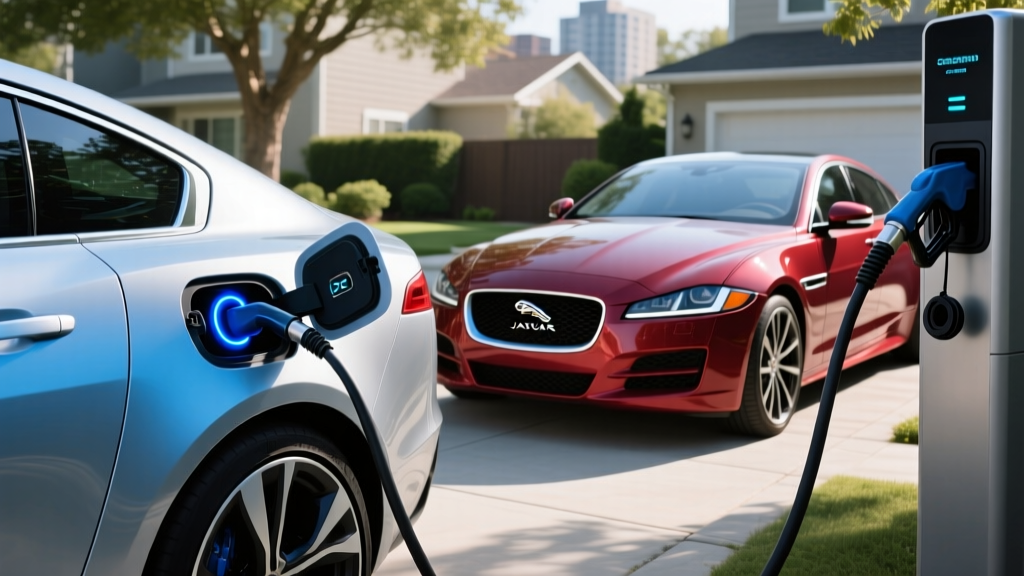
If you're cross-shopping a modern electric vehicle against a performance sedan like the 2014 Jaguar XF Supercharged—with its 5.0L V8 producing 470 hp and EPA-rated 18 mpg combined—the fuel-vs-electricity math is one of the most decisive factors in your purchase. That 5.0-liter V8 drinks roughly $3,100 worth of premium gasoline per year at 15,000 miles (assuming $4.10/gallon). An equivalent EV? Often under $600. But that savings only materializes if you understand charging levels, home electrical requirements, and real-world costs per mile.
This guide breaks down everything you need to charge an EV at home and on the road, with hard numbers, installation cost breakdowns, and a direct comparison to what you'd spend keeping a 2014 XF Supercharged fueled.
EV Charging Levels Explained: kW, Miles Per Hour, and Real Charge Times
The single most important distinction in EV literacy: kW (kilowatts) measures power—how fast energy flows into the battery. kWh (kilowatt-hours) measures energy—the battery's total capacity, like gallons in a fuel tank. A 77 kWh battery charged at 11.5 kW (Level 2) takes roughly 6.7 hours from 0–100%. That same battery at 250 kW (DC fast) can go 10–80% in about 18 minutes.
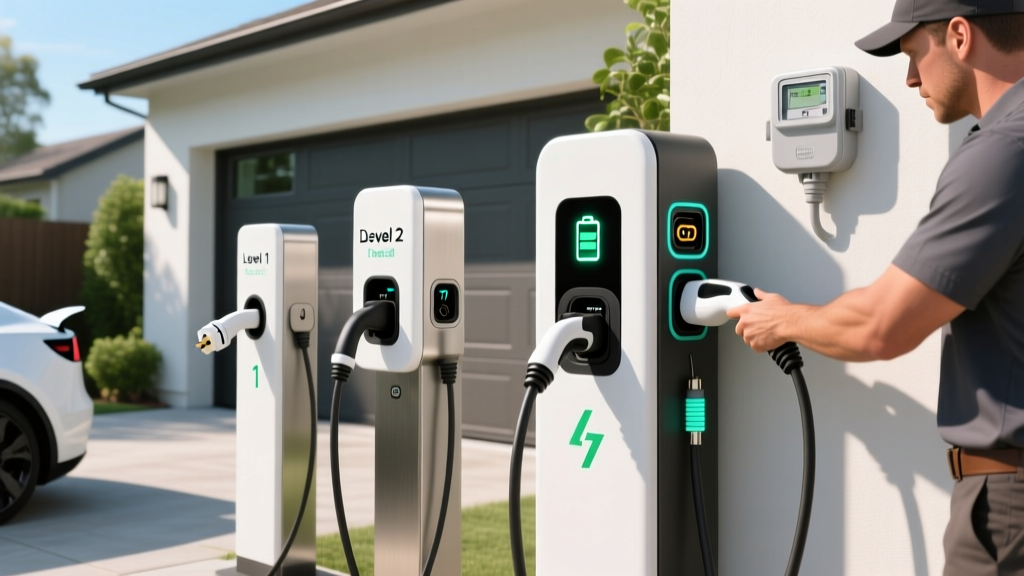
| Level | Voltage | Power (kW) | Miles of Range / Hour | Best For |
|---|---|---|---|---|
| Level 1 (120V) | 120V / 12A | ~1.4 kW | 3–5 mi/hr | Overnight top-ups, PHEVs |
| Level 2 (240V) | 240V / 32–48A | 7.7–11.5 kW | 25–44 mi/hr | Daily home charging |
| DC Fast Charge | 400–800V DC | 50–350 kW | 150–1,000+ mi/hr (peak) | Road trips, quick stops |
Real-world 10–80% charge times for common battery sizes:
- 60 kWh battery (e.g., base Tesla Model Y): ~15 min at 250 kW DCFC; ~4.5 hrs at 11.5 kW Level 2
- 84 kWh battery (e.g., Ford F-150 Lightning Extended): ~20 min at 250 kW DCFC; ~6.5 hrs at 11.5 kW Level 2
- 100 kWh battery (e.g., Lucid Air, Rivian R1T Max): ~22 min at 300+ kW DCFC; ~8 hrs at 11.5 kW Level 2
DC fast charging is never linear. You'll see a peak rate (say 250 kW) only between roughly 10–40% state of charge. Above 80%, the charge curve tapers dramatically—often dropping below 50 kW—to protect battery health via thermal management. This is why manufacturers quote 10–80% times rather than 0–100%.
Home EV Charger Installation: Electrical Requirements, Costs, and Panel Upgrades
Most EV owners do 80–90% of their charging at home on Level 2. A proper Level 2 setup requires a dedicated 240-volt circuit, similar to what powers an electric dryer or oven. The most common configuration is a NEMA 14-50 outlet on a 50-amp breaker, delivering up to 40 amps continuous (11.5 kW with a derated 48A charger on a 60A breaker).
Here's the cost breakdown that most guides gloss over:
| Item | Typical Range | Notes |
|---|---|---|
| Level 2 charger unit (smart, 40–48A) | $350–$700 | Wi-Fi enabled, 25-ft cable recommended |
| Electrician labor (standard install) | $500–$1,500 | Varies by run length from panel to garage |
| Electrical permit | $50–$200 | Required in most jurisdictions |
| Panel upgrade (if needed) | $1,500–$3,500 | Common in pre-2000 homes with 100A service |
| Total (no panel upgrade) | $900–$2,400 | Average: ~$1,400 |
| Total (with panel upgrade to 200A) | $2,400–$5,900 | Older homes, high-draw panels |
Safety and code essentials:
- Dedicated circuit: Your Level 2 charger must have its own breaker—never share with other appliances.
- GFCI protection: NEC 2020+ requires GFCI breakers for garage and outdoor EV outlets.
- Outdoor rating: If your charger lives outside, ensure the unit carries a NEMA 4 or IP65 weather rating.
- Hardwired vs. plug-in: Hardwired units (no plug) can deliver up to 48A continuous on a 60A breaker and avoid GFCI nuisance trips. Plug-in (NEMA 14-50) offers portability but caps at 40A continuous on a 50A breaker.
EV Connector Compatibility: NACS, CCS1, CHAdeMO, and Adapters
As of 2026, the North American charging landscape has largely consolidated around the NACS (North American Charging Standard), originally developed by Tesla. Nearly every major automaker—Ford, GM, Rivian, Volvo, Hyundai, Kia—has adopted NACS for new vehicles. CCS1 (Combined Charging System) is being phased out on new models but remains on many 2023–2025 EVs. CHAdeMO is effectively legacy, found only on older Nissan Leafs and Mitsubishi Outlander PHEVs.
| Connector | Brands Using It (New Vehicles) | DC Fast Network Access |
|---|---|---|
| NACS (Tesla standard) | Tesla, Ford, GM, Rivian, Volvo, Polestar, Hyundai, Kia, BMW, Mercedes | Tesla Superchargers + growing NACS networks |
| CCS1 | Remaining 2023–2025 models (VW ID.4 early batches, some Stellantis) | Electrify America, EVgo, ChargePoint |
| CHAdeMO | Legacy only (Nissan Leaf discontinued) | Declining station availability |
Adapter situation: CCS-to-NACS adapters are widely available ($150–$250) for older CCS-equipped EVs that need Tesla Supercharger access. If you buy a used 2024 EV with a CCS port, verify adapter compatibility before relying on Superchargers. Per the U.S. Department of Energy's fueleconomy.gov, connector type is one of the first specs to verify before purchase.
Charging Cost Per Mile: EV Electricity vs. 2014 XF Supercharged Gasoline
Here's where the 2014 Jaguar XF Supercharged comparison gets stark. That 5.0L supercharged V8 achieves an EPA-rated 18 mpg combined (15 city / 23 highway). At $4.10 per gallon for premium (required for the XF Supercharged), you're spending roughly $0.228 per mile on fuel alone.
An efficient EV like the 2026 Tesla Model Y (EPA-rated 28 kWh/100mi) charged at home on off-peak electricity ($0.13/kWh national average) costs roughly $0.036 per mile. That's an 84% reduction in energy cost per mile.
| Scenario | Rate | Cost / Mile | Annual (15,000 mi) |
|---|---|---|---|
| 2014 XF Supercharged (18 mpg, premium) | $4.10/gal | $0.228 | $3,420 |
| EV home charging (off-peak) | $0.13/kWh | $0.036 | $540 |
| EV home charging (peak/TOU high) | $0.28/kWh | $0.078 | $1,170 |
| EV public Level 2 (ChargePoint, etc.) | $0.35/kWh | $0.098 | $1,470 |
| EV DC fast charging (Electrify America) | $0.48/kWh | $0.134 | $2,010 |
Key takeaway: Even at the most expensive DC fast charging rates, an EV costs less per mile than the 2014 XF Supercharged on premium. But the real savings come from home charging on a time-of-use (TOU) plan, where overnight rates can drop to $0.08–$0.10/kWh in some utility territories—pushing cost per mile below $0.03.
For a definitive efficiency comparison, check the EPA's side-by-side vehicle tool on fueleconomy.gov, which lets you compare MPGe and kWh/100mi across any EV and ICE vehicle.
Best Home EV Chargers for 2026: Equipment Picks With Specs
Not all Level 2 chargers are equal. The critical specs: amperage (determines kW output), cable length (25 ft is ideal for most garages), connector type, and smart features like Wi-Fi scheduling for TOU optimization.
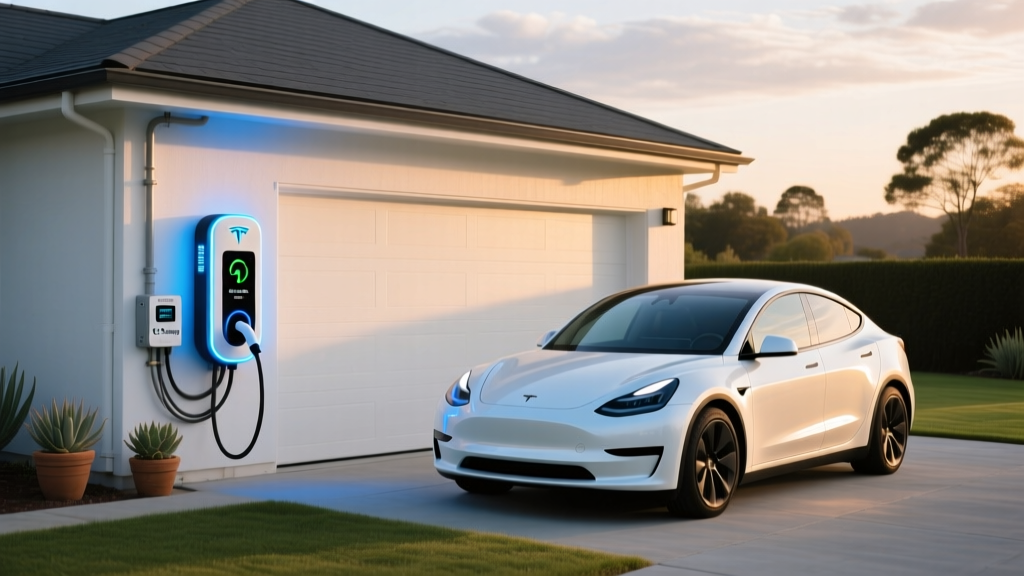
Tesla Wall Connector (Gen 4)
- Power: 48A / 11.5 kW (hardwired, 60A breaker)
- Connector: NACS native
- Cable: 24 ft
- Smart features: Wi-Fi, OTA updates, load sharing
- Price: ~$475
- Best for: Tesla owners, NACS-adopted vehicles with adapter
ChargePoint Home Flex (NACS version)
- Power: Up to 50A / 12 kW (adjustable, 60A breaker)
- Connector: NACS or CCS1 (select at purchase)
- Cable: 23 ft
- Smart features: Wi-Fi, app scheduling, Alexa, energy reports
- Price: ~$599
- Best for: Multi-EV households, CCS legacy vehicles
Emporia Level 2 Smart Charger
- Power: 48A / 11.5 kW (hardwired or 14-50 plug)
- Connector: NACS (2026 model) or J1772 with adapter
- Cable: 24 ft
- Smart features: Wi-Fi, solar integration, energy monitoring
- Price: ~$399
- Best for: Budget-conscious, solar-panel homes
Grizzl-E Smart (United Chargers)
- Power: 40A / 9.6 kW (14-50 plug, 50A breaker)
- Connector: NACS or J1772
- Cable: 24 ft
- Smart features: Wi-Fi, OCPP support, -40°F rated
- Price: ~$449
- Best for: Cold climates, outdoor installs, Canadian-built
Federal Tax Credit for Home Charging Equipment (§30C)
Beyond the well-known §30D vehicle credit, the IRS also offers the §30C Alternative Fuel Vehicle Refueling Property Credit for home charger installation. As of 2026, this credit covers 30% of equipment and installation costs, up to $1,000, but only for residents in eligible census tracts (typically rural or low-income communities as defined by the IRS §30C guidelines). Check your census tract eligibility before counting on this credit—it's geographically restricted and income-capped.
Public Charging: Networks, Reliability, and What to Expect
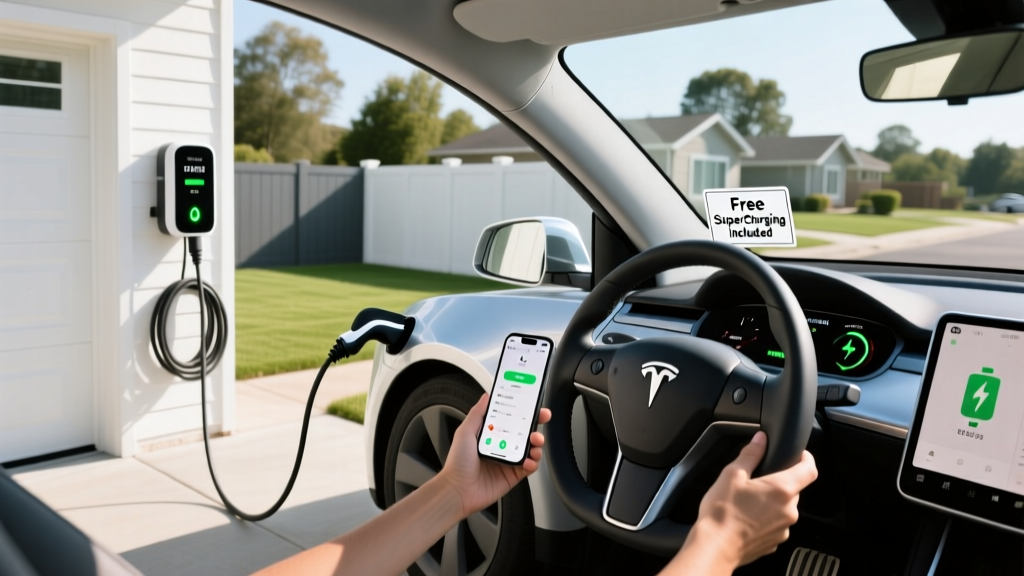
Public DC fast charging in 2026 is significantly more reliable than the 2022–2023 era, when Electrify America and EVgo stations suffered frequent downtime. Tesla's Supercharger network remains the gold standard, with over 99% uptime and consistent charge speeds. Non-Tesla networks have improved with NEVI-funded (National Electric Vehicle Infrastructure) station buildouts, but reliability still varies by location.
Practical public charging tips:
- Precondition your battery before arriving at a DC fast charger. Most EVs do this automatically when you navigate to a charger in the car's software—it warms the battery to optimal temperature, enabling peak kW rates. Without preconditioning, you may see charge speeds cut by 30–50% in cold weather.
- Charge to 80%, then move on. The charge curve above 80% is so slow that you'll add more range faster by driving to the next station than by waiting for the final 20%.
- PlugShare and A Better Routeplanner remain essential apps for checking real-time station status and planning road-trip charging stops.
Frequently Asked Questions
How much does it cost to install a home EV charger?
A standard Level 2 home installation (48A smart charger, 240V circuit, moderate panel distance) typically costs $900–$2,400 including equipment, electrician labor, and permit. If your home requires a panel upgrade from 100A to 200A service, add $1,500–$3,500, bringing the total to $2,400–$5,900. Always get a load calculation from a licensed electrician first.
How fast will each charging level add range?
Level 1 (120V) adds 3–5 miles per hour—adequate for PHEVs with small batteries. Level 2 (240V, 48A) adds 35–44 miles per hour, fully replenishing most EVs overnight. DC fast charging at 150–350 kW can add 150–300+ miles in 15–20 minutes, but speed tapers above 80% SoC.
Which connector/charger is compatible with my EV?
For 2026 model-year vehicles, nearly all new EVs use NACS. If you own a 2023–2025 EV with CCS1, a CCS-to-NACS adapter ($150–$250) unlocks Tesla Supercharger access. CHAdeMO is legacy-only. Always verify your vehicle's charge port before buying a home charger or adapter.
How much does charging cost per mile vs gas?
Home EV charging averages $0.036/mile (at $0.13/kWh), compared to $0.228/mile for a 2014 Jaguar XF Supercharged on premium at $4.10/gallon. That's a savings of over $2,800 per year at 15,000 miles. Even the most expensive public DC fast charging ($0.48/kWh = ~$0.134/mile) undercuts the XF Supercharged's fuel cost.
What electrical upgrades might I need?
Homes with 100-amp panels, multiple high-draw appliances (electric heat, dryer, oven, water heater), or long wire runs from the panel to the garage may need a panel upgrade to 200A service, a sub-panel installation, or heavier-gauge wiring. A licensed electrician will determine this via an NEC Article 220 load calculation. Never assume your panel has spare capacity without this check.