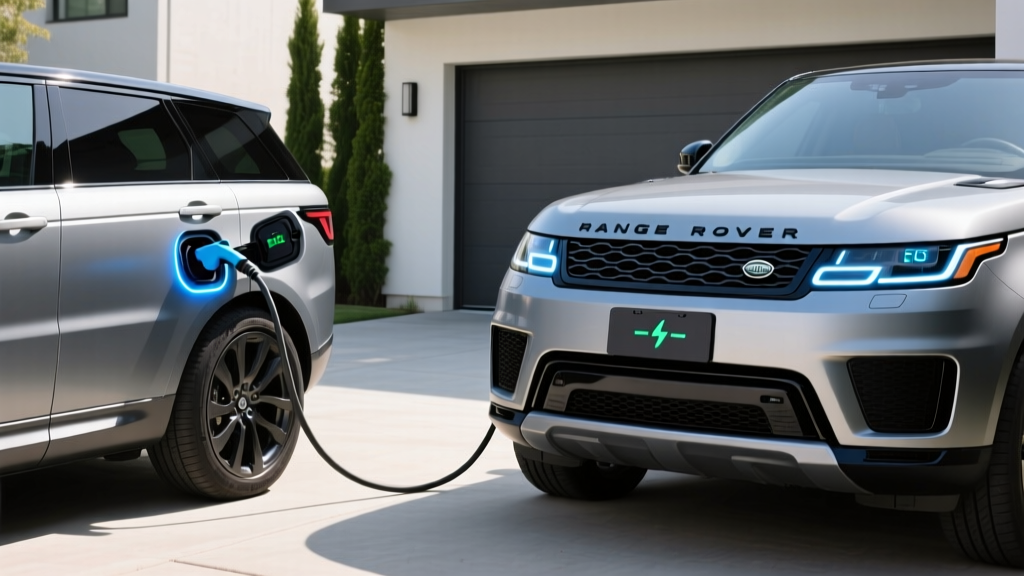
Why Compare a 2014 Land Rover Range Rover Supercharged to Modern EV Charging?
The 2014 Land Rover Range Rover Supercharged remains a benchmark luxury SUV: a 5.0-liter supercharged V8 producing 510 horsepower, 0-60 mph in 5.1 seconds, and a curb weight north of 5,100 pounds. But that performance comes at a steep fuel cost. EPA-rated at 14 mpg city / 20 mpg highway / 16 mpg combined (fueleconomy.gov), the Range Rover Supercharged gulps premium fuel at a rate that makes daily commuting an expensive proposition.
For owners researching an EV transition — or luxury SUV buyers weighing a new electric platform against a used Range Rover — understanding the true economics of EV charging versus gasoline is essential. This guide breaks down home charging installation, public charging costs, connector compatibility, and a direct per-mile cost comparison against the 2014 Range Rover Supercharged's real-world fuel consumption.
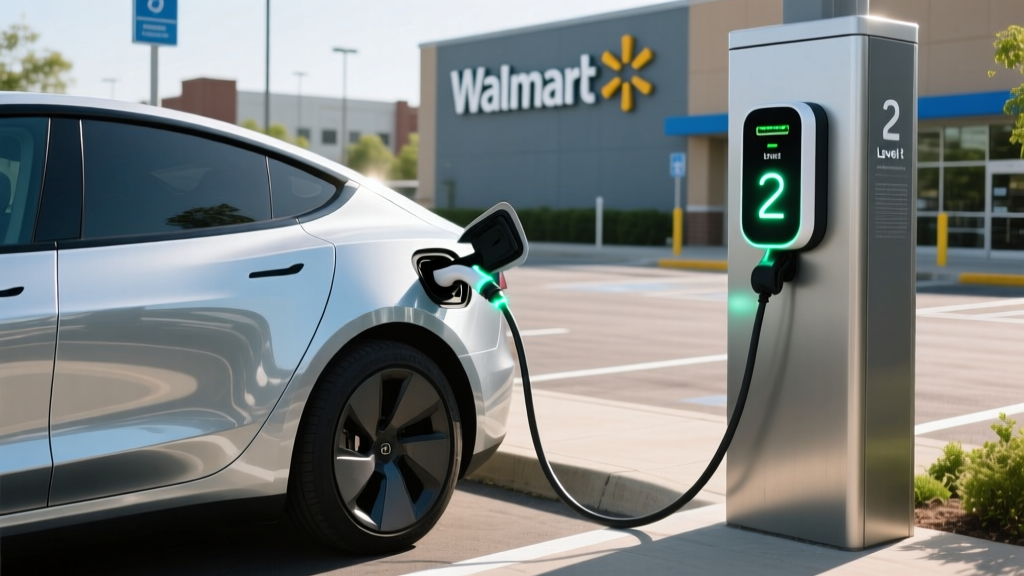
Charging Levels Explained: Speeds in kW and Miles Per Hour
Before calculating costs, you need to understand the three charging tiers available to EV owners. The critical distinction: kW (kilowatts) measures the rate of energy flow — like water pressure from a hose — while kWh (kilowatt-hours) measures total energy stored in the battery, like the size of the tank.
| Level | Voltage / Amperage | Max Power (kW) | Miles of Range Added Per Hour | Best Use Case |
|---|---|---|---|---|
| Level 1 | 120V / 12A | 1.4 kW | 3-5 miles/hr | Overnight trickle, PHEVs, emergency |
| Level 2 | 240V / 32-48A | 7.7-11.5 kW | 25-44 miles/hr | Daily home charging, workplaces |
| DC Fast | 400-800V DC | 50-350 kW | 150-1,200+ miles/hr (peak) | Road trips, rapid top-ups |
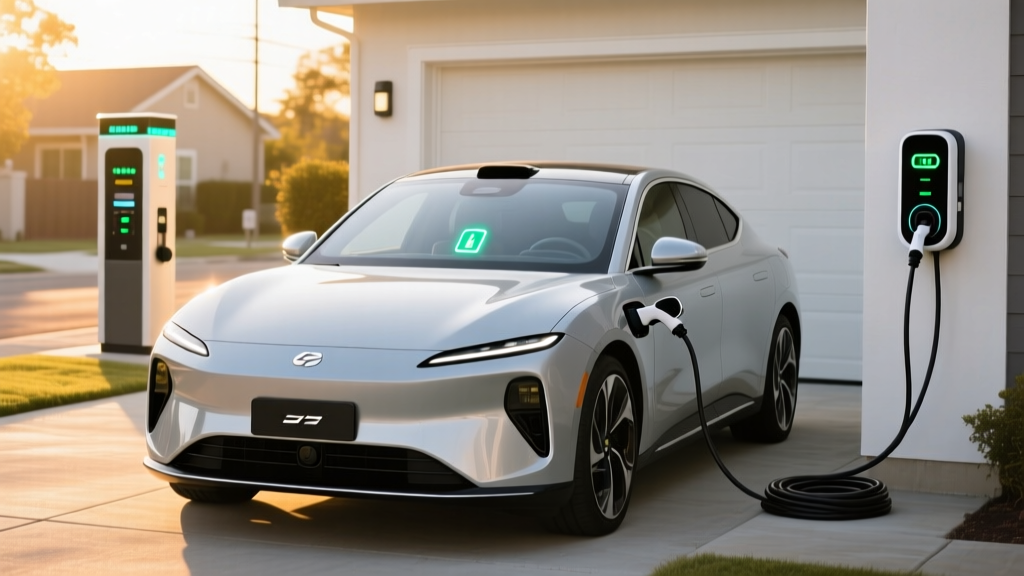
For context, a typical modern luxury EV like the 2026 BMW iX xDrive50 (105.2 kWh usable battery, EPA 324 miles) adds roughly 30 miles of range per hour on a 48-amp Level 2 home charger. A full overnight session (10 hours) replenishes about 300 miles — more than enough for any daily commute and a direct replacement for the gas-station routine of a Range Rover Supercharged owner.
How Much Does It Cost to Install a Home EV Charger?
Home Level 2 charging is the backbone of practical EV ownership. Installation costs vary dramatically depending on your home's electrical panel capacity, the distance from panel to charger location, and local permit requirements.
| Component | Basic Install (Panel Adjacent) | Complex Install (Long Run / Upgrade) |
|---|---|---|
| Level 2 Charger Equipment (40-48A) | $350-$700 | $500-$800 |
| Electrician Labor (2-6 hours) | $300-$600 | $800-$2,000 |
| Permit & Inspection | $50-$150 | $100-$300 |
| Electrical Panel Upgrade (if needed) | $0 (not needed) | $1,500-$3,500 |
| Total Estimated Cost | $700-$1,450 | $2,900-$6,600 |
Electrical Requirements: What Your Home Needs
A standard 48-amp Level 2 charger requires a dedicated 240V/60A circuit (the National Electrical Code requires circuits rated at 125% of continuous load, so a 48A charger needs a 60A breaker). Homes built after 2000 typically have 200A service panels with spare capacity. Older homes — particularly those with 100A panels — may require a panel upgrade to support both EV charging and existing loads like electric dryers, ovens, and HVAC.
Safety and Code Considerations
Every compliant home EV charger installation must include:
- Dedicated circuit: The charger must be on its own breaker — no sharing with other appliances.
- GFCI protection: NEC 2023 and later require GFCI (Ground Fault Circuit Interrupter) protection for all 240V EV charging outlets. Many hardwired chargers have GFCI built in; if you install a NEMA 14-50 receptacle, the breaker must be GFCI type (~$80-$120 extra).
- Outdoor rating: If the charger is installed outdoors (garage-less homes), the unit must carry a NEMA 4 or IP65 weather rating. Most premium chargers (ChargePoint Home Flex, Emporia Vue) meet this standard.
- Permit and inspection: Most jurisdictions require an electrical permit for new 240V circuits. Skipping the permit risks insurance claim denial if an electrical fire occurs.
Which Connector Is Compatible with My EV?
As of 2026, the North American EV charging connector landscape has consolidated significantly, but legacy standards still exist on older models and some public stations.
| Connector | Brands Using It (2026) | Notes |
|---|---|---|
| NACS (Tesla / J3400) | Tesla, Ford, GM, Rivian, Volvo, Polestar, Hyundai/Kia (2025+), most new models | Now the dominant standard. Access to Tesla Supercharger network. |
| CCS1 | Older GM, VW, Hyundai/Kia (pre-2025), BMW, Mercedes | Still widely supported at Electrify America, EVgo. Adapters to NACS available (~$200-$350). |
| CHAdeMO | Nissan Leaf (legacy), Mitsubishi Outlander PHEV | Effectively discontinued. Limited new infrastructure. |
If you're purchasing a 2025 or 2026 model-year EV, it almost certainly has a NACS port. If you own a CCS-equipped EV from 2022-2024, Ford and GM offer official NACS-to-CCS adapters enabling Supercharger access. For home charging, most Level 2 chargers now ship with a NACS connector or offer a CCS variant — confirm before ordering.
Charging Cost Per Mile vs. the 2014 Range Rover Supercharged
This is the calculation that drives EV adoption decisions. Let's compare real energy costs per mile for a modern luxury EV against the 2014 Range Rover Supercharged using 2026 energy prices.
| Scenario | Energy Source | Rate | Cost Per Mile | Annual Cost (12,000 mi) |
|---|---|---|---|---|
| 2014 Range Rover SC (16 mpg combined) | Premium gasoline | $4.50/gal | $0.281 | $3,375 |
| EV — Home off-peak (3.0 mi/kWh) | Level 2, utility off-peak | $0.13/kWh | $0.043 | $520 |
| EV — Home standard rate (3.0 mi/kWh) | Level 2, avg residential | $0.17/kWh | $0.057 | $680 |
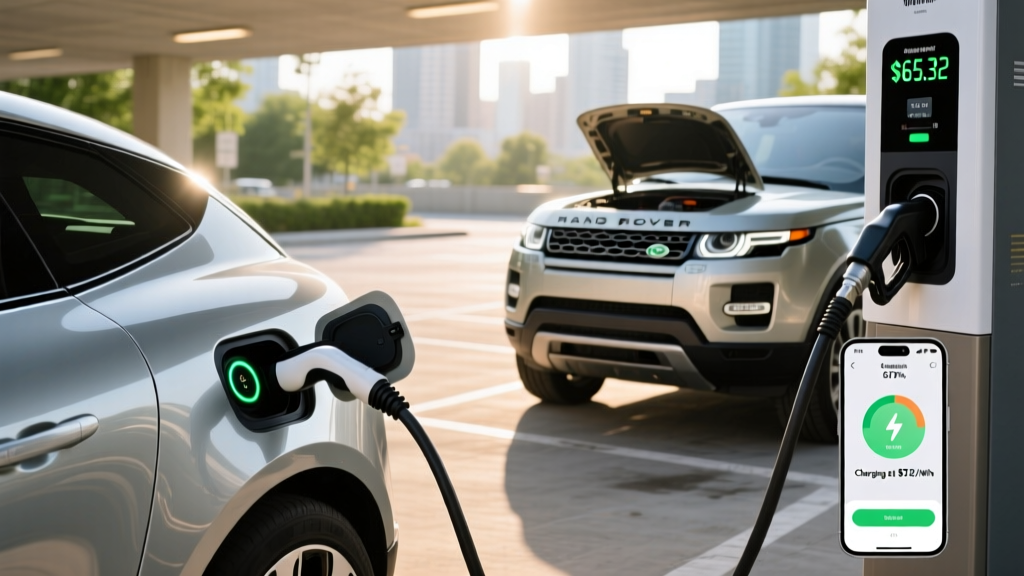
| EV — Public DC Fast (3.0 mi/kWh) | Electrify America / EVgo | $0.48/kWh | $0.160 | $1,920 |
| EV — Tesla Supercharger V4 (3.0 mi/kWh) | Supercharger network | $0.35/kWh | $0.117 | $1,400 |
Charging Time Examples: 10-80% for Common Battery Sizes
DC fast charging speed depends on the vehicle's peak charge rate, battery size, and the station's output. The charge curve matters: most EVs charge fastest between 10-50% SoC (State of Charge), then taper significantly above 80% to protect battery chemistry. That's why manufacturers quote 10-80% times rather than 0-100%.
| Vehicle (Example) | Battery (kWh Usable) | Peak DC Rate (kW) | 10-80% Time (350 kW Station) | Level 2 Home (11.5 kW) |
|---|---|---|---|---|
| 2026 Hyundai Ioniq 5 (Long Range) | 84 kWh (NMC) | 240 kW (800V) | ~18 minutes | ~5.1 hours (10-80%) |
| 2026 Tesla Model Y Long Range | 75 kWh (NMC) | 250 kW | ~22 minutes | ~4.6 hours (10-80%) |
| 2026 BMW iX xDrive50 | 105.2 kWh (NMC) | 200 kW | ~31 minutes | ~6.4 hours (10-80%) |
| 2026 Rivian R1S (Max Pack) | 141 kWh (NMC) | 220 kW | ~42 minutes | ~8.6 hours (10-80%) |
For daily driving, home Level 2 charging is the practical equivalent of the gas station: you plug in when you arrive home, and by morning the battery is full. The 2014 Range Rover Supercharged's 27.7-gallon fuel tank gives it roughly 443 highway miles of range — impressive. But a 2026 Rivian R1S Max Pack (EPA 410 miles) achieves similar range with zero fuel stops during the work week when charged at home overnight.
Recommended Home Level 2 Chargers (2026)
ChargePoint Home Flex
- Power Output: Up to 11.5 kW (48A) on a 60A circuit; configurable down to 16A
- Connector: NACS (J3400) standard; CCS adapter available
- Cable Length: 23 feet
- Smart Features: Wi-Fi, scheduled charging, Alexa integration, energy tracking via app
- Price: ~$549 (NACS version)
- Best For: Most homeowners wanting flexible amperage and reliable app control
Emporia Vue Smart Charger
- Power Output: Up to 11.5 kW (48A)
- Connector: NACS or CCS1 (select at purchase)
- Cable Length: 24 feet
- Smart Features: Real-time energy monitoring, solar integration, load management, scheduling
- Price: ~$399
- Best For: Budget-conscious buyers and solar-panel homes wanting granular energy data
Tesla Wall Connector
- Power Output: Up to 11.5 kW (48A)
- Connector: NACS native
- Cable Length: 24 feet
- Smart Features: Wi-Fi updates, power sharing (up to 6 units on one circuit), Tesla app integration
- Price: ~$425
- Best For: Tesla owners and multi-EV households wanting power sharing
All three chargers listed above are NEMA 4 rated for outdoor installation and include built-in GFCI protection when hardwired. If you install a NEMA 14-50 receptacle instead of hardwiring (for portability), ensure your electrician uses a GFCI breaker — this is a NEC requirement for EV charging receptacles in most jurisdictions as of the 2023 code cycle.
What Electrical Upgrades Might I Need?
Before purchasing a charger, have a licensed electrician evaluate your panel. Here's what determines whether an upgrade is necessary:
- Panel amperage: A 200A panel typically has headroom for a 60A EV circuit. A 100A panel likely does not if you have electric appliances.
- Available breaker spaces: Even with adequate amperage, you need two adjacent breaker slots for a 240V double-pole breaker.
- Service wire gauge: The wire from your utility meter to the panel must support the total load. Older homes with 100A service wire may need a utility-side upgrade.
- Load calculation: Per NEC Article 220, an electrician calculates your home's peak demand. If adding 48A continuous (60A breaker) pushes total demand above 80% of panel rating, an upgrade is mandatory.
Some utility companies offer free or discounted panel upgrades for EV adopters, and certain states provide rebates covering part of the installation cost. Check your local utility's EV program page before scheduling work. Note: the IRS §30D tax credit does not cover home charging equipment — that falls under the separate §30C Alternative Fuel Vehicle Refueling Property Credit, which offers up to $1,000 for residential charger installation through 2032, subject to census-tract eligibility (irs.gov).
Frequently Asked Questions
How much does it cost to install a home EV charger?
A straightforward installation (panel has capacity, charger mounted near the panel) costs $700-$1,450 including equipment, labor, and permit. Complex installs requiring long wire runs, conduit, or a panel upgrade range from $2,900-$6,600. Always get itemized quotes from at least two licensed electricians.
How fast will each charging level add range?
Level 1 (120V) adds 3-5 miles per hour — sufficient only for PHEVs with small batteries or emergency overnight trickle charging. Level 2 (240V, 48A) adds 25-44 miles per hour depending on vehicle efficiency, fully replenishing most EVs overnight. DC fast charging at 150-350 kW can add 150-250 miles in 15-25 minutes, though the charge curve tapers significantly above 80% SoC.
Which connector/charger is compatible with my EV?
For 2025-2026 model-year vehicles, NACS (J3400) is the dominant standard, used by Tesla, Ford, GM, Hyundai/Kia, Rivian, Volvo, and others. Older CCS1-equipped EVs (2022-2024) can access NACS Superchargers via manufacturer-approved adapters ($200-$350). CHAdeMO is legacy-only. For home Level 2 charging, match your charger's connector to your vehicle's port — or buy a universal unit with swappable cables.
How much does charging cost per mile vs gas?
Home-charged EV electricity costs $0.04-$0.06 per mile at typical residential rates ($0.13-$0.17/kWh). The 2014 Range Rover Supercharged at 16 mpg combined costs $0.28 per mile on premium fuel ($4.50/gal). That's a 78-85% per-mile savings for the EV. Even public DC fast charging at $0.48/kWh ($0.16/mile) remains 43% cheaper than the Range Rover's fuel cost.
What electrical upgrades might I need?
The most common upgrade is a 200A panel replacement for homes with 100A service ($1,500-$3,500). You may also need a new conduit run from the panel to the charger location, a GFCI breaker for receptacle-based installs, or additional breaker spaces. A licensed electrician will perform a NEC Article 220 load calculation to determine exact requirements. Never skip the permit — unpermitted electrical work can void homeowners insurance.
Sources: EPA fuel economy data from fueleconomy.gov; IRS §30C refueling property credit rules from irs.gov; NEC electrical code requirements per National Fire Protection Association standards.