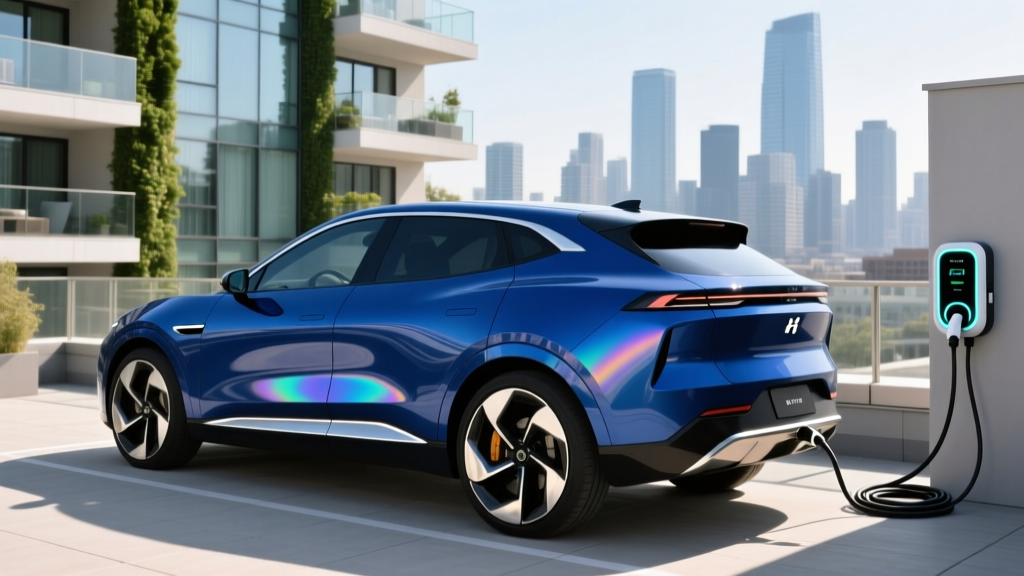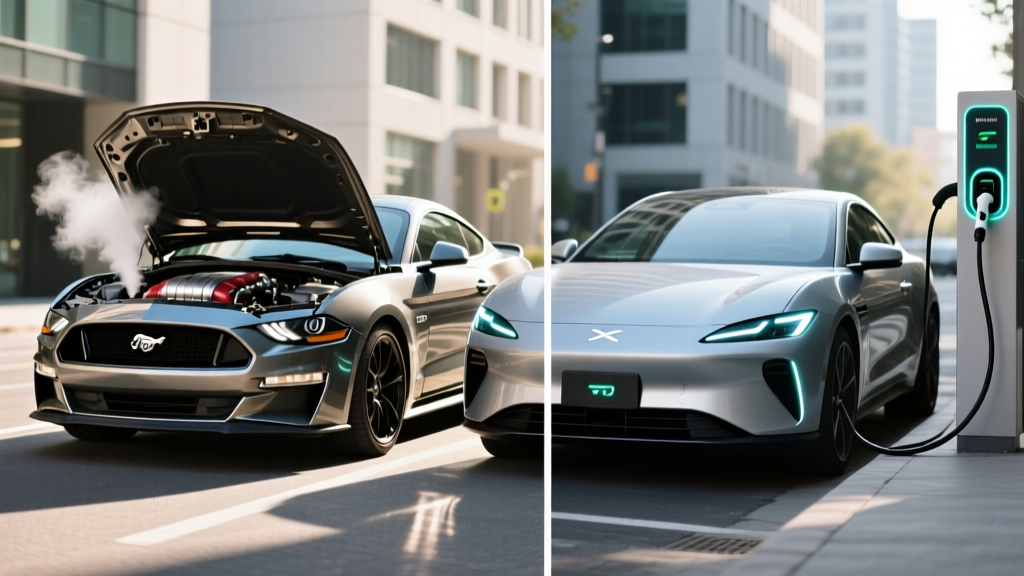
If you're cross-shopping a used luxury SUV like the 2013 Range Rover Sport Supercharged against a modern electric vehicle, the sticker price is only half the story. The 2013 RR Sport Supercharged packs a 5.0-liter supercharged V8 producing 375 horsepower and returns an EPA-rated 14 MPG combined. That thirst translates directly into fuel costs that dwarf what even the heaviest, least efficient EVs draw from the grid. This guide breaks down exactly what it costs to charge an EV at home and on the road — and how those numbers compare to filling the 27.7-gallon tank on the 2013 RR Sport Supercharged.
Charging Levels Explained: kW, Speeds, and Range Per Hour
Before we compare costs, let's nail down the three charging levels available to EV owners. The critical distinction: kW (kilowatts) measures power — how fast energy flows into the battery. kWh (kilowatt-hours) measures energy — the total capacity stored. Think of kW as the width of a pipe and kWh as the size of the tank it fills.
| Level | Voltage / Amperage | Power Output (kW) | Miles of Range Added Per Hour | Typical Use Case |
|---|---|---|---|---|
| Level 1 | 120V / 12A | 1.4 kW | 3–5 mi/hr | Overnight trickle; emergency top-up |
| Level 2 (Home) | 240V / 32–48A | 7.7–11.5 kW | 25–44 mi/hr | Daily home charging; full overnight fill |
| Level 2 (Public) | 240V / 32–80A | 7.7–19.2 kW | 25–70 mi/hr | Workplace, retail, apartment chargers |
| DC Fast Charging | 400–800V DC | 50–350 kW | 150–1,200+ mi/hr (peak) | Road trips; 10–80% in 18–45 min |
For a typical 80 kWh battery pack (think Tesla Model Y, Ford Mustang Mach-E, Hyundai Ioniq 5), a Level 2 home charger at 11.5 kW fills the battery from 10% to 100% in roughly 7–8 hours — perfectly suited to overnight charging. A 350 kW DC fast charger can take that same pack from 10% to 80% in approximately 18–25 minutes, though the charge curve tapers significantly above 80% to protect battery health. Peak kW is never sustained across the entire session.
Home EV Charger Installation: Requirements, Upgrades, and Costs
Most EV owners install a 240V Level 2 charger in their garage or driveway. The electrical requirements are straightforward, but older homes — the kind of house a 2013 RR Sport Supercharged owner might already live in — often need panel work.
Electrical Requirements
- Circuit: Dedicated 40A, 50A, or 60A breaker (depending on charger amperage)
- Voltage: 240V single-phase (same as a dryer or oven outlet)
- Wire gauge: 6 AWG copper for 50A circuits; 4 AWG for 60A
- GFCI protection: Required by NEC 2020+ for EV receptacles (National Electrical Code 625.54)
- Outdoor rating: NEMA 4 or NEMA 4X enclosure if mounted outside
Do You Need a Panel Upgrade?
A typical home EV charger draws 32–48A continuously. Electrical code requires the circuit to be rated at 125% of the continuous load, meaning a 48A charger needs a 60A breaker. If your home has a 100A main panel — common in homes built before 1990 — you likely need an upgrade to 200A service. This is the single biggest variable in installation cost and one that catches many buyers by surprise.
Even with a 200A panel, your electrician will perform a load calculation to verify available headroom. If you already run electric heat, an electric oven, a dryer, and an AC unit, adding a 48A EV circuit may max out the panel.
| Component | Low End | High End | Notes |
|---|---|---|---|
| Level 2 Charger Unit | $350 | $750 | Smart Wi-Fi chargers with 25ft cable |
| Electrician Labor | $400 | $1,500 | Varies by run length, conduit, drywall work |
| Materials (wire, conduit, breaker) | $100 | $400 | Longer runs from panel = more wire cost |
| Permit & Inspection | $50 | $300 | Required in most jurisdictions |
| Panel Upgrade (if needed) | $1,500 | $4,000 | 100A → 200A service upgrade |
| Total (no panel upgrade) | $900 | $2,950 | Most homes with 200A service |
| Total (with panel upgrade) | $2,400 | $6,950 | Older homes with 100A service |
Connector Compatibility: NACS, CCS1, and CHAdeMO
As of 2026, the North American charging landscape has largely standardized around the NACS (North American Charging Standard), originally developed by Tesla. Nearly every major automaker — Ford, GM, Hyundai, Kia, Rivian, BMW, Mercedes-Benz — has adopted NACS for new vehicles. The legacy CCS1 (Combined Charging System) connector remains on 2021–2024 model-year vehicles, and adapters are widely available. CHAdeMO is effectively discontinued outside of the aging Nissan Leaf fleet.
| Connector | Used By | DC Fast Charge Support | Adapter Availability |
|---|---|---|---|
| NACS (Tesla) | Tesla (all years), Ford, GM, Hyundai, Kia, Rivian, BMW, Mercedes (2025+) | Yes — up to 350 kW on V4 Superchargers | Native on new vehicles; CCS→NACS adapters $150–$250 |
| CCS1 | 2021–2024 non-Tesla EVs (VW ID.4, older Ioniq 5, Mach-E pre-2025) | Yes — up to 350 kW on Electrify America, EVgo | NACS→CCS1 adapters $200–$300 |
| CHAdeMO | Nissan Leaf (legacy), Mitsubishi Outlander PHEV (older) | Yes — up to 100 kW (limited stations) | Rare; no practical adapter path to NACS |
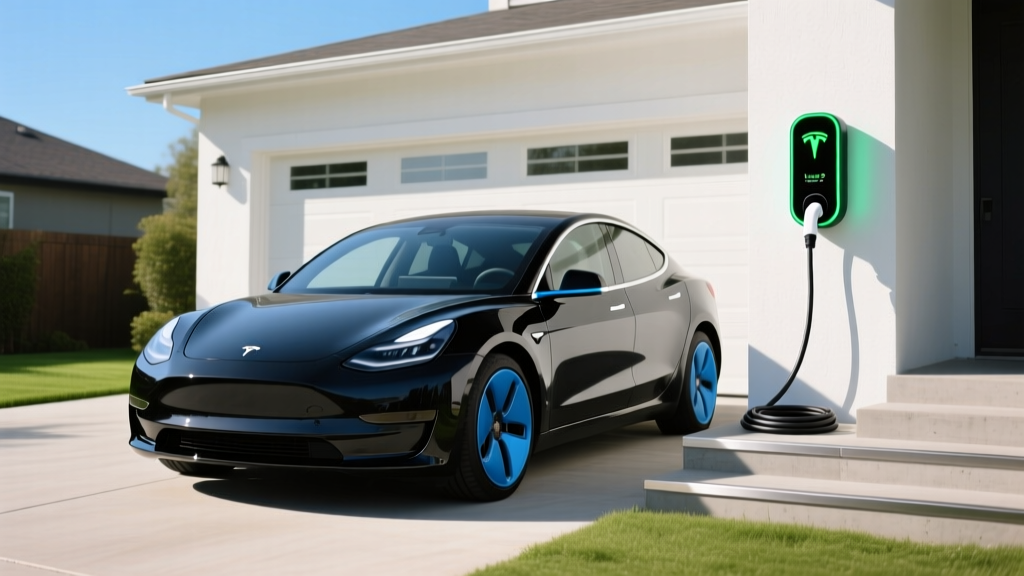
For home Level 2 charging, all non-Tesla EVs use the J1772 connector. Tesla vehicles use a proprietary NACS connector for Level 2, but a J1772-to-NACS adapter (included with every Tesla) allows Teslas to use any public Level 2 station. When buying a home charger, choose one with the connector matching your vehicle — or buy a universal J1772 unit and keep the adapter in the car.
Charging Cost Per Mile: EV vs. 2013 RR Sport Supercharged
Here's where the comparison gets stark. The 2013 Range Rover Sport Supercharged, with its 5.0L supercharged V8, achieves an EPA-rated 14 MPG combined (12 city / 17 highway). Let's model real fuel and charging costs across different scenarios using $3.50/gallon for premium unleaded (the RR Sport requires premium) and representative electricity rates.
| Scenario | Fuel/Electricity Cost | Vehicle Efficiency | Cost Per Mile |
|---|---|---|---|
| 2013 RR Sport Supercharged (Premium @ $3.50/gal) | $3.50/gallon | 14 MPG combined | $0.250/mi |
| EV — Home Charging (Off-Peak) | $0.10/kWh | 3.0 mi/kWh (101 MPGe) | $0.033/mi |
| EV — Home Charging (Standard Rate) | $0.16/kWh | 3.0 mi/kWh (101 MPGe) | $0.053/mi |
| EV — Home Charging (High-Cost State, e.g. CA) | $0.30/kWh | 3.0 mi/kWh (101 MPGe) | $0.100/mi |
| EV — Public Level 2 (Network Pricing) | $0.35/kWh | 3.0 mi/kWh (101 MPGe) | $0.117/mi |
| EV — DC Fast Charging (Tesla Supercharger) | $0.32/kWh | 3.0 mi/kWh (101 MPGe) | $0.107/mi |
| EV — DC Fast Charging (Electrify America/EVgo) | $0.48/kWh | 3.0 mi/kWh (101 MPGe) | $0.160/mi |
Charging Time Examples: What to Expect by Battery Size
Charging time depends on battery capacity (kWh), the charger's power output (kW), and the vehicle's onboard charger limit for Level 2. Here are realistic 10–80% times for common battery sizes across charging levels. Note that DC fast charging always tapers above 80% State of Charge (SoC) to protect battery chemistry — the last 20% can take as long as the first 70%.
| Battery Size (kWh) | Example Vehicles | Level 2 @ 11.5 kW | DC Fast (Peak kW) | DC Fast 10–80% Time |
|---|---|---|---|---|
| 60 kWh | Chevy Equinox EV, base Model 3 | ~3.5 hrs | 150 kW | ~22 min |
| 77 kWh | Ford Mustang Mach-E ER, VW ID.4 | ~4.5 hrs | 170 kW | ~28 min |
| 84 kWh | Hyundai Ioniq 5, Kia EV6 | ~5 hrs | 240 kW (800V) | ~18 min |
| 100 kWh | Tesla Model S/X, Rivian R1S Max | ~6 hrs | 250 kW | ~30 min |
| 131 kWh | Ford F-150 Lightning Extended, Hummer EV | ~8 hrs | 350 kW | ~41 min |
For context, the 2013 RR Sport Supercharged refuels its 27.7-gallon tank in about 3 minutes at a gas station. No EV matches that speed — but the 18-minute 10–80% session on an 800V architecture (Ioniq 5/EV6) is fast enough for a rest stop, and most daily charging happens at home while you sleep.
Recommended Home Chargers: Power, Features, and Price
Not all Level 2 chargers are equal. The key specs that matter: maximum power output (kW), amperage, cable length, connector type, and smart features (Wi-Fi scheduling, energy monitoring, load management). Here are proven picks across budgets as of 2026.
Emporia Level 2 Smart Charger
- Power: 11.5 kW (48A)
- Connector: J1772 (NACS adapter included)
- Cable Length: 24 ft
- Smart Features: Wi-Fi, app scheduling, solar integration, energy monitoring
- Price: ~$399
- Best For: Budget-conscious buyers who want full smart features
ChargePoint Home Flex
- Power: Up to 12 kW (50A) — adjustable 16A–50A
- Connector: J1772 or NACS
- Cable Length: 23 ft
- Smart Features: Wi-Fi, Alexa integration, flexible amperage setting for panel limits
- Price: ~$549
- Best For: Homes with limited panel headroom (dial down to 32A)
Tesla Wall Connector (Gen 4)
- Power: 11.5 kW (48A)
- Connector: NACS native; J1772 adapter available
- Cable Length: 24 ft
- Smart Features: Wi-Fi, OTA updates, power-sharing between two units on one circuit
- Price: ~$450
- Best For: Tesla owners or mixed-fleet garages (with adapter)
Grizzl-E Smart
- Power: 10 kW (40A)
- Connector: J1772 or NACS
- Cable Length: 24 ft
- Smart Features: OCPP-compatible, adjustable amperage, extreme-cold rated (-40°F)
- Price: ~$499
- Best For: Cold-climate garages and outdoor installations (NEMA 4 rated)
Safety, Code Compliance, and Installation Best Practices
EV charging involves sustained high-current draw — often for 6–8 hours straight. This is fundamentally different from intermittent loads like a microwave. Proper installation isn't optional; it's a safety requirement.
- Dedicated circuit: Your EV charger must be on its own dedicated breaker. Never share a circuit with other appliances.
- GFCI protection: The NEC (National Electrical Code) requires ground-fault protection for EV receptacles. Hardwired chargers may have internal GFCI, but verify with your electrician.
- Outdoor rating: If mounting outside, the unit must carry a NEMA 4 or NEMA 4X rating to withstand rain, dust, and ice. The Grizzl-E and ChargePoint Home Flex both qualify.
- Load management: If your panel is near capacity, consider a smart load-management system (e.g., Emporia's Smart Load Management) that throttles the charger when other high-draw appliances activate. This can avoid a costly panel upgrade.
- Permit and inspection: Most jurisdictions require an electrical permit for EV charger installation. Skipping this can void homeowner's insurance coverage for electrical fires and cause issues at resale.
- Wire gauge: Undersized wire causes overheating. A 48A continuous load requires 6 AWG copper minimum; 60A circuits need 4 AWG. Your electrician will spec this correctly, but verify.
Frequently Asked Questions
How much does it cost to install a home EV charger?
A typical Level 2 home charger installation runs $900–$2,950 when your electrical panel has sufficient capacity. If you need a 100A-to-200A panel upgrade, expect $2,400–$6,950 total. The federal Residential Clean Energy Credit covers 30% of equipment and installation, up to $1,000.
How fast will each charging level add range?
Level 1 (120V) adds 3–5 miles per hour — only practical for overnight top-ups. Level 2 (240V, 48A) adds 30–44 miles per hour, fully recharging most EVs overnight. DC fast charging at 150–350 kW can add 150–1,200 miles per hour at peak, delivering a 10–80% charge in 18–45 minutes depending on battery size and vehicle architecture.
Which connector/charger is compatible with my EV?
For 2025+ model-year vehicles, most use NACS (Tesla's standard). Older non-Tesla EVs (2021–2024) typically have CCS1. Check your vehicle's charge port. For home Level 2, all non-Tesla EVs use J1772, and Tesla includes a J1772 adapter. Adapters between NACS and CCS1 cost $150–$300.
How much does charging cost per mile vs. gas?
At a national average residential rate of $0.16/kWh, an efficient EV costs about $0.053 per mile. The 2013 Range Rover Sport Supercharged at 14 MPG and $3.50/gallon premium costs $0.250 per mile — nearly 5x more. Even the most expensive public DC fast charging at $0.48/kWh comes in at $0.160/mile, still 36% cheaper than the RR Sport.
What electrical upgrades might I need?
The most common upgrade is a 200A panel replacement ($1,500–$4,000) if your home has older 100A service. You may also need conduit runs (if the garage is far from the panel), a sub-panel, or smart load-management hardware to avoid overloading existing service. Always have a licensed electrician perform a load calculation before committing to a charger amperage.