If you're coming from a enthusiast car like the 2005 supercharged Monte Carlo SS — with its 3.8L supercharged V6 producing 240 horsepower and averaging roughly 20 MPG combined — the switch to an electric vehicle raises two immediate questions: how fast can I "refuel," and what does it actually cost? This guide breaks down every EV charging level, home installation requirements, connector standards, and real-world per-mile costs, using the Monte Carlo SS as a gas-car baseline so the numbers make sense in context.
Understanding EV Charging Levels: Speeds in kW and Miles Per Hour
The single most important distinction in EV charging is between kW (kilowatts — the rate of power delivery, like water pressure from a hose) and kWh (kilowatt-hours — the total energy stored or delivered, like gallons in a tank). Confusing these two is the most common EV literacy mistake. Your battery capacity is measured in kWh; the charger's speed is measured in kW.
Here is how each charging level translates into real charging speed and range recovery:
| Level | Voltage | Power (kW) | Miles of Range Added Per Hour | Typical Use Case |
|---|---|---|---|---|
| Level 1 | 120V AC | 1.0–1.9 kW | 3–5 mi/hr | Overnight trickle; emergency backup |
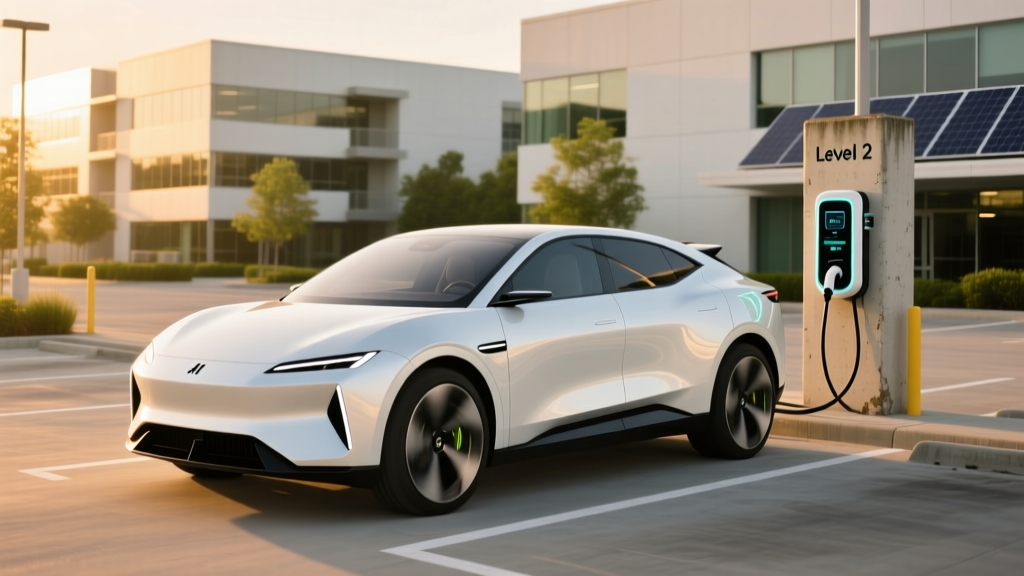
| Level 2 | 240V AC | 3.3–19.2 kW | 12–75 mi/hr | Home daily charging; workplace; shopping centers |
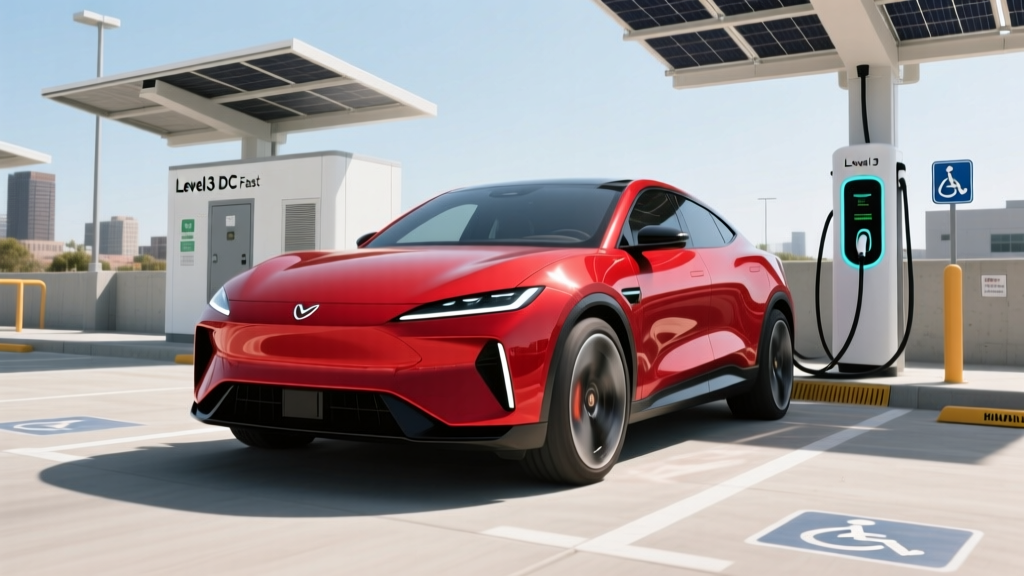
| DC Fast Charging (DCFC) | 400–800V DC | 50–350 kW | 150–1,200+ mi/hr (peak) | Road trips; highway corridors |
A practical example: a modern EV with a 75 kWh battery (e.g., a 2025 Tesla Model Y Long Range) charged on a 11.5 kW Level 2 home charger will go from 10% to 80% in roughly 5 hours. That same 10–80% session on a 250 kW DC fast charger takes approximately 18–22 minutes, though peak speeds only hold between roughly 10–40% state of charge before the charge curve tapers to protect the battery.
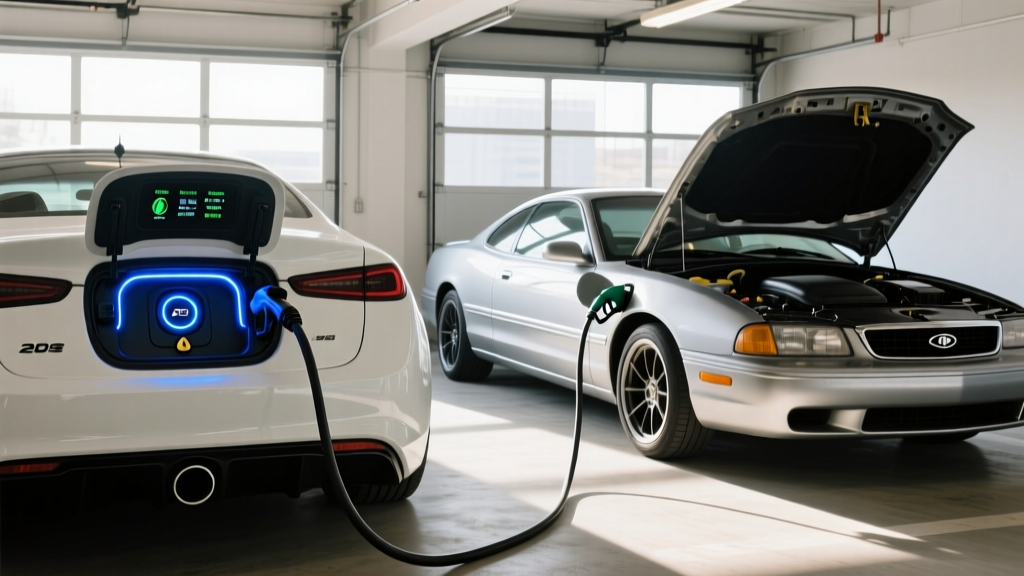
For comparison, filling the 17.5-gallon tank of a 2005 supercharged Monte Carlo SS takes about 3 minutes at the pump and yields roughly 350 miles of range. EV charging is slower per session, but the paradigm shifts when most charging happens at home while you sleep.
Home EV Charger Installation: Electrical Requirements, Costs, and Panel Upgrades
Installing a Level 2 home charger is the single biggest ownership infrastructure decision you'll make. Here's what's involved electrically and financially.
Electrical Requirements
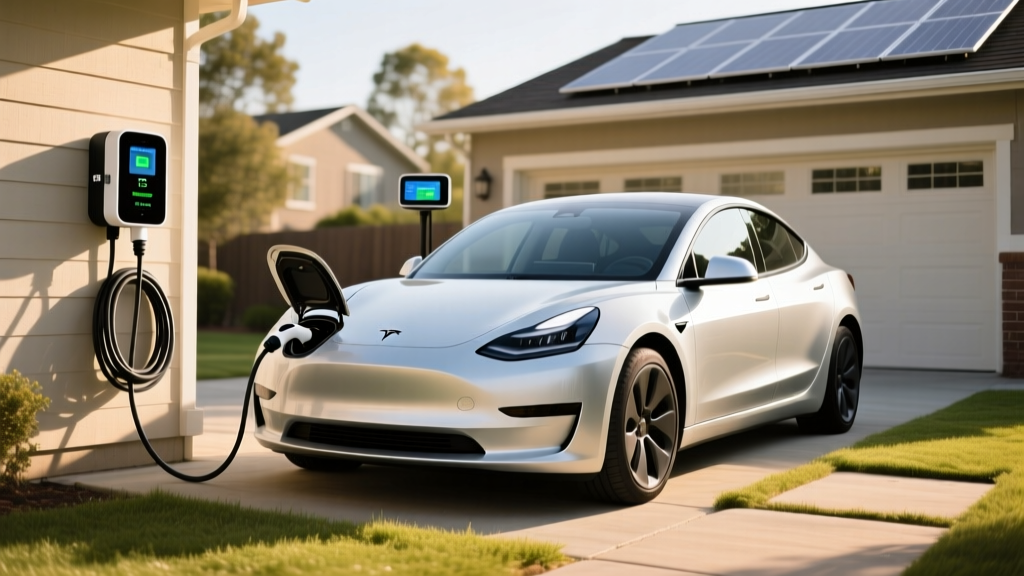
Most Level 2 home chargers require a 240V dedicated circuit, similar to what an electric dryer or oven uses. Common configurations:
- 32A circuit (7.7 kW continuous) — requires a 40A breaker (NEC requires 125% overhead for continuous loads)
- 40A circuit (9.6 kW continuous) — requires a 50A breaker
- 48A circuit (11.5 kW continuous) — requires a 60A breaker
- 80A circuit (19.2 kW continuous) — requires a 100A breaker; rare in residential, requires 200A+ service panel
Wire gauge depends on amperage and run length: 6 AWG copper for 40–50A circuits, 4 AWG for 60A, and 2 AWG for 80A runs. Your licensed electrician will determine exact requirements based on your panel's available capacity and the distance to the charger location.
Panel Upgrade Reality
Older homes — particularly those with 100A service — often lack the spare capacity for a 40–60A EV circuit. A licensed electrician will perform a load calculation per NEC Article 220. If your panel is near capacity, you may need:
- Service upgrade to 200A: $2,000–$5,000 depending on utility requirements
- Smart load-management device: $300–$800 installed — devices like the Emporia Smart Load Center or Span panel dynamically share capacity between EV charging and household loads, potentially avoiding a full panel upgrade
Installation Cost Breakdown
| Component | Low End | High End | Notes |
|---|---|---|---|
| Level 2 Charger (Equipment) | $300 | $750 | Varies by power output, cable length, smart features |
| Electrician Labor | $500 | $2,500 | Depends on run length, wall type, conduit needs |
| Electrical Permit | $50 | $300 | Required in most jurisdictions; varies by municipality |
| Panel Upgrade (if needed) | $2,000 | $5,000 | Only if existing service lacks capacity |
| Total (no panel upgrade) | $850 | $3,550 | Most homes fall in $1,200–$2,200 range |
| Total (with panel upgrade) | $2,850 | $8,550 | Older homes with 100A service |
Connector Compatibility: NACS, CCS, and CHAdeMO Explained
As of 2026, the North American EV connector landscape has consolidated significantly, but knowing what your vehicle uses still matters — especially for public charging.
| Connector | Form Factor | Brands Using It (New Vehicles) | Notes |
|---|---|---|---|
| NACS (J3400) | Compact, no latch | Tesla, Ford, GM, Rivian, Volvo, Polestar, Mercedes, Hyundai/Kia (2025+), most others | Now the dominant standard; grants access to Tesla Supercharger network |
| CCS1 (Combo) | Larger, latched | Legacy vehicles (2024 and earlier from most brands); Stellantis models | Adapters available to use NACS stations; networks still support CCS |
| CHAdeMO | Round, large | Nissan Leaf (legacy); no new US vehicles since ~2022 | Declining infrastructure; adapters limited |
If you own a CCS-equipped EV but want Tesla Supercharger access, a CCS-to-NACS adapter (such as the official Ford or Tesla adapter, ~$200–$250) unlocks the largest DC fast-charging network in North America. NACS-native vehicles need no adapter at Tesla stations and can use CCS stations with a NACS-to-CCS adapter (~$150–$200).
For home Level 2 charging, most chargers come with a J1772 connector (the Level 2 standard for non-Tesla). Tesla vehicles use a proprietary connector but include a J1772 adapter in the glovebox. Newer NACS-equipped vehicles from other brands may require a J1772-to-NACS adapter for some older public Level 2 stations.
Cost to Charge vs. Fueling: Per-Mile Economics
This is where the comparison to the 2005 supercharged Monte Carlo SS becomes illuminating. That car, with its 20 MPG combined rating and 17.5-gallon tank, costs roughly $52.50 to fill at $3.00/gallon — yielding a fuel cost of about $0.15 per mile (assuming regular unleaded; premium pushes it higher since the 3800 Series III supercharged engine recommends premium fuel).
| Scenario | Rate | Cost to Add 250 Miles | Cost Per Mile |
|---|---|---|---|
| Home Level 2 (off-peak utility rate) | $0.08–$0.12/kWh | $6.00–$9.00 | $0.024–$0.036 |
| Home Level 2 (standard residential avg) | $0.14–$0.18/kWh | $10.50–$13.50 | $0.042–$0.054 |
| Public Level 2 (network pricing) | $0.25–$0.40/kWh | $18.75–$30.00 | $0.075–$0.12 |
| DC Fast Charging (Electrify America, EVgo, etc.) | $0.35–$0.55/kWh | $26.25–$41.25 | $0.105–$0.165 |
| Tesla Supercharger (varies by location/time) | $0.25–$0.40/kWh | $18.75–$30.00 | $0.075–$0.12 |
| 2005 Monte Carlo SS (gas, $3.00/gal, 20 MPG) | $3.00/gal | $37.50 | $0.15 |
These numbers assume an EV efficiency of 3 miles per kWh (roughly 100 MPGe), which is typical for midsize crossovers like the Model Y, Ioniq 5, or Equinox EV. More efficient sedans (Lucid Air, Tesla Model 3) achieve 4+ mi/kWh, further reducing per-mile costs.
The takeaway: home charging on an off-peak rate costs roughly one-quarter to one-fifth of what you'd spend fueling the Monte Carlo SS. Even public DC fast charging at peak rates is often cheaper per mile than gasoline. However, if you rely exclusively on expensive public DCFC networks, your savings narrow considerably — making home charging access the critical economic variable.
Charging Time Examples: What 10–80% Looks Like for Common Battery Sizes
Charge times depend on battery capacity (kWh), peak charge rate (kW), and the charge curve — the way DC fast charging slows above ~50–60% state of charge to protect battery health. Peak kW numbers advertised by manufacturers are only sustained for a portion of the session.
- 60 kWh battery (e.g., base Hyundai Kona Electric, Nissan Arike): Level 2 at 7.7 kW takes ~7 hours (10–80%); DCFC at 100 kW peak takes ~28 minutes (10–80%)
- 75 kWh battery (e.g., Tesla Model Y LR, Ford Mustang Mach-E Extended Range): Level 2 at 11.5 kW takes ~5 hours (10–80%); DCFC at 250 kW peak takes ~18–22 minutes (10–80%)
- 85–100 kWh battery (e.g., Rivian R1T, GMC Sierra EV, Lucid Air): Level 2 at 11.5 kW takes ~6.5–7.5 hours (10–80%); DCFC at 250–320 kW peak takes ~22–30 minutes (10–80%)
For context, the 2005 Monte Carlo SS's gas tank refills in 3 minutes for 350 miles of range. The closest EV equivalent is an 800V-architecture vehicle (Hyundai Ioniq 5, Kia EV6, Porsche Taycan, Genesis GV60) on a 350 kW charger, which can add roughly 150–200 miles of range in 10–15 minutes under ideal conditions.
Recommended Home Level 2 Chargers: Equipment Picks
Emporia Vue Level 2 Charger
- Power Output: 48A (11.5 kW on 240V/60A circuit)
- Connector: J1772 (NACS adapter available)
- Cable Length: 24 ft
- Smart Features: Wi-Fi, app scheduling, solar integration, load management, energy monitoring
- Price: ~$399
- Best For: Budget-conscious buyers wanting full smart features and solar pairing
ChargePoint Home Flex
- Power Output: Up to 50A (12 kW) — adjustable via DIP switches
- Connector: J1772 (NACS version available 2025+)
- Cable Length: 23 ft
- Smart Features: Wi-Fi, app scheduling, Alexa integration, flexible amperage
- Price: ~$549
- Best For: Flexible amperage for homes with limited panel capacity
Tesla Wall Connector
- Power Output: 48A (11.5 kW on 240V/60A circuit)
- Connector: NACS native (J1772 adapter included for non-Tesla EVs)
- Cable Length: 24 ft
- Smart Features: Wi-Fi, OTA updates, power sharing (link multiple units), load management
- Price: ~$420
- Best For: Tesla owners or NACS-equipped households; cleanest integration
Grizzl-E Smart
- Power Output: 40A (9.6 kW on 240V/50A circuit)
- Connector: J1772
- Cable Length: 24 ft
- Smart Features: Bluetooth, app control, extreme cold rated (-40°F), rugged aluminum case
- Price: ~$449
- Best For: Cold climates, outdoor installs, durability priority
Safety, Electrical Code, and Installation Best Practices
EV charging involves sustained high-current draw — often for hours at a time. This makes code compliance and safety non-negotiable:
- Dedicated circuit: Your Level 2 charger must have its own breaker — no sharing with other appliances. NEC Article 625 governs EV charging specifically.
- GFCI protection: NEC 2020 and later require GFCI protection for all 120V and 240V receptacles used for EV charging in garages and outdoors. Hardwired installations may have different requirements — your electrician will determine compliance.
- Outdoor rating: If installing outside, ensure the charger carries a NEMA 4 (or IP65+) weatherproof rating. All chargers listed above meet outdoor standards.
- Permit and inspection: Most municipalities require an electrical permit and post-installation inspection. Skipping this risks insurance denial in the event of a fire and may violate local code.
- Cable management: Use a holster or cable organizer to prevent tripping hazards and connector damage. Never let the cable rest on the ground where vehicles can drive over it.
- Surge protection: Consider a whole-panel surge protective device (SPD), especially in areas with frequent lightning or grid instability. Cost: $200–$500 installed.
Frequently Asked Questions
How much does it cost to install a home EV charger?
A typical Level 2 home charger installation runs $1,200–$2,200 total (equipment, electrician labor, and permit) for homes with sufficient panel capacity. If your home needs a service panel upgrade from 100A to 200A, add $2,000–$5,000. The federal Alternative Fuel Vehicle Refueling Property Credit (IRS Form 8911) may cover up to 30% of costs, capped at $1,000, depending on your census tract and income.
How fast will each charging level add range?
Level 1 (120V standard outlet) adds roughly 3–5 miles of range per hour. Level 2 (240V) adds 12–75 miles per hour depending on amperage (32A to 80A). DC fast charging adds 150–1,200+ miles per hour at peak rates, though real sessions are measured in minutes (typically 18–30 minutes for a 10–80% charge).
Which connector or charger is compatible with my EV?
As of 2026, most new EVs sold in North America use the NACS (J3400) connector. Vehicles from 2024 and earlier mostly use CCS1. The Nissan Leaf uses CHAdeMO. Check your vehicle's charge port or owner's manual. For home Level 2 charging, nearly all EVs accept J1772 (or include an adapter). Adapters are available for cross-compatibility between networks.
How much does charging cost per mile vs. gas?
Home charging at average residential rates ($0.14–$0.18/kWh) costs roughly $0.04–$0.05 per mile for a typical EV. The 2005 supercharged Monte Carlo SS at 20 MPG and $3.00/gallon costs about $0.15 per mile. That's a 65–70% per-mile savings with home EV charging. Public DC fast charging at $0.40–$0.55/kWh narrows the gap to roughly $0.11–$0.17 per mile — comparable to or slightly above gas costs.
What electrical upgrades might I need?
If your home has a 200A service panel with available breaker slots, you likely need only a new 40–60A breaker and a wire run — no upgrade required. If you have 100A service or your panel is already near capacity (common in older homes, especially those with electric heating, dryers, and ranges), you may need a panel upgrade to 200A ($2,000–$5,000) or a smart load-management system ($300–$800) that dynamically limits charger draw when other appliances are running. Your electrician's load calculation per NEC Article 220 will determine this.
Sources: U.S. Department of Energy — Fuel Economy EV Technology, IRS Residential Clean Energy Credit, NFPA National Electrical Code (NEC).