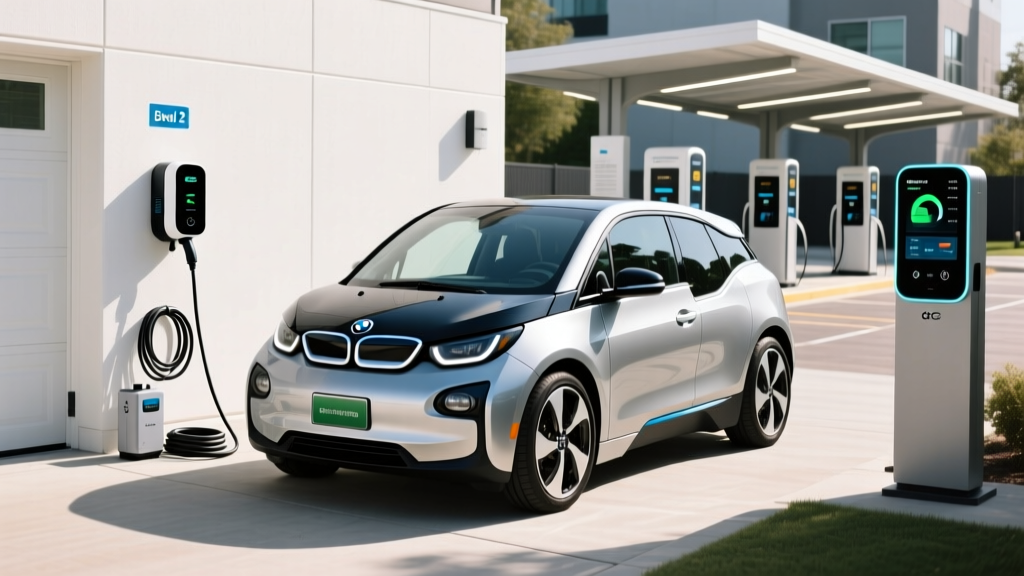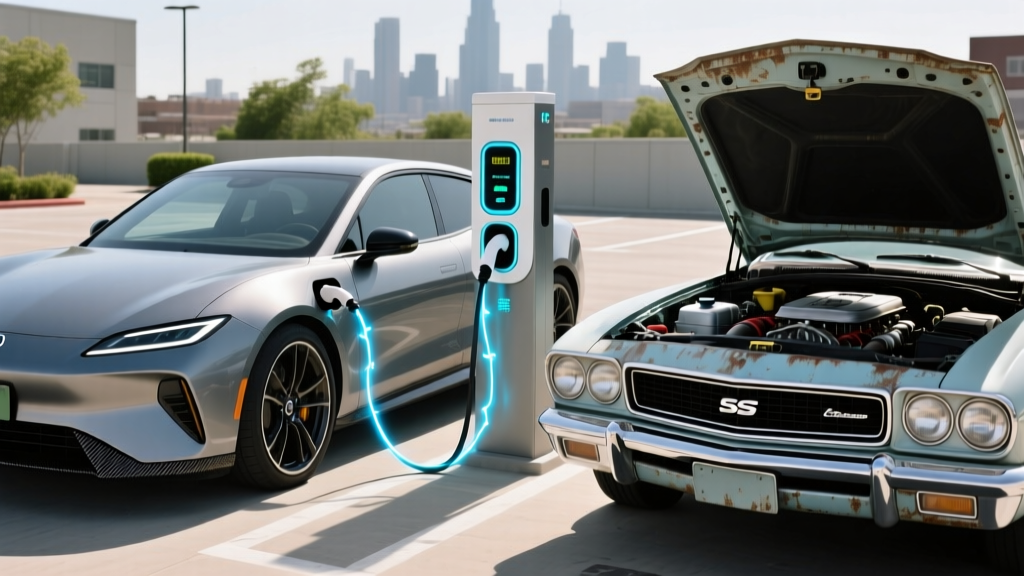
If you've ever owned a 2004 SS Monte Carlo supercharged, you know the ritual: 3.8-liter V6, Eaton M90 blower pushing 240 hp, and a thirst that averages around 18–20 MPG combined on premium. That car was a torque-rich cruiser from an era when "refueling" meant five minutes at a gas station and $35 to fill a 17-gallon tank. Today, electric vehicles flip that script — trading gas pumps for electrons, engine bays for battery packs, and mechanical superchargers for instant electric torque. But the real question for anyone cross-shopping the past and the future is this: what does it actually take to power an EV day-to-day, and how does that compare to the old supercharged life?
This guide breaks down EV charging the way we'd explain it to a Monte Carlo SS owner ready to go electric — exact speeds, real costs, home install realities, and the equipment worth your money in 2026.
How Fast Does Each Charging Level Add Range?
EV charging is split into three tiers. The critical distinction every new EV owner must internalize: kW (kilowatts) measures power — how fast energy flows into the car. kWh (kilowatt-hours) measures energy — the battery's total capacity, like gallons in a tank. Confusing them is the #1 mistake in EV literacy.
| Level | Voltage | Power (kW) | Miles Added/Hour | Best For |
|---|---|---|---|---|
| Level 1 | 120V AC | 1.2–1.9 kW | 3–5 mi/hr | Overnight top-ups, PHEVs |
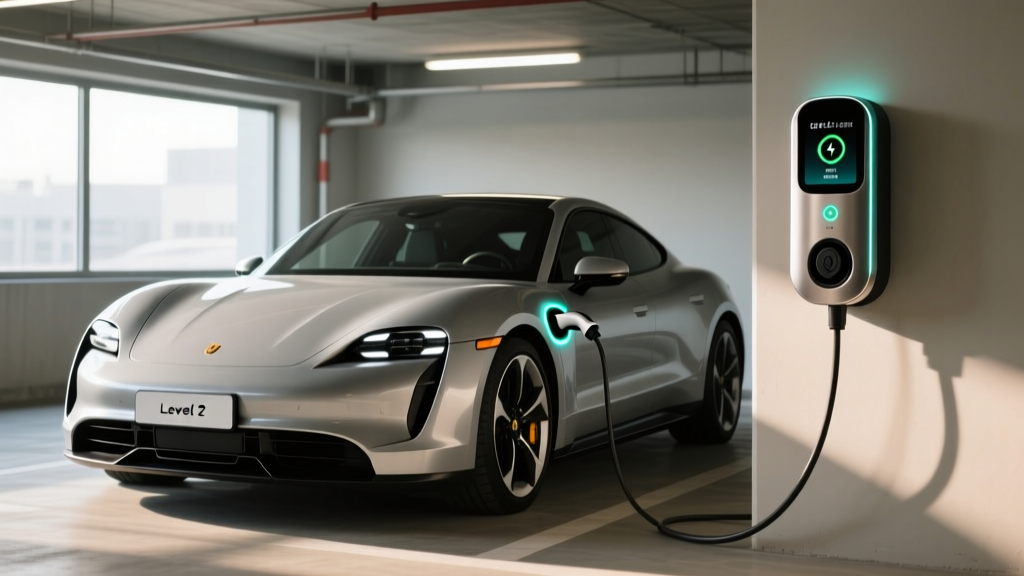
| Level 2 | 240V AC | 7.2–19.2 kW | 25–70 mi/hr | Daily home charging |
| DC Fast | 400–800V DC | 50–350 kW | 150–1,200+ mi/hr | Road trips, rapid top-ups |
A typical 2026 EV like the Hyundai Ioniq 5 (84 kWh battery, ~310 mi EPA range) adds roughly 30 miles per hour on a 7.2 kW Level 2 home charger — enough to replenish a daily commute overnight. On a 350 kW DC fast charger, the same car peaks at ~240 kW and hits 10–80% in about 18 minutes, though the charge curve tapers sharply above 80% to protect the NMC battery chemistry.
Your 2004 Monte Carlo SS could add ~350 miles of range in 5 minutes at a gas pump. No EV matches that yet. But the EV counterpoint is that most charging happens at home while you sleep — so "refueling time" only matters on road trips.
Home Charger Installation: Real Costs and Electrical Requirements
How much does it cost to install a home EV charger? The honest answer ranges from $500 to $3,500+ depending on your electrical panel, wiring distance, and local permit fees. Here's the breakdown:
| Component | Low End | High End | Notes |
|---|---|---|---|
| Level 2 Charger (Equipment) | $300 | $700 | 32A–48A smart chargers |
| Electrician Labor | $300 | $1,500 | Varies by run length, conduit |
| Permit / Inspection | $50 | $300 | Required in most jurisdictions |
| Panel Upgrade (if needed) | $1,500 | $4,000 | 100A → 200A service upgrade |
| Total (no panel upgrade) | $650 | $2,500 | Typical scenario |
| Total (with panel upgrade) | $2,150 | $6,500 | Older homes, 100A service |
Electrical requirements for a standard Level 2 install: a dedicated 240V circuit, typically 40A or 50A (supporting a 32A or 40A continuous charger load, per NEC 80% rule). The circuit needs a NEMA 14-50 outlet or a hardwired connection — hardwired is preferred for 48A+ chargers since NEMA 14-50 is rated for 50A max.
Panel upgrade gotcha: Homes built before 2000 — including the era when your 2004 SS Monte Carlo supercharged rolled off the line — often have 100A or 150A service. Adding a 40A EV circuit may push total load beyond 80% of panel capacity, triggering a utility-mandated upgrade to 200A. Budget for this possibility before committing to a charger.
Safety and code considerations: Your install should include a GFCI breaker (required by NEC 2020+ for garage outlets), an outdoor-rated (NEMA 4) enclosure if mounting outside, and a dedicated circuit — never share with a dryer or HVAC. Always use a licensed electrician and pull a permit; unpermitted work can void home insurance claims.
Which Connector Is Compatible with My EV?
The connector landscape consolidated heavily between 2023 and 2026. Here's where each brand stands:
| Connector | Brands Using It (2026) | Adapter Needed? |
|---|---|---|
| NACS (Tesla / J3400) | Tesla, Ford, GM, Rivian, Volvo, Polestar, Hyundai, Kia, BMW, Mercedes | None for new EVs; CCS→NACS adapters available (~$200) |
| CCS1 | Legacy models (pre-2025 VW ID.4, some Stellantis) | NACS→CCS adapter for Supercharger access |
| CHAdeMO | Nissan Leaf (discontinued 2025), older Mitsubishi | Limited network; no viable adapter to NACS |
For any new EV purchased in 2026, NACS is the de facto standard. If you're buying a used EV with CCS1, a Tesla NACS adapter or third-party equivalent unlocks Supercharger access — the most reliable DC fast-charging network in North America.
Cost to Charge per Mile vs. Gas: The Supercharged Monte Carlo Comparison
Let's put real numbers against the 2004 SS Monte Carlo supercharged. That car's 3.8L supercharged V6 averages about 19 MPG combined (per fueleconomy.gov historical data). At $3.80/gallon for premium (required for the supercharged engine), fuel costs roughly $0.20 per mile.
| Scenario | $/kWh | EV Efficiency (kWh/100mi) | $/Mile | vs. Monte Carlo SS |
|---|---|---|---|---|
| Home Off-Peak (utility rate) | $0.08–$0.12 | 28 kWh/100mi | $0.02–$0.03 | 85% cheaper |
| Home Standard Rate | $0.15 | 28 kWh/100mi | $0.04 | 80% cheaper |
| Public Level 2 (ChargePoint, etc.) | $0.25–$0.40 | 28 kWh/100mi | $0.07–$0.11 | 45–65% cheaper |
| DC Fast (Electrify America, EA Pass) | $0.35–$0.55 | 28 kWh/100mi | $0.10–$0.15 | 25–50% cheaper |
| 2004 Monte Carlo SS (premium gas) | $3.80/gal | 19 MPG | $0.20 | Baseline |
At home on off-peak rates, an EV costs about 2–3 cents per mile — an 85% savings over the Monte Carlo SS's supercharged appetite. Even on the most expensive DC fast chargers, you're still spending less per mile than premium gas. Over 15,000 miles/year, the home-charging EV saves roughly $2,500–$2,700 annually in fuel alone.
The caveat: if you rely exclusively on public DC fast charging in a high-cost market (California, Northeast), your per-mile cost can creep to $0.12–$0.15 — still cheaper than gas, but the gap narrows significantly. Home charging access is the single biggest economic variable in EV ownership.
Charging Time Examples: What to Expect with Common Battery Sizes
Real-world charging times depend on battery size (kWh), charger power (kW), and the charge curve. Peak kW ratings are not sustained — batteries taper draw above ~80% State of Charge to prevent thermal stress.
| Battery Size | Level 2 (11.5 kW) | DC Fast 150 kW | DC Fast 350 kW (peak ~240 kW) |
|---|---|---|---|
| 60 kWh (e.g., base Tesla Model 3 RWD, LFP) | ~5.5 hrs (0–100%) | 10–80%: ~28 min | 10–80%: ~22 min |
| 84 kWh (e.g., Ioniq 5, NMC) | ~7.5 hrs (0–100%) | 10–80%: ~35 min | 10–80%: ~18 min |
| 100 kWh (e.g., F-150 Lightning Ext. Range) | ~9 hrs (0–100%) | 10–80%: ~42 min | 10–80%: ~28 min |
| 131 kWh (e.g., F-150 Lightning Max) | ~12 hrs (0–100%) | 10–80%: ~55 min | 10–80%: ~38 min |
For context, your Monte Carlo SS's 17-gallon tank at 19 MPG gave about 323 miles of range. An 84 kWh EV at 28 kWh/100mi delivers ~300 miles EPA — but expect 250–270 miles in real-world highway driving, and 20–30% less in sub-freezing cold due to battery chemistry limitations and cabin heating load.
Equipment Recommendations: Level 2 Chargers Worth Buying in 2026
ChargePoint Home Flex (NACS)
- Power: Up to 12 kW (50A circuit, 40A continuous)
- Connector: NACS (J3400), CCS1 version also available
- Cable: 23 ft
- Smart features: Wi-Fi, app scheduling, Alexa, energy tracking
- Price: ~$550
- Best for: Most homes with 50A circuits; excellent app and reliability
Wallbox Pulsar Max
- Power: Up to 11.5 kW (48A continuous)
- Connector: NACS (2025+ models), CCS1 legacy
- Cable: 25 ft
- Smart features: Wi-Fi + Bluetooth, Power Sharing (dual-install), solar integration
- Price: ~$500
- Best for: Solar homes, tight budgets, dual-EV garages
Tesla Wall Connector (NACS)
- Power: Up to 11.5 kW (48A continuous, hardwired 60A circuit)
- Connector: NACS native; J1772 adapter included for non-Tesla
- Cable: 24 ft
- Smart features: Wi-Fi, OTA updates, Power Sharing, vehicle integration
- Price: ~$450
- Best for: Tesla owners; cleanest integration, best value at 48A
Emporia Level 2 Smart Charger
- Power: Up to 11.5 kW (48A)
- Connector: NACS and J1772 versions
- Cable: 24 ft
- Smart features: Real-time energy monitoring, solar-aware charging, circuit-breaker-level panel monitoring
- Price: ~$400
- Best for: Data-driven owners; pairs with Emporia Vue panel monitor to avoid panel upgrades
For any 2026 EV purchase, buy a NACS-native charger. If you own a used CCS1 vehicle, the J1772/CCS1 versions remain compatible — just plan for an eventual adapter or vehicle upgrade.
Federal Tax Credit and Incentives for Home Charging
The IRS §30D credit applies to the vehicle, but a separate provision — the Alternative Fuel Vehicle Refueling Property Credit (§30C) — covers up to 30% of home charger equipment and installation costs, capped at $1,000. This credit is available through 2032 but requires the charger to be installed at your primary residence in a qualifying census tract (per irs.gov guidance). Eligibility depends on income and location — consult a tax professional before claiming.
Many utilities also offer rebates of $200–$500 for Level 2 charger installations, and some provide free off-peak charging plans that drop rates to $0.05–$0.08/kWh. Check your local utility's EV program before installing.
The Ownership Math: Monte Carlo SS vs. Modern EV Over 5 Years
To put the 2004 SS Monte Carlo supercharged in full perspective against a 2026 EV like the Tesla Model 3 Long Range (363 mi EPA, 25 kWh/100mi):
| Category | 2004 Monte Carlo SS | 2026 Tesla Model 3 LR |
|---|---|---|
| Fuel/Energy Cost (15K mi/yr, 5 yrs) | ~$15,000 (premium gas) | ~$2,250 (home off-peak) |
| Maintenance (5 yrs) | ~$3,500 (oil, belts, supercharger coupler, trans) | ~$800 (tires, cabin filter, wipers) |
| Insurance (avg, 5 yrs) | ~$6,000 | ~$8,500 |
| Home Charger Install | N/A | ~$1,500 (one-time) |
| 5-Year Operating Total | ~$24,500 | ~$13,050 |
The EV saves roughly $11,000 over five years in operating costs — even accounting for higher insurance premiums and the one-time charger install. The Monte Carlo SS's supercharged charm costs real money at the pump and the shop.
Frequently Asked Questions
How much does it cost to install a home EV charger?
Between $650 and $2,500 for a typical Level 2 install (equipment + electrician + permit). If your home needs a 200A panel upgrade, add $1,500–$4,000. Older homes with 100A service are the most likely to need this.
How fast will each charging level add range?
Level 1 (120V): 3–5 miles per hour. Level 2 (240V): 25–70 miles per hour depending on kW. DC fast charging: 150–1,200+ miles per hour at peak, though the charge curve tapers above 80% SoC.
Which connector/charger is compatible with my EV?
For 2026 models, nearly all new EVs use NACS (J3400). Older CCS1 vehicles need an adapter for Tesla Supercharger access. CHAdeMO (Nissan Leaf) is effectively discontinued with no upgrade path. Match your charger connector to your vehicle's port.
How much does charging cost per mile vs. gas?
Home charging on off-peak rates costs $0.02–$0.03/mile. Public DC fast charging runs $0.10–$0.15/mile. A 2004 Monte Carlo SS supercharged on premium gas costs about $0.20/mile. Home-charged EVs save 80–85% per mile.
What electrical upgrades might I need?
A dedicated 240V/40A or 50A circuit is standard. Homes with 100A panels may need a service upgrade to 200A. If the wiring run from panel to garage exceeds 50 feet, expect higher conduit and copper costs. A licensed electrician can perform a load calculation to determine if your panel has headroom.
Can I charge on a regular 120V outlet?
Yes — Level 1 charging on a standard 120V outlet adds 3–5 miles per hour. This works for PHEVs with small batteries or BEVs driven under 30 miles/day. For anything more, a 240V Level 2 install is strongly recommended.