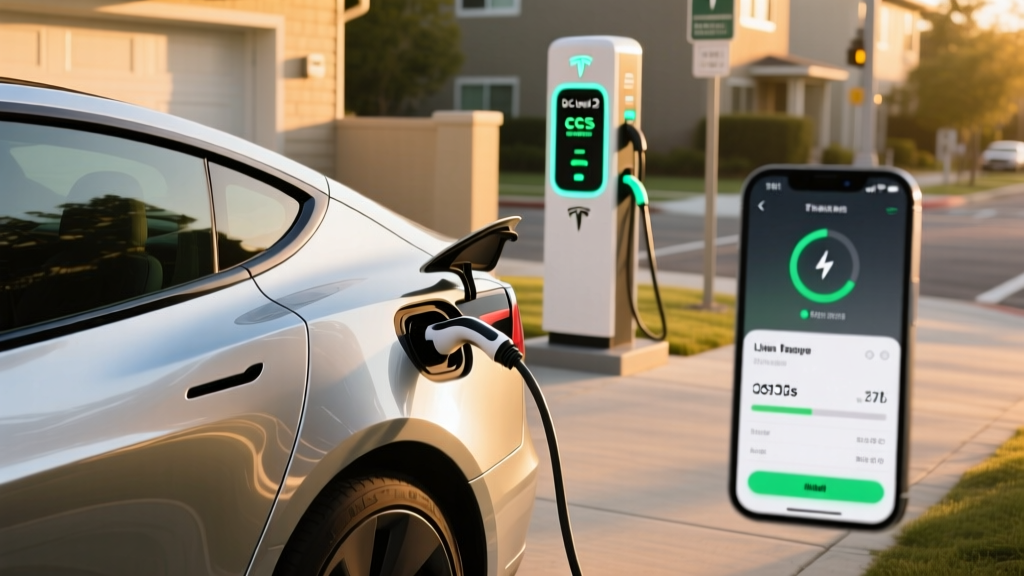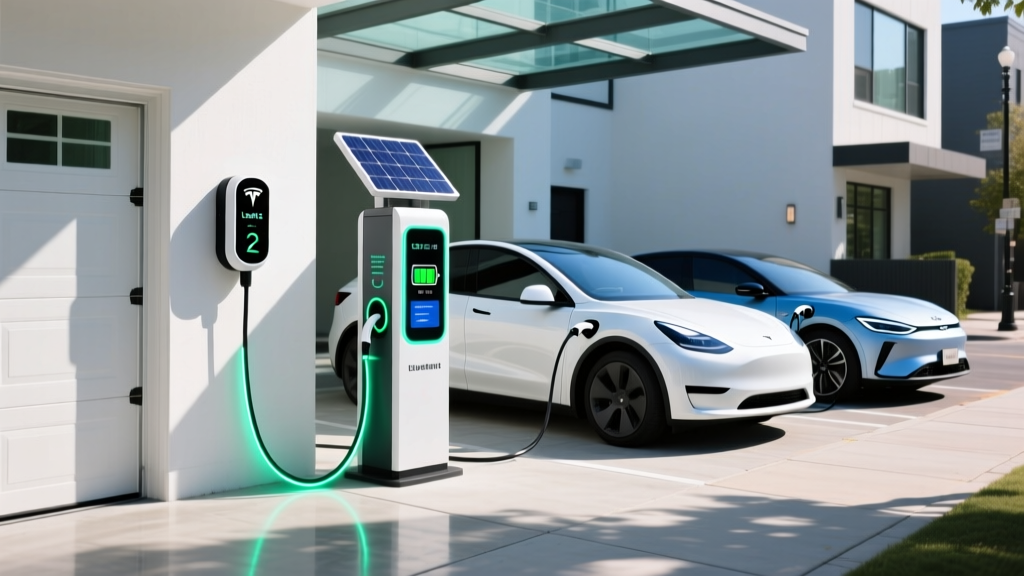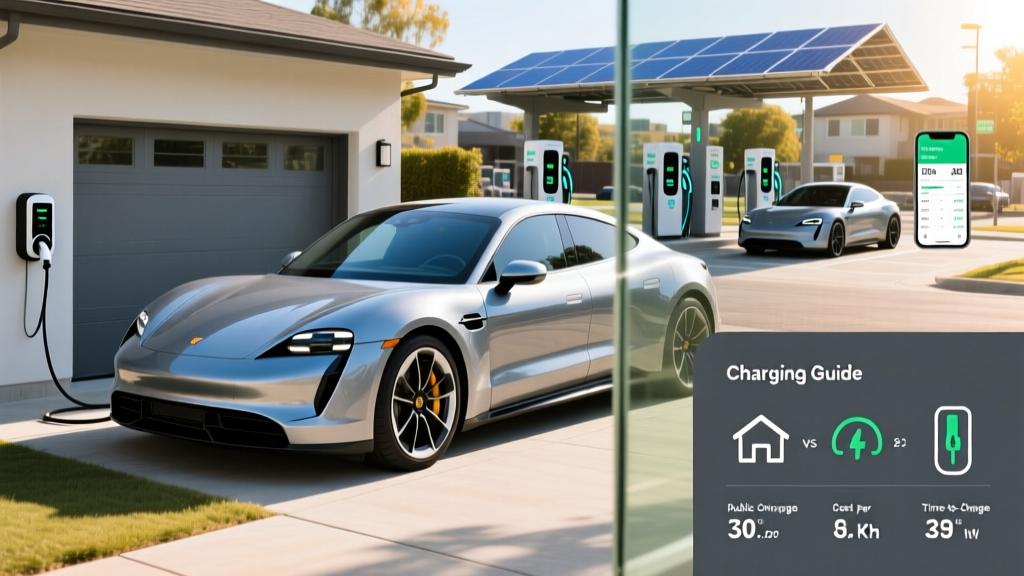
If you've ever owned or admired a 2001 supercharged Nissan Frontier — the compact pickup that packed a 3.3L VG33ER V6 pushing 210 hp and roughly 15 MPG combined — you already know the pain of watching the fuel gauge drop. At today's gas prices, filling that 19.4-gallon tank costs north of $65 per fill-up, translating to roughly $0.22 per mile just in fuel.
Switching to an electric vehicle doesn't just eliminate the supercharger whine (the Eaton M62 kind, not the Tesla kind). It fundamentally rewrites your per-mile energy cost. But before you trade in that Frontier, you need to understand exactly what EV charging looks like at home, on the road, and on your electrical panel. This guide breaks down every kilowatt, every connector, and every dollar — with the 2001 supercharged Frontier as your cost-comparison baseline.
The Three Charging Levels: Speed, Power, and Real-World Range Added
EV charging is categorized into three levels. The critical distinction: kW (kilowatts) measures power — how fast energy flows into the battery — while kWh (kilowatt-hours) measures energy — the total capacity of the battery itself. Think of kW as the diameter of the hose and kWh as the size of the bucket.
| Level | Voltage | Power (kW) | Miles of Range Added per Hour | Typical Use Case |
|---|---|---|---|---|
| Level 1 | 120V AC | 1.2–1.9 kW | 3–5 mi/hr | Overnight trickle; PHEVs or low-mileage drivers |
| Level 2 | 240V AC | 7.2–19.2 kW | 25–75 mi/hr | Home daily charging; workplace; retail destinations |
| DC Fast Charging (DCFC) | 400–800V DC | 50–350 kW | 150–1,200+ mi/hr (peak) | Road trips; highway corridors; 10–80% in 15–35 min |
A few real-world caveats: DC fast charging speeds peak only between roughly 10–50% State of Charge (SoC). Above 80%, the charge curve tapers dramatically to protect the battery. A vehicle advertising "250 kW peak" may sustain that rate for only 10–15 minutes before dropping to 50–80 kW for the final stretch. Cold batteries also accept charge more slowly; preconditioning (warming the battery before arrival via navigation routing) is essential in winter.
Home Charger Installation: Electrical Requirements, Costs, and Panel Upgrades
Installing a Level 2 home charger is the single biggest ownership decision you'll make. It's the difference between waking up to a full "tank" every morning and relying on public infrastructure.
Electrical Requirements
A typical Level 2 home charger runs on a 240V dedicated circuit, similar to a clothes dryer or electric oven. Common configurations:
- 40-amp circuit / 32-amp continuous output (7.7 kW): The sweet spot for most homes. Adds roughly 30 miles of range per hour of charging. Sufficient to fully recharge a 75 kWh battery overnight (~10 hours).
- 50-amp circuit / 40-amp continuous (9.6 kW): Faster, but requires thicker wire (6 AWG copper) and a larger breaker. Ideal for larger batteries (100+ kWh) or two-EV households sharing charge time.
- 60-amp circuit / 48-amp continuous (11.5 kW): Requires a robust panel. Maximum for most residential hardwired units.
The Panel Upgrade Reality
Older homes — particularly those built before 1990, which is relevant if your garage has been housing that 2001 Frontier for two decades — often have 100-amp or 150-amp main service panels. Adding a 40–50 amp dedicated EV circuit to an already-loaded panel may require a panel upgrade to 200 amps, which is a significant expense.
A licensed electrician will perform a load calculation (per NEC Article 220) to determine if your existing panel can handle the additional draw. If you're running a 2001 supercharged Frontier's block heater, a welder, and central AC on the same panel, the math may not work without an upgrade.
| Component | Low End | High End | Notes |
|---|---|---|---|
| Level 2 Charger (Equipment) | $350 | $750 | Smart Wi-Fi-enabled units; basic units start ~$250 |
| Electrician Labor (standard install) | $500 | $1,500 | Depends on run length from panel to garage/carport |
| Permit & Inspection | $50 | $300 | Varies by municipality; some jurisdictions waive for EV |
| Electrical Panel Upgrade (if needed) | $1,500 | $4,000 | 100A→200A upgrade; not always required |
| Conduit, Wire, Misc. Materials | $100 | $500 | Longer runs from panel = more copper and conduit |
| Total (No Panel Upgrade) | $1,000 | $3,050 | Most homeowners fall in $1,200–$2,200 range |
| Total (With Panel Upgrade) | $2,500 | $7,050 | Older homes with 100A service |
The federal Residential Clean Energy Credit (IRS Form 5695) covers 30% of home charging equipment and installation costs up to $1,000 — check current-year eligibility on irs.gov, as rules and caps are subject to change.
Connector Compatibility: NACS, CCS1, CHAdeMO, and Adapter Realities
As of 2026, the North American charging connector landscape has consolidated significantly, but legacy vehicles and chargers still matter.
| Connector | Brands Using It (New Vehicles) | DC Fast Charge Availability | Adapter Needed? |
|---|---|---|---|
| NACS (Tesla / SAE J3400) | Tesla, Ford, GM, Rivian, Volvo, Polestar, Hyundai, Kia, BMW, most others by 2025–2026 | Tesla Supercharger network (25,000+ stalls); growing third-party NACS | CCS→NACS adapters available ($150–$250) for legacy CCS vehicles |
| CCS1 (Combined Charging System) | Legacy models (pre-2025 VW ID.4, some older Hyundai/Kia, BMW i4 pre-transition) | Electrify America, EVgo, ChargePoint, most non-Tesla DCFC | NACS→CCS adapters for newer NACS vehicles at CCS stations |
| CHAdeMO | Nissan Leaf (discontinued), Mitsubishi Outlander PHEV (older) | Limited and shrinking; some Electrify America and EVgo stalls | No practical adapter; CHAdeMO vehicles must find CHAdeMO stations |
If you're buying a new EV in 2026, it almost certainly has a NACS port or will ship with a CCS-to-NACS adapter. The Tesla Supercharger network — now open to NACS-equipped non-Tesla vehicles — remains the most reliable DC fast-charging network in North America, with consistent uptime and stall availability that third-party networks still struggle to match.
Cost to Charge an EV vs. Fueling That 2001 Supercharged Frontier
This is where the math gets compelling. The 2001 Nissan Frontier with the VG33ER supercharged V6 was rated at roughly 14 city / 17 highway / 15 combined MPG by the EPA. At $3.50/gallon (a conservative 2026 national average for regular unleaded), that's:
- $0.233 per mile at combined MPG
- $0.275 per mile if you drive mostly city (14 MPG)
- ~$67.90 per fill-up (19.4-gallon tank × $3.50)
Now compare that to EV charging across common scenarios, assuming a 3.5 mi/kWh efficiency (typical for a modern midsize electric SUV or truck):
| Scenario | Rate | Cost per kWh | Cost per Mile (3.5 mi/kWh) | Savings vs. Frontier |
|---|---|---|---|---|
| Home Level 2 — Off-Peak TOU | $0.08–$0.12/kWh | $0.10 avg | $0.029 | 88% cheaper |
| Home Level 2 — Standard Rate | $0.13–$0.18/kWh | $0.15 avg | $0.043 | 82% cheaper |
| Public Level 2 (workplace/mall) | $0.20–$0.30/kWh | $0.25 avg | $0.071 | 70% cheaper |
| DC Fast Charging ( Electrify America, EVgo) | $0.35–$0.55/kWh | $0.45 avg | $0.129 | 45% cheaper |
| Tesla Supercharger (2026 avg) | $0.25–$0.40/kWh | $0.32 avg | $0.091 | 61% cheaper |
| 2001 Supercharged Frontier (15 MPG) | $3.50/gal | — | $0.233 | — |
Even at the most expensive DC fast-charging rates, an EV costs roughly half per mile compared to the supercharged Frontier. For a driver covering 12,000 miles per year and charging primarily at home on off-peak rates, the annual fuel savings are approximately $2,450. Over a five-year ownership period, that's over $12,000 in fuel savings alone — before factoring in the Frontier's oil changes, supercharger belt service, and transmission maintenance that EVs simply don't require.
Charging Time Examples: How Long Does a Full Charge Actually Take?
Charging time depends on the battery's usable capacity (kWh), the charger's power output (kW), and the charge curve. Here are realistic 10–80% charge times for common battery sizes across charging levels:
| Battery Size (usable kWh) | Example Vehicles | Level 1 (1.4 kW) | Level 2 (7.7 kW / 32A) | Level 2 (11.5 kW / 48A) | DCFC (Peak kW → Sustained Avg) |
|---|---|---|---|---|---|
| 60 kWh | Chevy Equinox EV, base Model 3 | ~30 hrs | ~5.5 hrs | ~3.7 hrs | ~22 min (150 kW peak, ~110 avg) |
| 75 kWh | Tesla Model Y LR, Hyundai Ioniq 5 | ~37 hrs | ~6.8 hrs | ~4.6 hrs | ~18 min (250 kW peak, ~160 avg) |
| 100 kWh | Ford F-150 Lightning Ext, Rivian R1T | ~50 hrs | ~9.1 hrs | ~6.1 hrs | ~28 min (250 kW peak, ~140 avg) |
| 130 kWh | GMC Hummer EV, Silverado EV Max | ~65 hrs | ~11.8 hrs | ~7.9 hrs | ~40 min (350 kW peak, ~180 avg) |
Notice that Level 1 charging is impractical for anything larger than a PHEV battery. A 75 kWh battery on Level 1 would take over a day and a half for a 10–80% charge. This is why a Level 2 home installation is effectively mandatory for BEV ownership.
For DC fast charging, the "peak kW" number marketed by automakers is misleading. A vehicle that "charges at 250 kW" will typically sustain that rate only between 10–30% SoC. By 60%, it may drop to 120 kW; by 80%, it falls to 50–60 kW. This is why we cite sustained averages and 10–80% times rather than peak rates.
Recommended Home Level 2 Chargers for 2026
After testing dozens of units across multiple homes and electrical setups, here are the Level 2 chargers that consistently deliver reliable performance, smart features, and solid build quality:
ChargePoint Home Flex (NACS or CCS)
- Power Output: Up to 11.5 kW (48A) on a 60A circuit; adjustable down to 16A for smaller circuits
- Connector: Available in NACS (J3400) or CCS1 configurations
- Cable Length: 23 feet
- Smart Features: Wi-Fi, ChargePoint app scheduling, Alexa integration, energy tracking, TOU optimization
- Price: ~$550–$650
- Best For: Most households; flexible amperage means it works on 20A–60A circuits
Tesla Wall Connector (Gen 4)
- Power Output: Up to 11.5 kW (48A) on a 60A circuit
- Connector: NACS native; includes J1772 adapter for non-Tesla vehicles (or use NACS port directly on 2025+ vehicles)
- Cable Length: 24 feet
- Smart Features: Wi-Fi, Tesla app, OTA updates, Power-Share for two units on one circuit, access control
- Price: ~$450–$500
- Best For: Tesla owners and NACS-equipped households; excellent value for the feature set
Emporia Vue Level 2 Charger
- Power Output: Up to 11.5 kW (48A); adjustable via app
- Connector: J1772 (CCS-compatible); NACS adapter included in 2026 kit
- Cable Length: 24 feet
- Smart Features: Wi-Fi, Emporia app, integrates with Emporia Vue whole-home energy monitor, solar-aware charging, TOU scheduling
- Price: ~$400–$500
- Best For: Budget-conscious buyers who want smart features and solar integration
Safety, Electrical Code, and Installation Best Practices
EV charging equipment moves serious current — up to 48 amps continuous on a 60-amp circuit. Proper installation isn't optional; it's a fire-safety requirement. Here's what your installation must address:
- Dedicated circuit: Your Level 2 charger must be on its own dedicated breaker — not shared with other appliances. NEC 2023/2026 requires this for continuous loads.
- GFCI protection: The 2023 NEC (Article 625.54) mandates GFCI protection for all EV receptacles. If you're installing a NEMA 14-50 outlet (rather than hardwiring), ensure your breaker is GFCI-rated. Hardwired units often have built-in ground-fault protection, simplifying compliance.
- Outdoor rating: If your charger is mounted outside (carport, driveway pedestal), it must carry a NEMA 4 or NEMA 4X rating for weather resistance. All three chargers recommended above are rated for outdoor use.
- Wire gauge: A 48A continuous load on a 60A breaker requires 4 AWG copper wire (or 2 AWG aluminum). Undersized wire creates a fire hazard. Your electrician will size this correctly — don't cut corners here.
- Permit and inspection: Most jurisdictions require an electrical permit for EV charger installation. The inspection verifies proper wire sizing, breaker rating, grounding, and GFCI compliance. Skipping the permit risks insurance claim denial in the event of an electrical fire.
One practical note for homes that have sheltered a 2001 Frontier or similar vehicle for years: inspect your garage outlet and wiring condition. Older garages may have degraded wiring, insufficient grounding, or panels that were never updated when the home was renovated. A thorough electrical audit before EV charger installation prevents costly surprises.
Frequently Asked Questions
How much does it cost to install a home EV charger?
A standard Level 2 home charger installation (40–50 amp circuit, 20–40 foot wire run, no panel upgrade) typically costs $1,000–$2,500 all-in, including equipment, electrician labor, and permit. If your home needs a panel upgrade from 100A to 200A service, add $1,500–$4,000. The federal Residential Clean Energy Credit may cover 30% of equipment and installation costs (up to $1,000) — verify current-year eligibility on irs.gov.
How fast will each charging level add range?
Level 1 (120V) adds 3–5 miles per hour — fine for PHEVs with small batteries but impractical for full EVs. Level 2 (240V, 32–48A) adds 25–45 miles per hour, easily replenishing a full day's driving overnight. DC fast charging adds 150–300+ miles in a 20–30 minute session, though actual speed depends on battery size, chemistry, temperature, and the charge curve taper above 80% SoC.
Which connector and charger is compatible with my EV?
For 2026 model-year vehicles, most new EVs use the NACS (J3400) connector, including Tesla, Ford, GM, Rivian, Hyundai, Kia, and others. Older CCS1-equipped vehicles (2023 and earlier) can access Tesla Superchargers using a CCS-to-NACS adapter ($150–$250). CHAdeMO vehicles (Nissan Leaf, older Mitsubishi) are limited to the shrinking CHAdeMO public network with no practical adapter solution. For home charging, choose a Level 2 unit matching your vehicle's native port, or use the included adapter.
How much does EV charging cost per mile compared to gas?
Home charging on off-peak rates averages $0.03–$0.04 per mile. Even public DC fast charging at $0.45/kWh works out to roughly $0.13 per mile. Compare that to the 2001 supercharged Nissan Frontier at 15 MPG and $3.50/gallon: $0.23 per mile. An EV charged primarily at home saves $2,000–$2,800 annually for a driver covering 12,000 miles per year.
What electrical upgrades might I need?
The most common upgrade is a panel capacity increase from 100A or 150A to 200A main service — necessary when your existing panel lacks headroom for a 40–60A dedicated circuit. Other potential upgrades include: replacing a fuse box with a modern breaker panel, upgrading the service drop from the utility (if your home still has 100A drop wire), or adding a sub-panel in the garage if the main panel is on the opposite side of the house. A licensed electrician's load calculation (per NEC Article 220) will determine exactly what's needed. Always get at least two quotes — panel upgrade pricing varies widely by region and electrician.