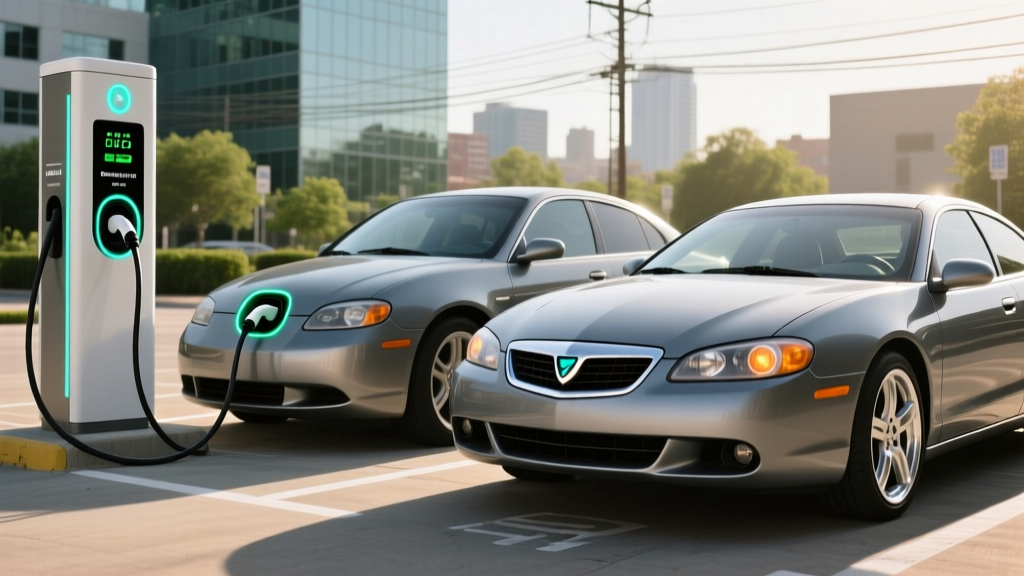
If you still own—or recently drove—a 2001 Pontiac Grand Prix GTP Supercharged, you know its 3.8L supercharged V6 (240 hp, 280 lb-ft) gets roughly 18 MPG city and 27 MPG highway per EPA estimates. For many longtime owners now researching an electric vehicle, the biggest question isn't just range—it's how home charging setup, public charging costs, and per-mile economics compare to filling that 17.5-gallon tank with premium fuel. This guide covers every EV charging fundamental through the lens of what you're leaving behind.
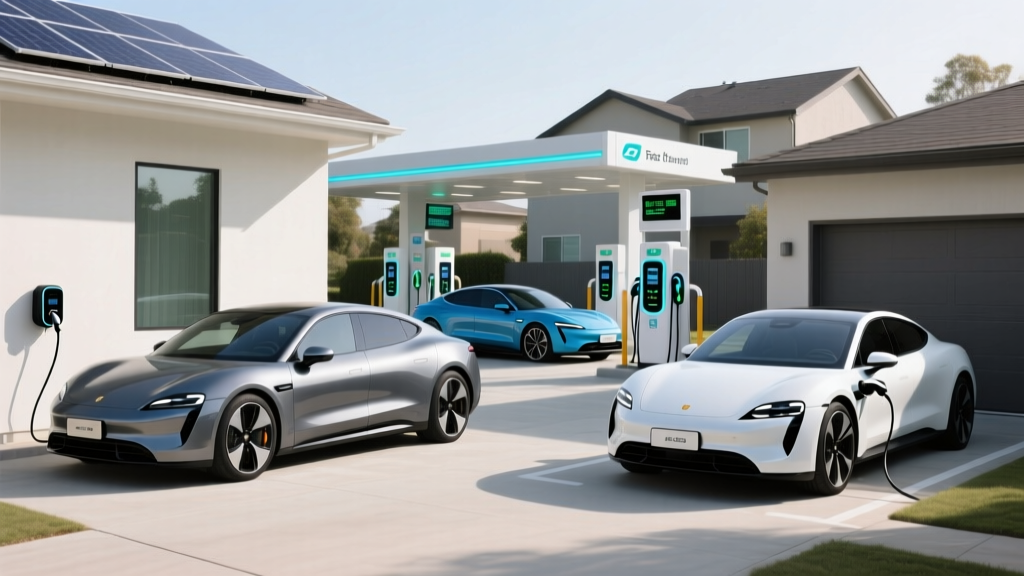
Charging Levels Explained: How Fast Will Each Add Range?
Before comparing costs, let's nail down the three charging tiers. Note that kW (kilowatts) measures power—the rate of energy delivery—while kWh (kilowatt-hours) measures energy capacity, analogous to gallons in a fuel tank. Confusing these is the single most common EV mistake.
| Level | Voltage | Power (kW) | Miles of Range/Hour | Best For |
|---|---|---|---|---|
| Level 1 (120V) | 120V AC | 1.2–1.9 kW | 3–5 mi/hr | Overnight top-ups, PHEVs, low daily mileage |
| Level 2 (240V) | 240V AC | 7.2–19.2 kW | 25–70 mi/hr | Daily home charging, overnight full recharge |
| DC Fast Charge | 400–800V DC | 50–350 kW | 150–1,200 mi/hr (peak) | Road trips, quick 10–80% top-ups |
For a 75 kWh battery pack (typical mid-size EV like the Hyundai Ioniq 5 or Tesla Model Y), a Level 2 charger at 11.5 kW refills 10–80% in roughly 5–6 hours overnight. A 150 kW DC fast charger hits 10–80% in approximately 25–30 minutes, though charging curves taper significantly above 80% SoC—peak kW is never sustained across the full session.
Home Charger Installation: Electrical Requirements and Costs
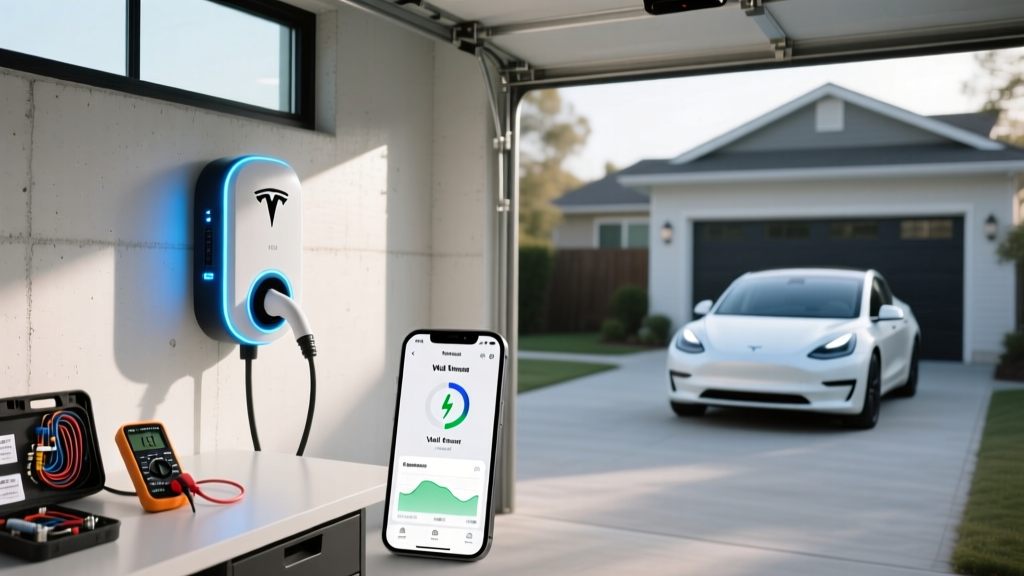
The Grand Prix GTP never needed anything beyond a gas station. An EV requires a dedicated 240V circuit, and installation costs vary widely depending on your home's electrical panel.
Typical requirements for a 48A Level 2 home charger:
- Circuit: 60A dedicated breaker (EVSE rated at 48A continuous load requires a circuit rated 125% higher per NEC Article 625)
- Wire: 6 AWG copper (THHN in conduit or NM-B), run from panel to charger location
- Panel capacity: Minimum 100A service; 200A preferred for homes with electric HVAC, dryer, and EVSE simultaneously
- GFCI protection: Required for outdoor receptacles per NEC 2023; hardwired EVSE units have internal ground-fault protection
- Permit: Most jurisdictions require an electrical permit ($50–$200) and final inspection
| Component | Low End | High End | Notes |
|---|---|---|---|
| Level 2 EVSE (40–48A) | $350 | $750 | Smart WiFi models cost more |
| Electrician labor (standard install) | $400 | $1,200 | Depends on panel-to-charger distance |
| Electrical permit | $50 | $200 | Varies by municipality |
| Panel upgrade (100A → 200A) | $1,500 | $4,000 | Only if existing panel lacks capacity |
| Total (no panel upgrade) | $800 | $2,150 | Most homes with 200A service |
| Total (with panel upgrade) | $2,300 | $6,150 | Older homes with 100A service |
Panel upgrade gotcha: If your home was built before 1990 with 100A service—which is common in neighborhoods where a 2001 Grand Prix would have been bought new—you'll likely need a panel upgrade to safely add a 60A EV circuit alongside existing loads. Budget for this possibility before purchasing equipment.
Connector Compatibility: NACS, CCS1, and CHAdeMO
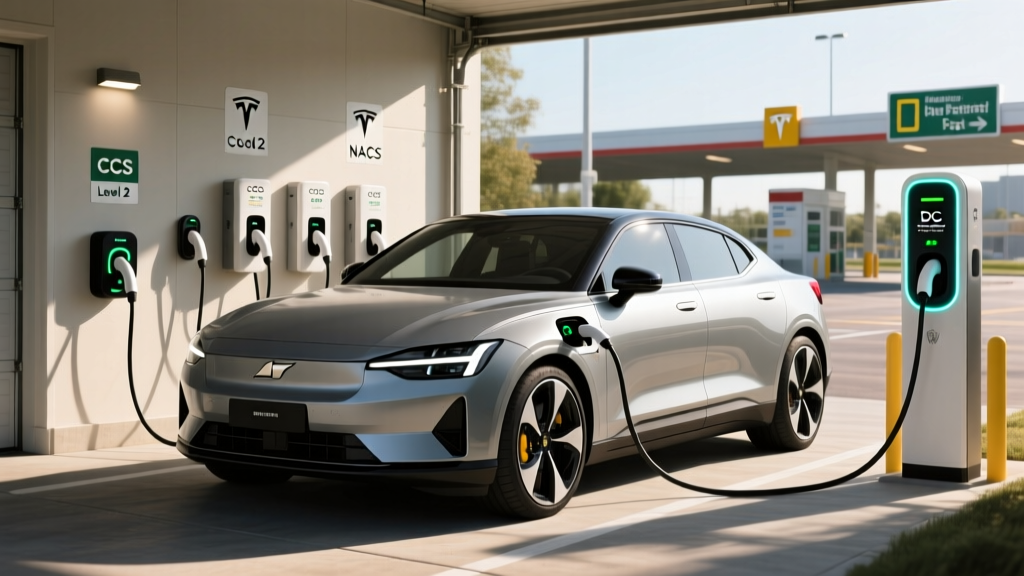
The 2001 Grand Prix had one fuel filler neck and every gas station worked. EVs have multiple connector standards, though the industry has largely converged on NACS for 2025–2026 model years.
| Connector | Brands Using It | Adapter Needed? |
|---|---|---|
| NACS (Tesla/SAE J3400) | Tesla, Ford, GM, Rivian, Volvo, Polestar, Hyundai, Kia (2025+) | CCS→NACS adapter for older CCS vehicles at Tesla Superchargers |
| CCS1 (Combined Charging System) | VW ID.4 (pre-2025), BMW iX (pre-2025), Stellantis EVs, legacy models | NACS→CCS adapter increasingly available |
| CHAdeMO | Nissan Leaf (discontinued), Mitsubishi Outlander PHEV | Limited network; no practical adapter to NACS/CCS |
If you're buying a 2025–2026 EV, choose one with a native NACS port for the widest Supercharger access. CCS1 vehicles work at Electrify America, EVgo, and ChargePoint DC stations but require an adapter for Tesla Superchargers.
Cost to Charge vs Fueling the Grand Prix GTP: Per-Mile Math
The supercharged 3800 Series II V6 in the GTP requires premium fuel (91+ octane). At $4.20/gallon (2026 national premium average) and 22 MPG combined, that's $0.191 per mile. Let's compare against common EV charging scenarios using a 2026 Hyundai Ioniq 5 (3.5 mi/kWh efficiency, per fueleconomy.gov).
| Scenario | Rate | Cost/kWh | Cost/Mile | vs GTP Savings |
|---|---|---|---|---|
| Home charging (off-peak utility rate) | $0.11/kWh | $0.11 | $0.031 | 84% cheaper |
| Home charging (standard rate) | $0.16/kWh | $0.16 | $0.046 | 76% cheaper |
| Public Level 2 (ChargePoint, etc.) | $0.35/kWh | $0.35 | $0.100 | 48% cheaper |
| DC fast charging (Electrify America) | $0.48/kWh | $0.48 | $0.137 | 28% cheaper |
| Tesla Supercharger (average) | $0.35/kWh | $0.35 | $0.100 | 48% cheaper |
| 2001 Grand Prix GTP (premium) | $4.20/gal | N/A | $0.191 | Baseline |
At 15,000 miles per year, home charging at off-peak rates saves roughly $2,400 annually versus the GTP's premium fuel bill. Even exclusive DC fast charging saves approximately $810/year. Over five years of ownership, home-charging economics recover the cost of a Level 2 installation several times over.
Level 2 Equipment Recommendations for 2026
Not all EVSEs are equal. Here are three tested units with verified specs:
ChargePoint Home Flex (2026)
- Power: Up to 12 kW (50A) on 60A circuit; adjustable down to 16A
- Connector: NACS native (CCS adapter included)
- Cable: 23 ft
- Smart features: WiFi, scheduling, energy tracking, Alexa
- Price: ~$549
Tesla Wall Connector (Gen 4)
- Power: Up to 11.5 kW (48A) on 60A circuit
- Connector: NACS native; J1772 adapter included
- Cable: 24 ft
- Smart features: WiFi, firmware OTA updates, power sharing (2 units on 1 circuit)
- Price: ~$475
Emporia Vue Level 2 EVSE
- Power: Up to 11.5 kW (48A) on 60A circuit
- Connector: J1772 (NACS adapter available separately)
- Cable: 24 ft
- Smart features: Whole-home energy monitoring integration, solar-aware charging, scheduling
- Price: ~$399
For homes with solar panels, the Emporia's solar-aware mode directs excess generation to the EV rather than exporting at low utility buyback rates. For Tesla or Ford/GM owners on NACS, the Tesla Wall Connector's power-sharing feature lets two EVs charge on a single 60A circuit—useful for two-EV households.
Safety, Code, and Installation Best Practices
EV charging is a continuous high-amperage load running 6–10 hours nightly. This is fundamentally different from intermittent appliances and demands strict code compliance:
- Dedicated circuit: The EVSE must have its own breaker—never share with a dryer, HVAC, or kitchen circuit.
- Hardwired vs plug: Hardwired units avoid the NEMA 14-50 receptacle, which the NEC now requires GFCI protection on (adding cost and nuisance-trip risk). Hardwired is preferred for new installs.
- Outdoor rating: If the charger mounts outside, verify NEMA 4 (weatherproof) rating. Indoor-rated units in garages need no special enclosure.
- Load calculation: A licensed electrician should perform an NEC Article 220 load calculation to confirm your panel can handle the EVSE alongside existing loads. This is non-negotiable for 100A panels.
- Utility rebates: Many utilities offer $250–$1,000 rebates for Level 2 installation, sometimes requiring a specific WiFi-enabled EVSE model for demand-response programs. Check with your provider before purchasing.
Frequently Asked Questions
How much does it cost to install a home EV charger?
Expect $800–$2,150 for a standard Level 2 installation in a home with 200A service and a short panel-to-charger wire run. Older homes needing a panel upgrade from 100A to 200A should budget $2,300–$6,150 total. The EVSE unit itself costs $350–$750.
How fast will each charging level add range?
Level 1 (120V) adds 3–5 miles per hour. Level 2 (240V, 48A) adds 30–45 miles per hour depending on vehicle efficiency. DC fast charging at 150 kW can add 150–250 miles in 20–25 minutes, though the charge curve tapers significantly above 80% SoC, making 10–80% the practical fast-charging window.
Which connector/charger is compatible with my EV?
For 2025–2026 model-year EVs, most brands (Ford, GM, Hyundai, Kia, Rivian, Volvo) now use the NACS connector natively, granting direct Tesla Supercharger access. Legacy CCS1 vehicles need an adapter for Superchargers. CHAdeMO (Nissan Leaf) is effectively discontinued with no adapter path to NACS.
How much does charging cost per mile vs gas?
Home charging at $0.11–$0.16/kWh costs $0.03–$0.05 per mile for a typical EV. The 2001 Grand Prix GTP on premium at $4.20/gallon and 22 MPG combined costs $0.19 per mile. Even the most expensive DC fast charging at $0.48/kWh ($0.14/mile) undercuts premium gasoline by 28%.
What electrical upgrades might I need?
The most common upgrade is a 100A-to-200A panel replacement ($1,500–$4,000) in older homes. You'll also need a dedicated 60A breaker and appropriate-gauge wiring. Homes with existing 200A service and available breaker slots typically need only the circuit run and permit—no panel work.
Always hire a licensed electrician for final specifications and installation. The National Electrical Code (NEC) governs all EVSE installation requirements, and local amendments may apply. Federal tax incentives for home charging equipment have changed frequently—consult IRS guidelines or a tax professional for current eligibility.