If you are still driving a 1999 Pontiac Grand Prix GTP Supercharged, you already know what 240 horsepower and a 3.8L supercharged V6 feel like — and you also know what it feels like to watch the fuel gauge drop on a car rated around 18 city / 27 highway mpg. That contrast is exactly why so many classic-ICE owners are running the numbers on switching to an EV — and why a rigorous, numbers-first charging guide is the right starting point.
This article is built as a side-by-side: what it actually costs (and what it takes at home) to charge a modern EV in 2026, measured against what you're spending today fueling a 1999 Pontiac Grand Prix GTP Supercharged. We'll cover charging levels in kW, real install costs, connector compatibility, per-mile fueling vs charging math, and the specific hardware worth buying.
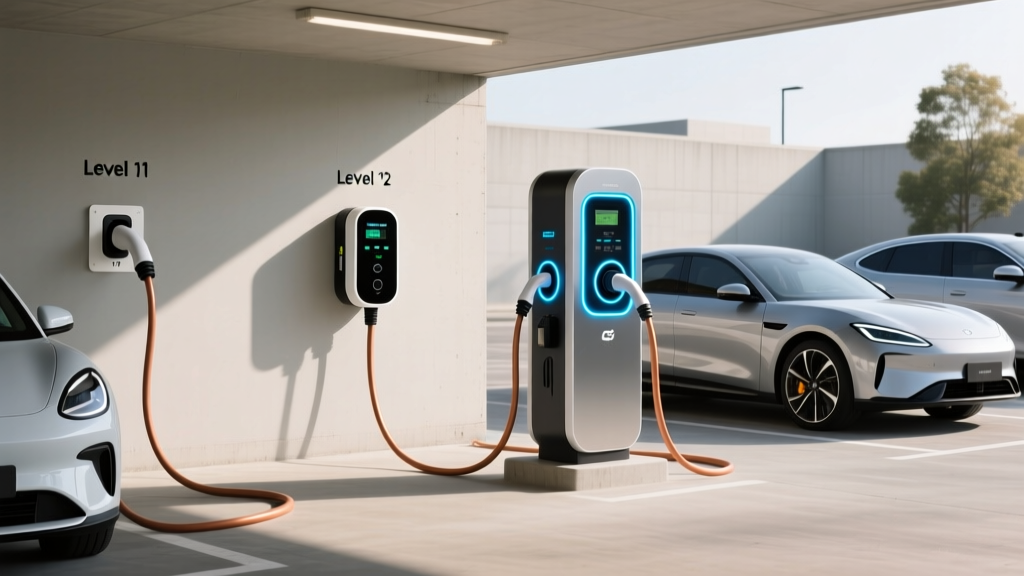
Charging Levels Explained: Level 1, Level 2, and DC Fast
The most common EV literacy gap is confusing kW (power — how fast energy flows) with kWh (energy — how big the battery is). Think of kW as the diameter of the hose and kWh as the size of the bucket. Every charging level below is defined by its kW delivery, which determines how many miles of range you add per hour.
| Level | Voltage / Amps | Power (kW) | Miles of Range / Hour | Best For |
|---|---|---|---|---|
| Level 1 | 120V / 12A | ~1.4 kW | 3 – 5 mi/hr | Overnight top-ups, PHEVs, low-mileage drivers |
| Level 2 (home) | 240V / 32A – 48A | 7.7 – 11.5 kW | 25 – 44 mi/hr | Daily home charging, most EV owners |
| DC Fast (Level 3) | 400V – 800V DC | 50 – 350 kW | 150 – 1,200+ mi/hr (peak) | Road trips, quick top-ups, fleet use |
Real-world charge-curve note: A DC fast charger rated at 250 kW does not deliver 250 kW for the entire session. Most EVs peak near 20-30% SoC and taper significantly above 80%. For a typical 75-85 kWh NMC pack on a 250 kW CCS or NACS post, expect a 10-80% session in roughly 18-26 minutes, not the "full battery in 15 minutes" marketing claim.
How Much Does It Cost to Install a Home EV Charger?
The honest answer for 2026: a straightforward Level 2 install on an existing 200A panel with a short conduit run is typically $1,200 – $2,200 all-in. An older home — which is realistic if your daily driver has been a 1999 Pontiac Grand Prix GTP Supercharged — may need a panel upgrade or a long trench, which can push the total well past $4,000.
| Line Item | Simple Install | Complex Install |
|---|---|---|
| Level 2 EVSE hardware (smart, 40A–48A) | $400 – $700 | $500 – $900 |
| Licensed electrician labor | $500 – $1,000 | $1,200 – $2,500 |
| Permit & inspection | $75 – $200 | $150 – $350 |
| Conduit / wire run (per foot) | $8 – $12/ft | $12 – $25/ft |
| Electrical panel upgrade (100A → 200A) | n/a | $2,000 – $4,500 |
| Total installed | $1,200 – $2,200 | $3,500 – $7,500 |
A few practical rules from real installs:
- Circuit sizing: A 48A EVSE requires a 60A dedicated circuit per NEC continuous-load rules (125% of rated draw). A 40A EVSE needs a 50A breaker.
- Hardwired vs. NEMA 14-50: Hardwired units avoid the GFCI-breaker nuisance trips that have plagued 14-50 receptacle installs in some jurisdictions, and many utilities/inspectors now prefer hardwired for 48A+ circuits.
- Panel capacity: If your home is still on a 100A service — common in pre-2000 builds from the same era as the Grand Prix GTP — adding a 60A EV circuit may require a load calculation or a full panel upgrade.
- Federal credit note: The IRA's §30D credit applies to the vehicle, not the charger. The separate §30C Alternative Fuel Vehicle Refueling Property Credit can cover up to 30% (max $1,000) of home charger install costs, but only in eligible census tracts — verify with the IRS §30C guidance and a tax professional.
Connector Compatibility: NACS, CCS1, and CHAdeMO in 2026
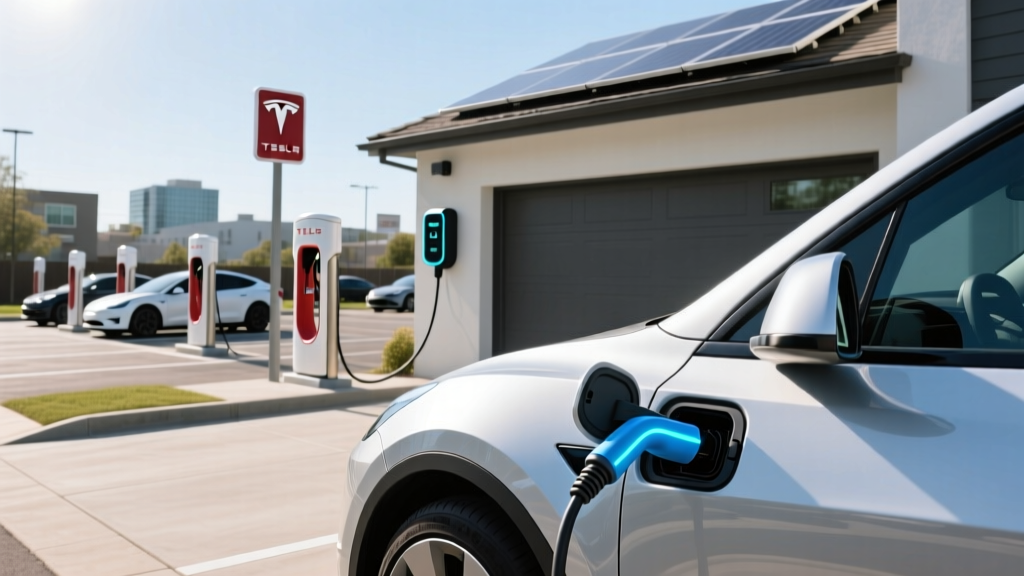
The connector wars have effectively resolved in North America. As of 2026, nearly every new EV sold in the U.S. ships with the NACS (Tesla-style) charge port, and the legacy CCS1 network has largely been retrofitted with NACS cables or adapters. CHAdeMO is functionally dead on new vehicles, surviving only on older Nissan Leafs and Mitsubishi Outlander PHEVs still on the road.
| Brand | Native Port | Adapter Needed for CCS Stations? |
|---|---|---|
| Tesla (all models) | NACS | Magic Dock / CCS adapter (included on newer models) |
| Ford (F-150 Lightning, Mustang Mach-E) | NACS | No — native NACS since 2025 |
| GM (Chevy, Cadillac, GMC) | NACS | No — native NACS since 2025 |
| Hyundai / Kia / Genesis | NACS | No — switched MY2025+ |
| Rivian | NACS | No |
| BMW, VW, Audi (legacy CCS vehicles) | CCS1 | CCS-to-NACS adapter (~$200) for Superchargers |
| Nissan Leaf (older) | CHAdeMO | CHAdeMO network shrinking; plan accordingly |
For a home Level 2 charger in 2026, buy a NACS-terminated unit unless you own a legacy CCS1 vehicle you plan to keep long-term. Adapters exist in both directions, but native NACS future-proofs the install.
Charging Cost Per Mile vs. Fueling a 1999 Pontiac Grand Prix GTP Supercharged
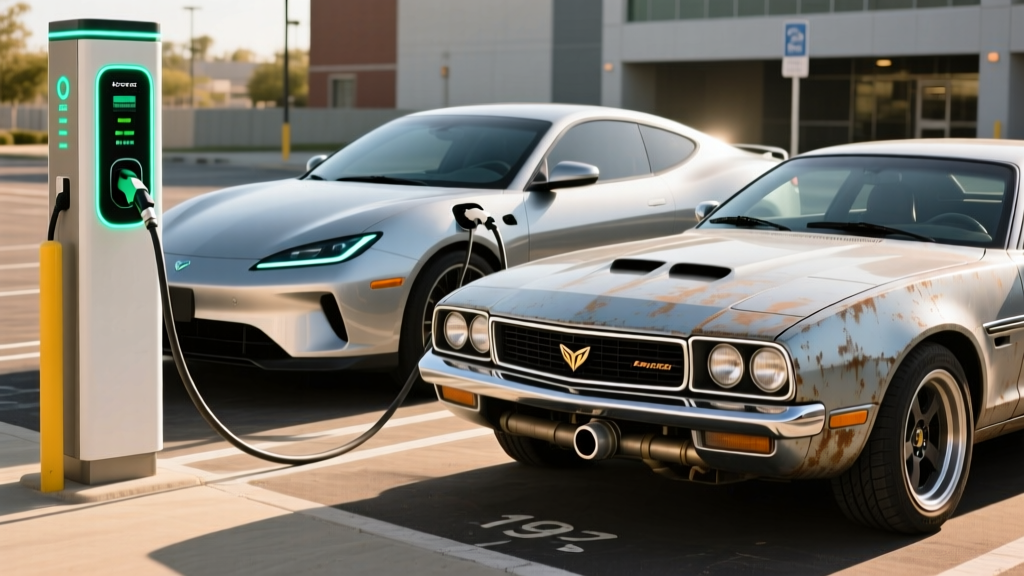
This is where the comparison gets concrete. The 1999 Grand Prix GTP Supercharged is EPA-rated around 18 mpg city / 27 mpg highway on premium fuel, and most owners report ~20-22 mpg combined in mixed driving with the supercharged 3.8L. At a national premium-gas average of roughly $3.85/gallon (early 2026), that's $0.175 – $0.193 per mile in fuel alone.
| Scenario | Energy Source | Rate | Efficiency | Cost / Mile |
|---|---|---|---|---|
| 1999 Pontiac GTP (premium) | Gasoline | $3.85/gal | ~21 mpg combined | $0.183 |
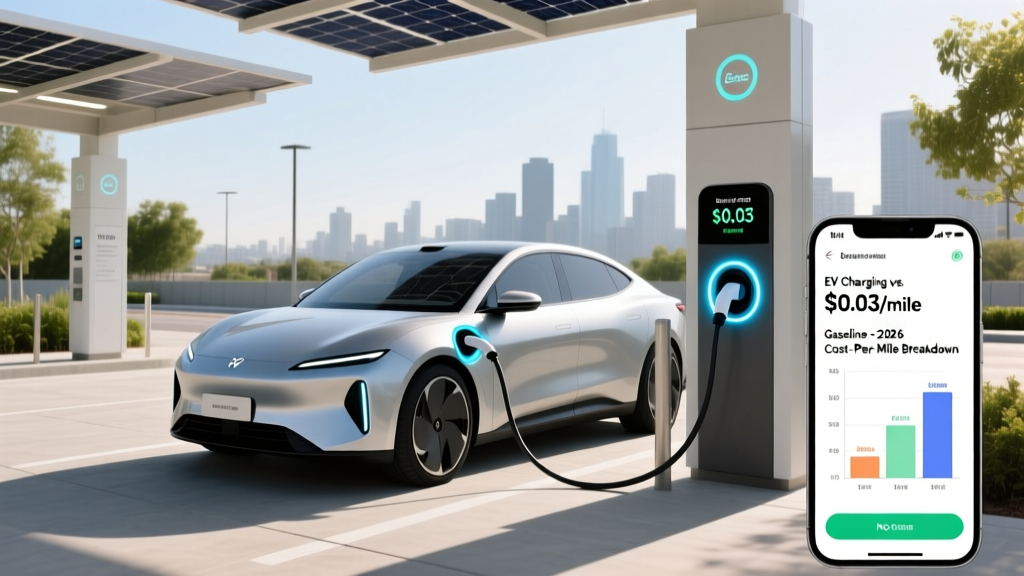
| EV — home, off-peak TOU | Grid electricity | $0.13/kWh | 3.5 mi/kWh (typical) | $0.037 |
| EV — home, peak rate | Grid electricity | $0.28/kWh | 3.5 mi/kWh | $0.080 |
| EV — public Level 2 | Network (ChargePoint, etc.) | $0.35/kWh | 3.5 mi/kWh | $0.100 |
| EV — DC fast (EA, Tesla) | DCFC network | $0.48/kWh | 3.3 mi/kWh (highway) | $0.145 |
The takeaway: even on the most expensive DC fast charging, a 2026 EV is still cheaper per mile than fueling the supercharged 3.8L. On home off-peak power, the EV costs roughly one-fifth per mile. Over 15,000 miles/year, that's a fuel-cost delta of $1,800 – $2,200 annually before any maintenance savings (no oil changes, no supercharger-belt tensioner, no transmission-fluid swaps).
Charging Times for Common Battery Sizes
Here is what a typical 10-80% session looks like across battery sizes and charger classes. These assume a preconditioned pack at moderate ambient temperature — cold-soaked batteries can double or triple these times without preconditioning.
- 60 kWh pack (e.g., base Hyundai Kona EV, Nissan Leaf Plus)
- Level 1 (1.4 kW): ~30 hours for full charge — impractical for daily use
- Level 2, 11.5 kW (48A): ~4.5 hours 10-80%
- DCFC 100 kW: ~28 min 10-80%
- 75-85 kWh pack (Tesla Model Y Long Range, Ford Mustang Mach-E Extended Range)
- Level 1: ~42 hours — not realistic
- Level 2, 11.5 kW: ~5.5 hours 10-80%
- DCFC 250 kW: ~20-24 min 10-80%
- 100-130 kWh pack (F-150 Lightning Extended, Hummer EV)
- Level 2, 11.5 kW: ~7-9 hours 10-80% (overnight is fine)
- DCFC 350 kW (800V architecture): ~22-30 min 10-80%
Recommended Home Level 2 Chargers (2026)
These are the units consistently earning top marks for reliability, smart features, and code compliance in real-world installs. Prices reflect typical street pricing as of early 2026.
ChargePoint Home Flex (NACS, 2025 refresh)
- Power: Up to 12.5 kW (50A) on a 60A circuit; configurable down to 16A
- Connector: NACS native
- Cable: 23 ft
- Smart features: Wi-Fi, scheduled charging, utility TOU integration, Alexa
- Outdoor rating: NEMA 4 (indoor/outdoor)
- Price: ~$599
Tesla Wall Connector (Gen 4)
- Power: Up to 11.5 kW (48A) on a 60A circuit
- Connector: NACS native; CCS adapter available for non-Teslas
- Cable: 24 ft
- Smart features: Wi-Fi, OTA updates, Power-Share with multiple units, Tesla app
- Outdoor rating: NEMA 4
- Price: ~$475
Emporia Vue EV Charger
- Power: Up to 11.5 kW (48A)
- Connector: NACS
- Cable: 24 ft
- Smart features: Integrated energy monitoring with Emporia Vue panel, solar-aware scheduling
- Outdoor rating: NEMA 4
- Price: ~$449
Grizzl-E Smart (United Chargers)
- Power: Up to 10 kW (40A) on a 50A circuit
- Connector: NACS or J1772 options
- Cable: 24 ft
- Smart features: OCPP-compatible, works with most utility apps
- Outdoor rating: NEMA 4, -40°F cold-weather tested
- Price: ~$549
Safety, Code, and the Panel-Upgrade Reality
NEC Article 625 governs EV charging installations, and the 2023/2026 code cycles tightened a few requirements that catch DIYers and even some electricians off guard:
- Dedicated circuit required: The EVSE must be on its own branch circuit — no sharing with a dryer, HVAC, or shop tools.
- GFCI: Receptacle-based (NEMA 14-50) installs require a GFCI breaker. Many EVSEs already have internal ground-fault protection, which is why hardwired installs avoid double-GFCI nuisance trips.
- Load calculation: A licensed electrician must perform a NEC Article 220 load calculation before adding a 50A-60A circuit. If the math doesn't clear on a 100A or 125A panel, the utility drop and panel must be upgraded — this is the single biggest surprise cost for older homes.
- Outdoor ratings: Any outdoor EVSE must be NEMA 4 rated. Indoor-only units mounted outside void warranty and insurance coverage.
- Permit + inspection: Skipping the permit is both illegal in most jurisdictions and a risk to homeowner's-insurance claims in the event of an electrical fire. Budget $75-$350 and plan one inspection visit.
If you live in a home built in the late 1990s — around the same vintage as the 1999 Pontiac Grand Prix GTP Supercharged — there is a roughly 40-50% chance your panel is 100A or 125A with limited spare breaker positions. Get a load calculation done before buying hardware.
FAQ: EV Charging vs. the 1999 Grand Prix GTP Supercharged
How much does it cost to install a home EV charger?
Expect $1,200 – $2,200 for a straightforward install on a modern 200A panel with a short conduit run. Older homes with 100A service, long wire runs, or required panel upgrades can see totals between $3,500 and $7,500. Always get a written quote that breaks out equipment, labor, and permit fees separately.
How fast will each charging level add range?
Level 1 (120V) adds 3-5 miles per hour. Level 2 (240V, 40A-48A) adds 25-44 miles per hour — enough to refill most EVs overnight. DC fast charging adds 150-1,200+ miles per hour at peak, but sessions taper above 80% SoC, so realistic 10-80% times are 18-30 minutes on a 250-350 kW post.
Which connector/charger is compatible with my EV?
In 2026, nearly all new EVs use NACS natively (Tesla, Ford, GM, Hyundai/Kia, Rivian, Volvo, Polestar). Legacy CCS1 vehicles from VW, BMW, and Audi can use Tesla Superchargers via a CCS-to-NACS adapter (~$200). CHAdeMO is effectively deprecated. For a home charger, buy NACS-terminated unless your specific vehicle still requires CCS1 or J1772.
How much does charging cost per mile vs. gas?
A 1999 Pontiac Grand Prix GTP Supercharged on premium at ~21 mpg combined costs roughly $0.18/mile in fuel. An EV charged at home off-peak ($0.13/kWh) costs about $0.04/mile — an 80% reduction. Even at expensive public DC fast chargers ($0.48/kWh), the EV still costs ~$0.15/mile, cheaper than the supercharged V6.
What electrical upgrades might I need?
The three most common are: (1) a panel upgrade from 100A to 200A ($2,000-$4,500), (2) a new dedicated 50A-60A circuit with proper-gauge wire and conduit, and (3) in some jurisdictions, a whole-home surge protector or AFCI/GFCI breaker upgrade to meet 2026 NEC. A licensed electrician's load calculation will tell you which of these apply before you commit to hardware.
Is the §30C charger credit still available in 2026?
The IRS §30C Alternative Fuel Vehicle Refueling Property Credit covers up to 30% of home charger hardware and install costs, capped at $1,000, but it is limited to equipment placed in eligible low-income or non-urban census tracts. Check the IRS eligibility map and confirm with a tax professional — rules and tract eligibility have shifted annually since the IRA passed.
Will my EV charge slower in cold weather?
Yes. A cold-soaked battery (below ~40°F) can accept DC fast charging at a fraction of peak rate until it warms up. Most 2026 EVs with heat pumps and preconditioning (Tesla, Hyundai E-GMP, GM Ultium) mitigate this when you navigate to a charger — always precondition before a DCFC session in winter. Level 2 home charging speed is largely unaffected by cold, since the session is long enough that pack warming happens naturally.
The bottom line: fueling a 1999 Pontiac Grand Prix GTP Supercharged will cost roughly $2,750/year at 15,000 miles. Charging a comparable 2026 EV at home on off-peak power costs roughly $550-$650/year, even after a $1,500-$2,200 one-time install. The math usually pays back the charger install inside the first 12-18 months — and that's before you factor in the elimination of premium-gas fill-ups, oil changes, and supercharger-belt service.