If you've ever searched for parts, maintenance tips, or ownership advice for a 1998 Pontiac Grand Prix GTP Supercharged, you already know that keeping a classic supercharged V6 on the road involves a specific set of costs — from premium fuel to aging electrical components. But what if you're now cross-shopping the idea of switching to an electric vehicle? This guide breaks down exactly what EV charging looks like in 2026 — home installation, public networks, equipment, and per-mile cost — and puts those numbers head-to-head with what you'd spend fueling that iconic 3.8L supercharged Series II engine.
We'll cover every charging level, the real cost to install a Level 2 home charger (including panel upgrades), connector compatibility across every major EV brand, and specific equipment recommendations with pricing. By the end, you'll know precisely what it takes to charge an EV at home and whether the math beats the pump.
Charging Levels Explained: Speeds, Power, and Range Added Per Hour
Before comparing costs, you need to understand the three charging levels available to EV owners. The critical distinction: kW (kilowatts) measures power — how fast energy flows into the battery. kWh (kilowatt-hours) measures energy — the total capacity of the battery itself. Think of kW as the width of a hose and kWh as the size of the bucket.
| Charging Level | Voltage | Power (kW) | Miles of Range Added Per Hour | Best For |
|---|---|---|---|---|
| Level 1 (Standard Outlet) | 120V AC | 1.0–1.4 kW | 3–5 miles/hr | Overnight top-ups, PHEVs, low daily mileage |
| Level 2 (Home/Public AC) | 240V AC | 3.3–19.2 kW | 12–75 miles/hr | Daily home charging, workplace, shopping centers |
| DC Fast Charging (Level 3) | 400–800V DC | 50–350 kW | 150–1,200+ miles/hr (peak) | Road trips, highway corridors, quick stops |
For context, a typical modern EV with a 75 kWh battery charged on a standard 120V Level 1 outlet would take roughly 75 hours to fill from empty — impractical for most drivers. A 48-amp Level 2 home charger (11.5 kW) replenishes that same battery in about 7 hours, easily covering overnight needs. DC fast chargers at 150+ kW can take a battery from 10% to 80% in 18–30 minutes depending on the vehicle's charge curve.
Real-world charging curve note: DC fast charging does not sustain peak kW for the entire session. A vehicle rated at 250 kW peak may only hold that rate between 10–40% State of Charge (SoC), then taper progressively. This is why manufacturers quote 10–80% times rather than 0–100% — charging above 80% slows dramatically to protect battery health.
Home EV Charger Installation: Electrical Requirements and Real Costs
The single biggest question prospective EV owners ask: How much does it cost to install a home EV charger? The answer depends heavily on your home's existing electrical infrastructure — and if you're coming from a home built around the same era as a 1998 Pontiac Grand Prix GTP Supercharged, you may need a panel upgrade.
Electrical Requirements for Level 2 Home Charging
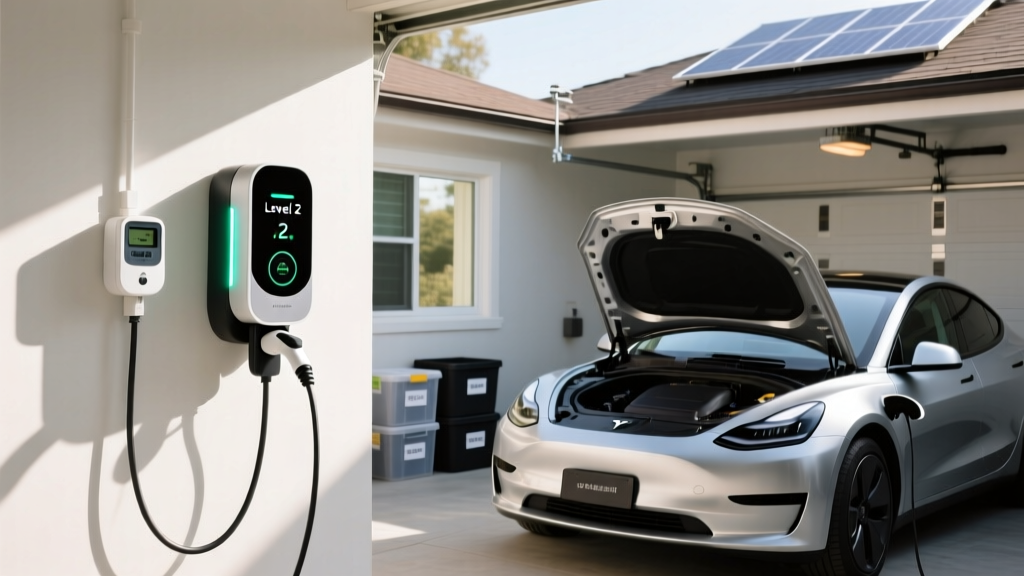
A typical Level 2 home charger requires a 240V dedicated circuit, similar to what powers an electric dryer or oven. The most common setup is a 40-amp or 48-amp circuit, which requires a 50-amp or 60-amp breaker respectively (National Electrical Code requires circuits to be rated at 125% of continuous load).
- 40-amp circuit / 50-amp breaker: Delivers up to 9.6 kW (32 miles of range per hour)
- 48-amp circuit / 60-amp breaker: Delivers up to 11.5 kW (38–42 miles of range per hour)
- 60-amp circuit / 75-amp breaker: Delivers up to 14.4 kW — only supported by certain EVs with larger onboard chargers (e.g., Ford F-150 Lightning extended range at 19.2 kW max)
Panel upgrade reality: Most homes built in the 1990s or earlier have 100-amp or 150-amp electrical panels. Adding a 50-amp EV circuit may push total load beyond panel capacity, especially if you already have electric heating, an electric dryer, and an electric range. A panel upgrade to 200 amps typically costs $1,500–$3,000 before the charger circuit is even installed. Homes with 200-amp panels usually have sufficient headroom.
| Component | Typical Cost Range | Notes |
|---|---|---|
| Level 2 Charger Equipment | $250–$700 | Varies by power output, cable length, smart features |
| Electrician Labor (standard install) | $500–$1,500 | Assumes panel has capacity; run within 20–40 ft of panel |
| Electrical Permit | $50–$200 | Required in most jurisdictions; varies by municipality |
| Panel Upgrade (if needed) | $1,500–$3,000 | 100A → 200A upgrade; older homes often need this |
| Conduit & Wiring (long runs) | $200–$800 | Adds cost if charger is far from panel (garage vs. exterior wall) |
| Total (No Panel Upgrade) | $800–$2,400 | Most common scenario for modern homes |
| Total (With Panel Upgrade) | $2,300–$5,500 | Common for homes built before 2000 |
Always hire a licensed electrician and pull a permit. Unpermitted electrical work can void homeowner's insurance claims and create fire hazards. The NEC requires a GFCI-protected breaker for EV charging circuits in most jurisdictions, and outdoor installations demand NEMA 4-rated (weatherproof) enclosures and connectors.
Connector Compatibility: NACS, CCS1, CHAdeMO, and Adapters
Which connector/charger is compatible with your EV? As of 2026, the North American charging landscape has largely consolidated around two standards, but legacy connectors remain in use.
| Connector Type | Brands Using It (2026 Models) | DC Fast Charge Availability | Adapter Needed? |
|---|---|---|---|
| NACS (Tesla / J3400) | Tesla (all), Ford, GM, Rivian, Volvo, Polestar, Mercedes-Benz, BMW, Hyundai, Kia (2025+ models) | Tesla Supercharger network (25,000+ stalls); growing third-party NACS stations | CCS-to-NACS adapters available (~$150–$250) for older CCS vehicles |
| CCS1 (Combined Charging System) | Volkswagen, Audi, Porsche (Taycan pre-2025), Subaru, some 2023–2024 Ford/GM models | Electrify America, EVgo, ChargePoint DC stations | NACS-to-CCS adapters available for Tesla Supercharger access |
| CHAdeMO | Nissan Leaf (legacy), Mitsubishi Outlander PHEV (older) | Limited and declining; mostly older Electrify America stations | No practical adapter to NACS or CCS for DC charging |
What this means practically: If you're buying a new EV in 2026, it almost certainly uses NACS or CCS1. Tesla's Supercharger network — now open to NACS-equipped non-Tesla vehicles — remains the most reliable public DC fast-charging network in the U.S. per fueleconomy.gov and third-party reliability surveys. If you buy a used EV with CCS1, a NACS adapter (~$200) unlocks Supercharger access, dramatically expanding your road-trip options.
Cost to Charge: Home, Public, and DC Fast Charging vs. Gasoline
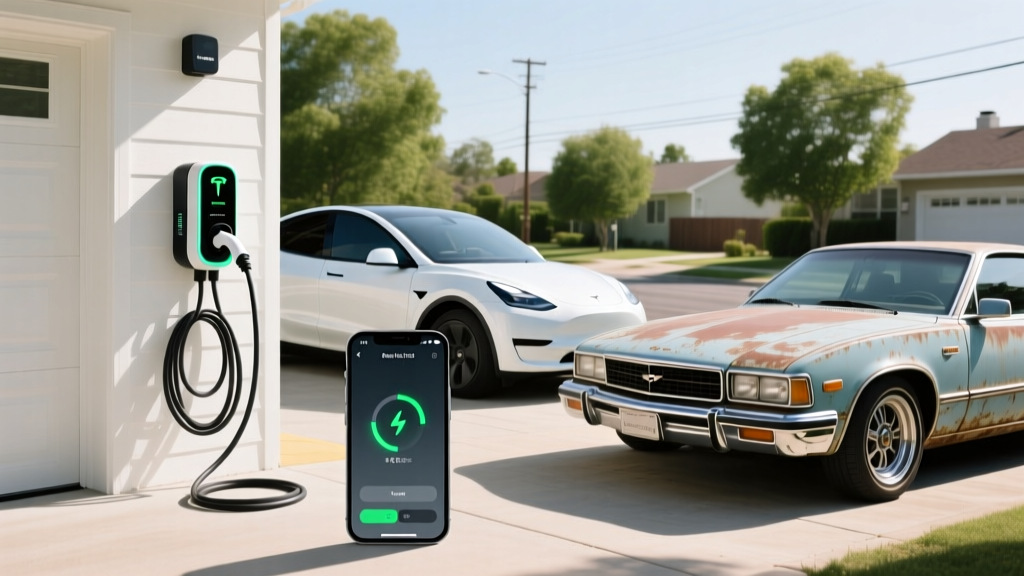
How much does charging cost per mile vs. gas? This is where the comparison to a 1998 Pontiac Grand Prix GTP Supercharged gets concrete. That 3.8L supercharged V6 is EPA-rated at roughly 17 city / 26 highway / 20 combined MPG (per fueleconomy.gov). Let's run the numbers.
| Scenario | Cost Per Unit | Vehicle Efficiency | Cost Per Mile |
|---|---|---|---|
| 1998 Grand Prix GTP (gas, combined) | $3.20/gallon (2026 avg regular) | 20 MPG combined | $0.160/mile |
| Home Level 2 (off-peak utility rate) | $0.10/kWh | 3.5 miles/kWh (typical EV) | $0.029/mile |
| Home Level 2 (national avg residential) | $0.17/kWh | 3.5 miles/kWh | $0.049/mile |
| Public Level 2 (network pricing) | $0.30/kWh | 3.5 miles/kWh | $0.086/mile |
| DC Fast Charging ( Electrify America) | $0.48/kWh | 3.5 miles/kWh | $0.137/mile |
| DC Fast Charging (Tesla Supercharger avg) | $0.32/kWh | 3.5 miles/kWh | $0.091/mile |
The takeaway: Even at the most expensive public DC fast-charging rates, a modern EV costs less per mile to fuel than the Grand Prix GTP on premium gasoline (which the supercharged 3800 Series II requires). At home off-peak rates, charging an EV costs roughly 82% less per mile than fueling the GTP.
For annual fuel cost, assuming 12,000 miles/year:
- 1998 Grand Prix GTP (premium required, ~$3.60/gal): $2,160/year
- EV charged primarily at home (avg $0.14/kWh): $480/year
- Annual savings: approximately $1,680
Charging Time Examples: 10–80% for Common Battery Sizes
Charging time depends on battery capacity (kWh) and the maximum charge rate the vehicle can accept (kW). Here are real-world 10–80% times for representative 2026 EVs at a DC fast charger:
| Vehicle (Example) | Battery Size | Peak DC Charge Rate | 10–80% Time | Notes |
|---|---|---|---|---|
| Chevrolet Equinox EV | 85 kWh (NMC) | 150 kW | ~34 minutes | Charge curve tapers significantly above 60% |
| Tesla Model Y Long Range | 75 kWh (NMC) | 250 kW | ~22 minutes | Excellent charge-curve management with preconditioning |
| Hyundai Ioniq 5 (2026) | 84 kWh (NMC) | 240 kW (800V architecture) | ~18 minutes | 800V system sustains high kW longer |
| Ford F-150 Lightning Ext. Range | 131 kWh (NMC) | 150 kW | ~44 minutes | Large battery = longer session despite decent kW |
| BMW iX xDrive50 | 111.5 kWh (NMC) | 200 kW | ~34 minutes | Sophisticated thermal management |
Preconditioning matters: Most modern EVs allow you to precondition the battery — warming it to optimal temperature before arriving at a DC fast charger. This can shave 5–10 minutes off a charging session, especially in cold weather. Without preconditioning, a battery at 30°F may accept only 40–50 kW initially, ramping up slowly as it warms. Always use your EV's built-in navigation to route to a charger; this triggers automatic preconditioning on most models.
Equipment Recommendations: Level 2 Chargers Worth Buying in 2026
Not all Level 2 chargers are equal. Here are proven units with specific specs:
Best Overall: ChargePoint Home Flex
- Power Output: Up to 12 kW (50 amps) on a 60-amp circuit; configurable down to 16 amps
- Connector: NACS or J1772 (select at purchase)
- Cable Length: 23 feet
- Smart Features: Wi-Fi, Alexa integration, scheduling, energy tracking via app
- Price: ~$550–$650
- UL Listed: Yes; outdoor-rated (NEMA 4)
Best Value: Emporia Level 2 EV Charger
- Power Output: Up to 11.5 kW (48 amps) on a 60-amp circuit
- Connector: J1772 (NACS adapter available separately)
- Cable Length: 24 feet
- Smart Features: Wi-Fi, solar integration (pairs with Emporia Vue energy monitor), load management
- Price: ~$350–$400
- UL Listed: Yes
Best for Tesla/NACS Ecosystem: Tesla Wall Connector
- Power Output: Up to 11.5 kW (48 amps) on a 60-amp circuit
- Connector: NACS (native Tesla connector)
- Cable Length: 24 feet
- Smart Features: Wi-Fi, over-the-air updates, power sharing between two units on one circuit
- Price: ~$475
- UL Listed: Yes; indoor/outdoor rated
Best Portable Option: Lectron V-BOX Pro
- Power Output: Up to 9.6 kW (40 amps) on a 50-amp circuit; also includes 120V adapter
- Connector: J1772 (NACS version available)
- Cable Length: 21 feet
- Smart Features: Basic LCD display, no Wi-Fi
- Price: ~$250–$300
- UL Listed: Yes; good for renters who may move
Critical buying note: Always match the charger's maximum amperage to your installed circuit. A 48-amp charger requires a 60-amp breaker. Buying a 48-amp charger and plugging it into a 40-amp circuit creates a fire hazard. Have your electrician confirm circuit capacity before purchasing.
Safety, Code, and Installation Best Practices
EV charging involves sustained high-current draw — often 8+ hours at maximum circuit capacity. This is fundamentally different from intermittent loads like a microwave. Key safety requirements:
- Dedicated circuit: Your EV charger must be on its own dedicated breaker — never shared with other appliances.
- GFCI protection: The 2023 NEC (and 2026 updates) requires GFCI protection for all EV charging outlets. Most modern EV-specific breakers include this; hardwired installations may use GFCI-integrated breakers.
- Outdoor rating: If your charger is installed outside (carport, driveway), it must be NEMA 4-rated for weather resistance. The connector holster should include a drip loop and protective cover.
- Wire gauge: A 50-amp circuit requires minimum 6 AWG copper wire; a 60-amp circuit requires 4 AWG. Undersized wiring is a fire risk.
- Load management: If your panel is near capacity, consider a smart load-management system (e.g., Emporia, Span panel) that dynamically reduces charger draw when other appliances activate. This can avoid a costly panel upgrade.
- Permit and inspection: Per NEC guidelines, all EV charger installations require a permit and final inspection. Skipping this step risks insurance denial in the event of an electrical fire.
Frequently Asked Questions
How much does it cost to install a home EV charger?
A standard Level 2 home charger installation (48-amp, no panel upgrade) typically costs $800–$2,400 total, including equipment ($250–$700), electrician labor ($500–$1,500), and permit fees ($50–$200). If your home needs a 200-amp panel upgrade, add $1,500–$3,000, bringing the total to $2,300–$5,500.
How fast will each charging level add range?
Level 1 (120V) adds 3–5 miles per hour. Level 2 (240V, 48 amps) adds 32–42 miles per hour depending on vehicle efficiency. DC fast charging at 150+ kW can add 150–400+ miles in a 20–30 minute session, though the rate tapers as the battery fills past 80%.
Which connector/charger is compatible with my EV?
New 2026 EVs from Tesla, Ford, GM, Rivian, Hyundai, Kia, BMW, Mercedes, and Volvo use the NACS connector. Volkswagen, some older Ford/GM models, and Porsche use CCS1. The Nissan Leaf and older Mitsubishi PHEVs use CHAdeMO. Check your vehicle's charge port or the manufacturer's spec page. Adapters are available for cross-compatibility.
How much does charging cost per mile vs gas?
Home charging at the national average residential rate ($0.17/kWh) costs approximately $0.049/mile for a typical EV. The 1998 Pontiac Grand Prix GTP Supercharged at 20 MPG combined on premium gasoline (~$3.60/gallon) costs about $0.18/mile. EV home charging is roughly 73% cheaper per mile.
What electrical upgrades might I need?
Homes built before 2000 often have 100-amp or 150-amp panels that may lack capacity for a dedicated 50–60 amp EV circuit. A 200-amp panel upgrade ($1,500–$3,000) is the most common upgrade. Alternatives include smart load-management systems that share capacity dynamically, or installing a lower-amperage charger (32-amp / 40-amp breaker) that draws less from the panel.
Does the 1998 Pontiac Grand Prix GTP Supercharged require premium fuel?
Yes. The supercharged 3800 Series II V6 (L67 engine) requires premium unleaded (91+ octane) to prevent knock under boost. This increases fuel costs versus regular-unleaded vehicles, making the per-mile cost comparison with EV charging even more favorable.
Can I claim a tax credit for home EV charger installation?
The federal Alternative Fuel Vehicle Refueling Property Credit (IRC §30C) was reinstated and modified under the Inflation Reduction Act, offering up to $1,000 for home charging equipment installed in eligible census tracts (typically lower-income or rural areas). Eligibility is location-specific — consult IRS.gov or a tax professional to verify your address qualifies.
Whether you're maintaining a beloved supercharged classic or transitioning to electric, understanding the real numbers — installation costs, per-mile fueling expense, charging speeds, and electrical requirements — is the only way to make a sound decision. The data is clear: for daily driving, home-charged EVs deliver a massive per-mile cost advantage, while the infrastructure investment pays for itself within 2–4 years for most drivers covering 10,000+ miles annually.