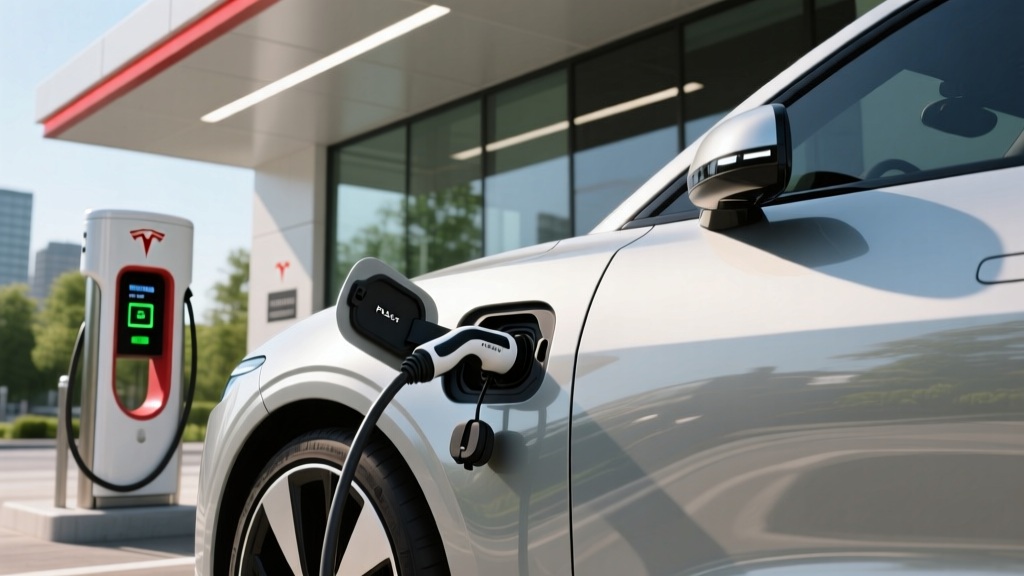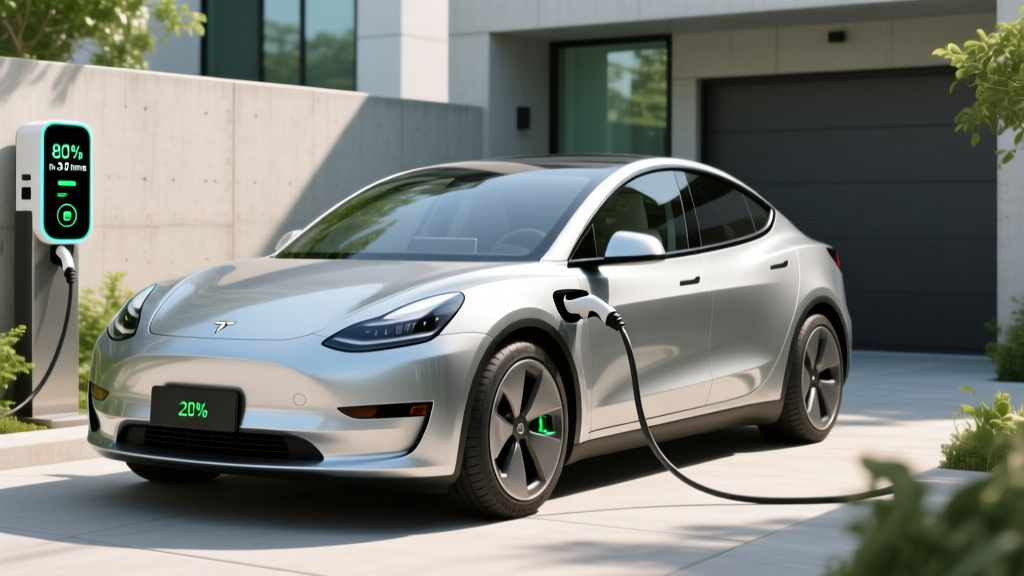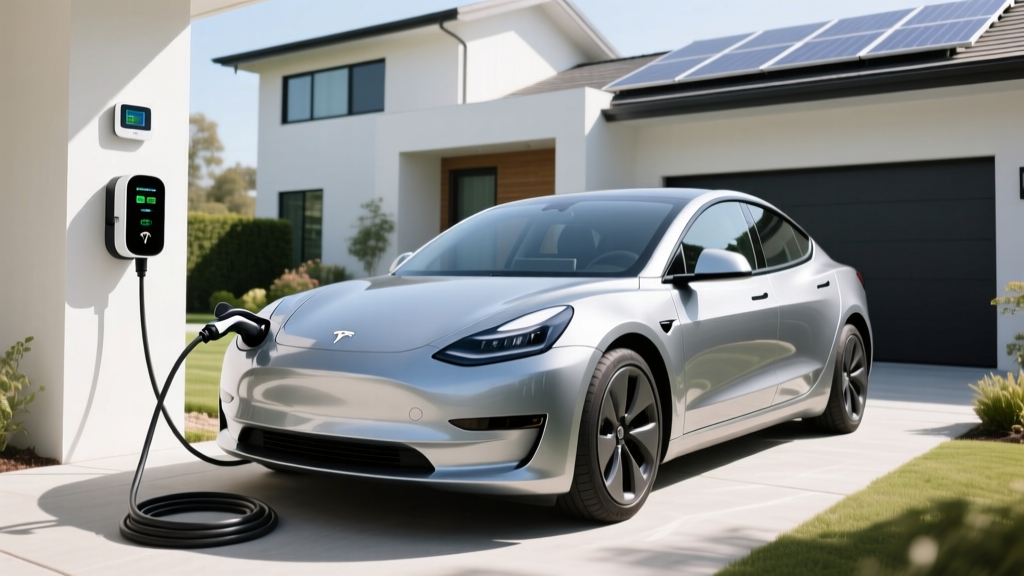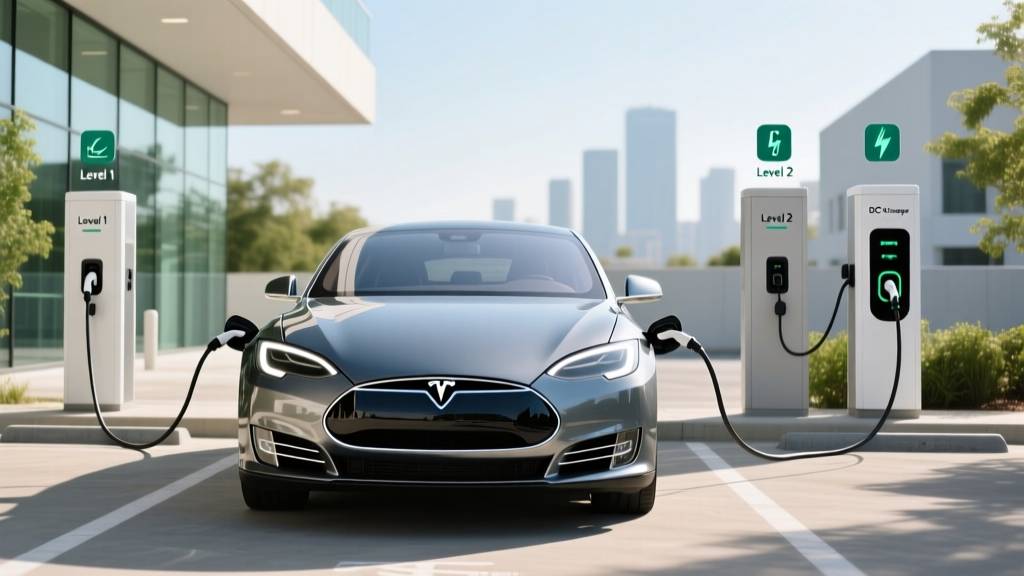
The single most common question from new EV buyers isn't about range — it's about charging time. How long will it actually take to recharge your battery at home, at a public station, or on a road trip? The answer depends on three variables: your battery's usable capacity (measured in kilowatt-hours, or kWh), the power delivery of the charger (measured in kilowatts, or kW), and your vehicle's onboard charger or charge-curve limitations.
This guide breaks down exact charging times across Level 1, Level 2, and DC fast charging, with real numbers for common EV battery sizes. We'll also cover home installation requirements, equipment picks for 2026, connector compatibility, and the true cost per mile compared to gasoline.
kW (kilowatt) measures power — the rate at which electricity flows into your battery, like water pressure from a hose. kWh (kilowatt-hour) measures energy — the total amount of electricity stored, like gallons in a tank. A 77 kWh battery charged at 11.5 kW takes roughly 6.7 hours from 0-100%. A 250 kW DC fast charger can push that same battery from 10-80% in about 20 minutes because the power delivery is vastly higher. Never confuse the two: your battery capacity is kWh; your charger speed is kW.
Charging Levels Compared: Speed, Power, and Real-World Range Added
Every EV sold in the U.S. can charge at three distinct levels. Understanding the power output at each level — and how that translates to miles of range per hour — is essential for planning your daily routine and road trips.
| Level | Voltage / Amperage | Power (kW) | Miles of Range per Hour | Best For |
|---|---|---|---|---|
| Level 1 | 120V / 12A | 1.4 kW | 3–5 miles | Overnight top-ups, PHEVs, emergencies |
| Level 2 | 240V / 32–48A | 7.7–11.5 kW | 25–44 miles | Daily home charging, workplace |
| DC Fast Charge | 400–800V DC | 50–350 kW | 150–1,200+ miles/hr equivalent | Road trips, rapid top-ups |
A practical way to think about it: if your daily commute is 40 miles round-trip, Level 1 charging overnight (roughly 10–12 hours plugged in) adds 30–50 miles — just barely enough. Level 2 replenishes that same commute in about one hour. DC fast charging is irrelevant for daily use but critical for highway travel, where a 20-minute stop can add 150–200 miles of range.
Charging Time by Battery Size: 10-80% Estimates
Battery capacity varies widely across today's EVs, from the ~58 kWh pack in a base Volkswagen ID.4 to the ~131 kWh extended-range battery in the Ford F-150 Lightning. Charging time scales directly with battery size and inversely with charger power — but DC fast charging introduces a critical complication: the charge curve.
Lithium-ion batteries accept charge fastest at low states of charge (SoC). As the battery fills, the vehicle's battery management system (BMS) reduces charging power to protect cell health and manage heat. A charger rated for 250 kW peak may only sustain that rate between 10-40% SoC, then taper to 150 kW, then 80 kW, and finally 25 kW above 90%. This is why manufacturers quote 10-80% charging times rather than 0-100% — the last 20% can take as long as the first 70%.
| Vehicle Example | Usable Battery (kWh) | Level 1 (1.4 kW) 10-80% | Level 2 (11.5 kW) 10-80% | DC Fast 10-80% |
|---|---|---|---|---|
| Tesla Model 3 RWD | 57.5 (LFP) | ~29 hours | ~3.5 hours | ~25 min (170 kW peak) |
| Hyundai Ioniq 5 (Long Range) | 77.4 (NMC) | ~39 hours | ~4.7 hours | ~18 min (240 kW peak, 800V) |
| Ford F-150 Lightning (Ext. Range) | 131 (NMC) | ~65 hours | ~8 hours | ~41 min (150 kW peak) |
| Chevrolet Equinox EV (3RS) | 85 (NMC) | ~43 hours | ~5.2 hours | ~24 min (190 kW peak) |
Source: Manufacturer specifications and fueleconomy.gov. DC fast times assume optimal battery preconditioning and ambient temperatures of 65-80°F. Cold weather (below 32°F) can increase DC fast charging time by 20-40% due to reduced charge acceptance.
Home Charger Installation: Electrical Requirements and Costs
Installing a Level 2 home charger is the single most impactful upgrade for daily EV ownership. Most EV owners do 80% or more of their charging at home, and a properly installed Level 2 station means waking up to a full battery every morning. But the installation process involves real electrical work, permits, and — in older homes — potentially a panel upgrade.
Electrical Requirements for Level 2 Charging
A Level 2 charger requires a 240-volt dedicated circuit, identical to what powers an electric dryer or oven. The most common configurations:
- 40-amp circuit / 32-amp charger: Delivers 7.7 kW. Requires 8 AWG copper wire. Sufficient for most daily needs — adds ~25 miles of range per hour.
- 50-amp circuit / 40-amp charger: Delivers 9.6 kW. Requires 6 AWG copper wire. The most popular home setup — adds ~32 miles per hour.
- 60-amp circuit / 48-amp charger: Delivers 11.5 kW. Requires 4 AWG copper wire. Maximum for most residential chargers — adds ~40 miles per hour. Requires a vehicle with an 11.5 kW or higher onboard charger to utilize fully.
The National Electrical Code (NEC) requires that continuous loads (including EV chargers) use no more than 80% of a circuit's rated capacity. A 48-amp charger therefore requires a 60-amp breaker.
Homes built before 1990 often have 100-amp electrical panels. Adding a 50- or 60-amp EV circuit to an already-loaded panel may exceed capacity, requiring an upgrade to a 200-amp panel. This is the single biggest variable in installation cost. If your home already has a 200-amp panel with available breaker slots and load capacity, you'll avoid this expense. Ask your electrician to perform a load calculation before quoting.
| Component | Simple Install (Panel Has Capacity) | Complex Install (Panel Upgrade Needed) |
|---|---|---|
| Level 2 Charger (hardwired, 48A) | $400–$700 | $400–$700 |
| Electrician labor (run 240V circuit, mount charger) | $500–$1,200 | $1,500–$3,000 |
| Electrical permit | $50–$200 | $100–$300 |
| Panel upgrade (100A → 200A) | N/A | $1,500–$3,500 |
| Total Estimated Cost | $950–$2,100 | $3,500–$7,500 |
Costs vary by region, wall/foundation penetration needs, conduit run length, and local labor rates. Always hire a licensed electrician and pull a permit — unpermitted EV charger installations can void home insurance claims and create fire hazards. Some utilities and states offer rebates of $250–$1,000 for home charger installation; check your local utility's website and the Alternative Fuels Data Center for current incentive programs.
Connector Compatibility: NACS, CCS, and CHAdeMO in 2026
The connector landscape has shifted dramatically. As of 2026, the North American Charging Standard (NACS) — originally developed by Tesla — has become the dominant connector for new EVs. Most legacy CCS1 vehicles require a NACS-to-CCS adapter for access to Tesla Superchargers, while CHAdeMO remains limited to older Nissan Leaf and Mitsubishi models.
| Connector | Native Vehicle Brands | Adapter Needed For | Network Access |
|---|---|---|---|
| NACS (Tesla) | Tesla, Ford, GM, Rivian, Volvo, Polestar, Mercedes, BMW, Hyundai/Kia (new models) | NACS-to-CCS adapter for legacy CCS stations | Tesla Supercharger + Electrify America + most new stations |
| CCS1 | VW ID.4 (prior MY), older Hyundai/Kia, Stellantis, some Honda | CCS-to-NACS adapter for Supercharger access | Electrify America, EVgo, ChargePoint, Ionity |
| CHAdeMO | Nissan Leaf (legacy), Mitsubishi Outlander PHEV | Limited adapters available | Declining network; mostly Electrify America legacy |
If you're buying a new EV in 2026, NACS is the clear standard going forward. Ford, GM, and Rivian owners who purchased 2024-2025 models with CCS ports should have received or can purchase a NACS adapter from their manufacturer — often free or discounted — to access the Tesla Supercharger network, which remains the most reliable DC fast charging infrastructure in the U.S.
Cost to Charge: Home vs. Public vs. Gasoline
One of the strongest economic arguments for EV ownership is the lower per-mile energy cost — but the savings depend heavily on where and when you charge. Home charging on off-peak electricity rates delivers the deepest savings, while DC fast charging on road trips can approach gasoline costs.
| Scenario | Rate / Price | Cost per Mile (3.5 mi/kWh EV) | Annual Cost (12,000 mi) |
|---|---|---|---|
| Home Level 2 (off-peak, national avg.) | $0.13/kWh | $0.037 | $446 |
| Home Level 2 (peak rate, CA/MA) | $0.30/kWh | $0.086 | $1,029 |
| Public Level 2 (ChargePoint, avg.) | $0.25/kWh | $0.071 | $857 |
| DC Fast Charge (Electrify America) | $0.48/kWh | $0.137 | $1,646 |
| Gasoline Vehicle (28 MPG combined) | $3.40/gallon | $0.121 | $1,457 |
EV efficiency assumed at 3.5 miles per kWh (approx. 28.5 kWh/100mi, representative of a midsize crossover like the Ioniq 5 or Model Y). Gasoline price reflects the U.S. national average as of early 2026 per EIA data. Your actual cost per mile will vary based on vehicle efficiency, local electricity rates, and driving patterns.
The takeaway: home off-peak charging delivers fuel costs roughly one-third of gasoline. Even at peak residential rates, EVs remain cheaper per mile than gas cars in most states. DC fast charging is the most expensive EV scenario and can exceed gasoline costs — which is why it should be reserved for road trips, not daily use.
Best Home EV Chargers for 2026: Equipment Picks
The home charger market has matured significantly. Today's best Level 2 stations offer smart scheduling (to take advantage of off-peak utility rates), Wi-Fi connectivity, energy monitoring, and robust safety certifications. Here are three top-tier options across different budgets and feature sets.
Tesla Wall Connector (Gen 4) — Best Overall for NACS Vehicles
- Power Output: 11.5 kW (48A on a 60A circuit)
- Connector: NACS native
- Cable Length: 24 feet
- Smart Features: Wi-Fi, OTA firmware updates, power sharing (link up to 6 units on one circuit), access control, energy tracking via Tesla app
- Price: ~$475
- Best For: Tesla, Ford, GM, Rivian, and other NACS-equipped vehicles. Excellent build quality and the most reliable Wi-Fi integration in the category.
ChargePoint Home Flex (2nd Gen) — Best Universal Charger
- Power Output: Up to 12 kW (50A, configurable from 16A–50A via DIP switches)
- Connector: NACS (CCS adapter included in box)
- Cable Length: 23 feet
- Smart Features: Wi-Fi, Alexa/Google Home integration, scheduled charging, ChargePoint app with detailed session history, utility demand-response program compatibility
- Price: ~$599
- Best For: Households with mixed fleets (NACS + CCS). The included adapter and adjustable amperage make this the most flexible option for panel-constrained homes.
Emporia Level 2 EV Charger — Best Budget Smart Charger
- Power Output: 11.5 kW (48A on a 60A circuit)
- Connector: NACS (CCS adapter sold separately)
- Cable Length: 24 feet
- Smart Features: Wi-Fi, Emporia app with real-time energy monitoring, integration with Emporia home energy monitor for whole-home load management, scheduled charging
- Price: ~$349
- Best For: Budget-conscious buyers who still want smart features. Pairs especially well with the Emporia Vue energy monitor for solar-equipped homes.
Safety, Code, and Installation Best Practices
A Level 2 EV charger is a high-amperage, continuous-load appliance that will run for 6-10 hours at a stretch. Proper installation isn't optional — it's critical for fire safety, insurance compliance, and equipment longevity.
- Dedicated circuit: Your EV charger must be on its own dedicated breaker — never shared with other appliances. A 48A charger on a 60A breaker means that breaker serves nothing else.
- GFCI protection: The 2023 NEC (and continuing into 2026 code cycles) requires GFCI protection for all EV charging outlets. Hardwired chargers are exempt from the outlet GFCI requirement but must have ground-fault protection built into the unit (all major brands do).
- Outdoor rating: If your charger is mounted outdoors or in an unenclosed carport, it must be rated NEMA 4 (weatherproof). All three chargers recommended above carry NEMA 4 ratings.
- Conduit and wire gauge: Your electrician will size wire gauge to circuit amperage and run length. Longer runs (over 50 feet from the panel) may require upsized wire to prevent voltage drop. This is a standard calculation — a licensed electrician handles it routinely.
- Permit and inspection: Every jurisdiction requires a permit for new 240V circuits. The inspection ensures proper wire sizing, breaker rating, grounding, and bonding. Do not skip this step.
Frequently Asked Questions About EV Charging Time
How much does it cost to install a home EV charger?
A straightforward Level 2 installation on an existing 200-amp panel with capacity typically costs $950–$2,100, including the charger unit ($350–$700), electrician labor ($500–$1,200), and permit ($50–$200). If your home needs a panel upgrade from 100A to 200A, total costs rise to $3,500–$7,500. Always get a load calculation from a licensed electrician before committing.
How fast will each charging level add range?
Level 1 (120V) adds roughly 3–5 miles of range per hour — adequate only for plug-in hybrids or very low-mileage drivers. Level 2 (240V) adds 25–44 miles per hour depending on amperage (32A–48A) and your vehicle's onboard charger capacity. DC fast charging adds the equivalent of 150–1,200+ miles per hour, which translates to a 10-80% charge in 18–45 minutes depending on battery size, peak kW acceptance, and the vehicle's charge curve.
Which connector/charger is compatible with my EV?
If you own a 2025-2026 model from Tesla, Ford, GM, Rivian, Volvo, BMW, Mercedes, Hyundai, or Kia, your vehicle almost certainly has a NACS port natively. Older CCS1 vehicles (2022-2024 VW ID.4, earlier Hyundai/Kia models) need a CCS-to-NACS adapter — typically $100–$200 or free from your manufacturer — to access Tesla Superchargers. CHAdeMO vehicles (Nissan Leaf) are increasingly limited in public fast-charging access.
How much does charging cost per mile vs. gas?
Home off-peak charging averages $0.037 per mile — about 70% cheaper than gasoline at $3.40/gallon in a 28 MPG vehicle ($0.121/mile). Public Level 2 costs around $0.071/mile. DC fast charging at $0.48/kWh costs $0.137/mile, which actually exceeds gasoline — making it a road-trip expense, not a daily strategy. The more you charge at home, the more you save.
What electrical upgrades might I need?
The most common upgrade is a panel replacement from 100 amps to 200 amps, needed in roughly 25-40% of homes built before 1990. You may also need additional breaker slots, a new grounding rod, or upgraded service entrance wiring from your utility. Some utilities offer "make-ready" programs that cover the cost of wiring from the panel to the charger location — check with your provider before hiring an electrician.
Does cold weather affect charging time?
Yes, significantly. Below 32°F, lithium-ion batteries accept charge more slowly due to increased internal resistance. Without battery preconditioning, DC fast charging times can increase 20-40%. Most modern EVs (Tesla, Hyundai/Kia E-GMP, GM Ultium) include battery preconditioning — the vehicle warms the pack when you navigate to a charger. Always use the vehicle's built-in navigation to route to a DC fast charger in cold weather to trigger preconditioning automatically.