Understanding EV Charging Time: Why kW and kWh Matter
The single most common question from new EV buyers isn't about range — it's about ev charging time. How long will it actually take to recharge? The answer depends entirely on which charging level you use, your vehicle's onboard charger capacity, and the size of your battery pack.
Before comparing speeds, let's resolve the most persistent confusion in EV ownership: kW versus kWh.
- kW (kilowatts) = power, or the rate at which energy flows into your battery. Think of it as the width of the hose filling a pool.
- kWh (kilowatt-hours) = energy, or the total capacity of your battery. Think of it as the volume of the pool itself.
A 77 kWh battery charged at 11.5 kW takes roughly 6.7 hours from empty to full (77 ÷ 11.5). That same battery at a 150 kW DC fast charger can reach 80% in about 25–30 minutes, though charging speed tapers significantly above 80% to protect battery health. This taper — called the charge curve — means peak kW ratings are never sustained across the entire session.
Charging Levels Compared: Speed, Power, and Range Added Per Hour
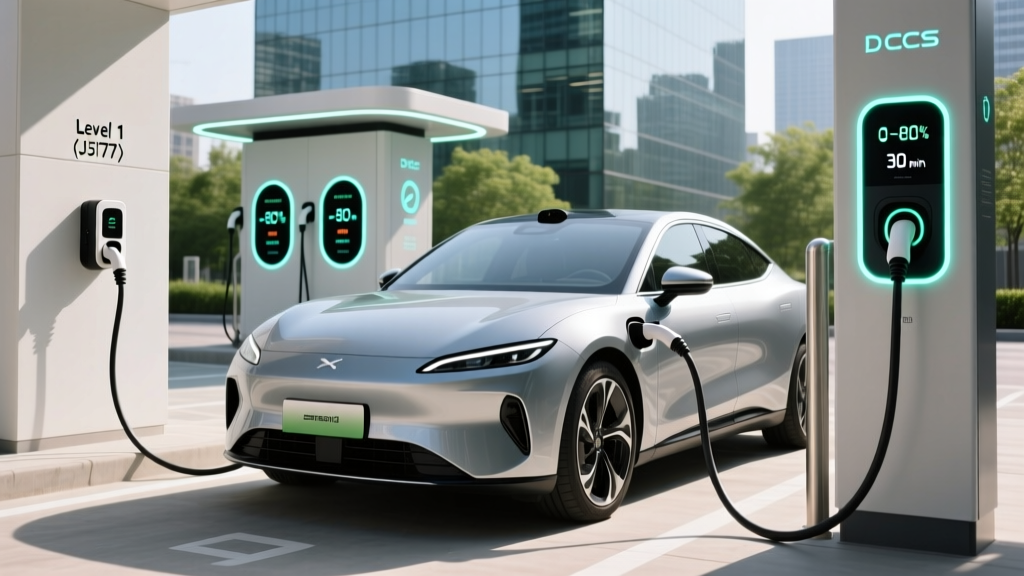
Every EV sold in the US charges via one of three levels. Here's exactly what each delivers in real-world conditions:
| Level | Voltage | Max Power (kW) | Miles of Range Added Per Hour | Typical Use Case |
|---|---|---|---|---|
| Level 1 | 120V AC | 1.0–1.4 kW | 3–5 miles | Overnight top-off, PHEVs, emergencies |
| Level 2 | 240V AC | 3.3–19.2 kW | 12–75 miles | Home daily charging, workplaces, public destinations |
| DC Fast Charging (Level 3) | 400–800V DC | 50–350 kW | 150–1,200+ miles/hr equivalent | Road trips, highway corridors, rapid top-ups |
Real-world context: Most EV owners driving 30–40 miles per day need only Level 2 home charging to wake up with a full battery every morning. Level 1 is adequate for plug-in hybrids with smaller batteries (15–25 kWh) but painfully slow for a full-size BEV with a 75–100 kWh pack.
EV Charging Time Examples: 10–80% by Battery Size
Because charging slows dramatically past 80% State of Charge (SoC) to prevent lithium plating and heat damage, the industry standard measurement is 10–80% charge time. Here's what to expect from common 2025–2026 models at different charging levels:
| Vehicle (Battery Size) | Level 2 at 11.5 kW (0–100%) | DC Fast Peak kW | DC Fast 10–80% Time |
|---|---|---|---|
| Tesla Model Y (75 kWh, LFP) | ~6.5 hours | 250 kW | ~22 minutes |
| Hyundai Ioniq 5 (77.4 kWh, NMC) | ~7.3 hours | 235 kW | ~18 minutes |
| Ford F-150 Lightning (131 kWh ext., NMC) | ~12 hours | 150 kW | ~41 minutes |
| Chevrolet Equinox EV (85 kWh, NMC) | ~7.5 hours | 150 kW | ~30 minutes |
| Toyota RAV4 PHEV (18.1 kWh, NMC) | ~2.5 hours | N/A (no DCFC) | N/A |
Charge curve reality check: The Hyundai Ioniq 5's 235 kW peak only holds from roughly 10–45% SoC on an 800V charger. From 45–80%, it tapers to 150 kW and below. That's why 10–80% takes ~18 minutes, not the ~14 minutes you'd calculate from peak rate alone. Always factor in taper.
Home Charger Installation: Electrical Requirements and Cost Breakdown
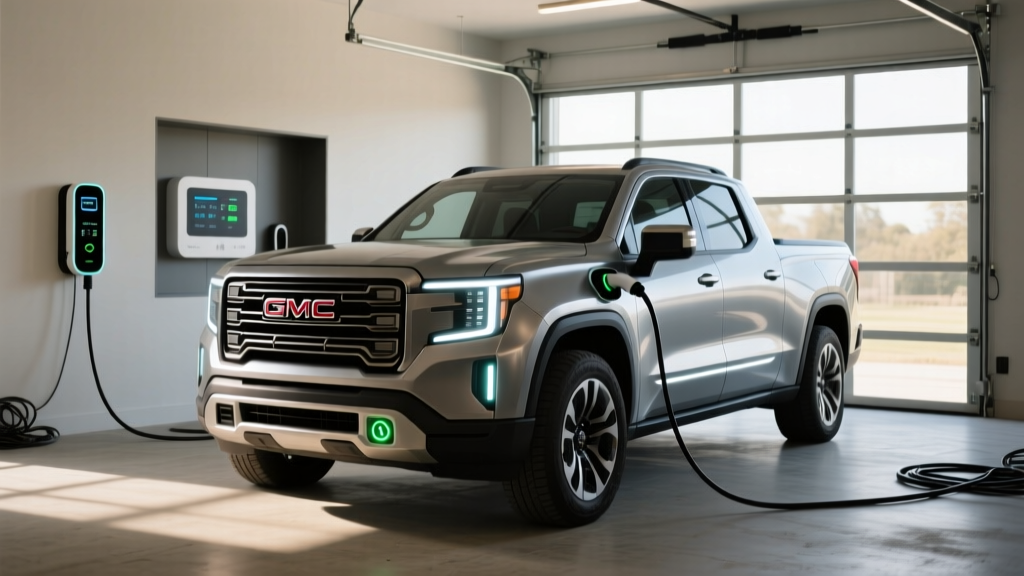
Installing a Level 2 home charger is the single most impactful upgrade for daily EV ownership. But costs vary enormously depending on your home's electrical panel, the distance from panel to charger location, and local permitting requirements.
Electrical Requirements for Level 2 Charging
Level 2 charging requires a 240V dedicated circuit, the same voltage as your electric dryer or oven. Common circuit sizes:
- 40-amp circuit → delivers up to 32A continuous (7.7 kW at 240V) — sufficient for most daily charging
- 50-amp circuit → delivers up to 40A continuous (9.6 kW) — faster, recommended for larger batteries
- 60-amp circuit → delivers up to 48A continuous (11.5 kW) — maxes out most EV onboard chargers
The National Electrical Code (NEC) requires that continuous loads (like EV charging) use only 80% of a circuit's rated capacity. So a 40A breaker safely delivers 32A continuous.
Panel Upgrade Considerations
Homes built before 1990 often have 100-amp or even 60-amp main panels. Adding a 50-amp EV circuit to a maxed-out 100A panel requires a panel upgrade to 200 amps, which significantly increases cost. Even newer homes with 200A panels may need a load calculation to confirm capacity.
Some homeowners use a smart load-management device (like the Emporia Load Management or Span panel integration) to share capacity between the EV charger and other appliances, avoiding a panel upgrade.
| Component | Low-End Cost | High-End Cost | Notes |
|---|---|---|---|
| Level 2 Charger Equipment | $250 | $700 | Hardwired units cheaper; plug-in (NEMA 14-50) more flexible |
| Electrician Labor (short run, <20 ft) | $300 | $800 | Panel to garage, same wall or adjacent |
| Electrician Labor (long run, 50+ ft) | $800 | $2,000 | Conduit, trenching, or running through finished walls |
| Permit & Inspection | $50 | $300 | Varies by municipality; some waive for EV installs |
| Panel Upgrade (if needed) | $1,500 | $4,000 | 100A → 200A service upgrade; not always required |
| Total (no panel upgrade) | $600 | $3,800 | Most homes with 200A panels fall in $800–$1,500 range |
| Total (with panel upgrade) | $2,100 | $7,800 | Older homes or high-load situations |
The IRS §30C alternative fuel vehicle refueling property credit covers 30% of home charging equipment and installation costs, up to $1,000, for eligible taxpayers in qualifying census tracts. Consult a tax professional for your specific eligibility.
Connector Compatibility: NACS, CCS1, and CHAdeMO
The connector landscape shifted dramatically in 2024–2025 when nearly every major automaker adopted Tesla's North American Charging Standard (NACS) for new vehicles. Here's where things stand for 2025–2026 models:
| Connector | Brands Using It (2025–2026) | DC Fast Charging Networks | Adapter Needed? |
|---|---|---|---|
| NACS (native) | Tesla (all), Ford, GM, Rivian, Volvo, Polestar, Nissan (new models) | Tesla Supercharger, Electrify America (partial), EVgo | None for Superchargers; CCS adapter for older non-Tesla DCFC |
| CCS1 | Hyundai, Kia, BMW, VW, legacy Ford/GM models (pre-2025) | Electrify America, EVgo, ChargePoint, most non-Tesla networks | NACS-to-CCS adapter for Tesla Superchargers (~$200–$250) |
| CHAdeMO | Nissan Leaf (legacy), Mitsubishi Outlander PHEV (legacy) | Limited; being phased out at most networks | No adapter available for NACS/CCS stations; declining access |
Practical advice: If you're buying a new EV in 2025–2026, prioritize a NACS-equipped vehicle for the broadest DC fast-charging access via Tesla's Supercharger network (17,000+ stalls in North America). If you own a CCS1 vehicle, Tesla sells a CCS-to-NACS adapter that unlocks Supercharger access — confirm compatibility with your specific model year.
Charging Cost Per Mile: Home vs. Public vs. Gas
Electricity pricing varies widely by region, time of day, and whether you're charging at home or on a public network. Here's a realistic cost comparison using a mid-size SUV consuming 3.0 miles per kWh (roughly 100 MPGe):
| Scenario | Rate ($/kWh) | Cost Per Mile | Cost to "Fill" 75 kWh Battery |
|---|---|---|---|
| Home, off-peak (utility rate) | $0.08–$0.14 | $0.027–$0.047 | $6.00–$10.50 |
| Home, standard rate (national avg.) | $0.16 | $0.053 | $12.00 |
| Public Level 2 (ChargePoint, etc.) | $0.25–$0.49 | $0.083–$0.163 | $18.75–$36.75 |
| DC Fast Charging (Electrify America, EVgo) | $0.35–$0.55 | $0.117–$0.183 | $26.25–$41.25 |
| Tesla Supercharger (varies by location) | $0.25–$0.40 | $0.083–$0.133 | $18.75–$30.00 |
| Gas equivalent (25 MPG, $3.40/gal) | — | $0.136 | ~$51 (equivalent energy) |
Key takeaway: Home off-peak charging delivers fuel costs at roughly 1/4 to 1/3 the per-mile cost of gasoline. Even public DC fast charging is typically cheaper per mile than gas for efficient EVs. However, exclusive reliance on premium-priced DC fast networks can narrow or eliminate the cost advantage — which is why home Level 2 charging remains the economic backbone of EV ownership.
According to fueleconomy.gov, most current EVs achieve 100–130 MPGe combined, translating to 3.0–3.9 miles per kWh. Check your specific model's efficiency rating for accurate cost calculations.
Recommended Home Level 2 Chargers
After testing dozens of units across multiple EVs, these chargers represent the best combination of reliability, power output, smart features, and value for 2025–2026:
ChargePoint Home Flex
- Power output: Up to 12 kW (50A, adjustable down to 16A)
- Connector: NACS (2025+ models) or J1772 (older stock)
- Cable length: 23 feet
- Smart features: Wi-Fi, app scheduling, Alexa integration, energy tracking
- Price: ~$550–$650
- Best for: Versatility — adjustable amperage lets you match your circuit without buying a new unit
Tesla Wall Connector
- Power output: Up to 11.5 kW (48A)
- Connector: NACS native
- Cable length: 24 feet
- Smart features: Wi-Fi, OTA updates, power sharing between multiple units, access control
- Price: ~$425–$475
- Best for: Tesla/NACS owners seeking the lowest cost per kW and cleanest integration
Emporia Vue Level 2 Charger
- Power output: Up to 11.5 kW (48A)
- Connector: J1772 (CCS vehicles) or NACS adapter available
- Cable length: 24 feet
- Smart features: Integration with Emporia Vue energy monitor, solar-aware scheduling, load management
- Price: ~$400–$500
- Best for: Solar-panel owners and anyone wanting whole-home energy visibility
Grizzl-E Smart
- Power output: Up to 10 kW (40A)
- Connector: J1772 or NACS
- Cable length: 24 feet
- Smart features: OCPP-compatible, app control, works with multiple networks
- Price: ~$450–$550
- Best for: Cold climates — rated to -40°F, built in Canada, rugged aluminum case
Safety, Code Compliance, and Installation Best Practices
EV charging draws sustained high current for hours — this is fundamentally different from a dryer that cycles on and off. Proper installation isn't optional; it's a fire-safety imperative.
Code Requirements to Know
- Dedicated circuit: Your EV charger must have its own breaker — never share a circuit with other appliances.
- GFCI protection: NEC 2023 (Article 625.54) requires GFCI protection for all receptacles used for EV charging. Hardwired installations may not require a GFCI breaker depending on local code interpretation — your electrician will confirm.
- Outdoor rating: If installing outside, the charger must carry a NEMA 3R or NEMA 4 rating for weather resistance. All recommended chargers above meet this standard.
- Permit and inspection: Most jurisdictions require an electrical permit for EV charger installation. Skipping this can void your homeowner's insurance in the event of an electrical fire.
Practical Installation Tips
- Hardwired vs. plug-in: Hardwired units (directly connected to circuit wiring) eliminate the failure point of a receptacle and often don't require GFCI breakers. Plug-in units (NEMA 14-50) offer portability if you move homes. Both are valid — discuss with your electrician.
- Cable management: A 24-foot cable drags on the ground and collects dirt. Install a cable holster or retractor near the charger to keep things tidy and prevent trip hazards.
- Wi-Fi signal: Smart chargers need reliable Wi-Fi for scheduling and energy tracking. Check your garage signal strength; a $25 Wi-Fi extender solves most dead-zone issues.
Always hire a licensed electrician experienced with EV charger installations. The National Fire Protection Association (NFPA) maintains the NEC standards governing EV supply equipment. Your local building department can confirm specific permit requirements.
Frequently Asked Questions
How much does it cost to install a home EV charger?
Most homes with an existing 200-amp panel spend $800–$1,500 total (equipment + electrician + permit) for a Level 2 charger installed within 20 feet of the panel. Longer cable runs or homes needing a panel upgrade can push costs to $3,000–$7,800. The IRS §30C credit can offset 30% of costs up to $1,000 for eligible taxpayers in qualifying census tracts.
How fast will each charging level add range?
Level 1 (120V) adds 3–5 miles per hour. Level 2 (240V) adds 12–75 miles per hour depending on amperage and vehicle acceptance rate. DC fast charging adds the equivalent of 150–1,200+ miles per hour but is measured in 10–80% session times (typically 18–41 minutes for modern EVs).
Which connector or charger is compatible with my EV?
2025–2026 vehicles from Tesla, Ford, GM, Rivian, Volvo, and Nissan use NACS natively. Hyundai, Kia, BMW, and VW still use CCS1 on most models. Legacy Nissan Leaf and Mitsubishi models use CHAdeMO. Check your vehicle's charge port or owner's manual, and verify adapter availability if you plan to use a different network.
How much does charging cost per mile compared to gas?
Home charging at the national average electricity rate ($0.16/kWh) costs roughly $0.05 per mile for a typical EV. Gasoline at $3.40/gallon in a 25 MPG vehicle costs about $0.14 per mile. Home charging is roughly 60–70% cheaper per mile. Public DC fast charging at $0.40–$0.55/kWh narrows the gap to roughly $0.12–$0.18 per mile.
What electrical upgrades might I need?
If your home has a 200-amp main panel with available capacity, you likely need only a new dedicated circuit breaker and wiring — no upgrade required. Homes with 100-amp panels, or 200-amp panels already near capacity (electric heat, pool, hot tub), may need a panel upgrade to 200A or 400A service. A licensed electrician will perform a load calculation to determine this before installation.
Does cold weather affect EV charging time?
Yes. Lithium-ion batteries charge significantly slower when cold. At temperatures below 32°F, expect DC fast charging times to increase 20–40% unless your vehicle has active battery preconditioning (most 2025+ models do). Always enable preconditioning via your vehicle's app before arriving at a DC fast charger in cold weather — it warms the battery to optimal charging temperature and restores peak charge rates.