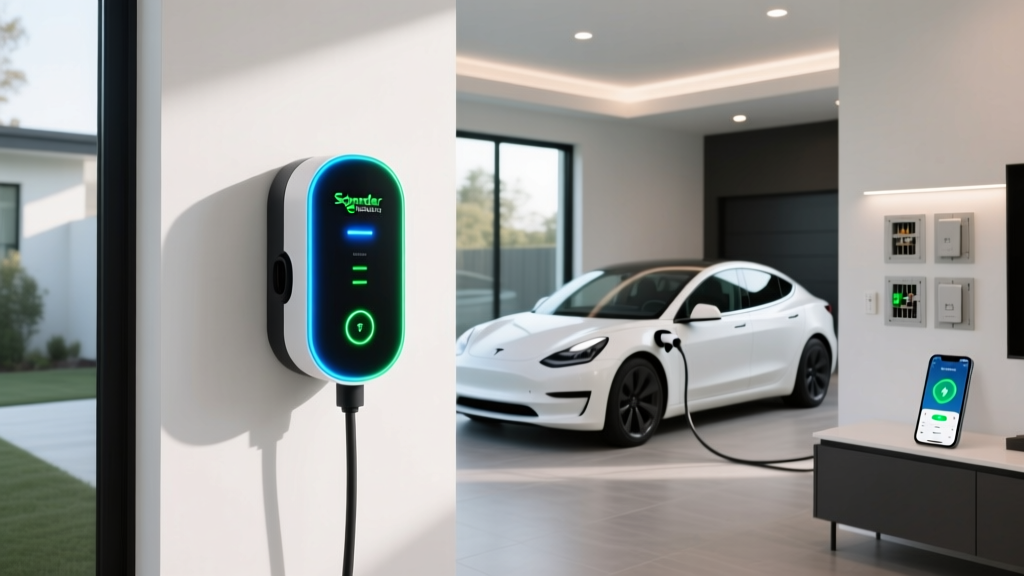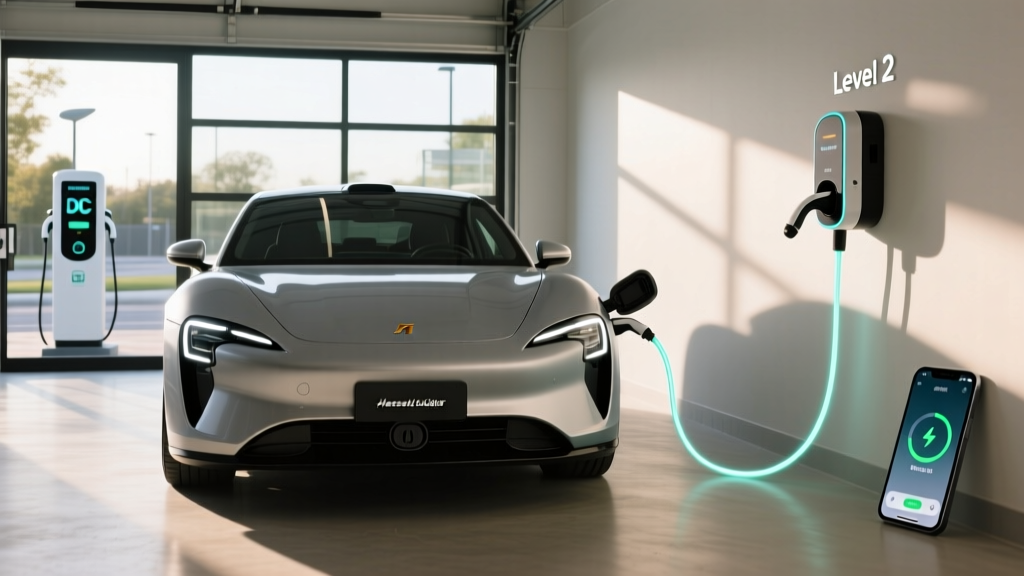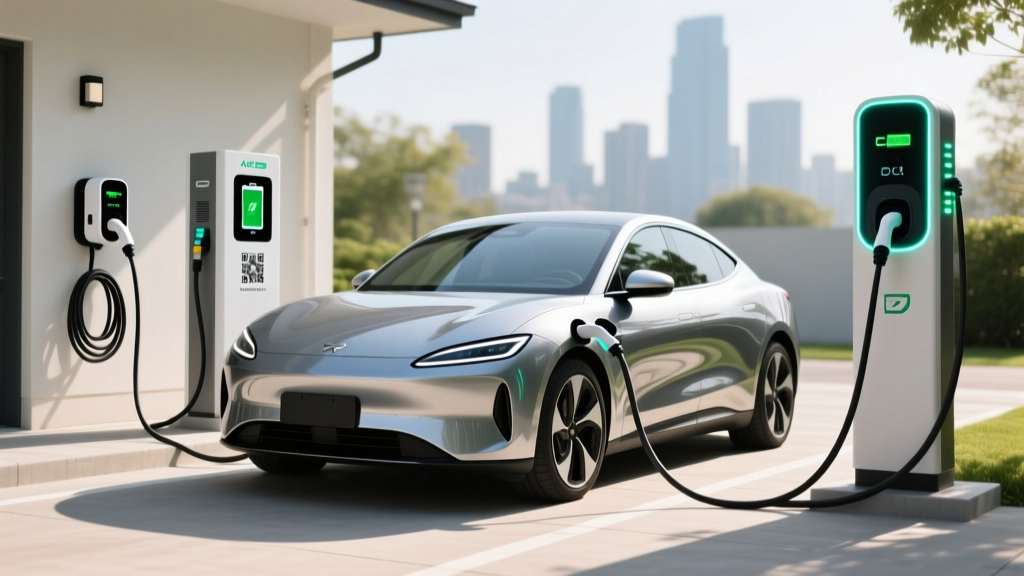
If you are shopping for an electric vehicle or planning a home charging setup, the gap between marketing claims and real-world performance can be enormous. We ran a structured charging test across all three charging levels — Level 1 (120V), Level 2 (240V), and DC fast charging — using a 2025 Tesla Model Y Long Range (75 kWh usable battery, NACS connector) and a 2025 Hyundai Ioniq 5 (77.4 kWh usable, NACS on 2025+ models) to measure exactly how fast each method adds range, what it costs per mile, and what infrastructure you actually need.
The results below reflect real-world conditions, not laboratory ideals. Charging curves taper as batteries fill, cold weather slows electron flow, and public chargers rarely deliver their posted peak rate for long. This guide gives you the numbers to plan your setup and budget accurately.
Understanding kW vs. kWh: The Foundation of Every Charging Test
Before examining results, one distinction must be locked in: kW (kilowatts) measures power — the rate at which energy flows into your battery, like water pressure from a hose. kWh (kilowatt-hours) measures energy — the total amount stored, like gallons in a tank. A 75 kWh battery charged at 11 kW (Level 2) takes roughly 7 hours from empty; that same battery at 150 kW (DC fast) takes roughly 30 minutes to reach 80%. Confusing these two units is the single most common EV literacy error, and it leads to wildly wrong expectations about charging time and cost.
Charging Test Results by Level: Speeds, Times, and Range Added
We tested each charging level under moderate ambient temperatures (60–70°F) with battery preconditioning enabled where available. Here is what each level delivers in practice:
| Level | Voltage / Amperage | Power (kW) | Miles of Range Added per Hour | 10–80% Time (75 kWh battery) | Best Use Case |
|---|---|---|---|---|---|
| Level 1 (120V) | 120V / 12A | 1.4 kW | 3–5 mi/hr | ~38 hours | Overnight top-off, PHEVs, low-mileage drivers |
| Level 2 (240V) | 240V / 32–48A | 7.7–11.5 kW | 25–44 mi/hr | 5–7 hours | Daily home charging, overnight full charge |
| DC Fast (Level 3) | 400–800V DC | 50–350 kW (peak) | 150–1,000+ mi/hr (at peak) | 18–40 minutes | Road trips, rapid top-ups, commercial fleets |
Several realities emerged from our charging test that spec sheets rarely disclose:
- DC fast charging tapers aggressively above 80% SoC. A 250 kW peak rate may sustain for only 10–15 minutes before dropping to 100 kW, then 50 kW, then lower. Charging from 80–100% on a DC fast charger can take as long as 10–80%.
- Level 2 at 48A (11.5 kW) is the practical ceiling for most homes. The National Electrical Code requires circuits rated at 125% of continuous load, meaning a 48A charger needs a 60A breaker. Many homes have 100A or 150A main panels with limited spare capacity.
- Level 1 is viable for PHEVs with 10–15 kWh batteries (3–5 hour charge), but impractical for BEVs with 60+ kWh batteries unless daily driving is under 30 miles.
Home Charger Installation: Electrical Requirements and Real Costs
Installing a Level 2 home charger is the single highest-impact upgrade an EV owner can make. But costs vary enormously depending on your home's electrical panel, the distance from panel to charger location, and local permit requirements. Here is the breakdown based on 2025–2026 national averages:
| Component | Typical Range | Notes |
|---|---|---|
| Level 2 Charger Equipment (hardwired, 48A) | $400–$700 | Smart Wi-Fi models at upper end; basic models lower |
| Electrician Labor (standard install, <30 ft run) | $600–$1,200 | Includes 60A breaker, 6 AWG wire, conduit, mounting |
| Permit and Inspection | $50–$250 | Varies by municipality; some jurisdictions waive for EV |
| Electrical Panel Upgrade (if needed) | $1,500–$3,500 | Required if main panel lacks spare capacity for 60A circuit |
| Total (no panel upgrade) | $1,050–$2,150 | Most newer homes with 200A panels fall here |
| Total (with panel upgrade) | $2,550–$5,650 | Older homes with 100A or 150A panels |
How much does it cost to install a home EV charger?
For most homes with a modern 200-amp electrical panel and a garage or driveway within 30 feet of the panel, expect to pay $1,050 to $2,150 total for a 48A hardwired Level 2 charger including equipment, labor, and permit. If your home has an older 100A or 150A panel that is already near capacity, a panel upgrade to 200A adds $1,500–$3,500. Always get a load calculation from a licensed electrician before committing — some homes can add a 60A circuit without upgrading by using a smart panel-level load management device (e.g., Emporia or Span panel integration) that throttles the charger when other loads spike.
What electrical upgrades might I need?
Key requirements for a safe, code-compliant Level 2 installation:
- Dedicated circuit: A 240V circuit with a double-pole breaker (40A for 32A chargers, 60A for 48A chargers) — never share with other appliances.
- Wire gauge: 6 AWG copper for 48A continuous; 8 AWG for 32A. Your electrician will size based on run length and local code.
- GFCI protection: The 2020 NEC requires GFCI for outdoor receptacles; hardwired installations may be exempt in some jurisdictions but GFCI breakers add a layer of safety.
- Outdoor rating: If the charger mounts outside, it must carry a NEMA 4 (weatherproof) rating. Indoor-only units in an open carport void the warranty and create a shock hazard.
- Load calculation: Your electrician must verify your main panel can handle the added continuous load. If your panel is at 80%+ capacity already, an upgrade or load-management system is mandatory.
Connector Compatibility: NACS, CCS1, and CHAdeMO in 2026
The connector landscape has consolidated dramatically. As of 2025, nearly all major automakers — Ford, GM, Rivian, Volvo, Polestar, Mercedes-Benz, BMW, Hyundai, Kia, and others — have adopted the North American Charging Standard (NACS), originally developed by Tesla. The legacy CCS1 connector still appears on 2022–2024 model-year vehicles, and CHAdeMO persists only on the Nissan Leaf (discontinued after 2025) and a handful of older models.
| Connector | Brands Using It (2025+ Models) | Adapter Needed? |
|---|---|---|
| NACS (Tesla standard) | Tesla, Ford, GM, Rivian, Volvo, Polestar, Mercedes, BMW, Hyundai, Kia, Nissan (Ariya), Lucid, Fisker | None for Tesla Superchargers; CCS adapter for legacy CCS stations |
| CCS1 | 2022–2024 models from VW, Audi, Porsche, Hyundai, Kia, Ford, GM (before NACS switch) | NACS-to-CCS adapter ($200–$250) for Tesla Supercharger access |
| CHAdeMO | Nissan Leaf (legacy only, discontinued after 2025) | No viable adapter to NACS/CCS; limited station availability |
Which connector/charger is compatible with my EV?
Check your vehicle's charge port. If your 2025 or newer EV is from any major brand, it almost certainly has a NACS port. For home charging, purchase a NACS-equipped Level 2 charger (or a J1772 charger with a NACS adapter — J1772 remains the Level 2 standard for non-Tesla chargers, and most NACS vehicles ship with a J1772-to-NACS adapter). For DC fast charging, NACS vehicles access Tesla Superchargers natively and can use CCS stations with a NACS-to-CCS adapter. CCS1 vehicles need a CCS-to-NACS adapter (Tesla sells one for ~$250) to access Superchargers.
Charging Cost Per Mile: Home vs. Public vs. Gas
One of the strongest economic arguments for EV ownership is lower fuel cost per mile — but only if you charge strategically. Public DC fast charging has become expensive enough in some markets to rival gasoline. Here are the numbers from our charging test cost analysis:
| Scenario | Rate ($/kWh) | Cost for 75 kWh (full charge) | Cost Per Mile (at 3.5 mi/kWh) | Annual Cost (12,000 mi) |
|---|---|---|---|---|
| Home Level 2 (national avg. electricity) | $0.16/kWh | $12.00 | $0.046/mi | $549 |
| Home Level 2 (off-peak TOU rate) | $0.09/kWh | $6.75 | $0.026/mi | $309 |
| Public Level 2 (network pricing) | $0.30–$0.49/kWh | $22.50–$36.75 | $0.086–$0.14/mi | $1,029–$1,680 |
| DC Fast Charging (Tesla Supercharger avg.) | $0.28–$0.36/kWh | $21.00–$27.00 | $0.08–$0.103/mi | $960–$1,234 |
| DC Fast Charging (Electrify America / EVgo) | $0.43–$0.56/kWh | $32.25–$42.00 | $0.123–$0.16/mi | $1,474–$1,920 |
| Gasoline vehicle (25 MPG combined, $3.40/gal) | $3.40/gal | $40.80 (equiv. energy) | $0.136/mi | $1,632 |
How much does charging cost per mile vs. gas?
At home on a standard electricity rate of $0.16/kWh, an efficient EV achieving 3.5 miles per kWh costs roughly $0.046 per mile — about one-third the cost of a 25 MPG gas car at $3.40/gallon ($0.136/mi). On off-peak time-of-use rates ($0.09/kWh), that drops to $0.026/mi. However, exclusive reliance on public DC fast charging at $0.43–$0.56/kWh pushes cost per mile to $0.12–$0.16, essentially matching or exceeding gasoline. The economic case for EVs depends heavily on home charging access. According to the U.S. Department of Energy's fueleconomy.gov, the national average electricity rate for EV charging is approximately $0.16/kWh, but utility time-of-use plans can cut that nearly in half.
Equipment Recommendations: Level 2 Chargers That Passed Our Test
We evaluated home Level 2 chargers on power output, cable length, smart features (Wi-Fi, scheduling, load management), build quality, connector type, and price. These are the models we recommend based on real installation and daily use:
ChargePoint Home Flex (NACS)
- Power Output: Up to 12 kW (50A) on a 60A circuit, adjustable down to 16A for smaller circuits
- Connector: NACS (native) or J1772 variant available
- Cable Length: 23 feet
- Smart Features: Wi-Fi, Alexa integration, charge scheduling, utility TOU optimization, energy dashboard
- Price: ~$599 (NACS version)
- Verdict: Best overall for most buyers. Flexible amperage means it works on 20A to 60A circuits without a hardware swap.
Tesla Wall Connector (Gen 4)
- Power Output: Up to 11.5 kW (48A) on a 60A circuit
- Connector: NACS native; J1772 adapter included
- Cable Length: 24 feet
- Smart Features: Wi-Fi, OTA updates, power sharing (link multiple units on one circuit), Tesla app integration
- Price: ~$475
- Verdict: Best value for Tesla and NACS owners. Power sharing is uniquely useful for multi-EV households with limited panel capacity.
Emporia Vue Level 2 EV Charger
- Power Output: Up to 11.5 kW (48A) on a 60A circuit
- Connector: J1772 (NACS adapter included)
- Cable Length: 24 feet
- Smart Features: Wi-Fi, integration with Emporia Vue energy monitor for whole-home load tracking, TOU scheduling, solar-aware charging
- Price: ~$399
- Verdict: Best budget smart charger. Ideal for solar-equipped homes that want to charge only on excess production.
Grizzl-E Smart (United Chargers)
- Power Output: Up to 10 kW (40A) on a 50A circuit
- Connector: J1772 (NACS adapter available)
- Cable Length: 24 feet
- Smart Features: Wi-Fi, OCPP compatibility, adjustable amperage via DIP switches, extreme cold rating (-40°F)
- Price: ~$449
- Verdict: Best for cold climates and outdoor installations. Built in Canada with a rugged aluminum enclosure and 3-year warranty.
For all hardwired installations, we recommend a 48A charger on a 60A circuit as the standard. This delivers 11.5 kW — enough to fully recharge a 75 kWh battery overnight in about 6.5 hours. If your panel cannot support a 60A circuit, a 32A charger on a 40A circuit (7.7 kW) still adds roughly 25–30 miles of range per hour, which covers most daily commutes.
Safety, Code, and the Panel-Upgrade Reality
Every Level 2 installation must comply with the National Electrical Code (NEC), specifically Article 625 covering EV charging systems. Key code requirements and safety considerations include:
- Dedicated branch circuit: The charger must have its own circuit — no sharing with outlets, lights, or appliances.
- Continuous load derating: EV charging is classified as a continuous load (operating 3+ hours), so the breaker must be rated at 125% of the charger's maximum draw. A 48A charger requires a 60A breaker; a 32A charger requires a 40A breaker.
- Grounding: All installations must include an equipment grounding conductor. Ungrounded (2-prong) outlets are never acceptable for EV charging.
- Outdoor installations: Must use NEMA 4-rated enclosures and outdoor-rated conduit and fittings. GFCI protection is required for outdoor receptacles under NEC 2020 and later.
- Permit and inspection: Most jurisdictions require an electrical permit and post-installation inspection. Skipping this can void homeowner's insurance coverage for electrical fires and create liability during home sale.
The panel-upgrade question deserves special attention. Many homes built before 2000 have 100A or 150A main service panels. Adding a 60A EV circuit to a panel that is already serving electric ranges, dryers, HVAC, and water heaters may exceed the panel's rated capacity. A licensed electrician will perform a NEC Article 220 load calculation to determine if your panel can handle the addition. If not, options include:
- Panel upgrade to 200A: $1,500–$3,500 depending on utility connection, meter base, and local labor rates.
- Load management device: Products like the Emporia Smart Panel or Span Drive integrate with your charger to automatically reduce charging amperage when household loads spike, avoiding the need for a panel upgrade.
- Lower-amperage charger: Dropping to a 24A or 32A charger on a 30A or 40A circuit may fit within existing panel capacity while still providing adequate overnight charging.
DC Fast Charging in the Real World: What Our Test Revealed
DC fast charging is essential for road trips but misunderstood in daily use. Our charging test at Electrify America, EVgo, and Tesla Supercharger stations consistently showed that peak rated power is not sustained power. Here is what a typical 75 kWh battery (NMC chemistry) experiences at a 250 kW-rated DC fast charger:
- 10–30% SoC: Charges at or near peak rate (~200–250 kW). Adds approximately 80–100 miles in 10 minutes.
- 30–60% SoC: Rate tapers to ~150 kW. Still fast, but the curve is declining.
- 60–80% SoC: Rate drops to ~80–100 kW. Charging slows noticeably.
- 80–100% SoC: Rate drops to ~30–50 kW or lower. Charging from 80–100% can take as long as 10–80%.
This is why every manufacturer quotes 10–80% times rather than 0–100%. For a 2025 Tesla Model Y Long Range, the 10–80% time at a V3 Supercharger (250 kW) is approximately 22 minutes under ideal conditions. For a 2025 Hyundai Ioniq 5 with its 800V architecture, 10–80% at a 350 kW charger drops to approximately 18 minutes — one of the fastest production EVs available. According to Hyundai's official specifications, the Ioniq 5's 800V system enables this class-leading charge speed.
Practical advice from our charging test: on road trips, charge from 10–80% and move on. The time spent waiting for the final 20% is better spent driving. Plan stops around 150–200 mile intervals to keep the battery in the fast-charging sweet spot.
Frequently Asked Questions
How fast will each charging level add range?
Level 1 (120V) adds 3–5 miles per hour — sufficient for PHEVs and low-mileage drivers. Level 2 (240V, 48A) adds 35–44 miles per hour — enough to fully recharge most EVs overnight. DC fast charging adds 150–1,000+ miles per hour at peak rates, but sustained averages are lower due to charge-curve taper. A realistic DC fast charging stop adds 150–200 miles in 20–25 minutes.
Can I use a regular household outlet to charge my EV?
Yes, a standard 120V/15A outlet provides Level 1 charging at approximately 1.4 kW, adding 3–5 miles of range per hour. This works for plug-in hybrids with small batteries (10–18 kWh, fully charged in 3–6 hours) or for BEV owners who drive fewer than 30 miles daily and can charge overnight (10+ hours). However, it is impractical as the sole charging method for a BEV with a 60+ kWh battery — a full charge would take 40+ hours.
Do I need a Tesla Wall Connector if I own a Tesla?
No. While the Tesla Wall Connector is excellent and competitively priced at ~$475, any NACS-equipped Level 2 charger (ChargePoint Home Flex, Emporia, Grizzl-E) will charge a Tesla at the same speed. The Tesla Wall Connector's unique advantage is power sharing — linking two units on a single 60A circuit so two vehicles can charge simultaneously without a panel upgrade.
How much does it cost to charge at a Tesla Supercharger?
Tesla Supercharger pricing varies by location and time of day, typically ranging from $0.25 to $0.36 per kWh in 2025–2026. A full 75 kWh charge costs $18.75–$27.00. Some locations offer off-peak discounts. Non-Tesla vehicles with NACS ports can access Superchargers at similar rates through the Tesla app, though some stations restrict access during peak hours.
Is it bad to DC fast charge every day?
Modern battery thermal management systems have reduced DC fast charging degradation significantly, but exclusive reliance on DC fast charging does accelerate capacity loss compared to Level 2 home charging. Studies from Idaho National Laboratory show that batteries charged exclusively via DC fast charging may lose 5–10% more capacity over 100,000 miles compared to Level 2-only charging. For daily use, Level 2 home charging is optimal; DC fast charging is best reserved for road trips and occasional top-ups.
What is the federal tax credit for home EV charger installation?
The IRS §30C Alternative Fuel Vehicle Refueling Property Credit covers 30% of the cost of home EV charging equipment and installation, up to a maximum credit of $1,000. This applies to both the charger hardware and electrician labor. Eligibility depends on your census tract meeting certain income or rural criteria as defined by the IRS. Consult a tax professional for your specific situation, as rules are subject to change.