If you're transitioning to an electric vehicle, understanding EV charging technology is the single most important factor in daily ownership satisfaction. Unlike gas cars, where refueling is universal and takes five minutes, EV charging spans three distinct power levels, multiple connector standards, and wildly varying costs depending on where and when you plug in. This guide breaks down the physics, the economics, and the hardware — with exact numbers — so you can plan your charging setup with confidence.
The Three Levels of EV Charging Technology
Every EV owner needs to internalize the difference between kW (kilowatts) and kWh (kilowatt-hours). kW measures power — the rate at which energy flows into your battery, like water pressure from a hose. kWh measures energy — the total capacity of your battery, like the size of the tank. A 75 kWh battery charged at 7 kW takes roughly 10 hours; charged at 150 kW, it takes under 30 minutes to reach 80%. Confusing these two units is the most common mistake new EV owners make.
| Level | Voltage | Power (kW) | Miles of Range Per Hour | Typical Use Case |
|---|---|---|---|---|
| Level 1 | 120V AC | 1.0–1.9 kW | 3–5 mi/hr | Overnight trickle; PHEVs; emergencies |
| Level 2 | 240V AC | 3.3–19.2 kW | 12–75 mi/hr | Home daily charging; workplace; public L2 |
| DC Fast Charging (Level 3) | 400–800V DC | 50–350+ kW | 150–1,000+ mi/hr (peak) | Road trips; rapid top-ups; commercial fleets |
A critical reality about DC fast charging: the advertised peak kW (say, 250 kW) is only sustained for a narrow portion of the battery's state of charge — typically between 10% and 40%. Above 80%, the charge curve tapers dramatically to protect battery chemistry. A vehicle that charges 10–80% in 18 minutes may need another 25 minutes to go from 80–100%. This is why most road-trip strategies target 10–80% charges and why manufacturers quote that specific range.
Home Charger Installation: Electrical Requirements and Costs
Installing a Level 2 home charger is the single biggest quality-of-life upgrade an EV owner can make. But the total cost depends heavily on your home's electrical infrastructure. Here's what to expect.
Electrical Requirements
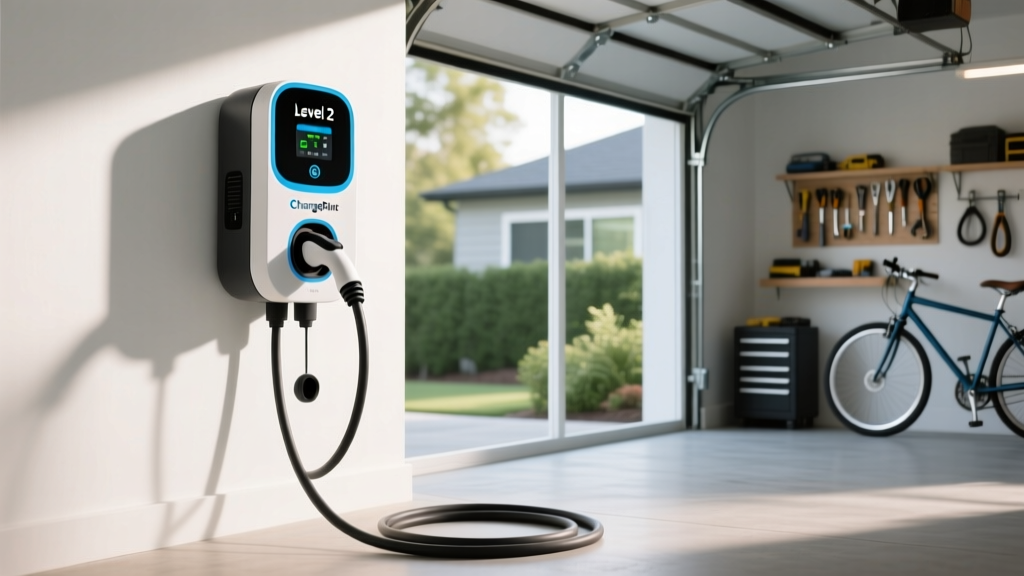
A typical Level 2 home charger runs on a 240V dedicated circuit, drawing between 16A and 48A depending on the unit. The most common setup is a 40A circuit (delivering up to 9.6 kW), which requires a 50A breaker — electrical code mandates that continuous loads use only 80% of a breaker's rated capacity. Higher-powered units like the 48A ChargePoint Home Flex or 80A Tesla Wall Connector require 60A or 100A breakers respectively.
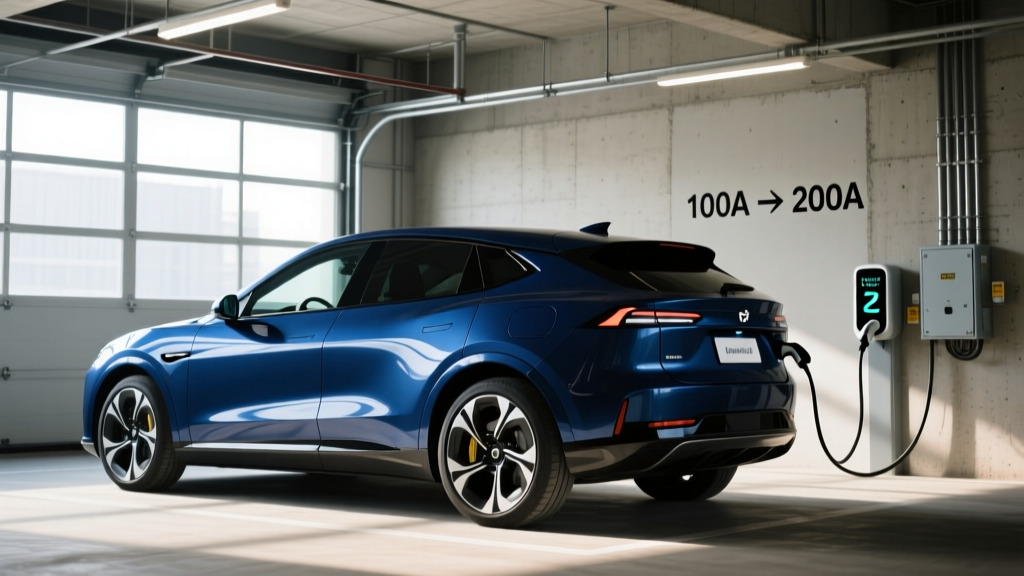
Your home's electrical panel must have sufficient spare capacity. A 200A panel is standard in modern homes and usually accommodates a 40A EV circuit without issue. Older homes with 100A panels often require a panel upgrade to 200A, which is the single largest cost variable in the installation process.
| Component | Low End | High End | Notes |
|---|---|---|---|
| Level 2 Charger Equipment | $300 | $750 | Smart Wi-Fi units with 25ft cable |
| Electrician Labor (simple run) | $400 | $900 | Panel adjacent, short conduit run |
| Electrician Labor (complex run) | $1,000 | $2,500 | Long wire runs, trenching, attic crawls |
| Permit Fees | $50 | $250 | Varies by municipality |
| Electrical Panel Upgrade (if needed) | $1,500 | $4,000 | 100A → 200A upgrade; not always required |
| Total (no panel upgrade) | $750 | $2,500 | Most common scenario |
| Total (with panel upgrade) | $2,250 | $6,500 | Older homes with 100A service |
Always hire a licensed electrician and pull a permit. Unpermitted electrical work can void your homeowner's insurance and create fire hazards. The National Electrical Contractors Association maintains a directory of qualified EV charger installers. Some utilities offer rebates of $250–$1,000 for home charger installation — check with your local provider before scheduling work.
What Electrical Upgrades Might I Need?
Beyond the panel itself, consider these potential upgrades: a dedicated circuit (never share the EV circuit with other appliances), a GFCI breaker (required by NEC 2020+ for outdoor outlets in many jurisdictions), and an outdoor-rated NEMA 14-50 receptacle with a weatherproof cover if you're installing outside. For hardwired units, the electrician will run conduit directly to the charger — this is generally more reliable and avoids the GFCI nuisance-tripping issues that some owners experience with plug-in setups.
Connector Compatibility: NACS, CCS, and CHAdeMO
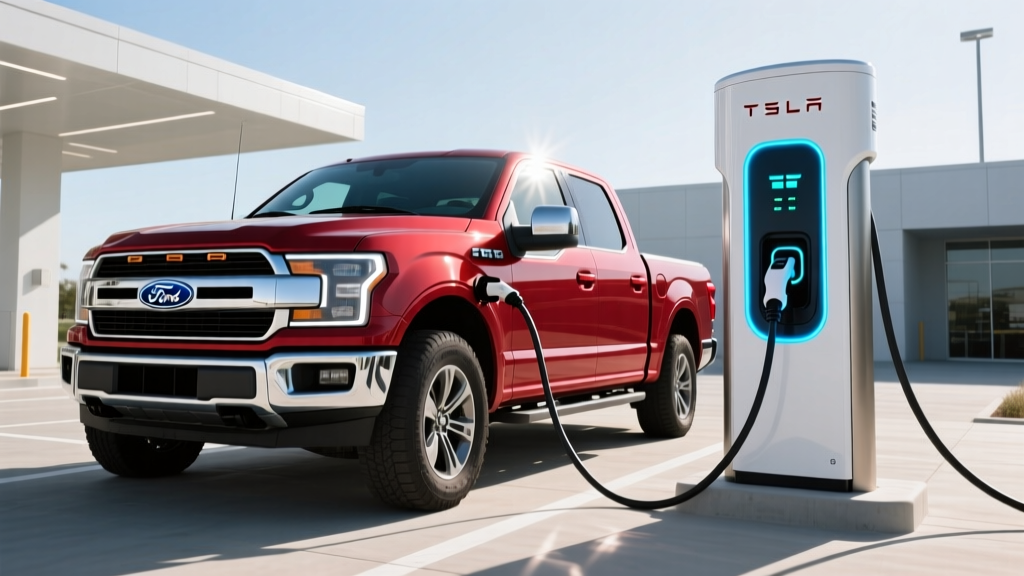
The connector landscape has consolidated dramatically since 2023, when Ford and GM announced adoption of Tesla's North American Charging Standard (NACS). As of the 2026 model year, virtually all new EVs sold in North America use the NACS connector natively. The older CCS1 connector persists on vehicles from the 2020–2024 model years, and CHAdeMO is limited to legacy Nissan Leaf and Mitsubishi models.
| Connector | Brands (Native) | DC Fast Networks Supported | Adapter Needed? |
|---|---|---|---|
| NACS (Tesla standard) | Tesla, Ford, GM, Rivian, Volvo, Polestar, Hyundai/Kia (2025+), BMW, Mercedes, Toyota | Tesla Supercharger, Electrify America, EVgo, ChargePoint (NACS stalls) | CCS→NACS adapter for legacy CCS vehicles (~$200) |
| CCS1 | Legacy VW ID.4, Hyundai Ioniq 5 (pre-2025), Kia EV6 (pre-2025), BMW i4 (pre-2025) | Electrify America, EVgo, ChargePoint, Ionity (EU) | NACS→CCS adapter for Tesla Supercharger access (~$250) |
| CHAdeMO | Nissan Leaf (all years), Mitsubishi Outlander PHEV (older) | Electrify America (limited), EVgo (legacy stalls) | No adapter available; network access declining |
If you own a CCS-equipped vehicle from the 2022–2024 era, you can purchase a NACS-to-CCS adapter to access Tesla's Supercharger network, which now welcomes non-Tesla vehicles at many locations. Verify adapter compatibility with your specific model on the manufacturer's site — Ford and Rivian provide adapters free or at reduced cost to owners of affected model years.
Cost to Charge: Home vs. Public vs. Gas
The economic case for EVs hinges on charging at home during off-peak hours. Public DC fast charging, while convenient for road trips, can cost nearly as much per mile as gasoline.
| Scenario | Rate | Cost Per Mile (at 3.5 mi/kWh or 28 MPG) | Annual Cost (12,000 mi) |
|---|---|---|---|
| Home Level 2 (off-peak utility rate) | $0.09/kWh | $0.026/mi | $309 |
| Home Level 2 (standard residential rate) | $0.16/kWh | $0.046/mi | $549 |
| Public Level 2 (network pricing) | $0.25/kWh | $0.071/mi | $857 |
| DC Fast Charging (Electrify America, EVgo) | $0.48/kWh | $0.137/mi | $1,646 |
| Gasoline (28 MPG combined, $3.40/gal) | $3.40/gal | $0.121/mi | $1,457 |
The numbers are clear: home charging at off-peak rates costs roughly one-fifth of gasoline per mile. But exclusive reliance on DC fast charging actually exceeds gas costs in many markets. The EPA's fueleconomy.gov tool lets you compare specific vehicles using your local electricity rates. For the typical EV owner who charges at home 85% of the time and uses DC fast charging for road trips, annual fuel savings over a comparable gas vehicle run $800–$1,200.
Charging Time Examples: 10–80% for Common Battery Sizes
Charge times depend on three variables: battery capacity (kWh), the vehicle's maximum accepted charge rate (kW), and the charger's output. Here are real-world 10–80% estimates based on manufacturer data and independent testing:
- Tesla Model Y (75 kWh battery, 250 kW peak): ~15 minutes at a V3 Supercharger (tapers above 50% SoC)
- Hyundai Ioniq 5 (77.4 kWh, 800V architecture, 240 kW peak): ~18 minutes at a 350 kW Electrify America station
- Ford F-150 Lightning Extended Range (131 kWh, 150 kW peak): ~41 minutes — larger battery, lower peak rate
- Chevrolet Equinox EV (85 kWh, 150 kW peak): ~30 minutes at a 150+ kW DC charger
- Level 2 home charging (48A / 11.5 kW) for a 77 kWh battery, 10–100%: ~6.5 hours — ideal for overnight
Remember that charging speed is bottlenecked by whichever is lower: the charger's output or the vehicle's maximum acceptance rate. Plugging a vehicle that accepts 150 kW max into a 350 kW charger won't speed things up — but plugging a 350 kW-capable vehicle into a 50 kW charger will slow things down significantly.
Recommended Home EV Chargers for 2026
ChargePoint Home Flex (NACS)
Power: Up to 11.5 kW (48A, 240V) | Cable: 23 ft | Price: ~$550
Smart features: Wi-Fi scheduling, Alexa integration, charge history, utility demand-response programs. UL-listed, NEMA 4 outdoor rating. Adjustable amperage (16A–48A) via DIP switch — useful for homes with limited panel capacity. The most versatile smart charger on the market, compatible with any EV via NACS or J1772 adapter.
Tesla Wall Connector (NACS)
Power: Up to 11.5 kW (48A, 240V) | Cable: 24 ft | Price: ~$475
Smart features: Wi-Fi updates, Power Sharing (link multiple units on one circuit), Tesla app integration. Sleek design, NACS native. For non-Tesla NACS vehicles (Ford, Rivian, GM), the Wall Connector works seamlessly. Best value in the category, though the app ecosystem is Tesla-centric.
Emporia Vue Level 2 Charger
Power: Up to 11.5 kW (48A, 240V) | Cable: 24 ft | Price: ~$400
Smart features: Integrates with Emporia's whole-home energy monitor for real-time solar-aware charging, scheduled charging, and load management. Excellent choice for homes with solar panels — can be configured to charge only on excess solar production. J1772 connector with NACS adapter included.
Grizzl-E Smart (United Chargers)
Power: Up to 10 kW (40A, 240V) | Cable: 24 ft | Price: ~$500
Smart features: OCPP-compatible (open protocol — works with any network), adjustable amperage, extreme cold-rated to -40°F. Built in Canada for harsh climates. Less polished app than ChargePoint, but the most rugged build quality available. Ideal for unheated garages and outdoor installations in northern states.
Safety, Code, and Installation Best Practices
EV charging involves sustained high-current draw — far more demanding on your home's wiring than typical appliances. Follow these non-negotiable safety principles:
- Dedicated circuit: Your EV charger must have its own circuit — never share with a dryer, HVAC, or kitchen appliance.
- GFCI protection: Required for outdoor installations under NEC Article 625. Many electricians recommend hardwiring over NEMA 14-50 outlets to avoid GFCI nuisance tripping, which is a known issue with some breaker brands.
- Outdoor rating: Any outdoor charger must carry a NEMA 4 or NEMA 4X rating for weather resistance. Indoor-only units (NEMA 1) will fail and void warranties if exposed to moisture.
- Wire gauge: A 48A charger on a 60A breaker requires 4 AWG copper wire for runs up to 50 feet; longer runs may need 3 AWG to prevent voltage drop. Your electrician will calculate this — don't attempt DIY sizing.
- Utility notification: Some utilities require advance notification before installing an EV charger, and many offer time-of-use (TOU) rate plans that dramatically reduce off-peak charging costs. Contact your utility before installation.
The National Fire Protection Association's NEC Article 625 governs all EV charging equipment installation in the United States. Local jurisdictions may add amendments — your electrician and permitting office will advise on specific requirements in your area.
Frequently Asked Questions
How much does it cost to install a home EV charger?
Most homeowners pay between $750 and $2,500 for a complete Level 2 installation (equipment, electrician, and permit) when no panel upgrade is needed. If your home has a 100A electrical panel that requires upgrading to 200A, add $1,500–$4,000. The total range is $750–$6,500 depending on infrastructure complexity. Utility rebates of $250–$1,000 can offset a significant portion of the cost.
How fast will each charging level add range?
Level 1 (120V) adds 3–5 miles of range per hour — adequate for plug-in hybrids with small batteries but impractical for full EVs. Level 2 (240V, 40A) adds roughly 30–35 miles per hour, fully recharging most EVs overnight in 6–8 hours. DC fast charging adds 150–1,000+ miles per hour at peak rates, enabling 10–80% charges in 15–40 minutes depending on the vehicle and charger.
Which connector/charger is compatible with my EV?
If your EV is a 2025 or 2026 model year from any major manufacturer, it almost certainly uses the NACS connector natively. Vehicles from 2020–2024 may use CCS1. The Nissan Leaf uses CHAdeMO exclusively. Check your vehicle's charge port or consult the manufacturer's specifications. For home Level 2 charging, all EVs accept the J1772 connector or NACS — adapters are widely available for cross-compatibility.
How much does charging cost per mile vs gas?
Home charging at off-peak rates ($0.09/kWh) costs about $0.026 per mile — roughly one-fifth the cost of gasoline at $3.40/gal and 28 MPG ($0.121/mi). Standard residential rates ($0.16/kWh) bring the cost to $0.046/mi. However, exclusive use of public DC fast charging ($0.48/kWh) costs $0.137/mi — slightly more than gas. The economics strongly favor home charging.
What electrical upgrades might I need?
The most common upgrade is a panel capacity increase from 100A to 200A, required in older homes that lack spare breaker slots or amperage headroom. You'll also need a dedicated 50A or 60A breaker, appropriate-gauge wiring, and potentially a GFCI breaker for outdoor installations. Homes built after 2000 with 200A panels rarely need upgrades beyond the dedicated circuit itself.
Is it safe to charge an EV in the rain or snow?
Yes. All outdoor-rated EV chargers (NEMA 4 or higher) are designed for wet conditions. The connector and vehicle charge port are engineered with drainage channels and sealed contacts. Charging in rain, snow, or freezing temperatures is routine and safe — the system will not energize until a secure connection is confirmed.