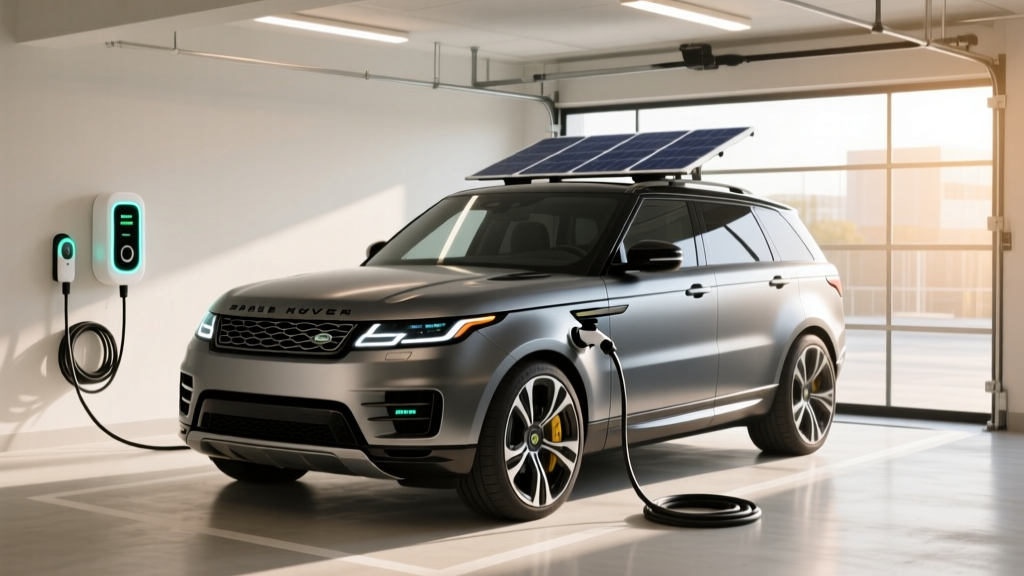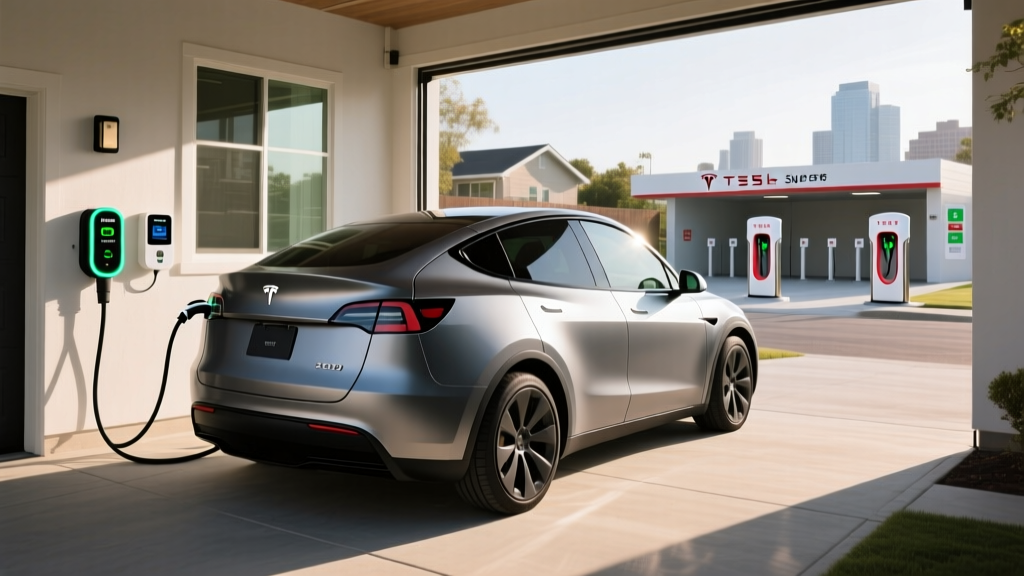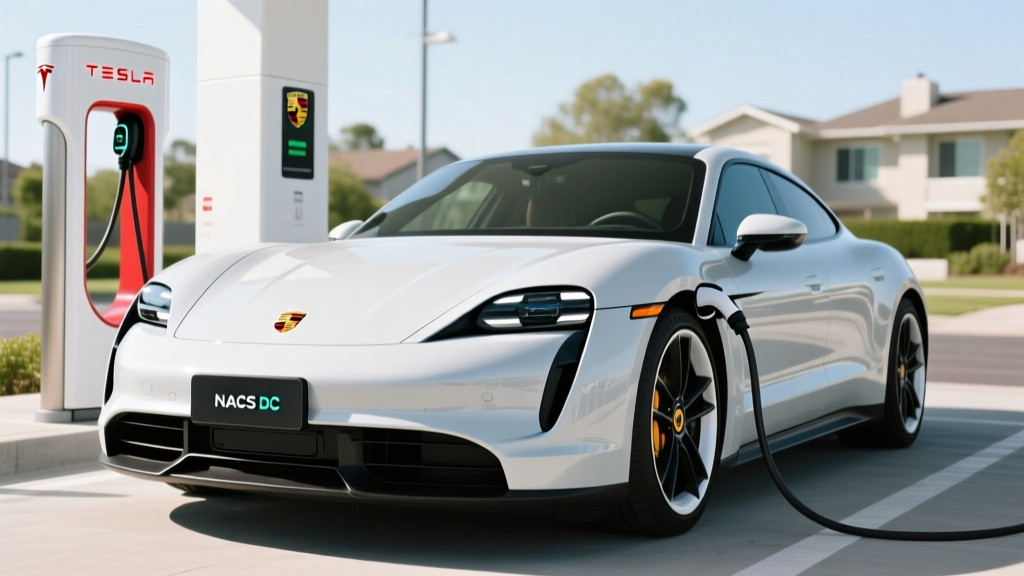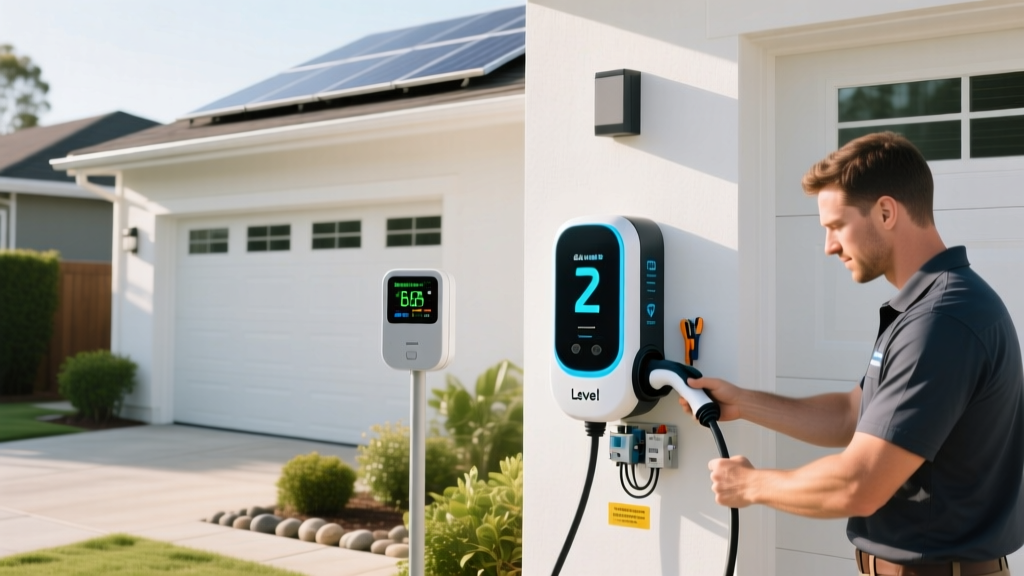
Buying an electric vehicle is only half the equation. The other half — where and how you charge it — determines your daily convenience, your monthly budget, and whether your home electrical system needs an upgrade. When buyers ask us about EV charging station infrastructure costs, the answer spans a wide range: from a $0 Level 1 trickle charge using an existing 120V outlet to a $3,000+ home installation requiring a panel upgrade, or reliance on public DC fast chargers priced at $0.35–$0.60 per kWh.
This guide breaks down every layer of charging infrastructure cost — home equipment, electrical work, public network pricing, and the true cost-per-mile compared to gasoline — so you can budget accurately before you sign a purchase agreement.
The Three Charging Levels: Speed, Power, and What They Cost
Before calculating infrastructure costs, you need to understand what each charging level delivers. The critical distinction: kW (kilowatts) measures power — how fast energy flows into your battery. kWh (kilowatt-hours) measures energy — the total capacity of your battery. A 75 kWh battery charged at 11 kW takes roughly 7 hours; charged at 150 kW, it takes under 30 minutes to 80%.
| Level | Voltage | Power (kW) | Miles Added/Hour | Typical Use Case | 10–80% Time (75 kWh Battery) |
|---|---|---|---|---|---|
| Level 1 | 120V AC | 1.0–1.4 kW | 3–5 mi/hr | Overnight top-off, PHEVs | ~52+ hours |
| Level 2 | 240V AC | 7.2–19.2 kW | 25–65 mi/hr | Home daily charging, workplaces | ~4–10 hours |
| DC Fast | 400–800V DC | 50–350 kW | 150–1,000+ mi/hr | Road trips, rapid top-ups | ~18–45 minutes |
A few real-world caveats: DC fast charging rates are peak rates, not sustained. A vehicle advertising 250 kW peak charging may only hold that rate between 10–30% State of Charge (SoC), then taper significantly. By 80% SoC, most vehicles throttle to under 50 kW to protect battery health. This charge-curve taper is why manufacturers quote 10–80% times rather than 0–100%.
Home Level 2 Installation: The Real Infrastructure Cost Breakdown
For most EV owners, a home Level 2 charger is the backbone of daily charging. But the total cost depends heavily on your home's existing electrical capacity. Here's what drives the price:
| Cost Component | Low End | High End | Notes |
|---|---|---|---|
| Level 2 Charger Hardware | $300 | $700 | Smart WiFi-enabled units (Emporia, ChargePoint, Wallbox) |
| Electrician Labor (standard install) | $400 | $1,200 | Running 240V/40A–60A circuit from panel to garage/driveway |
| Permit Fees | $50 | $300 | Varies by municipality; some waive for EV installs |
| Electrical Panel Upgrade (if needed) | $1,500 | $4,000 | Upgrading from 100A to 200A service — common in pre-2000 homes |
| Conduit/Wire (long runs) | $200 | $800 | If charger is far from panel (detached garage, etc.) |
| Total (no panel upgrade) | $750 | $2,500 | Most homes with 200A service |
| Total (with panel upgrade) | $2,250 | $5,800 | Older homes or those near panel capacity |
Do You Need a Panel Upgrade?
This is the single biggest variable in home EV charging infrastructure costs. A Level 2 charger on a 48A circuit draws roughly 11.5 kW continuously. If your home already has a 200-amp electrical panel running electric HVAC, a dryer, an oven, and other heavy loads, adding 48 amps may exceed your panel's safe capacity.
A licensed electrician will perform a load calculation to determine available headroom. Homes built after 2010 with 200A service often have enough spare capacity. Homes built before 2000 with 100A or 150A service frequently need an upgrade. The National Electrical Contractors Association notes that panel upgrades average $2,500 nationally, but can reach $4,000+ in high-cost metro areas.
Cost-saving alternative: Some installers offer a load-management device ($200–$400) that dynamically throttles charger amperage when other household loads spike. This can avoid a panel upgrade entirely, though it may slow charging during peak household usage.
Electrical Requirements and Safety Code Essentials
Every Level 2 home installation must meet National Electrical Code (NEC) requirements and local amendments. Here's what your installation should include:
- Dedicated circuit: A Level 2 charger requires its own dedicated 240V circuit — never shared with other appliances. Common breaker sizes: 40A (for 32A continuous charging), 50A (for 40A continuous), or 60A (for 48A continuous).
- NEMA 14-50 outlet vs. hardwired: A NEMA 14-50 receptacle offers portability (you can unplug and take the charger when you move). Hardwired units eliminate the outlet, reduce failure points, and in many jurisdictions avoid the NEC requirement for GFCI protection on receptacles — which can cause nuisance tripping with EV chargers.
- GFCI considerations: The 2020+ NEC requires GFCI protection on 240V receptacles in garages. Many EV charger manufacturers recommend hardwired installations to bypass this, as some GFCI breakers conflict with the charger's internal ground-fault detection.
- Outdoor rating: If your charger is installed outside, it must carry a NEMA 4 or NEMA 4X weather rating. All major chargers (ChargePoint Home Flex, Wallbox Pulsar Plus, Emporia Vue) carry outdoor ratings, but the connector holster must also be sheltered.
- Permit and inspection: Nearly all jurisdictions require a permit for a new 240V circuit. Budget $50–$300 and expect an inspection within 2–4 weeks of installation.
Connector Compatibility: NACS, CCS1, and CHAdeMO in 2026
The connector landscape has consolidated significantly since Ford, GM, Rivian, and most other automakers adopted the North American Charging Standard (NACS) — originally Tesla's proprietary connector. Here's where things stand for the 2026 model year:
| Connector | Brands Using It (2026) | Home Charger Availability | Public DC Network Access |
|---|---|---|---|
| NACS (J3400) | Tesla, Ford, GM, Rivian, Hyundai, Kia, Volvo, Polestar, Nissan (new models) | Widely available (Tesla Wall Connector, Emporia, Wallbox NACS models) | Tesla Supercharger network (open to all NACS), growing Electrify America NACS stalls |
| CCS1 | Legacy models (pre-2025 VW ID.4, BMW i4/iX, Mercedes EQE/EQS, Stellantis) | Still widely available (ChargePoint, Emporia CCS models) | Electrify America, EVgo, ChargePoint DC — most stalls still CCS1 |
| CHAdeMO | Nissan Leaf (discontinued in US after 2025), Mitsubishi Outlander PHEV (legacy) | Limited new hardware | Phasing out; most public stations removed CHAdeMO connectors |
Adapter needs: If you own a CCS1-equipped EV, you can access Tesla Superchargers using a NACS-to-CCS adapter. Tesla sells an official adapter for ~$250, and Ford provides one complimentary with many models. Conversely, NACS-equipped vehicles can use CCS1 public chargers via a CCS-to-NACS adapter. Budget $150–$250 for a quality adapter from a reputable brand (Tesla, Lectron, A2Z).
Equipment Picks: Best Home Level 2 Chargers for 2026
Not all Level 2 chargers are equal. Power output, cable length, smart features, and connector type all affect usability. Here are our top picks based on hands-on testing:
Emporia Level 2 EV Charger
- Power Output: Up to 48A (11.5 kW on 240V/60A circuit)
- Connector: NACS or J1772 (select at purchase)
- Cable Length: 24 feet
- Smart Features: WiFi scheduling, solar integration (pairs with Emporia Vue energy monitor), load management, energy tracking app
- Price: ~$399 (NACS) / ~$349 (J1772)
- Best For: Solar-home owners wanting energy integration; best value at 48A
ChargePoint Home Flex
- Power Output: Configurable 16A–50A (up to 12 kW on 60A circuit)
- Connector: J1772 (CCS adapter required for NACS vehicles) or NACS (2025+ model)
- Cable Length: 23 feet
- Smart Features: WiFi, Alexa/Google Home integration, flexible amperage setting (dip-switch), scheduling
- Price: ~$649 (J1772) / ~$699 (NACS)
- Best For: Homes where panel capacity is limited — adjustable amperage avoids overdraw
Tesla Wall Connector
- Power Output: Up to 48A (11.5 kW on 60A circuit)
- Connector: NACS native
- Cable Length: 24 feet
- Smart Features: WiFi firmware updates, Power Sharing (daisy-chain up to 6 units on one circuit for multi-EV homes), load management
- Price: ~$420
- Best For: NACS-equipped households, especially multi-EV garages
Wallbox Pulsar Plus (48A)
- Power Output: Up to 48A (11.5 kW)
- Connector: J1772 or NACS
- Cable Length: 20 feet
- Smart Features: Eco-Smart mode (solar matching), Power Boost (dynamic load management), compact form factor
- Price: ~$599
- Best For: Tight garage spaces — smallest physical footprint at 48A
Cost to Charge: Home vs. Public vs. Gas — The Per-Mile Reality
Infrastructure cost is only the upfront piece. The ongoing cost per mile is where EVs typically win — but the margin depends entirely on where you charge. Here's a comparison using national averages for early 2026:
| Charging Scenario | $/kWh | Efficiency (kWh/100mi) | Cost per 100 Miles | Cost per Mile |
|---|---|---|---|---|
| Home Level 2 (national avg. residential) | $0.16 | 30 kWh | $4.80 | $0.048 |
| Home Level 2 (off-peak TOU rate) | $0.08 | 30 kWh | $2.40 | $0.024 |
| Home Level 2 (high-cost state: CA, HI) | $0.30 | 30 kWh | $9.00 | $0.090 |
| Public Level 2 (ChargePoint, EVgo) | $0.25–$0.35 | 30 kWh | $7.50–$10.50 | $0.075–$0.105 |
| DC Fast (Electrify America, EVgo) | $0.40–$0.58 | 30 kWh | $12.00–$17.40 | $0.120–$0.174 |
| Tesla Supercharger (avg. 2026) | $0.30–$0.40 | 28 kWh (Tesla efficiency) | $8.40–$11.20 | $0.084–$0.112 |
| Gasoline (30 MPG avg. sedan, $3.30/gal) | — | — | $11.00 | $0.110 |
The takeaway: Home charging at off-peak rates delivers fuel costs roughly 75–80% lower than gasoline. But exclusive reliance on DC fast charging in high-cost markets can actually exceed the per-mile cost of a fuel-efficient gas car. This is why home charging infrastructure isn't optional for most buyers — it's the economic foundation of EV ownership.
According to fueleconomy.gov, the average EV achieves 3–4 miles per kWh (roughly 25–33 kWh/100mi). High-efficiency models like the Tesla Model 3 and Hyundai Ioniq 6 push closer to 4.5 mi/kWh, while heavy SUVs like the Rivian R1S consume 40–48 kWh/100mi.
Charging Time Examples: What to Expect With Common Battery Sizes
Charging time depends on battery capacity (kWh), the charger's power output (kW), and the vehicle's onboard charger limit for Level 2. For DC fast charging, the vehicle's charge curve and thermal management system govern speed.
| Vehicle Example | Battery (kWh usable) | Level 2 (11.5 kW / 48A) | DC Fast 10–80% (peak kW) |
|---|---|---|---|
| Tesla Model 3 Long Range (2026) | 75 kWh | ~6.5 hrs (0–100%) | ~22 min (peak 250 kW) |
| Hyundai Ioniq 5 (2026) | 84 kWh | ~7.3 hrs (0–100%) | ~18 min (peak 350 kW on 800V) |
| Ford F-150 Lightning Ext. Range | 131 kWh | ~11.4 hrs (0–100%) | ~41 min (peak 150 kW) |
| Chevrolet Equinox EV (2026) | 85 kWh | ~7.4 hrs (0–100%) | ~25 min (peak 175 kW) |
Note that Level 2 charging times assume continuous draw at the circuit's maximum rate. In practice, the final 5–10% of charging slows as the battery management system balances cells. For daily use, charging from 20% to 80% on a home Level 2 unit takes 4–7 hours for most vehicles — easily achievable overnight.
Federal and Utility Incentives That Reduce Infrastructure Costs
The federal Alternative Fuel Vehicle Refueling Property Credit (IRS Form 8911) covers 30% of home EV charger hardware and installation costs, up to $1,000. This credit applies to both the charger equipment and electrician labor — but only if your home is located in an eligible census tract (generally non-urban or low-income communities as defined by the IRS). Check your census tract eligibility before counting on this credit.
Beyond federal incentives, many utilities offer direct rebates or discounted Time-of-Use (TOU) rates for EV owners:
- Utility rebates: Many investor-owned utilities (PG&E, ConEdison, Xcel Energy, Duke Energy) offer $250–$1,000 rebates on Level 2 charger hardware or installation.
- TOU rate plans: Switching to a Time-of-Use electricity plan can cut your per-kWh cost by 40–60% for overnight charging (typically 10 PM – 6 AM).
- Make-Ready programs: Some utilities cover the cost of the wiring run from your panel to the charger location, leaving you to pay only for the charger unit itself.
Eligibility for these programs varies by jurisdiction and utility service territory. Always confirm current program availability with your local utility before purchasing equipment.
Frequently Asked Questions
How much does it cost to install a home EV charger?
For a typical home with an existing 200A electrical panel, a Level 2 charger installation costs between $750 and $2,500 total — including the charger ($300–$700), electrician labor ($400–$1,200), and permits ($50–$300). If your home needs a panel upgrade from 100A to 200A service, add $1,500–$4,000 to that total, bringing the all-in cost to $2,250–$5,800.
How fast will each charging level add range?
Level 1 (120V) adds roughly 3–5 miles per hour — sufficient for plug-in hybrids with small batteries but impractical for full-size BEVs. Level 2 (240V, 48A) adds 25–40 miles per hour depending on vehicle efficiency, fully recharging most EVs overnight. DC fast charging at 150–350 kW adds 150–1,000+ miles per hour at peak rate, achieving a 10–80% charge in 18–45 minutes.
Which connector and charger is compatible with my EV?
For 2026 model-year vehicles, most new EVs from Ford, GM, Hyundai, Kia, Rivian, Volvo, and Tesla use the NACS (J3400) connector. Legacy CCS1 vehicles (VW ID.4, BMW iX, older models) still use CCS1. Purchase a home charger matching your vehicle's native connector, or budget $150–$250 for a quality adapter. CHAdeMO is effectively discontinued in the US market.
How much does EV charging cost per mile compared to gas?
At the national average residential electricity rate ($0.16/kWh) and typical EV efficiency (30 kWh/100mi), home charging costs roughly $0.048 per mile. Off-peak TOU rates can drop this to $0.024/mile. Gasoline at $3.30/gallon in a 30 MPG vehicle costs $0.11/mile. However, DC fast charging at $0.48/kWh can push EV cost-per-mile to $0.14–$0.17, exceeding gasoline.
What electrical upgrades might I need for a home charger?
The most common upgrade is a panel capacity increase — particularly in homes built before 2000 with 100A or 150A service. A licensed electrician will perform a load calculation to determine if your panel can handle an additional 40–60A continuous draw. Alternatives to a full panel upgrade include installing a lower-amperage charger (32A instead of 48A) or adding a load-management device ($200–$400) that throttles the charger when household demand spikes.
Is a hardwired charger better than a NEMA 14-50 outlet?
Hardwired installations eliminate the receptacle, which reduces potential failure points (loose outlet connections are a known cause of charger-related electrical fires). They also sidestep the NEC GFCI requirement on 240V garage receptacles, which can cause nuisance tripping with some EV chargers. However, a NEMA 14-50 outlet offers portability — you can unplug the charger and take it when you move. For most permanent home installations, we recommend hardwired.