If you're shopping for an electric vehicle or planning your first home charging setup, the landscape of EV charging standards can feel like a maze of acronyms and conflicting specs. NACS, CCS1, CHAdeMO, kW, kWh, Level 2, DC fast — each term carries real-world implications for how quickly you'll charge, what equipment you'll buy, and how much you'll spend. This guide cuts through the confusion with exact numbers, real costs, and practical recommendations based on the current 2026 charging ecosystem.
Understanding EV Charging Levels: Speeds in kW and Miles Per Hour
EV charging is organized into three tiers, each defined by its power delivery (measured in kilowatts, or kW). Power (kW) determines how fast energy flows into your battery; energy (kWh) is what your battery stores. Think of kW as the width of a hose and kWh as the size of the bucket. Here's what each level delivers in practice:
| Level | Voltage | Power (kW) | Miles of Range Added Per Hour | Best For |
|---|---|---|---|---|
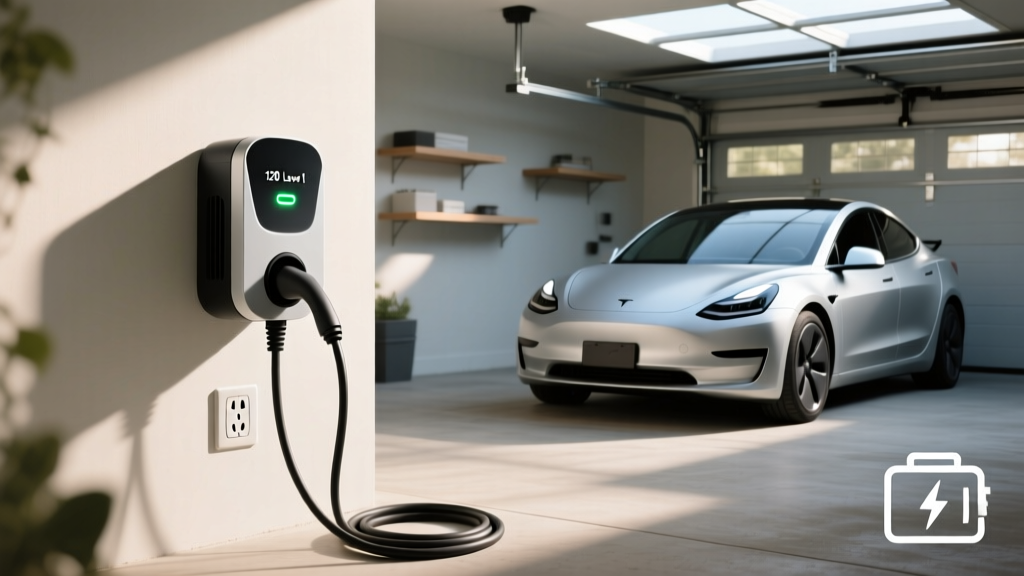
| Level 1 | 120V AC | 1.2–1.9 kW | 3–5 miles | Overnight top-ups, PHEVs, low-mileage drivers |
| Level 2 | 240V AC | 3.3–19.2 kW | 12–75 miles | Daily home charging, workplace, destination |
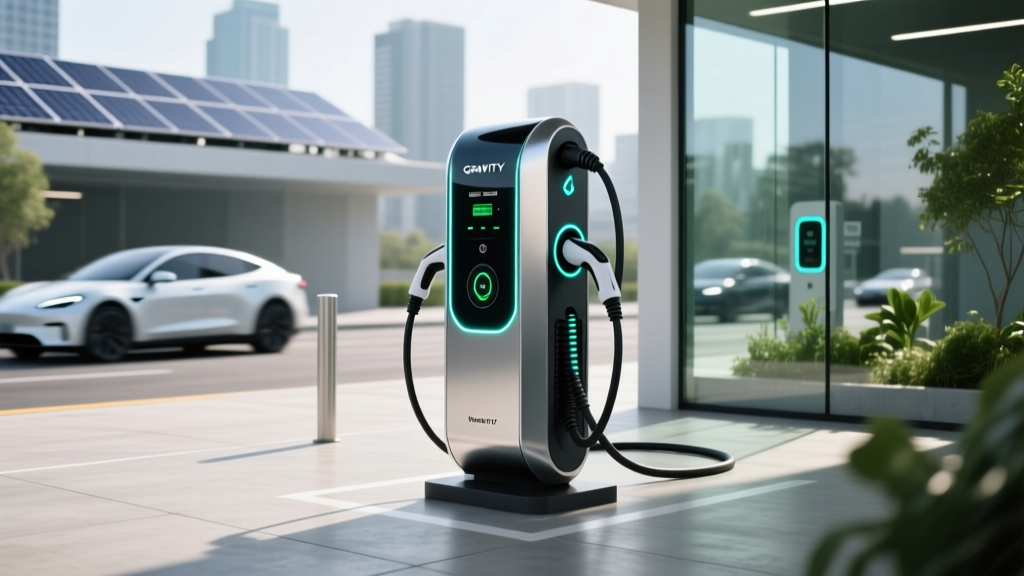
| DC Fast Charging | 400–900V DC | 50–350+ kW | 150–1,200+ miles (theoretical) | Road trips, rapid top-ups, commercial fleets |
A few real-world notes: Level 1 is the standard 120V household outlet — adequate for plug-in hybrids with small batteries (say, 15–20 kWh) but painfully slow for a full-size BEV with an 80+ kWh pack. Level 2 at 240V is the sweet spot for most EV owners, replenishing 30–45 miles of range per hour at a typical 48A (11.5 kW) home charger. DC fast charging bypasses the vehicle's onboard charger and feeds direct current straight to the battery — but peak kW rates are only sustained at low states of charge (typically 10–40% SoC), tapering significantly above 80% to protect battery health.
- Tesla Model Y (75 kWh usable, NMC): ~18–22 minutes on a 250 kW V4 Supercharger
- Hyundai Ioniq 5 (77.4 kWh, NMC, 800V architecture): ~18 minutes on a 350 kW Electrify America station
- Ford F-150 Lightning (131 kWh extended range): ~41 minutes on a 150 kW DC fast charger
- Chevrolet Bolt EV (65 kWh, NMC, limited to 55 kW DC): ~60 minutes on a 50+ kW charger
Note: These times assume battery preconditioning and starting at ~10% SoC. Cold batteries (below 50°F/10°C) without preconditioning can double charge times.
EV Charging Connector Standards: NACS, CCS1, and CHAdeMO Compatibility
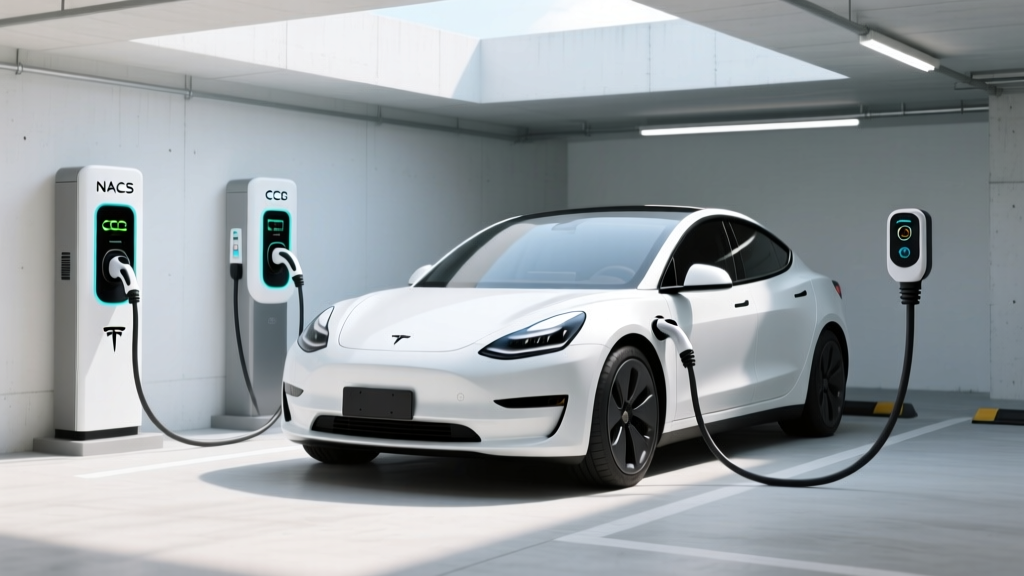
The connector landscape in North America has undergone a seismic shift since 2023, when Ford, GM, Rivian, Volvo, and nearly every major automaker announced adoption of Tesla's North American Charging Standard (NACS). By 2026, NACS is the de facto standard for new light-duty EVs sold in the U.S., though CCS1 and CHAdeMO vehicles remain on the road and at many public stations.
| Connector | Brands Using It (New Vehicles) | Legacy/Remaining Vehicles | Adapter Needed? |
|---|---|---|---|
| NACS (Tesla) | Tesla, Ford, GM, Rivian, Volvo, Polestar, Mercedes-Benz, BMW, Hyundai, Kia, Lucid, Toyota, Subaru | — | CCS1→NACS adapters available from Tesla and third parties (~$200–$250) |
| CCS1 (Combo) | Legacy: VW ID.4 (pre-2025), older Bolt EV/EUV, some Stellantis models | Millions on the road | NACS→CCS1 adapters available (~$150–$300) |
| CHAdeMO | None (new production ended ~2022) | Nissan Leaf, Mitsubishi Outlander PHEV | Limited adapter options; rely on CHAdeMO-equipped stations |
For new EV buyers in 2026, the decision is simple: your vehicle will almost certainly have a NACS port. The bigger concern is public charging infrastructure — while Tesla's Supercharger network (now open to NACS-equipped non-Tesla vehicles) has largely transitioned smoothly, many Electrify America, EVgo, and ChargePoint stations still carry CCS1 cables alongside new NACS stalls. If you drive a CCS1-equipped used EV, carry an adapter for NACS/Tesla destination chargers. If you drive a new NACS vehicle, CCS1 adapters are readily available for older public stations.
Home EV Charger Installation: Electrical Requirements and Costs
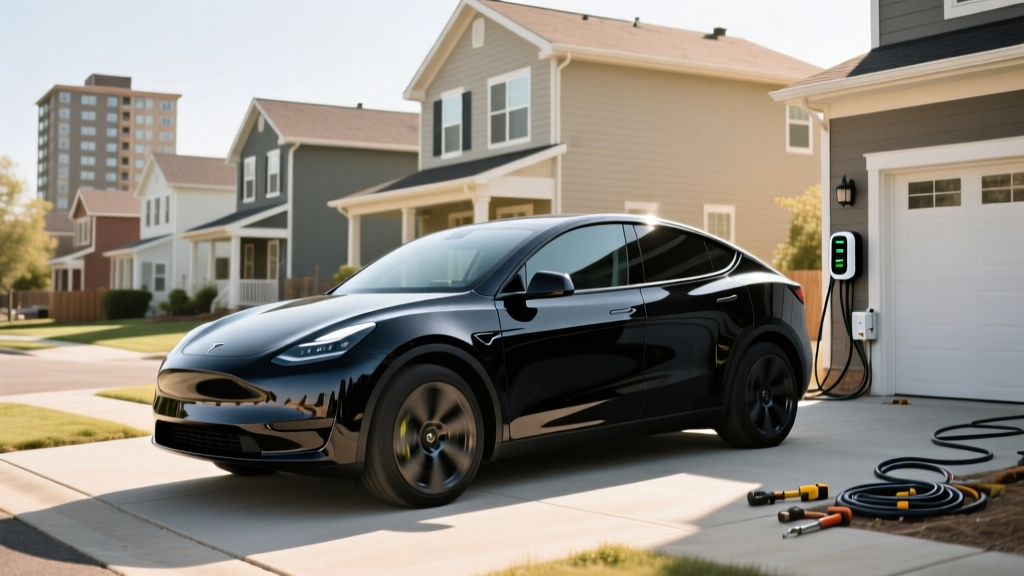
Installing a Level 2 home charger is the single most impactful upgrade for EV ownership — but the cost varies enormously depending on your home's electrical panel, the distance from panel to charger location, and local permit requirements. Here's what you need to know before calling an electrician.
Electrical Requirements
A typical Level 2 home charger requires a 240V dedicated circuit, similar to what powers an electric dryer or oven. The most common configurations:
- 40A circuit / 32A continuous (7.7 kW): Adequate for most EVs; charges a 75 kWh battery from 10–80% in ~7 hours
- 50A circuit / 40A continuous (9.6 kW): The current sweet spot; charges a 75 kWh battery 10–80% in ~5.5 hours
- 60A circuit / 48A continuous (11.5 kW): Maximum for most residential chargers; charges a 75 kWh battery 10–80% in ~4.5 hours
- 80A circuit / 64A continuous (15.3–19.2 kW): Requires robust panel capacity; benefits large-battery vehicles like the F-150 Lightning or Hummer EV
Panel Upgrade Considerations
If your home has a 100A electrical service (common in homes built before the 1990s), you may not have enough spare capacity for a 50A or 60A EV circuit, especially if you already run electric heat, a dryer, and an oven. A panel upgrade to 200A service typically costs $1,500–$3,500 and may be required by your local building department. Some homeowners can avoid this with a smart load-management device (like the Emporia Smart Load Management or Tesla Wall Connector with load sharing), which dynamically reduces charger amperage when other high-draw appliances are running.
| Component | Simple Install (Panel Nearby) | Moderate Install (50–100 ft run) | Complex Install (Panel Upgrade + Long Run) |
|---|---|---|---|
| Level 2 Charger Equipment | $350–$700 | $350–$700 | $350–$700 |
| Electrician Labor | $300–$600 | $600–$1,200 | $1,000–$2,000 |
| Electrical Permit | $50–$150 | $50–$200 | $100–$300 |
| Panel Upgrade (if needed) | — | — | $1,500–$3,500 |
| Conduit/Wiring Materials | $50–$100 | $150–$400 | $300–$800 |
| Total Estimated Cost | $750–$1,550 | $1,150–$2,500 | $3,250–$7,300 |
Always hire a licensed electrician familiar with NEC Article 625 (Electric Vehicle Charging System Equipment). Permits are required in most jurisdictions and ensure your installation meets fire-safety codes — this matters for both safety and home insurance claims.
Cost to Charge: Home vs. Public vs. Gas Per Mile
One of the strongest arguments for EV ownership is the cost-per-mile advantage — but only if you charge strategically. Electricity rates vary widely by region, time of day, and whether you're charging at home or on a public DC fast network.
| Scenario | Cost per kWh | Vehicle Efficiency | Cost Per Mile |
|---|---|---|---|
| Home charging (off-peak/utility rate) | $0.10–$0.16 | 3.0 mi/kWh (avg EV) | $0.03–$0.05 |
| Home charging (standard rate, no TOU) | $0.14–$0.20 | 3.0 mi/kWh | $0.05–$0.07 |
| Public Level 2 (ChargePoint, workplace) | $0.20–$0.35 | 3.0 mi/kWh | $0.07–$0.12 |
| DC Fast Charging (Electrify America, EVgo) | $0.35–$0.55 | 3.0 mi/kWh | $0.12–$0.18 |
| Tesla Supercharger (member pricing) | $0.25–$0.40 | 3.0 mi/kWh | $0.08–$0.13 |
| Gas vehicle (30 MPG, $3.40/gal) | $3.40/gallon | 30 MPG | $0.11 |
| Gas vehicle (22 MPG, $3.40/gal — truck/SUV) | $3.40/gallon | 22 MPG | $0.15 |
The takeaway: home charging on an off-peak utility plan delivers fuel costs at roughly one-third to one-quarter the price of gasoline per mile. Even DC fast charging — the most expensive EV fueling option — is competitive with a 22 MPG gas SUV. According to fueleconomy.gov, the average EV achieves 100–130 MPGe combined, translating to 3.0–4.0 miles per kWh.
Recommended Home EV Chargers for 2026
Not all Level 2 chargers are created equal. We've tested and tracked reliability data on the top units available to U.S. buyers. Here are our picks across categories, all NACS-native or available with NACS connectors:
Best Overall: Tesla Wall Connector (Gen 4, NACS)
- Power Output: Up to 11.5 kW (48A) on a 60A circuit
- Connector: NACS native
- Cable Length: 24 ft
- Smart Features: Wi-Fi, OTA updates, load sharing between multiple units, Power Sharing with Tesla Powerwall
- Price: ~$475
- Best For: Tesla owners and NACS-equipped vehicles; cleanest integration
Best Universal: ChargePoint Home Flex (Gen 2, NACS)
- Power Output: Up to 12 kW (50A) on a 60A circuit; configurable from 16A–50A via DIP switches
- Connector: NACS (2025+ models); J1772 adapter included
- Cable Length: 23 ft
- Smart Features: Wi-Fi, app scheduling, Alexa integration, energy tracking, utility demand-response programs
- Price: ~$599
- Best For: Multi-EV households, utility-program participants
Best Budget: Emporia Level 2 EV Charger (NACS)
- Power Output: Up to 11.5 kW (48A)
- Connector: NACS
- Cable Length: 24 ft
- Smart Features: Wi-Fi, app control, real-time energy monitoring, solar integration with Emporia Vue panel monitor
- Price: ~$399
- Best For: Budget-conscious buyers, solar-panel households
Best for High Power: Grizzl-E Smart (NACS)
- Power Output: Up to 19.2 kW (80A) on a 100A circuit
- Connector: NACS
- Cable Length: 24 ft
- Smart Features: OCPP-compatible, adjustable amperage, extreme-cold rated (-40°F), aluminum enclosure
- Price: ~$699
- Best For: Large-battery EVs (F-150 Lightning, Hummer EV), cold climates, outdoor installs
Safety, Code, and Installation Best Practices
A properly installed home charger is extremely safe — EVSE (Electric Vehicle Supply Equipment) units are designed with multiple redundant safety systems. But cutting corners on installation is a fire and insurance risk. Here's what the National Electrical Code (NEC) and best practices require:
- Dedicated circuit: Your EV charger must be on its own dedicated breaker — never shared with other appliances. EV charging is classified as a continuous load (3+ hours), so the circuit must be rated at 125% of the charger's maximum amperage (e.g., a 48A charger requires a 60A breaker).
- GFCI protection: NEC 2020 and later requires GFCI (Ground Fault Circuit Interrupter) protection for all EV receptacles. Hardwired chargers typically have built-in ground-fault protection. If using a NEMA 14-50 receptacle, your electrician must install a GFCI breaker — these cost $50–$100 more than standard breakers.
- Outdoor rating: If mounting outdoors, ensure your charger carries a NEMA 4 or NEMA 4X rating (weatherproof). All recommended units above carry outdoor ratings.
- Hardwired vs. plug: Hardwired installations (no plug — direct connection to junction box) are preferred for circuits above 50A and eliminate the GFCI breaker requirement in some jurisdictions. A NEMA 14-50 plug offers portability but limits you to 40A continuous (50A breaker).
- Permit and inspection: Nearly all jurisdictions require an electrical permit for EV charger installation. The inspection verifies wire gauge, breaker sizing, grounding, and GFCI compliance. Skipping the permit can void your homeowner's insurance in the event of an electrical fire.
Never use a standard household extension cord with a Level 1 or Level 2 EV charger. EV charging draws sustained high current that can overheat undersized cords. If your outlet is too far from your parking spot, invest in a longer-cable charger or have an electrician relocate the outlet. Similarly, avoid stacking adapters (e.g., NACS→CCS1→J1772) — each connection point adds resistance and a potential failure point.
Frequently Asked Questions
How much does it cost to install a home EV charger?
For a straightforward installation with the electrical panel nearby and sufficient capacity, expect $750–$1,550 total (equipment + electrician + permit). If the panel is far from the garage or you need a 200A service upgrade, costs can reach $3,250–$7,300. Get at least two quotes from licensed electricians and verify they include permit costs.
How fast will each charging level add range?
Level 1 (120V) adds roughly 3–5 miles per hour. Level 2 (240V, 48A) adds 30–45 miles per hour depending on vehicle efficiency. DC fast charging at 150+ kW can add 150–300+ miles in 20–30 minutes, though charging speed tapers significantly above 80% state of charge.
Which connector/charger is compatible with my EV?
If your EV is a 2025 or 2026 model, it almost certainly uses the NACS connector (Tesla's standard, now adopted by Ford, GM, Hyundai, Kia, BMW, Mercedes, Rivian, and others). Older CCS1 vehicles can use NACS-to-CCS adapters. The Nissan Leaf uses CHAdeMO, which is being phased out at public stations. Check your vehicle's charge port or owner's manual to confirm.
How much does charging cost per mile vs gas?
Home charging on an off-peak utility plan costs approximately $0.03–$0.05 per mile. A comparable gas vehicle at 30 MPG and $3.40/gallon costs about $0.11 per mile. That's a 55–70% fuel cost reduction. Even DC fast charging at $0.45/kWh ($0.15/mile) is competitive with a 22 MPG gas SUV. Source: fueleconomy.gov.
What electrical upgrades might I need?
The most common upgrade is a panel capacity increase from 100A to 200A service ($1,500–$3,500), required if your existing panel lacks spare capacity for a 50–60A EV circuit. You may also need new conduit runs if the panel is far from the garage, or a smart load-management device to avoid a panel upgrade by dynamically sharing capacity between the charger and other appliances.
Is there a federal tax credit for home EV charger installation?
The IRS Alternative Fuel Vehicle Refueling Property Credit (§30C) offers up to $1,000 (30% of cost, capped) for home charging equipment installed in eligible census tracts. Eligibility depends on your address — check the IRS tool or consult a tax professional. This is separate from the §30D vehicle purchase credit.
Can I charge my EV with solar panels?
Yes. If you have a home solar array, smart chargers like the Emporia or ChargePoint Home Flex can prioritize solar-generated electricity, effectively reducing your fuel cost to near zero during daylight hours. Pair with a time-of-use utility plan to charge from the grid at night at off-peak rates.