If you've shopped for an electric vehicle recently, you've probably noticed a tangle of plug shapes, network logos, and acronyms competing for attention. The EV charging standard your vehicle uses dictates where you can plug in, how fast you can charge, and whether you'll need an adapter on a road trip. As of 2026, the North American market has largely consolidated around the North American Charging Standard (NACS), but CCS1 and CHAdeMO vehicles remain on the road and in showrooms. This guide breaks down every major connector, charging tier, and real-world cost so you can buy and charge with confidence.
The Three EV Charging Standards in North America
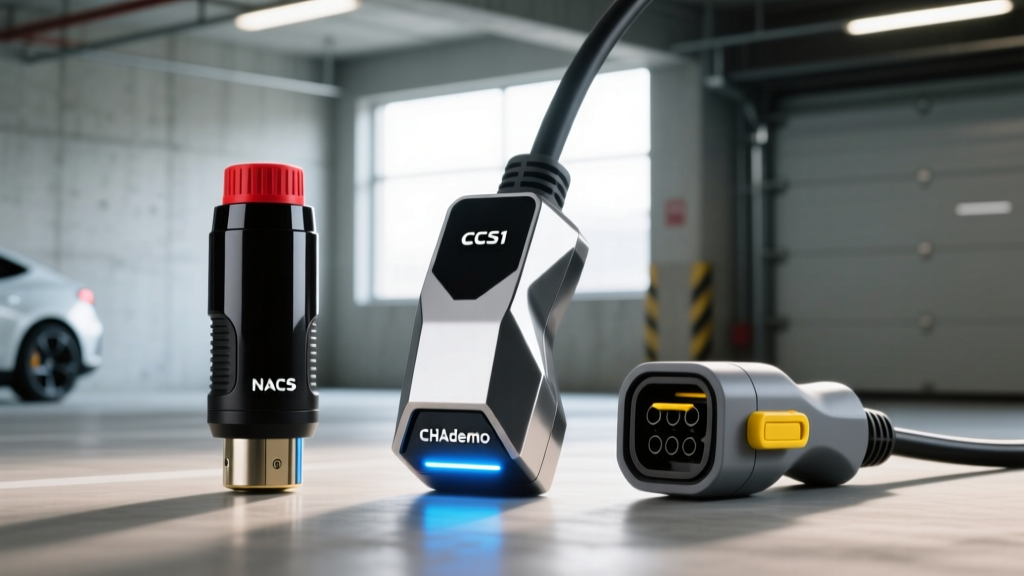
An EV charging standard defines the physical connector, the communication protocol between car and charger, and the electrical specifications for safe power delivery. Three standards dominate North American roads today:
- NACS (North American Charging Standard / J3400): Originally developed by Tesla and opened to the industry in late 2022. Now formally standardized as SAE J3400, NACS is the default connector on all Tesla vehicles and has been adopted by Ford, GM, Rivian, Volvo, Polestar, Hyundai, Kia, BMW, and most other major automakers for their 2025–2026 model-year EVs.
- CCS1 (Combined Charging System Combo 1): The standard backed by most legacy automakers prior to the NACS shift. It combines a J1772 AC connector with two additional DC pins. Many 2022–2024 model-year EVs from Volkswagen, BMW, and Stellantis still use CCS1 natively.
- CHAdeMO: The Japanese-origin DC fast-charging standard found primarily on the Nissan Leaf and Mitsubishi Outlander PHEV. No new CHAdeMO-equipped passenger EVs are being developed for the U.S. market, but thousands remain in service.
| Standard | AC Charging | DC Fast Charging | Key Vehicles (2026) | Adapter Needed? |
|---|---|---|---|---|
| NACS (J3400) | Native (1-phase) | Native | Tesla Model 3/Y/S/X, Ford F-150 Lightning, GM Ultium vehicles, Rivian R1T/R1S, Hyundai Ioniq 5 (2026+), Kia EV6/EV9 (2026+) | None on native NACS; CCS1 adapter for legacy chargers |
| CCS1 | J1772 (native) | CCS Combo 1 | VW ID.4 (2022–2024), BMW i4/iX (pre-2025), some Stellantis PHEVs | NACS-to-CCS adapter required for Tesla Superchargers |
| CHAdeMO | J1772 (native) | CHAdeMO | Nissan Leaf (all years), Mitsubishi Outlander PHEV | No viable adapter to NACS/CCS for DC |
Practical takeaway: If you're buying a new EV in 2026, it almost certainly has NACS unless you're purchasing remaining CCS1 inventory or a used CHAdeMO vehicle. For CCS1 owners, Ford, GM, and other automakers now sell or include NACS adapters that unlock the Tesla Supercharger network—over 25,000 stalls in North America.
Charging Levels: Speeds, Power, and Range Added
Understanding charging speed requires separating two units that are frequently confused: kW (kilowatts) measures the rate of power delivery—how fast energy flows into your battery. kWh (kilowatt-hours) measures total energy stored—your battery's capacity. Think of kW as the flow rate of a hose and kWh as the size of the bucket.
| Level | Voltage / Amps | Max Power (kW) | Miles of Range Added per Hour | Typical Use Case |
|---|---|---|---|---|
| Level 1 | 120V / 12A | ~1.4 kW | 3–5 miles | Overnight trickle; PHEVs; emergency top-ups |
| Level 2 | 240V / 32–48A | 7.7–11.5 kW | 20–44 miles | Home daily charging; workplace; public AC |
| DC Fast Charge | 400–800V DC | 50–350 kW | 150–1,000+ miles (theoretical peak) | Road trips; rapid top-ups; commercial fleets |
Real-World Charging Time Examples
Charge times depend on battery size, state of charge (SoC), battery temperature, and the charger's power curve. Peak kW is never sustained for the entire session—charge speed tapers significantly above 80% SoC to protect battery health.
- 60 kWh battery (e.g., base Tesla Model 3 RWD): 10–80% at a 150 kW DC fast charger in approximately 22–25 minutes; full Level 2 charge (11.5 kW) in ~5.5 hours.
- 84 kWh battery (e.g., Ford F-150 Lightning Extended Range): 10–80% at a 150 kW DC charger in ~32–38 minutes; Level 2 (11.5 kW) in ~7.5 hours.
- 100 kWh battery (e.g., Rivian R1T Max Pack): 10–80% at a 200+ kW DC charger in ~35–42 minutes; Level 2 (11.5 kW) in ~9 hours.
For context, most EVs charge fastest between 10–50% SoC. If you're road-tripping, plan to arrive at chargers around 10–15% and leave around 80%—charging from 80–100% can take as long as 10–80%.
Home Charger Installation: Requirements and Costs
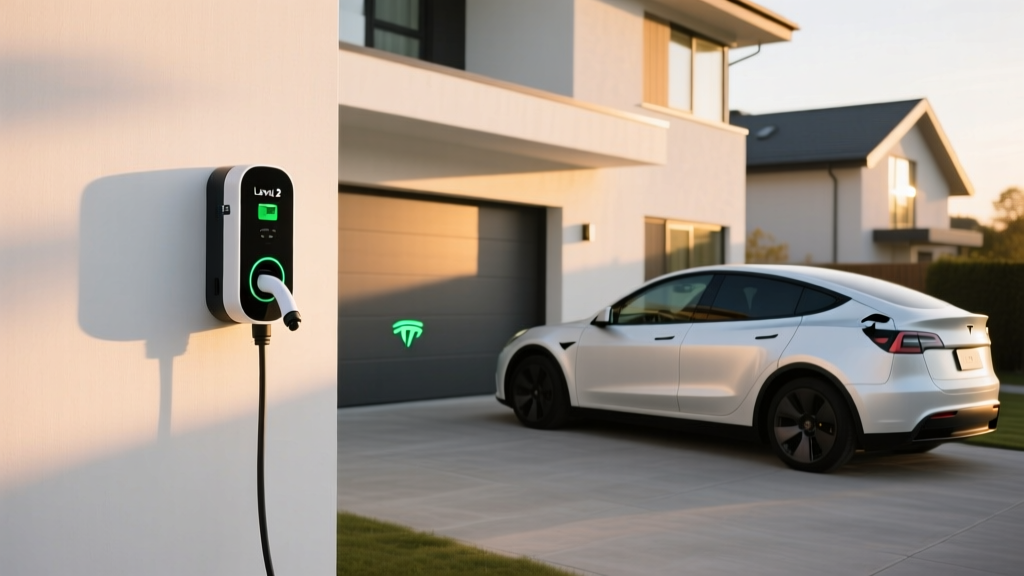
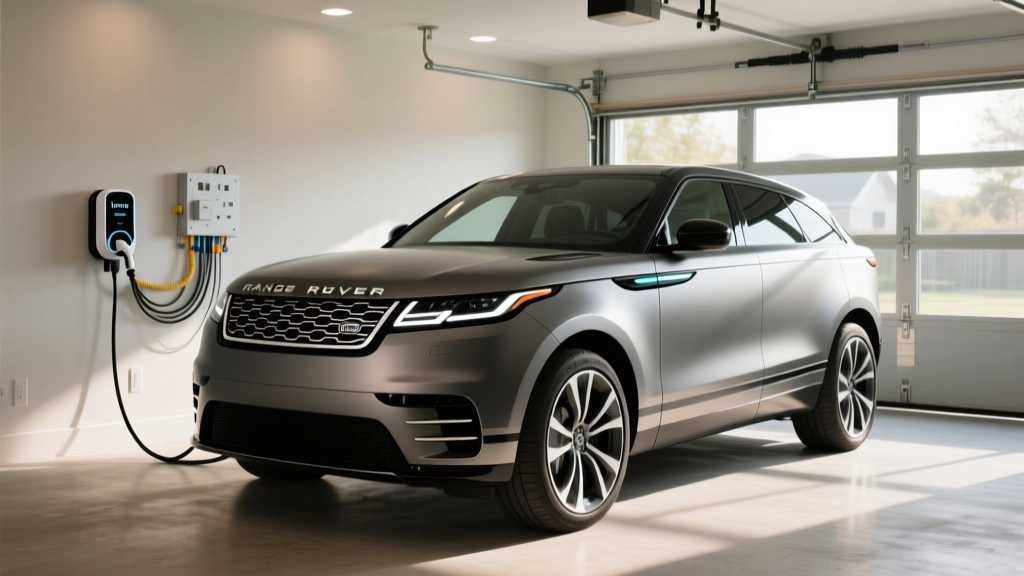
Installing a Level 2 home charger is the single biggest quality-of-life upgrade for EV ownership. You'll wake up every morning with a full battery and avoid routine public-charger visits. But costs vary widely depending on your home's electrical panel, the distance from panel to charger location, and local permit fees.
Electrical Requirements
Most Level 2 home chargers require a dedicated 240V circuit at 40, 48, or 60 amps. The breaker must be rated at 125% of the continuous load per NEC (National Electrical Code), meaning:
- A 40A charger needs a 50A breaker
- A 48A charger needs a 60A breaker
- Hardwired installations are preferred over NEMA 14-50 outlets for circuits above 40A (NEC 2023 update requires GFCI breakers on receptacles, adding cost)
Panel Upgrade Considerations
Homes with a 100A or older electrical panel may not have capacity for a dedicated 40–60A EV circuit, especially if you also run electric heat, an electric dryer, and an electric oven. A panel upgrade to 200A service typically costs $1,500–$3,000. Some homeowners can avoid this by using a smart panel load-management device (e.g., Span drive panel or a ChargePoint load-sharing module) that dynamically reduces charger draw when other circuits are active.
| Component | Low-End Estimate | High-End Estimate | Notes |
|---|---|---|---|
| Level 2 charger equipment | $350 | $750 | 32A–48A smart chargers; see equipment picks below |
| Electrician labor (standard install) | $400 | $1,200 | Depends on distance from panel; conduit runs add cost |
| Electrical permit | $50 | $200 | Varies by municipality |
| Panel upgrade (if needed) | $1,500 | $3,000 | 100A to 200A service upgrade |
| NEMA 14-50 outlet (if not hardwired) | $100 | $300 | Includes GFCI breaker if required by local code |
| Total (no panel upgrade) | $800 | $2,350 | Most homes fall in $1,000–$1,600 range |
| Total (with panel upgrade) | $2,300 | $5,350 | Older homes with 100A panels |
Tip: The federal Alternative Fuel Vehicle Refueling Property Credit (IRS Form 8911) can cover up to 30% of home charger equipment and installation costs, capped at $1,000. Eligibility depends on census-tract income and location requirements—consult a tax professional.
Connector Compatibility: What Plugs Into Your EV?
Here's how to determine which connectors and chargers work with your specific vehicle:
AC (Level 1 and Level 2) Charging
All EVs sold in North America accept AC charging through either a native NACS port or a J1772 port. If your EV has NACS, you can plug into any NACS-equipped Level 2 station. If your EV has J1772 (older CCS1 vehicles), you can use any J1772 station. Adapters are available in both directions (J1772-to-NACS and NACS-to-J1772), typically $100–$200.
DC Fast Charging
This is where standards diverge most:
- NACS vehicles can charge natively at Tesla Superchargers and the growing number of non-Tesla DC chargers being built with NACS cables (Electrify America, EVgo, and others are adding NACS connectors to new and retrofitted stations).
- CCS1 vehicles can charge at Electrify America, EVgo, ChargePoint DC stations, and many independents. With a manufacturer-approved NACS-to-CCS adapter (e.g., Ford's ~$230 adapter or the Tesla CCS adapter), CCS1 vehicles can also access Tesla Superchargers.
- CHAdeMO vehicles are increasingly limited. Electrify America discontinued CHAdeMO connectors on new stations, and many networks are phasing them out. Nissan Leaf owners should check PlugShare before road-tripping.
Cost to Charge: Home vs. Public vs. Gas
One of the strongest economic arguments for EV ownership is lower per-mile fuel cost—but only if you charge smart. Public DC fast charging can approach or exceed gasoline costs on a per-mile basis.
| Scenario | Rate | Vehicle Efficiency | Cost Per Mile |
|---|---|---|---|
| Home Level 2 (off-peak utility rate) | $0.09/kWh | 3.5 mi/kWh (avg EV) | $0.026 |
| Home Level 2 (national avg residential) | $0.17/kWh | 3.5 mi/kWh | $0.049 |
| Public Level 2 (network pricing) | $0.25/kWh | 3.5 mi/kWh | $0.071 |
| DC Fast Charge (Electrify America/Tesla) | $0.40/kWh | 3.0 mi/kWh (highway) | $0.133 |
| DC Fast Charge (peak pricing, some networks) | $0.58/kWh | 3.0 mi/kWh | $0.193 |
| Gasoline vehicle (30 MPG combined) | $3.40/gallon | 30 MPG | $0.113 |
| Gasoline vehicle (22 MPG combined, truck/SUV) | $3.40/gallon | 22 MPG | $0.155 |
Key insight: Home charging at off-peak rates delivers fuel costs roughly 75–80% lower than an efficient gas car. However, exclusive reliance on DC fast charging at $0.40–$0.58/kWh can push EV fuel costs above a 30 MPG gas car. The economics strongly favor home or workplace Level 2 charging. Data on average electricity rates can be verified via the U.S. Energy Information Administration.
Recommended Home Level 2 Chargers for 2026
ChargePoint Home Flex
- Power: Up to 11.5 kW (48A) on a 60A circuit; configurable down to 16A
- Connector: Available in NACS and J1772 versions
- Cable length: 23 feet
- Smart features: Wi-Fi, scheduling, Alexa/Google integration, energy dashboard
- Price: ~$550–$650
- Best for: Versatility; adjustable amperage lets you match your circuit
Tesla Wall Connector
- Power: Up to 11.5 kW (48A) on a 60A circuit
- Connector: Native NACS; includes J1772 adapter in box
- Cable length: 24 feet
- Smart features: Wi-Fi, OTA updates, power-sharing with multiple units, Tesla app integration
- Price: ~$475
- Best for: Tesla owners and NACS-native vehicles; excellent value
Emporia Vue Level 2 Charger
- Power: Up to 11.5 kW (48A) on a 60A circuit
- Connector: J1772 (NACS adapter available separately)
- Cable length: 24 feet
- Smart features: Wi-Fi, integrates with Emporia Vue energy monitor for whole-home tracking, solar-aware scheduling
- Price: ~$400–$450
- Best for: Budget-conscious buyers who want energy monitoring
Grizzl-E Smart
- Power: Up to 10 kW (40A) on a 50A circuit
- Connector: J1772 (NACS version available)
- Cable length: 24 feet
- Smart features: Wi-Fi, OCPP compatibility, adjustable amperage
- Price: ~$450–$550
- Best for: Cold-climate durability; Canadian-built with -40°F operational rating
All chargers listed above are UL-listed or ETL-listed for safety, support hardwired or NEMA 14-50 installation, and carry at minimum a 3-year warranty. Avoid non-UL-listed chargers from marketplace sellers—they may lack critical safety protections and can void insurance coverage.
Safety and Electrical Code Considerations
EV charging draws sustained high current for hours, which places demands on your home wiring that typical appliances do not. Follow these non-negotiable safety guidelines:
- Dedicated circuit: Your Level 2 charger must have its own dedicated breaker. Never share a circuit with other high-draw appliances.
- GFCI protection: The 2023 NEC requires GFCI protection on receptacles used for EV charging (NEMA 14-50 outlets). Hardwired installations are exempt from this specific requirement, which is one reason electricians increasingly recommend hardwiring.
- Outdoor rating: If your charger is installed outdoors, ensure the unit carries a NEMA 4 or NEMA 4X rating for water and dust ingress. All chargers recommended above meet this standard.
- Wire gauge: A 48A charger on a 60A circuit typically requires 4 AWG copper wire for runs under 50 feet. Longer runs may need 3 AWG or 2 AWG to prevent voltage drop. Your electrician will calculate this.
- Permit and inspection: Most jurisdictions require a permit and post-installation inspection. Skipping this can void homeowner's insurance in the event of an electrical fire.
Frequently Asked Questions
How much does it cost to install a home EV charger?
A typical Level 2 home charger installation costs between $800 and $2,350 when no panel upgrade is needed. This includes the charger unit ($350–$750), electrician labor ($400–$1,200), and permit fees ($50–$200). Homes with older 100A electrical panels may require a $1,500–$3,000 panel upgrade, pushing total cost to $2,300–$5,350. Get at least two quotes from licensed electricians.
How fast will each charging level add range?
Level 1 (120V) adds 3–5 miles of range per hour. Level 2 (240V, 40–48A) adds 20–44 miles per hour depending on your vehicle's onboard charger capacity. DC fast charging adds 100–250+ miles in 15–30 minutes at rates of 50–350 kW, though speed tapers significantly above 80% state of charge.
Which connector and charger is compatible with my EV?
Check your vehicle's charge port. If it's a 2025–2026 model from Tesla, Ford, GM, Rivian, Hyundai, Kia, Volvo, or BMW, it almost certainly has NACS. Older CCS1 vehicles (2022–2024 VW ID.4, pre-2025 BMW i4) use CCS Combo 1 and need a NACS adapter for Tesla Superchargers. The Nissan Leaf uses CHAdeMO for DC and J1772 for AC. For home Level 2 charging, match your charger's connector to your car's port or use an adapter.
How much does charging cost per mile vs. gas?
Home charging at the national average residential rate (~$0.17/kWh) costs about $0.05 per mile for a typical EV—roughly 55% cheaper than a 30 MPG gas car at $3.40/gallon ($0.11/mile). Off-peak home rates ($0.09/kWh) drop that to about $0.03/mile. However, public DC fast charging at $0.40–$0.58/kWh can cost $0.13–$0.19/mile, which exceeds many gas vehicles. The economic case for EVs depends heavily on access to affordable home or workplace charging.
What electrical upgrades might I need?
If your home has a 200A electrical panel with available breaker slots and capacity, you likely need only a dedicated circuit run. Homes with 100A panels, especially those with existing electric appliances (dryer, oven, HVAC), may need a panel upgrade to 200A service ($1,500–$3,000). Alternatives include installing a lower-amperage charger (32A/7.7 kW instead of 48A/11.5 kW) or using a smart load-management device that dynamically caps charger draw.
Is NACS replacing CCS entirely?
For new vehicles, yes—NACS is now the dominant standard for 2025–2026 model-year EVs in North America. CCS1 infrastructure will remain operational for years to serve existing vehicles, and many charging networks are retrofitting stations with both NACS and CCS1 cables. CHAdeMO is effectively legacy-only and should not factor into a new EV purchase decision.