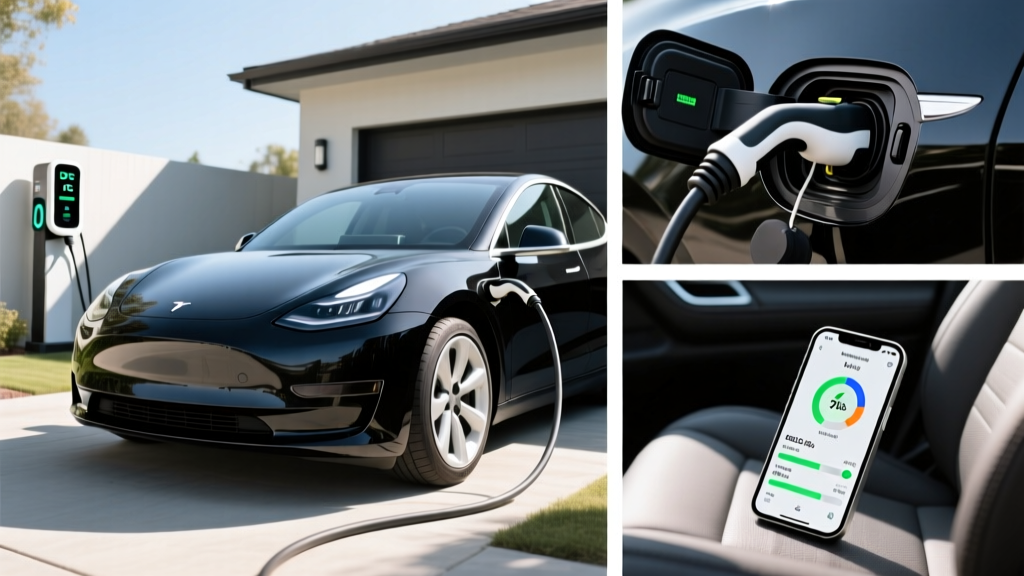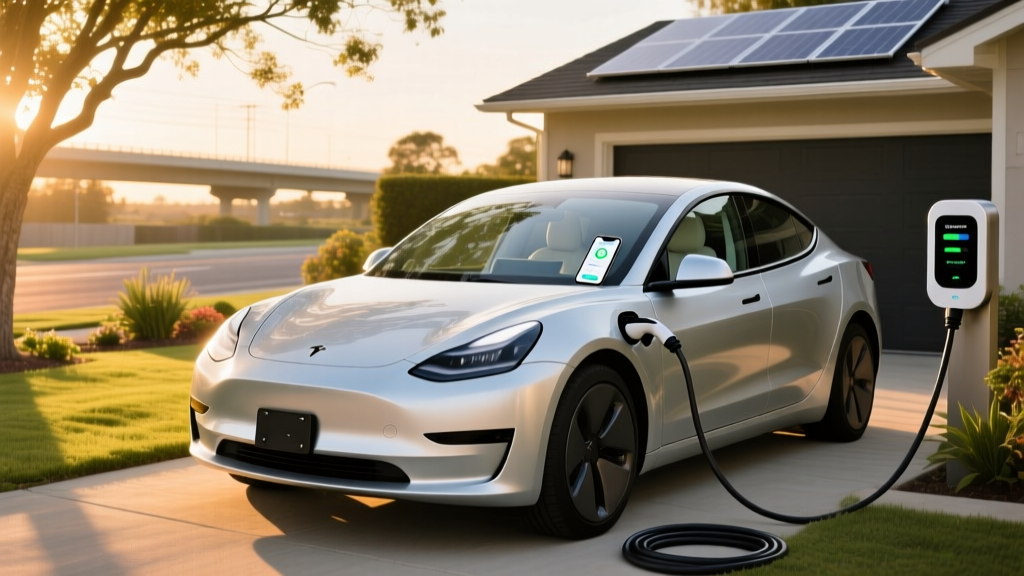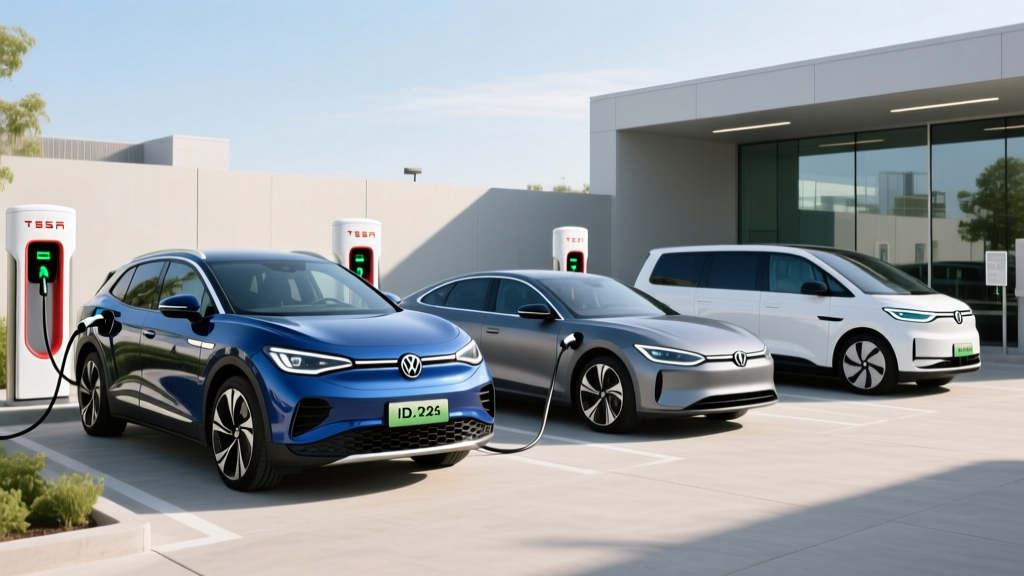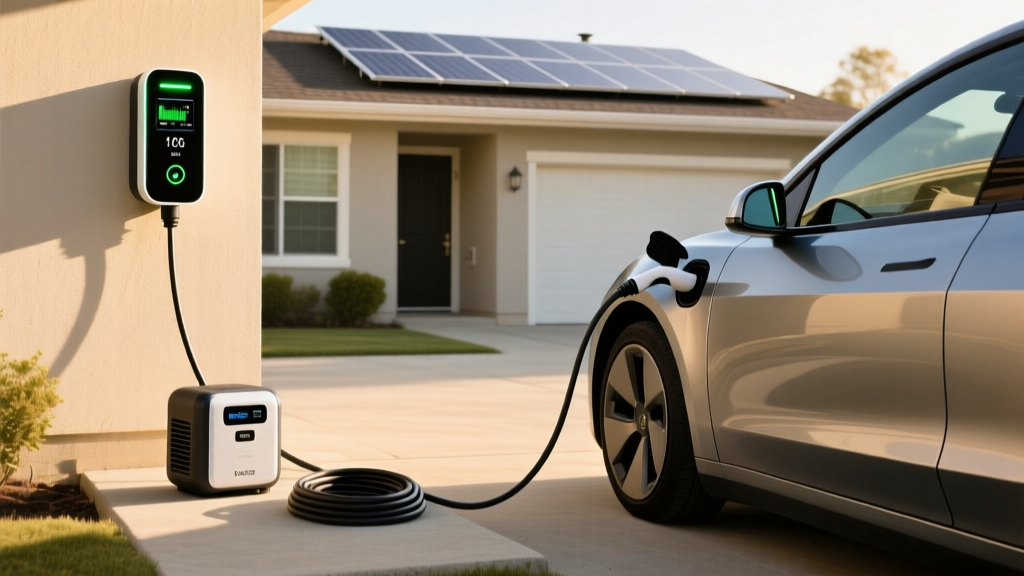
If you've spent any time searching for pictures of Dodge Chargers — the classic muscle car or the new 2024+ Dodge Charger Daytona EV — you've probably noticed something: the EV version looks every bit as aggressive as its HEMI predecessors, but it requires an entirely different kind of fueling infrastructure. Whether you're considering the Charger Daytona EV, a Tesla Model Y, a Hyundai Ioniq 5, or any other battery-electric vehicle, understanding charging is the single most important homework you'll do before buying.
This guide gives you exact numbers: charging speeds in kW, real installation costs with breakdowns, connector compatibility by brand, and the per-mile cost math that determines whether an EV actually saves you money. We'll also clarify the most common EV confusion — the difference between kW (kilowatts, a measure of power or charge rate) and kWh (kilowatt-hours, a measure of energy or battery capacity). Think of it like this: kW is how fast water flows from the hose; kWh is how many gallons the bucket holds.
Charging Levels Explained: Level 1, Level 2, and DC Fast Charging
Every EV sold in the U.S. can accept three tiers of charging, though the speeds vary dramatically by vehicle and equipment. Here's what each level delivers in practice, measured in both kW (power delivery rate) and approximate miles of range added per hour of charging.
| Level | Voltage / Amperage | Power (kW) | Miles of Range Added per Hour | Typical Use Case |
|---|---|---|---|---|
| Level 1 | 120V / 12-16A | 1.4 – 1.9 kW | 3 – 5 mi/hr | Overnight trickle; PHEVs; emergencies |
| Level 2 | 240V / 32-48A | 7.7 – 11.5 kW | 25 – 44 mi/hr | Daily home & workplace charging |
| DC Fast Charge | 400-800V DC | 50 – 350 kW | 150 – 1,200+ mi/hr (peak) | Road trips; rapid top-ups |
Real-world caveat on DC fast charging: Those peak kW numbers (say, 250 kW on a Tesla V4 Supercharger or 350 kW on an Electrify America station) are peak rates, sustained only between roughly 10-30% State of Charge (SoC). As the battery fills, the charge rate tapers significantly to protect cell health. A vehicle that peaks at 250 kW might average only 120-140 kW across a full 10-80% session. That's why manufacturers quote 10-80% times rather than 0-100% — charging above 80% slows dramatically, sometimes to Level 2 speeds.
For context, the 2025 Dodge Charger Daytona EV (with its estimated ~100 kWh battery pack) would need roughly 10-11 hours on a Level 2 home charger for a full charge, but could add approximately 130 miles of range in 15 minutes at a 150+ kW DC fast charger, based on Dodge's preliminary specifications.
How Much Does It Cost to Install a Home EV Charger?
Home Level 2 charging is the backbone of practical EV ownership. But the cost varies enormously depending on your home's electrical panel, the distance from panel to charger location, and local permitting requirements. Here's a realistic breakdown for 2026:
| Component | Low End | Typical | High End (Panel Upgrade) |
|---|---|---|---|
| Level 2 Charger Equipment (hardwired, 48A) | $350 | $500 – $700 | $600 – $800 |
| Electrician Labor (run 240V/50A circuit) | $400 | $800 – $1,200 | $1,500 – $2,500 |
| Permit & Inspection | $50 | $100 – $250 | $150 – $400 |
| Electrical Panel Upgrade (100A → 200A, if needed) | $0 (not needed) | $0 (not needed) | $1,500 – $3,500 |
| Total Estimated Cost | $800 | $1,400 – $2,150 | $3,750 – $7,200 |
Electrical requirements for a standard 48A Level 2 charger: You'll need a dedicated 240V circuit on a 60-amp breaker (the National Electrical Code requires circuits to be rated at 125% of continuous load, so a 48A charger needs a 60A breaker). The wire run is typically 6 AWG copper for runs under 50 feet, upgrading to 4 AWG for longer distances to minimize voltage drop.
The panel upgrade gotcha: Many homes built before 2000 have 100-amp or 150-amp main panels. If your panel is already near capacity — running central A/C, an electric dryer, an electric oven, and a water heater — adding a 48A EV circuit may push you over the safe load calculation. A licensed electrician will perform a load calculation per NEC Article 220. If you need a panel upgrade to 200A, budget $1,500-$3,500 additional. Some newer smart panels and load-management devices (like the SPAN smart panel) can avoid a full upgrade by dynamically shedding non-essential loads when the EV is charging.
Federal tax credit for home charging: Under IRS §25C Residential Clean Energy Credit, you may be eligible for a 30% credit on home EV charger equipment and installation costs, capped at $1,000 per year. This is separate from the §30D vehicle purchase credit. Confirm eligibility with a tax professional, as rules around census-tract eligibility and income limits apply.
Connector Compatibility: NACS, CCS1, and CHAdeMO
As of 2026, the North American charging connector landscape has consolidated significantly around the North American Charging Standard (NACS), originally developed by Tesla. But depending on your EV's model year, you may encounter different connectors:
| Connector | Brands Using It (Factory) | Adapter Needed For | DC Fast Charge Availability |
|---|---|---|---|
| NACS (Tesla-style) | Tesla, Ford (2025+), GM (2025+), Rivian (2025+), Volvo, Polestar, Dodge Charger Daytona EV, Hyundai/Kia (2026+ models) | CCS1 stations (via adapter, often included) | Tesla Supercharger network (20,000+ stalls), growing third-party NACS stations |
| CCS1 (Combined Charging System) | VW, Audi, BMW, Mercedes-Benz, older Ford/GM/Hyundai/Kia models (pre-NACS transition) | Tesla Superchargers (via NACS adapter, available from OEM or Tesla) | Electrify America, EVgo, ChargePoint, Ionity (EU) |
| CHAdeMO | Nissan Leaf (legacy), Mitsubishi Outlander PHEV (older models) | Limited adapter options; network shrinking | Declining — most new DC stations prioritize CCS1/NACS |
Adapter reality check: If you drive a CCS1-equipped EV (like a 2024 Hyundai Ioniq 5 built before the NACS transition), you can access Tesla Superchargers using a NACS-to-CCS adapter. Tesla sells one for approximately $250, and several third-party options exist. Ford and GM shipped adapters with their 2024-2025 transition vehicles. Conversely, NACS-equipped vehicles can use CCS1 stations with a CCS-to-NACS adapter. Always verify adapter compatibility with your specific model year before purchasing.
Charging Cost Per Mile: EV vs. Gas in 2026
The economic case for an EV hinges on your local electricity rates and driving patterns. Here's a realistic cost-per-mile comparison using a mid-size EV (3.5 miles per kWh efficiency, typical for vehicles like the Tesla Model Y or Hyundai Ioniq 5) versus a comparable 28 MPG gas car at $3.40/gallon:
| Charging Scenario | Rate ($/kWh) | EV Cost Per Mile | Gas Car Cost Per Mile (28 MPG, $3.40/gal) | Annual Savings (12,000 mi/yr) |
|---|---|---|---|---|
| Home off-peak (utility time-of-use rate) | $0.08 – $0.12 | $0.023 – $0.034 | $0.121 | $1,050 – $1,180 |
| Home standard rate (national avg.) | $0.16 | $0.046 | $0.121 | $900 |
| Public Level 2 (ChargePoint, etc.) | $0.25 – $0.40 | $0.071 – $0.114 | $0.121 | $85 – $600 |
| DC Fast Charging (Electrify America, EVgo) | $0.35 – $0.55 | $0.100 – $0.157 | $0.121 | -$430 to +$250 (more expensive if exclusively DC) |
The takeaway: Home charging is where EVs win decisively. If you charge exclusively at home on off-peak rates, you'll spend roughly $300-$400/year on electricity for 12,000 miles of driving. Relying entirely on DC fast charging can actually exceed gas costs — which is why home Level 2 installation isn't optional for most EV owners; it's the economic foundation. According to fueleconomy.gov, most EVs achieve 100-130 MPGe combined, translating to the efficiency figures above.
Charging Time Examples: 10-80% by Battery Size and Charger
Charging speed depends on both the charger's power output and the vehicle's onboard acceptance rate. Here are representative 10-80% charge times for common EV battery sizes:
| Battery Size (usable kWh) | Example Vehicles | Level 2 (11.5 kW) | 150 kW DC Fast | 250 kW DC Fast |
|---|---|---|---|---|
| 58 kWh | VW ID.4 Standard, base Hyundai Kona Electric | ~3.5 hours | ~28 min | ~22 min (if vehicle accepts 250 kW) |
| 77 kWh | Tesla Model Y LR, Ford Mustang Mach-E ER | ~4.7 hours | ~33 min | ~25 min |
| 84 kWh | Hyundai Ioniq 5, Kia EV6 (long-range) | ~5.1 hours | ~20 min (800V architecture) | ~18 min |
| 100+ kWh | GMC Hummer EV, Dodge Charger Daytona EV (est.), Rivian R1T Max Pack | ~6.5-7.5 hours | ~40-50 min | ~30-40 min |
Charge curve reality: An 84 kWh Hyundai Ioniq 5 on a 350 kW charger doesn't pull 350 kW for the entire session. Its 800-volt architecture allows a peak of roughly 240 kW, which it sustains from approximately 10-45% SoC, then tapers to ~150 kW through 65%, then ~80 kW through 80%. The quoted 10-80% time of ~18 minutes reflects this averaged curve. Always look at 10-80% times, not peak kW, when comparing charging performance.
Level 2 Home Charger Equipment: Top Picks for 2026
Not all Level 2 chargers are equal. Here are four proven units that cover different needs and budgets, all UL-listed for safety:
ChargePoint Home Flex
- Power output: Up to 11.5 kW (48A, 240V) — configurable down to 16A for lower-capacity circuits
- Connector: NACS or J1772 (select at purchase); CCS1 via adapter
- Cable length: 23 feet
- Smart features: Wi-Fi, app scheduling, energy tracking, Alexa integration, time-of-use optimization
- Price: ~$550 (NACS version ~$600)
- Best for: Most EV owners wanting flexible amperage and robust app control
Tesla Wall Connector (Gen 4)
- Power output: Up to 11.5 kW (48A, 240V)
- Connector: NACS native; J1772 adapter included for non-Tesla EVs
- Cable length: 24 feet
- Smart features: Wi-Fi, over-the-air updates, Power Sharing (link multiple units on one circuit), integrates with Tesla vehicle scheduling
- Price: ~$475
- Best for: Tesla owners and households with mixed NACS/J1772 vehicles
Grizzl-E Smart
- Power output: Up to 9.6 kW (40A, 240V)
- Connector: J1772 (NACS adapter available separately)
- Cable length: 24 feet
- Smart features: Wi-Fi, OCPP-compatible, load balancing, extreme cold rating (-40°F)
- Price: ~$450
- Best for: Cold-climate owners and those wanting open-protocol (non-proprietary) smart features
Emporia Vue Level 2 Charger
- Power output: Up to 11.5 kW (48A, 240V)
- Connector: J1772 (NACS adapter included with some bundles)
- Cable length: 24 feet
- Smart features: Integrates with Emporia Vue whole-home energy monitor, solar-aware charging, time-of-use scheduling
- Price: ~$400
- Best for: Solar panel owners and budget-conscious buyers wanting energy monitoring
Safety, Electrical Code, and Installation Best Practices
A Level 2 EV charger draws significant continuous current — up to 48 amps for hours at a time. This is not a DIY project unless you're a licensed electrician. Here are the critical safety and code requirements:
- Dedicated circuit: Your EV charger must be on its own dedicated breaker — not shared with outlets, lights, or appliances. A 48A charger requires a 60A breaker (125% NEC continuous-load rule).
- GFCI protection: NEC 2020 and later (Article 625.54) require GFCI protection for all EV charging outlets. Hardwired chargers with built-in ground-fault protection may satisfy this without a separate GFCI breaker. Confirm with your local inspector.
- Outdoor rating: If your charger is mounted outdoors (garage-exterior wall, driveway post, carport), it must be rated for outdoor use — look for NEMA 4 or NEMA 4X enclosure ratings. All the chargers listed above meet this standard.
- Wire gauge and conduit: For a 60A circuit, 6 AWG copper THHN wire in conduit is standard for runs under 50 feet. Longer runs may require 4 AWG to prevent voltage drop exceeding 3%.
- Permit and inspection: Virtually all jurisdictions require an electrical permit for a new 240V circuit. The inspection verifies wire gauge, breaker sizing, grounding, GFCI compliance, and proper mounting. Budget $50-$400 for the permit depending on your municipality. Skipping the permit risks insurance claim denial if an electrical fire occurs.
- Load management: If your panel is near capacity, consider a smart load-management system (like the Sense monitor or SPAN panel) that dynamically reduces charger amperage when other heavy loads (dryer, A/C) are running. This can avoid a $2,000+ panel upgrade.
Frequently Asked Questions
How much does it cost to install a home EV charger?
For a typical 48A Level 2 charger on a 240V/60A circuit, expect to pay $1,400-$2,150 total (equipment, electrician labor, and permit) if your electrical panel has adequate capacity. If your home needs a panel upgrade from 100A to 200A, total costs can reach $3,750-$7,200. The federal §25C credit may offset up to $1,000 (30% of equipment and installation).
How fast will each charging level add range?
Level 1 (120V standard outlet): 3-5 miles per hour. Level 2 (240V home charger): 25-44 miles per hour depending on amperage and vehicle efficiency. DC Fast Charging: 150-1,200+ miles per hour at peak, though actual sessions average much less due to charge-curve taper. A 10-80% DC fast charge typically takes 18-45 minutes depending on battery size and charger power.
Which connector and charger is compatible with my EV?
For 2025-2026 model-year vehicles, most new EVs from Tesla, Ford, GM, Rivian, Hyundai, Kia, and Stellantis (including the Dodge Charger Daytona) use NACS. Older CCS1 vehicles can access NACS/Supercharger stations with an adapter. CHAdeMO is effectively legacy — only the Nissan Leaf still uses it, and the public charging network for CHAdeMO is shrinking. Check your vehicle's charge port or owner's manual for the definitive connector type.
How much does charging cost per mile compared to gas?
Charging at home on average U.S. electricity rates (~$0.16/kWh) costs roughly $0.046 per mile for a typical EV, compared to $0.121 per mile for a 28 MPG gas car at $3.40/gallon — saving about $900/year over 12,000 miles. Off-peak home rates ($0.08-$0.12/kWh) push savings to $1,050-$1,180/year. However, exclusive reliance on DC fast charging ($0.35-$0.55/kWh) can actually cost more than gasoline.
What electrical upgrades might I need for a home charger?
The most common upgrade is a panel replacement from 100A or 150A to 200A service, needed when your existing panel lacks capacity for a 60A EV circuit. A licensed electrician performs a NEC Article 220 load calculation to determine this. Other potential upgrades include adding a sub-panel in the garage, replacing outdated wiring (aluminum or knob-and-tube), or installing a smart load-management system to avoid a full panel upgrade. Always get a professional assessment before purchasing equipment.