Trading a Supercharged V6 for Kilowatts: What Changes When You Go Electric
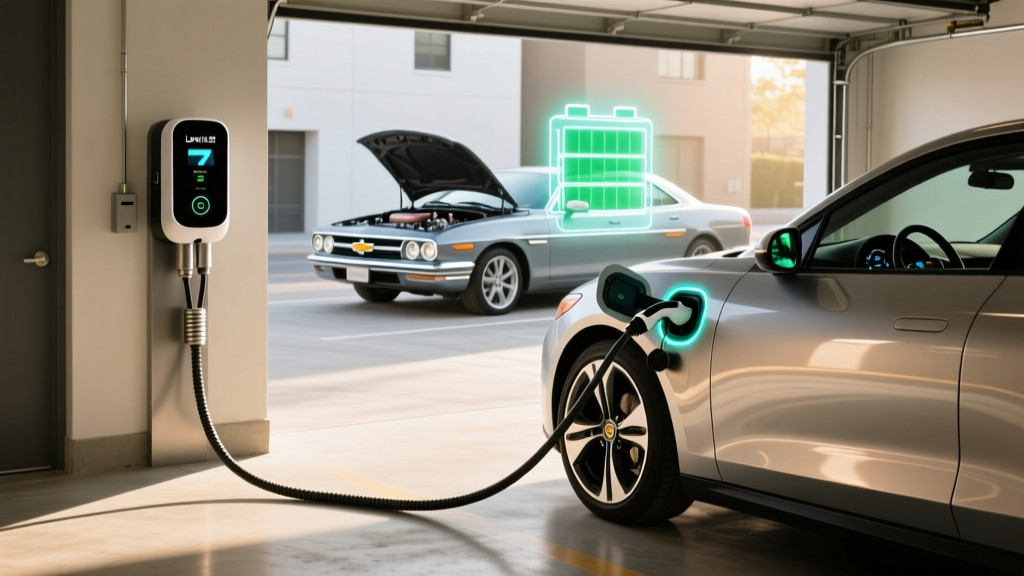
If you've spent years behind the wheel of a 2004 Chevy Impala SS Supercharged — with its 3.8L supercharged V6 pushing 240 horsepower and 280 lb-ft of torque — you already understand performance. What you might not realize is how fundamentally different "refueling" becomes when you transition to a battery-electric vehicle. Instead of a 15.5-gallon tank and 3-minute gas station stops, you're managing kilowatt-hours (kWh) of battery capacity, charge rates measured in kilowatts (kW), and home electrical infrastructure that may need upgrading.
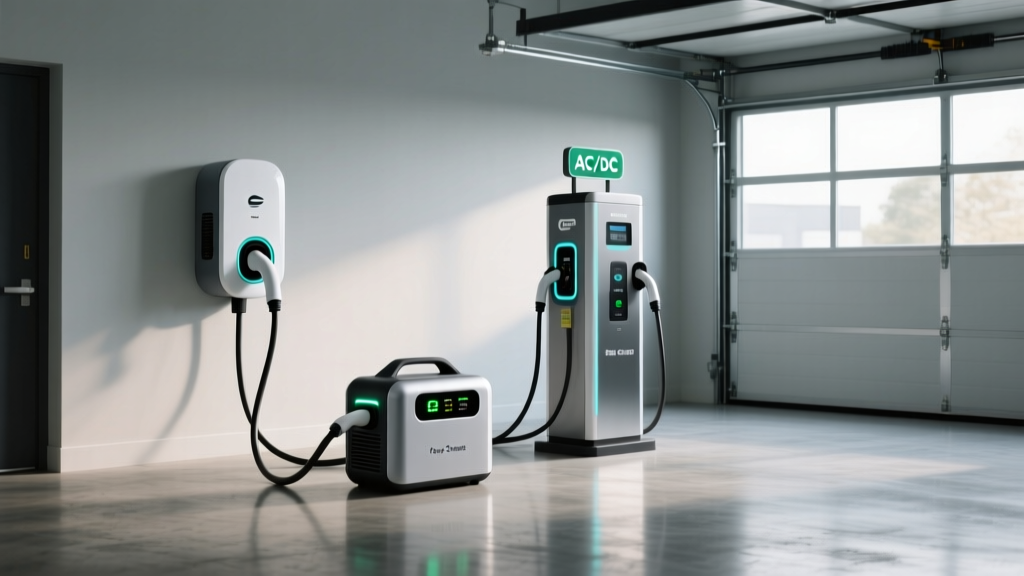
This guide walks through every practical aspect of EV charging — home installation, public networks, equipment selection, connector compatibility, and the real cost-per-mile math compared to filling up that Impala SS. The terminology distinction matters immediately: kW (kilowatts) measures power — how fast energy flows into your battery, like water pressure from a hose. kWh (kilowatt-hours) measures energy — the total amount stored, like gallons in a tank. A 75 kWh battery charged at 11.5 kW takes roughly 6.5 hours from empty to full. Confusing these two is the single most common mistake new EV owners make.
Charging Levels Explained: Speed, Power, and Real-World Range Added
EV charging falls into three tiers. Each delivers energy at a different rate, and understanding the miles-per-hour math is critical for planning both daily driving and road trips.
| Level | Voltage / Amps | Max Power (kW) | Miles of Range Added per Hour | Typical Use Case |
|---|---|---|---|---|
| Level 1 | 120V / 12A | ~1.4 kW | 3–5 mi/hr | Overnight top-off, PHEVs, emergency |
| Level 2 | 240V / 32–48A | 7.7–11.5 kW | 25–44 mi/hr | Daily home charging, workplace |
| DC Fast (Level 3) | 400–800V DC | 50–350 kW | 150–1,200+ mi/hr (peak) | Road trips, highway corridors |
A few real-world caveats: DC fast charging speeds are peak rates, not sustained. A vehicle rated for 250 kW peak charging will typically only sustain that rate between roughly 10–30% state of charge (SoC), then taper progressively. A "10–80% in 18 minutes" claim assumes battery preconditioning and an available 350 kW charger — at a 150 kW station, expect 25–30 minutes for the same session. Cold batteries charge significantly slower; preconditioning (warming the battery before arrival via navigation routing) is essential in sub-50°F weather.
For context, if you're accustomed to the 2004 Impala SS Supercharged achieving roughly 18 city / 28 highway MPG per EPA estimates on fueleconomy.gov, you'd refuel about every 340 highway miles. A modern EV like the Hyundai Ioniq 5 (EPA 305 miles, 77.4 kWh battery) covers similar distance between charges — but the "refuel" takes 18 minutes on a DC fast charger instead of 3 minutes at a pump.
Home Charger Installation: Electrical Requirements, Costs, and Panel Upgrades
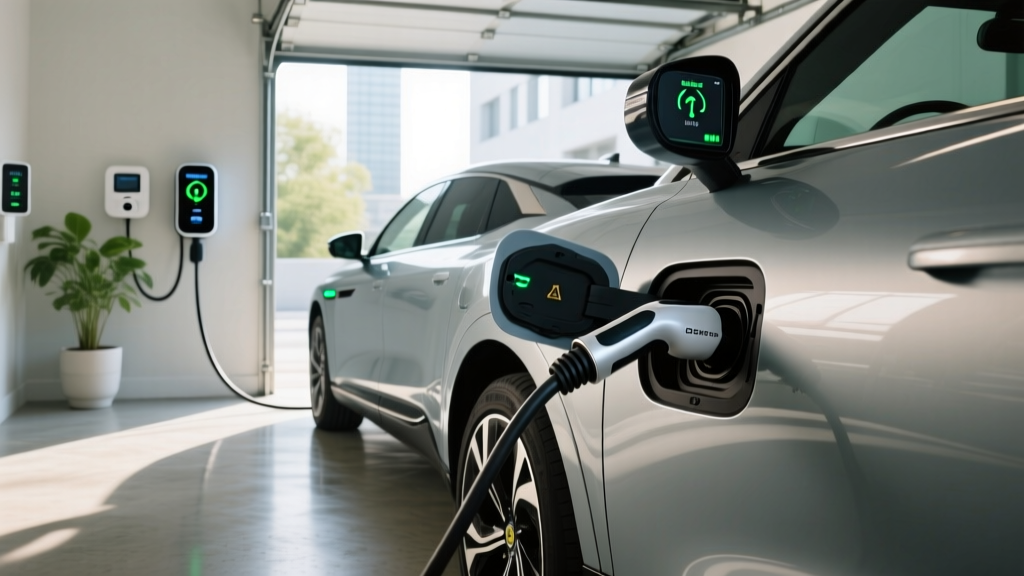
Most EV owners do 80%+ of their charging at home on a Level 2 circuit. The installation involves more than plugging in a box — it requires a dedicated 240V circuit, proper wire gauge, and often a panel capacity assessment.
Electrical Requirements for a Typical Level 2 Setup
- Circuit: Dedicated 40A or 50A breaker (240V, single-phase)
- Continuous load rule: NEC requires EV chargers to use no more than 80% of circuit capacity — a 40A circuit supports a 32A (7.7 kW) charger; a 50A circuit supports a 40A (9.6 kW) charger; a 60A circuit supports a 48A (11.5 kW) charger
- Wire gauge: 6 AWG copper for 50A circuits; 4 AWG for 60A (varies by run length and local code)
- Outlet vs hardwired: NEMA 14-50 outlet offers portability; hardwired avoids GFCI nuisance trips common on 50A receptacles and may be required by some jurisdictions
- GFCI protection: NEC 2020+ requires GFCI on EV receptacles — some electricians recommend hardwiring to avoid this requirement and improve reliability
Panel Capacity: The Hidden Cost for Older Homes
Homes built before 2000 often have 100A or 150A main panels. Adding a 50A EV circuit to an already-loaded panel may require a panel upgrade to 200A, which is one of the most expensive variables in EV adoption. A load calculation (per NEC Article 220) determines whether your existing panel can handle the additional draw alongside HVAC, electric range, dryer, and water heater.
| Component | Low Estimate | High Estimate | Notes |
|---|---|---|---|
| Level 2 Charger Equipment | $350 | $750 | 32A–48A smart charger, 18–25 ft cable |
| Electrician Labor (standard install) | $500 | $1,500 | Panel to garage, <50 ft run, conduit |
| Permit & Inspection | $50 | $250 | Varies by municipality |
| Electrical Panel Upgrade (if needed) | $1,500 | $3,500 | 100A→200A service upgrade |
| Utility Make-Ready / Service Drop | $0 | $2,000 | Some utilities cover this; others don't |
| Total (no panel upgrade) | $900 | $2,500 | Most common scenario |
| Total (with panel upgrade) | $2,400 | $6,000 | Older homes, high-load panels |
The federal Residential Clean Energy Credit does not currently cover EV charger equipment for most taxpayers — the Alternative Fuel Vehicle Refueling Property Credit (§30C) was modified under recent legislation and now applies primarily to low-income and rural census tracts. Check with a tax professional and the IRS for your specific eligibility. Some utilities and state programs offer rebates of $250–$1,000 for Level 2 equipment and installation.
Connector Compatibility: NACS, CCS1, CHAdeMO, and What You Need to Know
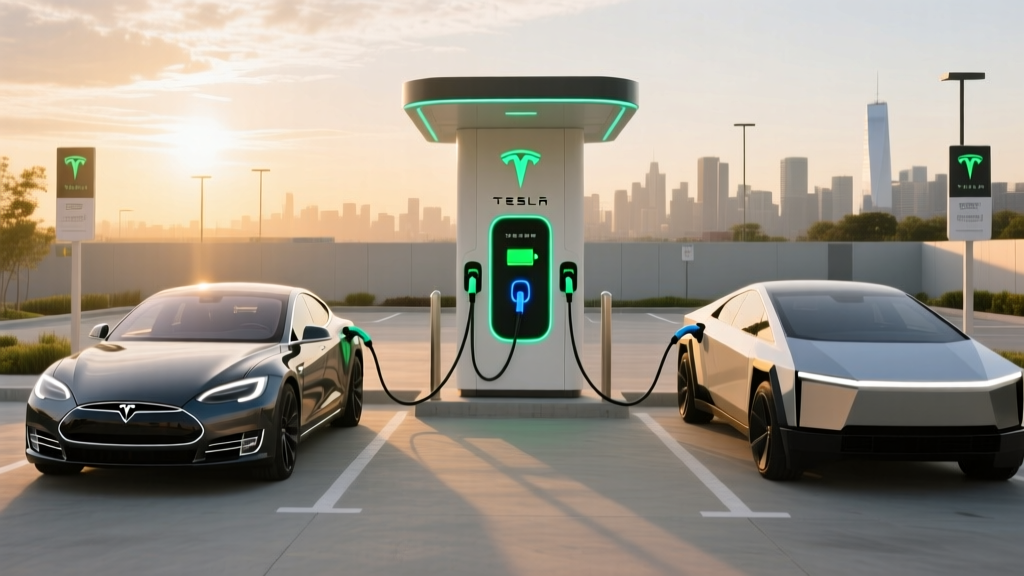
The EV charging connector landscape has consolidated significantly. As of 2026, the North American Charging Standard (NACS), developed by Tesla and adopted by Ford, GM, Hyundai, Rivian, Volvo, BMW, and most major automakers, is the dominant connector for new vehicles. CCS1 remains on many 2023–2025 models still on the road, and CHAdeMO is effectively legacy (Nissan Leaf being the last notable holdout).
| Connector | Status | Compatible Vehicles | Adapter Needed? |
|---|---|---|---|
| NACS (Tesla) | Standard for new EVs | Tesla (all), Ford (2025+), GM (2025+), Hyundai/Kia (2026+), Rivian, Volvo, BMW, others | CCS→NACS adapter for older CCS vehicles at Tesla Superchargers |
| CCS1 | Legacy/transitioning | 2022–2025 GM, Hyundai, Kia, VW, BMW, Mercedes models | NACS→CCS adapter needed for Tesla Supercharger access |
| CHAdeMO | Legacy (discontinued for new vehicles) | Nissan Leaf, Mitsubishi Outlander PHEV, older Kia Soul EV | No adapter available for NACS/CCS; limited charger availability |
For home Level 2 charging, all EVs use a J1772 connector (or NACS for Teslas). Most non-Tesla Level 2 chargers come with J1772; Tesla includes a J1772 adapter with every vehicle. If you buy a third-party NACS charger for home, non-Tesla EVs will need a NACS-to-J1772 adapter.
Cost to Charge: Home Electricity vs. Public DC Fast vs. Gasoline
The financial case for EV charging vs. gasoline hinges on where you charge. Home charging on a time-of-use (TOU) plan is dramatically cheaper than public DC fast charging, which can approach gasoline costs per mile.
| Scenario | Rate | Cost Per Mile (3.5 mi/kWh avg EV) | Annual Cost (12,000 mi) |
|---|---|---|---|
| Home Off-Peak (TOU plan) | $0.08–$0.12/kWh | $0.025–$0.034 | $300–$410 |
| Home Standard Rate | $0.14–$0.18/kWh | $0.040–$0.051 | $480–$615 |
| Public Level 2 (workplace/mall) | $0.20–$0.35/kWh | $0.057–$0.100 | $685–$1,200 |
| DC Fast Charging (road trips) | $0.35–$0.55/kWh | $0.100–$0.157 | $1,200–$1,885 |
| 2004 Impala SS (22 MPG combined, $3.20/gal) | $3.20/gallon | $0.145 | $1,745 |
The takeaway: an EV owner who charges primarily at home on off-peak rates spends roughly $300–$615 annually on electricity — compared to $1,745 in gasoline for the 2004 Impala SS Supercharged at 22 MPG combined and $3.20/gallon. Even exclusive DC fast charging is competitive with gasoline on a per-mile basis, though it eliminates the home-charging cost advantage.
For charging time examples with a typical 75–80 kWh battery (like a Tesla Model Y or Hyundai Ioniq 5):
- Level 1 (1.4 kW): 10–80% in approximately 38–42 hours (not practical for BEVs, fine for PHEVs with 15–40 kWh batteries)
- Level 2 at 11.5 kW (48A): 10–80% in approximately 4.5–5 hours — overnight charging fully replenishes daily driving
- DC Fast at 250 kW peak: 10–80% in approximately 18–22 minutes with preconditioned battery
- DC Fast at 150 kW peak: 10–80% in approximately 28–35 minutes
Equipment Recommendations: Level 2 Chargers for Home (2026 Picks)
The home charger market has matured. Below are proven units across the price spectrum, each with stated power output, connector type, and smart features.
Emporia Vue Level 2 Charger
- Power: 48A (11.5 kW) on 60A circuit; configurable down to 16A
- Connector: J1772 (NACS version available)
- Cable: 24 ft
- Smart features: Wi-Fi, app scheduling, solar integration, energy monitoring, load management with Emporia panel sensors
- Price: ~$399
- Best for: Solar homeowners, budget-conscious buyers wanting 48A
ChargePoint Home Flex
- Power: Up to 50A (12 kW) on 60A circuit; DIP-switch configurable 16–50A
- Connector: J1772 or NACS (select at purchase)
- Cable: 23 ft
- Smart features: Wi-Fi, app scheduling, Alexa integration, detailed session history
- Price: ~$599–$699
- Best for: Reliability-focused buyers, NACS-native option
Tesla Wall Connector (Gen 3)
- Power: 48A (11.5 kW) on 60A circuit
- Connector: NACS native; J1772 adapter included
- Cable: 24 ft
- Smart features: Wi-Fi, OTA updates, power sharing (up to 6 units on one circuit), Tesla app integration
- Price: ~$475
- Best for: Tesla owners, multi-EV households with Tesla Power Share
Grizzl-E Smart
- Power: 40A (9.6 kW) on 50A circuit
- Connector: J1772 or NACS
- Cable: 24 ft
- Smart features: OCPP-compatible, works with multiple apps, extreme cold rated (-40°F)
- Price: ~$449–$549
- Best for: Cold-climate owners, those wanting open-protocol flexibility
Safety, Code, and Installation Best Practices
EV charging draws sustained high current for hours — unlike a dryer or oven that cycles on and off. This continuous-load profile demands proper installation:
- Dedicated circuit: Never share an EV circuit with other appliances. A 50A or 60A breaker serving only the charger prevents overloads.
- Permit and inspection: Most jurisdictions require an electrical permit for EV charger installation. Skipping this risks insurance claim denial in the event of an electrical fire.
- Outdoor rating: If the charger is mounted outside, verify NEMA 4 (weatherproof) rating. Most quality units carry this, but cables and connectors left exposed degrade faster.
- Thermal monitoring: Premium chargers include internal temperature sensors that reduce power if the unit overheats — valuable for garage installations in hot climates.
- Cable management: A 24-foot cable left on a garage floor is a tripping hazard and degrades from abrasion. Wall-mounted retractors or holsters are a $30–$50 upgrade worth making.
Frequently Asked Questions
How much does it cost to install a home EV charger?
A standard Level 2 installation (40A–60A circuit, <50 ft wire run, no panel upgrade) typically costs $900–$2,500 including equipment, electrician labor, and permit. If your home needs a 200A panel upgrade, add $1,500–$3,500. Always get 2–3 quotes from licensed electricians who have EV charger experience.
How fast will each charging level add range?
Level 1 (120V) adds 3–5 miles per hour. Level 2 (240V, 32–48A) adds 25–44 miles per hour depending on amperage. DC fast charging adds 150–1,200+ miles per hour at peak rate, but tapers significantly above 50% SoC — practical sessions are measured in 10–80% minutes (typically 18–35 min depending on vehicle and charger power).
Which connector/charger is compatible with my EV?
For 2025–2026 model-year vehicles, most new EVs use NACS (Tesla's connector). Older 2022–2024 models typically use CCS1. The Nissan Leaf uses CHAdeMO. For home charging, all non-Tesla EVs accept J1772 at Level 2; Teslas use NACS natively but include a J1772 adapter. Check your vehicle's charge port or owner's manual to confirm.
How much does charging cost per mile vs. gas?
Home charging at $0.10–$0.18/kWh costs approximately $0.03–$0.05 per mile. Public DC fast charging at $0.35–$0.55/kWh costs $0.10–$0.16 per mile. A 2004 Chevy Impala SS Supercharged at 22 MPG combined with $3.20/gallon gasoline costs roughly $0.145 per mile. Home-charged EVs save 65–80% per mile vs. gasoline.
What electrical upgrades might I need?
The most common upgrade is a panel capacity increase from 100A or 150A to 200A service, required when your existing panel lacks capacity for a new 50–60A circuit alongside existing loads. Other potential needs: replacing a Federal Pacific or Zinsco panel (known fire hazards, uninsurable in some states), upgrading the service drop from the utility, or adding a sub-panel in a detached garage. A licensed electrician's load calculation determines your specific requirements.