Knowing how to configure your EV's charging settings—and matching them to the right equipment—is the single highest-leverage thing you can do for ownership satisfaction. A misconfigured charge limit, an undersized home circuit, or a mismatched connector can turn a seamless experience into a daily frustration. This guide walks through every charging scenario you'll encounter, with the exact numbers you need to make decisions.
The Three Charging Levels: Speed, Power, and What Your Settings Control
Before adjusting any charging settings, you need to understand the three charging tiers and what each delivers. The critical distinction: kW (kilowatts) measures power—the rate at which energy flows into your battery. kWh (kilowatt-hours) measures energy—the total capacity stored. Think of kW as the width of a hose and kWh as the size of the bucket. Your charging settings primarily govern the kW side of the equation.
| Level | Voltage | Typical Power (kW) | Miles of Range Added per Hour | Best For |
|---|---|---|---|---|
| Level 1 | 120V AC | 1.0–1.4 kW | 3–5 mi/hr | Overnight top-ups, PHEVs, low-mileage drivers |
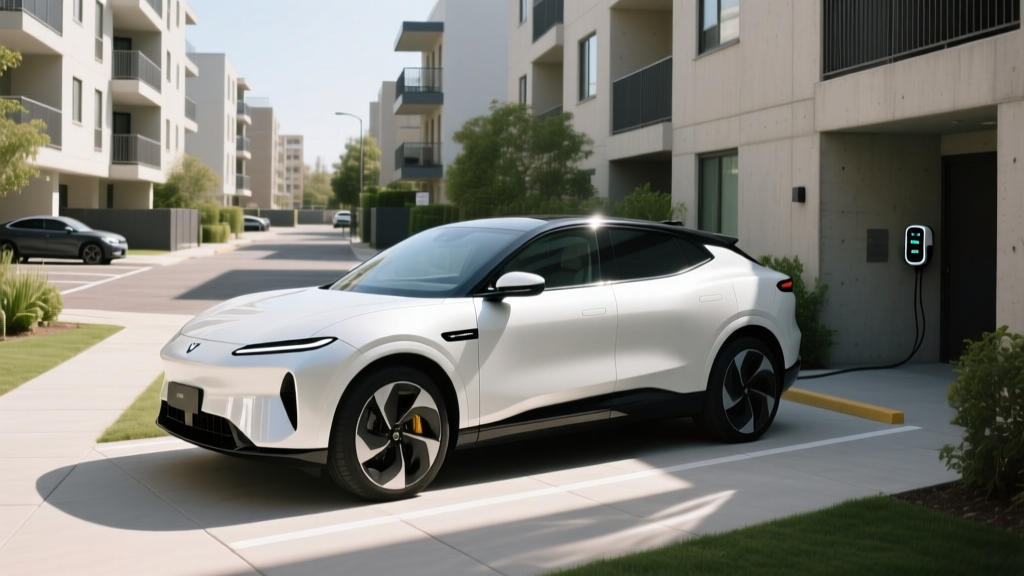
| Level 2 | 240V AC | 3.3–19.2 kW | 12–75 mi/hr | Daily home charging, workplace, destinations |
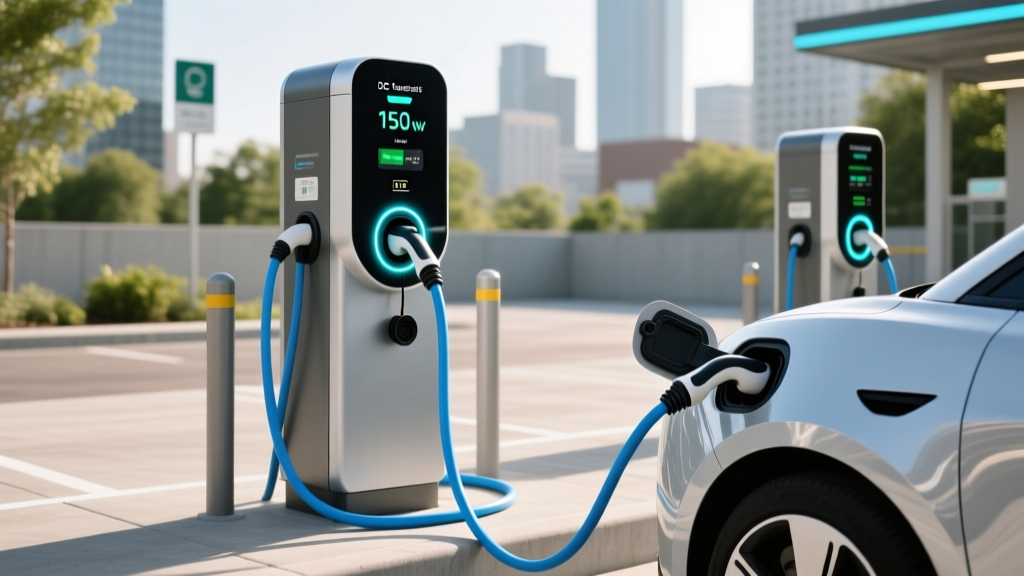
| DC Fast | 400–900V DC | 50–350+ kW | 150–1,200+ mi/hr | Road trips, rapid top-ups, fleet operations |
Your vehicle's onboard charger determines the maximum Level 2 AC power it can accept. For example, the Tesla Model Y accepts up to 11.5 kW on AC, while the Ford F-150 Lightning (extended range) accepts up to 19.2 kW. No home charger can push beyond what the car's onboard charger allows—so check that spec before overspending on equipment.
How Fast Will Each Charging Level Add Range?
Charging speed depends on your battery size, the charger's output, and your vehicle's acceptance rate. Here are real-world time estimates for common battery sizes:
10–80% Charging Time Examples
- 60 kWh battery (e.g., Hyundai Ioniq 5 Standard Range): ~18 min at 150 kW DC fast charger; ~5.5 hours at 7.7 kW Level 2; ~42 hours at 1.2 kW Level 1
- 77 kWh battery (e.g., Tesla Model Y Long Range): ~25 min at 250 kW Supercharger; ~7 hours at 11.5 kW Level 2; ~54 hours at 1.2 kW Level 1
- 98 kWh usable (e.g., GMC Sierra EV): ~30 min at 350 kW capable charger; ~10 hours at 11.5 kW Level 2; impractical on Level 1
- 131 kWh extended (e.g., F-150 Lightning): ~41 min at 150 kW; ~11 hours at 19.2 kW Level 2; not recommended on Level 1
Charge curve reality check: Peak kW ratings apply only in the 10–50% state-of-charge window on most vehicles. Above 80%, charging slows dramatically—often to under 30 kW—as the battery management system protects cell health. This is why 10–80% is the standard measurement; the final 20% can take as long as the first 70%.
Home Charger Installation: Electrical Requirements, Costs, and Panel Upgrades
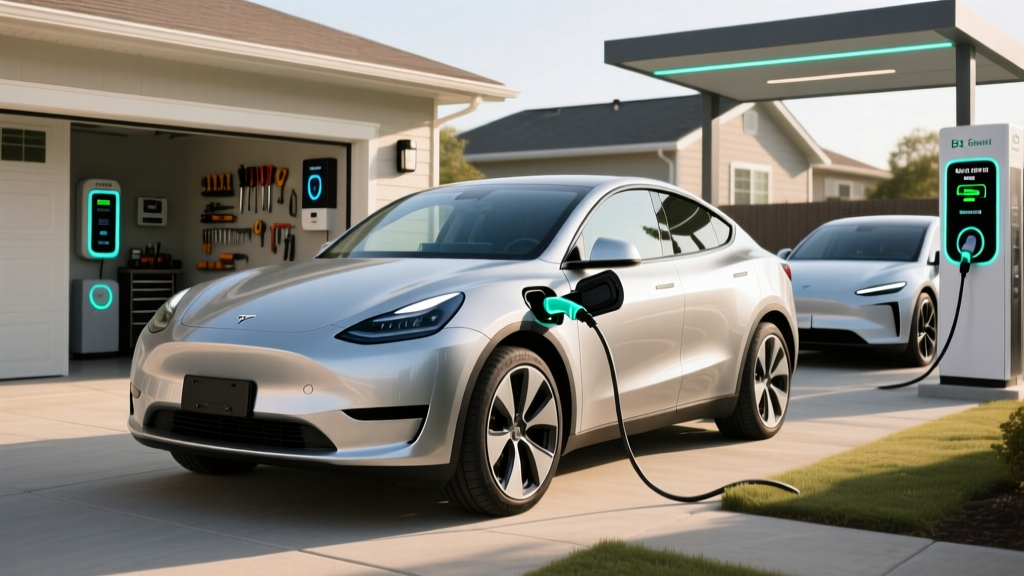
Installing a Level 2 home charger is the most impactful upgrade an EV owner can make. But the total cost depends heavily on your home's electrical infrastructure.
Core Electrical Requirements
A typical Level 2 charger requires a 240V dedicated circuit with amperage matched to the unit. The National Electrical Code (NEC) requires that continuous loads (which EV charging qualifies as) use only 80% of a circuit's rated capacity. So a 48-amp charger requires a 60-amp circuit; a 40-amp charger requires a 50-amp circuit.
| Component | Typical Cost Range | Notes |
|---|---|---|
| Level 2 Charger (Equipment) | $300–$700 | Smart Wi-Fi units cost more; hardwired vs. plug-in (NEMA 14-50) affects price |
| Electrician Labor | $500–$2,000 | Depends on run length from panel, wall type, conduit needs |
| Permit & Inspection | $50–$250 | Required in most jurisdictions; ensures code compliance |
| Electrical Panel Upgrade (if needed) | $1,500–$4,000 | Common in homes with 100A service; upgrading to 200A |
| Total (no panel upgrade) | $850–$2,950 | Most homes with 200A service fall in this range |
| Total (with panel upgrade) | $2,350–$6,950 | Older homes, 100A service, or full panels |
The panel-upgrade gotcha: Many homes built before 2000 have 100-amp or 150-amp electrical panels that are already near capacity. Adding a 48-amp continuous EV load (requiring a 60-amp breaker) may push total demand beyond the panel's rating. An electrician will perform a load calculation per NEC Article 220 to determine if an upgrade is mandatory. Don't skip this step—an overloaded panel is a fire risk.
For a detailed breakdown of federal incentives that can offset installation, consult the IRS clean vehicle credits page and check whether your utility offers a charger rebate or time-of-use rate.
Safety and Code Considerations
- Dedicated circuit: Your EV charger must be on its own breaker—never shared with other appliances.
- GFCI protection: NEC 2020 and later require GFCI protection for outdoor receptacles. Hardwired installations may bypass this requirement in some jurisdictions but offer superior weather resistance.
- Outdoor rating: If your charger is mounted outside, verify it carries a NEMA 4 (weatherproof) rating. Units rated only for indoor use will degrade rapidly in rain or snow.
- Cable management: Choose a cable length (18–25 ft typical) that reaches your charge port without stretching across walkways. Retractable reels and wall-mounted holsters reduce trip hazards.
- Wi-Fi smart features: Smart chargers let you schedule charging during off-peak utility hours, monitor energy use, and receive firmware updates. Non-smart units are simpler but forfeit utility-rate optimization.
Connector Compatibility: NACS, CCS1, CHAdeMO, and Adapters
The North American charging landscape has consolidated heavily around NACS (North American Charging Standard, originally Tesla's connector), but CCS1 and CHAdeMO vehicles remain on the road. Your charging settings are only useful if the physical connector matches.
| Connector | Brands Using It (Native) | Adapter Needed for Other Networks? |
|---|---|---|
| NACS (Tesla) | Tesla, Ford, GM, Rivian, Volvo, Polestar, Mercedes-Benz (new), Hyundai/Kia (select 2025+ models) | CCS1 adapter needed for older Electrify America / non-Tesla CCS stations |
| CCS1 | Hyundai, Kia, BMW, VW, most legacy non-Tesla EVs (pre-2025) | NACS adapter needed for Tesla Supercharger access (where opened to non-Tesla) |
| CHAdeMO | Nissan Leaf (discontinued), Mitsubishi Outlander PHEV | Limited public infrastructure; no viable NACS adapter for DC fast charging |
Adapter reality: Tesla sells a CCS1-to-NACS adapter (~$250) for use at non-Tesla DC fast chargers. Ford and GM provide NACS adapters for their CCS1-equipped legacy models. Always verify adapter compatibility with your specific model year—firmware updates may be required. According to fueleconomy.gov, you can confirm your vehicle's connector type and charging capacity under each model's detailed specs.
Cost to Charge: Per-Mile Economics vs. Gasoline
One of the strongest arguments for electrification is fuel-cost savings—but the math depends entirely on where and when you charge. Your charging settings (scheduled charging, charge limits) directly affect what you pay.
| Scenario | Rate | Cost per Mile (3 mi/kWh EV) | Annual Cost (12,000 mi) |
|---|---|---|---|
| Home, off-peak utility rate | $0.08–$0.12/kWh | $0.027–$0.040 | $320–$480 |
| Home, standard residential rate | $0.14–$0.18/kWh | $0.047–$0.060 | $560–$720 |
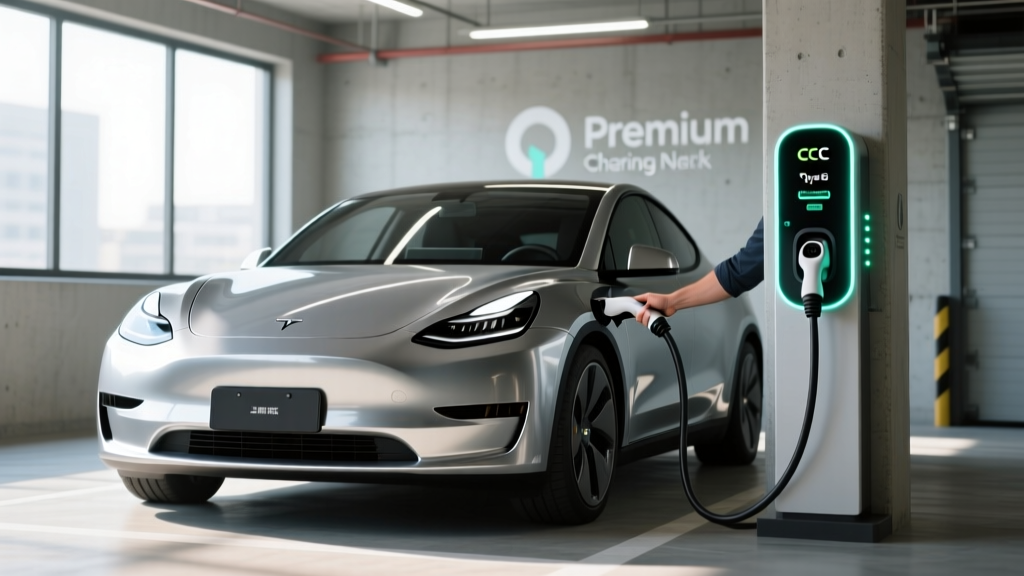
| Public Level 2 (network) | $0.25–$0.49/kWh | $0.083–$0.163 | $1,000–$1,960 |
| DC Fast Charging (public) | $0.30–$0.60/kWh | $0.100–$0.200 | $1,200–$2,400 |
| Gasoline (28 MPG avg, $3.40/gal) | $3.40/gal | $0.121 | $1,457 |
The takeaway: Home charging at off-peak rates delivers 70–75% fuel cost savings vs. gasoline. Exclusive reliance on DC fast charging can erase that advantage entirely. Configure your charging settings to schedule sessions during your utility's lowest-rate window (typically midnight–6 AM) to maximize savings.
Some utilities offer dedicated EV time-of-use (TOU) plans with rates as low as $0.05/kWh overnight. Contact your provider to ask about EV-specific rate plans before your charger installation.
Equipment Recommendations: Best Home Chargers for 2026
These are the units we recommend based on reliability, smart features, build quality, and value. Every recommendation includes exact specs—no vague "high power" claims.
ChargePoint Home Flex
- Power Output: Up to 12 kW (50A) on a 60A circuit
- Connector: NACS (J3400) or J1772/CCS (configurable)
- Cable Length: 23 ft
- Smart Features: Wi-Fi, app scheduling, Alexa integration, energy tracking, load sharing
- Price: ~$599
- Install Type: Hardwired or NEMA 14-50 plug
Best for: Versatility across connector types and strong app ecosystem.
Tesla Wall Connector
- Power Output: Up to 11.5 kW (48A) on a 60A circuit
- Connector: NACS native; J1772 adapter included
- Cable Length: 24 ft
- Smart Features: Wi-Fi, OTA updates, power sharing (up to 6 units on one circuit), Tesla app integration
- Price: ~$475
- Install Type: Hardwired only
Best for: Tesla owners and NACS-native vehicles; cleanest integration.
Emporia Level 2 EV Charger
- Power Output: Up to 11.5 kW (48A) on a 60A circuit
- Connector: J1772 (NACS adapter available)
- Cable Length: 24 ft
- Smart Features: Wi-Fi, app scheduling, solar integration, energy monitoring, TOU rate optimization
- Price: ~$399
- Install Type: Hardwired or NEMA 14-50 plug
Best for: Budget-conscious buyers with home solar panels; best energy-tracking app.
Grizzl-E Smart
- Power Output: Up to 10 kW (40A) on a 50A circuit
- Connector: J1772 or NACS
- Cable Length: 24 ft
- Smart Features: Wi-Fi, OCPP support, adjustable amperage, extreme cold-rated (-40°F)
- Price: ~$549
- Install Type: Hardwired or NEMA 14-50 plug
Best for: Cold-climate durability and adjustable output for panel-limited homes.
Optimizing Your Charging Settings for Battery Longevity
Your vehicle's charging settings menu is more than a convenience feature—it's a battery-preservation tool. Here's how to configure them for maximum lifespan:
- Daily charge limit: Set to 80% for NMC/NCA batteries; 100% for LFP. Check your owner's manual or battery chemistry specification to confirm which you have.
- Scheduled charging: Program your charger or vehicle to begin charging 1–2 hours before your departure time. This avoids the battery sitting at high state-of-charge for extended periods.
- Preconditioning: Enable battery preconditioning (available on Tesla, Hyundai/Kia E-GMP, BMW, and others) when navigating to a DC fast charger. This warms the battery to optimal temperature, enabling faster charging and reducing stress on cells—especially critical in cold weather.
- Amperage adjustment: Some vehicles and chargers allow you to reduce charging amperage. If your home wiring is older or you're using a long extension cord (not recommended, but sometimes unavoidable), reducing from 48A to 32A reduces thermal load on the circuit.
- Departure climate prep: Many EVs can precondition the cabin while still plugged in, drawing from grid power rather than the battery. This preserves range and ensures a comfortable cabin without the energy penalty.
Frequently Asked Questions
How much does it cost to install a home EV charger?
A typical Level 2 home charger installation costs $850–$2,950 when no panel upgrade is needed. This includes the charger unit ($300–$700), electrician labor ($500–$2,000), and permits ($50–$250). If your home has a 100-amp panel that needs upgrading to 200 amps, add $1,500–$4,000, bringing the total to $2,350–$6,950. Always get a load calculation from a licensed electrician before committing.
How fast will each charging level add range?
Level 1 (120V) adds 3–5 miles of range per hour. Level 2 (240V) adds 12–75 miles per hour depending on the charger's kW output and your vehicle's onboard charger capacity. DC fast charging adds 150–1,200+ miles per hour at peak rates, though sustained speeds are lower due to the charge curve taper above 80% SoC.
Which connector or charger is compatible with my EV?
Check your vehicle's charge port. Most 2025–2026 models from Tesla, Ford, GM, Rivian, Volvo, and select Hyundai/Kia vehicles use NACS. Older non-Tesla EVs and many 2024 models still use CCS1. Nissan Leaf and Mitsubishi Outlander PHEV use CHAdeMO. Adapters exist for most combinations, but verify compatibility with your specific model year and firmware version.
How much does charging cost per mile vs. gas?
Home charging at off-peak rates costs roughly $0.03–$0.04 per mile—about 70% less than gasoline at $3.40/gallon in a 28 MPG vehicle ($0.12/mile). Public DC fast charging at $0.45/kWh costs about $0.15/mile, which is comparable to or slightly more than gasoline. Maximizing home charging is the key to EV cost savings.
What electrical upgrades might I need?
The most common upgrade is an electrical panel replacement from 100A to 200A service ($1,500–$4,000). You may also need a new dedicated circuit run from the panel to the charger location, especially if the garage is far from the main panel. Homes with aluminum wiring, outdated breaker panels (e.g., Federal Pacific or Zinsco), or insufficient physical breaker slots will need remediation before a charger can be safely installed.
Can I use a regular household outlet for EV charging?
Yes—this is Level 1 charging using a standard 120V/15A outlet, delivering about 1.2 kW and adding 3–5 miles of range per hour. It's sufficient for PHEVs with small batteries (10–20 kWh) or BEVs driven under 30 miles daily. For anything more, a 240V Level 2 installation is strongly recommended. Never use an extension cord for Level 1 charging unless it's a heavy-duty 12-gauge cord rated for the load, and even then, only as a temporary solution.
For authoritative data on EV efficiency, range, and energy consumption by model, refer to the U.S. Department of Energy's EV technology resources on fueleconomy.gov. For electrical code specifics, consult the NFPA 70 National Electrical Code or a licensed electrician in your jurisdiction.