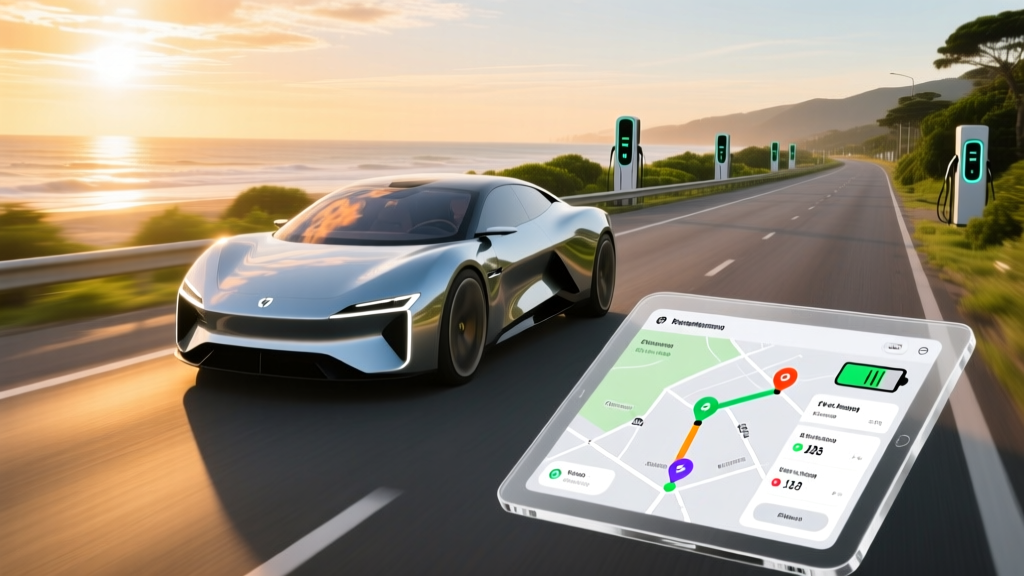
Planning a road trip in an electric vehicle requires more than just punching a destination into your navigation system. An EV charging route planner helps you identify reliable charging stations along your route, estimate charging times, and avoid range anxiety by mapping stops around your vehicle's real-world range. Whether you drive a Tesla Model Y, Hyundai Ioniq 5, Ford F-150 Lightning, or Chevrolet Equinox EV, understanding how route planners integrate with charging networks is essential for stress-free long-distance travel.
This guide covers everything you need to know about planning EV road trips: how charging levels affect your stops, which connectors you'll encounter, what charging actually costs per mile, and how to set up your home charging infrastructure to start every trip with a full battery.
Understanding EV Charging Levels for Route Planning
Before mapping your route, you need to understand the three charging levels you'll encounter. Each level delivers power at different rates, measured in kilowatts (kW). Remember: kW measures power (how fast energy flows), while kWh measures energy (your battery's total capacity). This distinction matters when calculating charging times.
| Charging Level | Power Output | Miles of Range Added Per Hour | Typical Use Case |
|---|---|---|---|
| Level 1 (120V household outlet) | 1.4–1.9 kW | 3–5 miles | Overnight top-up, emergencies |
| Level 2 (240V home/public) | 7.2–19.2 kW | 20–60 miles | Home charging, workplace, hotels |
| DC Fast Charging | 50–350 kW | 150–1,000+ miles (in peak conditions) | Road trips, highway corridors |
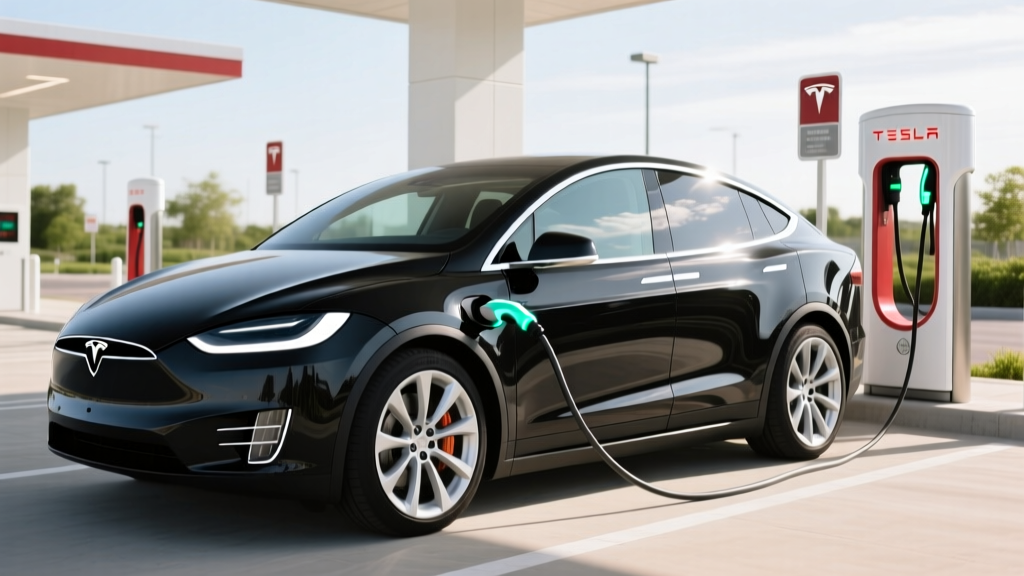
For route planning purposes, DC fast charging is what matters most. Most modern EVs can add 150–250 miles of range in 15–25 minutes at a 150+ kW DC fast charger, assuming optimal battery temperature and state of charge (SoC).
Real-World Charging Times: What Route Planners Don't Always Show
Route planners often display optimistic charging times based on peak power delivery. In reality, charging speed follows a curve: batteries accept power fastest between 10–80% SoC, then taper significantly to protect battery health. Here's what to expect with common battery sizes:
| Battery Size (Usable kWh) | Peak Charge Rate | 10–80% Time | Example Vehicles |
|---|---|---|---|
| 58–65 kWh | 150–175 kW | 25–32 minutes | Volkswagen ID.4, Nissan Ariya |
| 75–84 kWh | 200–250 kW | 18–25 minutes | Tesla Model Y, Hyundai Ioniq 5, Kia EV6 |
| 100–131 kWh | 250–350 kW | 20–30 minutes | Ford F-150 Lightning, Rivian R1T, GMC Sierra EV |
Cold weather caveat: Expect 20–40% longer charging times in freezing temperatures unless your vehicle has battery preconditioning. Tesla, Hyundai/Kia, and Ford all offer preconditioning features that warm the battery before you arrive at a charger.
Connector Compatibility: What You'll Find on the Road
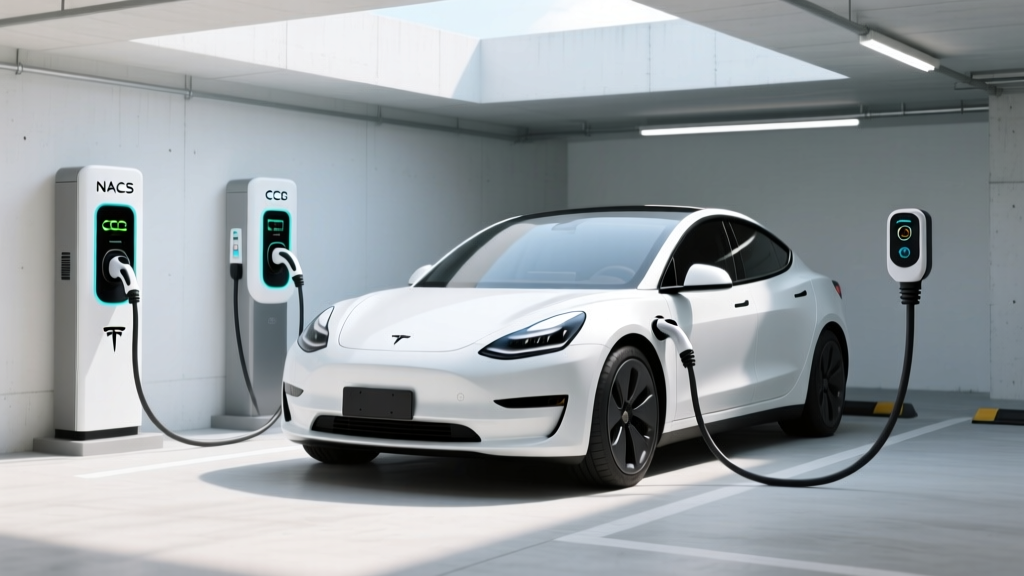
The North American charging landscape has largely standardized around the North American Charging Standard (NACS), originally developed by Tesla. As of 2026, most automakers have adopted NACS for new vehicles, but many EVs from 2020–2024 still use the Combined Charging System (CCS1) connector.
| Connector Type | Brands Using It | Adapter Needed? |
|---|---|---|
| NACS (Tesla-style) | Tesla (all), Ford, GM, Rivian, Volvo, Polestar, Mercedes-Benz, Nissan (2025+) | CCS-to-NACS adapter for older CCS stations (~$150–250) |
| CCS1 | Hyundai/Kia (pre-2025), Volkswagen ID.4 (pre-2025), BMW iX, older EVs | NACS-to-CCS adapter for Tesla Superchargers (~$150–250) |
| CHAdeMO | Nissan Leaf (legacy), Mitsubishi Outlander PHEV | Limited infrastructure; CHAdeMO stations declining |
When using an EV charging route planner, filter stations by your connector type. Apps like PlugShare, A Better Routeplanner (ABRP), and in-vehicle navigation (Tesla, Ford, GM) allow you to set connector preferences and avoid arriving at incompatible chargers.
How Much Does Charging Cost Per Mile vs Gas?
One of the biggest advantages of EV road trips is fuel cost savings, but the exact numbers depend on where and when you charge. Here's a breakdown based on 2026 electricity and gas prices:
| Charging Scenario | Cost per kWh | Cost Per Mile (3–4 mi/kWh efficiency) | Equivalent Gas Cost (30 MPG, $3.50/gal) |
|---|---|---|---|
| Home charging (off-peak utility rate) | $0.10–0.15 | $0.03–0.05 | $0.12 |
| Public Level 2 (ChargePoint, EVgo) | $0.25–0.40 | $0.07–0.12 | $0.12 |
| DC Fast Charging (Electrify America, Tesla Supercharger) | $0.35–0.55 | $0.10–0.16 | $0.12 |
Bottom line: Home charging delivers massive savings (70–75% less per mile than gas). Public DC fast charging is roughly comparable to gas on a cost-per-mile basis, but offers convenience and speed for road trips. Route planners that display pricing (like PlugShare or the Tesla app) help you budget accordingly.
Home Charging Setup: Electrical Requirements and Installation Costs
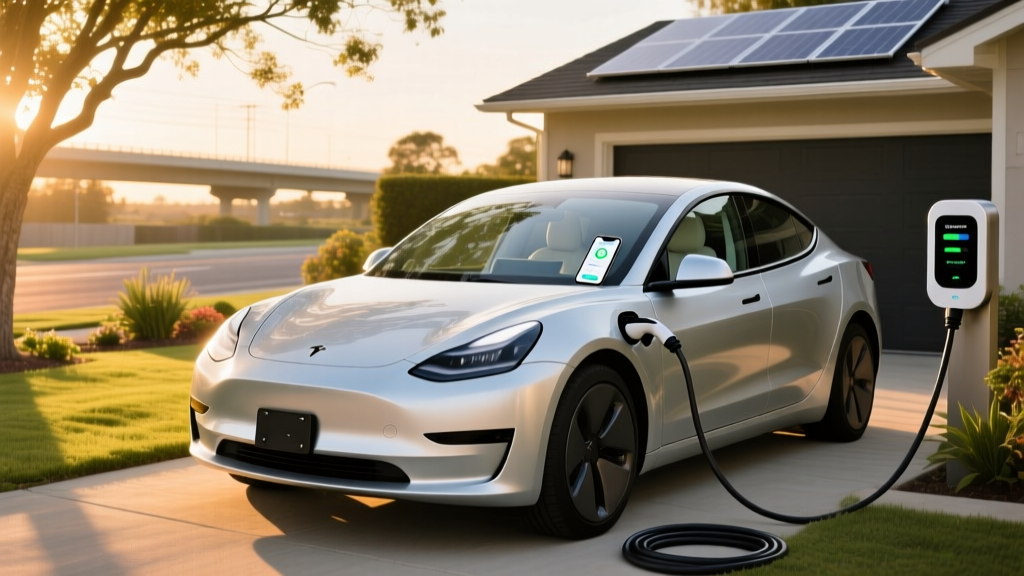
Every road trip starts at home. A properly installed Level 2 home charger ensures you leave with a full battery, maximizing your vehicle's EPA-rated range. Here's what's involved:
Electrical Requirements
- Voltage: 240V (same as a clothes dryer or electric oven)
- Amperage: 40A circuit recommended for 32A continuous charging (NEC code requires 80% derating for continuous loads)
- Breaker size: 50A breaker for a 40A charger
- Wire gauge: 6 AWG copper (varies by run length)
Panel Upgrade Considerations
Most modern homes with 200A electrical service can accommodate a Level 2 charger without a panel upgrade. However, older homes with 100A service or those already running high-draw appliances (electric heat, hot tub, workshop equipment) may need a panel upgrade to 200A or 400A.
| Component | Cost Range | Notes |
|---|---|---|
| Level 2 charger (hardware) | $400–800 | 32–48A models from ChargePoint, Emporia, Wallbox |
| Electrician labor (standard install) | $600–1,500 | Assumes panel within 50 ft of garage, no upgrades |
| Permit fees | $50–200 | Varies by municipality |
| Electrical panel upgrade (if needed) | $1,500–4,000 | 100A to 200A upgrade; includes new panel, labor, permit |
| Total (no panel upgrade) | $1,050–2,500 | Most common scenario |
| Total (with panel upgrade) | $2,550–6,500 | Older homes, high-draw existing loads |
Safety and Code Requirements
- Dedicated circuit: EV chargers require a dedicated circuit—no sharing with other outlets or appliances
- GFCI protection: Required for outdoor installations (2023 NEC update); some jurisdictions require it indoors as well
- Outdoor rating: If mounting outside, ensure the charger has a NEMA 4 or IP65 rating for weather resistance
- Load management: Some utilities offer smart chargers that throttle power during peak demand to avoid panel overload
Always hire a licensed electrician familiar with EV charging installations. The National Electrical Contractors Association maintains a directory of certified EV installer electricians.
Best EV Route Planning Apps and Tools
The right route planner makes or breaks your road trip experience. Here are the top options for 2026:
A Better Routeplanner (ABRP)
Best for: Cross-platform planning with granular control
- Supports 200+ EV models with real-world efficiency data
- Factors in elevation, temperature, wind, and driving speed
- Integrates with OBD2 dongles for live battery data
- Free tier available; Premium $10/month
Tesla In-Vehicle Navigation
Best for: Tesla owners seeking seamless Supercharger routing
- Automatic battery preconditioning before Supercharger stops
- Real-time stall availability and pricing
- Optimizes route for fewest stops, not shortest distance
- Free (included with vehicle)
PlugShare
Best for: Finding all charger networks and user reviews
- Aggregates Tesla, Electrify America, EVgo, ChargePoint, and more
- User-submitted photos and reliability reports
- Filter by connector type, power output, and network
- Free
FordPass / GM myChevrolet Apps
Best for: Ford and GM owners using native navigation
- Built-in route planning with DC fast charger integration
- Battery preconditioning (Ford F-150 Lightning, Chevy Silverado EV)
- Displays estimated SoC at each waypoint
- Free (included with vehicle)
Equipment Recommendations: Home Chargers for Every Budget
A reliable home charger is the foundation of every successful road trip. Here are three top picks for 2026:
| Charger Model | Power Output | Connector | Cable Length | Smart Features | Price |
|---|---|---|---|---|---|
| ChargePoint Home Flex | Up to 50A (12 kW) | NACS or J1772 (configurable) | 23 ft | Wi-Fi, app scheduling, Alexa integration | $699 |
| Emporia Vue 2 | 48A (11.5 kW) | NACS or J1772 | 24 ft | Energy monitoring, load balancing, solar integration | $599 |
| Wallbox Pulsar Plus | 40A (9.6 kW) | J1772 (NACS adapter available) | 25 ft | Wi-Fi, Bluetooth, load sharing | $549 |
All three chargers are UL-listed, support hardwired or NEMA 14-50 plug installation, and qualify for the federal Alternative Fuel Vehicle Refueling Property Credit (up to $1,000 for home charging equipment, subject to income and location restrictions).
FAQ: EV Charging Route Planning
How accurate are EV charging route planners?
Most route planners (ABRP, Tesla nav) are accurate within 5–10% for charging time and energy consumption, assuming you input correct driving speed and temperature. Real-world factors like headwinds, elevation changes, and battery age can affect accuracy. Always plan a 10–15% buffer for unexpected detours or charger outages.
What if a charger on my route is broken?
Always identify backup chargers within 10–20 miles of your planned stops. Apps like PlugShare show real-time user reports of broken or offline chargers. Tesla Superchargers have the highest reliability (95%+ uptime), while third-party networks like Electrify America and EVgo vary by location.
Do I need to precondition my battery before DC fast charging?
Yes, if your vehicle supports it. Battery preconditioning warms the battery to optimal temperature (around 77°F/25°C), enabling faster charging. Tesla, Hyundai/Kia (E-GMP platform), Ford, and GM all offer automatic preconditioning when you navigate to a DC fast charger. Expect 20–40% slower charging in cold weather without preconditioning.
Can I use Tesla Superchargers with a non-Tesla EV?
Yes, as of 2026, Tesla has opened most Supercharger locations to non-Tesla EVs equipped with NACS connectors or using a CCS-to-NACS adapter. Use the Tesla app to check compatibility and initiate charging. Pricing is typically $0.35–0.50/kWh, comparable to other DC fast networks.
How do I plan a route if I'm towing with my EV?
Towing reduces EV range by 30–50% depending on trailer weight and aerodynamics. Use ABRP's towing mode to input trailer weight and adjust efficiency estimates. Plan charging stops every 100–150 miles instead of the typical 200–250 miles, and expect 30–45 minute charging sessions instead of 20–25 minutes.
With the right route planner, home charging setup, and realistic expectations about charging times, EV road trips are not just possible—they're often more relaxing and cost-effective than gas-powered travel. Start every trip with a full battery, plan stops around DC fast chargers, and enjoy the journey.