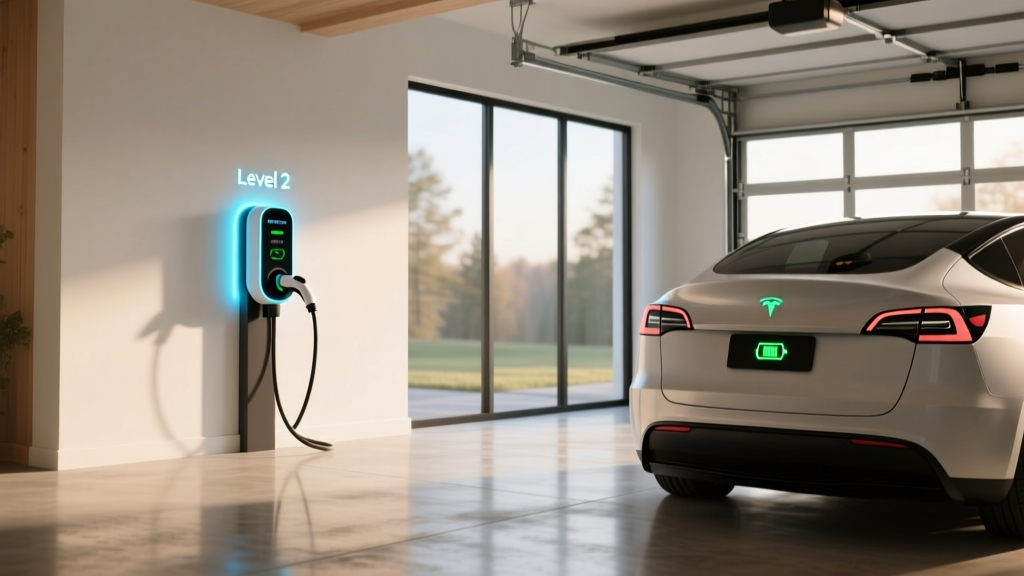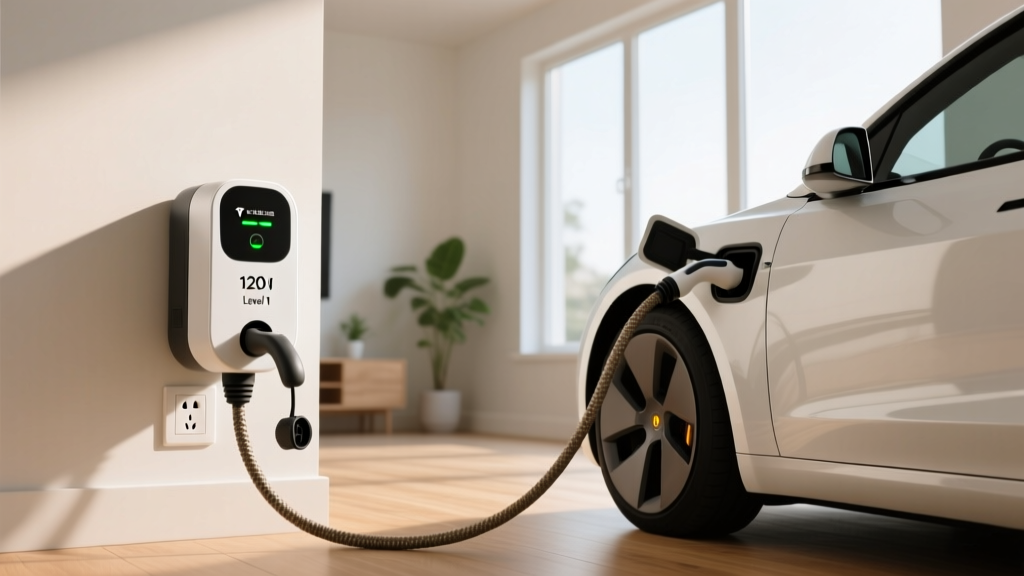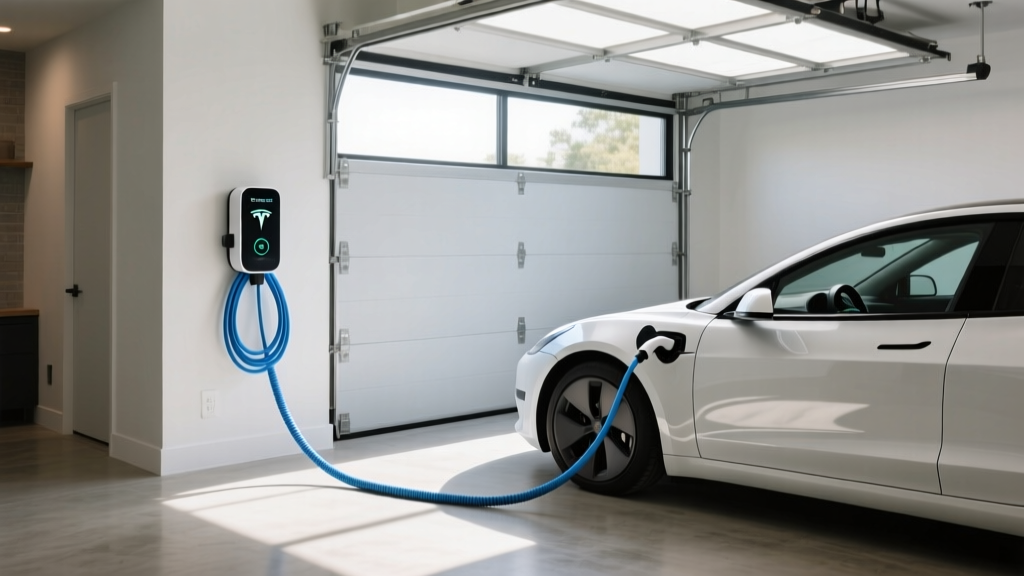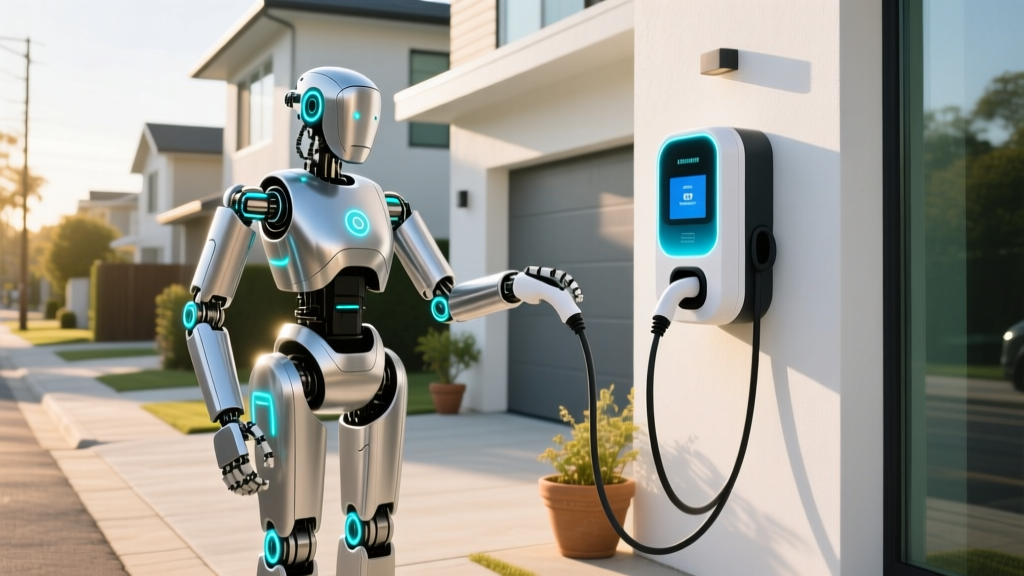
Scroll through any EV forum in 2026 and you will eventually encounter the term EV charging robot — an automated arm or mobile unit that plugs into your vehicle without human intervention. The concept is undeniably appealing: park, walk away, and let a machine handle the cable. But for the overwhelming majority of EV owners today, a well-installed home Level 2 charger delivers faster daily charging, lower per-mile cost, and far simpler logistics than any robotic system currently deployed.
This guide breaks down exactly what EV charging robots are, where they actually operate, and why a conventional home charger remains the practical choice. Along the way, you will get exact numbers on charging speeds, installation costs, connector compatibility, and per-mile electricity costs so you can make a spec-driven decision.
What Is an EV Charging Robot and Where Does It Exist?
An EV charging robot is a mechanized system that autonomously locates a vehicle's charge port and inserts a connector. The two most visible examples are:
- WigWag / robotic-arm stations — fixed pedestal units with a multi-axis arm that uses cameras and sensors to find the port. These appear in limited fleet depots and select parking garages in South Korea, China, and pilot programs in Europe.
- Mobile charging robots — autonomous battery-on-wheels units (like the EVSafeCharge ZIGGY) that roll to a parked car in a garage or lot and provide Level 2 or DC fast charging from an onboard battery pack.
As of 2026, neither system is available for residential purchase. They are commercial or municipal deployments aimed at dense urban parking, fleet yards, and valet-style operations where human plugging is impractical. For a private homeowner with a garage or driveway, the technology does not yet apply — and the economics strongly favor a hardwired Level 2 unit.
Charging Levels Explained: Speeds, kW, and Range Added
Before comparing equipment, you need clarity on the three charging tiers. Power is measured in kW (kilowatts) — the rate of energy flow — while battery capacity is measured in kWh (kilowatt-hours) — the total energy stored. Confusing the two is the single most common EV mistake.
| Level | Voltage | Power (kW) | Miles of Range Added per Hour | Typical Use Case |
|---|---|---|---|---|
| Level 1 | 120V AC | 1.0–1.4 kW | 3–5 mi/hr | Overnight trickle, PHEV top-ups |
| Level 2 | 240V AC | 7.2–19.2 kW | 25–65 mi/hr | Home daily charging, workplace |
| DC Fast | 400–800V DC | 50–350 kW | 150–1,000+ mi/hr (peak) | Road trips, highway corridors |
A typical 2026 EV with a 75 kWh battery (e.g., Hyundai Ioniq 5, Tesla Model Y) will charge from 10–80% on a 50 kW DC fast charger in roughly 55–65 minutes. On a 150 kW charger, the same battery reaches 80% in about 25–30 minutes, though sustained rate tapers as the battery management system protects cell health above 60% State of Charge.
Home Level 2 Installation: Electrical Requirements and Costs
Most EV owners in 2026 install a 240V, 48-amp hardwired Level 2 charger on a dedicated 60-amp breaker. This delivers up to 11.5 kW continuously and is compatible with virtually every EV on the market. Here is what the electrical work entails:
- Dedicated circuit: A 60A double-pole breaker in your main panel, with 6 AWG copper wire (or 4 AWG aluminum) run to the charger location.
- Panel capacity check: Your electrician will perform a load calculation per NEC Article 220. If your panel is 100A and already near capacity (common in pre-2000 homes), you may need a panel upgrade to 200A, which adds $1,500–$3,000 to the project.
- Permit: Most jurisdictions require an electrical permit ($50–$250) and a final inspection.
- GFCI protection: The 2023 NEC (and 2026 adoptions) requires GFCI protection for EV receptacles. Hardwired units bypass this requirement and avoid nuisance tripping — a strong reason to hardwire rather than use a NEMA 14-50 outlet.
- Outdoor rating: If the charger is mounted outside, it must carry a NEMA 4 or IP65 rating for weather resistance.
| Component | Cost Range |
|---|---|
| Level 2 charger unit (48A, hardwired) | $400–$700 |
| Electrician labor (standard install, <50 ft run) | $500–$1,200 |
| Materials (wire, conduit, breaker) | $150–$400 |
| Electrical permit | $50–$250 |
| Total — standard install | $1,100–$2,550 |
| Panel upgrade to 200A (if needed) | +$1,500–$3,000 |
| Total — with panel upgrade | $2,600–$5,550 |
The IRS §30D credit does not cover home charging equipment for most buyers in 2026. The separate §30C Alternative Fuel Vehicle Refueling Property Credit offers up to $1,000 for home charger installation, but only if you live in a qualifying census tract (typically rural or low-income areas). Check your eligibility at the IRS site before budgeting around this incentive.
Connector Compatibility: NACS, CCS1, and CHAdeMO in 2026
The connector landscape has consolidated dramatically. Tesla's North American Charging Standard (NACS) is now the dominant plug for new vehicles sold in the US, with Ford, GM, Rivian, Hyundai, Kia, and most other automakers adopting it for 2025–2026 model-year vehicles.
| Connector | Brands Using It Natively | Adapter Needed For |
|---|---|---|
| NACS (Tesla) | Tesla, Ford, GM, Rivian, Hyundai, Kia, Volvo, Polestar, Fisker, Lucid (2026) | Older CCS vehicles accessing Superchargers |
| CCS1 | VW ID.4 (2024 and earlier), BMW iX (pre-2026), some legacy models | NACS vehicles at Electrify America CCS-only stalls |
| CHAdeMO | Nissan Leaf (discontinued 2025), Mitsubishi Outlander PHEV (legacy) | Essentially sunset — no new vehicles |
For home Level 2 charging, the connector matters less because nearly all home chargers now ship with a NACS plug or include a CCS adapter in the box. If you own a CCS-equipped vehicle and plan to upgrade to a NACS vehicle later, buy a charger with a swappable connector or one that includes both.
Cost to Charge: Per-Mile Electricity vs Gasoline
Charging economics vary enormously depending on where and when you plug in. Below are realistic 2026 scenarios for an EV averaging 3.0 miles per kWh (roughly 112 MPGe combined, typical of a midsize crossover like the Toyota bZ4X or Chevrolet Equinox EV):
| Scenario | Rate ($/kWh) | Cost per Mile | Equivalent Gas Price at 28 MPG |
|---|---|---|---|
| Home Level 2 — off-peak utility rate | $0.08–$0.12 | $0.027–$0.040 | $0.75–$1.12/gal |
| Home Level 2 — standard residential rate | $0.14–$0.18 | $0.047–$0.060 | $1.31–$1.68/gal |
| Public Level 2 (ChargePoint, EVgo L2) | $0.25–$0.40 | $0.083–$0.133 | $2.33–$3.73/gal |
| DC Fast Charging (Tesla Supercharger, EA) | $0.30–$0.55 | $0.100–$0.183 | $2.80–$5.13/gal |
| Gasoline vehicle (28 MPG avg, $3.40/gal) | — | $0.121 | $3.40/gal |
The takeaway is unambiguous: home charging on any utility rate undercuts gasoline per mile by 60–80%. Public DC fast charging at peak rates can approach or exceed gas costs, which is why home installation pays for itself quickly. According to fueleconomy.gov, the average EV owner who charges primarily at home spends $500–$700 per year on electricity for 12,000 miles of driving — compared to $1,400–$1,800 in gasoline for a comparable ICE vehicle.
Equipment Recommendations: Top Home Chargers for 2026
The home charger market in 2026 is mature, with reliable options spanning $350 to $700. Below are three units that consistently perform well in real-world use:
Emporia Level 2 EV Charger (48A)
- Power output: 11.5 kW (48A, 240V hardwired)
- Connector: NACS native; CCS adapter available
- Cable length: 24 ft
- Smart features: Wi-Fi, energy monitoring via Emporia app, solar integration, scheduled charging
- Price: ~$399
- Best for: Budget-conscious buyers who want smart scheduling and solar tracking
ChargePoint Home Flex (50A)
- Power output: 12.0 kW (50A, 240V hardwired or NEMA 14-50)
- Connector: NACS (2025+ models); J1772 with adapter for older units
- Cable length: 23 ft
- Smart features: Alexa integration, ChargePoint app scheduling, load sharing for multi-charger setups
- Price: ~$599
- Best for: Two-EV households needing managed load sharing on a single circuit
Tesla Wall Connector (48A)
- Power output: 11.5 kW (48A, 240V hardwired)
- Connector: NACS native; J1772 adapter included for non-Tesla EVs
- Cable length: 24 ft
- Smart features: Wi-Fi updates, power sharing between two units, Tesla app integration
- Price: ~$450
- Best for: Tesla owners or mixed-Tesla households wanting native Supercharger ecosystem compatibility
All three units are UL-listed, rated for indoor and outdoor use (NEMA 4), and eligible for the §30C credit if your census tract qualifies. Avoid unbranded chargers under $250 from online marketplaces — they frequently lack UL certification and may not meet NEC code, which can void your homeowner's insurance in the event of an electrical fire.
Charging Time Examples: Real-World 10–80% Benchmarks
Charge times depend on battery size (kWh), the charger's power output (kW), and the vehicle's onboard charge acceptance rate. Here are real-world benchmarks for common 2026 EVs:
| Vehicle (Battery kWh) | Level 2 — 11.5 kW Home | DC Fast — 150 kW | DC Fast — 250+ kW |
|---|---|---|---|
| Tesla Model Y (75 kWh, NMC) | ~4.5 hours | ~28 min | ~20 min (V3 Supercharger) |
| Hyundai Ioniq 5 (77.4 kWh, NMC) | ~4.7 hours | ~25 min | ~18 min (800V architecture) |
| Ford F-150 Lightning (131 kWh, NMC) | ~8.0 hours | ~45 min | ~35 min (170 kW peak) |
| Chevrolet Equinox EV (85 kWh, NMC) | ~5.2 hours | ~32 min | ~25 min |
| BMW i4 (81.5 kWh, NMC) | ~5.0 hours | ~30 min | ~22 min |
Notice that 800-volt architectures (Hyundai/Kia E-GMP, Porsche Taycan, GM Ultium-based 2026 models) sustain higher charge rates longer, meaning the 10–80% time is meaningfully shorter even at the same peak kW rating. This matters for road trips but is irrelevant for overnight home charging, where you will always wake up at 100% regardless of battery size.
So Where Do EV Charging Robots Fit In?
Robotic charging solves a specific problem: high-density parking environments where vehicles are tightly packed, where accessibility is a concern (ADA compliance for drivers who cannot physically handle a cable), or where fleet vehicles cycle through charging spots around the clock. Companies like NHTSA-monitored autonomous parking systems and robotic charger pilots in South Korea (Hyundai's robotic arm at EV charging stations) and Volkswagen's mobile charging robot concept demonstrate the technology's viability.
But for a private homeowner, the math does not support waiting for robotic charging:
- A Level 2 home charger costs $1,100–$2,550 installed and adds 25–65 miles of range per hour — more than enough for any daily commute.
- Plugging in takes approximately 8 seconds of your time.
- Robotic systems carry maintenance, calibration, and software overhead that adds cost without adding charging speed.
- No residential robotic charger is commercially available or UL-certified for home use as of 2026.
If you live in an apartment building or condo where automated valet parking with robotic charging is being installed by the property management, enjoy the convenience. Otherwise, invest in a quality Level 2 unit and a licensed electrician.
Frequently Asked Questions
How much does it cost to install a home EV charger?
A standard 48-amp, 240V hardwired Level 2 charger installation costs between $1,100 and $2,550 including equipment, electrician labor, materials, and permit. If your home requires a panel upgrade from 100A to 200A service, add $1,500–$3,000, bringing the total to $2,600–$5,550. Get three quotes from licensed electricians — prices vary significantly by region and wire-run distance.
How fast will each charging level add range?
Level 1 (120V) adds 3–5 miles per hour — suitable only for plug-in hybrids or very low-mileage drivers. Level 2 (240V, 48A) adds 25–65 miles per hour depending on the vehicle's efficiency, fully recharging most EVs overnight. DC fast charging adds 150–1,000+ miles per hour at peak rate, but sustained rate tapers significantly above 80% State of Charge.
Which connector or charger is compatible with my EV?
If you drive a 2025–2026 model from Tesla, Ford, GM, Rivian, Hyundai, or Kia, your vehicle uses NACS natively. Older models from Volkswagen, BMW, and others may still use CCS1. CHAdeMO is effectively discontinued. For home charging, buy a NACS-native charger; if you currently own a CCS vehicle, use the included adapter or buy a dual-connector unit.
How much does charging cost per mile vs gas?
Home charging at standard residential rates ($0.14–$0.18/kWh) costs $0.047–$0.060 per mile for an average EV — roughly 60% cheaper than a 28 MPG gasoline vehicle at $3.40/gallon. Off-peak home rates drop that to $0.03–$0.04 per mile. Public DC fast charging at $0.35–$0.55/kWh narrows the gap but still typically undercuts gas.
What electrical upgrades might I need?
The most common upgrade is a panel capacity increase from 100A to 200A service, required when your existing panel lacks headroom for a new 60A dedicated circuit. Older homes with knob-and-tube or aluminum branch wiring may also need a sub-panel installed near the garage. Your electrician will perform an NEC Article 220 load calculation before recommending any upgrade — do not skip this step.