The Promise of EV Charging Roads — And Where the Tech Stands
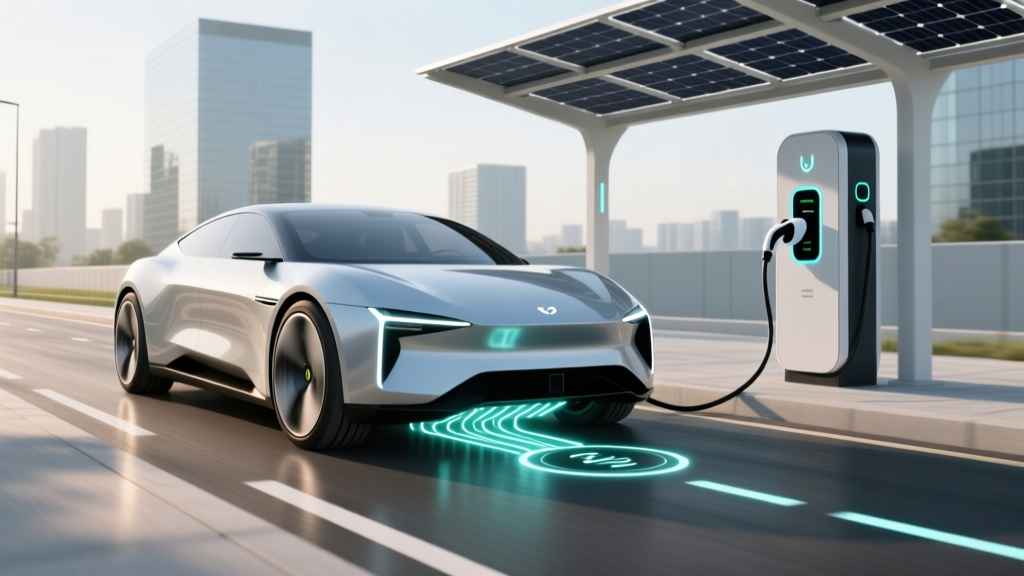
The idea of EV charging roads — highways and streets that wirelessly charge your vehicle as you drive — captures the imagination like few other concepts in electric mobility. No plugs, no charging stops, no range anxiety. Just drive and the battery replenishes itself through electromagnetic induction embedded in the pavement.
As of 2026, dynamic wireless power transfer (DWPT) technology has moved beyond lab prototypes into limited real-world pilot programs. Projects like ENRX's (formerly Electreon) test installations in Detroit, Michigan, and Visby, Sweden, have demonstrated that in-road charging can transfer between 25 kW and 75 kW to a moving vehicle equipped with a specialized receiver pad. Purdue University's ASPIRE (Advancing Sustainability through Powered Infrastructure for Roadway Electrification) initiative has also been testing magnetic cement-based roadway sections.
But here's the honest assessment for anyone researching EV charging today: plug-in charging — at home, at work, and at public DC fast stations — remains the only practical, scalable, and cost-effective way to charge an electric vehicle in 2026. Charging roads are years, likely decades, from mainstream deployment at highway scale. Let's break down why, what the real numbers look like, and how to set up charging that actually works right now.
How Fast Does Each Charging Level Add Range?
Before comparing futuristic roads to today's infrastructure, let's establish the baseline: what plug-in charging actually delivers. EV charging is measured in kW (kilowatts) — that's the rate of power flow, like water pressure in a hose. Your battery capacity is measured in kWh (kilowatt-hours) — the total energy stored, like the size of the tank. These are not interchangeable.
| Level | Voltage | Max Power (kW) | Miles of Range Added/Hour | Typical Use Case |
|---|---|---|---|---|
| Level 1 | 120V AC | 1.4–1.9 kW | 3–5 mi/hr | Overnight top-up, PHEVs, emergencies |
| Level 2 | 240V AC | 7.2–19.2 kW | 20–60 mi/hr | Home daily charging, workplace, destinations |
| DC Fast (CCS/NACS) | 400–800V DC | 50–350 kW | 150–1,000+ mi/hr (peak) | Road trips, rapid top-up |
Real-world charging time examples (10%–80% SoC):
- Tesla Model Y (75 kWh battery, NACS, 250 kW peak): ~20 minutes at a V3 Supercharger, tapering above 60% SoC
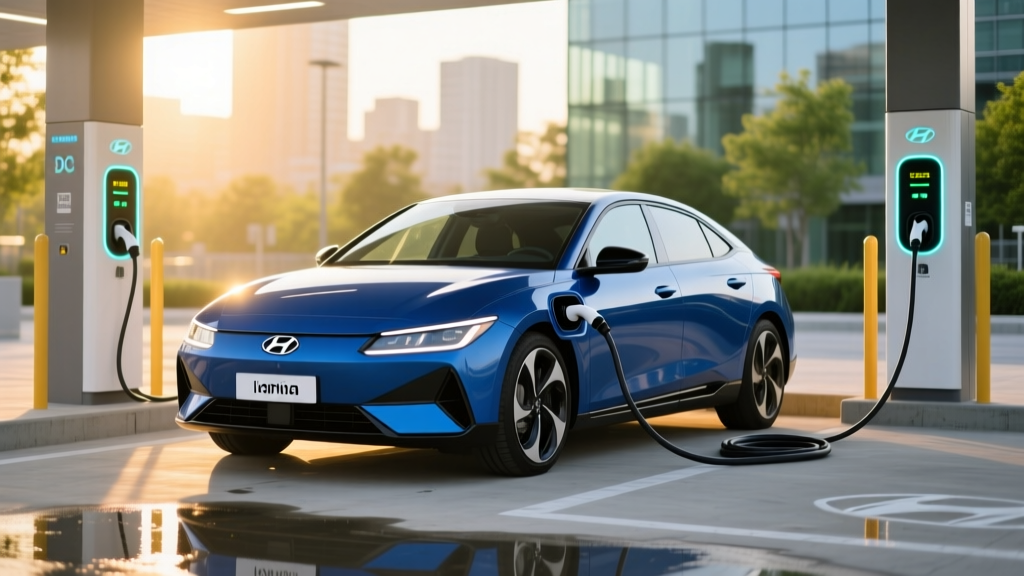
- Hyundai Ioniq 5 (77.4 kWh, 800V architecture, 240 kW peak): ~18 minutes at a 350 kW station
- Ford F-150 Lightning Extended Range (131 kWh, 150 kW peak): ~41 minutes due to larger pack and lower peak rate
- Chevrolet Equinox EV (85 kWh, 150 kW peak): ~30 minutes
Note that DC fast charging follows a charge curve — you'll see peak kW only between roughly 10–50% state of charge. Above 80%, speeds taper sharply to protect battery health. This is why 10–80% time is the standard metric, not 0–100%.
EV Charging Roads vs. Home Level 2: A Cost and Practicality Comparison
The core question for an EV owner isn't whether charging roads are cool — they are — but whether they solve a real problem better than existing infrastructure. Let's compare.
| Factor | EV Charging Roads (DWPT) | Home Level 2 Charger |
|---|---|---|
| Availability | Limited pilot roads only (<2 miles total globally) | Any home with 240V circuit |
| Vehicle compatibility | Requires factory receiver pad (no consumer EVs in 2026) | Every EV sold in the US (J1772/NACS) |
| Infrastructure cost | $1.5M–$4M per lane-mile (estimated) | $500–$2,500 total install |
| Charging speed | 25–75 kW (while moving) | 7.2–19.2 kW (stationary) |
| Cost to user | Unknown — likely toll-based per mile | $0.04–$0.16/kWh (home electricity) |
| Reliability | Untested at scale; road wear/weather risks | Proven; 95%+ uptime for quality units |
The math is stark. A single mile of charging road could fund thousands of home Level 2 installations. For the foreseeable future, your driveway is your best charging station.
How Much Does It Cost to Install a Home EV Charger?
Home Level 2 charging is where 80%+ of all EV charging happens, according to fueleconomy.gov data. Here's what a realistic installation looks like, broken down honestly — including the panel-upgrade scenario that catches many older-home buyers off guard.
| Component | Budget Scenario | Typical Scenario | Complex Scenario |
|---|---|---|---|
| Level 2 charger unit (hardwired, 40A–48A) | $350–$500 | $500–$750 | $600–$900 |
| Electrician labor (run 240V circuit, mount unit) | $300–$600 | $600–$1,200 | $1,200–$2,500 |
| Electrical permit | $50–$100 | $100–$200 | $100–$250 |
| Panel upgrade (100A → 200A, if needed) | $0 (not needed) | $0–$1,500 | $2,000–$4,000 |
| Conduit/wiring (long runs >50 ft) | $0–$100 | $100–$400 | $400–$1,000 |
| Total estimated cost | $700–$1,300 | $1,300–$3,050 | $4,300–$8,650 |
Key electrical requirements for a standard Level 2 install:
- Circuit: Dedicated 240V circuit, typically 40A or 50A breaker (EVSE rated at 32A or 40A continuous draw — the National Electrical Code requires circuits rated at 125% of continuous load)
- Wire gauge: 6 AWG copper for 50A circuits; 8 AWG for 40A (varies by run length and local code)
- Panel capacity: Your main panel needs enough spare amperage to add a 40–50A load. A 100A panel with existing heavy loads (electric range, dryer, HVAC) may need upgrading to 200A — this is the $2,000–$4,000 surprise
- GFCI protection: Required for outdoor installations per NEC 2023 (adopted by most jurisdictions by 2026); many modern EVSEs have built-in GFCI
- Outdoor rating: If your charger mounts outside, it must carry a NEMA 4 or NEMA 4X weatherproof rating
Which Connector Is Compatible With My EV?
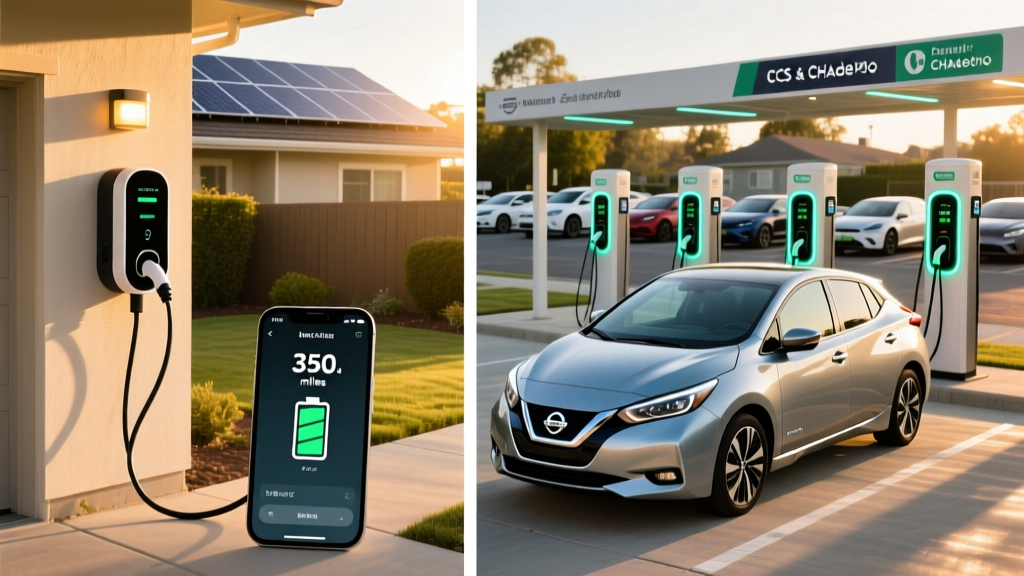
The connector landscape in 2026 has largely consolidated around two standards, with a legacy holdout still in the field. Here's what fits what:
| Connector | Brands Using It (2026) | DC Fast Charging? | Notes |
|---|---|---|---|
| NACS (North American Charging Standard) | Tesla (all), Ford, GM, Rivian, Volvo, Polestar, Hyundai/Kia (select), Mercedes-Benz, BMW | Yes (Tesla Supercharger + NACS stations) | Now the dominant standard; compact, no locking pins |
| CCS1 (Combined Charging System) | Volkswagen ID.4 (2025 and earlier), older BMW i4/iX, some legacy models | Yes (Electrify America, EVgo, ChargePoint) | Being phased out by most automakers by 2027 |
| CHAdeMO | Nissan Leaf (discontinued after 2025), Mitsubishi Outlander PHEV (older) | Yes (declining station availability) | Effectively deprecated; avoid for new purchases |
Adapter reality in 2026: If you buy a CCS1-equipped EV (like a used Volkswagen ID.4), you can purchase a CCS-to-NACS adapter (~$200–$300) to access the Tesla Supercharger network, which now hosts 25,000+ NACS stalls open to non-Tesla vehicles. The reverse — NACS-to-CCS adapters — are also available for accessing legacy Electrify America CCS stations. Always verify adapter compatibility with your specific model year before purchasing.
How Much Does Charging Cost Per Mile vs. Gas?
This is where EVs win decisively — but the exact savings depend on your electricity rate and where you charge. Let's run real numbers.
| Scenario | Rate | Cost per Mile (Efficient EV: 3 mi/kWh) | Cost per Mile (Gas Car: 30 MPG, $3.50/gal) |
|---|---|---|---|
| Home Level 2 (national avg electricity) | $0.16/kWh | $0.053 | $0.117 |
| Home Level 2 (off-peak/utility EV rate) | $0.08/kWh | $0.027 | $0.117 |
| Home Level 2 (California peak) | $0.35/kWh | $0.117 | $0.117 |
| Public Level 2 (network pricing) | $0.25–$0.40/kWh | $0.083–$0.133 | $0.117 |
| DC Fast Charging ( Electrify America, EVgo) | $0.35–$0.55/kWh | $0.117–$0.183 | $0.117 |
Key takeaways:
- Home charging on an off-peak or utility EV rate plan delivers 75–80% savings per mile vs. a 30 MPG gas car
- Even at national average residential rates ($0.16/kWh), home charging is roughly half the cost of gasoline per mile
- Exclusive DC fast charging at public rates can equal or exceed gasoline costs — this is why home Level 2 is essential for EV economics
- Many utilities now offer dedicated EV time-of-use (TOU) rates that drop to $0.06–$0.10/kWh overnight. Check with your provider
For a driver covering 12,000 miles/year, home charging at $0.10/kWh costs roughly $400/year in electricity. The equivalent gas car at 30 MPG and $3.50/gal spends $1,400/year. That's $1,000 in annual fuel savings — and $5,000 over five years — before factoring in reduced maintenance (no oil changes, fewer brake replacements thanks to regenerative braking).
Recommended Home Level 2 Chargers for 2026
Here are five proven units that deliver reliable daily charging, with specific specs so you can match them to your electrical setup and EV.
ChargePoint Home Flex
- Power output: Up to 12 kW (50A circuit, 40A continuous) — adjustable down to 16A for smaller panels
- Connector: NACS (native); J1772 adapter included
- Cable length: 23 feet
- Smart features: Wi-Fi, app scheduling, Alexa/Google integration, energy tracking, utility TOU integration
- Price: ~$599
- Best for: Most EV owners with a 50A-capable circuit; adjustable amperage handles panel limitations gracefully
Tesla Wall Connector
- Power output: Up to 11.5 kW (60A circuit, 48A continuous)
- Connector: NACS native
- Cable length: 24 feet
- Smart features: Wi-Fi, over-the-air updates, power sharing (link multiple units on one circuit), Tesla app integration
- Price: ~$475
- Best for: Tesla owners or those planning to buy a NACS-equipped EV; excellent value for the output
Emporia Vue Level 2 EV Charger
- Power output: Up to 11.5 kW (60A circuit, 48A continuous)
- Connector: J1772 (NACS adapter available separately)
- Cable length: 24 feet
- Smart features: Wi-Fi, Emporia energy monitoring ecosystem integration, solar-aware charging, scheduling
- Price: ~$399
- Best for: Budget-conscious buyers who want high amperage and solar integration
Grizzl-E Smart
- Power output: Up to 10 kW (40A circuit, 32A continuous) — dip-switch adjustable to 16/24/32/40A
- Connector: J1772 or NACS (select at purchase)
- Cable length: 24 feet
- Smart features: Wi-Fi, OCPP protocol (utility/fleet compatible), app control, built-in GFCI
- Price: ~$449
- Best for: Cold-climate owners (rated to -40°F), outdoor installations, and homes with limited panel capacity (adjustable amperage)
Wallbox Pulsar Plus
- Power output: Up to 11.5 kW (60A circuit, 48A continuous)
- Connector: J1772 or NACS
- Cable length: 25 feet
- Smart features: Wi-Fi + Bluetooth, Power Sharing, Eco-Smart (solar/green energy mode), compact form factor
- Price: ~$649
- Best for: Tight garage spaces (smallest footprint in this list) and multi-EV households using Power Sharing
Safety, Code, and the Fine Print on Home Charging
Electrical safety isn't optional, and cutting corners on an EV charger installation is both dangerous and potentially uninsurable. Here's what matters:
- Dedicated circuit: Your EV charger must have its own dedicated breaker — never share a circuit with a dryer, range, or other high-draw appliance
- Hardwired vs. plug: Hardwired installations (no plug) are preferred for 48A+ units; NEMA 14-50 receptacles work for up to 40A units but require a quality industrial-grade outlet (cheap $10 receptacles have caused documented fire incidents — use a Hubbell or Bryant brand rated for continuous EV duty)
- GFCI: Required for outdoor outlets per NEC 2023+; most quality EVSEs include built-in ground fault protection
- Permitting: Nearly every jurisdiction requires an electrical permit for a new 240V circuit. Your electrician pulls this; the inspector verifies wire gauge, breaker sizing, and grounding. Unpermitted work can void homeowner's insurance
- Utility notification: Some utilities require you to notify them before installing a Level 2 charger, especially if you want access to EV-specific TOU rates
What About the Future — Will Charging Roads Replace Plugs?
Dynamic wireless charging has genuine engineering merit. ENRX has demonstrated 25 kW transfer to a moving truck at highway speeds in Swedish tests, and Purdue's magnetic cement research could reduce installation costs substantially. The U.S. Department of Energy has funded ASPIRE research with over $30 million.
But scaling from a 1-mile test road to a national highway network involves problems that no amount of engineering solves quickly:
- Cost: At $2–4 million per lane-mile, electrifying even 10% of U.S. Interstate highways (roughly 4,800 miles) would cost $10–20 billion — and that's just the road, not the grid infrastructure to supply the power
- Vehicle hardware: No 2026 production EV ships with a DWPT receiver pad. Standards haven't been finalized. This is a chicken-and-egg problem that will take at least a decade to resolve
- Efficiency losses: Wireless transfer across an air gap (road surface to vehicle undercarriage) is 85–92% efficient vs. 95–98% for a wired plug. That 8–15% energy loss, at highway scale, is substantial
- Maintenance: Road surfaces crack, shift, freeze, and get repaved. Maintaining embedded coils under heavy truck traffic is an unsolved infrastructure challenge
The realistic outlook: EV charging roads will likely appear first in controlled environments — port logistics lanes, dedicated bus routes, and short urban corridors — before ever reaching general-purpose highways. For the next 10–15 years, your plug-in home charger and the public DC fast charging network are your infrastructure.
Frequently Asked Questions
How much does it cost to install a home EV charger?
A typical Level 2 home installation costs $1,300–$3,050 including the charger unit ($350–$750), electrician labor ($600–$1,200), and permit ($100–$200). If your home needs a panel upgrade from 100A to 200A service, add $2,000–$4,000. Simple installs on newer homes with 200A panels and short wire runs can come in under $1,000 total.
How fast will each charging level add range?
Level 1 (120V) adds 3–5 miles of range per hour. Level 2 (240V) adds 20–60 miles per hour depending on amperage. DC fast charging adds 150–1,000+ miles per hour at peak power, though real-world charging sessions are measured in 10–80% time: typically 18–40 minutes depending on battery size and peak kW acceptance.
Which connector/charger is compatible with my EV?
In 2026, most new EVs use the NACS connector (Tesla, Ford, GM, Rivian, Hyundai/Kia, Volvo, BMW, Mercedes). CCS1 is still found on some Volkswagen models and older vehicles. CHAdeMO is effectively deprecated. Check your vehicle's charge port — if it's NACS, buy a NACS home charger. If it's CCS1, buy a J1772/CCS charger and consider a NACS adapter for Supercharger access.
How much does charging cost per mile vs. gas?
Home charging at average US electricity rates ($0.16/kWh) costs about $0.05/mile for a typical EV — roughly half the $0.12/mile cost of a 30 MPG gas car at $3.50/gallon. Off-peak utility rates can drop that to $0.03/mile. However, exclusive DC fast charging at $0.45–$0.55/kWh can equal or exceed gas costs, which is why home charging access is critical for EV economics.
What electrical upgrades might I need?
The most common upgrade is a panel capacity increase from 100A to 200A service ($2,000–$4,000), needed when your existing panel lacks spare amperage for a 40–50A EV circuit. You may also need a new conduit run if your garage is far from the panel (adding $400–$1,000 for long wire runs). Some utilities offer rebates of $250–$500 for Level 2 installations — check with your provider before starting work.
Are EV charging roads available anywhere in the US right now?
As of 2026, there are no public EV charging roads available for consumer use in the United States. ENRX (formerly Electreon) completed a short test segment on a Detroit service road, and Purdue University has tested magnetic cement sections, but these are research pilots, not public infrastructure. All EV charging in the US requires plug-in connections at home, workplace, or public stations.
Sources: fueleconomy.gov (EPA efficiency data), IRS §30D clean vehicle credit rules, manufacturer specification sheets for referenced 2026 model-year vehicles.