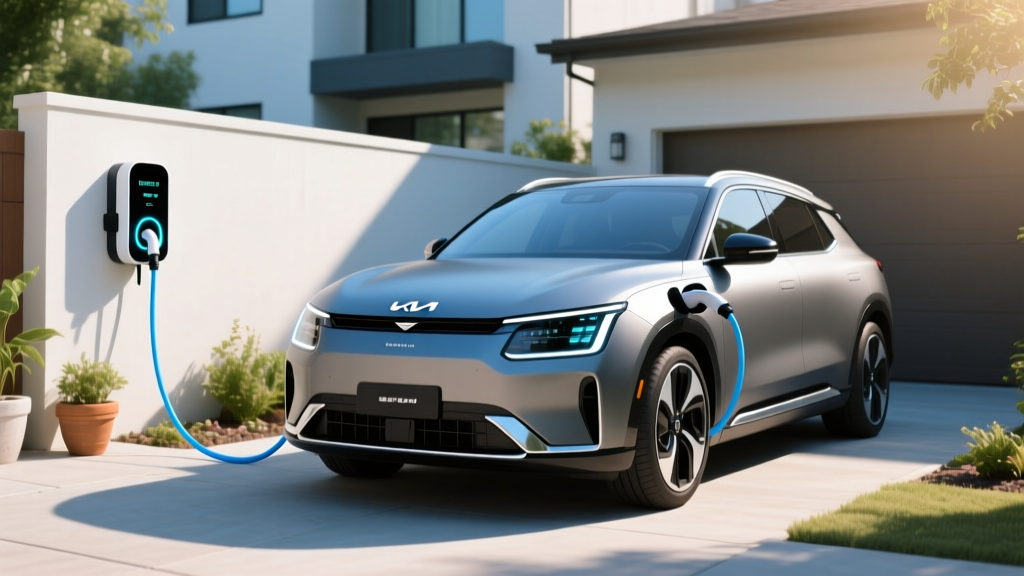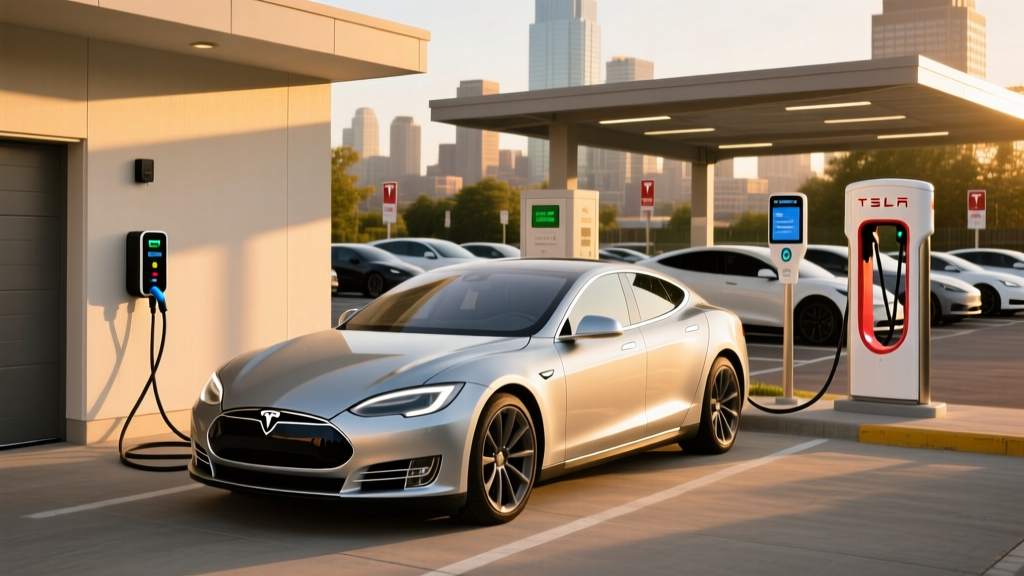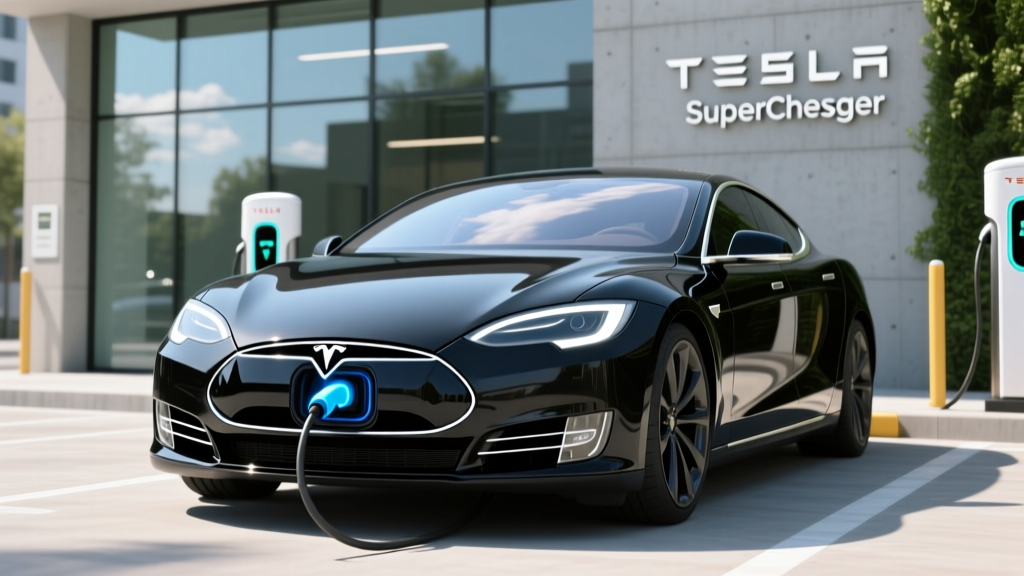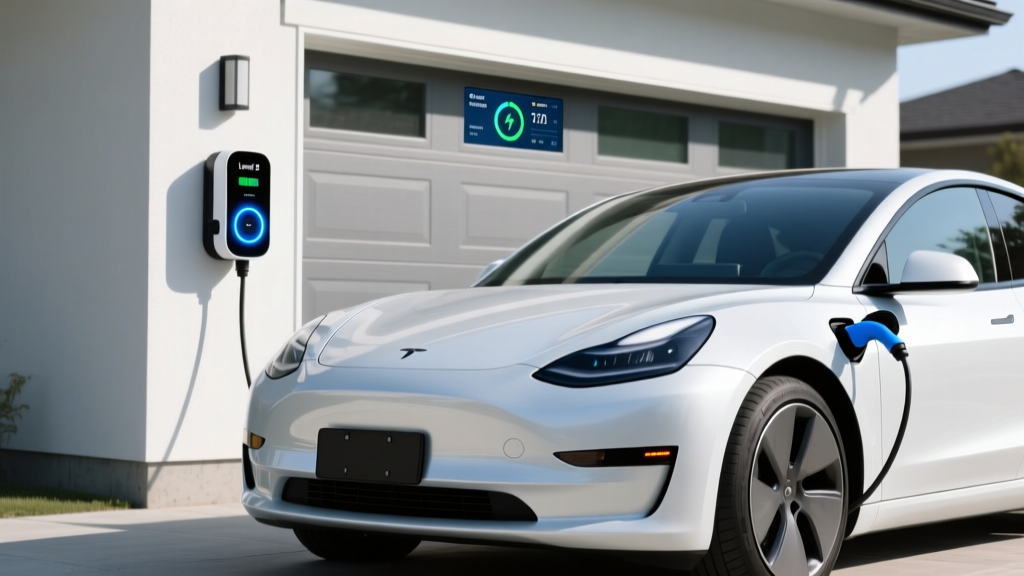
If you're shopping for an electric vehicle or just took delivery of one, charging logistics are probably your biggest open question. The EV industry organizes charging into three tiers — Level 1, Level 2, and DC Fast Charging — each with drastically different speeds, costs, and infrastructure needs. This guide breaks down exactly what each level delivers in real-world miles, what you'll pay to install at home, which connectors fit your vehicle, and how charging costs compare to gasoline on a per-mile basis.
Before we get into the tiers, one critical distinction: kW (kilowatts) measures power — the rate at which electricity flows into your battery. kWh (kilowatt-hours) measures energy — the total capacity of your battery. Think of kW as the width of the pipe and kWh as the size of the tank. A 84 kWh battery charged at 11.5 kW will take roughly 7.3 hours from empty; that same battery at 150 kW DC fast charging can reach 80% in about 25 minutes.
The Three EV Charging Levels at a Glance
Every EV sold in the U.S. supports at least two of these three charging tiers. Here's what each delivers in measurable terms:
| Level | Voltage | Power (kW) | Miles Added/Hour | Typical Use Case | 10–80% Time (75 kWh Battery) |
|---|---|---|---|---|---|
| Level 1 (120V) | 120V AC | 1.0–1.4 kW | 3–5 miles | Overnight top-up, PHEVs, emergencies | ~45–50 hours |
| Level 2 (240V) | 240V AC | 3.3–19.2 kW | 12–75 miles | Home daily charging, workplace, public | ~3.5–10 hours |
| DC Fast Charge | 400–800V DC | 50–350 kW | 150–1,000+ miles | Road trips, highway corridors | ~18–45 minutes |
A few things the table doesn't show: Level 1 charging comes included with most EVs via a portable cord. Level 2 requires dedicated 240V circuitry — the same voltage your electric dryer uses. DC Fast Charging bypasses the vehicle's onboard charger entirely, feeding DC current directly into the battery pack at far higher power levels.
Level 1 Charging: The Emergency Backup
Level 1 plugs into a standard 120V household outlet (NEMA 5-15). At 12 amps continuous (80% of a 15A circuit), you'll get roughly 1.4 kW — enough to add 3 to 5 miles of range per hour depending on your vehicle's efficiency. A Chevy Equinox EV with a 85 kWh battery would need well over 50 hours to charge from 10% to 80% on Level 1.
For plug-in hybrids with smaller batteries — the Toyota RAV4 Prime's 18.1 kWh pack, for instance — Level 1 is more viable. You can fully replenish its 42 miles of electric range in about 12 hours overnight. But for any battery-electric vehicle with 60+ kWh of capacity, Level 1 is strictly a backup or trickle-maintenance option. It's also worth noting that Level 1 efficiency drops in extreme cold, where battery preconditioning draws additional power.
Level 2 Charging: The Home Standard
Level 2 operates on 240V AC and is the backbone of practical EV ownership. Most home installations run at 40 amps (delivering 9.6 kW to the vehicle) or 48 amps (11.5 kW), though some high-amperage chargers push to 80 amps (19.2 kW) for vehicles with large onboard chargers like the Ford F-150 Lightning.
At 48 amps / 11.5 kW, a Tesla Model Y (75 kWh usable battery) gains roughly 44 miles of range per hour, reaching 10–80% in about 4.5 hours. A Hyundai Ioniq 5 with its 77.4 kWh pack charges in a similar window. This means a typical overnight session of 8 hours easily replenishes 200+ miles of range — more than enough for daily driving plus weekend trips.
Electrical Requirements for Home Level 2
A Level 2 home charger requires a dedicated 240V circuit on your electrical panel. Here's what that involves:
- Circuit breaker: 50A breaker for a 40A charger, or 60A breaker for a 48A charger (NEC code requires circuits rated at 125% of continuous load)
- Wire gauge: 6 AWG copper for 50A circuits; 4 AWG for 60A circuits
- Outlet type: NEMA 14-50 (most common), NEMA 6-50, or hardwired connection
- Panel capacity: Your home's main panel must have sufficient spare amperage. A 200A panel in a home already running electric heat, dryer, and oven may need a load calculation before adding a 50A EV circuit
Hardwired installations are generally preferred over plug-in NEMA 14-50 outlets for chargers above 40A. Hardwired units eliminate the outlet as a potential failure point, don't require GFCI breakers (which can nuisance-trip with EV chargers), and are required by code in some jurisdictions for 60A+ circuits.
DC Fast Charging: Road Trip Power
DC Fast Chargers (DCFC) are the public stations you find along highways and at rest stops, delivering 50 kW to 350 kW directly to your battery. These skip your car's onboard AC-to-DC converter entirely, which is why they can charge so much faster.
Peak charge rates vary enormously by vehicle:
- Hyundai Ioniq 5 / Kia EV6 (800V architecture): Peak ~240 kW, 10–80% in approximately 18 minutes at a 350 kW station
- Tesla Model 3/Y: Peak ~250 kW at V3 Superchargers, 10–80% in roughly 25–27 minutes
- Ford F-150 Lightning (extended range): Peak ~155 kW, 10–80% in about 35–40 minutes
- Chevy Equinox EV: Peak ~150 kW, 10–80% in roughly 30 minutes
Two critical real-world caveats: Peak kW is not sustained kW. A vehicle advertising 240 kW peak will only hold that rate for a narrow SoC window (typically 10–30%), then taper progressively. The 10–80% time is a more honest metric than peak rate. Second, station output matters. Plugging a 240 kW-capable Ioniq 5 into a 50 kW station means you'll charge at 50 kW regardless. Always check the station's rated output in your charging app before pulling off the highway.
According to fueleconomy.gov, DC fast charging efficiency can be 10–15% lower than Level 2 due to thermal management energy and conversion losses at high power levels.
How Much Does It Cost to Install a Home EV Charger?
This is the question that stops many prospective EV buyers. The honest answer: it ranges from $800 on the low end to $3,500+ if your electrical panel needs upgrading. Here's the full breakdown based on 2025–2026 national averages:
| Cost Component | Simple Install (panel nearby) | Complex Install (long run / panel upgrade) |
|---|---|---|
| Level 2 charger unit (hardware) | $400–$700 | $400–$700 |
| Electrician labor (2–4 hrs typical) | $300–$600 | $600–$1,200 |
| Materials (wire, conduit, breaker) | $100–$300 | $300–$800 |
| Electrical permit | $50–$150 | $50–$150 |
| Panel upgrade (if needed: 100A → 200A) | $0 | $1,500–$3,000 |
| Utility service upgrade (rare) | $0 | $2,000–$5,000 |
| Total estimated range | $850–$1,750 | $2,850–$5,850+ |
The single biggest variable is your electrical panel. Homes built after 2000 with 200A service and spare breaker slots typically fall in the simple-install range. Older homes with 100A panels, full breaker boxes, or panels located far from the garage may require a panel upgrade ($1,500–$3,000) or even a utility service upgrade ($2,000–$5,000) — the latter being rare but real.
Some utilities offer rebates of $250–$500 for EV charger installation, and a few states offer additional incentives. Check with your local utility before scheduling work. Always hire a licensed electrician and pull a permit — unpermitted electrical work can void homeowner's insurance and create fire risk.
Connector Compatibility: NACS, CCS, and CHAdeMO
The connector landscape has consolidated significantly since 2024, but you still need to know what fits your vehicle — especially for public DC fast charging.
| Connector | Type | Vehicles Using It | Notes |
|---|---|---|---|
| NACS (J3400) | AC + DC | Tesla (all), Ford, GM, Rivian, Volvo, Polestar, Hyundai/Kia (2025+) | Now the dominant North American standard; direct access to Tesla Supercharger network |
| CCS1 | AC + DC | VW ID.4, BMW i4/iX, older Hyundai/Kia, most pre-2025 non-Tesla EVs | Being phased out on new models; adapters available for Supercharger access |
| CHAdeMO | DC only | Nissan Leaf (legacy) | Essentially discontinued; very limited new station deployment |
The key takeaway for 2026: NACS is the standard going forward. If you're buying a new EV, it almost certainly has NACS or will have a CCS-to-NACS adapter included. CCS1 vehicles can access Tesla Superchargers using an adapter (typically $200–$250 from the manufacturer). CHAdeMO owners — primarily Nissan Leaf drivers — face a shrinking public network and should plan charging around Electrify America and other CCS-compatible stations, which also support CHAdeMO at many locations.
For Level 2 home and public AC charging, all vehicles use the same J1772 connector (or NACS, which handles AC natively). Tesla includes a J1772 adapter in every vehicle, and NACS-equipped non-Tesla EVs include a J1772-to-NACS adapter for compatibility with older Level 2 stations.
Charging Cost Per Mile: EV vs Gasoline
The economics of EV charging depend heavily on where and when you charge. Here are realistic 2026 scenarios compared against a 30 MPG gasoline vehicle at $3.40/gallon:
| Scenario | Rate | Cost per kWh | Cost per Mile (3.5 mi/kWh EV) | Annual Cost (12,000 mi) |
|---|---|---|---|---|
| Home off-peak (utility TOU rate) | Level 2 | $0.08–$0.14 | $0.023–$0.040 | $275–$480 |
| Home standard rate | Level 2 | $0.14–$0.20 | $0.040–$0.057 | $480–$685 |
| Public Level 2 (network pricing) | Level 2 | $0.25–$0.49 | $0.071–$0.140 | $855–$1,680 |
| DC Fast Charging (public) | DCFC | $0.30–$0.55 | $0.086–$0.157 | $1,030–$1,885 |
| Gasoline vehicle (30 MPG) | — | $3.40/gal | $0.113 | $1,360 |
The data makes the case clear: home charging is the economic sweet spot. An EV owner charging primarily at home on off-peak rates spends roughly $300–$500 per year on electricity for 12,000 miles — about a quarter to a third of what a 30 MPG gas car costs. Even at standard residential rates, the EV saves $675–$880 annually.
However, exclusive reliance on DC fast charging narrows the savings significantly and can actually exceed gasoline costs in some markets. This is why home Level 2 access remains the single most important factor in EV ownership economics. If you can't charge at home, a PHEV may be a more practical choice.
Recommended Home Level 2 Chargers for 2026
Based on reliability, feature sets, and value, here are four chargers that cover the major use cases:
ChargePoint Home Flex
- Power: Up to 12 kW (50A), adjustable down to 16A
- Connector: J1772 (NACS adapter included)
- Cable length: 23 feet
- Smart features: Wi-Fi, app scheduling, Alexa integration, energy reporting
- Price: ~$550–$650
- Best for: Most EV owners; flexible amperage fits any panel
Tesla Wall Connector
- Power: Up to 11.5 kW (48A)
- Connector: NACS native (J1772 adapter sold separately)
- Cable length: 24 feet
- Smart features: Wi-Fi, OTA updates, power sharing between multiple units
- Price: ~$450–$500
- Best for: Tesla owners and NACS-equipped vehicles
Emporia Vue Level 2 Charger
- Power: Up to 11.5 kW (48A)
- Connector: J1772 (NACS adapter available)
- Cable length: 24 feet
- Smart features: Energy monitoring, solar integration, scheduling
- Price: ~$350–$400
- Best for: Budget-conscious buyers with solar panels
Grizzl-E Smart
- Power: Up to 10 kW (40A)
- Connector: J1772 (NACS version available)
- Cable length: 24 feet
- Smart features: OCPP-compatible, app control, adjustable amperage
- Price: ~$450–$550
- Best for: Cold-climate durability (rated to -40°F), outdoor installs
All four units are UL-listed (or equivalent) and support both indoor and outdoor installation. Choose hardwired over plug-in for any unit above 40A, and ensure your charger is rated for your installation environment — outdoor units need NEMA 4 (weatherproof) enclosures at minimum.
Safety, Code, and Installation Best Practices
EV charging places a sustained high-amperage load on your home's electrical system — far longer than a dryer or oven cycle. This makes proper installation non-negotiable:
- Dedicated circuit: Your EV charger must be on its own dedicated breaker — never shared with other appliances
- GFCI considerations: NEC 2023+ requires GFCI protection for plug-in receptacles used for EV charging in garages. However, many EV chargers have built-in ground-fault protection, and GFCI breakers can nuisance-trip with certain chargers. Hardwired installations typically bypass this issue entirely
- Outdoor rating: Any charger installed outside must carry a NEMA 4 or IP65 rating. Cable management matters too — a cable left on the ground will degrade from UV exposure, moisture, and physical damage
- Load calculation: A licensed electrician should perform a NEC Article 220 load calculation on your panel before installation. If your home's calculated load exceeds 80% of panel capacity with the EV circuit added, a panel upgrade is required
- Permit and inspection: Virtually all jurisdictions require an electrical permit and post-installation inspection. Skipping this step risks insurance denial in the event of a fire and may cause issues at home sale
According to the NHTSA and the National Fire Protection Association, properly installed EV chargers carry no greater fire risk than other major home appliances. The risk comes from unpermitted work, undersized wiring, and overloaded panels — all preventable with a qualified electrician.
Frequently Asked Questions
How fast will each charging level add range to my EV?
Level 1 (120V) adds 3–5 miles per hour. Level 2 at 48 amps (11.5 kW) adds 30–44 miles per hour depending on vehicle efficiency. DC Fast Charging adds 150–1,000+ miles per hour equivalent, though sessions typically last 18–45 minutes rather than hours. The most useful metric is 10–80% time: roughly 45+ hours on Level 1, 4–10 hours on Level 2, and 18–40 minutes on DC fast charging for a typical 75 kWh battery.
How much does it cost to install a home EV charger?
A straightforward Level 2 installation with an adequate 200A panel and short wire run costs $850–$1,750 all-in (charger + electrician + materials + permit). If your panel needs upgrading from 100A to 200A, add $1,500–$3,000. Utility service upgrades (rare, mostly in homes with original 60–100A service from the street) can add $2,000–$5,000. Always get a load calculation from your electrician before committing.
Which connector and charger are compatible with my EV?
For 2026 model-year vehicles: Tesla, Ford, GM, Rivian, Volvo, Polestar, and newer Hyundai/Kia models use NACS. Most pre-2025 non-Tesla EVs use CCS1. The Nissan Leaf (legacy) uses CHAdeMO. For home Level 2, all vehicles are compatible with J1772 stations using an adapter if needed. For DC fast charging, verify your vehicle's native connector and check whether the manufacturer includes a CCS-to-NACS or J1772-to-NACS adapter.
How much does EV charging cost per mile compared to gas?
Home charging at off-peak rates costs roughly $0.02–$0.04 per mile — about 70–80% cheaper than a 30 MPG gasoline car at $3.40/gallon ($0.11/mile). Standard home rates run $0.04–$0.06/mile, still a significant savings. Public DC fast charging at $0.30–$0.55/kWh costs $0.09–$0.16/mile, which can approach or exceed gasoline costs. The economic advantage of EV ownership depends heavily on home charging access.
What electrical upgrades might my home need for an EV charger?
The most common upgrade is a panel replacement from 100A to 200A service ($1,500–$3,000) if your existing panel lacks spare capacity. Older homes may also need new wiring from the meter to the panel, or in rare cases a utility service upgrade. Some homes need a sub-panel installed in the garage if the main panel is far away. A licensed electrician's load calculation will determine exactly what's required — don't skip this step. See the IRS clean vehicle credit page for information on whether any electrical upgrades qualify for energy-efficiency tax credits under §25C.