The US electric vehicle charging network hit a milestone in early 2026: over 72,000 public charging stations and roughly 205,000 public ports nationwide, according to the U.S. Department of Energy's Alternative Fuels Data Center (AFDC). But raw station counts only tell part of the story. For EV shoppers and new owners, the real questions are practical: How fast can I charge? What will a home install cost? Which connector does my car need?
This guide translates the latest electric vehicle charging infrastructure statistics into actionable numbers — charging speeds, installation costs, per-mile economics, and equipment picks — so you can plan a setup that actually works for your driving life.
The 2026 Charging Network by the Numbers
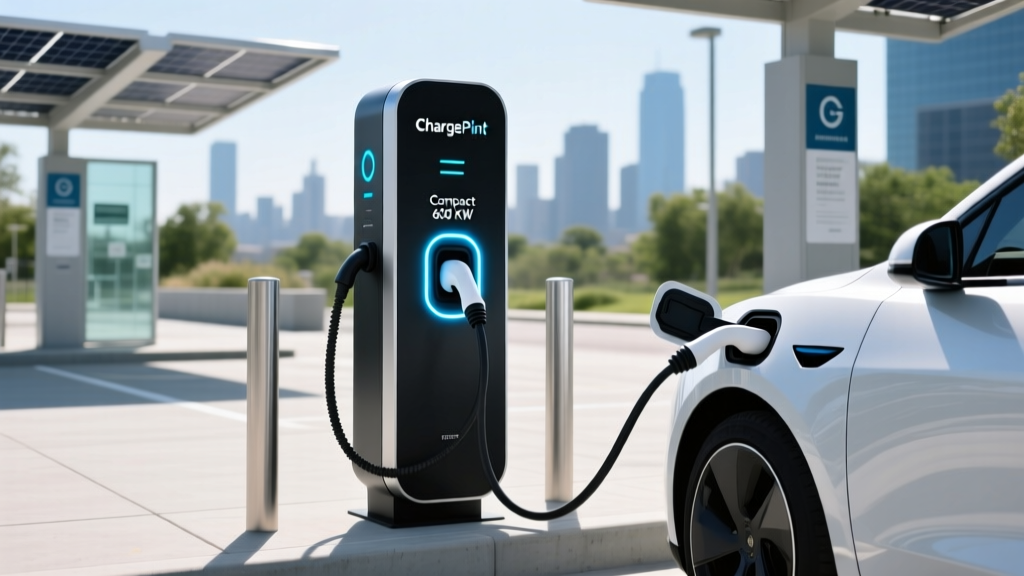
Before evaluating hardware, it helps to understand what's available on the road. Here's where the US network stands entering the second half of 2026:
- ~72,000 public stations (up from ~64,000 in early 2025)
- ~205,000 public charging ports across all levels
- ~48,000 DC fast charging ports (100 kW+ capable)
- ~18,500 Tesla Supercharger stations / ~72,000 Supercharger stalls now open to non-Tesla NACS vehicles via adapter or native NACS port
- NEVI-funded stations: Over 2,400 federally funded fast-charging corridors are now operational under the National Electric Vehicle Infrastructure program
The growth is real, but distribution remains uneven. Urban corridors along I-5, I-95, and I-80 are well-served; rural stretches in the Dakotas, West Texas, and parts of the Mountain West still qualify as charging deserts. The practical takeaway: home charging remains the backbone of EV ownership for roughly 80% of daily driving, with public fast charging serving road trips and apartment dwellers.
Charging Levels Explained: Speeds, kW, and Real-World Range Added
A critical distinction every EV owner must internalize: kW (kilowatts) measures power — the rate of charging, while kWh (kilowatt-hours) measures energy — the battery's capacity. A 10 kW charger delivers 10 kWh of energy in one hour (minus losses). Confusing these two is the single most common EV literacy gap.
| Level | Voltage / Amps | Power (kW) | Miles of Range Per Hour | Typical Use Case |
|---|---|---|---|---|
| Level 1 (120V) | 120V / 12A | ~1.4 kW | 3–5 mi/hr | Overnight top-up, PHEVs, low-mileage drivers |
| Level 2 (240V) | 240V / 32–48A | 7.7–11.5 kW | 25–44 mi/hr | Home daily charging, workplace, destinations |
| DC Fast (Level 3) | 400–800V DC | 50–350 kW | 150–1,200+ mi/hr (peak) | Road trips, quick top-ups, commercial fleets |
Real-world context: A 25-mile daily commute consumes roughly 7–9 kWh depending on the vehicle. Level 2 home charging at 7.7 kW replenishes that in about one hour — meaning overnight charging is more than sufficient for most drivers. DC fast charging is a road-trip tool, not a daily habit; frequent use accelerates battery degradation slightly and costs significantly more per kWh than home power.
Charging Time Examples: 10–80% for Common Battery Sizes
EV batteries charge fastest between 10–80% State of Charge (SoC). Above 80%, the charge curve tapers sharply to protect cell health — a 10–80% session might take 18 minutes, but 80–100% can add another 25–35 minutes. Here's what to expect with typical 2026 models:
| Battery Size (usable kWh) | Peak DC Rate | 10–80% Time (at rated peak) | Example Vehicles |
|---|---|---|---|
| 58 kWh | 170 kW | ~21 min | VW ID.4 Standard |
| 77 kWh | 240 kW | ~18 min | Hyundai Ioniq 5, Kia EV6 |
| 82 kWh | 250 kW | ~20 min | Tesla Model Y Long Range |
| 100 kWh | 270 kW | ~25 min | Rivian R1S Dual-Motor Max |
| 131 kWh | 350 kW | ~32 min | GMC Sierra EV Denali |
Honest caveat: Peak kW is not sustained kW. A vehicle rated for 240 kW may only hold that rate for 3–5 minutes before tapering. Real-world 10–80% sessions at a properly functioning 350 kW Electrify America or Tesla V4 stall typically average 120–160 kW across the session. Cold batteries (< 40°F) can add 30–50% to charge times unless the vehicle preconditioned the pack en route to the charger.
Home Charger Installation: Costs, Electrical Requirements, and Panel Upgrades
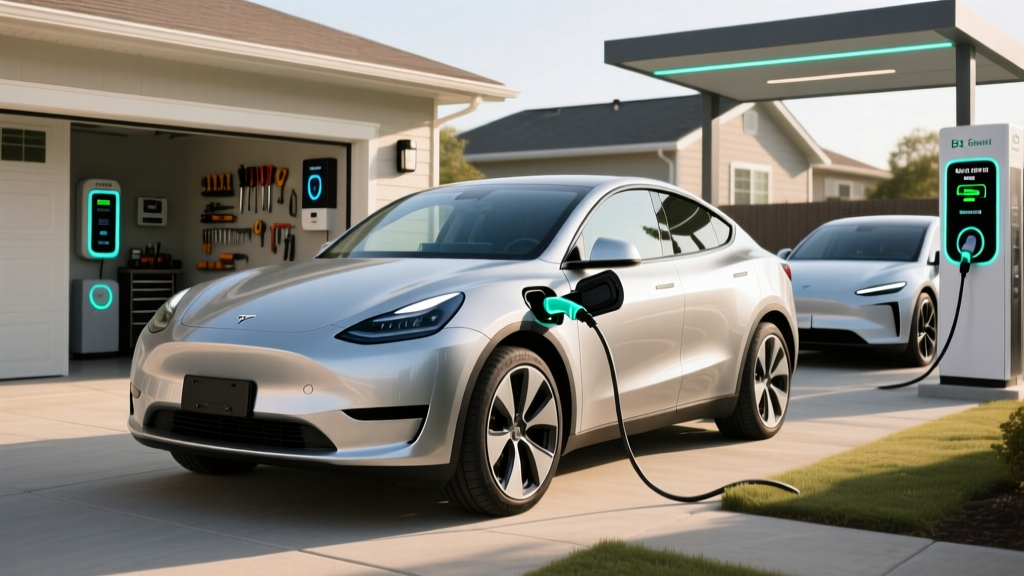
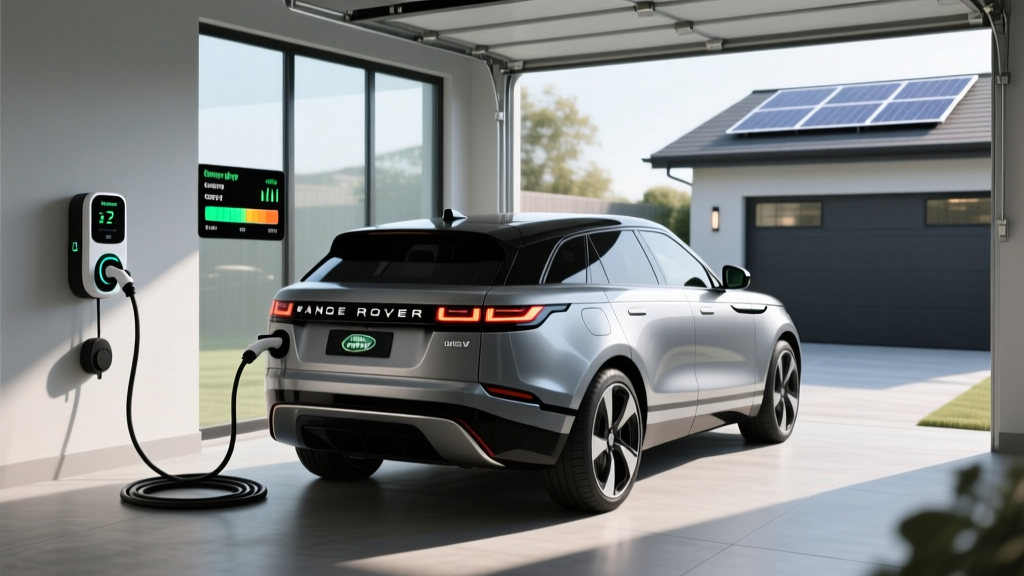
Home Level 2 charging is where the economics and convenience of EV ownership truly work. But installation costs vary enormously depending on your home's electrical panel, the distance from panel to charger location, and local permit requirements.
Electrical Requirements
A typical Level 2 home charger requires a dedicated 240V circuit at 40A, 50A, or 60A depending on the charger's max draw. The National Electrical Code (NEC) requires circuits to be rated at 125% of the continuous load — so a 48A charger requires a 60A circuit. Most modern homes with a 200A main panel can accommodate this without an upgrade, but older homes with 100A panels or heavy existing loads (electric range, dryer, HVAC) may not have the headroom.
Installation Cost Breakdown
| Cost Component | Simple Install (panel nearby, no upgrade) | Complex Install (long run, panel upgrade) |
|---|---|---|
| Level 2 Charger (hardware) | $400–$700 | $400–$700 |
| Electrician labor (2–4 hrs simple / 6–12 hrs complex) | $400–$900 | $1,200–$3,000 |
| Electrical permit | $50–$150 | $100–$300 |
| Panel upgrade (100A → 200A, if needed) | N/A | $1,500–$4,000 |
| Conduit/wiring materials | $50–$150 | $200–$600 |
| Total estimated range | $900–$1,900 | $3,400–$8,600 |
Panel upgrade reality check: Roughly 15–20% of homes built before 1990 have 100A panels that may need upgrading. A panel upgrade alone adds $1,500–$4,000 and typically requires a utility disconnect and re-inspection. Get a licensed electrician to perform a load calculation before committing to a charger purchase.
Federal incentive note: The §30D alternative fuel vehicle refueling property credit offers up to $1,000 (30% of cost, capped) for home charger installation, but only if you live in a qualifying census tract (typically lower-income or non-urban areas per IRA provisions). Check the latest IRS guidance on the refueling property credit and consult a tax professional — eligibility rules are location-specific and subject to change.
Connector Compatibility: NACS, CCS1, CHAdeMO, and Adapter Reality
The connector landscape shifted dramatically in 2024–2025 when Ford, GM, Rivian, Volvo, Hyundai, and most major automakers adopted the North American Charging Standard (NACS) — originally Tesla's proprietary connector. By 2026, NACS is the de facto standard for new light-duty EVs sold in North America.
| Connector | Brands Using It (native port) | Adapter Needed For |
|---|---|---|
| NACS (Tesla / SAE J3400) | Tesla, Ford, GM, Rivian, Hyundai, Kia, Volvo, Polestar, Mercedes-Benz, BMW, Toyota (2026+) | Legacy CCS stations (NACS→CCS adapter, ~$200–$250) |
| CCS1 (Combined Charging System) | VW (ID.4 through 2025), some legacy models, Stellantis (some) | Tesla Superchargers (CCS→NACS adapter, often included by OEM) |
| CHAdeMO | Nissan Leaf (discontinued), Mitsubishi Outlander PHEV (some years) | Increasingly obsolete; limited new station deployment |
Adapter practicality: Most automakers now include or sell a CCS-to-NACS adapter ($100–$250) for vehicles with native NACS ports, enabling access to legacy Electrify America and EVgo CCS stations. Tesla Superchargers with "Magic Dock" built-in CCS adapters are available at select locations for non-Tesla vehicles without a separate adapter. Confirm your vehicle's native port before buying any third-party charger or adapter.
Cost to Charge: Home vs. Public vs. Gas Per-Mile Comparison
Charging economics depend heavily on where and when you charge. Electricity rates vary from $0.08/kWh in parts of the Pacific Northwest to $0.35+/kWh in California and the Northeast. Public DC fast charging has become notably more expensive, often rivaling gasoline on a per-mile basis.
| Scenario | $/kWh or $/gallon | Vehicle Efficiency | Cost Per Mile |
|---|---|---|---|
| Home Level 2 (off-peak TOU rate) | $0.12/kWh | 3.5 mi/kWh (120 MPGe) | $0.034/mi |
| Home Level 2 (standard rate) | $0.18/kWh | 3.5 mi/kWh | $0.051/mi |
| Public Level 2 (ChargePoint, etc.) | $0.25–$0.40/kWh | 3.5 mi/kWh | $0.071–$0.114/mi |
| DC Fast Charging (Electrify America, EVgo) | $0.40–$0.60/kWh | 3.2 mi/kWh (highway) | $0.125–$0.188/mi |
| Tesla Supercharger (member rate) | $0.28–$0.40/kWh | 3.5 mi/kWh | $0.080–$0.114/mi |
| Gasoline (30 MPG combined) | $3.40/gallon | 30 MPG | $0.113/mi |
| Gasoline (22 MPG combined, truck/SUV) | $3.40/gallon | 22 MPG | $0.155/mi |
The bottom line: Home off-peak charging delivers fuel costs at roughly one-third to one-quarter of gasoline. Public DC fast charging, however, often matches or exceeds gas costs per mile — it's a convenience premium for road trips, not a daily strategy. Drivers who charge exclusively at home and use DC fast charging only for long trips typically see annual fuel savings of $800–$1,500 compared to a 25 MPG gas vehicle (12,000 miles/year).
Equipment Picks: Recommended Home Level 2 Chargers for 2026
These chargers represent strong value based on power output, build quality, smart features, and connector compatibility. All are hardwired or NEMA 14-50 plug-in capable, UL-listed, and suitable for indoor or outdoor installation.
Emporia Vue Level 2 EV Charger
- Power output: 48A (11.5 kW at 240V)
- Connector: NACS (J3400) native; CCS adapter available
- Cable length: 24 ft
- Smart features: Wi-Fi, app scheduling, solar integration, energy monitoring, load management
- Price: ~$400–$500
- Best for: Budget-conscious buyers wanting full smart features and energy tracking
ChargePoint Home Flex (2026 NACS version)
- Power output: Up to 50A (12 kW at 240V, configurable 16–50A)
- Connector: NACS native; CCS version also available
- Cable length: 23 ft
- Smart features: Wi-Fi, Alexa integration, flexible amperage adjustment, detailed session history
- Price: ~$550–$650
- Best for: Homes with limited panel capacity (dial down amps to match circuit)
Tesla Wall Connector (Gen 4)
- Power output: 48A (11.5 kW at 240V)
- Connector: NACS native
- Cable length: 24 ft
- Smart features: Wi-Fi, over-the-air updates, power sharing between two units, vehicle-specific access control
- Price: ~$450–$500
- Best for: Tesla owners and NACS-native vehicles seeking the simplest, most reliable setup
Grizzl-E Smart (United Chargers)
- Power output: 40A (9.6 kW at 240V)
- Connector: NACS or J1772 versions available
- Cable length: 24 ft
- Smart features: Wi-Fi, OCPP-compatible (works with utility demand-response programs), adjustable amperage
- Price: ~$450–$550
- Best for: Cold-climate durability (rated to -40°F), Canadian-built, utility-program compatible
Safety, Code, and Installation Best Practices
EV charging involves sustained high-current draw — more similar to running a welder than plugging in a dryer. Proper installation protects your home and your vehicle:
- Dedicated circuit: Your Level 2 charger must have its own dedicated breaker — never shared with other appliances. The NEC requires the circuit rating to be 125% of the charger's continuous draw (e.g., 48A charger → 60A breaker).
- GFCI protection: The 2023 NEC update (widely adopted by 2026) requires GFCI protection for all EV charging outlets. Hardwired installations typically satisfy this through the charger's internal protection; receptacle-based installs may need a GFCI breaker ($60–$120 additional).
- Outdoor rating: If mounting outdoors, ensure the charger carries a NEMA 4 or IP65 rating. All four chargers above meet this standard, but the cable and connector should be stored in a holster to prevent water and debris ingress.
- NEMA 14-50 receptacle vs. hardwired: Hardwired installations eliminate the failure point of a receptacle and are preferred for 48A+ chargers. If using a 14-50 outlet, ensure the electrician uses a commercial-grade receptacle (Hubbell or Bryant) rated for continuous high-current draw — residential-grade outlets have been linked to overheating in EV charging applications.
- Permit and inspection: Most jurisdictions require an electrical permit ($50–$300) and post-installation inspection. Skipping this risks insurance claim denial in the event of an electrical fire. Your electrician should pull the permit — if they suggest skipping it, find another electrician.
Frequently Asked Questions
How much does it cost to install a home EV charger?
A straightforward Level 2 installation with an adequate electrical panel typically costs $900–$1,900 including the charger, electrician labor, materials, and permit. If your home needs a panel upgrade (100A to 200A) or the charger location is far from the panel, expect $3,400–$8,600. Get at least two quotes from licensed electricians who have specific EV charger installation experience.
How fast will each charging level add range?
Level 1 (120V) adds 3–5 miles per hour — adequate for PHEVs with small batteries or drivers covering under 30 miles daily. Level 2 (240V, 48A) adds 30–44 miles per hour, fully replenishing most EV batteries overnight in 6–10 hours. DC fast charging adds 150–1,200+ miles per hour at peak rates, enabling 10–80% sessions in 18–32 minutes depending on battery size and charger power.
Which connector/charger is compatible with my EV?
If you're buying a 2025–2026 model-year EV from Tesla, Ford, GM, Hyundai, Kia, Rivian, Volvo, or most other major brands, your vehicle has a NACS (J3400) port. Older CCS-equipped vehicles (2023–2024 VW ID.4, some Stellantis models) use CCS1 and can access NACS/Supercharger stations with an adapter. CHAdeMO is effectively discontinued for new vehicles. Always verify your vehicle's native port before purchasing a home charger.
How much does charging cost per mile vs. gas?
Home charging on an off-peak rate (~$0.12/kWh) costs roughly $0.03–$0.05 per mile — about one-third the cost of gasoline at $3.40/gallon in a 30 MPG vehicle ($0.113/mi). Public DC fast charging at $0.45–$0.55/kWh costs $0.13–$0.18/mi, which can exceed gasoline costs. The economic case for EVs depends heavily on reliable home or workplace charging access.
What electrical upgrades might I need?
Homes with a 200A main panel and available breaker slots usually need no upgrade — a dedicated 60A circuit for a 48A charger is standard. Homes with 100A panels, maxed-out breaker boxes, or panels that are already near capacity (large electric HVAC, pool equipment, electric range + dryer) may need a panel upgrade ($1,500–$4,000) or a smart load-management device ($200–$500) that dynamically reduces charger draw when other appliances activate. A licensed electrician's load calculation is the definitive answer.
Are public charging stations reliable enough for road trips in 2026?
Reliability has improved but remains inconsistent. Tesla Superchargers consistently report 95%+ uptime. Electrify America and EVgo have improved to roughly 85–90% uptime at newer stations, but older CCS-only sites can still be problematic. For road trips, plan routes using apps like A Better Routeplanner or PlugShare, always have a backup station identified, and carry your vehicle's CCS-to-NACS adapter if applicable. According to fueleconomy.gov, most 2026 EVs achieve 85–95% of their EPA-estimated range in mixed highway driving at 70°F — plan charging stops based on real-world range, not the sticker number.