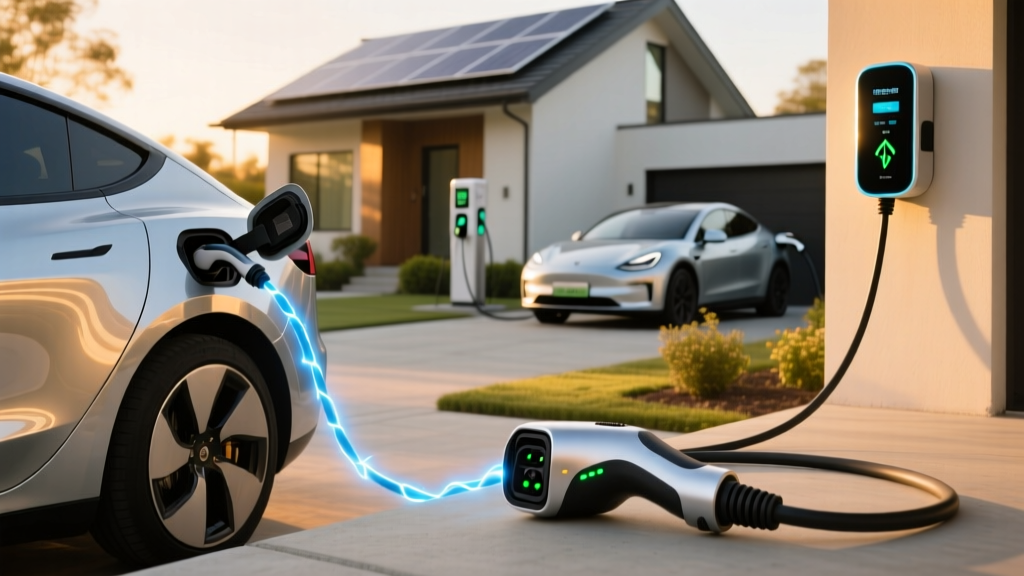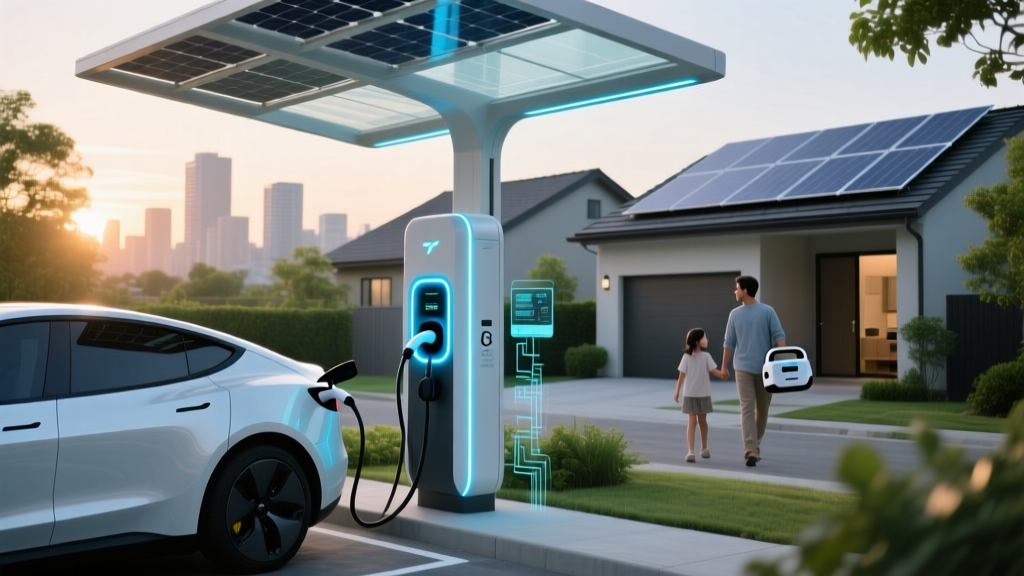
The electric vehicle charging infrastructure buildout progress in 2026 looks markedly different from even two years ago. The Tesla Supercharger network opened to non-Tesla EVs via NACS adapters, the NEVI-funded public charger rollout accelerated past 200,000 DC fast-charging ports nationwide, and home charging equipment has matured into a category with proven, code-compliant options at every price point. Yet the reality on the ground remains uneven: urban condo dwellers still struggle for access, rural corridors have gaps, and installation costs vary wildly by home age and electrical panel capacity.
This guide breaks down the full charging picture as of the 2026 model year — what each level actually delivers in miles per hour, what a home install really costs, which connectors your EV needs, and how per-mile charging expenses compare to gasoline. All figures reference current EPA data, manufacturer specifications, and IRS guidelines.
Charging Levels Explained: Speeds, Power, and Real-World Range Added
Understanding EV charging starts with one critical distinction: kW (kilowatts) measures power — how fast energy flows into your battery. kWh (kilowatt-hours) measures energy — the total capacity stored in your battery. A 75 kWh battery charged at 11.5 kW takes roughly 6.5 hours from empty to full. A 250 kW DC fast charger can refill that same battery much faster, but only up to ~80% state of charge before the charge curve tapers to protect the cells.
| Level | Voltage | Power (kW) | Miles of Range Added Per Hour | Typical Use Case |
|---|---|---|---|---|
| Level 1 | 120V AC | 1.0–1.4 kW | 3–5 mi/hr | Overnight top-up, PHEV owners, emergency |
| Level 2 | 240V AC | 7.2–19.2 kW | 25–70 mi/hr | Home daily charging, workplace, retail |
| DC Fast (Level 3) | 400–800V DC | 50–350 kW | 150–1,200+ mi/hr (peak) | Road trips, highway corridors, quick stops |
The "miles per hour" column depends on your vehicle's efficiency. A Hyundai Ioniq 6 (EPA-rated at 140 MPGe combined, consuming roughly 25 kWh/100 mi) gains more miles per kW than a GMC Hummer EV (consuming 47+ kWh/100 mi). Always calculate based on your specific vehicle's kWh/100mi figure from fueleconomy.gov.
How Much Does It Cost to Install a Home EV Charger?
Home Level 2 charging remains the gold standard for daily EV ownership, and most 2026 EV buyers install a 240V hardwired or plug-in (NEMA 14-50) charger in their garage or driveway. The total cost spans a wide range depending on your home's electrical panel, the distance from panel to charger location, and local permit requirements.
| Cost Component | Low End | Typical | High End |
|---|---|---|---|
| Level 2 Charger Equipment (40A–48A) | $350 | $550 | $750 |
| Electrician Labor | $500 | $1,200 | $2,500 |
| Electrical Permit | $50 | $150 | $350 |
| Panel Upgrade (if needed: 100A→200A) | $1,500 | $2,500 | $4,500 |
| Conduit/Wire Run (50+ ft from panel) | $300 | $600 | $1,200 |
| Total Without Panel Upgrade | $900 | $1,900 | $3,550 |
| Total With Panel Upgrade | $2,400 | $4,400 | $8,050 |
The panel upgrade is the wildcard. Homes built before 1990 often have 100-amp service, which may not support a dedicated 40A or 50A EV circuit alongside existing loads like electric dryers, ranges, and HVAC. A licensed electrician will perform a load calculation per NEC Article 220 to determine if an upgrade is required. The federal Residential Clean Energy Credit (IRC §25D) does not cover EV charger equipment for 2026; however, the separate Alternative Fuel Vehicle Refueling Property Credit (IRC §30C) provides up to $1,000 for home charger installation in eligible census tracts — check IRS guidance for your zip code.
Electrical Requirements: Voltage, Amperage, and Code Considerations
A standard home Level 2 installation requires a 240V dedicated circuit. Most homeowners choose between two configurations:
- NEMA 14-50 receptacle (50A breaker, 40A continuous): Allows you to plug in a portable or wall-mounted charger. Useful if you want to take the charger when you move or use it for an RV. Requires a GFCI breaker per NEC 2023/2026 code in most jurisdictions, adding $100–$150 to the breaker cost.
- Hardwired connection (40A–60A breaker): Charger wires connect directly to the breaker panel. Eliminates the GFCI breaker requirement (the charger has internal ground-fault protection), reduces failure points, and allows higher amperage (up to 48A continuous on a 60A breaker). Preferred for permanent installations.
Safety and code essentials:
- The circuit must be dedicated — no sharing with other appliances.
- NEC requires continuous loads to be sized at 125% of rated draw: a 40A charger needs a 50A breaker; a 48A charger needs a 60A breaker.
- Outdoor installations require a NEMA 4-rated (weatherproof) charger enclosure and conduit rated for wet locations.
- Wire gauge depends on run length: 6 AWG copper for runs up to ~50 feet on a 50A circuit; 4 AWG for longer runs to minimize voltage drop.
- Always pull a permit and have the work inspected. Unpermitted electrical work can void homeowner's insurance claims and create fire risk.
Connector Compatibility: NACS, CCS1, and CHAdeMO in 2026
The connector landscape shifted dramatically between 2023 and 2026. Ford, GM, Rivian, Volvo, and others transitioned to the North American Charging Standard (NACS), originally developed by Tesla. Most new EVs sold in 2026 ship with a NACS port natively. CCS1 remains on vehicles from legacy brands still in transition (some Stellantis and VW Group models), while CHAdeMO is effectively legacy — only found on older Nissan Leafs and Mitsubishi Outlander PHEVs.
| Connector | Brands Using It (2026) | Adapter Needed for Superchargers? |
|---|---|---|
| NACS (native) | Tesla (all), Ford, GM, Rivian, Volvo, Polestar, Mercedes, BMW, Hyundai/Kia (select 2026 models) | No — direct access to Tesla Superchargers and NACS-equipped public stations |
| CCS1 | VW ID.4 (some trims), Stellantis EVs, legacy models, Hyundai/Kia (2024–2025 carry-over) | Yes — CCS-to-NACS adapter ($150–$250) for Supercharger access |
| CHAdeMO | Nissan Leaf (discontinued 2025), older used EVs only | Limited adapters available; CHAdeMO stations declining |
If you own a CCS1-equipped EV, a certified NACS adapter from your manufacturer (Ford and GM offer official adapters) unlocks access to 25,000+ Tesla Supercharger stalls. Third-party adapters exist but check that they carry proper safety certifications (UL or equivalent) — uncertified adapters risk overheating at high power levels.
How Much Does Charging Cost Per Mile vs. Gasoline?
The economics of EV charging depend heavily on where and when you charge. Home charging on off-peak utility rates delivers the lowest cost, while public DC fast charging can approach or exceed gasoline costs per mile in some markets.
| Scenario | Rate | Vehicle Efficiency | Cost Per Mile |
|---|---|---|---|
| Home off-peak (utility rate) | $0.09/kWh | 3.0 mi/kWh (avg EV) | $0.030 |
| Home standard rate | $0.14/kWh | 3.0 mi/kWh | $0.047 |
| Public Level 2 (ChargePoint, etc.) | $0.28/kWh | 3.0 mi/kWh | $0.093 |
| DC Fast Charging (Electrify America) | $0.48/kWh | 3.0 mi/kWh | $0.160 |
| Tesla Supercharger (avg 2026) | $0.32/kWh | 3.0 mi/kWh | $0.107 |
| Gasoline vehicle (28 MPG avg) | $3.35/gal | 28 mi/gal | $0.120 |
At home off-peak rates, an EV costs roughly 75% less per mile than a 28 MPG gasoline car. Even on public DC fast chargers at $0.48/kWh, many EVs remain cost-competitive with gasoline. The break-even point shifts if you drive a less efficient EV (like a full-size electric truck at 2.0 mi/kWh) or live in a high-electricity state (California, Hawaii, Massachusetts where residential rates exceed $0.30/kWh).
Charging time examples for common battery sizes (10–80% state of charge):
- 60 kWh battery (e.g., base Tesla Model 3): ~15–18 minutes on a 250 kW DC fast charger; ~4.5 hours on an 11.5 kW home Level 2 charger.
- 77 kWh battery (e.g., Ford Mustang Mach-E Extended Range): ~20–25 minutes on a 150 kW DC fast charger; ~6 hours on an 11.5 kW home Level 2 charger.
- 100 kWh battery (e.g., GMC Sierra EV): ~25–35 minutes on a 350 kW DC fast charger (800V architecture); ~8.5 hours on an 11.5 kW home Level 2 charger.
2026 Equipment Recommendations: Level 2 Home Chargers
The home charger market in 2026 is mature, with several UL-listed options spanning price points. Below are proven units based on power output, cable length, smart features, and build quality.
Emporia Level 2 Smart Charger
Power: 48A (11.5 kW) | Connector: NACS or J1772 | Cable: 24 ft | Price: ~$400
Hardwired or plug-in. Energy monitoring via app integrates with Emporia Vue home energy panel. No built-in display — app-dependent. Excellent value for a 48A unit.
ChargePoint Home Flex (2nd Gen)
Power: 50A (12 kW) | Connector: NACS or J1772 | Cable: 23 ft | Price: ~$650
Adjustable amperage (16A–50A) to match your circuit. Alexa and HomeKit integration. UL-listed. Proven track record with strong customer support. NACS version native for 2026.
Tesla Wall Connector
Power: 48A (11.5 kW) | Connector: NACS (native) + J1772 adapter included | Cable: 24 ft | Price: ~$475
Works with all EVs (J1772 adapter in box for CCS vehicles). Wi-Fi-enabled with OTA updates. Power-sharing feature lets you install two units on one 60A circuit. Sleek, durable build.
Grizzl-E Smart (United Chargers)
Power: 40A (9.6 kW) | Connector: NACS or J1772 | Cable: 24 ft | Price: ~$550
Built in Canada, rated to -40°F — the cold-weather pick. OCPP-compatible for commercial/fleet use. IP67 outdoor rating. Heavier gauge cable than competitors. Less polished app experience.
For most homeowners with a 200A panel and a 60A breaker available, the Emporia or Tesla Wall Connector at 48A provides the best balance of charging speed and price. If you need adjustable amperage for an older panel, the ChargePoint Home Flex is the most flexible option.
Public Charging Infrastructure: Where the Buildout Stands in 2026
The National Electric Vehicle Infrastructure (NEVI) program and private investment have pushed the U.S. public charging network past 200,000 ports, with DC fast-charging stations now averaging 4–8 stalls per location along major interstate corridors. Key developments:
- Tesla Supercharger network: Over 30,000 stalls in North America, now open to NACS-equipped EVs from Ford, GM, Rivian, and others. CCS vehicles can use Superchargers via adapter at select locations with built-in "Magic Dock" CCS cables.
- Electrify America, EVgo, ChargePoint: Combined, these networks operate 15,000+ DC fast-charging stalls. Reliability has improved — Electrify America reported 95%+ uptime in 2025 — but station density still lags behind Tesla in rural areas.
- NEVI-funded stations: Required to have at least four 150 kW+ CCS chargers, ADA-compliant design, and 97% uptime. Rollout accelerated in 2025–2026 after initial state-level procurement delays.
- 800V charging: Hyundai/Kia E-GMP vehicles, Porsche Taycan, GM's Ultium-based trucks, and newer platforms can accept 350 kW on compatible chargers, achieving 10–80% in under 20 minutes.
Frequently Asked Questions
How fast will each charging level add range?
Level 1 (120V) adds 3–5 miles of range per hour — adequate for plug-in hybrids with 30–40 miles of electric range, but impractical for full EVs. Level 2 (240V, 48A) adds 25–45 miles per hour depending on vehicle efficiency, replenishing most EVs overnight in 6–8 hours. DC fast charging (50–350 kW) can add 100–300+ miles in 15–30 minutes, but speed tapers significantly above 80% state of charge.
How much does it cost to install a home EV charger?
A straightforward Level 2 installation with a 240V circuit close to your electrical panel typically costs $1,200–$2,500 including equipment, electrician labor, and permit. If your home needs a panel upgrade from 100A to 200A service, add $1,500–$4,500. Long wire runs (50+ feet) add $300–$1,200 in conduit and wire costs. Always get three quotes from licensed electricians.
Which connector and charger is compatible with my EV?
Check your vehicle's charge port. Most 2026 EVs from Tesla, Ford, GM, Rivian, and Volvo use the NACS connector natively. Some Hyundai, Kia, VW, and Stellantis models still use CCS1 — these can access Tesla Superchargers with a manufacturer-approved NACS adapter ($150–$250). CHAdeMO is found only on older Nissan Leafs. For home Level 2 charging, all non-Tesla EVs sold before 2025 use J1772; newer NACS vehicles may include a J1772 adapter or you can purchase a NACS home charger.
How much does charging cost per mile compared to gas?
Home charging at off-peak utility rates (~$0.09/kWh) costs about $0.03 per mile — roughly 75% less than a 28 MPG gasoline car at $3.35/gallon ($0.12/mile). Standard home rates (~$0.14/kWh) bring the cost to ~$0.05/mile. Public DC fast charging at $0.48/kWh rises to ~$0.16/mile, which can exceed gasoline costs. The economic advantage of an EV is maximized when you charge at home on a time-of-use utility plan.
What electrical upgrades might I need for a home charger?
The most common upgrade is a panel replacement from 100A to 200A service, required when your existing panel lacks capacity for a dedicated 40A–60A EV circuit. Older homes may also need updated grounding, a new meter socket, or utility service-line replacement. A licensed electrician will perform a NEC Article 220 load calculation to determine exact requirements. Homes with 200A panels already in place usually need only a new breaker and wire run — no panel work required.