If you're driving a 2014 Jaguar XJ Supercharged and considering the leap to an electric vehicle, you already know what 470 horsepower and a supercharged 5.0L V8 feel like. What you might not know is how to replicate that thrill — and beat it at the fuel pump — with a modern EV. The first and most important step in EV ownership is setting up reliable home charging. This guide walks you through every watt, dollar, and connector you need to know before you plug in.
We'll also benchmark EV charging costs directly against what you're currently paying to fuel that XJ Supercharged (EPA-rated 15/23 mpg combined 18 mpg), so you can see the real savings in black and white.
Understanding EV Charging Levels: kW, Speed, and What You'll Actually Use
Before anything else, let's clear up the single most common confusion in EV ownership: kW (kilowatts) measure power — how fast energy flows into the battery. kWh (kilowatt-hours) measure energy — the total capacity of the battery, like gallons in a fuel tank. A 100 kWh battery charged at 10 kW takes roughly 10 hours from empty. Keep that distinction sharp and everything else clicks into place.
| Level | Voltage | Power (kW) | Miles of Range Added per Hour | Best For |
|---|---|---|---|---|
| Level 1 | 120V AC | 1.0–1.4 kW | 3–5 mi/hr | Overnight top-ups, PHEVs, low-mileage drivers |
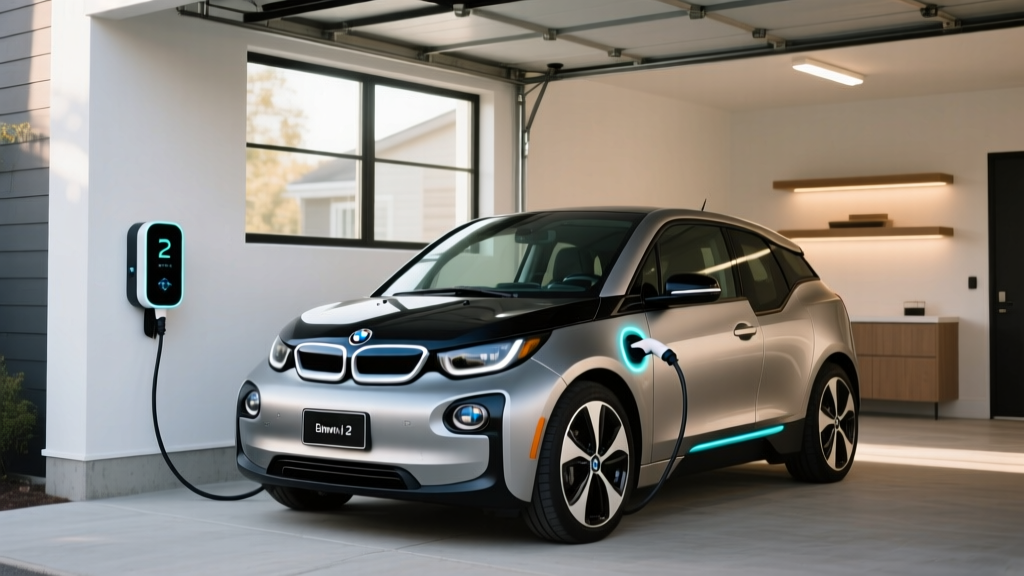
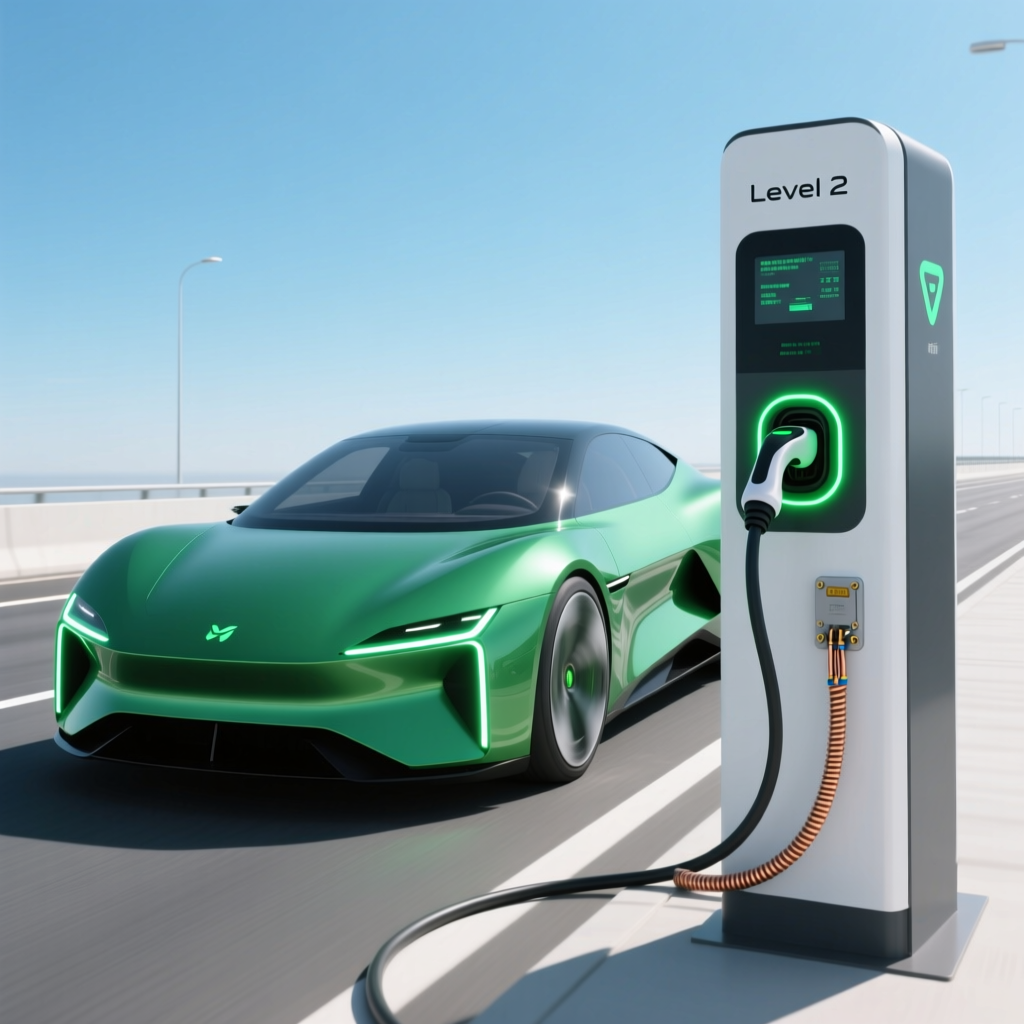
| Level 2 | 240V AC | 3.3–19.2 kW | 12–75 mi/hr | Daily home charging, the EV ownership standard |
| DC Fast Charge | 400–800V DC | 50–350+ kW | 150–1,200+ mi/hr (peak) | Road trips, quick top-ups away from home |
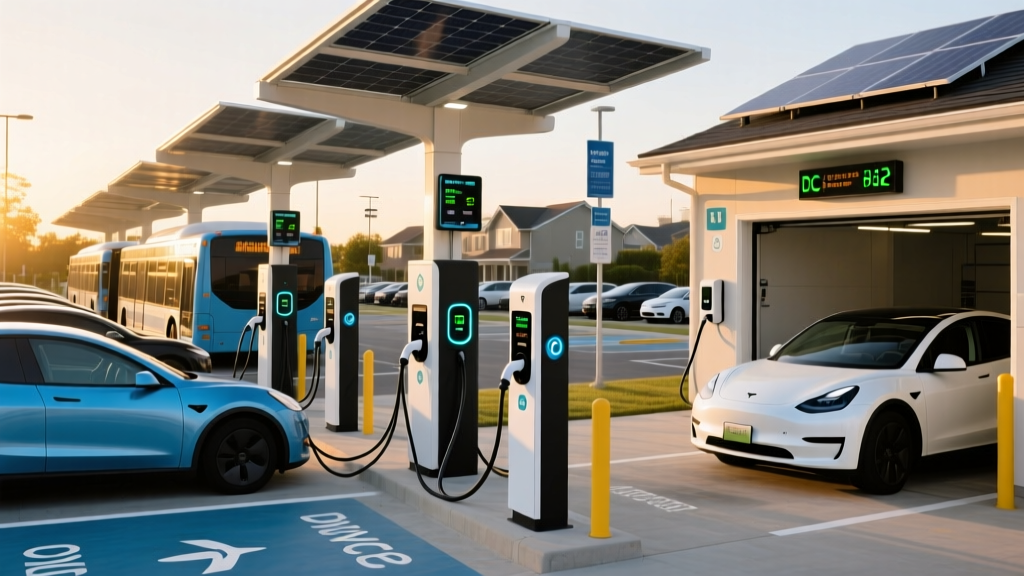
For a battery-electric vehicle with an 80–100 kWh pack (think Tesla Model S, BMW iX, Lucid Air), a Level 2 home charger running at 11.5 kW (48A on a 60A circuit) will add roughly 40–45 miles of range per hour. That's a full overnight recharge from 20% to 100% in about 8–9 hours. A DC fast charger at 250 kW can take that same battery from 10% to 80% in approximately 20–25 minutes, though the charge curve tapers significantly above 80% to protect battery health.
- 60 kWh battery (e.g., Chevrolet Equinox EV): ~18 min at 150 kW DCFC; ~5.5 hrs at 11.5 kW L2
- 82 kWh battery (e.g., Tesla Model 3 Long Range): ~22 min at 250 kW DCFC; ~7 hrs at 11.5 kW L2
- 112 kWh battery (e.g., Ford F-150 Lightning Extended): ~30 min at 250 kW DCFC; ~9.5 hrs at 11.5 kW L2
Note: DC fast-charging times assume optimal battery preconditioning and ambient temps above 60°F. Cold batteries charge significantly slower until warmed.
How Much Does It Cost to Install a Home EV Charger?
This is where a lot of first-time EV buyers get sticker shock — or pleasant surprises, depending on their electrical panel. The total cost of a Level 2 home charger installation depends on four variables: the charger unit itself, the electrician's labor, whether your panel needs an upgrade, and local permitting.
| Component | Low Estimate | High Estimate | Notes |
|---|---|---|---|
| Level 2 Charger (hardware) | $300 | $750 | Smart Wi-Fi chargers with 25ft cable, 40–48A |
| Electrician labor | $400 | $1,500 | Depends on run length from panel to garage/driveway |
| Electrical permit | $50 | $250 | Varies by municipality; some jurisdictions waive for EV |
| Panel upgrade (if needed) | $1,500 | $4,000+ | Required if panel is 100A or has no spare breaker slots |
| Total (no panel upgrade) | $750 | $2,500 | Most homes with 200A service fall in this range |
| Total (with panel upgrade) | $2,250 | $6,500+ | Older homes (pre-2000s) commonly need this |
Electrical Requirements: What Your Home Needs
A typical Level 2 charger installation requires:
- 240V circuit (same voltage as your electric dryer or oven)
- 40A to 60A dedicated breaker — a 48A charger requires a 60A circuit per the National Electrical Code's 80% continuous-load rule (NEC Article 210.20)
- Available panel capacity — your 200A panel must have enough spare amperage headroom after accounting for existing loads
- NEMA 14-50 outlet (for plug-in chargers) or hardwired connection (required for some 48A+ units and often preferred for reliability)
If your home was built before the 1990s and still has a 100A panel, you'll almost certainly need a service upgrade to 200A. This is the single biggest variable in installation cost and requires coordination with your local utility. Plan for 2–6 weeks for the full panel-upgrade process.
A licensed electrician should perform a load calculation per NEC Article 220 before any installation. This determines whether your existing panel can support a 60A EV circuit without overloading. Some utilities and states offer rebates of $250–$1,000 for home charger installation — check the AFDC incentive database for current programs in your area.
Which Connector and Charger Is Compatible with My EV?
The EV connector landscape has consolidated significantly since the early 2020s. Here's where things stand in 2026:
| Connector | Brands Using It | Notes |
|---|---|---|
| NACS (North American Charging Standard / Tesla) | Tesla (all), Ford, GM, Rivian, Volvo, Polestar, Hyundai, Kia, BMW, Mercedes, Nissan (2025+) | Industry standard as of 2025; access to Tesla Supercharger network |
| CCS1 (Combined Charging System) | Legacy VW ID.4 (pre-2025), some Stellantis models, older BMW/Hyundai/Kia | Being phased out; adapters to NACS widely available (~$200) |
| CHAdeMO | Nissan Leaf (legacy only) | Effectively discontinued in the US; very limited DCFC infrastructure |
For a new EV purchase in 2026, NACS is the clear standard. If you buy a vehicle with CCS1, a CCS-to-NACS adapter (such as the Lectron or A2Z adapter, typically $150–$250) will grant access to Tesla Superchargers. For Level 2 home charging, all vehicles use the J1772 standard (or Tesla's proprietary connector, which is included with every Tesla), and most home chargers ship with J1772 or NACS connectors.
Equipment Recommendations: Top Home Chargers for 2026
Here are three well-regarded Level 2 home chargers that cover different budgets and feature needs. All are UL-listed for safety and support the amperage most homes can deliver.
Emporia Vue EV Charger
- Power: 48A / 11.5 kW (hardwired) or 40A / 9.6 kW (NEMA 14-50)
- Connector: J1772 (NACS adapter included)
- Cable: 24 ft
- Smart features: Wi-Fi, app scheduling, solar integration, energy monitoring
- Price: ~$399
Best for: Budget-conscious buyers who want full smart features and energy tracking.
ChargePoint Home Flex
- Power: Configurable 16A–50A (up to 12 kW at 50A)
- Connector: J1772 or NACS (select at purchase)
- Cable: 23 ft
- Smart features: Wi-Fi, Alexa/Google integration, ChargePoint network access
- Price: ~$599–$699
Best for: Flexible amperage if your panel can't support a full 60A circuit.
Tesla Wall Connector
- Power: 48A / 11.5 kW (hardwired, 60A circuit)
- Connector: NACS native (J1772 adapter available)
- Cable: 24 ft
- Smart features: Wi-Fi, power sharing (dual units on one circuit), OTA updates
- Price: ~$475
Best for: Tesla owners or anyone buying into the NACS ecosystem; cleanest installation.
How Much Does Charging Cost Per Mile vs. Gas?
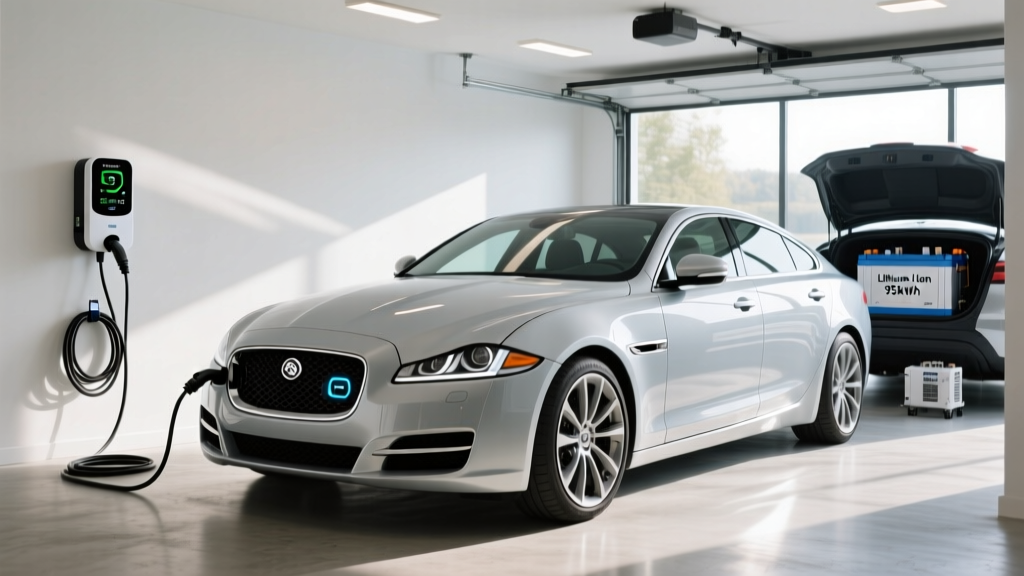
This is where your 2014 Jaguar XJ Supercharged makes the math interesting. That 5.0L supercharged V8 returns an EPA-estimated 18 mpg combined. At a national average of $3.50/gallon (early 2026), you're spending roughly $0.194 per mile on fuel.
Now compare that to common EV charging scenarios for a vehicle averaging 3.0 miles per kWh (typical for a mid-size luxury EV like the BMW i5 or Mercedes EQE):
| Scenario | Cost per kWh | Cost per Mile (3 mi/kWh) | Annual Fuel Cost (12,000 mi) |
|---|---|---|---|
| Home charging (off-peak utility rate) | $0.10–$0.14 | $0.033–$0.047 | $400–$560 |
| Home charging (standard residential) | $0.15–$0.18 | $0.050–$0.060 | $600–$720 |
| Public Level 2 (ChargePoint, etc.) | $0.25–$0.39 | $0.083–$0.130 | $1,000–$1,560 |
| DC Fast Charging (Electrify America, Tesla) | $0.35–$0.55 | $0.117–$0.183 | $1,400–$2,200 |
| 2014 Jaguar XJ Supercharged (18 mpg) | $3.50/gal | $0.194 | $2,330 |
Even in the worst-case scenario — relying entirely on DC fast charging at premium rates — a modern EV costs roughly the same per mile as your supercharged Jaguar. With home off-peak charging, the EV costs 75–83% less per mile. Over five years and 60,000 miles, that's a potential fuel savings of $9,000–$11,500.
Many utilities offer time-of-use (TOU) plans with off-peak rates between midnight and 6 AM as low as $0.06–$0.08/kWh. Pair a TOU plan with your charger's scheduled charging feature and you'll hit the lowest possible cost per mile.
Safety, Electrical Code, and Installation Best Practices
EV charging draws significant continuous current — often for 6–10 hours at a stretch. This is not the same as plugging in a phone. Proper installation protects your home and your vehicle.
- Dedicated circuit: Your EV charger must have its own dedicated breaker — never shared with other appliances. NEC 511.8 mandates this for EV supply equipment.
- GFCI protection: Outdoor installations require GFCI (Ground Fault Circuit Interrupter) protection per NEC 2023/2026 updates. Many modern EVSEs (Electric Vehicle Supply Equipment) have built-in GFCI, but your electrician will verify compliance.
- Outdoor rating: If your charger is mounted outside, it must be rated NEMA 4 (weatherproof). All chargers recommended above carry NEMA 4 ratings for outdoor use.
- Cable management: Avoid running charging cables across driveways or walkways. Use a cable holster or retractor to prevent trip hazards and cable damage.
- Permit and inspection: Most jurisdictions require an electrical permit for new 240V circuits. The inspection ensures your installation meets NEC standards — skip this and you risk voiding home insurance coverage for electrical fires.
Always hire a licensed electrician experienced with EVSE installations. The National Electrical Contractors Association maintains a directory of certified installers. Avoid handyman installations — improper torque on a 60A breaker connection can cause arcing and fire.
Frequently Asked Questions
How much does it cost to install a home EV charger?
Expect $750–$2,500 for a standard Level 2 installation on a 200A panel with a short cable run. If your home needs a panel upgrade from 100A to 200A, add $1,500–$4,000+. The charger hardware itself runs $300–$700.
How fast will each charging level add range?
Level 1 (120V) adds 3–5 miles per hour — fine for plug-in hybrids with 30–40 mile batteries but painfully slow for full EVs. Level 2 (240V, 48A) adds roughly 40–45 miles per hour, enough to fully recharge overnight. DC fast charging at 150–250 kW can add 150–300+ miles in 20–30 minutes, though speed tapers above 80% state of charge.
Which connector/charger is compatible with my EV?
In 2026, NACS is the dominant standard — Tesla, Ford, GM, Hyundai, Kia, BMW, Rivian, and most others have adopted it. If your EV has CCS1, a $150–$250 adapter grants Tesla Supercharger access. For home Level 2 charging, J1772 is universal (with Tesla adapters available). Check your vehicle's charge port before purchasing a charger.
How much does charging cost per mile vs. gas?
Home charging at average residential rates ($0.15/kWh) costs roughly $0.05/mile for a typical EV — about 75% less than a 2014 Jaguar XJ Supercharged at $0.194/mile (18 mpg, $3.50/gallon). Even exclusive DC fast charging at $0.48/kWh yields roughly $0.16/mile, still under the Jaguar's fuel cost.
What electrical upgrades might I need?
The most common upgrade is a panel service increase from 100A to 200A, needed in older homes that lack amperage headroom. You may also need additional breaker slots (a subpanel can solve this for $400–$800). Your electrician's load calculation will determine this before any work begins. Homes built after 2005 with 200A service typically need no panel upgrade.
Can I charge my EV with a regular 120V outlet?
Yes — this is Level 1 charging. It adds only 3–5 miles of range per hour and a full recharge of an 80 kWh battery would take 60+ hours. It's practical only as a backup or for plug-in hybrids with smaller batteries. For daily BEV use, Level 2 is strongly recommended.
Does the federal tax credit cover home charger installation?
The IRS §30C Alternative Fuel Vehicle Refueling Property Credit offers up to 30% of charger hardware and installation costs, capped at $1,000 for residential installations. Eligibility depends on census-tract income and location requirements. Check the IRS §30C page for current eligibility rules and consult a tax professional before claiming.