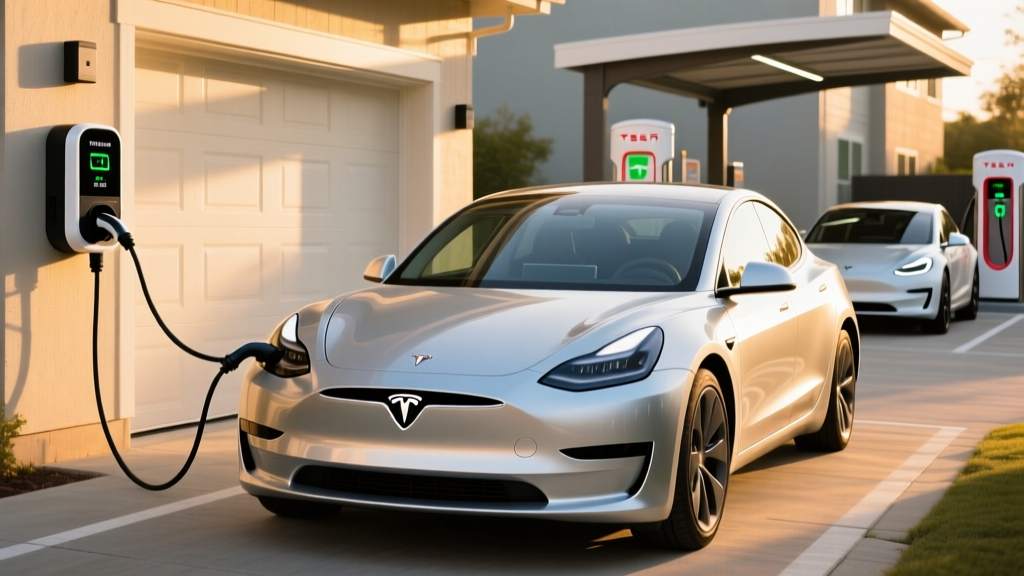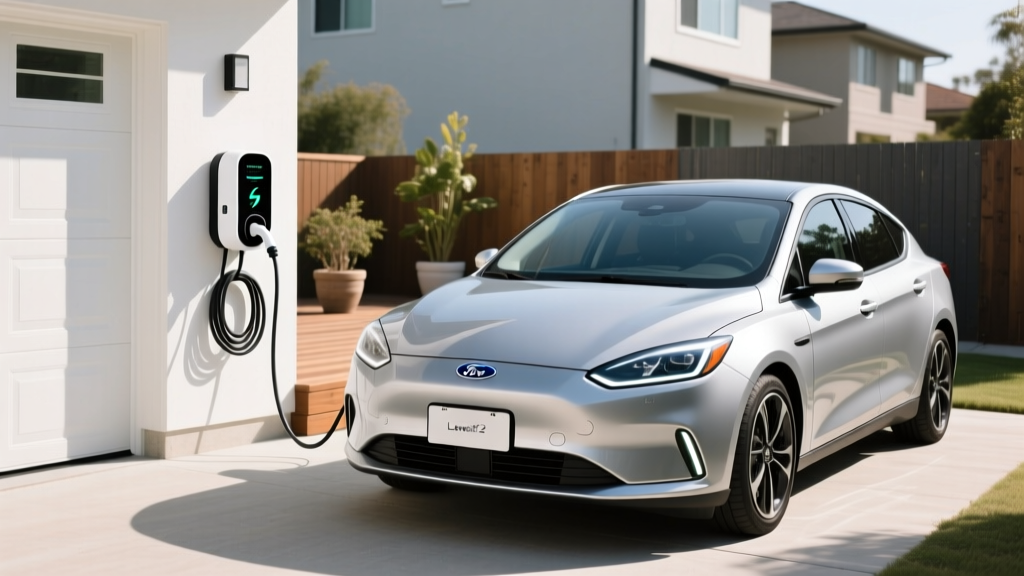
If you were following football back in 2010, the San Diego Chargers roster featured Philip Rivers, Antonio Gates, and LaDainian Tomlinson — and the idea of "charging" anything other than a cellphone was foreign to most Americans. The Nissan Leaf was just hitting showrooms, public charging stations were rare, and the word "kW" meant nothing to the average driver. Fast-forward to 2026, and EV charging infrastructure has transformed dramatically. Whether you're a new EV owner or shopping for your first electric vehicle, this guide breaks down everything you need to know about charging at home, on the road, and the equipment that makes it all work.
Charging Levels Explained: Level 1, Level 2, and DC Fast Charging
The single most important distinction in EV charging is the difference between kW (kilowatts) and kWh (kilowatt-hours). Think of kW as the speed of water flowing through a hose (power), and kWh as the total volume of water in the bucket (energy stored in your battery). A 10 kW charger delivers energy at a certain rate; a 75 kWh battery holds a certain amount of energy. Confusing the two is the most common mistake new EV owners make.
There are three tiers of EV charging, each serving different use cases:
| Level | Voltage | Power (kW) | Miles of Range Added Per Hour | Best For |
|---|---|---|---|---|
| Level 1 | 120V AC | 1.0–1.4 kW | 3–5 mi/hr | Overnight top-ups, PHEVs, low-mileage drivers |
| Level 2 | 240V AC | 3.3–19.2 kW | 12–75 mi/hr | Daily home charging, workplace, shopping centers |
| DC Fast Charging | 400–800V DC | 50–350 kW | 150–1,200+ mi/hr (peak) | Road trips, highway corridors, quick stops |
For context, most modern EVs with 75–100 kWh batteries will charge from 10–80% on a DC fast charger in 18–35 minutes, depending on peak charge rate and battery chemistry. On Level 2 at home (typically 7.7–11.5 kW), that same 10–80% charge takes 6–10 hours — ideal for overnight charging while you sleep.
- 60 kWh battery (e.g., base Chevy Equinox EV): ~28 min on 150 kW DCFC; ~5.5 hr on 7.7 kW Level 2
- 84 kWh battery (e.g., Hyundai Ioniq 5): ~18 min on 240 kW DCFC (800V architecture); ~7.5 hr on 11.5 kW Level 2
- 100 kWh battery (e.g., Ford F-150 Lightning Extended Range): ~41 min on 150 kW DCFC; ~9 hr on 11.5 kW Level 2
Note: DC fast charging slows significantly above 80% SoC due to the charge curve taper. Charging to 100% on DCFC is rarely time-efficient — plan to charge to 80% and move on.
Home EV Charger Installation: Requirements, Costs, and Gotchas
Installing a Level 2 home charger is the single biggest quality-of-life upgrade for any EV owner. But the cost varies enormously depending on your home's electrical panel, the distance from the panel to your garage or driveway, and local permit requirements.
Electrical Requirements
A typical Level 2 home charger requires a 240V dedicated circuit — the same voltage your electric dryer or oven uses. Most homeowners install a 40-amp or 48-amp circuit, which supports chargers rated at 32A or 40A continuous draw (electrical code requires circuits rated at 125% of continuous load).
If your home has a 100-amp main electrical panel (common in homes built before the 1980s), you may need a panel upgrade to 200 amps before adding an EV charger circuit. This is one of the most overlooked costs in EV ownership planning.
| Component | Simple Install (panel nearby) | Complex Install (panel upgrade needed) |
|---|---|---|
| Level 2 Charger Equipment | $350–$700 | $350–$700 |
| Electrician Labor (240V circuit run) | $400–$1,200 | $800–$2,500 |
| Electrical Permit | $50–$200 | $50–$200 |
| Panel Upgrade (100A → 200A, if needed) | N/A | $1,500–$3,500 |
| Conduit/wiring materials | $50–$200 | $100–$400 |
| Total Estimated Cost | $850–$2,300 | $2,800–$7,300 |
Some utilities and states offer rebates covering $250–$1,000 of installation costs. Check with your local utility — programs vary by jurisdiction and change frequently.
Safety and Code Considerations
Any Level 2 installation must comply with the National Electrical Code (NEC Article 625) and local building codes. Key requirements include:
- Dedicated circuit: The EV charger must have its own breaker — no sharing with other appliances.
- GFCI protection: Required for outdoor installations and in many jurisdictions for garage installations as well.
- Outdoor-rated equipment: If your charger is mounted outside or in an uncovered carport, it must carry a NEMA 4 (weatherproof) rating.
- Proper grounding: Your electrician will verify grounding at the panel and outlet/hardwire point.
- Hardwired vs. plug: Hardwired installations (no plug) are preferred for higher-amperage chargers (48A+) because NEMA 14-50 receptacles are rated for 50A but may overheat under continuous 40A+ draw over years of use.
Which Connector Does Your EV Use? NACS, CCS, and CHAdeMO in 2026
The connector landscape has shifted dramatically. As of 2025–2026, nearly every major automaker has adopted the North American Charging Standard (NACS) — the connector originally developed by Tesla. Here's where things stand:
| Connector | Brands Using It (Native) | Notes |
|---|---|---|
| NACS (Tesla / J3400) | Tesla, Ford, GM, Rivian, Volvo, Polestar, Mercedes-Benz, BMW, Hyundai/Kia (select 2026 models), Nissan (Ariana) | Now the dominant standard. Direct access to Tesla Supercharger network. |
| CCS1 | VW (legacy models), Stellantis, some 2024–2025 Hyundai/Kia models still on road | Declining on new models; adapters to NACS widely available. |
| CHAdeMO | Nissan Leaf (discontinued), Mitsubishi Outlander PHEV (older) | Essentially legacy; very few new vehicles. Public CHAdeMO stations declining. |
If you own a CCS1-equipped vehicle (many 2023–2025 models), you'll likely need a CCS-to-NACS adapter ($150–$250) to access Tesla Superchargers, which now comprise the largest and most reliable fast-charging network in North America. Ford and GM began shipping NACS-to-CCS adapters with their 2025 vehicles; check with your dealer.
For Level 2 home and public AC charging, all vehicles still use the J1772 connector (or NACS, which handles AC on the same pins). Every Level 2 charger sold works with every EV via J1772 or the NACS AC pins — no adapter needed for home charging.
How Much Does EV Charging Actually Cost? Home vs. Public vs. Gas
One of the biggest advantages of EV ownership is lower fueling costs — but the savings depend heavily on where and when you charge.
| Scenario | Cost per kWh | Cost per Mile (at 3 mi/kWh efficiency) |
|---|---|---|
| Home charging — off-peak (overnight TOU rate) | $0.08–$0.14 | $0.03–$0.05 |
| Home charging — standard residential rate | $0.13–$0.20 | $0.04–$0.07 |
| Public Level 2 (ChargePoint, EVgo, etc.) | $0.25–$0.49 | $0.08–$0.16 |
| DC Fast Charging (Electrify America, Tesla Supercharger) | $0.30–$0.58 | $0.10–$0.19 |
| Gasoline vehicle (28 MPG combined, $3.40/gal) | — | $0.12 |
| Gasoline vehicle (28 MPG combined, $4.00/gal) | — | $0.14 |
At national averages, home charging on an off-peak rate saves 60–75% compared to gasoline per mile. Even DC fast charging on the road is often cost-competitive with gas, though frequent DCFC use adds up. According to fueleconomy.gov, most modern EVs achieve 100–130 MPGe combined, translating to roughly 3–4 miles per kWh.
The real savings unlock when you charge at home on a time-of-use (TOU) plan. Many utilities offer rates as low as $0.06–$0.10/kWh between midnight and 6 AM. Set your EV or charger to charge during those hours and your per-mile fuel cost drops to around $0.02–$0.03.
Recommended Home EV Chargers for 2026
Here are four Level 2 home chargers that consistently rank highly for reliability, features, and value. All support the J1772/NACS standard and are UL-listed for safety.
ChargePoint Home Flex
- Power: Up to 12 kW (50A circuit, 40A continuous)
- Connector: J1772 (NACS adapter included)
- Cable: 23 ft
- Smart features: Wi-Fi, app scheduling, Alexa, load sharing
- Price: ~$550–$650
- Best for: Most homeowners; flexible amperage adjustment via DIP switches
Tesla Wall Connector
- Power: Up to 11.5 kW (60A circuit, 48A continuous)
- Connector: NACS native (J1772 adapter available separately)
- Cable: 24 ft
- Smart features: Wi-Fi, OTA updates, power sharing between units, access control
- Price: ~$420–$475
- Best for: Tesla owners and NACS-native vehicles (Ford, GM, Rivian, 2026 Hyundai/Kia)
Emporia Vue Level 2 Charger
- Power: Up to 11.5 kW (60A circuit, 48A continuous)
- Connector: J1772 (NACS adapter available)
- Cable: 24 ft
- Smart features: Energy monitoring, solar integration, app control, load management
- Price: ~$350–$450
- Best for: Budget-conscious buyers; solar-panel homeowners
Grizzl-E Smart
- Power: Up to 10 kW (50A circuit, 40A continuous)
- Connector: J1772 or NACS (select at purchase)
- Cable: 24 ft
- Smart features: Wi-Fi, OCPP compatibility, adjustable amperage, extreme-cold rated (-40°F)
- Price: ~$400–$500
- Best for: Cold-climate owners; outdoor installations; rugged durability
Public Charging Networks: What's Changed Since 2010
In 2010 — the year of that memorable San Diego Chargers roster and their 9-7 season — there were fewer than 3,000 public EV charging outlets in the entire United States. Today, there are over 200,000 public charging ports, including more than 50,000 DC fast-charging stalls. The major networks in 2026 include:
- Tesla Supercharger: ~30,000+ stalls globally; now open to NACS-equipped non-Tesla EVs. Widely regarded as the most reliable network.
- Electrify America: ~4,500+ DC fast chargers in the U.S.; 150–350 kW capable. CCS and NACS connectors available at newer stations.
- EVgo: ~3,500+ public fast chargers; strong urban coverage; partnership with GM's Ultium Charge 360.
- ChargePoint: Largest Level 2 network; ~100,000+ ports across workplaces, retail, and apartments.
- IONNA: New joint venture (BMW, GM, Honda, Hyundai, Kia, Mercedes, Stellantis) deploying 30,000+ high-power chargers at highway rest stops through 2030.
Reliability has improved significantly. According to J.D. Power's 2025 EV Charging Experience study, satisfaction with DC fast charging rose 14% year-over-year, driven largely by Tesla opening its network and newer Electrify America Gen 4 stations. Still, plan road trips with a backup charging stop in your route — charger downtime at non-Tesla networks remains a real, if declining, frustration.
Frequently Asked Questions
How much does it cost to install a home EV charger?
A straightforward Level 2 installation (240V/40A circuit, panel within 30 feet of the charger, no panel upgrade) typically costs $850–$2,300 including equipment, electrician labor, and permit. If your home needs a panel upgrade from 100A to 200A, total costs can reach $2,800–$7,300. Always get 2–3 quotes from licensed electricians and verify they have EV charger installation experience.
How fast will each charging level add range?
Level 1 (120V) adds roughly 3–5 miles of range per hour. Level 2 (240V) adds 12–75 miles per hour depending on amperage (a 48A/11.5 kW charger adds roughly 35–44 miles per hour for most EVs). DC fast charging can add 150–1,200+ miles per hour at peak rates, but the charge curve tapers significantly above 80% SoC.
Which connector/charger is compatible with my EV?
For 2026 model-year vehicles, most new EVs use NACS natively (Tesla, Ford, GM, Rivian, Volvo, and increasingly Hyundai/Kia). Some 2023–2025 models still on the road use CCS1. Check your vehicle's charge port or owner's manual. For home Level 2 charging, all EVs are compatible with any J1772 or NACS charger. For DC fast charging, a CCS-to-NACS adapter (~$150–$250) unlocks Tesla Supercharger access for CCS vehicles.
How much does charging cost per mile vs gas?
Home charging on off-peak rates costs $0.03–$0.05 per mile — roughly 60–75% cheaper than gasoline at $3.40/gal for a 28 MPG vehicle ($0.12/mi). Public DC fast charging costs $0.10–$0.19 per mile, which is competitive with gas but erodes the EV cost advantage. The key to maximum savings is consistent home charging on a TOU rate plan.
What electrical upgrades might I need?
Homes with 100A panels (typical of pre-1980s construction) often need a 200A panel upgrade ($1,500–$3,500). Homes with existing 200A panels usually have sufficient capacity for a 40A–60A EV circuit. Your electrician will perform a load calculation per NEC Article 220 to confirm. Some newer homes may also benefit from a smart load-management device that dynamically reduces charger amperage when other high-draw appliances are running, avoiding the need for a panel upgrade entirely.
Is it safe to charge an EV in the rain or snow?
Yes. All UL-listed EV chargers with a NEMA 4 rating are designed for outdoor use in rain, snow, and dust. The connector and vehicle inlet are designed to be weather-sealed when mated. Never use a damaged cable or a charger with visible corrosion, and ensure your installation includes GFCI protection as required by code.
Sources: EPA Fuel Economy, IRS Clean Vehicle Credits, Alternative Fuels Data Center