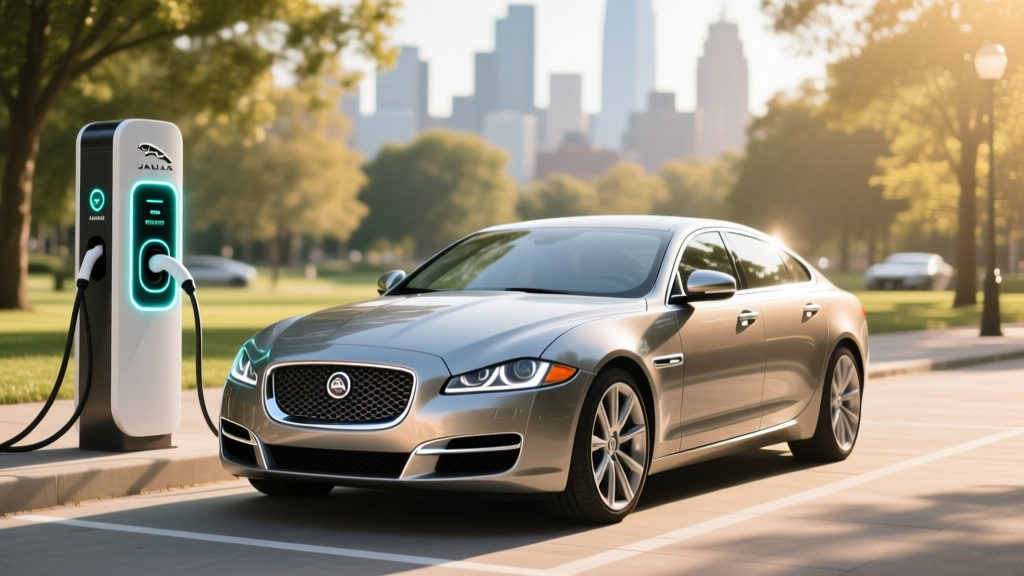
If you're coming from a supercharged V8 luxury sedan like the 2013 Jaguar XJ Supercharged — a car that delivered 470 horsepower and roughly 16 MPG combined on premium fuel — the jump to an electric vehicle involves more than just picking a new model. The biggest shift in daily ownership is how you refuel. Instead of stopping at a gas station, most EV owners do the vast majority of their charging at home, topping up overnight the way you'd charge a phone.
This guide walks through every layer of EV charging — from the electrical panel in your garage to the DC fast charger on a highway corridor — with exact numbers, real costs, and the equipment worth buying in 2026. Whether you're cross-shopping a Tesla Model S, a Lucid Air, a BMW i7, or a Porsche Taycan as your next luxury daily, the charging fundamentals below apply universally.
The Three Charging Levels: Speed, Power, and Real-World Range Added
EV charging is categorized into three levels. The critical distinction to understand first: kW (kilowatts) measures the rate of energy delivery — like water flow from a hose — while kWh (kilowatt-hours) measures the total energy stored in the battery — like gallons in a tank. A 80 kWh battery charged at 10 kW takes roughly 8 hours; at 150 kW, the math changes dramatically (though charging curves taper — more on that later).
| Level | Voltage | Power (kW) | Miles of Range Added per Hour | Typical Use Case |
|---|---|---|---|---|
| Level 1 | 120V AC | 1.0–1.9 kW | 3–5 mi/hr | Overnight top-up, PHEVs, low-mileage days |
| Level 2 | 240V AC | 3.3–19.2 kW | 12–75 mi/hr | Home garage, workplace, destination charging |
| DC Fast Charge | 200–800V DC | 50–350+ kW | 150–1,000+ mi/hr (at peak) | Highway road trips, rapid top-ups |
Level 1 uses a standard 120V household outlet. Every EV ships with a cord that plugs in here. It's slow — roughly 4 miles of range per hour of charging — but adequate for plug-in hybrids with 30–40 miles of electric range or for BEV owners who drive fewer than 30 miles daily and can top up over 10+ hours overnight.
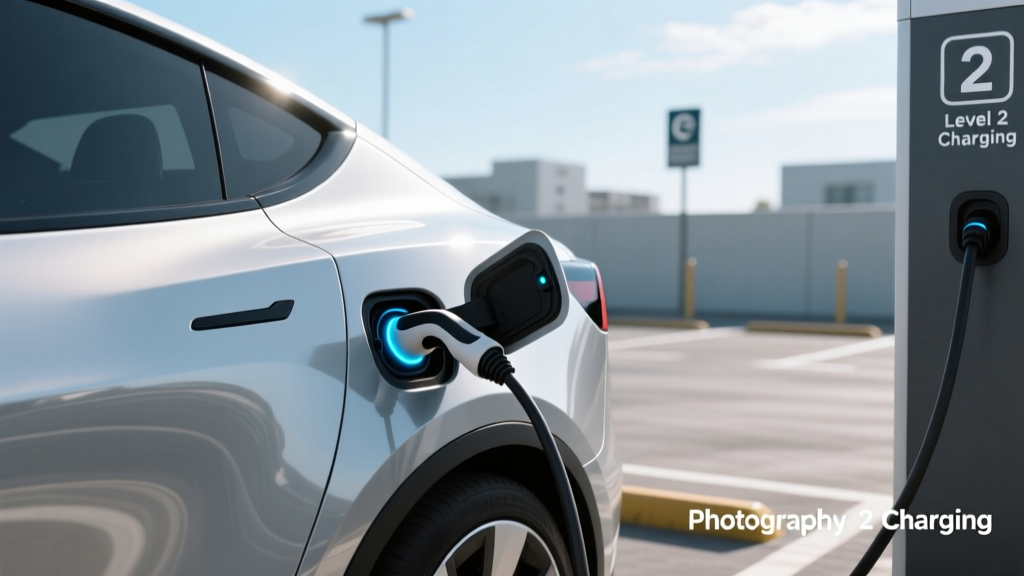
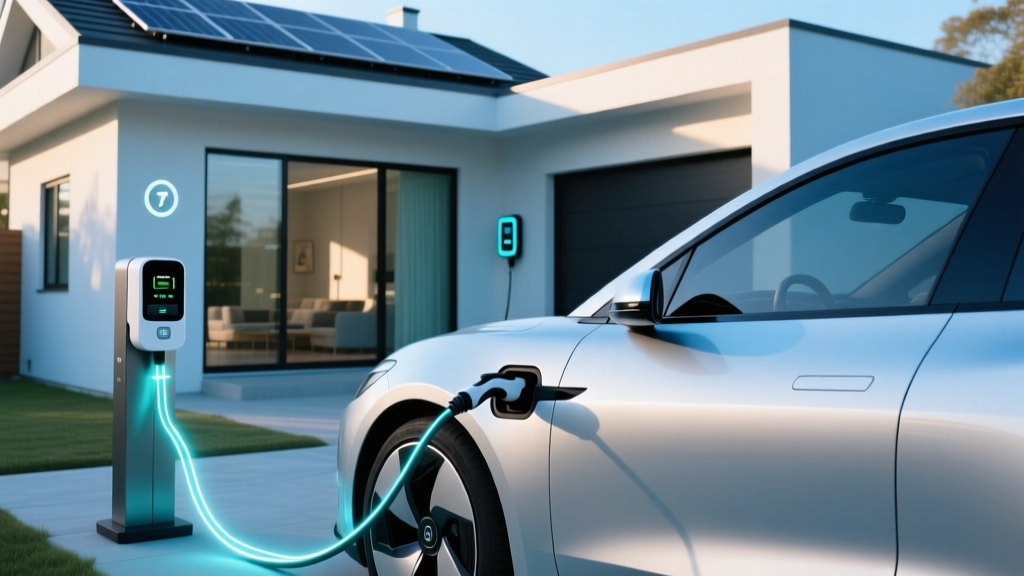
Level 2 requires a 240V circuit — the same voltage as your electric dryer or oven. This is where most EV owners do 80–95% of their charging. A typical 48-amp Level 2 home charger delivers about 11.5 kW, adding roughly 40–45 miles of range per hour for an efficient sedan. An 80 kWh battery charging from 10% to 80% at this rate takes about 5 hours — perfect for an overnight session.
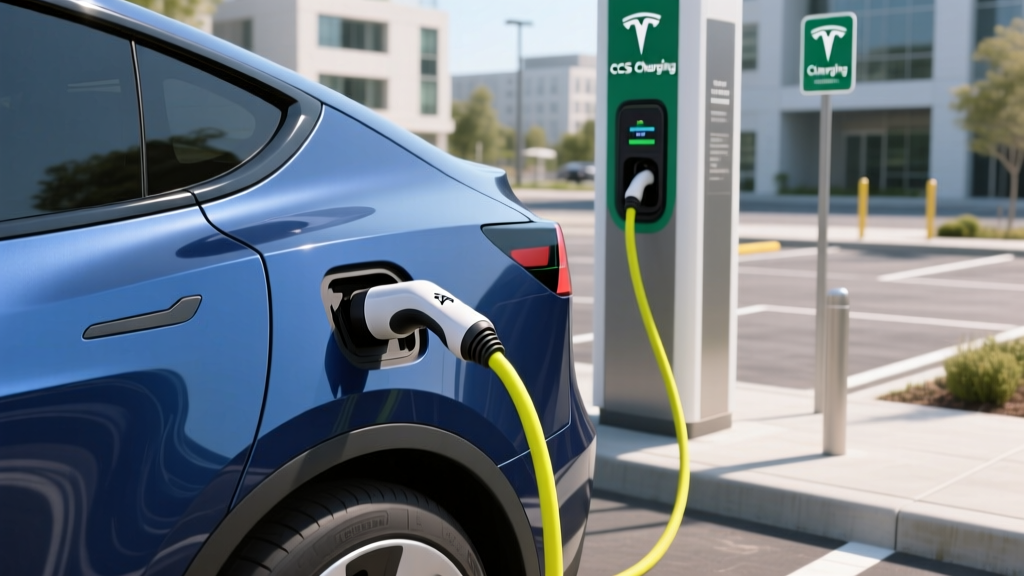
DC Fast Charging (DCFC) bypasses the car's onboard AC-to-DC converter and feeds direct current straight to the battery at much higher power. Modern luxury EVs with 800V architectures (Porsche Taycan, Hyundai Ioniq 5, Kia EV6, Lucid Air) can accept 250–350 kW at peak, adding 10–80% in as little as 18 minutes under ideal conditions. However, peak is not sustained — charge rates taper significantly above 80% SoC to protect battery health, which is why 10–80% is the standard benchmark rather than 0–100%.
Home Charger Installation: Electrical Requirements, Panel Upgrades, and Real Costs
The sticker price of a Level 2 wall charger is only part of the equation. Installation costs vary enormously based on your home's electrical panel, the distance from panel to garage, and local permitting requirements. Here's the full breakdown.
Electrical Requirements for a Typical Level 2 Installation
- Circuit: Dedicated 40-amp to 60-amp 240V circuit (NEMA 14-50 outlet or hardwired)
- Charger amperage: Most 48A chargers require a 60A breaker (NEC requires circuits rated at 125% of continuous load)
- Wire gauge: Typically 6 AWG copper (THHN/THWN in conduit) for runs up to ~50 feet; 4 AWG for longer runs
- Panel capacity: Your main panel must have sufficient spare amperage. A 200A panel in an all-gas home usually has headroom. A 100A panel in a home with electric heat, dryer, and range may not.
Do You Need a Panel Upgrade?
This is the cost wildcard. If your home has a 100-amp main panel that's already near capacity, adding a 60A EV circuit may require upgrading to a 200A service — a job that typically runs $1,500–$4,000 depending on utility involvement, meter upgrades, and local code. Homes built after the 1990s with 200A panels rarely need this, but older homes (like many that were around when the 2013 Jaguar XJ was new) often do.
An alternative for panel-constrained homes: a smart load management device like the Span panel or a CT-clamp-based EVSE that dynamically reduces charging amperage when the house is drawing heavily elsewhere. This lets you charge at 24–32A instead of 48A, but avoids the panel upgrade entirely.
| Component | Cost Range | Notes |
|---|---|---|
| Level 2 Charger (hardware) | $300–$750 | 40A–48A smart Wi-Fi chargers |
| Electrician labor (standard install) | $500–$1,500 | Short run from 200A panel, surface conduit |
| Electrical permit | $50–$250 | Varies by municipality |
| Panel upgrade (if needed) | $1,500–$4,000 | 100A → 200A service upgrade |
| Long wire run / trenching | $500–$2,500 | Detached garage, 100+ ft runs |
| Total (typical, no panel upgrade) | $850–$2,500 | Most homes with 200A panel |
| Total (with panel upgrade) | $2,500–$6,500 | Older homes with 100A service |
Federal incentive note: The IRS §30C credit covers 30% of home EV charging equipment and installation costs, up to $1,000, for installations in eligible census tracts. Check your eligibility on the IRS website before scheduling work — the census-tract requirement catches many buyers off guard.
Connector Compatibility: NACS, CCS, and the Adapter Landscape in 2026
The North American charging connector landscape has consolidated significantly since Ford, GM, Rivian, and most major automakers adopted Tesla's NACS (North American Charging Standard) beginning in 2024–2025. Here's where things stand:
| Connector | Brands Using It (Native) | DC Fast Network Access |
|---|---|---|
| NACS (J3400) | Tesla, Ford, GM, Rivian, Volvo, Polestar, Mercedes, BMW, Hyundai, Kia, Lucid (2025+) | Tesla Supercharger + NACS-equipped EA, ChargePoint |
| CCS1 | VW ID.4 (remaining), older non-Tesla EVs pre-2025 | Electrify America, EVgo, ChargePoint CCS stalls |
| CHAdeMO | Nissan Leaf (legacy only, discontinued) | Limited and shrinking network |
What this means for buyers: If you're purchasing a new EV in 2026, it almost certainly has a NACS port — or a CCS port with a NACS adapter included or available for ~$100–$200. The Tesla Supercharger network, now open to NACS-equipped non-Tesla vehicles via the Tesla app, remains the most reliable DC fast-charging network in the US, with over 30,000 stalls nationally.
If you're buying a used CCS-equipped EV (say, a 2023–2024 model), you can purchase a CCS-to-NACS adapter from Tesla, Lectron, or A2Z to access Supercharger stalls. For home Level 2 charging, all EVs use the same J1772 connector (or NACS for Teslas), and adapters are cheap and ubiquitous. You do not need a Tesla Wall Connector to charge a non-Tesla — and you do not need a J1772 charger to charge a Tesla. Adapters solve every home-charging scenario.
Cost to Charge: Home vs. Public vs. Gas — the Per-Mile Math
This is where the economics of leaving a supercharged V8 behind become undeniable. The 2013 Jaguar XJ Supercharged, with its 5.0L V8, averaged roughly 16 MPG combined on premium fuel. At $4.50/gallon (a reasonable 2026 national average for premium), that's approximately $0.28 per mile in fuel alone.
| Scenario | Rate | Cost per Mile (Efficient EV, 3 mi/kWh) | Cost per Mile (Large EV, 2.5 mi/kWh) |
|---|---|---|---|
| Home, off-peak utility rate | $0.10–$0.15/kWh | $0.03–$0.05 | $0.04–$0.06 |
| Home, standard rate | $0.15–$0.20/kWh | $0.05–$0.07 | $0.06–$0.08 |
| Public Level 2 (workplace, mall) | $0.20–$0.35/kWh | $0.07–$0.12 | $0.08–$0.14 |
| DC Fast Charge (EA, EVgo, Tesla) | $0.30–$0.55/kWh | $0.10–$0.18 | $0.12–$0.22 |
| 2013 Jaguar XJ SC (premium gas) | $4.50/gal, 16 MPG | $0.28/mile | |
The takeaway: Even at the most expensive DC fast-charging rates, a modern EV costs roughly 40–65% less per mile to "fuel" than the XJ Supercharged. At home off-peak rates, the savings are staggering — 80–85% less per mile. Over 15,000 miles annually, that translates to roughly $2,800–$3,500 in fuel savings per year for a comparable luxury EV sedan.
Of course, electricity rates vary enormously by region. California homeowners may pay $0.25–$0.35/kWh at peak (making time-of-use rates essential), while Pacific Northwest or Southern homeowners with cheap utility power may pay $0.08–$0.12/kWh. Always check your utility's EV-specific rate plans — many now offer off-peak rates 40–60% below standard.
Charging Time Examples: What to Expect with Common Battery Sizes
Here are realistic 10–80% charging times for popular EV battery sizes at different charging levels. These account for typical charge-curve taper, which slows charging above ~80% SoC to protect battery longevity.
| Battery Size | Example Vehicles | Level 2 (11.5 kW / 48A) | 150 kW DCFC | 250 kW DCFC | 350 kW DCFC |
|---|---|---|---|---|---|
| 60–65 kWh | Tesla Model 3 RWD, Chevy Equinox EV | ~3.5 hrs | ~28 min | ~22 min | ~18 min* |
| 75–85 kWh | Tesla Model S, BMW i7, Ford Mustang Mach-E ER | ~4.5 hrs | ~35 min | ~26 min | ~20 min* |
| 90–100 kWh | Lucid Air, Porsche Taycan, Mercedes EQS | ~5.5 hrs | ~42 min | ~30 min | ~22 min* |
| 110–118 kWh | GMC Hummer EV, Chevy Silverado EV | ~7 hrs | ~55 min | ~40 min | ~28 min* |
*350 kW times require vehicles with 800V battery architecture (Taycan, Ioniq 5, EV6, Lucid Air, E-GMP/PPC platforms). Vehicles limited to 400V architectures cannot accept more than ~250 kW regardless of charger capability.
Charge curve reality check: A Porsche Taycan at a 350 kW Electrify America stall will peak near 270 kW for the first 5–8 minutes, then taper progressively. The published "10–80% in 22 minutes" figure reflects this averaged curve, not a sustained peak. In cold weather (below 40°F), expect 10–80% times to stretch 20–40% longer unless the vehicle has preconditioned its battery — a feature that warms the pack before you arrive at the charger, typically activated when you navigate to a DCFC in the car's built-in nav.
Equipment Recommendations: Best Home Level 2 Chargers for 2026
Tesla Wall Connector (Gen 4)
- Power output: Up to 48A (11.5 kW on 240V/60A circuit)
- Connector: NACS native; J1772 adapter included
- Cable length: 24 ft
- Smart features: Wi-Fi, OTA updates, load sharing (pair up to 6 units on one circuit), access control
- Price: ~$475
- Best for: Tesla owners and NACS-equipped EVs; excellent value and reliability
ChargePoint Home Flex (2nd Gen)
- Power output: Configurable 16A–50A (up to 12 kW)
- Connector: J1772 native; NACS adapter available
- Cable length: 23 ft
- Smart features: Wi-Fi, Alexa/Google Home integration, scheduling, energy tracking, flexible amperage to match your circuit
- Price: ~$550–$650
- Best for: Non-Tesla EVs, homes with variable circuit capacity, multi-EV households
Emporia Level 2 EV Charger
- Power output: Up to 48A (11.5 kW)
- Connector: J1772 (NACS adapter available)
- Cable length: 24 ft
- Smart features: Wi-Fi, integration with Emporia Vue energy monitor, solar-aware charging, time-of-use scheduling
- Price: ~$350–$400
- Best for: Budget-conscious buyers, solar-panel homes, energy-monitoring enthusiasts
Grizzl-E Smart
- Power output: Up to 40A (9.6 kW)
- Connector: J1772 native
- Cable length: 24 ft
- Smart features: Wi-Fi, OCPP-compatible, adjustable amperage, built-in load management
- Price: ~$450
- Best for: Cold-climate durability (rated to -40°F), Canadian-made, rugged outdoor installs
Safety, Code, and Installation Best Practices
EV charging is a high-draw, continuous electrical load — the National Electrical Code (NEC) classifies it as a continuous load, meaning the circuit must be rated at 125% of the charger's maximum draw. A 48A charger requires a 60A breaker and appropriately sized wire. Cutting corners here creates fire risk.
- Dedicated circuit: Your Level 2 charger must be on its own dedicated circuit — never shared with other appliances. This is non-negotiable per NEC Article 625.
- GFCI protection: NEC 2020 and later requires GFCI (Ground Fault Circuit Interrupter) protection for all EV receptacles. Most hardwired chargers have GFCI built in; for NEMA 14-50 outlets, your electrician must install a GFCI breaker.
- Outdoor rating: If your charger is mounted outside or in an open carport, ensure it carries a NEMA 4 or IP65 rating. All chargers listed above are outdoor-rated.
- Permit and inspection: Most jurisdictions require an electrical permit and post-installation inspection for new 240V circuits. The permit typically costs $50–$250 and the inspection ensures the work meets code. Do not skip this — it protects you and is required for insurance coverage in the event of a claim.
- Hardwired vs. plug: Hardwired installations (no plug, direct wire to the charger) are preferred for 48A+ chargers. NEMA 14-50 plugs are convenient for portability but are a known failure point if low-quality receptacles are used. If using a plug, insist on an industrial-grade Hubbell or Bryant 14-50R receptacle — not the $10 big-box-store version.
Frequently Asked Questions
How much does it cost to install a home EV charger?
A typical Level 2 home installation with a 200A panel and short wire run costs $850–$2,500 all-in (charger, electrician, permit). Homes needing a panel upgrade from 100A to 200A should budget $2,500–$6,500. The IRS §30C credit can offset 30% of costs up to $1,000 if your census tract qualifies.
How fast will each charging level add range?
Level 1 (120V) adds 3–5 miles per hour. Level 2 (240V, 48A) adds 35–50 miles per hour depending on vehicle efficiency. DC fast charging at 150–350 kW adds 150–1,000+ miles per hour at peak, but sessions are typically measured in 10–80% minutes (18–40 minutes depending on battery size and vehicle architecture).
Which connector/charger is compatible with my EV?
For 2026 model-year EVs, nearly all use the NACS connector natively. Older CCS-equipped EVs (2022–2024 models) can use CCS-to-NACS adapters for Supercharger access. At home, all Level 2 chargers work with all EVs via the appropriate plug or adapter. CHAdeMO is effectively discontinued outside legacy Nissan Leaf owners.
How much does EV charging cost per mile vs. gas?
Home charging at average US rates ($0.15/kWh) costs roughly $0.05–$0.07 per mile for a typical EV. Compare that to the 2013 Jaguar XJ Supercharged at 16 MPG on $4.50 premium: $0.28 per mile. Even expensive public DC fast charging ($0.45/kWh) runs about $0.15/mile — still roughly half the cost of premium gas in the Jaguar.
What electrical upgrades might I need?
The most common upgrade is a panel capacity increase from 100A to 200A ($1,500–$4,000). You may also need: a new 240V circuit with appropriate wire gauge, a GFCI breaker, and possibly a sub-panel if your garage is detached. A licensed electrician can perform a load calculation per NEC Article 220 to determine if your existing panel can handle the EV circuit without an upgrade.
Sources: fueleconomy.gov (EPA efficiency data), IRS §30C credit guidelines, NHTSA (vehicle safety and compliance data).