From Supercharged V8 to Supercharged Electrons: A Charging Primer for Truck Enthusiasts
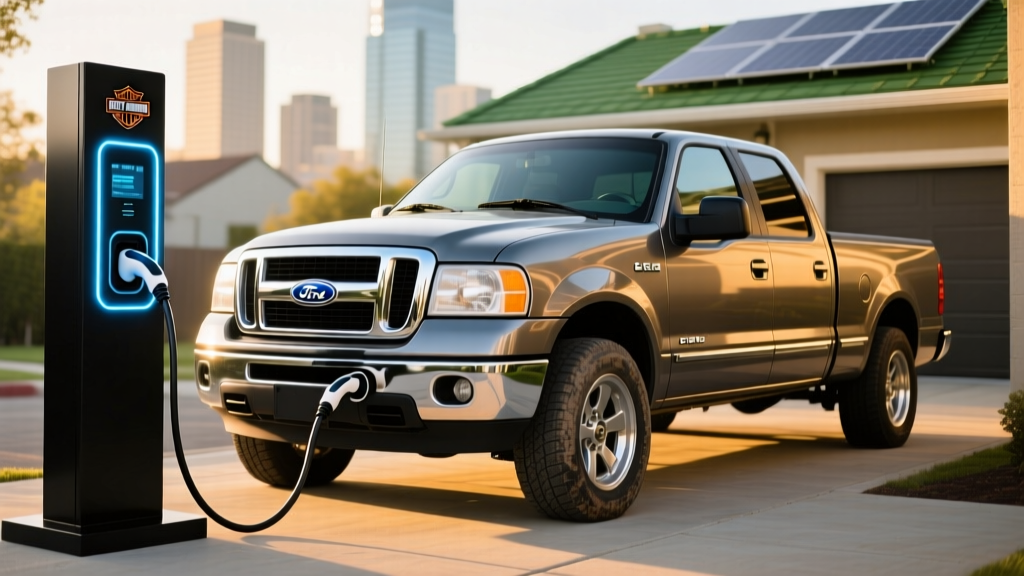
If you've ever owned or admired a 2002 Ford F-150 Harley-Davidson Supercharged, you know the thrill of a 380-horsepower, 5.4L Triton V8 with a Eaton supercharger pushing 14 mpg combined. That truck was a cultural icon — black paint, orange striping, and a supercharger whine that turned heads at every stoplight. But in 2026, the math around performance trucks has shifted dramatically, and understanding EV charging is now as essential as knowing your way around a wrench.
This guide breaks down everything you need to know about charging an electric vehicle at home, in public, and on the road — written for enthusiasts who appreciate raw numbers, whether they're measured in horsepower or kilowatts. We'll compare the real cost of fueling an EV versus that legendary supercharged F-150, walk through home installation step by step, and recommend specific chargers you can buy today.
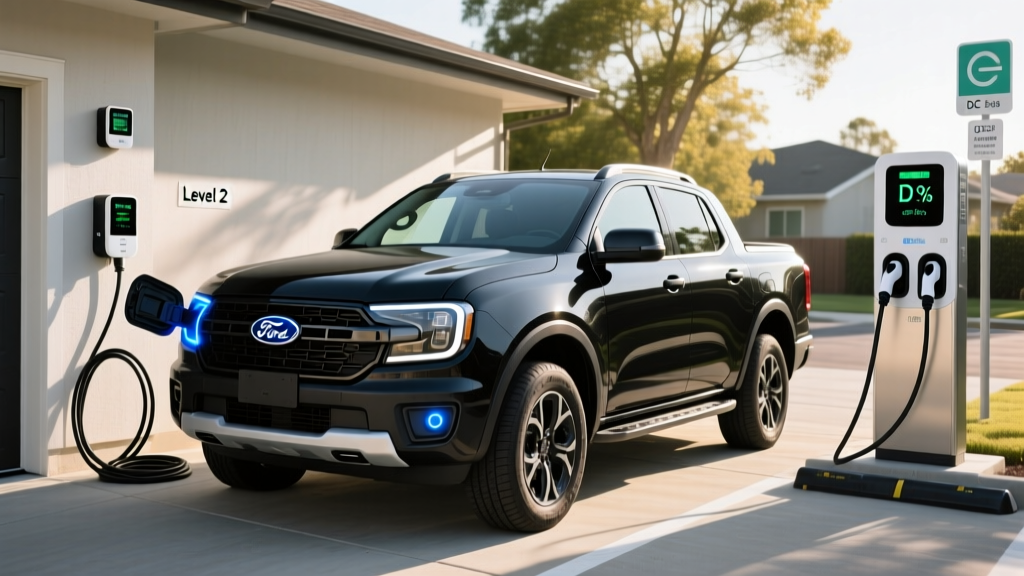
Charging Levels Explained: Level 1, Level 2, and DC Fast Charging
Before buying any equipment, you need to understand the three charging tiers. The critical distinction: kW (kilowatts) measures power — how fast energy flows into the battery. kWh (kilowatt-hours) measures energy — the total capacity of the battery, like gallons in a fuel tank. Never confuse the two.
| Level | Voltage | Power (kW) | Miles Added/Hour | Best For |
|---|---|---|---|---|
| Level 1 | 120V AC | 1.2–1.9 kW | 3–5 mi/hr | Overnight top-ups, PHEVs, emergencies |
| Level 2 | 240V AC | 3.3–19.2 kW | 12–75 mi/hr | Daily home charging, workplace, shopping centers |
| DC Fast Charge | 400–800V DC | 50–350 kW | 150–1,000+ mi/hr | Road trips, highway corridors, commercial fleets |
A typical modern EV like the Ford F-150 Lightning (extended-range, 131 kWh usable battery) charges from 10–80% in approximately 41 minutes at a 150 kW DC fast charger, according to fueleconomy.gov. At a Level 2 home charger delivering 11.5 kW, that same 10–80% session takes roughly 9–10 hours — perfect for overnight charging.
Home Charger Installation: Electrical Requirements and Real Costs
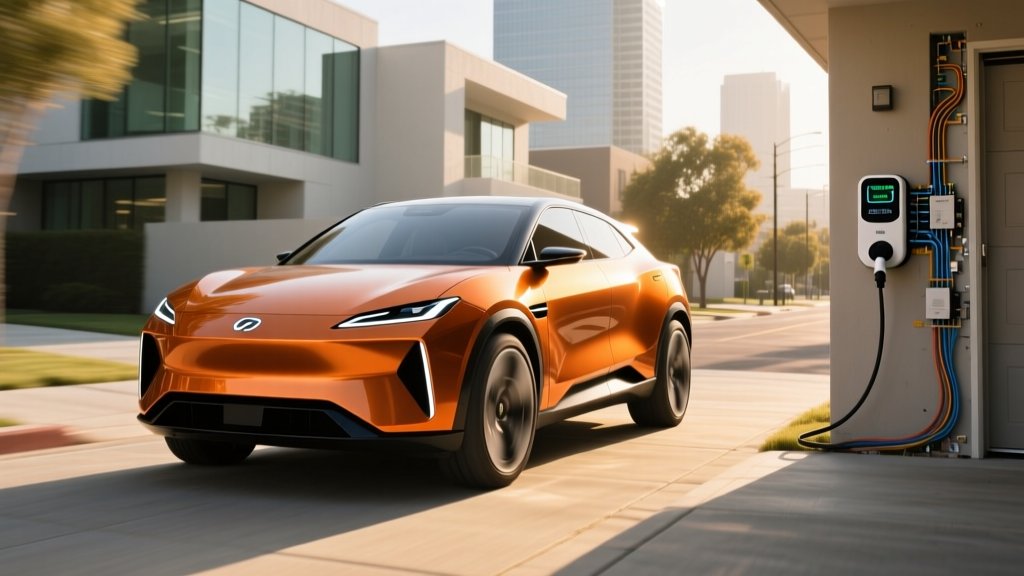
Most EV owners do 80% or more of their charging at home. But installation isn't as simple as plugging into a dryer outlet. Here's what's actually involved.
Electrical Requirements
- Circuit: A dedicated 240V circuit, typically 40A, 50A, or 60A depending on charger amperage
- Breaker sizing: NEC code requires the breaker rated at 125% of continuous load — a 40A charger needs a 50A breaker
- Wire gauge: 6 AWG copper for 50A circuits; 4 AWG for 60A circuits (longer runs may require larger gauge)
- Panel capacity: Most homes need 200A main service minimum; older homes with 100A panels often require a panel upgrade
- Permit: Required in virtually all jurisdictions; costs $50–$300 depending on locality
Typical Home Level 2 Installation Cost Breakdown (2026)
| Component | Cost Range |
|---|---|
| Level 2 charger (hardwired, 40–48A) | $400–$700 |
| Electrician labor (standard install, same panel) | $500–$1,500 |
| Permit and inspection | $50–$300 |
| Wire and conduit (50–100 ft run) | $200–$600 |
| Total (no panel upgrade) | $1,150–$3,100 |
| Electrical panel upgrade (100A → 200A) | $1,500–$4,000 additional |
| Total (with panel upgrade) | $2,650–$7,100 |
The panel upgrade is the wildcard that catches many buyers off guard. If your home was built before 1990 and still has a 100-amp panel, adding a 50A EV circuit may push you over the calculated load limit. A licensed electrician will perform a load calculation per NEC Article 220 to determine whether an upgrade is necessary. Some utility companies offer rebates of $500–$1,500 for panel upgrades when paired with EV charger installation — check your local provider.
Safety and Code Considerations
- GFCI protection: NEC 2023 and later require GFCI protection for 240V EV charging circuits in garages (625.54)
- Outdoor rating: If mounting outside, the charger must carry a NEMA 4 or IP65 weather rating
- Dedicated circuit: EV chargers must have their own dedicated circuit — never share with a dryer or HVAC
- UL listing: Only purchase UL-listed or ETL-listed chargers; non-listed units may void homeowner's insurance
Connector Compatibility: NACS, CCS1, and CHAdeMO in 2026
The connector landscape has consolidated significantly since Tesla opened its Supercharger network and the North American Charging Standard (NACS) was adopted by nearly every major automaker. Here's where things stand for 2026 model-year vehicles:
| Connector | Brands Using It (2026) | DC Fast Charge Availability | Adapter Needed? |
|---|---|---|---|
| NACS (Tesla/J3400) | Tesla, Ford, GM, Rivian, Volvo, Polestar, Hyundai, Kia, BMW, Mercedes | Tesla Superchargers + growing third-party | CCS vehicles need NACS adapter ($100–$200) |
| CCS1 | Legacy models (pre-2025 VW ID.4, some Stellantis, Honda Prologue early batches) | Electrify America, EVgo, ChargePoint | NACS vehicles need CCS adapter |
| CHAdeMO | Discontinued — Nissan Leaf (final models), Mitsubishi Outlander PHEV | Limited and shrinking network | No reliable adapter to NACS/CCS |
If you're buying a new EV in 2026, NACS is the standard to target. Ford's F-150 Lightning, for example, ships with a native NACS port and has full access to Tesla Supercharger stations (over 25,000 stalls in North America) via a built-in adapter for older CCS chargers. The IRS §30D tax credit remains available for qualifying new EVs, though eligibility depends on MSRP caps ($80,000 for trucks/vans/SUVs), buyer income limits ($300,000 joint / $150,000 single), and battery component/critical mineral sourcing requirements. Consult a tax professional for your specific situation.
Cost to Charge: EV Electricity vs. the Supercharged F-150's Gas Bill
The 2002 Ford F-150 Harley-Davidson Supercharged rated at 12 mpg city / 16 mpg highway (approximately 14 mpg combined per period EPA estimates). At today's national average of $3.40/gallon for regular unleaded (premium recommended for the supercharged 5.4L), fueling costs roughly $0.24 per mile.
Here's how EV charging costs compare across different scenarios:
| Charging Scenario | Rate ($/kWh) | Cost per Mile (at 3 mi/kWh) | Annual Cost (12,000 mi) |
|---|---|---|---|
| Home, off-peak (utility time-of-use) | $0.08–$0.12 | $0.03–$0.04 | $360–$480 |
| Home, standard residential rate | $0.14–$0.18 | $0.05–$0.06 | $600–$720 |
| Public Level 2 (ChargePoint, etc.) | $0.20–$0.35 | $0.07–$0.12 | $840–$1,440 |
| DC Fast Charging (Electrify America, EVgo) | $0.30–$0.55 | $0.10–$0.18 | $1,200–$2,160 |
| 2002 F-150 Harley (gas, 14 mpg, $3.40/gal) | N/A | $0.24 | $2,880 |
Even charging exclusively on the most expensive DC fast chargers, a modern EV costs less per mile than that supercharged Triton V8. But the real savings come from home charging — at off-peak rates, you're spending roughly $0.035 per mile, or about 85% less than the Harley F-150. Over five years and 60,000 miles, that's a fuel savings of approximately $12,240.
For context, the F-150 Lightning extended-range with its 131 kWh battery and 320 miles of EPA range achieves approximately 2.0–2.5 mi/kWh in real-world highway driving (76 MPGe combined per EPA data). Smaller, more efficient EVs like the Hyundai Ioniq 6 or Tesla Model 3 achieve 3.5–4.0 mi/kWh, stretching each dollar further.
Charging Time Examples: What to Expect with Common Battery Sizes
Charging time depends on three variables: battery capacity (kWh), charger power output (kW), and the vehicle's charge curve. Most EVs accept peak charge rates only between approximately 10–50% state of charge, then taper significantly above 80% to protect battery health. Here are real-world estimates for popular 2026 EVs:
| Vehicle | Battery (kWh) | Peak DC Rate (kW) | 10–80% DC Fast | Level 2 (11.5 kW) 10–80% |
|---|---|---|---|---|
| Tesla Model 3 Long Range | 75 (usable) | 250 | ~25 min | ~5.5 hours |
| Ford F-150 Lightning Ext. Range | 131 (usable) | 150 | ~41 min | ~9.5 hours |
| Hyundai Ioniq 5 (Long Range) | 77.4 (usable) | 240 (800V) | ~18 min | ~5.5 hours |
| Chevrolet Silverado EV 4WT | 200 (usable) | 350 | ~35 min | ~14 hours |
| BMW iX xDrive50 | 105.2 (usable) | 200 | ~34 min | ~7.5 hours |
Note that the Hyundai Ioniq 5's 800-volt architecture enables it to sustain higher charge rates longer, resulting in faster 10–80% times despite a smaller peak kW rating than some competitors. The charge curve matters more than the peak number — a truck that peaks at 350 kW but tapers aggressively after 40% may not actually charge faster than one sustaining 200 kW to 60%.
Equipment Recommendations: Best Home Chargers for 2026
ChargePoint Home Flex
- Power Output: Up to 12 kW (50A) on 240V; adjustable down to 16A for older panels
- Connector: NACS (J3400) native; CCS1 adapter available
- Cable Length: 23 feet
- Smart Features: Wi-Fi, app scheduling, utility demand-response integration, Alexa/Google Home
- Price: $549–$649
- Best For: Most homeowners wanting flexible amperage and smart scheduling
WallConnector (Tesla, 4th Gen)
- Power Output: Up to 11.5 kW (48A) on 240V/60A circuit
- Connector: NACS native; J1772/CCS adapter included
- Cable Length: 24 feet
- Smart Features: Wi-Fi, over-the-air updates, power sharing (multiple units on one circuit), Tesla app integration
- Price: $475
- Best For: Tesla owners and NACS-native vehicles; best value per kW
Emporia Level 2 EV Charger
- Power Output: Up to 11.5 kW (48A) hardwired; 9.6 kW (40A) with NEMA 14-50 plug
- Connector: J1772 (NACS adapter included for 2026 models)
- Cable Length: 24 feet
- Smart Features: Wi-Fi, energy monitoring, solar integration (pairs with Emporia Vue panel monitor), time-of-use scheduling
- Price: $399–$449
- Best For: Budget-conscious buyers with solar panels or who want granular energy tracking
Grizzl-E Smart (United Chargers)
- Power Output: Up to 10 kW (40A) on 240V/50A circuit
- Connector: J1772 or NACS (select at purchase)
- Cable Length: 24 feet
- Smart Features: Wi-Fi, OCPP-compatible (works with utility programs), built-in load management
- Price: $449–$549
- Best For: Outdoor installations (IP67 rated, -40°F operating), Canadian-made, rugged build
All four chargers above are UL-listed, support hardwired installation (preferred for reliability over plug-in NEMA 14-50), and deliver enough power to fully charge most EVs overnight. For the F-150 Lightning with its 131 kWh battery, even the 40A Grizzl-E will add approximately 100 miles of range in 8 hours — enough to replenish a typical day's driving.
Frequently Asked Questions
How much does it cost to install a home EV charger?
A standard Level 2 home charger installation with an existing 200A electrical panel typically costs $1,150–$3,100 total, including the charger ($400–$700), electrician labor ($500–$1,500), permit ($50–$300), and wiring ($200–$600). If your home needs a panel upgrade from 100A to 200A service, add $1,500–$4,000. Always get at least two quotes from licensed electricians and verify they pull a permit — unpermitted work can void insurance and cause issues at resale.
How fast will each charging level add range?
Level 1 (120V standard outlet) adds 3–5 miles per hour — sufficient only for plug-in hybrids or emergency top-ups. Level 2 (240V, 40–48A) adds 25–45 miles per hour for most EVs and is the standard for daily home charging. DC fast charging (150–350 kW) can add 150–300+ miles in 20–30 minutes, though actual speed depends on battery size, state of charge, and the vehicle's charge curve taper above 80%.
Which connector/charger is compatible with my EV?
For 2026 model-year vehicles, NACS (J3400) is the dominant standard in North America, used by Tesla, Ford, GM, Hyundai, Kia, BMW, Rivian, Volvo, and most others. CCS1 is being phased out but still appears on some carryover models. CHAdeMO is effectively discontinued. Check your vehicle's charge port or the manufacturer's spec sheet. If your EV has CCS1, a NACS adapter ($100–$200) provides access to Tesla Superchargers.
How much does charging cost per mile vs gas?
At home on off-peak electricity rates ($0.10/kWh), an average EV costs approximately $0.03–$0.04 per mile. A 2002 Ford F-150 Harley-Davidson Supercharged at 14 mpg combined on premium fuel ($3.80/gallon) costs approximately $0.27 per mile. Even exclusive DC fast charging at $0.45/kWh costs roughly $0.15/mile — still about 45% less than the supercharged truck. Annual fuel savings for 12,000 miles of driving range from $1,500 (mostly DC fast charging) to $2,500+ (mostly home charging).
What electrical upgrades might I need?
The most common upgrade is a panel replacement from 100A to 200A service, which costs $1,500–$4,000 and is required when your home's calculated electrical load (HVAC, appliances, existing circuits) plus the new 50A EV circuit exceeds the panel's rated capacity. Other potential upgrades include: adding a sub-panel in the garage ($500–$1,200), upgrading the utility service drop if the transformer is undersized ($500–$2,000, sometimes covered by the utility), or installing a smart load-management system ($300–$600) that dynamically shares capacity between the EV charger and other high-draw appliances to avoid a full panel upgrade.
Can I charge using a regular 120V outlet?
Yes, but slowly. A standard 120V/15A household outlet delivers approximately 1.2–1.4 kW, adding 3–5 miles of range per hour. For a 131 kWh truck battery, a full charge from empty would take over 100 hours. Level 1 works fine for plug-in hybrids with 20–40 miles of electric range, or for BEV owners who drive less than 30 miles daily and can charge for 10+ hours overnight. For anything more, Level 2 is strongly recommended.
Does extreme cold affect charging speed?
Yes, significantly. Lithium-ion batteries charge more slowly when cold because the electrolyte becomes more viscous and lithium ions move sluggishly through the anode. Most modern EVs have battery thermal management systems that precondition the pack when you navigate to a charger, warming it to optimal temperature (typically 70–90°F). Without preconditioning, a cold-soaked battery (below 32°F) may accept only 20–40% of its rated peak charge rate until it warms up. Always precondition before DC fast charging in winter — it can cut your 10–80% time nearly in half.
The Bottom Line: Performance Evolves, and So Should Your Garage
The 2002 Ford F-150 Harley-Davidson Supercharged was a masterpiece of internal combustion attitude — a supercharged V8 in a leather-trimmed truck that made no apologies at the pump. Twenty-four years later, the performance truck segment has evolved, and the infrastructure to support it is more mature than most enthusiasts realize.
A home Level 2 charger installed on a 240V/50A circuit costs most homeowners $1,500–$2,500 all-in, charges any modern EV overnight, and cuts per-mile fuel costs by 75–85% compared to a supercharged gas truck. With the NACS connector now standard across nearly every brand, public charging access is the broadest it's ever been — over 25,000 Tesla Supercharger stalls plus growing Electrify America and EVgo networks.
Whether you're parking a Lightning, a Silverado EV, or still keeping that Harley F-150 as a weekend toy while daily-driving something electric, understanding kW, kWh, charge curves, and installation costs puts you in control. The supercharger under the hood was great. The one on your garage wall might be better.