Understanding EV Charging Levels: Speed, Power, and Real-World Expectations
Electric vehicle charging operates across three distinct levels, each with different power requirements and charging speeds. Understanding the difference between kW (kilowatts) and kWh (kilowatt-hours) is critical: kW measures power delivery rate (how fast energy flows), while kWh measures energy capacity (how much energy your battery stores). Think of it like water—kW is the flow rate from your hose, kWh is the total volume in your pool.
| Level | Voltage | Power (kW) | Miles Added/Hour | Best For |
|---|---|---|---|---|
| Level 1 | 120V AC | 1.4-1.9 kW | 3-5 miles | Overnight top-ups, PHEVs, emergencies |
| Level 2 | 240V AC | 3.3-19.2 kW | 12-75 miles | Daily home charging, workplaces, destinations |
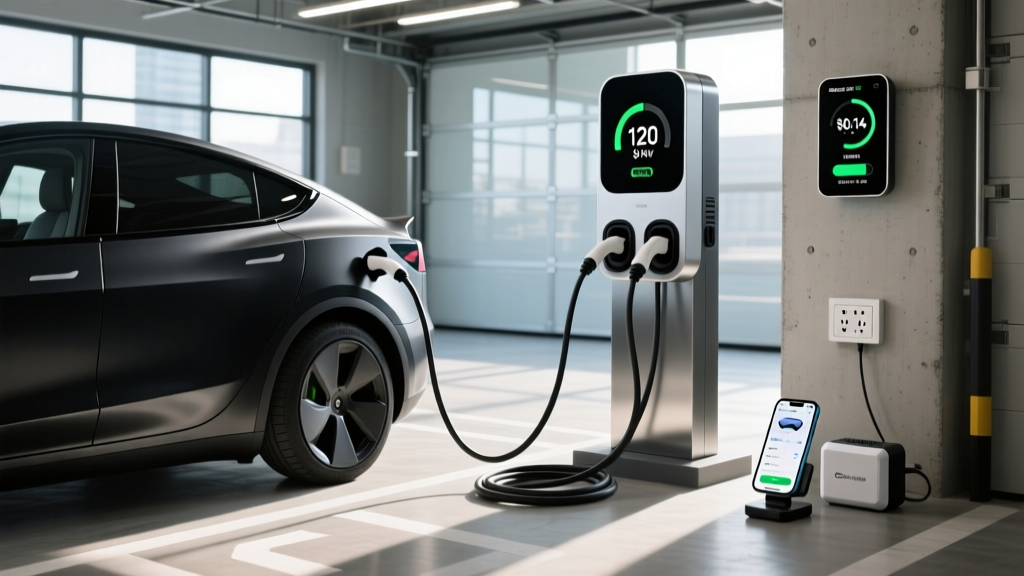
| DC Fast | 400-800V DC | 50-350 kW | 150-1,000+ miles | Road trips, quick top-ups (10-80% in 18-45 min) |
Real-world caveat: These speeds assume optimal conditions—moderate battery temperature (65-85°F), state of charge between 10-80%, and no grid congestion. Cold batteries below 50°F can reduce Level 2 acceptance rates by 30-50%, and DC fast charging slows dramatically above 80% SoC to protect battery health.
Home Charger Installation: Electrical Requirements and Costs
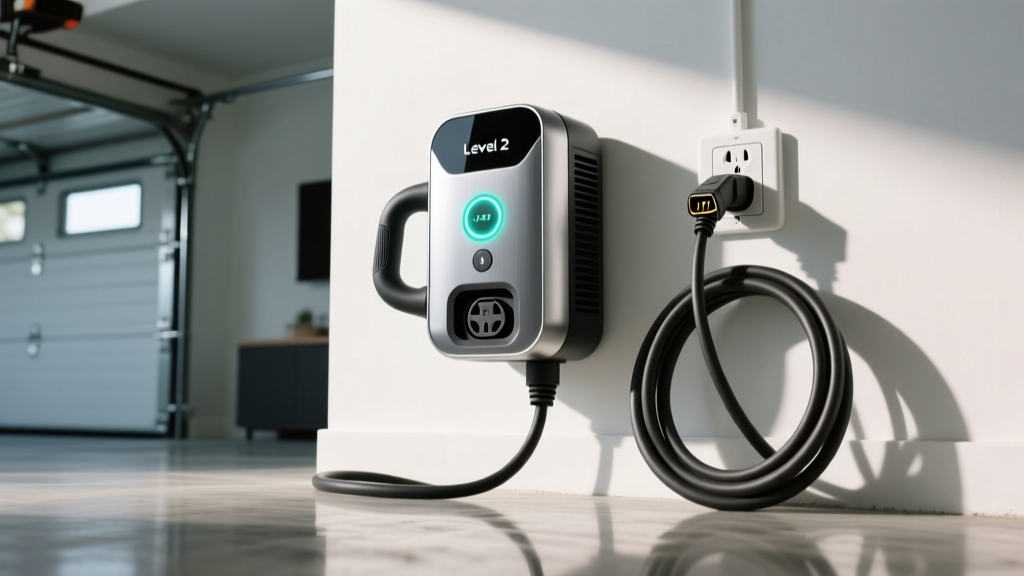
Installing a Level 2 home charger requires a dedicated 240V circuit, similar to what powers your electric dryer or oven. Most homes need a 40-amp or 50-amp circuit to support 7.7 kW or 9.6 kW chargers respectively. Here's what determines your installation complexity and cost:
Key Electrical Considerations
- Panel capacity: Your main electrical panel must have room for a new double-pole breaker and sufficient amperage headroom. A 200-amp panel typically supports a 50A EV circuit; older 100-amp panels may require upgrades.
- Wire gauge: 40A circuits need 8 AWG copper wire; 50A circuits require 6 AWG. Longer runs (100+ feet from panel to charger) increase material costs.
- Permits: Most jurisdictions require an electrical permit ($50-$200) and inspection to ensure code compliance.
- GFCI protection: NEC 2023 and later require GFCI (ground-fault circuit interrupter) protection for EV circuits, adding $30-$60 for a GFCI breaker.
Panel Upgrade Reality
For homes built before 1980 or those with 100-amp service, adding a 50A EV circuit may push total load beyond panel capacity. A licensed electrician can perform a load calculation. If an upgrade is needed, expect to add $1,500-$3,500 for a 200-amp panel replacement before your charger installation even begins.
| Component | Basic Install | Standard Install | Complex Install |
|---|---|---|---|
| Equipment (charger) | $300-$500 | $500-$700 | $600-$900 |
| Electrician labor | $300-$600 | $600-$1,200 | $1,200-$2,500 |
| Electrical materials | $100-$200 | $200-$400 | $400-$800 |
| Permit & inspection | $50-$100 | $100-$150 | $150-$250 |
| Panel upgrade (if needed) | $0 | $0 | $1,500-$3,500 |
| Total | $750-$1,400 | $1,400-$2,450 | $3,850-$7,950 |
Pro tip: Get 2-3 quotes from licensed electricians who specialize in EV installations. Ask specifically about their experience with 240V EV circuits and whether they'll handle permit paperwork. Some utilities offer rebates of $250-$1,000 that can offset installation costs.
Connector Compatibility: NACS, CCS1, and CHAdeMO
The EV charging landscape has consolidated significantly since 2023, with Tesla's North American Charging Standard (NACS) becoming the dominant connector for new vehicles. Here's what you need to know for compatibility:
| Connector | Vehicle Brands | Adapter Needed? |
|---|---|---|
| NACS (Tesla) | Tesla, Ford, GM, Rivian, Volvo, Polestar, Mercedes, BMW (2025+) | None for Superchargers; CCS adapter for non-Tesla DC networks |
| CCS1 | Hyundai, Kia, Volkswagen, Audi (pre-2025), some Stellantis | NACS adapter for Tesla Superchargers ($200-$300) |
| CHAdeMO | Nissan Leaf (legacy) | Limited DC fast charging options; CCS adapter not widely available |
For home Level 2 charging: All vehicles use the J1772 connector (or NACS, which is J1772-compatible). Tesla vehicles include a J1772 adapter; other brands plug directly. Most home chargers come with J1772 connectors, making them universal for Level 2 charging regardless of your vehicle's DC fast-charge connector.
Charging Time Examples: 10-80% State of Charge
Most EV owners charge between 10% and 80% SoC for daily use—charging beyond 80% slows dramatically and increases battery stress. Here are realistic charging times for common battery sizes:
Mid-Size Battery (60-70 kWh usable)
- Level 1 (1.4 kW): 30-35 hours (impractical for daily use)
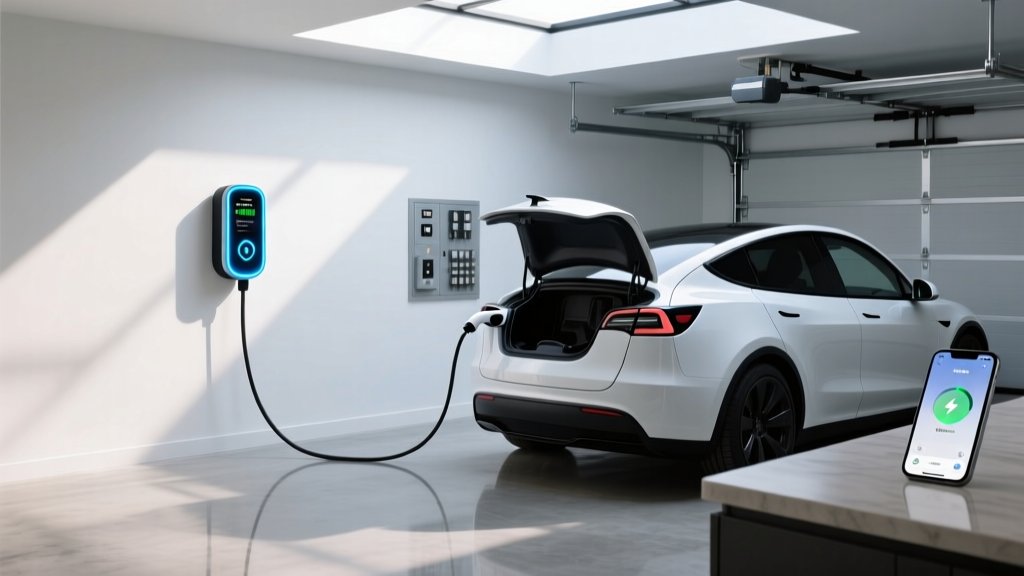
- Level 2 (7.7 kW, 32A): 5.5-6.5 hours (overnight charging)
- Level 2 (11.5 kW, 48A): 3.5-4.5 hours
- DC Fast (150 kW peak): 18-25 minutes (10-80%)
Large Battery (85-100 kWh usable)
- Level 1 (1.4 kW): 45-55 hours
- Level 2 (7.7 kW, 32A): 8-10 hours
- Level 2 (11.5 kW, 48A): 5.5-7 hours
- DC Fast (250 kW peak): 18-30 minutes (10-80%)
Charge curve reality: DC fast charging doesn't maintain peak power throughout the session. A vehicle advertising "250 kW peak" may only sustain that rate between 10-40% SoC, then taper to 150 kW, then 100 kW, then 50 kW as it approaches 80%. The average charging power matters more than the peak number.
Cost to Charge: Home vs Public vs Gas Comparison
Electricity costs vary dramatically by location, time of day, and charging method. Here's how charging costs break down in 2026:
| Charging Method | Avg $/kWh | Cost Per Mile* | Annual Cost (12,000 mi) |
|---|---|---|---|
| Home (off-peak utility rate) | $0.08-$0.15 | $0.03-$0.05 | $360-$600 |
| Home (standard rate) | $0.12-$0.20 | $0.04-$0.07 | $480-$840 |
| Public Level 2 (workplace/retail) | $0.20-$0.35 | $0.07-$0.12 | $840-$1,440 |
| DC Fast Charging (public) | $0.30-$0.50 | $0.10-$0.17 | $1,200-$2,040 |
| Gasoline (25 MPG avg, $3.50/gal) | N/A | $0.14 | $1,680 |
*Based on 3.5 miles per kWh (typical EV efficiency). Actual costs vary by vehicle efficiency, local rates, and driving patterns.
Key insight: Home charging at off-peak rates delivers the lowest cost per mile—often 70-80% cheaper than gasoline. Public DC fast charging can approach or exceed gas costs, making it best reserved for road trips rather than daily use. Time-of-use (TOU) utility plans can cut home charging costs by 30-50% if you schedule charging for overnight hours (typically 10 PM - 6 AM).
Recommended Home Chargers: Equipment Comparison
Not all Level 2 chargers are equal. Here are three proven options across different price points, all with J1772 connectors compatible with every EV sold in North America:
Budget Pick: Lectron V-BOX Pro (48A, 11.5 kW)
- Power output: 48A / 11.5 kW (requires 60A circuit)
- Cable length: 20 feet
- Smart features: Basic app, scheduling, energy tracking
- Price: $350-$400
- Best for: Cost-conscious buyers who want fast Level 2 charging without smart-home integration
Best Overall: ChargePoint Home Flex (50A, 12 kW)
- Power output: Adjustable 16A-50A / 3.8-12 kW (flexible circuit sizing)
- Cable length: 23 feet
- Smart features: Robust app, Alexa/Google integration, detailed analytics, guest access
- Price: $550-$650
- Best for: Most EV owners; adjustable amperage works with 20A-60A circuits
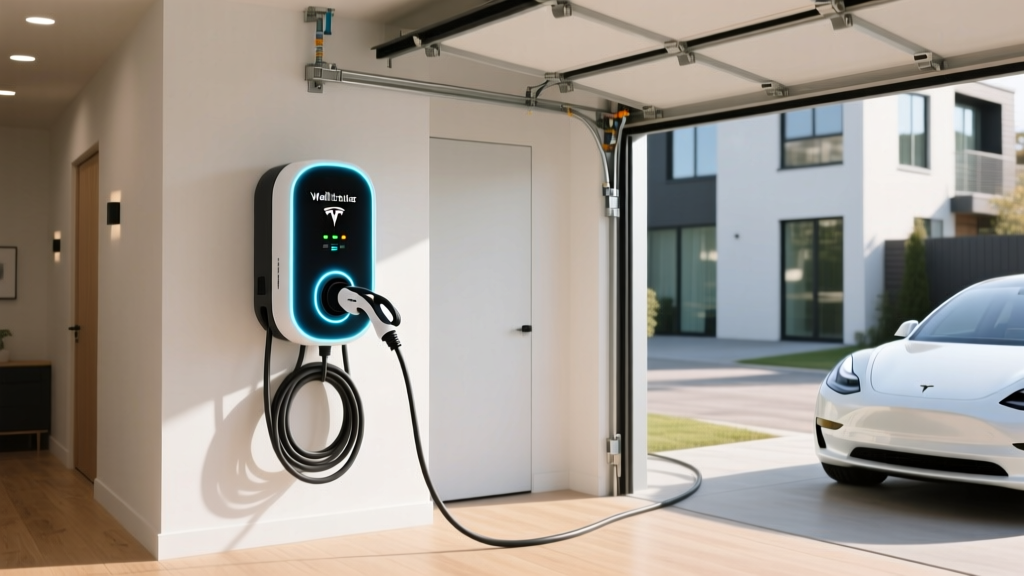
Premium Pick: Tesla Wall Connector (48A, 11.5 kW)
- Power output: 48A / 11.5 kW (requires 60A circuit)
- Cable length: 24 feet
- Smart features: Tesla app integration, Wi-Fi updates, power sharing (multiple units), NACS connector (J1772 adapter included)
- Price: $475-$550
- Best for: Tesla owners or multi-EV households wanting load-balancing between chargers
Safety note: All recommended chargers are UL-listed and include ground-fault protection, overcurrent protection, and thermal monitoring. Avoid non-UL-listed chargers from overseas manufacturers—they may lack critical safety features and could void your homeowner's insurance in case of electrical fire.
Safety and Code Considerations
EV charging involves sustained high-current draw over many hours, making proper installation critical for safety and code compliance:
Essential Safety Requirements
- Dedicated circuit: Your EV charger must have its own dedicated circuit—never share with other appliances. This prevents overloads and nuisance tripping.
- Hardwired vs plug-in: Hardwired installations (direct wire connection) are safer and more reliable than plug-in (NEMA 14-50 outlet) for circuits above 40A. Plug-in offers portability but requires a high-quality industrial receptacle ($80-$150).
- Outdoor rating: If installing outdoors, ensure your charger has a NEMA 4 or IP65 rating for weather resistance. Indoor-only units will fail prematurely when exposed to rain or humidity.
- GFCI protection: Required by NEC 2023+ for all EV circuits. Some chargers include built-in GFCI; otherwise, your electrician will install a GFCI breaker.
- Cable management: Use a holster or cable organizer to prevent tripping hazards and protect the connector from ground contact and moisture.
Common Code Violations to Avoid
- Using undersized wire (8 AWG on a 50A circuit) — fire hazard
- Installing a 50A receptacle on a 50A circuit (code requires 125% derating, so 50A continuous load needs 60A+ circuit)
- Skipping permits and inspections — can void insurance and create resale issues
- Daisy-chaining extension cords or using household adapters — immediate safety risk
Frequently Asked Questions
How much does it cost to install a home EV charger?
Typical Level 2 home charger installation costs $1,400-$2,450 for a standard setup (50A circuit, 30-foot wire run, no panel upgrade). Basic installations with shorter runs can cost $750-$1,400, while complex installs requiring panel upgrades or long wire runs can reach $3,850-$7,950. Always get multiple quotes from licensed electricians.
How fast will each charging level add range?
Level 1 (120V) adds 3-5 miles per hour—suitable only for PHEVs or overnight top-ups. Level 2 (240V) adds 12-75 miles per hour depending on amperage (16A-50A), making it ideal for daily home charging. DC fast charging adds 150-1,000+ miles per hour but is meant for road trips, not daily use, due to higher costs and battery stress from frequent use.
Which connector/charger is compatible with my EV?
For home Level 2 charging, all EVs use J1772 (or NACS, which is J1772-compatible)—any Level 2 charger will work with any EV. For DC fast charging, check your vehicle's connector: NACS (Tesla, Ford, GM, Rivian), CCS1 (Hyundai, Kia, VW), or CHAdeMO (Nissan Leaf). Adapters are available for cross-compatibility in most cases.
How much does charging cost per mile vs gas?
Home charging at off-peak rates costs $0.03-$0.05 per mile—roughly 70-80% cheaper than gasoline at $3.50/gallon and 25 MPG ($0.14/mile). Public Level 2 charging costs $0.07-$0.12/mile, while DC fast charging ranges $0.10-$0.17/mile. For maximum savings, prioritize home charging and use public charging sparingly.
What electrical upgrades might I need?
If your home has a 100-amp electrical panel or was built before 1980, you may need a panel upgrade to 200 amps ($1,500-$3,500) before adding a 50A EV circuit. Your electrician will perform a load calculation to determine if your existing panel can handle the additional load. Other potential upgrades include replacing outdated wiring, adding a sub-panel, or upgrading your utility service entrance.
Can I install a Level 2 charger myself?
While technically possible for experienced DIYers with electrical knowledge, we strongly recommend hiring a licensed electrician. EV charging involves sustained high-current loads that can cause fires if improperly installed. Professional installation ensures code compliance, maintains your homeowner's insurance coverage, and provides liability protection. Most jurisdictions require permits and inspections for EV circuits anyway.
Final Considerations for EV Charging Setup
Successful EV charging infrastructure depends on matching your daily driving needs with appropriate equipment and electrical capacity. For most EV owners driving 30-50 miles daily, a 7.7 kW or 11.5 kW Level 2 home charger provides ample overnight charging at minimal cost. Reserve DC fast charging for road trips to protect battery health and minimize expenses.
Before purchasing equipment or scheduling installation, verify your electrical panel capacity, research local utility rebates, and choose a charger with the right power output for your circuit. With proper planning, home EV charging delivers convenience and cost savings that make electric ownership practical and economical.
For detailed information on federal tax incentives for EV charging equipment, consult the IRS Alternative Fuel Vehicle Refueling Property Credit guidelines, which may provide up to $1,000 in tax credits for home charger installation in eligible census tracts.