The Real Data Behind EV Charging Fires
Searches for "EV charging fires" spike every time a viral video shows a burning battery pack, but the actual incident data tells a more nuanced story. According to the National Fire Protection Association (NFPA) and data compiled by the Swedish Civil Contingencies Agency (MSB), electric vehicles are significantly less likely to catch fire than internal combustion engine vehicles on a per-vehicle basis. However, when an EV battery does experience thermal runaway, the fire burns hotter, lasts longer, and requires vastly more water to suppress than a gasoline fire.
For EV owners and prospective buyers, the practical question isn't whether EVs catch fire more often — they don't — but whether your home charging setup meets electrical code and whether you're using certified equipment. The vast majority of EV-related fire incidents trace back to improper wiring, uncertified extension cords, damaged connectors, or aftermarket modifications, not the vehicle battery itself.
Charging Levels Explained: Speed, Power, and Safety Profile
Every EV sold in the US charges at one of three levels. Each carries different electrical demands and different safety considerations for your home wiring.
| Level | Voltage | Max Power (kW) | Miles of Range Added Per Hour | Typical Use Case |
|---|---|---|---|---|
| Level 1 | 120V AC | 1.3–1.9 kW | 3–5 miles | Overnight trickle charge; PHEVs; emergency |
| Level 2 | 240V AC | 7.2–19.2 kW | 20–65 miles | Primary home charging; workplace |
| DC Fast Charge | 400–900V DC | 50–350 kW | 150–300+ miles (in 20 min) | Road trips; commercial stations |
Level 1 charging draws from a standard household outlet and poses minimal fire risk — the current is low and the circuit is familiar. Level 2 is where most home fire concerns arise, because it demands a dedicated 240V circuit pulling 30 to 80 amps continuously for hours. That's the same electrical load as running an electric oven and a clothes dryer simultaneously, sustained for 6-10 hours. If your wiring, breaker, or connector isn't rated for that sustained load, heat builds up at connection points.
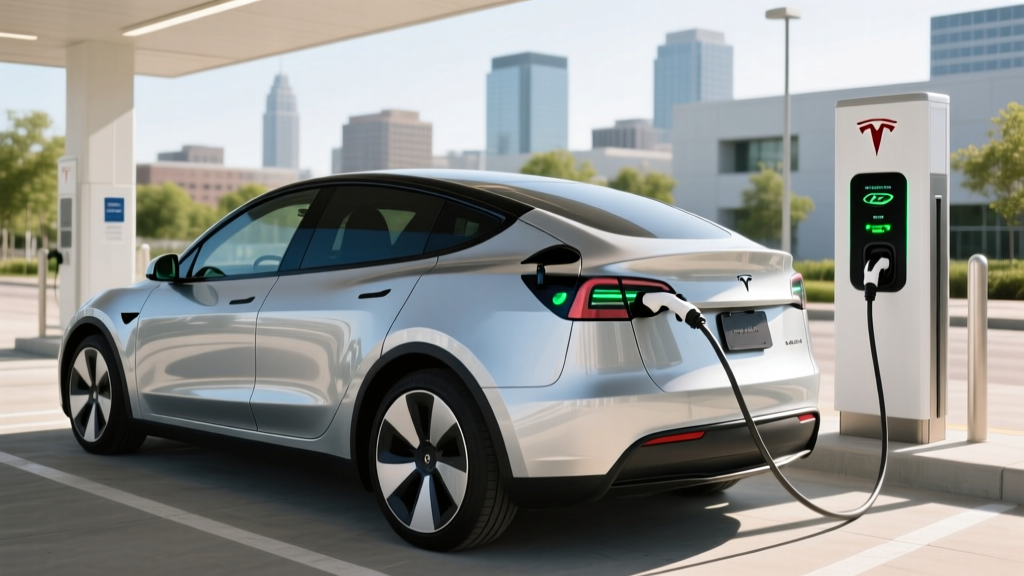
DC fast charging happens exclusively at commercial stations with industrial-grade infrastructure. You won't install DCFC at home, and the safety engineering at these stations includes liquid-cooled cables, ground-fault protection, and automatic shutoff systems monitored by networked software.
Home Charger Installation: Electrical Requirements and Real Costs
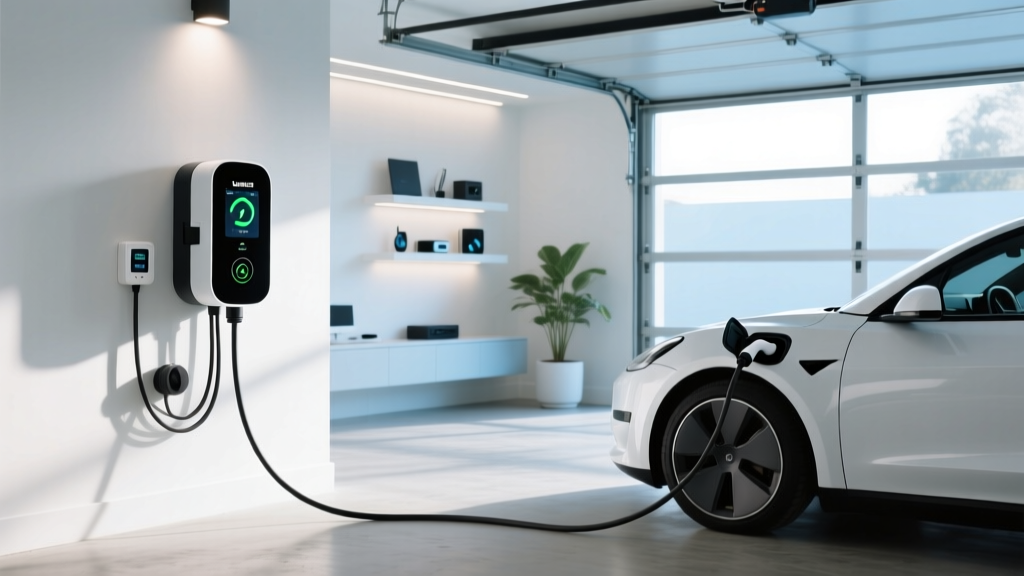
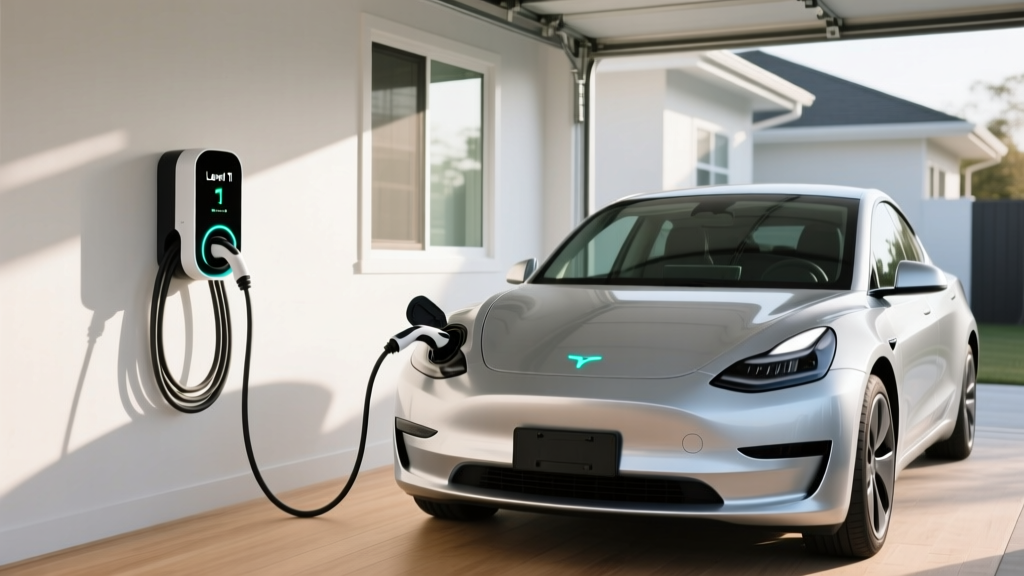
A Level 2 home charger installation is the single point where most EV charging fire risks can be eliminated — or introduced. The difference is whether the installation meets National Electrical Code (NEC) Article 625 requirements and whether a licensed electrician evaluates your panel capacity.
Core electrical requirements for a safe Level 2 install:
- Dedicated circuit: Your EV charger needs its own breaker — not shared with a dryer, HVAC, or water heater. A 40-amp charger requires a 50-amp breaker (NEC requires circuits rated at 125% of continuous load).
- Wire gauge: 6 AWG copper for 40A circuits; 4 AWG for 50A; 3 AWG for 60A. Undersized wire overheats inside walls.
- GFCI protection: NEC 2020 and later requires ground-fault circuit interrupter protection for all EV charging outlets, especially outdoors.
- NEMA 14-50 outlet vs. hardwired: A 14-50 receptacle offers portability but introduces a connection point that can loosen and arc over time. Hardwired units eliminate the plug connection and are generally safer for sustained high-amperage use.
- Outdoor rating: If your charger is outside, the enclosure must carry a NEMA 4 or IP65 rating for weather resistance.
What Electrical Upgrades Might I Need?
This is the question that catches homeowners off guard. If your home has a 100-amp main electrical panel — common in homes built before 1990 — adding a 40A or 50A EV circuit may exceed your panel's capacity, especially if you already run electric heat, an electric dryer, and an electric oven. A licensed electrician will perform a load calculation (NEC Article 220) to determine whether your panel can handle the added draw.
If it can't, you face a panel upgrade to 200A service, which is a significant project. Some utilities offer rebates for panel upgrades tied to EV adoption, and the Residential Clean Energy Credit may cover a portion of related electrical work — consult a tax professional for eligibility under current-year IRS rules.
| Component | Cost Range | Notes |
|---|---|---|
| Level 2 Charger Equipment | $350 – $750 | Smart Wi-Fi-enabled units from reputable brands |
| Electrician Labor (standard install) | $500 – $1,500 | Assumes panel is nearby, no trenching |
| Permit & Inspection | $100 – $300 | Required by most jurisdictions; varies by locality |
| Panel Upgrade (if needed) | $1,500 – $3,500 | 100A → 200A service upgrade |
| Trenching / Conduit (long runs) | $500 – $2,000 | If charger is far from panel or detached garage |
| Total (no panel upgrade) | $950 – $2,550 | Typical single-family home |
| Total (with panel upgrade) | $2,450 – $6,050 | Older homes with 100A service |
Skipping the permit to save $200 is a false economy. Unpermitted work may not be covered by homeowner's insurance in the event of a fire, and it can complicate a future home sale.
Connector Compatibility: NACS, CCS, and CHAdeMO in 2026
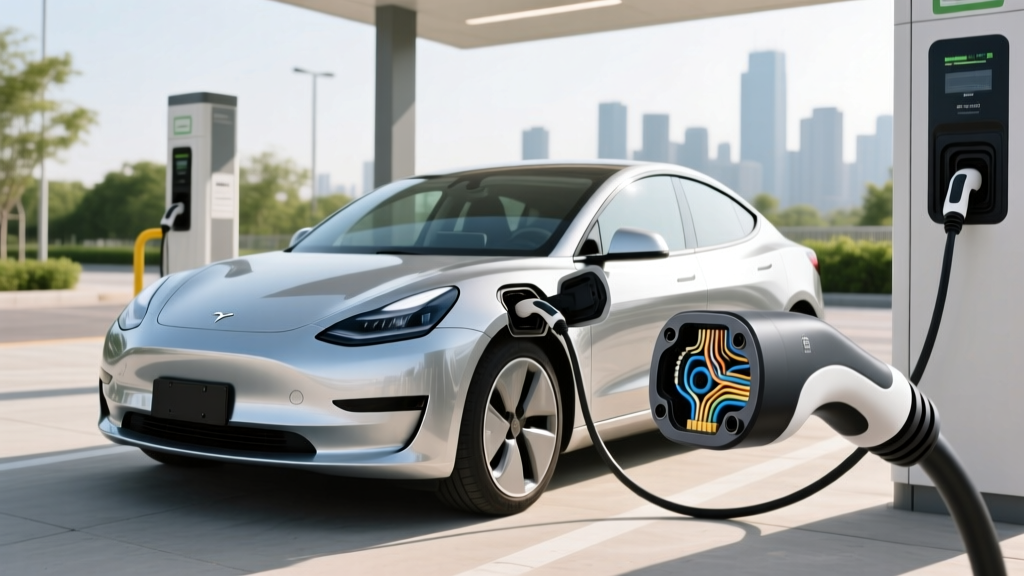
The connector landscape has consolidated significantly. Tesla's North American Charging Standard (NACS) is now the dominant connector for new EVs sold in North America, with Ford, GM, Rivian, Volvo, Hyundai, and most other manufacturers adopting it for 2025 and 2026 models. CCS1 (Combined Charging System) remains on many 2022-2024 models still on the road, and CHAdeMO is effectively legacy, found only on older Nissan Leaf and Mitsubishi Outlander PHEV models.
| Connector | Brands Using It (New Vehicles) | Adapter Needed For |
|---|---|---|
| NACS (Tesla standard) | Tesla, Ford, GM, Rivian, Hyundai, Kia, Volvo, BMW, Mercedes, Lucid | CCS1 stations (Tesla provides adapter) |
| CCS1 | VW ID.4 (2024 and earlier), some Stellantis models, legacy fleet | NACS Superchargers (CCS-to-NACS adapter, ~$200-250) |
| CHAdeMO | Nissan Leaf (discontinued), Mitsubishi Outlander PHEV | Limited public infrastructure; declining |
For home Level 2 charging, the connector matters less because most home chargers either come with a J1772 plug (which all non-Tesla EVs accept) or a NACS plug (for Tesla and newer NACS-equipped vehicles). If you own a CCS1 vehicle and buy a NACS home charger, you'll need a NACS-to-J1772 adapter (~$150-$200). Check your vehicle's charge port before purchasing equipment.
Charging Cost Per Mile: Home vs. Public vs. Gas
One of the strongest arguments for electrification is fuel cost, but the savings depend heavily on where and when you charge. Here's how the numbers break down for a typical EV achieving 3.5 miles per kWh (roughly equivalent to a midsize sedan like the Tesla Model 3 or Hyundai Ioniq 6).
| Scenario | Rate | Cost Per Mile |
|---|---|---|
| Home Level 2 (off-peak utility rate) | $0.09/kWh | $0.026 |
| Home Level 2 (national avg residential) | $0.16/kWh | $0.046 |
| Public Level 2 (network pricing) | $0.25–$0.49/kWh | $0.071–$0.140 |
| DC Fast Charging (EA, EVgo, etc.) | $0.35–$0.55/kWh | $0.100–$0.157 |
| Gasoline (30 MPG combined, $3.40/gal) | $3.40/gallon | $0.113 |
| Gasoline (22 MPG combined, $3.40/gal) | $3.40/gallon | $0.155 |
Home charging at off-peak rates is roughly 4x cheaper per mile than gasoline. Even at the national average residential rate, you're paying less than half the per-mile cost of a 30 MPG gas car. However, exclusive reliance on DC fast charging narrows the gap substantially — in some markets, DCFC is more expensive per mile than gasoline. This is why home charging access remains the single biggest factor in EV ownership satisfaction and economics.
According to fueleconomy.gov, the most efficient EVs on the market achieve 130+ MPGe combined, while even efficient hybrids top out around 55-60 MPG real-world. The cost advantage is structural, not marginal.
Charging Time Examples: How Long Does It Really Take?
Charging time depends on your battery size (in kWh) and your charger's power output (in kW). Here are real-world 10-80% charge times for common battery sizes at different charging levels. Note that charging slows significantly above 80% State of Charge to protect battery health — this taper is normal and built into every modern Battery Management System (BMS).
- 60 kWh battery (e.g., base Tesla Model 3 RWD): 10-80% in ~8 hours at 7.2 kW (Level 2, 30A); ~5 hours at 11.5 kW (48A); ~22 minutes at 170 kW DCFC (peak, with taper).
- 82 kWh battery (e.g., Ford Mustang Mach-E Extended Range): 10-80% in ~11 hours at 7.2 kW; ~7 hours at 11.5 kW; ~25 minutes at 150 kW DCFC.
- 100 kWh battery (e.g., GMC Sierra EV, Rivian R1T Max Pack): 10-80% in ~13.5 hours at 7.2 kW; ~8.5 hours at 11.5 kW; ~30 minutes at 200+ kW DCFC on an 800V architecture.
For daily driving, most EV owners charge from 20-80% overnight on Level 2, which takes 4-7 hours depending on battery size and circuit amperage. You rarely need a full 0-100% charge, and keeping the battery between 20-80% extends long-term battery health — particularly for NMC chemistry cells. LFP (lithium iron phosphate) batteries, found in the base Tesla Model 3 and some BYD models, tolerate regular 100% charges better and can be charged to full without accelerated degradation.
Recommended Home EV Chargers: Safety-Certified Equipment
Only purchase chargers that carry UL (Underwriters Laboratories) or ETL (Intertek) certification. Uncertified chargers from marketplace sellers bypass the safety testing that prevents overcurrent, overheating, and ground-fault conditions. Here are proven, code-compliant options:
ChargePoint Home Flex
Power: Up to 12 kW (50A) configurable
Connector: NACS or J1772 (select at purchase)
Cable: 23 feet
Smart features: Wi-Fi, app scheduling, Alexa, utility demand-response
Price: ~$550-$650
UL listed: Yes
Tesla Wall Connector
Power: Up to 11.5 kW (48A)
Connector: NACS native; J1772 adapter included
Cable: 24 feet
Smart features: Wi-Fi, OTA updates, power sharing (multiple units on one circuit)
Price: ~$475
UL listed: Yes
Emporia Vue Level 2
Power: Up to 11.5 kW (48A)
Connector: J1772 (NACS adapter available)
Cable: 24 feet
Smart features: Wi-Fi, energy monitoring, solar integration, scheduling
Price: ~$400
UL listed: Yes
All three units support load management, meaning they can dynamically reduce charging power if your home's total electrical draw approaches panel capacity. This feature alone significantly reduces fire risk in homes with marginal panel headroom and can eliminate the need for a panel upgrade in some cases.
Fire Prevention: A Practical Safety Checklist
Based on incident analysis from the NHTSA and fire investigation reports, here's what actually prevents EV charging fires at home:
- Use UL/ETL-listed equipment only. No Amazon marketplace chargers without verified certification marks. Look for the UL hologram or ETL mark on the unit itself.
- Never use an extension cord. Level 2 charging at 40A+ through an extension cord — even a heavy-duty one — introduces resistance, voltage drop, and heat at connections not designed for continuous high-amperage duty.
- Inspect your NEMA 14-50 receptacle annually. The plug-receptacle interface is the most common failure point. Look for discoloration, melting, or a warm-to-the-touch faceplate. If you see any, stop charging and call an electrician immediately. Consider upgrading to a Hubbell or Bryant industrial-grade 14-50 receptacle ($50-$80) — consumer-grade Leviton units have been associated with overheating under sustained EV loads.
- Hardwire if possible. A hardwired charger eliminates the plug connection entirely, removing the single most common point of failure in home charging setups.
- Ensure GFCI protection on outdoor circuits. Required by code, but verify your electrician installed it. Ground faults in wet conditions are a shock and arc-flash hazard.
- Don't charge a damaged battery. If your vehicle has sustained underbody impact (road debris, curb strike, collision), have the battery inspected before charging. Thermal runaway events almost always follow physical damage or manufacturing defects, not normal charging.
- Install a smoke detector in your garage. This is basic, often overlooked, and required by code in most jurisdictions for attached garages. A lithium battery fire produces distinctive off-gassing before flame — early detection matters.
Frequently Asked Questions
How common are EV charging fires compared to gas car fires?
On a per-vehicle basis, EVs catch fire at a lower rate than internal combustion vehicles. Data from the Swedish Civil Contingencies Agency and US fire incident databases show ICE vehicles experience fires at roughly 1,500 per 100,000 vehicles annually, while EVs experience fires at approximately 25 per 100,000. However, EV battery fires are more difficult to extinguish — they can require 3,000-8,000 gallons of water and may reignite hours or days after initial suppression due to cell-to-cell thermal propagation.
Can I install a Level 2 charger myself?
Technically, a homeowner can perform their own electrical work in many jurisdictions, but for a 240V/40-50A circuit, this is strongly discouraged unless you are a licensed electrician. The continuous-load nature of EV charging (hours at full amperage) is unlike most household circuits, and mistakes in wire gauge, torque on terminal connections, or breaker sizing create fire hazards hidden inside walls. A licensed electrician carries liability insurance, pulls permits, and the work passes inspection — all of which protect you in the event of an incident.
Does leaving my EV plugged in overnight increase fire risk?
No. Modern EVs and certified Level 2 chargers communicate continuously via the J1772/NACS control pilot signal. When the battery reaches its target State of Charge, the vehicle tells the charger to stop delivering power. The charger enters a standby state. The BMS monitors cell temperatures and voltage throughout. Overnight charging on a properly installed circuit is the intended use case and is no more dangerous than running a dishwasher while you sleep.
Should I be concerned about charging in the rain?
No. EV charge connectors are designed to be weather-sealed. The J1772 and NACS connectors will not deliver power until a sealed connection is confirmed with the vehicle. Rain, snow, and humidity are not fire or shock hazards with properly rated outdoor equipment (NEMA 4 or IP65). The real outdoor risk is physical damage to the cable from being run over or exposed to UV degradation over years — inspect your cable jacket periodically for cracking.
What's the safest charging practice for battery longevity and fire prevention?
For NMC battery chemistry: set your charge limit to 80% for daily use and charge to 100% only before long trips. For LFP chemistry: charge to 100% regularly as recommended by the manufacturer (Tesla recommends 100% at least weekly for LFP Model 3 RWD). In both cases, avoid letting the battery sit at 0% or 100% for extended periods, precondition the battery before DC fast charging, and use a certified Level 2 charger on a dedicated, permitted circuit.