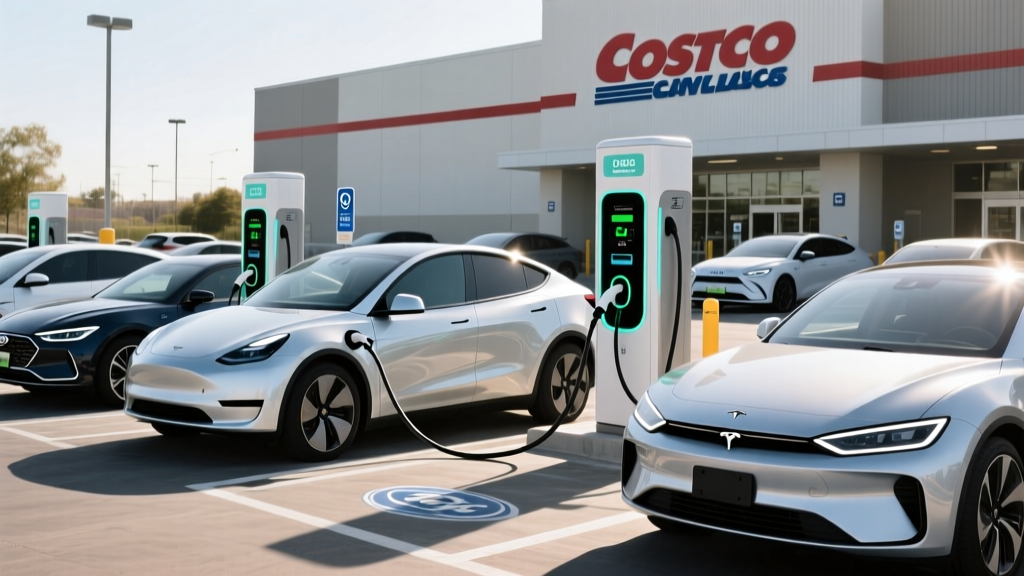
If you've searched for "EV charging Costco" hoping to find a reliable place to top up while you shop, you're not alone. Many EV owners look to big-box retailers for convenient charging. But as of 2026, Costco does not operate a widespread network of public EV chargers at its warehouse locations. A handful of individual Costco warehouses have partnered with third-party networks like Electrify America or ChargePoint, but these are exceptions, not a corporate standard.
The good news? Whether you're shopping at Costco or anywhere else, understanding your charging options — at home and on the road — is straightforward once you know the numbers. This guide covers exactly what you need to charge efficiently and cost-effectively.
Understanding EV Charging Levels and Speeds
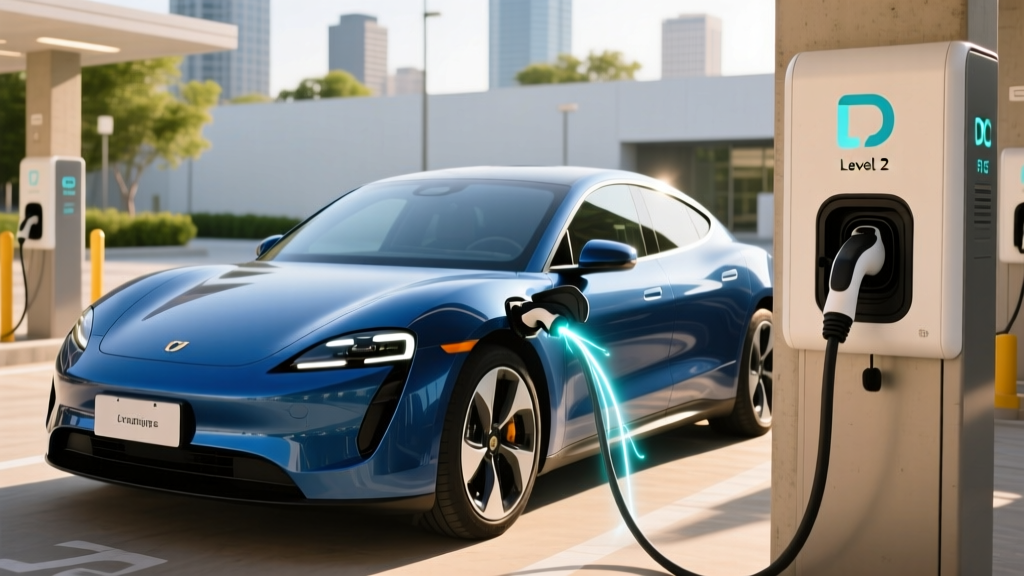
Before evaluating any charging location, you need to understand the three charging levels. Power is measured in kW (kilowatts) — the rate of energy flow — while your battery capacity is measured in kWh (kilowatt-hours) — the total energy stored. Think of kW like water pressure and kWh like the size of your tank.
| Level | Voltage | Power (kW) | Miles Added per Hour | Typical Use |
|---|---|---|---|---|
| Level 1 | 120V | 1.4 – 1.9 kW | 3 – 5 mi/hr | Emergency/overnight |
| Level 2 | 240V | 7.2 – 19.2 kW | 20 – 60 mi/hr | Home/workplace daily |
| DC Fast Charging | 400–800V DC | 50 – 350 kW | 150 – 300+ mi in 20 min | Road trips, public stations |
Real-world charging time examples (10% to 80% state of charge):
- 75 kWh battery (e.g., Tesla Model Y Long Range): ~18–25 minutes at a 250 kW DC fast charger; ~8 hours on a 9.6 kW Level 2 home charger
- 90 kWh battery (e.g., Ford F-150 Lightning Extended Range): ~20–30 minutes at 150+ kW DC fast; ~10 hours on Level 2
- 60 kWh battery (e.g., Chevy Equinox EV): ~15–20 minutes at 150 kW DC fast; ~6–7 hours on Level 2
Note that DC fast charging slows significantly above 80% state of charge to protect the battery. That 10–80% window is where you'll see peak kW rates; charging from 80–100% can take as long as the first 80%.
How Much Does It Cost to Install a Home EV Charger?
Home Level 2 charging is where most EV owners do 80% or more of their charging. Installation costs vary dramatically based on your home's electrical panel and the distance from panel to charger location.
| Component | Low Estimate | High Estimate |
|---|---|---|
| Level 2 charger equipment | $300 | $700 |
| Electrician labor (standard install, panel nearby) | $400 | $1,200 |
| Permit fees | $50 | $200 |
| Electrical panel upgrade (if needed, 100A to 200A) | $1,500 | $3,500 |
| Total (no panel upgrade) | $750 | $2,100 |
| Total (with panel upgrade) | $2,250 | $5,600 |
What Electrical Upgrades Might I Need?
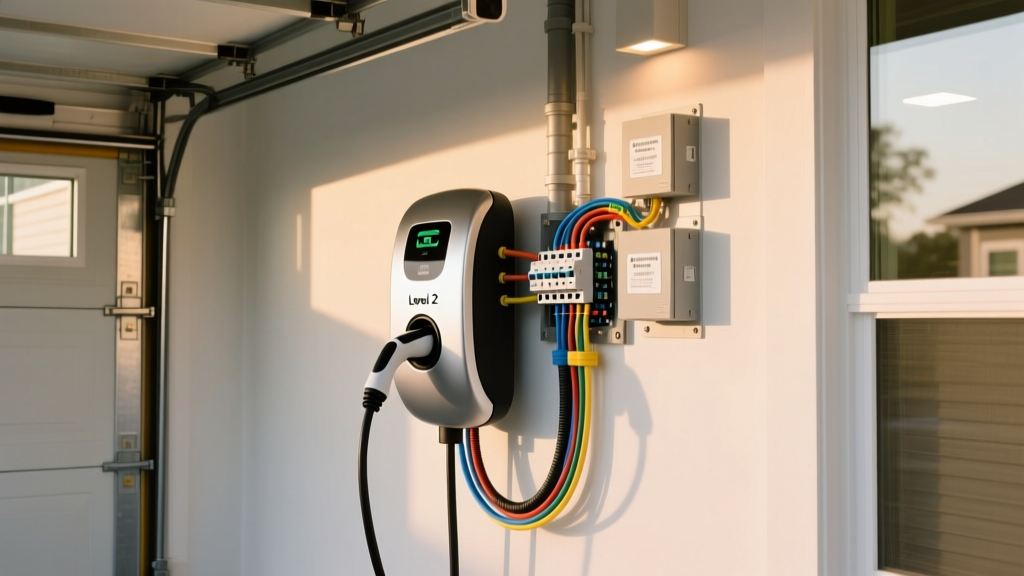
A typical Level 2 charger requires a dedicated 240V circuit. Most 40-amp chargers need a 50-amp breaker (NEC code requires circuits to be rated at 125% of continuous load). If your home has a 100-amp main panel that's already near capacity, you'll likely need a panel upgrade to 200 amps — a significant but one-time cost.
Key safety requirements:
- Dedicated circuit (not shared with other appliances)
- GFCI protection for outdoor installations
- NEMA 14-50 outlet or hardwired connection (hardwired is safer and often required for 48A+ chargers)
- Outdoor-rated enclosure (NEMA 4) if installed outside
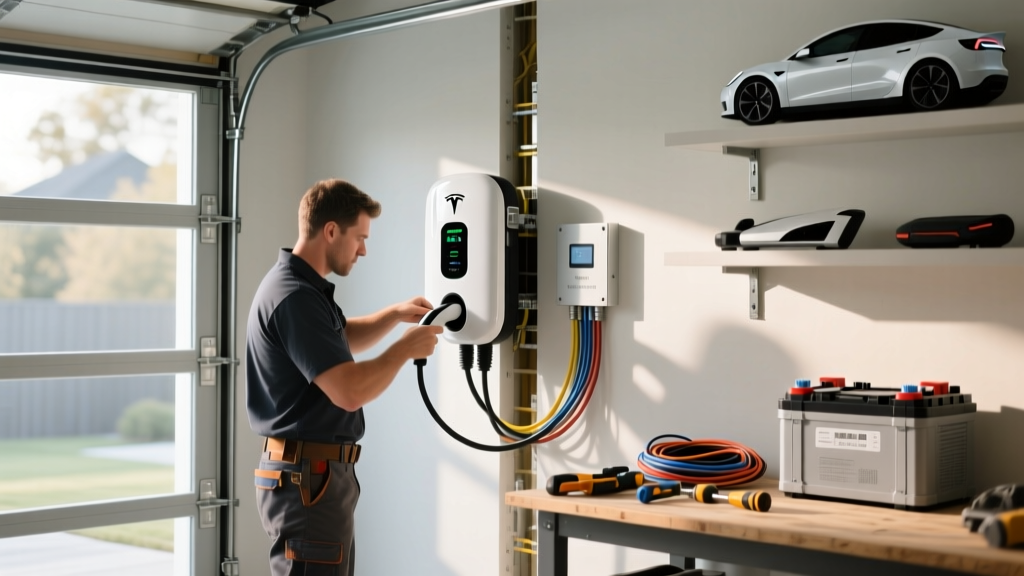
Always hire a licensed electrician familiar with EV charging installations. Some utilities offer rebates covering $250–$1,000 of installation costs — check with your local provider.
Which Connector Is Compatible With My EV?
Connector standards have consolidated significantly by 2026, with NACS (North American Charging Standard, used by Tesla) becoming the dominant standard. Here's what you need to know:
| Connector | Brands Using It | Notes |
|---|---|---|
| NACS (Tesla) | Tesla, Ford, GM, Rivian, Volvo, Polestar, Nissan (2025+), Honda (2025+) | Becoming industry standard; adapters available for CCS vehicles |
| CCS1 | Hyundai, Kia, BMW, VW, Audi, Mercedes, older Nissan Leaf (CHAdeMO) | Still common at public stations; NACS adapters widely available |
| CHAdeMO | Older Nissan Leaf, Mitsubishi Outlander PHEV | Legacy standard; limited new station deployment |
If you're buying a home Level 2 charger in 2026, a NACS-equipped charger is the safest bet for future compatibility. CCS1 vehicles can use a NACS-to-CCS adapter (typically $150–$250). For public DC fast charging, networks like Electrify America and EVgo are adding NACS cables alongside CCS1.
How Much Does EV Charging Cost per Mile vs. Gas?
One of the biggest financial advantages of EV ownership is lower fuel costs — but the savings depend heavily on where and when you charge.
| Scenario | Cost per kWh | Cost per Mile (3.5 mi/kWh EV) | Annual Cost (12,000 mi) |
|---|---|---|---|
| Home charging (national avg electricity) | $0.16/kWh | $0.046/mi | $550 |
| Home charging (off-peak utility rate) | $0.08/kWh | $0.023/mi | $275 |
| Public Level 2 (e.g., ChargePoint) | $0.25–$0.35/kWh | $0.07–$0.10/mi | $840–$1,200 |
| DC Fast Charging (public) | $0.35–$0.55/kWh | $0.10–$0.16/mi | $1,200–$1,920 |
| Gas car (28 MPG avg, $3.50/gal) | $3.50/gal | $0.125/mi | $1,500 |
The takeaway: Home charging, especially on off-peak rates, delivers fuel costs 70–85% lower than gasoline. Public DC fast charging can approach or exceed gas costs, which is why home charging is the financial sweet spot. If you rely primarily on public DC fast charging, your savings shrink significantly.
Many utilities offer time-of-use (TOU) rates that make overnight charging dramatically cheaper. Check if your utility has an EV-specific rate plan — some offer rates as low as $0.05–$0.08/kWh between midnight and 6 AM.
Best Level 2 Home EV Chargers for 2026
Based on reliability, charging speed, smart features, and value, here are top-rated Level 2 chargers for home use:
ChargePoint Home Flex (NACS or CCS1)
- Power: Up to 12 kW (50A) on a 60A circuit
- Connector: NACS or CCS1 (configurable)
- Cable length: 23 feet
- Smart features: Wi-Fi, app scheduling, Alexa integration, load management
- Price: ~$550–$650
Wall Connector (Tesla, NACS)
- Power: Up to 11.5 kW (48A) on a 60A circuit
- Connector: NACS native
- Cable length: 24 feet
- Smart features: Wi-Fi updates, power sharing with multiple units, access control
- Price: ~$475
Emporia Level 2 Charger
- Power: Up to 11.5 kW (48A)
- Connector: NACS or J1772 (with adapter)
- Cable length: 24 feet
- Smart features: Solar integration, energy monitoring, scheduled charging
- Price: ~$400
All three chargers support hardwired installation (recommended for maximum power and safety) or NEMA 14-50 plug-in setups. For homes with solar panels, the Emporia charger's real-time solar-export tracking is a standout feature.
Public Charging Networks: Where to Charge If Not at Costco
While Costco warehouses don't have a standardized charging program, many other retailers do. As of 2026, you'll find reliable public charging at:
- Target: Hundreds of locations with ChargePoint Level 2 and DC fast chargers
- Walmart: Electrify America DC fast chargers at many Supercenters
- Kohl's, Whole Foods, and many grocery chains: Level 2 chargers via ChargePoint or EVgo
- Tesla Supercharger network: 6,000+ U.S. stalls, increasingly open to non-Tesla EVs with NACS adapters
Apps like PlugShare, ChargePoint, and A Better Routeplanner (ABRP) are essential for finding chargers near your shopping destinations. Filter by connector type, power level, and network to avoid surprises.
Frequently Asked Questions
Does Costco have EV chargers in 2026?
Costco does not operate a company-wide EV charging network. A small number of individual warehouses may have third-party chargers (ChargePoint, Electrify America) in their parking lots, but this is not standard. Use PlugShare to check your local Costco before relying on charging there.
How fast will a Level 2 home charger add range?
A typical 48-amp Level 2 charger (11.5 kW) adds roughly 35–45 miles of range per hour of charging for a mid-size EV. Larger vehicles like trucks and SUVs with lower efficiency may see 25–35 miles per hour. An overnight charge (8–10 hours) will fully replenish most EVs.
Is it worth installing a home charger if I rent?
If you rent a single-family home with garage access, a portable Level 2 charger that plugs into a NEMA 14-50 outlet (with landlord permission) can work. For apartments or condos, look into workplace charging or public Level 2 options nearby. Some states and utilities offer incentives for renters who install chargers.
Can I charge my non-Tesla EV at a Tesla Supercharger?
Yes, as of 2026, Tesla has opened many Supercharger stalls to non-Tesla EVs equipped with NACS charge ports or a CCS-to-NACS adapter. Ford, GM, Rivian, and other brands now ship with native NACS ports. Check the Tesla app or your vehicle's navigation for compatible stations.
What's the cheapest way to charge my EV?
Home charging on an off-peak utility rate (overnight, typically midnight–6 AM) is the cheapest option, often $0.05–$0.10/kWh. Some utilities offer special EV rate plans with even lower rates. Avoid relying on public DC fast charging for daily needs — it's the most expensive option and can cost as much as gasoline per mile.
Do I need a permit to install a home EV charger?
Most jurisdictions require an electrical permit for a new 240V circuit. Your electrician will typically pull the permit and arrange for a final inspection. Permit costs range from $50–$200 depending on your locality. Skipping permits can void home insurance coverage and cause issues during a future home sale.
For more information on EV charging infrastructure and incentives, see the U.S. Department of Energy's EV technology resources and your utility's EV rate programs. Federal and state incentives for home charger installation may also be available — check the IRS Alternative Fuel Vehicle Refueling Property Credit for current eligibility rules.