If you've just ordered an electric vehicle — or you're deep in the research phase — you've probably noticed that the included charging cord is slow, public chargers use different plugs, and the jargon around cables, connectors, and kilowatts gets confusing fast. This guide cuts through the noise with exact numbers: what each EV charging cable actually delivers, what your home electrical panel can handle, what installation really costs, and which chargers and cables are worth your money in 2026.
A critical distinction before we start: kW (kilowatts) measures power — the rate at which electricity flows into your battery. kWh (kilowatt-hours) measures energy — the total capacity of your battery. A 9.6 kW charger delivers energy at that rate; a 75 kWh battery holds that much total energy. Mixing these up is the single most common EV mistake. We'll use both correctly throughout.
Charging Levels Explained: Speeds, Cables, and Real-World Range Added
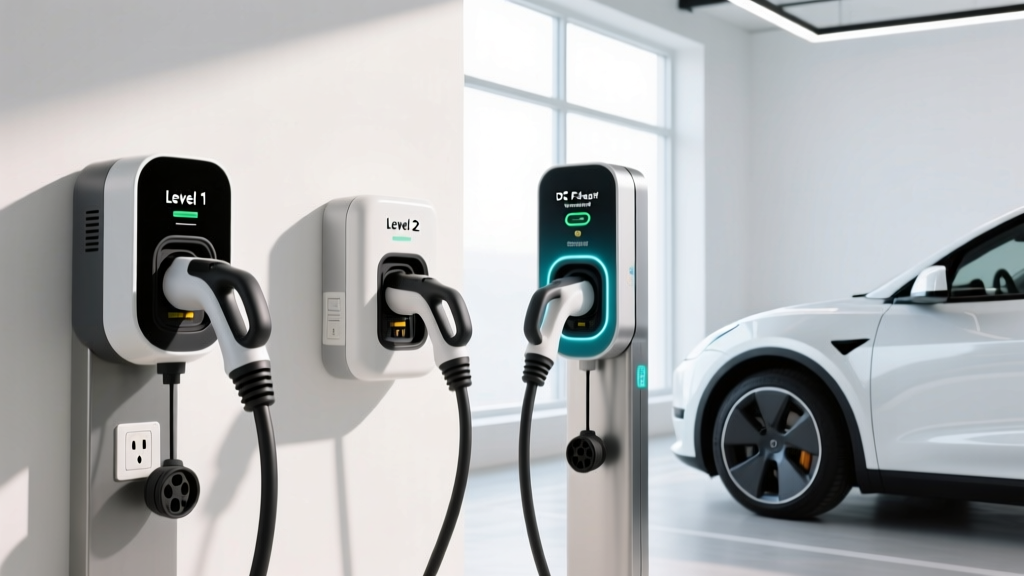
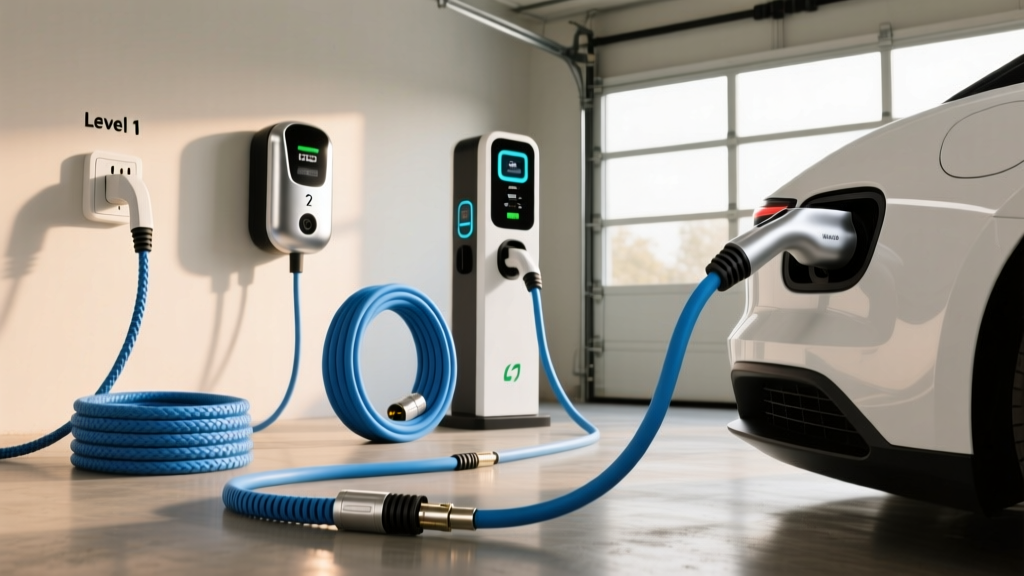
Every EV sold in the US charges at one of three levels. The cable you use — and the circuit it connects to — determines how quickly your battery refills. Here's the full breakdown with real-world range gains based on an average EV efficiency of 3.0 miles per kWh (roughly what a Tesla Model Y, Hyundai Ioniq 5, or Ford Mustang Mach-E achieves in mixed driving).
| Level | Voltage / Amperage | Max Power (kW) | Miles of Range Added Per Hour | Typical Use Case |
|---|---|---|---|---|
| Level 1 | 120V / 12A | 1.4 kW | 3–5 mi/hr | Overnight top-ups, PHEVs, emergency backup |
| Level 2 | 240V / 16A–48A | 3.8–11.5 kW | 12–37 mi/hr | Daily home charging, workplace, destinations |
| DC Fast Charge | 200–900V DC | 50–350 kW | 150–700+ mi/hr (peak) | Road trips, rapid top-ups, commercial fleets |
Charging Time Examples by Battery Size
To ground this in reality, here's how long common EV battery sizes take to charge at each level, from 10% to 80% state of charge (the practical daily window most owners use to preserve battery longevity):
- 60 kWh battery (e.g., base Chevrolet Equinox EV): Level 1 ~29 hrs | Level 2 at 9.6 kW ~4.5 hrs | 150 kW DCFC ~24 min
- 75 kWh battery (e.g., Tesla Model Y Long Range): Level 1 ~37 hrs | Level 2 at 11.5 kW ~4.5 hrs | 250 kW DCFC ~20 min
- 100 kWh battery (e.g., Ford F-150 Lightning Extended Range): Level 1 ~50 hrs | Level 2 at 11.5 kW ~6 hrs | 150 kW DCFC ~45 min
Level 1 is essentially unusable for BEVs with large batteries — it's a trickle meant for plug-in hybrids with 10–18 kWh batteries or for emergencies. For any battery-electric vehicle, Level 2 at home is the standard.
Home EV Charger Installation: Electrical Requirements and Real Costs
Installing a Level 2 home charger is one of the highest-value upgrades an EV owner can make. It transforms daily charging from a chore into something that happens automatically while you sleep. But costs vary widely depending on your home's electrical panel, the distance from panel to charger location, and local permitting.
Electrical Requirements for Level 2 Charging
A Level 2 charger requires a 240-volt dedicated circuit — the same type of circuit that powers your electric dryer or oven. The most common configurations:
- NEMA 14-50 outlet (50A circuit, 40A continuous): The most popular setup. Supports chargers up to 9.6 kW. The outlet lets you unplug the charger and take it if you move.
- Hardwired 60A circuit (48A continuous): Required for 11.5 kW chargers. More permanent, slightly more efficient (no plug connection loss), and often preferred by electricians for higher-amperage installs.
- NEMA 6-20 outlet (20A circuit, 16A continuous): A budget option delivering 3.8 kW. Adequate for PHEVs or low-mileage BEV drivers, and cheaper to install since it doesn't require a panel upgrade in most homes.
National Electrical Code (NEC) rule: EV chargers are considered continuous loads, meaning the circuit must be rated at 125% of the charger's maximum draw. A 40A charger needs a 50A circuit. A 48A charger needs a 60A circuit. Your electrician will size this correctly, but it's worth understanding so you don't under-spec.
Do You Need a Panel Upgrade?
This is the single biggest cost variable. Most homes built after 1990 have a 200A main panel, which usually has enough spare capacity for a 50A EV circuit. Older homes with 100A service — or newer homes already running electric heat, an electric dryer, and an electric range simultaneously — may need a panel upgrade to 200A, or a smart load-management device that throttles the charger when other heavy loads are running.
Load-management devices (like the Emporia Load Management Kit or the Span smart panel) cost $200–$600 plus installation and can avoid a full panel upgrade that runs $2,000–$4,000. Ask your electrician to perform a load calculation before quoting — this is standard practice and often required by the permitting authority.
Home Charger Installation Cost Breakdown
| Cost Component | Simple Install (panel nearby, no upgrade) | Moderate Install (50+ ft run, outlet) | Complex Install (panel upgrade needed) |
|---|---|---|---|
| Level 2 Charger Equipment | $350–$700 | $350–$700 | $350–$700 |
| Electrician Labor (2–6 hrs @ $85–$150/hr) | $250–$500 | $500–$900 | $400–$800 |
| Materials (conduit, wire, outlet/breaker) | $50–$150 | $150–$400 | $150–$400 |
| Permit Fee | $50–$150 | $50–$150 | $50–$150 |
| Panel Upgrade (if needed) | — | — | $2,000–$4,000 |
| Total Estimated Cost | $700–$1,500 | $1,050–$2,150 | $2,950–$6,050 |
Some utility companies offer rebates of $200–$500 for Level 2 charger installations, and certain states provide additional incentives. Check with your local utility and your state energy office — these can meaningfully offset costs. The Alternative Fuels Data Center maintains a state-by-state incentive database.
EV Charging Cable Connectors: NACS, CCS, CHAdeMO Compatibility
The connector landscape shifted dramatically between 2023 and 2026. What began as a fragmented three-standard market has consolidated heavily toward NACS (the North American Charging Standard, originally Tesla's proprietary connector). Here's where things stand now:
| Connector | AC Level 2 Charging | DC Fast Charging | Vehicle Brands Using It (2026) |
|---|---|---|---|
| NACS (J3400) | Yes | Yes | Tesla (all), Ford, GM, Rivian, Volvo, Polestar, Hyundai/Kia (new models), Mercedes-Benz, BMW (new models), Nissan (new Ariya+) |
| CCS1 (Combo) | Via J1772 AC + DC pins | Yes | Legacy models: older Hyundai/Kia, VW ID.4 (pre-2026), BMW i4/iX (pre-NACS), Stellantis, some Honda |
| CHAdeMO | Separate J1772 for AC | Yes (declining) | Legacy Nissan Leaf, Mitsubishi Outlander PHEV — essentially discontinued for new vehicles |
Adapter Needs in 2026
If you own a CCS-equipped EV, you'll likely need a CCS-to-NACS adapter (such as the Ford-provided adapter or Tesla's Magic Dock at Superchargers) to access Tesla Supercharger stations, which now outnumber all other DC fast networks combined. These adapters cost $200–$250 and are sometimes provided free by automakers to existing owners. Check your manufacturer's EV owner portal.
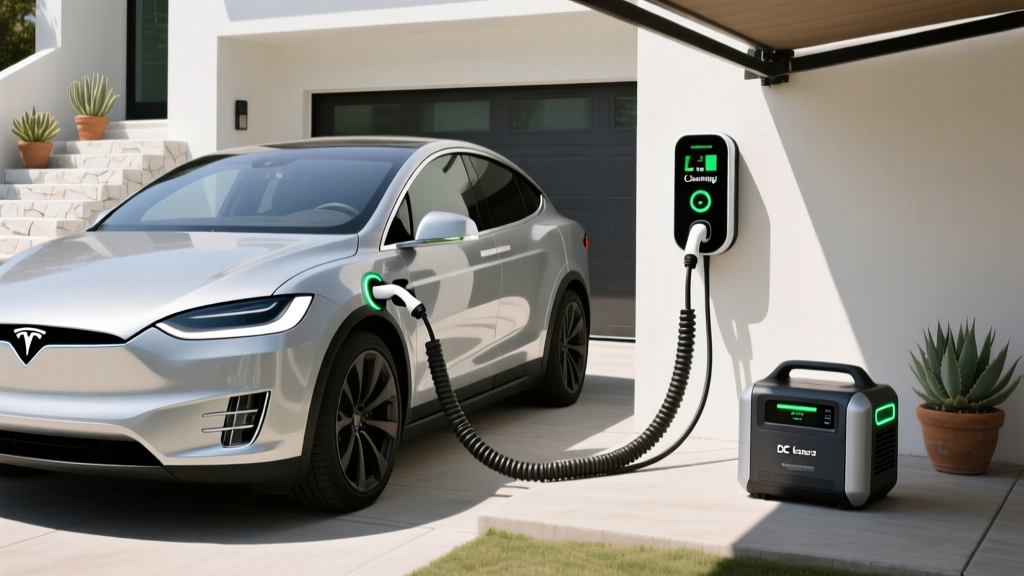
For Level 2 home charging, NACS vehicles use the NACS connector natively. CCS/J1772 vehicles use a J1772 connector. Some universal chargers (like the Lectron V-BOX Pro) include swappable connector heads. Most dedicated home chargers come with one fixed connector type — order the one that matches your vehicle.
Cable Length Matters
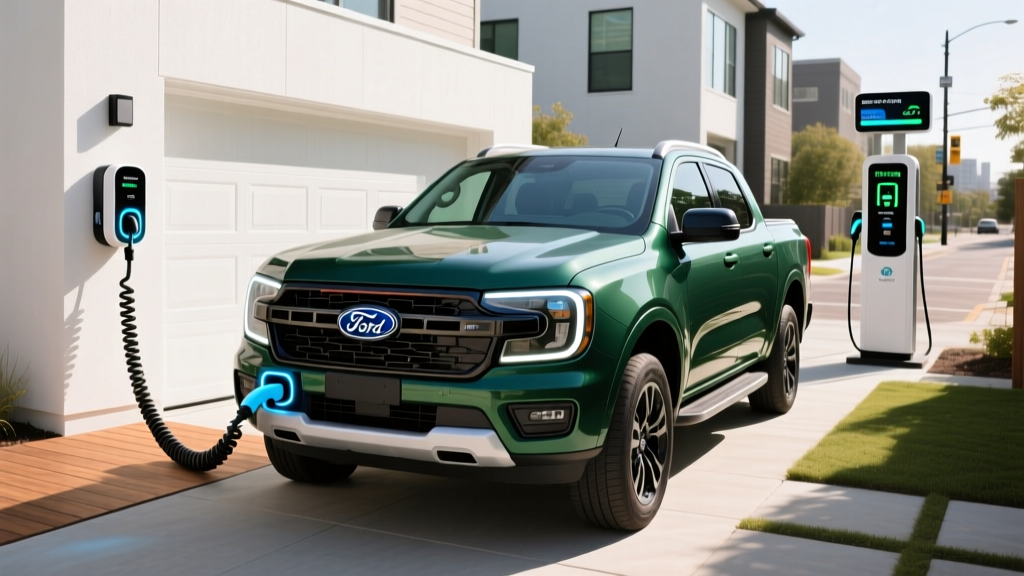
Home charging cables typically come in 18-foot and 25-foot lengths. The 25-foot cable is strongly recommended for most garage installations — it provides flexibility if you park in different spots or charge two vehicles. For outdoor driveway installations, measure from your planned charger mount to your vehicle's charge port before ordering. Some vehicles (like the Hyundai Ioniq 5) have the port on the rear quarter panel, which can require more cable reach than a front-fender port.
Cost to Charge: Per-Mile Cost vs. Gasoline
One of the strongest arguments for EV ownership is lower fueling cost — but the savings depend heavily on where and when you charge. Here are realistic 2026 scenarios using an EV averaging 3.0 mi/kWh and a comparable gas vehicle at 28 MPG combined:
| Charging Scenario | Typical $/kWh | Cost Per Mile (EV) | Cost Per Mile (Gas @ $3.40/gal, 28 MPG) | Annual Savings (12,000 mi/yr) |
|---|---|---|---|---|
| Home, off-peak utility rate | $0.08–$0.14 | $0.027–$0.047 | $0.121 | $890–$1,130 |
| Home, standard rate (no TOU) | $0.14–$0.20 | $0.047–$0.067 | $0.121 | $650–$890 |
| Public Level 2 (workplace, retail) | $0.20–$0.35 | $0.067–$0.117 | $0.121 | $50–$650 |
| DC Fast Charging (Electrify America, EVgo) | $0.35–$0.55 | $0.117–$0.183 | $0.121 | -$740 to +$50 |
Best EV Charging Cables and Home Chargers: 2026 Equipment Picks
Based on power output, cable quality, connector options, smart features, build durability, and real-world reliability reports, here are the home Level 2 chargers we recommend for most EV owners:
ChargePoint Home Flex (2nd Gen)
- Power Output: Up to 11.5 kW (48A) on a 60A circuit; adjustable down to 16A
- Connector: Available in NACS or J1772
- Cable Length: 24 feet
- Smart Features: Wi-Fi, app scheduling, energy tracking, Alexa/Google Home integration, load sharing between two units
- Price: ~$550–$650
- Best For: Most EV owners wanting a reliable, feature-rich smart charger with flexible amperage
Emporia Vue Level 2 EV Charger
- Power Output: Up to 11.5 kW (48A) on a 60A circuit
- Connector: J1772 (NACS adapter available)
- Cable Length: 24 feet
- Smart Features: Integrated with Emporia energy monitoring, solar-aware charging, time-of-use optimization, load management kit available
- Price: ~$400–$500
- Best For: Budget-conscious buyers and homes with solar panels or Emporia whole-home energy monitors
Tesla Wall Connector (Gen 4)
- Power Output: Up to 11.5 kW (48A) on a 60A circuit
- Connector: NACS (native Tesla)
- Cable Length: 24 feet
- Smart Features: Wi-Fi, OTA firmware updates, Power-Sharing (up to 6 units on one circuit), access control
- Price: ~$475
- Best For: Tesla owners and NACS-equipped vehicles; cleanest integration for Tesla ecosystem users
Grizzl-E Smart (United Chargers)
- Power Output: Up to 10 kW (40A) on a 50A circuit
- Connector: J1772 or NACS
- Cable Length: 24 feet
- Smart Features: OCPP-compatible, app control, RFID access, built-in load management
- Price: ~$500–$600
- Best For: Outdoor installations (IP67-rated, -40°C to +50°C operating range), cold-climate durability
Portable EV Charging Cables Worth Carrying
Beyond your home wall unit, keeping a portable Level 2 charging cable in your trunk is practical for travel and workplace charging. The Lectron V-BOX Pro ($300–$380) delivers up to 40A on a NEMA 14-50 outlet and includes both J1772 and NACS connector options. The Emporia Portable EV Charger ($250–$300) offers 32A with a 20-foot cable and basic app connectivity. Both are significantly faster than the Level 1 cord that ships with most EVs.
Safety, Code Compliance, and Installation Best Practices
A properly installed home charger should last 10–15 years with minimal maintenance. Getting the installation right the first time protects your home, your vehicle, and your insurance coverage:
- Dedicated circuit: Your EV charger must be on its own dedicated breaker — never shared with other appliances. This prevents nuisance tripping and overheating.
- GFCI protection: NEC 2023 and later editions require GFCI (Ground Fault Circuit Interrupter) protection for all EV charging outlets. Hardwired chargers typically have GFCI built into the unit. If your electrician installs a NEMA 14-50 receptacle, a GFCI breaker is required — these cost $50–$90 more than standard breakers.
- Outdoor rating: If mounting outside, ensure the charger is rated at least IP55 (splash-resistant) or IP67 (submersible). Cable management hooks prevent the cable from sitting on wet ground.
- Permit and inspection: Most jurisdictions require an electrical permit for EV charger installation ($50–$150). The inspection verifies code compliance — skipping this can void homeowner's insurance claims related to electrical fires. Your electrician typically handles permit filing.
- Wire gauge: For a 50A circuit, 6 AWG copper wire is standard. For a 60A circuit, 4 AWG copper is required. Undersized wire is a fire hazard — this is why professional installation matters.
EV Charging Cables FAQ
How much does it cost to install a home EV charger?
A straightforward Level 2 home charger installation with an existing 200A panel and a short wire run typically costs $700–$1,500 including equipment, electrician labor, materials, and permit. If the panel is far from the charger location or a 60A circuit is needed, expect $1,050–$2,150. Homes requiring a panel upgrade to 200A should budget $2,950–$6,050 total. Utility rebates of $200–$500 are available in many areas.
How fast will each charging level add range?
Level 1 (120V) adds 3–5 miles of range per hour — adequate only for PHEVs or emergencies. Level 2 (240V) adds 12–37 miles per hour depending on amperage, easily refilling most EVs overnight. DC fast charging adds 150–700+ miles per hour at peak speed, but tapers significantly above 80% state of charge, so a realistic 10–80% session takes 18–45 minutes depending on battery size and charger power.
Which connector and charger is compatible with my EV?
In 2026, most new EVs use the NACS connector for both AC and DC charging. Older models from Hyundai, Kia, Volkswagen, and BMW may use CCS1. The Nissan Leaf uses CHAdeMO. Check your vehicle's charge port or owner's manual. For home charging, match your charger's connector to your vehicle — or use an adapter. A CCS-to-NACS adapter ($200–$250) lets CCS vehicles access Tesla Superchargers.
How much does EV charging cost per mile compared to gas?
At typical residential off-peak electricity rates ($0.08–$0.14/kWh), EV charging costs $0.03–$0.05 per mile — roughly a quarter of what gasoline costs at $3.40/gallon and 28 MPG ($0.12/mile). Annual savings for a driver covering 12,000 miles are $890–$1,130 with home charging. However, exclusive reliance on DC fast charging at $0.45+/kWh can cost as much as or more than gasoline.
What electrical upgrades might I need for a home charger?
If your home has a 200A electrical panel with sufficient spare capacity, no upgrade is needed — a 50A or 60A dedicated circuit can be added directly. Homes with 100A service, or 200A panels already near capacity (electric heat, dryer, range, pool equipment), may need a panel upgrade ($2,000–$4,000) or a smart load-management device ($200–$600 plus installation) that dynamically reduces charger power when other loads are active. A licensed electrician will perform a load calculation to determine your specific needs.
Can I use the Level 1 charging cable that came with my EV?
Yes, but it's slow. The included Level 1 cable (120V, 12A, 1.4 kW) adds only 3–5 miles of range per hour. For a 75 kWh battery going from 10% to 80%, that's roughly 37 hours — impractical for daily BEV use. It works fine for plug-in hybrids with small batteries (10–18 kWh) that can fully recharge overnight, or as a backup for BEV owners with reliable Level 2 access at home or work.
Is it safe to leave my EV plugged in overnight or for days?
Yes. Modern EVs and Level 2 chargers manage charging automatically — the vehicle stops drawing power once the target state of charge is reached. Most EV manufacturers recommend setting a daily charge limit of 80% for NMC battery chemistry to maximize long-term battery health (LFP batteries can safely charge to 100% daily). Leaving your EV plugged in also allows the thermal management system to maintain battery temperature in extreme weather without depleting the battery. For more on battery care, see the manufacturer guidance on Tesla's battery care page or your specific brand's EV owner portal.