Your electric vehicle charging cable is the single most important accessory you'll interact with as an EV owner. Whether you're plugging in overnight at home, topping up at a public Level 2 station, or pulling into a DC fast-charging plaza, understanding cable types, charging speeds, and home electrical requirements determines how conveniently — and affordably — you'll keep your vehicle powered.
This guide breaks down every charging level with exact kW figures, maps connector compatibility across current 2026 models, walks through real home installation costs (including the panel upgrades many buyers overlook), and calculates true cost-per-mile versus gasoline.
Charging Levels Explained: Speed, Power, and Range Added Per Hour
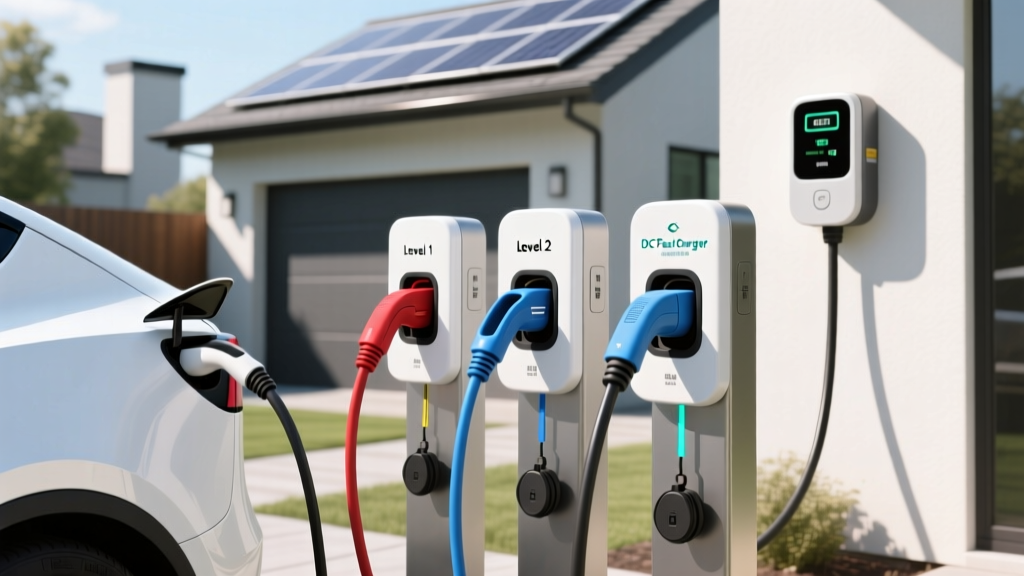
EV charging happens at three distinct levels. The critical distinction to understand first: kW (kilowatts) measures power — how fast energy flows into your vehicle — while kWh (kilowatt-hours) measures energy — how much your battery holds. Think of kW as the width of a hose and kWh as the size of the bucket.
| Level | Voltage | Power (kW) | Miles of Range Added/Hour | Best Use Case |
|---|---|---|---|---|
| Level 1 | 120V AC | 1.2–1.9 kW | 3–5 miles | Overnight top-up, PHEVs, low daily mileage |
| Level 2 | 240V AC | 3.3–19.2 kW | 12–75 miles | Home daily charging, workplace, public destinations |
| DC Fast Charge | 400–800V DC | 50–350 kW | 150–1,000+ miles (equivalent rate) | Road trips, rapid top-ups, 10–80% in 15–30 min |
Level 1 uses a standard household 120V outlet and the portable cable that ships with most EVs. It's painfully slow for battery-electric vehicles — a 75 kWh battery like the one in a Ford Mustang Mach-E would take over 50 hours from empty to full. But for a PHEV with a 15–40 mile electric range, Level 1 overnight charging is often sufficient.
Level 2 is where most daily charging happens. A 48-amp (11.5 kW) home charger adds roughly 35–45 miles of range per hour for a typical midsize EV. That means a full overnight session easily replenishes 200+ miles — more than most drivers use in a day.
DC fast charging bypasses the vehicle's onboard charger and feeds direct current straight to the battery. Peak speeds vary enormously: a Hyundai Ioniq 5 on an 800V architecture can peak at 240 kW and reach 10–80% in roughly 18 minutes, while a first-generation Nissan Leaf on CHAdeMO tops out near 50 kW and takes 45–60 minutes for the same session.
Real-world charging note: Peak kW is not sustained kW. DC fast chargers taper significantly above 80% State of Charge (SoC) to protect battery health. A charger rated at 150 kW may only sustain that rate between 10–50% SoC, then drop to 40–60 kW through the final stretch. Always plan road trips around 10–80% sessions — the last 20% can take as long as the first 70%.
Electric Vehicle Charging Cable Connectors: Which One Fits Your EV?
The connector landscape in North America has shifted dramatically. Tesla's North American Charging Standard (NACS) has been adopted by Ford, GM, Rivian, Volvo, Polestar, Mercedes-Benz, BMW, and most other major automakers starting with 2025–2026 model-year vehicles. CCS1 (Combined Charging System) remains on many vehicles sold before this transition, and CHAdeMO is now effectively legacy — limited to the Nissan Leaf and a handful of older models.
| Connector | AC Level 2 Charging | DC Fast Charging | Vehicle Examples (2026) | Adapter Needed? |
|---|---|---|---|---|
| NACS (Tesla standard) | Yes | Yes (Tesla Superchargers + NACS-equipped public stations) | Tesla Model 3/Y/S/X, Ford F-150 Lightning, GM Ultium vehicles, Rivian R1T/R1S, Hyundai Ioniq 5 (2026+) | CCS-to-NACS adapters available for older non-Tesla vehicles |
| CCS1 | Yes (J1772 + DC pins) | Yes (Electrify America, EVgo, ChargePoint DC) | VW ID.4 (pre-2025), older Hyundai/Kia models, BMW i4 (pre-NACS transition) | NACS-to-CCS adapters for Tesla Supercharger access |
| CHAdeMO | Yes (J1772 for AC) | Yes (declining network) | Nissan Leaf (all years), Mitsubishi Outlander PHEV (older) | No reliable CHAdeMO-to-NACS adapter exists |
For Level 2 AC charging at home, nearly all non-Tesla EVs built before 2025 use the J1772 connector. Tesla vehicles use a proprietary connector that accepts J1772 via a small adapter included with every Tesla. With the NACS transition, new 2026 vehicles from most automakers now ship with the NACS port natively — meaning one cable handles both home AC and Supercharger DC.
If you're buying a home charger in 2026, choose the connector that matches your vehicle's native port. If you own a CCS-equipped vehicle and want Tesla Supercharger access, Ford and other automakers offer official CCS-to-NACS adapters (typically $200–$300). Always verify adapter compatibility with your specific model year before purchasing.
Home Charger Installation: Electrical Requirements and Real Costs
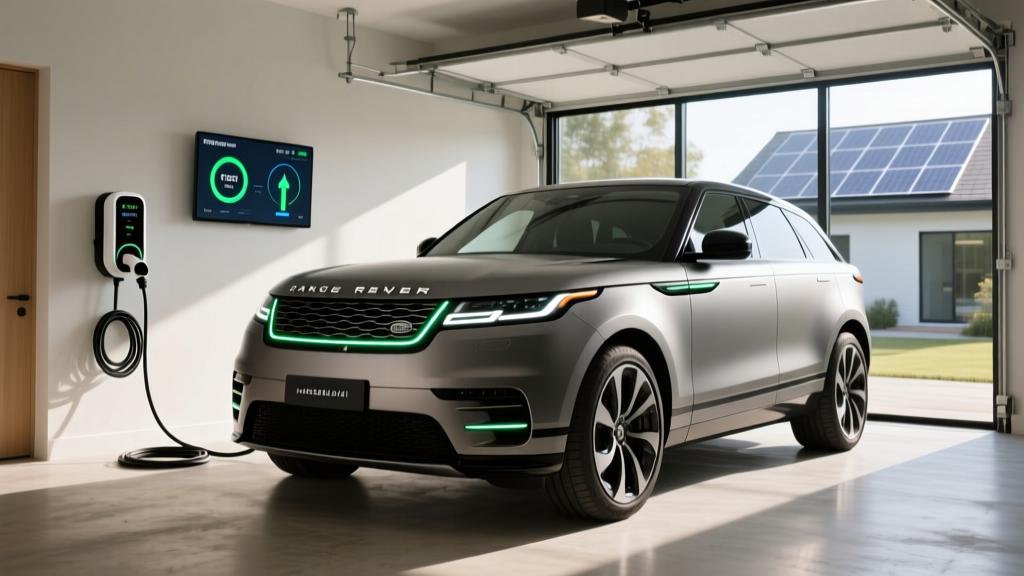
Installing a Level 2 home charger is an electrical project, not just a purchase. The total cost depends on your home's electrical panel capacity, the distance from panel to charger location, and local permitting requirements.
Electrical Requirements
A typical Level 2 charger runs on a 240V dedicated circuit — the same voltage as your electric dryer or oven. Common circuit sizes include:
- 20-amp circuit: Supports up to 16A continuous (3.8 kW) — adequate for PHEVs and low-mileage BEV drivers
- 40-amp circuit: Supports up to 32A continuous (7.7 kW) — the most common home setup, adds ~25–30 miles/hour
- 50-amp circuit: Supports up to 40A continuous (9.6 kW) — faster charging for larger batteries
- 60-amp circuit: Supports up to 48A continuous (11.5 kW) — maximum typical residential Level 2 speed
Per the National Electrical Code (NEC), EV chargers are considered continuous loads, meaning the circuit must be rated for 125% of the charger's maximum draw. A 48-amp charger requires a 60-amp breaker. Your electrician will verify this.
Panel Upgrade Reality
Many homes built before 2000 have 100-amp or even 60-amp main service panels. Adding a 40–60 amp dedicated EV circuit to a panel already running central AC, an electric range, and a dryer may exceed capacity. A panel upgrade to 200 amps costs $1,500–$3,500 depending on your region and utility requirements. Some homeowners opt for a smart load-management system (like the Span panel or a DCC-10 from Wallbox) that shares capacity between the charger and other appliances, avoiding a full upgrade.
Installation Cost Breakdown
| Component | Typical Cost Range | Notes |
|---|---|---|
| Level 2 Charger (hardware) | $300–$750 | Varies by power output, cable length, smart features |
| Electrician labor (standard install) | $500–$1,500 | Assumes panel has capacity; 10–30 ft run from panel |
| Permit and inspection | $50–$250 | Required in most jurisdictions; varies by municipality |
| Electrical panel upgrade (if needed) | $1,500–$3,500 | 200A upgrade; may not be needed in newer homes |
| Conduit and wiring (long runs) | $200–$800 | Added cost if charger is far from panel (50+ ft) |
| Total (no panel upgrade) | $850–$2,500 | Most common scenario for homes with adequate panel capacity |
| Total (with panel upgrade) | $2,350–$6,000 | Older homes or high-load panels |
Always get at least two quotes from licensed electricians experienced with EV charger installations. Ask specifically whether the quote includes permit fees, whether your panel has adequate headroom, and whether a load calculation was performed. According to the U.S. Department of Energy, some utilities offer rebates of $250–$1,000 for home charger installation, which can offset a significant portion of these costs.
Cost to Charge: Per-Mile Analysis vs. Gasoline
One of the most compelling EV ownership arguments is fuel cost savings — but the actual number depends heavily on where and when you charge.
| Charging Scenario | Cost per kWh | Cost to Add 200 Miles (3.5 mi/kWh EV) | Cost per Mile |
|---|---|---|---|
| Home (off-peak utility rate) | $0.08–$0.14 | $4.57–$8.00 | $0.023–$0.04 |
| Home (standard rate, no TOU) | $0.14–$0.20 | $8.00–$11.43 | $0.04–$0.057 |
| Public Level 2 (network pricing) | $0.25–$0.49 | $14.29–$28.00 | $0.07–$0.14 |
| DC Fast Charge (public) | $0.30–$0.60 | $17.14–$34.29 | $0.086–$0.17 |
| Gasoline vehicle (28 MPG, $3.40/gal) | — | $24.29 | $0.121 |
Home charging on a time-of-use (TOU) plan during off-peak hours delivers the lowest cost per mile — typically 2–4 cents, roughly one-third to one-quarter the cost of gasoline per mile. Public DC fast charging, however, can approach or even exceed gasoline costs per mile in high-price markets like California. The economic case for EV ownership is strongest when you can charge at home most nights.
For a driver covering 12,000 miles per year, home charging at $0.12/kWh with a vehicle averaging 3.5 miles per kWh costs approximately $411 annually. A comparable 28 MPG gasoline vehicle at $3.40/gallon costs $1,457. That's over $1,000 in annual fuel savings — and the gap widens as gas prices rise. Use the DOE's fueleconomy.gov EV calculator to compare your specific vehicle and local electricity rates.
Charging Time Examples: 10–80% Sessions for Common Battery Sizes
Here's how long realistic 10–80% charging sessions take across common battery sizes and charger types. These figures assume sustained average power — actual times vary with battery temperature, SoC, and charger availability.
| Vehicle (Battery Size) | Level 2 @ 11.5 kW (48A) | DC Fast @ 150 kW | DC Fast @ 250–350 kW |
|---|---|---|---|
| Chevrolet Equinox EV (85 kWh usable) | ~5.5 hours | ~32 min (10–80%) | ~22 min (on capable stations) |
| Hyundai Ioniq 5 (77.4 kWh, 800V) | ~5 hours | ~22 min (10–80%) | ~18 min (10–80% at 240 kW peak) |
| Tesla Model Y Long Range (~75 kWh usable) | ~4.8 hours | ~28 min (10–80%) | ~22 min (V3 Supercharger, 250 kW peak) |
| Ford F-150 Lightning Extended Range (131 kWh) | ~8.5 hours | ~45 min (10–80%) | ~38 min (at 170+ kW stations) |
| Toyota RAV4 PHEV (18.1 kWh) | ~2 hours (full charge) | N/A (no DC fast) | N/A |
For overnight home charging, Level 2 at 40–48 amps replenishes most EVs completely in 5–9 hours. That's the target: wake up every morning with a full battery. DC fast charging is a road-trip tool, not a daily routine — frequent 100% DC fast charging accelerates battery degradation due to sustained high temperatures and high C-rates.
Recommended Home Chargers for 2026
ChargePoint Home Flex
- Power: Up to 12 kW (50A) — configurable from 16A to 50A
- Connector: J1772 (CCS) or NACS available
- Cable length: 24 feet
- Smart features: Wi-Fi, scheduling, Alexa integration, energy tracking
- Price: ~$550–$650
- Best for: Flexible amperage lets you match your circuit without overspending
Wallbox Pulsar Plus
- Power: Up to 11.5 kW (48A)
- Connector: J1772 or NACS
- Cable length: 25 feet
- Smart features: Wi-Fi + Bluetooth, load balancing, solar integration, compact form factor
- Price: ~$450–$550
- Best for: Smaller garages, homes with solar panels, budget-conscious buyers
Tesla Wall Connector
- Power: Up to 11.5 kW (48A)
- Connector: NACS native; J1772 adapter included
- Cable length: 24 feet
- Smart features: Wi-Fi, OTA updates, power sharing between multiple units, Tesla app integration
- Price: ~$475
- Best for: Tesla owners and multi-Tesla households; cleanest NACS-native experience
Emporia Level 2 EV Charger
- Power: Up to 11.5 kW (48A)
- Connector: J1772 (NACS via adapter)
- Cable length: 24 feet
- Smart features: Wi-Fi, real-time energy monitoring, integrates with Emporia home energy system
- Price: ~$350–$400
- Best for: Value pick; excellent energy monitoring at a lower price point
When selecting a charger, match the amperage to your installed circuit (remember the 125% NEC rule), confirm connector compatibility with your vehicle, and prioritize UL-listed or ETL-certified units. Avoid no-name chargers from online marketplaces — they may lack required safety certifications and can void home insurance coverage in the event of an electrical fire.
Safety and Electrical Code Considerations
EV charging places a sustained high-current load on your home's electrical system — far longer than a dryer cycle or oven use. Proper installation isn't optional; it's a safety requirement.
- Dedicated circuit: Your EV charger must have its own dedicated breaker — never share a circuit with other appliances.
- GFCI protection: NEC 2020 and later require GFCI (Ground Fault Circuit Interrupter) protection for outdoor receptacles used for EV charging. Many modern hardwired chargers include built-in ground-fault protection; if you use a plug-in charger on an outdoor 240V receptacle, your breaker must be GFCI-type.
- Outdoor rating: If your charger is installed outside (driveway or exterior wall), it must carry a NEMA 4 or IP65 rating for weather resistance. All recommended chargers above meet this standard.
- Hardwired vs. plug-in: Hardwired installations (no plug, direct connection to junction box) are preferred for 48A+ chargers because they avoid the heat and connection-loss issues associated with NEMA 14-50 receptacles under continuous load. The National Fire Protection Association (NFPA) publishes the NEC guidelines your electrician will follow.
- Permit and inspection: Most municipalities require a permit and post-installation inspection for any new 240V circuit. Skipping this step risks insurance claim denial and code violations that surface during a home sale.
Frequently Asked Questions
How much does it cost to install a home EV charger?
A standard Level 2 home charger installation typically costs $850–$2,500 when your electrical panel has adequate capacity. This includes the charger ($300–$750), electrician labor ($500–$1,500), and permit fees ($50–$250). If your home requires a 200-amp panel upgrade — common in older homes — add $1,500–$3,500, bringing the total to $2,350–$6,000. Utility rebates and state incentives can offset $250–$1,000 of this cost.
How fast will each charging level add range?
Level 1 (120V) adds 3–5 miles of range per hour. Level 2 (240V, 40–48A) adds 25–45 miles per hour depending on the vehicle's efficiency. DC fast charging doesn't measure well in miles-per-hour since sessions are short, but a 150 kW charger can add 150–200 miles in 15–20 minutes, while a 350 kW charger on an 800V vehicle like the Ioniq 5 can add 200+ miles in under 15 minutes at peak rate.
Which connector and charger is compatible with my EV?
Check your vehicle's charge port. For 2025–2026 models, most new EVs from Tesla, Ford, GM, Rivian, Hyundai, Kia, and others now use NACS. Older or pre-transition models typically use CCS1 (J1772 for AC + two DC pins). The Nissan Leaf uniquely uses CHAdeMO for DC. Match your home charger's connector to your vehicle's native port, or use a manufacturer-approved adapter. Tesla Wall Connectors include a J1772 adapter for non-Tesla use.
How much does charging cost per mile vs. gas?
Home charging on an off-peak rate ($0.08–$0.14/kWh) costs 2–4 cents per mile for an EV averaging 3.5 miles per kWh. Public DC fast charging at $0.30–$0.60/kWh costs 9–17 cents per mile. A comparable 28 MPG gasoline vehicle at $3.40/gallon costs about 12 cents per mile. Home charging delivers the strongest savings — roughly 70–80% less per mile than gasoline.
What electrical upgrades might I need?
The most common upgrade is a panel capacity increase from 100A to 200A service, needed when your existing panel can't accommodate a new 40–60A dedicated circuit alongside existing loads. Other potential upgrades include: running new conduit for long distances from panel to garage ($200–$800), installing a GFCI breaker for outdoor receptacles ($50–$150), or adding a smart load-management system to avoid a panel upgrade entirely ($400–$1,200 for hardware). Your electrician should perform a load calculation before recommending any upgrade.
Is a portable Level 1 cable enough for daily use?
For PHEVs with 25–45 miles of electric range, the included Level 1 cable charging overnight on a standard 120V outlet is usually sufficient — it adds 30–50 miles in 10–12 hours. For a full battery-electric vehicle with a 250+ mile battery, Level 1 adds only 35–50 miles overnight, which works if your daily driving is under 40 miles but becomes impractical for anything beyond a minimal commute. Most BEV owners find Level 2 essential for convenient ownership.
The right electric vehicle charging cable setup comes down to three decisions: matching your vehicle's connector (NACS or CCS), installing a Level 2 circuit sized to your daily mileage needs (40A covers most drivers), and choosing a UL-certified charger from a reputable manufacturer. Get a professional load calculation before purchasing hardware, factor in panel-upgrade costs if your home is older, and prioritize off-peak home charging to maximize your per-mile savings. For the latest federal incentive rules on charger installation, check the IRS residential clean energy credit page — the §30C alternative fuel infrastructure credit can cover up to 30% of home charger equipment and installation costs (up to $1,000) for eligible taxpayers in qualifying census tracts.