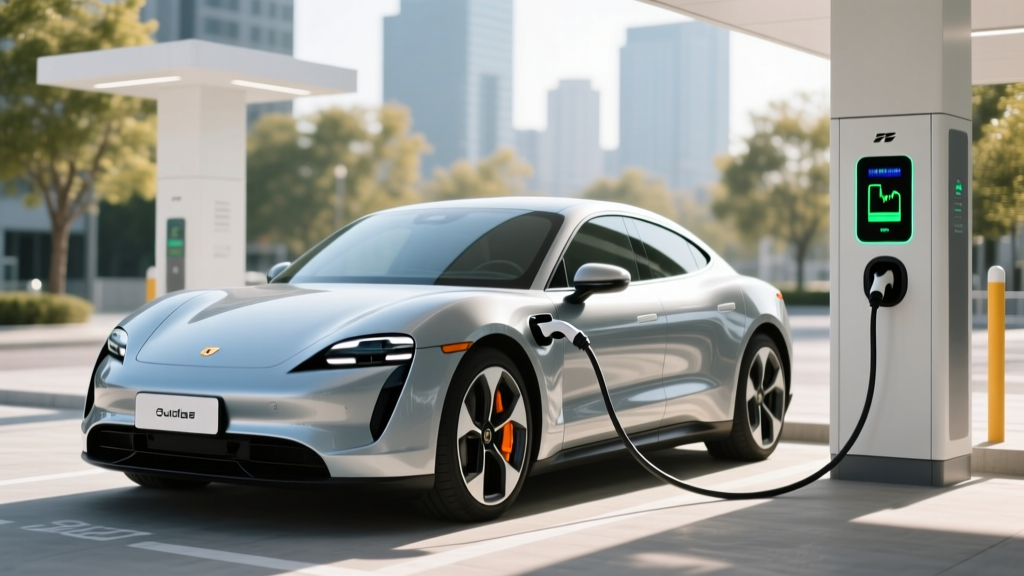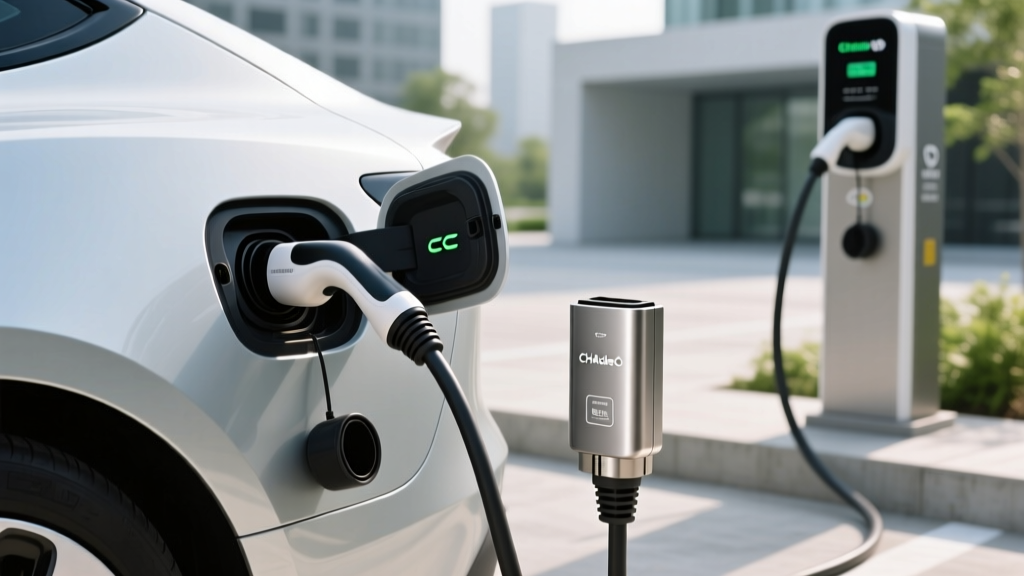
The transition to the North American Charging Standard (NACS) has turned the once-simple act of plugging in into a compatibility puzzle. If you own an EV built before 2025, or if you are buying into a legacy charging network, understanding which EV charging adapter you need is no longer optional — it is essential infrastructure literacy. This guide maps the connector landscape, breaks down real-world charging speeds, and details the exact costs of wiring your home for Level 2 charging in 2026.
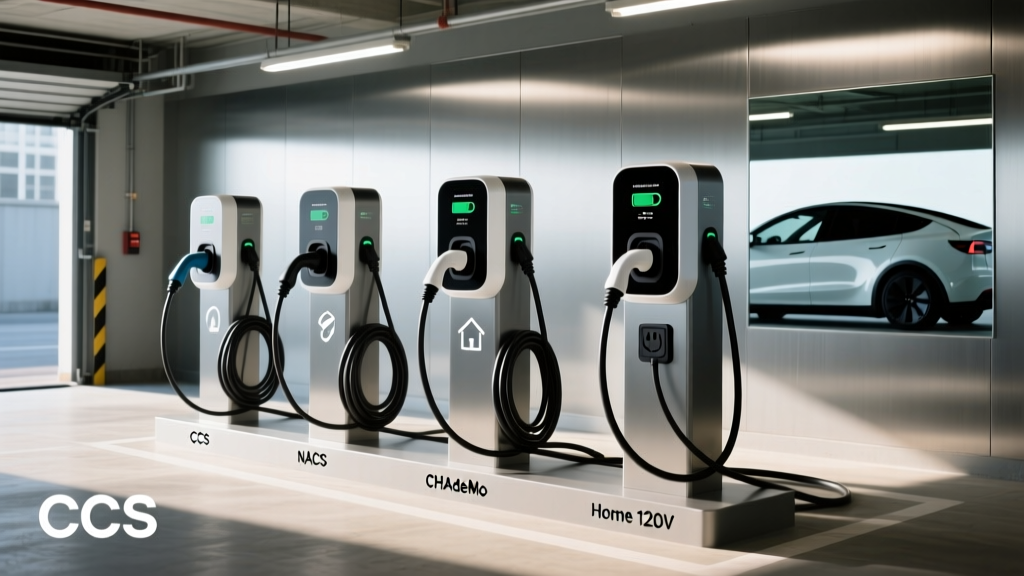
The Connector Landscape: NACS, CCS1, and CHAdeMO
As of 2026, the North American market has largely standardized on NACS (the Tesla connector) for new vehicles, but millions of EVs on the road still use CCS1 or the older CHAdeMO standard. Adapters bridge these gaps, but not all adapters work for all charging speeds.
| EV Brand / Model | Native Port | Adapter Needed For | Adapter Availability |
|---|---|---|---|
| Tesla (Model 3/Y/S/X, Cybertruck) | NACS | CCS1 (at non-Tesla DCFC) | OEM & 3rd-party, ~$200-$250 |
| Ford (F-150 Lightning, Mustang Mach-E 2025+) | NACS | CCS1 (legacy stations) | Ford-provided or aftermarket |
| Hyundai Ioniq 5/6, Kia EV6/EV9 (pre-2025) | CCS1 | NACS (Tesla Superchargers) | Hyundai/Kia OEM adapter included or ~$200 |
| Chevrolet Equinox EV, Blazer EV | NACS | CCS1 (legacy) | GM accessory, ~$225 |
| Rivian R1T/R1S | NACS (2025+) | CCS1 (older stations) | Rivian OEM adapter |
| Nissan Leaf, Ariya (older) | CHAdeMO / CCS1 | NACS (limited adapter options) | CHAdeMO-to-NACS: rare/expensive |
| BMW i4/i5/iX, VW ID.4 (pre-2025) | CCS1 | NACS (Superchargers) | OEM adapters rolling out |
Critical distinction: Most CCS1-to-NACS adapters are rated for DC fast charging up to 250 kW. However, some budget adapters are rated only for AC Level 2 charging (up to 19.2 kW). Always verify the adapter's DC fast-charge rating before purchasing. For CHAdeMO vehicles like older Nissan Leafs, adapter options remain severely limited — CHAdeMO-to-NACS adapters are scarce and often cost $400+.
Charging Levels Explained: Speed, Power, and Range Added
Understanding charging speed requires keeping two units straight: kW (kilowatts) measures power — the rate of energy flow. kWh (kilowatt-hours) measures energy — the total amount stored in your battery. A 10 kW charger delivers 10 kWh of energy in one hour (minus losses). Here is how each level performs in practice.
| Level | Voltage / Phase | Max Power (kW) | Miles of Range Added Per Hour | Typical Use Case |
|---|---|---|---|---|
| Level 1 | 120V AC / Single | 1.4 - 1.9 kW | 3 - 5 miles/hr | Overnight trickle, PHEVs, emergency top-up |
| Level 2 (Home) | 240V AC / Single | 7.2 - 19.2 kW | 20 - 60 miles/hr | Daily home charging, workplace |
| DC Fast Charging | 200-800V DC | 50 - 350 kW | 150 - 1,000+ miles/hr (peak) | Road trips, highway corridors |
Real-world charging time examples (10% to 80% State of Charge):
- 75 kWh battery (e.g., Tesla Model Y) at a 250 kW DCFC: ~18-22 minutes (peak rate tapers above 60% SoC)
- 84 kWh battery (e.g., Hyundai Ioniq 5) at a 350 kW DCFC: ~15-18 minutes (800V architecture sustains higher rates longer)
- 77 kWh battery (e.g., Ford Mustang Mach-E) at a 50 kW DCFC: ~70-85 minutes
- Level 2 home charging (11.5 kW) for a 75 kWh battery: ~7 hours (0-100%)
The charge curve matters: a charger rated at 250 kW will not deliver 250 kW for the entire session. Most EVs hit peak rate between 10-50% SoC, then taper significantly. A "250 kW charger" session might average 120-150 kW across the full 10-80% session. Vehicles with 800V architectures (Ioniq 5, EV6, Porsche Taycan) sustain higher rates deeper into the charge, making their real-world charging faster than the peak kW number alone suggests.
Home Level 2 Installation: Electrical Requirements and Real Costs
A Level 2 home charger is the single highest-impact upgrade an EV owner can make. But the sticker price of the charger itself is only a fraction of the total cost. Here is what you actually need to budget for.
Electrical requirements for a typical Level 2 install:
- Circuit: Dedicated 240V circuit, typically 40A or 50A (breaker rated at 125% of continuous load, so a 40A circuit supports a 32A charger)
- Wire: 6 AWG copper for 40A; 4 AWG for 50A (run in conduit if exposed)
- Outlet vs. hardwired: NEMA 14-50 outlet offers portability; hardwired is preferred for higher-amp units (48A+) and avoids GFCI breaker nuisance trips common with some 14-50 installations
- GFCI protection: NEC 2020+ requires GFCI for receptacle-based EV charging circuits; hardwired units have built-in ground-fault protection and do not require a GFCI breaker
- Outdoor rating: If mounted outside, the charger must carry a NEMA 4 or NEMA 4X rating for weather resistance
| Component | Simple Install (Panel Adjacent) | Moderate Install (50-80 ft Run) | Complex Install (Panel Upgrade + Long Run) |
|---|---|---|---|
| Level 2 Charger (Equipment) | $350 - $700 | $350 - $700 | $350 - $700 |
| Electrician Labor | $300 - $600 | $600 - $1,200 | $1,200 - $2,500 |
| Materials (Wire, Conduit, Breaker) | $100 - $250 | $250 - $500 | $400 - $800 |
| Permit Fee | $50 - $150 | $50 - $200 | $50 - $250 |
| Electrical Panel Upgrade (if needed) | $0 | $0 | $1,500 - $3,500 |
| Total Estimated Cost | $800 - $1,700 | $1,250 - $2,600 | $3,500 - $7,750 |
The panel upgrade factor: Homes built before 2000 often have 100A or 150A service panels. Adding a 40A-50A EV circuit to an already-loaded panel may require upgrading to 200A service — a $1,500-$3,500 job. Some utilities offer rebates for panel upgrades tied to EV adoption. An electrician will perform a load calculation to determine if your existing panel has capacity. Do not skip the permit — unpermitted electrical work can void home insurance claims and complicate future home sales.
Level 2 Charger Equipment Picks: What to Buy in 2026
Not all Level 2 chargers are equal. Key differentiators include power output, cable length, smart features (Wi-Fi scheduling, utility integration), and connector type. With NACS now dominant, most new chargers ship with NACS connectors; CCS1 vehicles will need an adapter.
ChargePoint Home Flex (NACS)
- Power Output: Up to 12 kW (50A circuit) / 9.6 kW (40A circuit)
- Connector: NACS (CCS1 adapter included in some bundles)
- Cable Length: 23 feet
- Smart Features: Wi-Fi, app scheduling, Alexa, utility demand-response integration
- Price: ~$550-$650
- Best For: Most EV owners; flexible amperage via DIP switches
Emporia Vue EV Charger
- Power Output: Up to 11.5 kW (48A on 60A circuit)
- Connector: NACS (2025+ models); J1772 with adapter available
- Cable Length: 24 feet
- Smart Features: Wi-Fi, solar integration with Emporia Vue energy monitor, time-of-use scheduling
- Price: ~$400-$500
- Best For: Solar-equipped homes, budget-conscious buyers
Tesla Wall Connector (NACS)
- Power Output: Up to 11.5 kW (48A on 60A circuit)
- Connector: NACS native
- Cable Length: 24 feet
- Smart Features: Wi-Fi, over-the-air updates, power sharing (multiple units on one circuit)
- Price: ~$450-$500
- Best For: Tesla owners, multi-Tesla households
Grizzl-E Smart (NACS or J1772)
- Power Output: Up to 10 kW (40A circuit)
- Connector: Available in NACS or J1772
- Cable Length: 24 feet
- Smart Features: OCPP-compatible, works with multiple network apps, load balancing
- Price: ~$450-$550
- Best For: Cold climates (rated to -40°F), commercial/fleet use
Important for non-Tesla EVs: If you buy a NACS-connector charger and drive a CCS1 vehicle (pre-2025 Hyundai, Kia, VW, BMW), you will need a NACS-to-CCS1 adapter for home charging. These AC-rated adapters cost $150-$250. Alternatively, buy a charger with a J1772 connector and use the J1772-to-NACS adapter that ships with most NACS-equipped EVs.
Charging Cost Per Mile: Home vs. Public vs. Gas
One of the strongest economic arguments for EVs is the per-mile fuel cost. But the savings depend heavily on where and when you charge. Here is a realistic breakdown using national average rates as of early 2026.
| Scenario | Rate ($/kWh) | Efficiency Assumption | Cost Per Mile |
|---|---|---|---|
| Home (Off-Peak / TOU Rate) | $0.08 - $0.12 | 3.0 mi/kWh (avg EV) | $0.03 - $0.04 |
| Home (Standard Residential Rate) | $0.15 - $0.18 | 3.0 mi/kWh | $0.05 - $0.06 |
| Public Level 2 (Workplace / Retail) | $0.20 - $0.35 | 3.0 mi/kWh | $0.07 - $0.12 |
| DC Fast Charging (Electrify America, EVgo) | $0.35 - $0.55 | 3.0 mi/kWh | $0.12 - $0.18 |
| Tesla Supercharger (Member Pricing) | $0.25 - $0.35 | 3.5 mi/kWh (efficient models) | $0.07 - $0.10 |
| Gasoline Car (28 MPG Combined) | $3.30/gallon | 28 mi/gal | $0.12 |
| Gasoline Car (22 MPG Combined, Truck/SUV) | $3.30/gallon | 22 mi/gal | $0.15 |
Key takeaway: Home off-peak charging delivers a 3x-4x cost advantage over gasoline. However, exclusive reliance on DC fast charging narrows the gap — and in some high-cost markets (California, parts of the Northeast), public DCFC rates can exceed the per-mile cost of a fuel-efficient gas car. Time-of-use (TOU) utility plans are essential for maximizing savings. According to fueleconomy.gov, most EVs achieve 3.0-4.0 miles per kWh; efficient models like the Lucid Air exceed 4.5 mi/kWh, while heavy trucks like the F-150 Lightning average 2.0-2.5 mi/kWh.
Safety, Code, and Common Installation Mistakes
EV charging draws sustained high current for hours — a duty cycle that stresses residential wiring more than typical household loads. Cutting corners here creates fire risk. These are the non-negotiable safety considerations:
- Dedicated circuit: Your EV charger must have its own dedicated breaker — never share a circuit with other appliances. A 48A charger on a shared 60A circuit is a code violation and a fire hazard.
- Continuous load derating: The NEC classifies EV charging as a continuous load (3+ hours). This means the circuit must be rated at 125% of the charger's max draw. A 48A charger requires a 60A circuit, not a 50A circuit.
- NEMA 14-50 GFCI nuisance trips: Under NEC 2020+, receptacle-based EV circuits require GFCI breakers. Many EV owners report nuisance trips with certain charger-and-breaker combinations. Hardwiring the charger eliminates this issue entirely.
- Outdoor installations: Use only NEMA 4-rated chargers outdoors. Verify the connector holster provides drip-loop protection. In cold climates, choose a charger rated below 0°F — some units fail to initiate charging below -20°F.
- Extension cords: Never use an extension cord with a Level 1 or portable Level 2 charger. The sustained current causes voltage drop and overheating at the plug.
- Permit and inspection: Most jurisdictions require an electrical permit for new 240V circuits. The inspection ensures proper wire gauge, grounding, and breaker sizing. Skipping the permit risks insurance denial in the event of an electrical fire.
Frequently Asked Questions
How much does it cost to install a home EV charger?
A straightforward Level 2 installation (panel has capacity, short wire run) costs $800-$1,700 including equipment, labor, materials, and permit. A moderate install with a 50-80 foot wire run typically runs $1,250-$2,600. If your home needs a panel upgrade from 100A to 200A service, expect $3,500-$7,750 total. Always get a load calculation from a licensed electrician before committing.
How fast will each charging level add range?
Level 1 (120V) adds 3-5 miles per hour — adequate for PHEVs with small batteries but impractical for full EVs. Level 2 (240V) adds 20-60 miles per hour depending on amperage and vehicle acceptance rate, fully recharging most EVs overnight. DC fast charging adds 150-1,000+ miles per hour at peak rates, enabling 10-80% charges in 15-25 minutes depending on battery size and charger power.
Which connector and charger is compatible with my EV?
Check your vehicle's charge port. 2025-2026 models from Tesla, Ford, GM, Rivian, and others use NACS. Pre-2025 models from Hyundai, Kia, VW, BMW, and most legacy automakers use CCS1. Older Nissan Leafs use CHAdeMO. For home charging, buy a Level 2 charger matching your vehicle's native port, or use the appropriate EV charging adapter. For public DC fast charging, verify the station's connector matches your car — apps like PlugShare and A Better Routeplanner filter by connector type.
How much does charging cost per mile vs. gas?
Home off-peak charging costs $0.03-$0.04 per mile — roughly one-third the cost of gasoline at $3.30/gallon in a 28 MPG car ($0.12/mile). Standard residential rates push EV charging to $0.05-$0.06/mile. Public DC fast charging at $0.35-$0.55/kWh costs $0.12-$0.18/mile, which narrows or eliminates the cost advantage over gasoline. To maximize savings, install a home Level 2 charger and enroll in your utility's time-of-use plan.
What electrical upgrades might I need?
Homes with 100A or 150A service panels may need a panel upgrade to 200A to accommodate a 40A-50A EV circuit alongside existing loads — this costs $1,500-$3,500. Older homes may also need grounding upgrades (many pre-1970 homes lack proper equipment grounding). If your garage is far from the panel, expect higher wire and conduit costs. Some utilities and state programs offer rebates of $250-$1,000 for panel upgrades associated with EV adoption — check with your local utility and state incentive database.
Do I need an EV charging adapter for Tesla Superchargers?
If your EV has a CCS1 port (most non-Tesla EVs built before 2025), yes — you need a CCS1-to-NACS adapter to use Tesla Superchargers that have been opened to non-Tesla vehicles. Most automakers now provide or sell these adapters. Verify your vehicle's firmware supports Supercharger authentication via the Tesla app before relying on this for road trips. As of 2026, over 15,000 Supercharger stalls across North America accept NACS-equipped non-Tesla EVs.
Can I use a dryer outlet (NEMA 14-30) for EV charging?
Yes, but with limits. A NEMA 14-30 outlet provides 240V at 30A, supporting a 24A continuous charge (5.8 kW). This adds roughly 18-22 miles of range per hour — workable for smaller batteries or PHEVs. You will need a portable Level 2 charger with a 14-30 plug, and you must never share the outlet with a dryer while charging. For full-size EVs with 75+ kWh batteries, a dedicated 14-50 or hardwired 48A circuit is strongly recommended.
For the latest on federal tax incentives for home charging equipment, consult the IRS Residential Clean Energy Credit guidelines — the §25D credit covers 30% of qualified home energy equipment through 2032, though EV charger eligibility varies by tax year and installation specifics. Consult a tax professional for your situation.