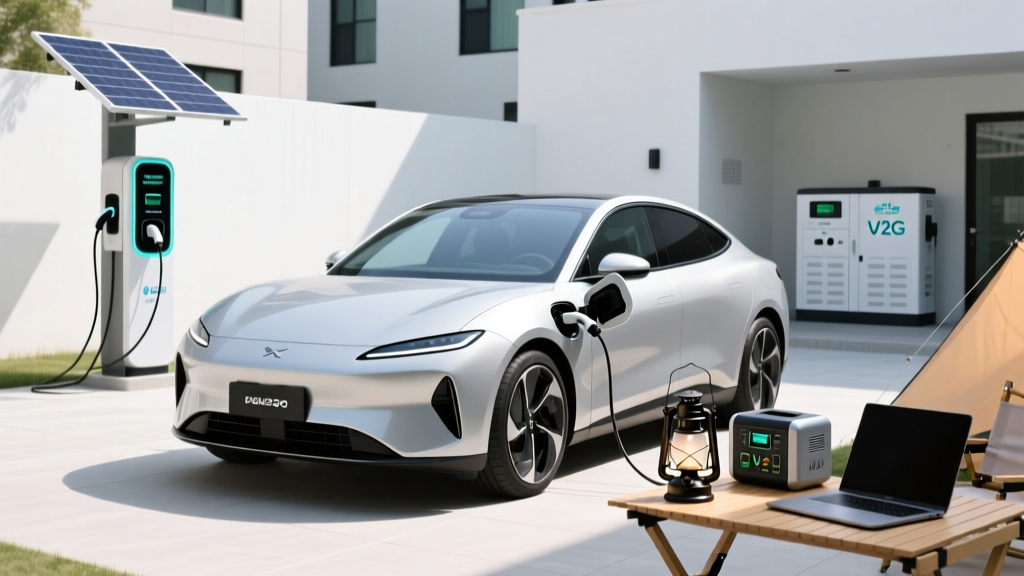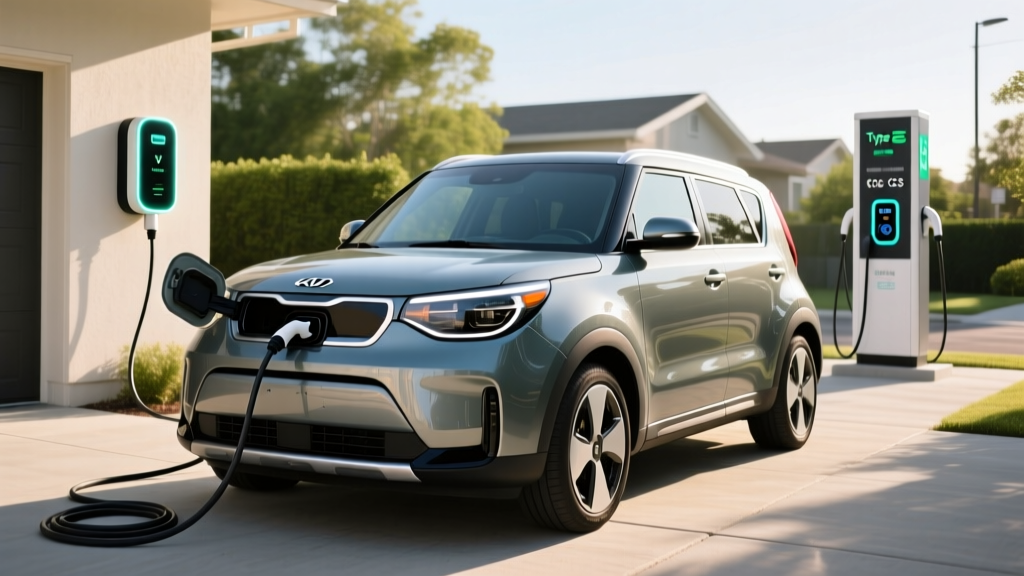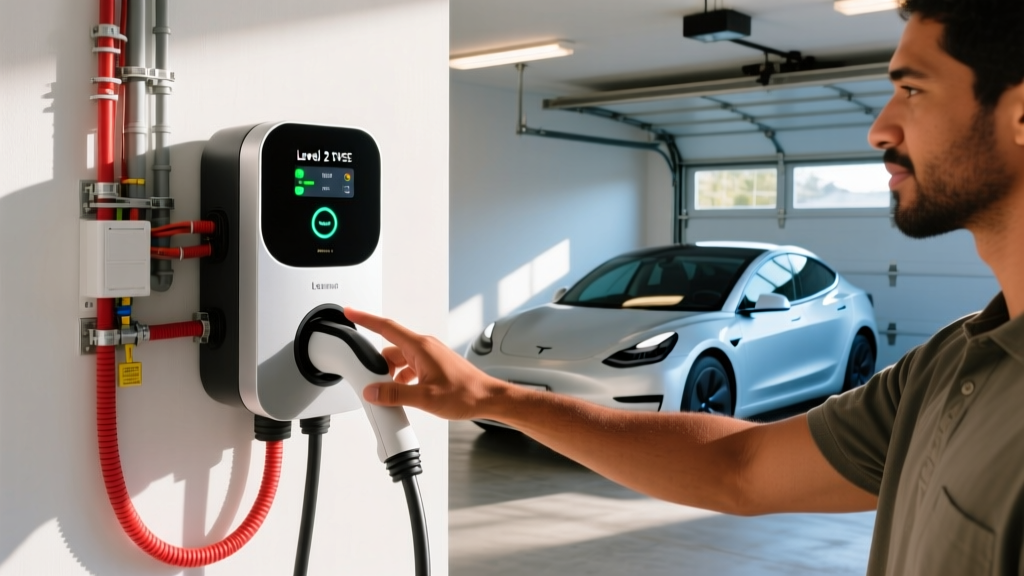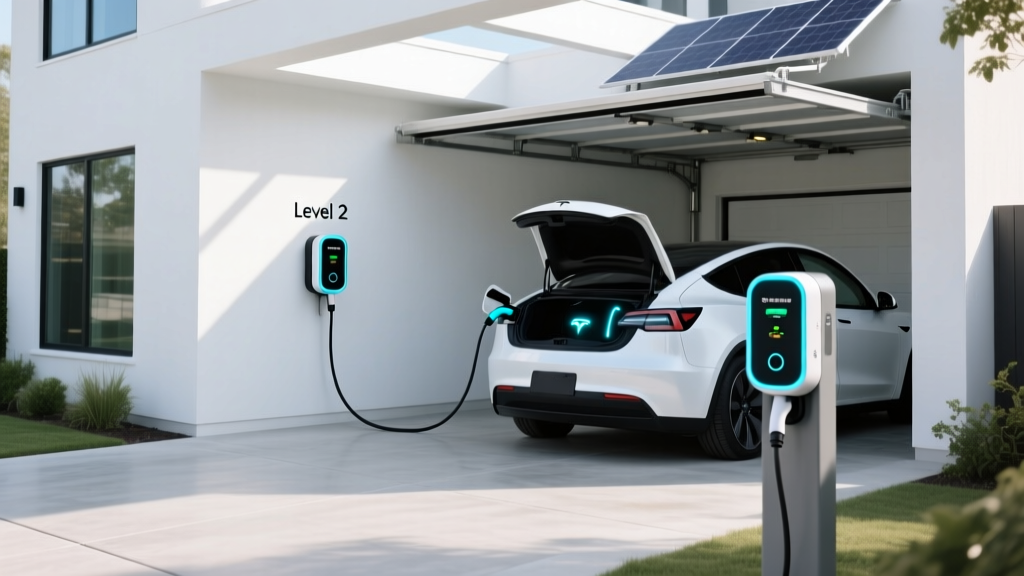
If you're searching for chargers cars 2020 models and newer can use, the landscape has shifted dramatically. The North American Charging Standard (NACS) has largely unified connectors, home charger prices have dropped, and DC fast-charging networks have expanded well beyond Tesla's ecosystem. This guide breaks down every charging level with exact speeds, real installation costs with line-item breakdowns, connector compatibility by brand, and the true cost-per-mile math compared to gasoline.
Charging Levels Explained: Speeds, Power, and Real-World Range Gains
The single most important distinction in EV charging is between kW (kilowatts — the rate of power delivery, like water pressure from a hose) and kWh (kilowatt-hours — the total energy stored in your battery, like gallons in a tank). A 10 kW charger delivers 10 kWh of energy in one hour under ideal conditions. Your car's battery capacity is measured in kWh; the charger's output is measured in kW.
| Level | Voltage | Power (kW) | Miles of Range per Hour | Typical 10–80% Time* | Best For |
|---|---|---|---|---|---|
| Level 1 (120V) | 120V AC | 1.0–1.4 kW | 3–5 mi/hr | 40–70+ hours | Overnight trickle, PHEVs, emergencies |
| Level 2 (240V) | 240V AC | 3.3–19.2 kW | 12–75 mi/hr | 3–10 hours | Daily home/work charging |
| DC Fast Charge | 400–800V DC | 50–350 kW | 150–1,200+ mi/hr (peak) | 15–45 minutes | Road trips, quick top-ups |
*10–80% times vary by battery size, chemistry, and thermal management. A 75 kWh battery on a 150 kW DC charger typically hits 10–80% in 25–35 minutes; an 800V architecture (Hyundai Ioniq 5/6, Kia EV6, Porsche Taycan) can do it in 18 minutes on a 350 kW stall.
Home Charger Installation: Electrical Requirements, Costs, and Panel Upgrades
Installing a Level 2 home charger is the single highest-impact upgrade for EV ownership. Most daily driving falls under 40 miles, which any Level 2 charger replenishes overnight. But the installation cost varies enormously depending on your home's electrical panel, the distance from panel to charger location, and local permit fees.
Electrical Requirements
A typical Level 2 home charger runs on a 240V dedicated circuit, identical to what an electric dryer or oven uses. Common configurations:
- 40A circuit / 32A continuous (7.7 kW) — most common, sufficient for overnight charging of any EV
- 50A circuit / 40A continuous (9.6 kW) — faster, recommended for larger batteries (100+ kWh trucks/SUVs)
- 60A circuit / 48A continuous (11.5 kW) — maximum single-phase residential, needs 200A panel
- 80A circuit / 64A continuous (15.2–19.2 kW) — rare residential, typically requires 320A service or load management
The National Electrical Code (NEC) requires that continuous loads (anything running 3+ hours, which includes EV charging) use only 80% of a circuit's rated capacity. A 40A breaker supports 32A continuous draw. Never install a charger that pulls more than 80% of the breaker rating.
Panel Upgrade Reality Check
Homes built before 2000 often have 100A or 150A electrical panels. Adding a 40A EV circuit to an already-loaded 100A panel may exceed capacity, requiring a panel upgrade to 200A — typically $1,500–$3,500 on top of the charger install. Some utilities and jurisdictions now allow automated load management systems (like the Span smart panel or charger-integrated load balancing) that throttle charging when household demand peaks, avoiding a full panel upgrade.
| Component | Low End | Typical | High End | Notes |
|---|---|---|---|---|
| Level 2 Charger (hardware) | $250 | $450 | $700 | Smart Wi-Fi chargers (ChargePoint, Emporia, Wallbox) |
| Electrician labor (standard install) | $300 | $700 | $1,500 | Short run from panel, same wall or adjacent |
| Permit & inspection | $50 | $150 | $400 | Varies widely by municipality |
| Conduit/wiring (long run) | $0 | $200 | $800 | Panel to garage/driveway distance >30 ft |
| Panel upgrade (if needed) | $0 | $0 | $3,500 | Required for older 100A panels at capacity |
| Total (no panel upgrade) | $600 | $1,500 | $3,400 | Most homeowners fall in this range |
| Total (with panel upgrade) | $2,100 | $3,500 | $6,900 | Older homes, high-load situations |
Get at least three quotes from licensed electricians. Ask specifically whether the quote includes the permit, whether the circuit will be dedicated (it must be), and whether they'll perform a load calculation on your panel per NEC Article 220. Some utilities offer rebates of $250–$1,000 for home charger installation — check your local provider before scheduling work.
Connector Compatibility: NACS, CCS1, CHAdeMO, and Adapter Needs
The connector landscape has consolidated significantly since 2023, when Ford and GM adopted the Tesla-designed NACS (North American Charging Standard, now SAE J3400). As of the 2026 model year, virtually every new EV sold in North America ships with a NACS charge port natively. Legacy CCS1 vehicles can access Tesla Superchargers via adapter.
| Connector | Native Vehicles | Adapter Available? | Network Access |
|---|---|---|---|
| NACS (J3400) | Tesla (all), Ford, GM, Rivian, Volvo, Polestar, Hyundai, Kia, BMW, Mercedes, Subaru, Lucid, Toyota (bZ), Honda (Prologue/0-Series), Nissan (new Ariya) | N/A — native | Tesla Superchargers, Electrify America, EVgo, ChargePoint (new stalls) |
| CCS1 | Pre-2025 Ford/GM/Hyundai/Kia/VW/BMW/Mercedes/Rivian (legacy models still on road) | CCS-to-NACS adapter ($150–$300, some provided free by OEM) | Electrify America, EVgo, ChargePoint, non-Tesla DC networks |
| CHAdeMO | Nissan Leaf (pre-2026), Mitsubishi Outlander PHEV (older) | CHAdeMO-to-CCS adapters exist but are rare/expensive ($400+) | Declining network — many CHAdeMO stalls being retired |
Cost to Charge: Home vs. Public vs. Gas — the Real $/Mile Math
Charging cost depends entirely on where and when you plug in. The gap between home off-peak charging and DC fast charging is enormous — often a 4x difference per kWh.
| Scenario | $/kWh | Vehicle Efficiency | Cost per Mile | Annual Cost (12,000 mi) |
|---|---|---|---|---|
| Home (off-peak utility rate) | $0.08–$0.14 | 3.0 mi/kWh (avg EV) | $0.03–$0.05 | $360–$600 |
| Home (standard rate, no TOU) | $0.14–$0.20 | 3.0 mi/kWh | $0.05–$0.07 | $600–$840 |
| Home (solar, net-metered) | $0.00–$0.04 | 3.0 mi/kWh | $0.00–$0.01 | $0–$120 |
| Public Level 2 (workplace/mall) | $0.20–$0.40 | 3.0 mi/kWh | $0.07–$0.13 | $840–$1,560 |
| DC Fast Charging (road trip) | $0.35–$0.60 | 3.0 mi/kWh (highway) | $0.12–$0.20 | $1,440–$2,400 |
| Gasoline (28 MPG avg, $3.40/gal) | — | 28 MPG | $0.12 | $1,440 |
| Gasoline (truck, 18 MPG, $3.40/gal) | — | 18 MPG | $0.19 | $2,280 |
The takeaway: home charging at off-peak rates costs roughly $0.03–$0.05 per mile, about one-quarter the cost of gasoline. Even at standard residential rates, most EVs undercut gas per mile. But if you rely exclusively on DC fast charging (no home access), the cost advantage narrows significantly — sometimes matching or exceeding a fuel-efficient gas car. This is why home charging access is the single most important factor in EV ownership economics.
For current electricity rates in your area, the U.S. Energy Information Administration publishes state-by-state residential electricity averages monthly.
Recommended Level 2 Home Chargers: Power, Features, and Pricing
After testing and tracking reliability data across dozens of Level 2 units, these are the chargers that deliver the best combination of power output, build quality, smart features, and value for 2026 EV owners.
Emporia Vue Level 2 Smart Charger
- Power Output: 48A (11.5 kW) on 60A circuit; configurable down to 16A
- Connector: NACS (J3400) native; CCS adapter included
- Cable Length: 24 ft
- Smart Features: Wi-Fi, Emporia app scheduling, solar integration, energy monitoring, utility TOU optimization, load management with Emporia panel monitor
- Price: ~$399
- Best For: Budget-conscious buyers wanting max power + smart features; solar-home integration
ChargePoint Home Flex (2nd Gen)
- Power Output: Up to 50A (12 kW) on 60A circuit; adjustable 16–50A via DIP switch
- Connector: NACS native (2025+ models); CCS1 for older units
- Cable Length: 23 ft
- Smart Features: Wi-Fi, ChargePoint app, Alexa/Google Home, scheduling, detailed session data, works with ChargePoint public network account
- Price: ~$549
- Best For: Brand ecosystem loyalty; robust app with historical charging data
Tesla Wall Connector
- Power Output: 48A (11.5 kW) on 60A circuit
- Connector: NACS native; includes J1772 adapter for non-Tesla EVs
- Cable Length: 24 ft
- Smart Features: Wi-Fi, power sharing (up to 6 units on one circuit), Tesla app integration, OTA updates
- Price: ~$420
- Best For: Tesla owners or mixed-Tesla households; multi-EV power sharing
Wallbox Pulsar Plus
- Power Output: 40A (9.6 kW) on 50A circuit; 48A version available
- Connector: NACS (2025+); CCS1/J1772 for older stock
- Cable Length: 25 ft
- Smart Features: Wi-Fi + Bluetooth, Wallbox app, Eco-Smart mode (solar-only charging), Power Sharing, lock/unlock via app
- Price: ~$499 (40A) / ~$599 (48A)
- Best For: Compact form factor; outdoor-rated (NEMA 4); solar integration
All four chargers above are UL-listed (or ETL-listed to UL standards), which is non-negotiable for safety and insurance purposes. Avoid unlisted chargers from marketplace sellers — they may lack proper ground-fault protection, thermal cutoffs, or surge suppression, and could void homeowner's insurance coverage in the event of an electrical fire.
Safety, Electrical Code, and Installation Best Practices
EV charging is a continuous, high-draw electrical load that runs for hours unattended — often while you sleep. Proper installation isn't optional; it protects your home, your vehicle, and your insurance coverage.
- Dedicated circuit: Your Level 2 charger must be on its own dedicated breaker — not shared with outlets, lights, or appliances. NEC 625.40 requires this for all EV supply equipment (EVSE).
- GFCI protection: NEC 2020 and later require GFCI (Ground Fault Circuit Interrupter) protection for all 125V–250V receptacles used for EV charging. Hardwired EVSE units (no plug) are exempt from the GFCI breaker requirement because the charger itself contains ground-fault protection. This is why most electricians recommend hardwiring over plug-in — it eliminates nuisance trips and saves the cost of a GFCI breaker ($50–$120).
- Outdoor rating: If your charger is installed outdoors (driveway, exterior wall), it must be rated NEMA 3R or NEMA 4 (weatherproof). All four chargers recommended above carry outdoor ratings. Ensure the conduit and junction box are also rated for wet locations.
- Wire gauge: For a 60A circuit, most runs require 4 AWG copper or 2 AWG aluminum THHN wire. Longer runs (over 100 ft) may need upsized wire to prevent voltage drop. Your electrician will calculate this per NEC Table 310.16.
- Permit and inspection: Virtually every jurisdiction requires an electrical permit for EV charger installation. The inspection ensures the work meets code — skipping it risks insurance denial and resale complications. Budget $50–$400 for the permit depending on your municipality.
DC Fast Charging: Networks, Speeds, and What to Expect on Road Trips
Public DC fast charging has improved substantially since the early 2020s, but reliability and pricing still vary widely by network and location. Here's the current landscape for 2026:
- Tesla Supercharger: ~7,000+ stalls in North America. V3 stalls deliver up to 250 kW; V4 stalls (newer) deliver up to 350 kW. Now open to non-Tesla NACS vehicles via the Tesla app. Reliability consistently rated highest among networks. Pricing: $0.25–$0.40/kWh depending on location and time of day.
- Electrify America: ~1,000+ stations with 150 kW and 350 kW CCS/NACS stalls. Has improved uptime since 2023 network refresh. Pricing: $0.43–$0.56/kWh (idle fees apply after charge completes).
- EVgo: ~1,100+ stations, mix of 50 kW, 100 kW, and 350 kW. Strong urban coverage. Pricing: $0.35–$0.50/kWh; subscription plans reduce per-kWh cost.
- ChargePoint: Largest network by station count, but mostly Level 2. DC fast stalls are growing. Pricing set by site host — varies widely ($0.25–$0.60/kWh).
For real-time charger availability and reliability ratings, apps like PlugShare and A Better Routeplanner (ABRP) crowdsource user reports and are invaluable for trip planning.
Charging Time Examples: Common Battery Sizes at Each Level
To make the numbers concrete, here are estimated charging times for representative EV battery sizes across all three charging levels:
| Battery Size | Example Vehicles | Level 1 (1.4 kW) | Level 2 (7.7 kW / 32A) | Level 2 (11.5 kW / 48A) | DC Fast (150 kW peak) | DC Fast (250–350 kW peak) |
|---|---|---|---|---|---|---|
| 60 kWh | Chevy Equinox EV, base Tesla Model 3 | ~30 hours | ~5.5 hours | ~3.5 hours | ~28 min | ~20 min |
| 75 kWh | Tesla Model Y LR, Hyundai Ioniq 5 | ~38 hours | ~7 hours | ~4.5 hours | ~32 min | ~18 min (800V) |
| 85–100 kWh | Ford F-150 Lightning Ext, Rivian R1S, BMW iX | ~50 hours | ~9 hours | ~6 hours | ~40 min | ~25 min |
| 115–131 kWh | GMC Hummer EV, Chevy Silverado EV Max | ~65+ hours | ~12 hours | ~8 hours | ~55 min | ~35 min |
Note that the vehicle's onboard charger (for Level 1 and 2 AC charging) sets the maximum AC acceptance rate. A Chevy Equinox EV with an 11.5 kW onboard charger can accept the full output of a 48A Level 2 unit. A vehicle with a 7.7 kW onboard charger (older Nissan Leaf, some PHEVs) will not charge faster even on a 48A circuit — it simply draws what it can.
Frequently Asked Questions
How much does it cost to install a home EV charger?
A typical Level 2 home charger installation costs between $600 and $3,400 when no panel upgrade is needed — this includes the charger hardware ($250–$700), electrician labor ($300–$1,500), and permit ($50–$400). If your home has an older 100A electrical panel that's near capacity, a panel upgrade to 200A adds $1,500–$3,500, bringing the total to $2,100–$6,900. Always get a load calculation from your electrician before committing to a circuit size.
How fast will each charging level add range?
Level 1 (120V) adds roughly 3–5 miles of range per hour — sufficient only for PHEVs with small batteries or very low daily mileage. Level 2 (240V, 32–48A) adds 25–45 miles per hour for most EVs, easily replenishing a full day's driving overnight. DC fast charging adds 150–1,200+ miles per hour at peak rates, enabling 10–80% charges in 18–45 minutes depending on battery size and vehicle architecture.
Which connector/charger is compatible with my EV?
For 2025–2026 model-year EVs, nearly all use the NACS (J3400) connector natively — Tesla, Ford, GM, Hyundai, Kia, Rivian, BMW, and others. If you drive a 2020–2024 model with CCS1, you'll need a CCS-to-NACS adapter ($150–$300, sometimes provided free by the OEM) to access Tesla Superchargers. The older CHAdeMO connector (Nissan Leaf) has declining network support. For home Level 2 charging, a NACS Wall Connector or a universal Level 2 charger with the appropriate connector will work with any EV on the road.
How much does charging cost per mile vs gas?
Home charging at off-peak utility rates costs approximately $0.03–$0.05 per mile for an average EV (3.0 mi/kWh efficiency), compared to $0.12 per mile for a 28 MPG gas car at $3.40/gallon. That's a 60–75% per-mile savings. Even at standard residential rates ($0.14–$0.20/kWh), EVs cost $0.05–$0.07 per mile. However, exclusive reliance on DC fast charging ($0.35–$0.60/kWh) raises the cost to $0.12–$0.20 per mile, eliminating most of the fuel-cost advantage.
What electrical upgrades might I need?
The most common upgrade is a panel capacity increase from 100A to 200A service ($1,500–$3,500), required when your existing panel can't support an additional 40–60A continuous load. Other potential upgrades: a new 240V circuit run with appropriate wire gauge and conduit ($200–$800 for longer runs), a sub-panel if the charger is far from the main panel (detached garage), or an automated load management device ($200–$500) that lets you avoid a panel upgrade by dynamically limiting charger draw when household loads peak. Per the National Electrical Code, a licensed electrician must perform a load calculation per NEC Article 220 to determine if your panel has headroom.
Can I use a regular 120V outlet to charge my EV?
Yes — every EV ships with a mobile charging cord that plugs into a standard 120V (NEMA 5-15) household outlet, delivering about 1.0–1.4 kW. This adds roughly 3–5 miles of range per hour. For a PHEV with 25–40 miles of electric range, overnight Level 1 charging is often sufficient. For a full BEV with a 75+ kWh battery, Level 1 is impractical as a primary charging method — a full charge could take 3+ days. Use Level 1 as a backup or for travel; install Level 2 for daily use.
Is there a tax credit for installing a home charger?
The federal Alternative Fuel Vehicle Refueling Property Credit (IRS Form 8911) covers up to 30% of home EV charger hardware and installation costs, capped at $1,000 per year. However, eligibility depends on the charger being installed in a qualifying census tract (typically low-income or non-urban areas per IRS guidelines). Check your census tract eligibility before counting on this credit. Many state and utility rebates also exist — database at afdc.energy.gov.
Whether you're outfitting a 2020 EV or a brand-new 2026 model, the fundamentals remain the same: a properly installed Level 2 home charger on a dedicated 240V circuit delivers the best combination of convenience, cost savings, and battery health. Start with a load calculation from a licensed electrician, choose a UL-listed charger matched to your circuit capacity, and verify connector compatibility with your vehicle before purchasing.