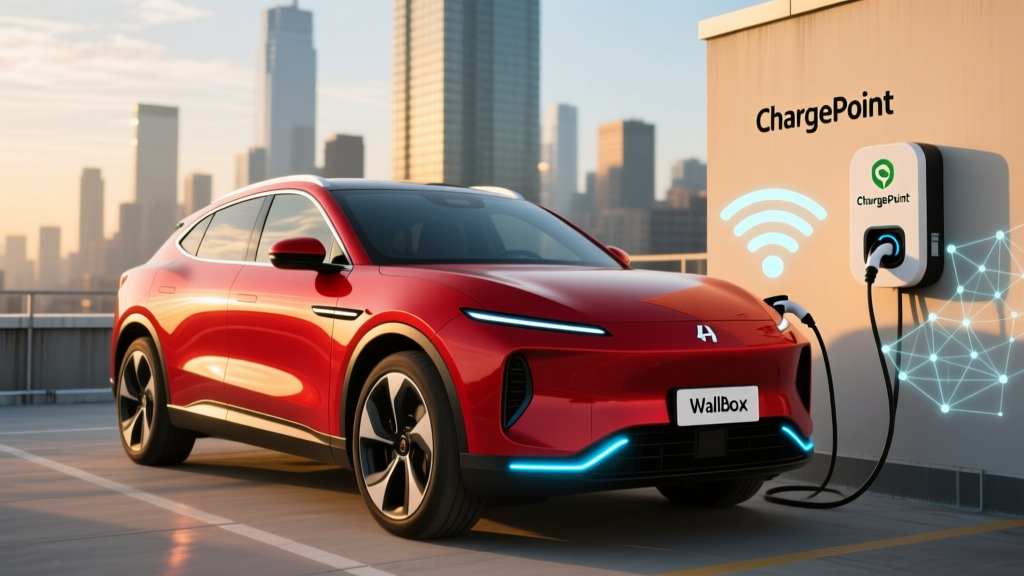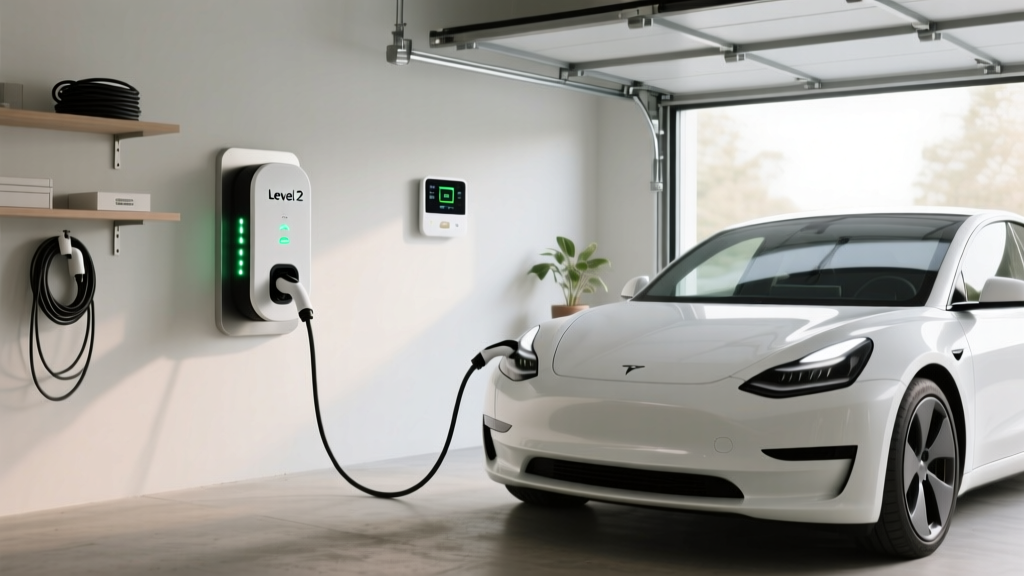
If you've walked the warehouse aisles lately, you may have noticed the EV chargers at Costco — typically Level 2 home charging stations from brands like Emporia, ChargePoint, and Wallbox, often bundled at member-only pricing. For new EV owners figuring out how to charge at home, a Costco deal can look attractive. But is the hardware any good, and what will it actually cost to get it wired up in your garage?
This guide breaks down what Costco typically stocks, how fast each charging level adds range, what your electrical panel needs to support a home charger, and the real-world installation costs you should budget for in 2026.
What EV Chargers Does Costco Sell?
Costco's EV charger inventory rotates by season and location, but in 2026 the warehouse consistently carries a handful of Level 2 (240V) home charging stations. You'll generally find:
- Emporia Level 2 Smart Charger — 48A max output, NEMA 14-50 plug or hardwired, ~25-foot cable, Wi-Fi app scheduling. Costco price typically $299–$349.
- ChargePoint Home Flex — up to 50A (adjustable via DIP switch), 23-foot cable, NACS or J1772 connector options, smart scheduling. Costco price typically $499–$549.
- Wallbox Pulsar Plus — 40A or 48A variant, compact form factor, Bluetooth/Wi-Fi, 25-foot cable. Costco price typically $399–$449.
Costco does not sell DC fast chargers (those are commercial-grade, 50–350 kW units costing $20,000+ and requiring three-phase power). Everything on the warehouse floor is a Level 2 unit designed for residential 240V circuits. That's the right category for overnight home charging — the backbone of practical EV ownership.
Charging Levels Explained: How Fast Will Each Add Range?
Before you buy, understand the three charging tiers available to EV owners. Power is measured in kW (kilowatts — the rate of energy flow), while battery capacity is measured in kWh (kilowatt-hours — the total energy stored). Confusing the two is the most common EV mistake. A 48A Level 2 charger delivers about 11.5 kW of power; a 75 kWh battery holds 75 kWh of energy.
| Level | Voltage / Amps | Power (kW) | Miles of Range Per Hour | Typical Use |
|---|---|---|---|---|
| Level 1 | 120V / 12A | ~1.4 kW | 3–5 mi/hr | Emergency / PHEV overnight |
| Level 2 (Home) | 240V / 32–48A | 7.7–11.5 kW | 25–44 mi/hr | Daily home charging (overnight) |
| DC Fast Charging | 400–800V DC | 50–350 kW | 150–1,000+ mi/hr | Road trips, public stations |
Real-world charging time examples for a Level 2 charger at 11.5 kW (48A):
- Tesla Model Y (75 kWh usable battery): 10–80% in approximately 5.5 hours
- Hyundai Ioniq 5 (77.4 kWh): 10–80% in roughly 5.8 hours
- Ford F-150 Lightning Extended Range (131 kWh): 10–80% in about 9.5 hours
- Toyota RAV4 Prime PHEV (18.1 kWh): 0–100% in about 2.5 hours
For most EV owners, Level 2 overnight charging is the sweet spot. You plug in at 10 PM and wake up to a full battery — no detours, no waiting. That's why the EV chargers at Costco are Level 2 units: they solve the daily charging problem for the lowest cost per mile.
Connector Compatibility: Will a Costco Charger Fit Your EV?
The connector landscape shifted dramatically in 2024–2025 when Ford, GM, Rivian, Volvo, and most major automakers adopted the NACS (North American Charging Standard, originally Tesla's connector). As of 2026, virtually all new EVs sold in the U.S. ship with a NACS charge port. Older EVs and some remaining models still use CCS1 or the legacy CHAdeMO connector (Nissan Leaf).
| Connector | Compatible Brands | Adapter Needed? |
|---|---|---|
| NACS (Tesla-style) | Tesla, Ford, GM, Rivian, Volvo, Polestar, Mercedes, Hyundai, Kia (2025+) | None for new vehicles; J1772-to-NACS adapter for older J1772 chargers |
| CCS1 | Most 2024-and-earlier non-Tesla EVs (VW ID.4, older Ioniq 5, BMW i4) | NACS-to-CCS adapter if charger is NACS-terminated |
| CHAdeMO | Nissan Leaf (discontinued 2025), Mitsubishi Outlander PHEV (older) | Limited adapter options; CHAdeMO infrastructure declining |
| J1772 (Level 2 only) | All EVs (universal standard for AC charging) | NACS vehicles use included J1772-to-NACS adapter |
Key buying tip for Costco chargers: Many Level 2 chargers sold in 2026 ship with a J1772 connector (the universal AC standard). If you drive a NACS-equipped vehicle, you'll use the J1772-to-NACS adapter that came with your car. Some Costco listings (like the ChargePoint Home Flex) now offer a native NACS cable option — worth checking before you buy to avoid adapter clutter.
Home Installation: Electrical Requirements and Costs
Buying the charger is the easy part. Installing a dedicated 240V circuit is where costs and complexity come in. Here's what your electrical system needs:
Circuit and Panel Requirements
A 48A Level 2 charger requires a 60-amp dedicated circuit (the National Electrical Code requires circuits to be rated at 125% of the continuous load — 48A × 1.25 = 60A). This means:
- A 60A double-pole breaker in your main panel
- 6 AWG copper wire (or 4 AWG aluminum) from the panel to the charger location
- Either a NEMA 14-50 receptacle (for plug-in chargers) or a hardwired junction box
- Sufficient spare capacity in your electrical panel — typically 200A service for modern homes
Panel upgrade warning: If your home has a 100A main panel (common in homes built before the 1990s) or your panel is already near capacity, you may need a service upgrade to 200A. This is the single biggest cost variable in EV charger installation. A panel upgrade adds $1,500–$3,500 to the project and requires a utility coordination visit.
Installation Cost Breakdown
| Component | Low Estimate | High Estimate |
|---|---|---|
| Level 2 Charger (Costco pricing) | $300 | $550 |
| Electrician labor (run 240V circuit, mount unit) | $400 | $1,200 |
| Electrical materials (wire, breaker, conduit, receptacle) | $150 | $400 |
| Permit and inspection | $50 | $250 |
| Panel upgrade (if needed) | $1,500 | $3,500 |
| Total — no panel upgrade | $900 | $2,400 |
| Total — with panel upgrade | $2,400 | $5,900 |
How to estimate your situation: If your garage shares a wall with the electrical panel and you have a 200A service with spare breaker slots, expect the lower end (~$900–$1,200 total). If the charger location is 50+ feet from the panel, requires trenching through concrete, or your panel is maxed out, budget toward the higher end. Always get at least two quotes from licensed electricians — and verify they have EV charger installation experience.
Cost to Charge: Home vs. Public vs. Gas
The financial case for home charging is overwhelming. Here's how the cost per mile breaks down in 2026, using a fuel economy comparison framework from the EPA:
| Scenario | Rate | Cost per Mile (3.5 mi/kWh EV) | Cost for 300 Miles |
|---|---|---|---|
| Home (off-peak utility rate) | $0.12/kWh | $0.034 | $10.29 |
| Home (standard rate, no TOU) | $0.18/kWh | $0.051 | $15.43 |
| Public Level 2 (ChargePoint, EVgo) | $0.35/kWh | $0.100 | $30.00 |
| DC Fast Charging (Electrify America) | $0.48/kWh | $0.137 | $41.14 |
| Gasoline vehicle (27 MPG, $3.40/gal) | $3.40/gal | $0.126 | $37.78 |
Home off-peak charging delivers fuel at roughly one-quarter the cost of gasoline per mile. Even standard-rate home charging undercuts gas significantly. Public DC fast charging, by contrast, can be more expensive than gasoline — which is exactly why the EV chargers at Costco (and home Level 2 in general) are such an important investment. The charger pays for itself within the first year of driving for most owners.
Pro tip: Many utilities offer time-of-use (TOU) rates that drop electricity to $0.08–$0.12/kWh between 10 PM and 6 AM. Pair a Costco smart charger (which supports scheduled charging via app) with a TOU plan for the lowest possible fuel cost.
Equipment Comparison: Top Costco-Available Chargers
Here's how the most common Costco-stocked Level 2 chargers compare on the specs that matter:
Emporia Level 2 Smart Charger
- Max output: 48A / 11.5 kW
- Connector: J1772 (NACS adapter included or use vehicle adapter)
- Cable length: 24 ft
- Smart features: Wi-Fi, app scheduling, energy monitoring, solar integration
- Installation: NEMA 14-50 plug or hardwired
- Outdoor rating: NEMA 4 (suitable for outdoor mount)
- Costco price: ~$299–$349
Best for: Budget-conscious buyers who want smart scheduling and energy tracking.
ChargePoint Home Flex
- Max output: 50A / 12 kW (adjustable 16–50A via DIP switch)
- Connector: J1772 or NACS (select at purchase)
- Cable length: 23 ft
- Smart features: Wi-Fi, app scheduling, Alexa/Google integration, charge history
- Installation: NEMA 14-50 or NEMA 6-50 plug, or hardwired
- Outdoor rating: NEMA 4
- Costco price: ~$499–$549
Best for: Buyers wanting the highest amperage flexibility and native NACS option.
Wallbox Pulsar Plus
- Max output: 40A / 9.6 kW or 48A / 11.5 kW
- Connector: J1772 or NACS
- Cable length: 25 ft
- Smart features: Bluetooth + Wi-Fi, app control, Power Sharing (dual-unit load balancing)
- Installation: Hardwired only (no plug option)
- Outdoor rating: NEMA 4
- Costco price: ~$399–$449
Best for: Compact installations and dual-charger garages (Power Sharing avoids panel upgrades).
Safety, Permits, and Code Considerations
EV chargers draw significant continuous current — often for 6–10 hours straight. Electrical safety is non-negotiable. Here's what your installation must address per the National Electrical Code (NEC) and local building codes:
- Dedicated circuit: Your EV charger must have its own breaker — it cannot share a circuit with other appliances or outlets.
- GFCI protection: NEC 2020 and later require GFCI (ground-fault circuit interrupter) protection for all EV charging receptacles. Hardwired units may have GFCI built into the charger itself.
- Outdoor rating: If mounting outside, the charger must be rated NEMA 4 or higher (weather-sealed against rain and dust). All three Costco options above meet this standard.
- Permit and inspection: Most jurisdictions require an electrical permit for a new 240V circuit. The inspection ensures the breaker, wire gauge, and mounting meet code. Skipping the permit risks insurance denial if an electrical fire occurs.
- Load calculation: A licensed electrician will perform a load calculation on your panel to confirm it can handle the additional 48–60A draw alongside existing loads (HVAC, dryer, oven, water heater).
Never plug a Level 2 charger into an extension cord, and never use a "cheater" adapter to fit a 14-50 plug into a 10-30 (dryer) outlet. These workarounds create fire risk at sustained high amperage.
Is the Costco Price Actually a Deal?
Costco's member pricing on Level 2 chargers typically undercuts direct retail by $50–$150, and the bundled warranty support (Costco's return policy extends to electronics) adds a layer of buyer protection. However, consider these trade-offs:
- Limited selection: You can't choose from the full catalog of chargers. If you need a specific feature — like a 30-foot cable for a deep garage, or load-sharing for solar integration — Costco's rotating stock may not have it.
- Connector choice: Some Costco listings only offer J1772. If you want native NACS without an adapter, check the listing carefully or compare with direct-from-manufacturer pricing.
- No installation included: Costco sells the hardware only. You'll still need to hire a licensed electrician separately.
For most buyers, the Costco price on an Emporia or ChargePoint unit is competitive and worth the purchase — especially when paired with Costco's generous return window if the unit doesn't meet your needs.
Frequently Asked Questions
How much does it cost to install a home EV charger?
Expect $900–$2,400 total (charger + electrician + materials + permit) if your panel has sufficient capacity. If you need a 200A panel upgrade, total costs rise to $2,400–$5,900. The Costco charger itself typically runs $300–$550.
How fast will a Level 2 Costco charger add range?
A 48A Level 2 charger delivers about 11.5 kW, adding 25–44 miles of range per hour depending on vehicle efficiency. Most EVs charge from 10–80% in 5–6 hours overnight.
Which connector do I need?
For 2025+ model year EVs, most use NACS. Older non-Tesla EVs typically use CCS1 or J1772. Costco chargers generally ship with J1772 connectors, which work with all EVs using the appropriate adapter (NACS vehicles include a J1772-to-NACS adapter in the glovebox).
How much does charging cost per mile vs gas?
Home charging at off-peak rates (~$0.12/kWh) costs about $0.03–$0.05 per mile — roughly one-quarter the cost of gasoline at $3.40/gallon in a 27 MPG vehicle ($0.13/mile). Public DC fast charging can approach or exceed gas costs at $0.40–$0.50/kWh.
What electrical upgrades might I need?
You'll need a dedicated 60A breaker on a 200A panel. Homes with 100A service or panels near capacity may require a full service upgrade ($1,500–$3,500). Your electrician will perform a load calculation to determine this before work begins.
Can I claim a tax credit for a home EV charger?
The federal Alternative Fuel Vehicle Refueling Property Credit (IRS Form 8911) covers 30% of home charger equipment and installation costs, up to $1,000. Eligibility depends on your census tract meeting certain income or non-urban criteria. Check with a tax professional for your specific situation.