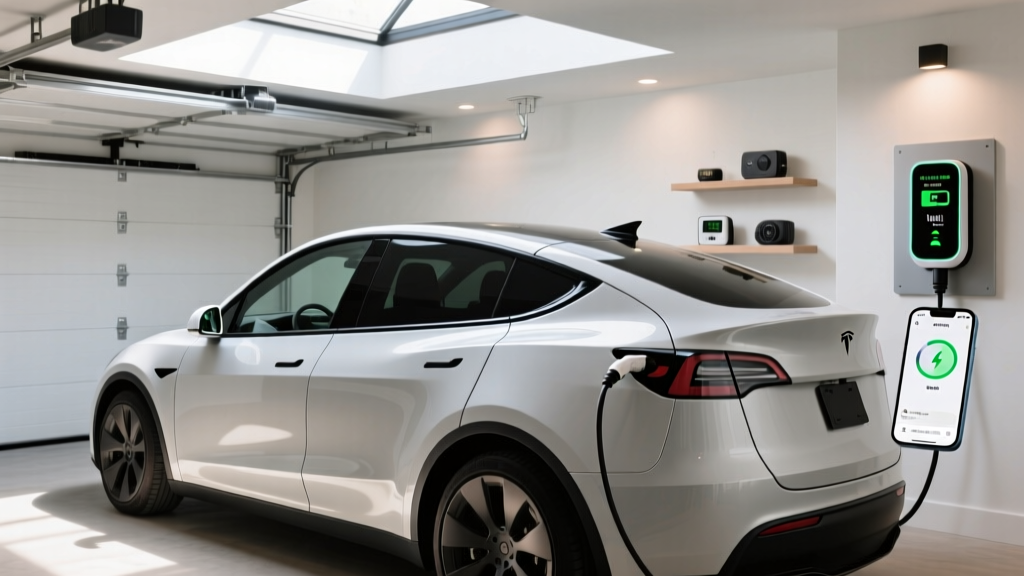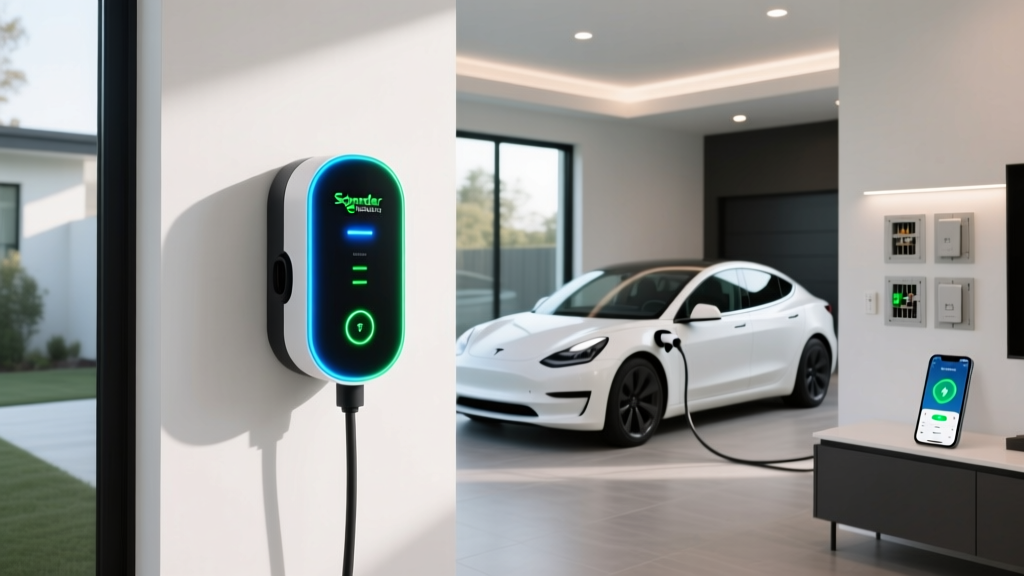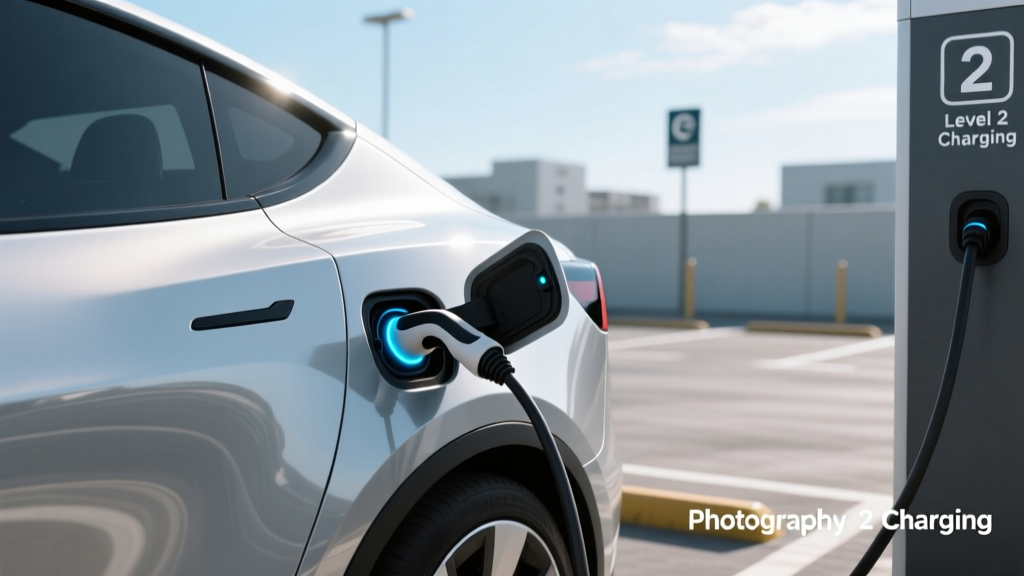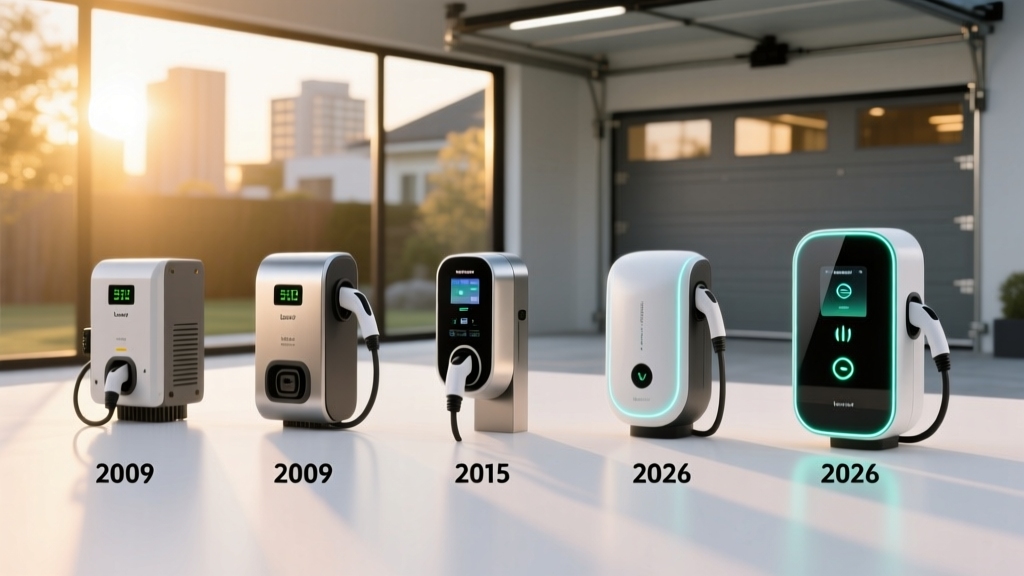
If you search for "chargers 2009 roster," you'll find a landscape that looks almost unrecognizable to today's EV owners. Back then, the Nissan Leaf was still a concept car preview, the Tesla Roadster was a low-volume novelty, and home charging meant a standard 120V wall outlet trickling energy into a battery overnight. Fast-forward to 2026, and the EV charging ecosystem has exploded — with Level 2 home chargers delivering up to 19.2 kW, NACS connectors becoming the industry standard, and public DC fast chargers routinely pushing 250–350 kW. This guide bridges that gap, explaining exactly what modern EV charging looks like, what it costs, and how to set up your home for electrification.
Charging Levels Explained: Level 1, Level 2, and DC Fast Charging
Every EV owner needs to understand three charging tiers. The critical distinction: kW (kilowatts) measures power — how fast energy flows into your car. kWh (kilowatt-hours) measures energy — how much your battery holds. Think of kW as the width of a hose and kWh as the size of the bucket.
| Level | Voltage | Power (kW) | Miles of Range Added Per Hour | Typical Use Case |
|---|---|---|---|---|
| Level 1 | 120V AC | 1.0–1.4 kW | 3–5 mi/hr | Overnight top-ups, PHEVs, emergencies |
| Level 2 | 240V AC | 3.3–19.2 kW | 12–75 mi/hr | Daily home charging, workplace, destinations |
| DC Fast Charge | 400–800V DC | 50–350 kW | 150–1,000+ mi/hr (peak) | Road trips, highway corridors, quick stops |
A few real-world caveats matter here. Level 1 charging at 1.4 kW will fully replenish a 75 kWh battery (like a Tesla Model Y Long Range) in roughly 54 hours — impractical for daily use. Level 2 at 11.5 kW (the most common home setup on a 48-amp circuit) cuts that to about 6.5 hours. DC fast charging is not linear: your car will accept peak kW only between roughly 10–50% state of charge (SoC), then taper significantly. A vehicle advertising "250 kW peak" might sustain that rate for only 5–8 minutes before dropping to 100 kW or lower as the battery fills.
Home EV Charger Installation: Electrical Requirements and Costs
Installing a Level 2 home charger is the single biggest quality-of-life upgrade an EV owner can make. But the total cost depends heavily on your home's electrical infrastructure.
Electrical Requirements
Most Level 2 chargers require a 240V dedicated circuit, similar to what an electric dryer or oven uses. Common configurations:
- 40-amp circuit / 32-amp continuous → 7.7 kW output (entry-level Level 2)
- 50-amp circuit / 40-amp continuous → 9.6 kW output (most popular)
- 60-amp circuit / 48-amp continuous → 11.5 kW output (high-power, requires robust panel)
- 80-amp circuit / 64-amp continuous → 15.4–19.2 kW output (rare in residential; requires 200A+ service)
The National Electrical Code (NEC) requires that continuous loads (including EV chargers) use no more than 80% of a circuit's rated capacity. A 50-amp breaker therefore delivers 40 amps continuous — yielding 9.6 kW at 240V.
Do You Need a Panel Upgrade?
Homes built before 1990 often have 100-amp electrical service. Adding a 50-amp EV circuit to a panel already near capacity may require a service upgrade to 200 amps — a significant expense. Homes with existing 200-amp service typically have enough headroom, but an electrician must perform a load calculation (NEC Article 220) to confirm.
| Component | Low End | High End | Notes |
|---|---|---|---|
| Level 2 Charger (Equipment) | $300 | $750 | Smart Wi-Fi chargers; basic models from $200 |
| Electrician Labor | $400 | $1,500 | Depends on run length from panel to garage |
| Permit & Inspection | $50 | $300 | Varies by municipality |
| Electrical Materials (conduit, wire) | $100 | $500 | Longer runs = more copper and conduit |
| Panel Upgrade (if needed) | $1,500 | $4,000 | 100A → 200A service upgrade |
| Total (no panel upgrade) | $850 | $3,050 | |
| Total (with panel upgrade) | $2,350 | $7,050 |
Pro tip: The IRS §30C Alternative Fuel Vehicle Refueling Property Credit offers up to $1,000 (30% of equipment and installation costs) for home charger installs, subject to census-tract eligibility. Check IRS guidelines and consult a tax professional — rules and qualifying areas change.
Connector Compatibility: NACS, CCS1, CHAdeMO, and Adapters
The connector landscape has shifted dramatically since 2009. Here's where things stand in 2026:
| Connector | Brands Using It | Notes |
|---|---|---|
| NACS (North American Charging Standard) | Tesla, Ford, GM, Rivian, Volvo, Polestar, Hyundai/Kia (2025+ models), most new 2026 EVs | Industry standard as of 2025–2026; native Supercharger access |
| CCS1 (Combined Charging System) | VW ID.4 (pre-2026), BMW iX (pre-2026), legacy non-Tesla EVs | Being phased out; adapters available for NACS stations |
| CHAdeMO | Nissan Leaf (discontinued), Mitsubishi Outlander PHEV (older models) | Legacy standard; limited new infrastructure |
| J1772 | All EVs (Level 2 AC) | Universal AC connector; NACS vehicles use a J1772-to-NACS adapter for non-Tesla Level 2 stations |
For home Level 2 charging, most chargers ship with a J1772 connector. If your EV uses NACS (as most 2026 models now do), you'll either use the included J1772-to-NACS adapter or purchase a charger with a native NACS plug. Tesla's Wall Connector now includes both NACS and J1772 compatibility via an adapter in the box.
For DC fast charging on road trips, NACS-equipped vehicles get native access to the Tesla Supercharger network — the largest and most reliable in North America, with over 30,000 stalls. CCS1 vehicles can use Electrify America, EVgo, and other networks, though reliability remains inconsistent compared to Superchargers.
How Much Does Charging Cost Per Mile vs. Gas?
Charging economics depend on where and when you plug in. Here are realistic 2026 scenarios for a vehicle averaging 3.0 miles per kWh (roughly 112 MPGe — typical for a midsize crossover EV like a Tesla Model Y or Hyundai Ioniq 5):
| Scenario | Rate | Cost Per Mile | Annual Cost (12,000 mi) |
|---|---|---|---|
| Home charging (off-peak utility rate) | $0.08/kWh | $0.027 | $320 |
| Home charging (national avg. residential) | $0.17/kWh | $0.057 | $680 |
| Public Level 2 (ChargePoint, etc.) | $0.25/kWh | $0.083 | $1,000 |
| DC Fast Charging (Electrify America) | $0.48/kWh | $0.160 | $1,920 |
| Gasoline vehicle (28 MPG combined, $3.40/gal) | $3.40/gal | $0.121 | $1,457 |
The takeaway: home charging at off-peak rates is roughly 4–5× cheaper per mile than gasoline. Even at national average residential rates, EVs cost less than half per mile. DC fast charging, however, can exceed gasoline costs — which is why home charging access is the single most important economic factor in EV ownership. Data from fueleconomy.gov confirms that efficiency varies by model, so check your specific vehicle's kWh/100mi rating.
Charging Time Examples: 10–80% for Common Battery Sizes
The 10–80% metric is the industry standard because charging above 80% slows dramatically to protect battery health. Here's what to expect across common scenarios:
- 60 kWh battery (e.g., base RWD EV) at a 150 kW DC charger: ~18–22 minutes (10–80%), assuming the vehicle can accept 150 kW peak
- 82 kWh battery (e.g., long-range AWD) at a 250 kW DC charger: ~20–25 minutes (10–80%), with taper above 50% SoC
- 100 kWh battery (e.g., large SUV/truck) at a 350 kW charger: ~22–30 minutes (10–80%), if the vehicle supports 800V architecture (e.g., Hyundai E-GMP, Porsche 800V)
- Home Level 2 (11.5 kW), 82 kWh battery from 10–80%: ~5 hours
- Home Level 2 (7.7 kW), 82 kWh battery from 10–80%: ~7.5 hours
Real-world charging curves matter more than peak numbers. A vehicle that peaks at 250 kW but drops to 80 kW above 50% SoC may actually charge slower overall than one sustaining 175 kW from 10–80%. Battery preconditioning — warming the pack before arriving at a charger — is essential for achieving advertised speeds, especially in cold weather.
Best Home EV Chargers for 2026: Equipment Recommendations
After evaluating reliability, smart features, build quality, and value, these are the top home Level 2 chargers for 2026:
ChargePoint Home Flex (NACS)
- Power: Up to 12 kW (50-amp circuit, adjustable down to 16A)
- Connector: Native NACS (J1772 version also available)
- Cable length: 23 feet
- Smart features: Wi-Fi, app scheduling, Alexa integration, energy tracking
- Price: ~$599
- Best for: Most EV owners wanting a reliable, flexible smart charger
Tesla Wall Connector (Gen 4)
- Power: Up to 11.5 kW (48-amp, 60-amp circuit)
- Connector: Native NACS with J1772 adapter included
- Cable length: 24 feet
- Smart features: Wi-Fi, OTA updates, power sharing (link multiple units on one circuit), Tesla app integration
- Price: ~$475
- Best for: Tesla and NACS-vehicle owners; excellent value and Supercharger-ecosystem integration
Emporia Level 2 Smart Charger
- Power: Up to 11.5 kW (48-amp)
- Connector: J1772 (NACS adapter needed for newer EVs)
- Cable length: 24 feet
- Smart features: Wi-Fi, real-time energy monitoring, solar integration, load management, works with Emporia Vue energy monitor
- Price: ~$399
- Best for: Budget-conscious buyers with solar panels or those wanting detailed energy data
Grizzl-E Smart (United Chargers)
- Power: Up to 10 kW (40-amp, adjustable)
- Connector: J1772 (NACS version available)
- Cable length: 24 feet
- Smart features: Wi-Fi, OCPP compatibility, amperage adjustment, extreme cold-rated (-40°F)
- Price: ~$549
- Best for: Cold-climate owners and those wanting a rugged, Canadian-built unit
Safety, Code Compliance, and Outdoor Installation
EV charger installation isn't a DIY project. The NEC (National Electrical Code) and local building codes require:
- Dedicated circuit: Your EV charger must have its own breaker — no sharing with other appliances.
- GFCI protection: NEC 2020 and later requires Ground Fault Circuit Interrupter protection for all EV charging outlets (240V included). Many hardwired chargers have built-in GFCI; plug-in units require a GFCI breaker.
- Outdoor rating: If mounting outside, the charger must carry a NEMA 4 (or IP65+) weather rating. All chargers listed above meet this standard.
- Permit and inspection: Most jurisdictions require an electrical permit and post-installation inspection. Skipping this can void homeowner's insurance claims related to electrical fires.
- Wire gauge: A 50-amp circuit typically requires 6 AWG copper wire; a 60-amp circuit needs 4 AWG. Your electrician will size this correctly.
For outdoor installations, consider a charger holster or mounting bracket with a cord management system to prevent tripping hazards and UV degradation. In regions with heavy snow or ice, a covered enclosure adds protection.
What Has Changed Since the 2009 Charger Roster?
The "chargers 2009 roster" was essentially a list of slow, proprietary, and poorly standardized equipment. The EV infrastructure of 2009 meant:
- Level 1 only for most owners (1.4 kW, 4 mi/hr)
- No unified public charging networks — mostly isolated pilot programs
- No CCS or NACS standards; every manufacturer used different connectors
- No home smart chargers with Wi-Fi or load management
- No DC fast charging available to consumers outside limited fleet programs
Today's ecosystem offers 11.5 kW home charging, 350 kW public DC fast charging, universal app-based payment, and a converging connector standard (NACS). The evolution from the chargers 2009 roster to 2026 represents one of the most rapid infrastructure buildouts in transportation history. According to the Alternative Fuels Data Center, the U.S. now has over 200,000 public charging ports — compared to virtually zero in 2009.
Frequently Asked Questions
How much does it cost to install a home EV charger?
Expect $850–$3,050 for a standard Level 2 installation (equipment, electrician, permit) if your panel has capacity. If a 200-amp service upgrade is needed, total costs range from $2,350–$7,050. The IRS §30C credit can offset up to $1,000 of this cost in eligible census tracts.
How fast will each charging level add range?
Level 1 adds 3–5 miles per hour. Level 2 at 11.5 kW adds roughly 35–45 miles per hour (depending on vehicle efficiency). DC fast charging adds 150–1,000+ miles per hour at peak, but only for short bursts during the 10–50% SoC window before tapering.
Which connector/charger is compatible with my EV?
Check your vehicle's charge port. Most 2025–2026 EVs use NACS. Older non-Tesla EVs may use CCS1 or CHAdeMO. For Level 2 home charging, J1772 is the universal AC connector — NACS vehicles use an included adapter. All new chargers now offer NACS compatibility.
How much does charging cost per mile vs. gas?
Home charging at off-peak rates costs roughly $0.03/mile — about 4× cheaper than gasoline at $0.12/mile. Even at the national residential average ($0.17/kWh), EV charging costs $0.06/mile. DC fast charging at $0.48/kWh can exceed gasoline costs at $0.16/mile.
What electrical upgrades might I need?
If your home has 100-amp service or your panel is near capacity, a 200-amp service upgrade ($1,500–$4,000) may be required. An electrician performs a NEC Article 220 load calculation to determine this. Homes with 200-amp service and available breaker spaces usually need no upgrade.