The Growing Problem of EV Charger Vandalism
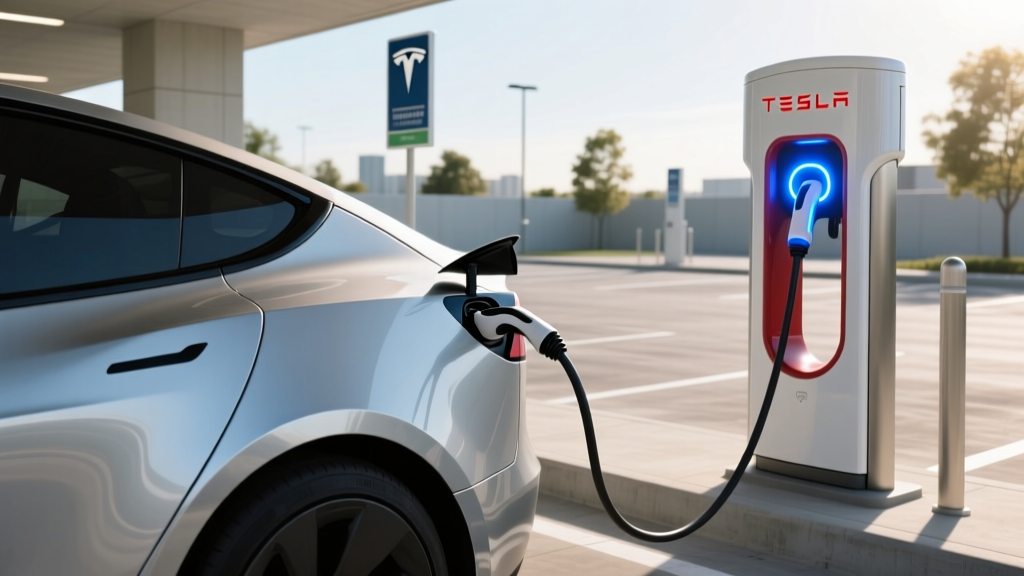
Electric vehicle adoption continues to accelerate, but so does a troubling trend: vandalism targeting EV charging infrastructure. According to UK-based reports from Detertech and other monitoring services, incidents of EV chargepoint vandalism roughly doubled between 2023 and 2024. While the UK has seen the sharpest documented spike, the pattern mirrors growing concerns in North America as well, where public charging networks like Electrify America and EVgo have reported increased equipment damage and cable theft.
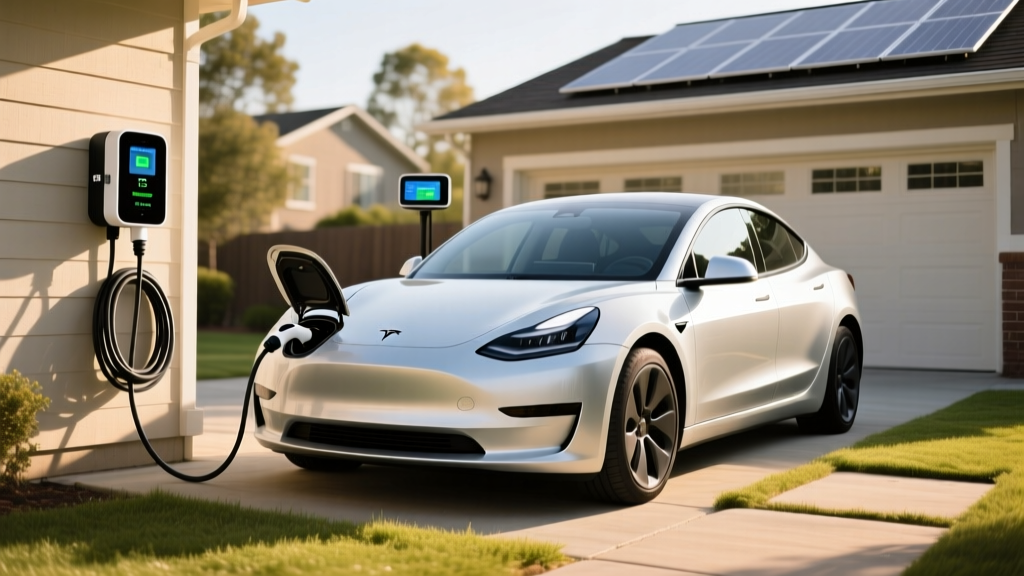
For EV owners, this trend underscores a critical advantage of home charging: control over your equipment's security. A properly installed Level 2 home charger eliminates dependence on vulnerable public infrastructure while delivering faster, cheaper, and more reliable charging. Let's break down what you need to know about setting up a secure, efficient home charging system in 2026.
Understanding EV Charging Levels and Speeds
Before selecting equipment, you need to understand the three charging tiers available to EV owners. The distinction between kW (kilowatts) and kWh (kilowatt-hours) is essential: kW measures charging power (the rate of energy delivery), while kWh measures battery capacity (the total energy stored). Think of kW as water flow rate and kWh as the size of your tank.
| Level | Voltage | Power (kW) | Miles of Range Added Per Hour | Typical Use Case |
|---|---|---|---|---|
| Level 1 | 120V AC | 1.4–1.9 kW | 3–5 miles | Overnight trickle charging, PHEVs |
| Level 2 | 240V AC | 3.3–19.2 kW | 12–75 miles | Home, workplace, public destinations |
| DC Fast Charging | 400–800V DC | 50–350 kW | 150–1,000+ miles (theoretical) | Highway travel, rapid top-ups |
Real-world charging time examples:
- Tesla Model Y (75 kWh battery, ~310 mi EPA range): 10–80% in ~25 minutes at a 250 kW Supercharger; ~8–10 hours on a 48A Level 2 home charger (11.5 kW)
- Hyundai Ioniq 5 (77.4 kWh battery, ~303 mi EPA range): 10–80% in ~18 minutes at a 350 kW DC fast charger (with battery preconditioning); ~7–9 hours on a 48A Level 2 charger
- Ford F-150 Lightning Extended Range (131 kWh battery, ~320 mi EPA range): 10–80% in ~41 minutes at a 150 kW DC fast charger; ~13–15 hours on a 48A Level 2 charger
Note that DC fast charging speeds are not sustained — the charge curve tapers significantly above 80% State of Charge (SoC) to protect battery health. Peak kW ratings represent the maximum rate, typically achieved between 10–50% SoC.
Home Charger Installation: Electrical Requirements and Costs
A Level 2 home charger is the backbone of reliable EV ownership. Most residential installations require a dedicated 240V circuit, similar to what powers an electric dryer or oven. The specific amperage depends on your charger's power output:
- 32A charger (7.7 kW): Requires a 40A breaker (NEC code mandates 125% circuit capacity for continuous loads)
- 40A charger (9.6 kW): Requires a 50A breaker
- 48A charger (11.5 kW): Requires a 60A breaker
- 80A charger (19.2 kW): Requires a 100A breaker — often necessitates a panel upgrade
Typical Home Charger Installation Cost Breakdown (2026)
| Component | Cost Range | Notes |
|---|---|---|
| Level 2 Charger Equipment | $300–$750 | Varies by brand, power output, smart features |
| Electrician Labor | $400–$1,500 | Depends on run length, conduit, wall type |
| Permit Fees | $50–$250 | Required in most jurisdictions for code compliance |
| Electrical Panel Upgrade (if needed) | $1,500–$3,500 | Older homes with 100A service may need 200A upgrade |
| Total (no panel upgrade) | $750–$2,500 | Most common scenario for newer homes |
| Total (with panel upgrade) | $2,250–$6,000 | Older homes or high-power installations |
Panel upgrade warning: Homes built before 1990 often have 100A electrical service. Adding a 48A or higher EV charger alongside existing loads (HVAC, electric range, dryer) may exceed your panel's capacity. A licensed electrician can perform a load calculation to determine whether an upgrade to 200A service is necessary. Some utilities offer rebates for panel upgrades tied to EV adoption — check with your local provider.
Federal tax credit note: The IRS §30D credit applies to vehicle purchases, not home charging equipment. However, the Residential Clean Energy Credit (25C) may cover up to 30% of qualified home energy improvements in some cases. Consult a tax professional for eligibility specifics.
Connector Compatibility: NACS, CCS1, and CHAdeMO
The North American EV market has undergone a major connector transition. Tesla's NACS (North American Charging Standard) has become the dominant plug, with most automakers adopting it for 2025 and 2026 model-year vehicles. Here's the current landscape:
| Connector | Adopting Brands | Adapter Needed? |
|---|---|---|
| NACS (Tesla) | Tesla, Ford, GM, Rivian, Volvo, Polestar, Mercedes-Benz, BMW (new models) | CCS-to-NACS adapter for legacy CCS chargers (~$150–$250) |
| CCS1 | Hyundai, Kia, Volkswagen, some legacy models from Ford/GM | NACS-to-CCS adapter if accessing Tesla Superchargers |
| CHAdeMO | Nissan Leaf (legacy), Mitsubishi Outlander PHEV | Limited adapter options; network shrinking |
Home charger selection tip: If you're buying a new 2025/2026 EV with NACS, purchase a NACS-connector home charger. If you own a CCS-equipped vehicle but plan to switch to NACS in the future, consider a charger with a swappable connector or budget for an adapter. Universal J1772 chargers with adapter dongles offer flexibility but add cable bulk.
Equipment Recommendations: Top Home Chargers for 2026
Based on reliability, smart features, and value, here are recommended Level 2 chargers for home installation:
ChargePoint Home Flex
- Power Output: Up to 12 kW (50A) — adjustable down to 16A/32A/40A/48A
- Connector: NACS or J1772 (select at purchase)
- Cable Length: 23 feet
- Smart Features: Wi-Fi enabled, app scheduling, Alexa integration, load sharing for multi-charger setups
- Price: ~$550–$650
- Best For: Flexible amperage adjustment for homes with limited panel capacity
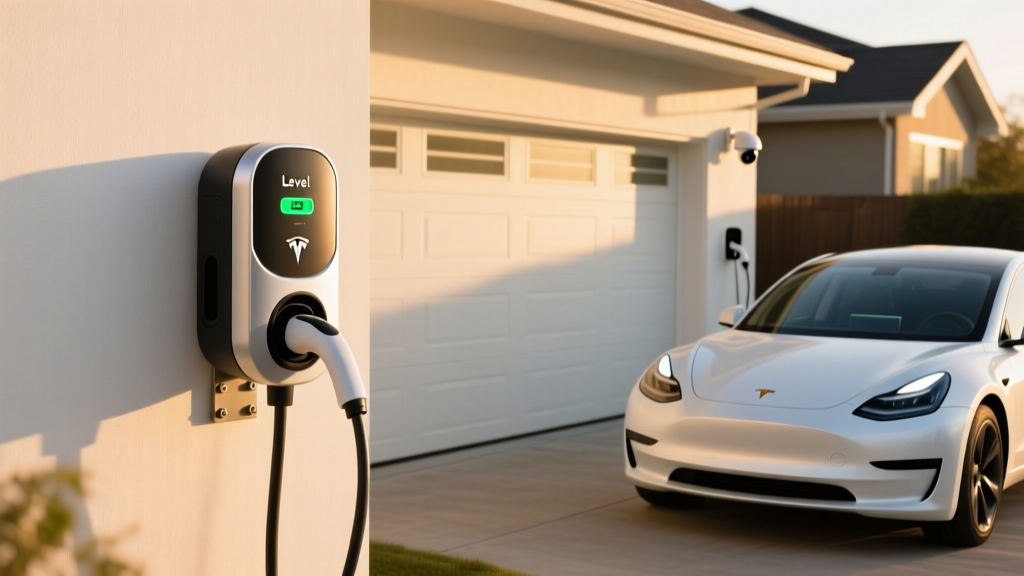
Tesla Wall Connector (Gen 4)
- Power Output: Up to 11.5 kW (48A)
- Connector: NACS native
- Cable Length: 24 feet
- Smart Features: Wi-Fi, over-the-air updates, power sharing, integrated cable management
- Price: ~$450–$500
- Best For: Tesla owners and NACS-adopting vehicles; excellent value
Emporia Level 2 EV Charger
- Power Output: Up to 11.5 kW (48A)
- Connector: J1772 (with NACS adapter available)
- Cable Length: 24 feet
- Smart Features: Energy monitoring, solar integration, time-of-use scheduling
- Price: ~$350–$400
- Best For: Budget-conscious buyers with solar panels or energy monitoring needs
Charging Cost: Home vs. Public vs. Gas
One of the strongest arguments for home charging is economics. Even as public charging prices have risen, home electricity rates remain significantly cheaper per mile driven.
| Charging Scenario | Cost per kWh | Cost per Mile (at 3 mi/kWh efficiency) | Annual Cost (12,000 miles) |
|---|---|---|---|
| Home (off-peak TOU rate) | $0.08–$0.14 | $0.03–$0.05 | $360–$600 |
| Home (standard rate) | $0.15–$0.22 | $0.05–$0.07 | $600–$840 |
| Public Level 2 (network) | $0.25–$0.49 | $0.08–$0.16 | $960–$1,920 |
| DC Fast Charging (network) | $0.35–$0.69 | $0.12–$0.23 | $1,440–$2,760 |
| Gas Vehicle (28 MPG avg, $3.50/gal) | N/A | $0.125 | $1,500 |
Key insight: Home charging on an off-peak time-of-use (TOU) plan delivers fuel costs 70–80% lower than gasoline. Even exclusive DC fast charging is roughly cost-competitive with gas, though it's harder on battery longevity. Most EV owners charge at home 80–90% of the time, reserving DC fast charging for road trips.
Protecting Your Charger from Vandalism and Theft
With public charging infrastructure facing increased vandalism — from cable cutting to screen smashing and payment terminal damage — home charging offers both cost and security advantages. If you do install an outdoor charger or rely on public networks, consider these protective measures:
- Garage installation: The simplest protection. A garage-mounted charger is shielded from weather and vandals alike.
- Locking connector holsters: Some chargers (like the Tesla Wall Connector) support app-based locking that prevents unauthorized unplugging.
- Security cameras: A visible camera near your outdoor charger deters opportunistic vandalism. Many smart chargers integrate with home security systems.
- Cable management: Retractable reels or wall-mounted cable organizers reduce tripping hazards and make cables less tempting targets for copper thieves.
- Outdoor-rated equipment: Ensure your charger carries a NEMA 4 or IP65 rating for weather resistance. This doesn't prevent vandalism but ensures the unit survives exposure.
Safety, Code Compliance, and Permits
Electrical safety isn't optional — improper charger installation can cause fires, void insurance, and fail home inspections. Key requirements include:
- Dedicated circuit: Your EV charger must have its own breaker — no sharing with other appliances.
- GFCI protection: The 2020 NEC update requires GFCI (Ground Fault Circuit Interrupter) protection for all EV charging outlets. Hardwired chargers often have built-in GFCI; plug-in units require a GFCI breaker.
- Permit and inspection: Most jurisdictions require an electrical permit for EV charger installation. The inspection ensures code compliance and protects your home insurance coverage.
- Outdoor rating: If installing outside, the charger and any junction boxes must carry appropriate weatherproofing ratings (NEMA 4 minimum).
- Load calculation: A licensed electrician will calculate your panel's available capacity to ensure the charger doesn't overload your system.
Skipping the permit might save $100–$250 upfront, but it can void your homeowner's insurance in the event of an electrical fire and create problems during a future home sale.
Frequently Asked Questions
How much does it cost to install a home EV charger?
A typical Level 2 home charger installation costs $750–$2,500 when no panel upgrade is needed. This includes the charger unit ($300–$750), electrician labor ($400–$1,500), and permit fees ($50–$250). Homes requiring a 200A panel upgrade should budget an additional $1,500–$3,500.
How fast will each charging level add range?
Level 1 (120V) adds 3–5 miles per hour — suitable only for PHEVs or overnight trickle charging. Level 2 (240V) adds 12–75 miles per hour depending on amperage (a 48A/11.5 kW charger adds roughly 35–45 miles per hour for most EVs). DC fast charging adds 150–300+ miles in 15–30 minutes, depending on vehicle acceptance rate and charger output.
Which connector/charger is compatible with my EV?
For 2025–2026 model-year vehicles, check your manufacturer's specs. Most new EVs from Ford, GM, Rivian, Volvo, and Tesla use NACS. Hyundai, Kia, and some legacy models still use CCS1. The Nissan Leaf uses CHAdeMO. Match your home charger's connector to your vehicle, or plan for an adapter.
How much does charging cost per mile vs. gas?
Home charging on a standard rate ($0.15–$0.22/kWh) costs roughly $0.05–$0.07 per mile for an efficient EV (3 mi/kWh). A comparable gas vehicle at 28 MPG and $3.50/gallon costs about $0.125 per mile. Home charging saves 45–60% on fuel costs; off-peak TOU rates push savings to 70–80%.
What electrical upgrades might I need?
If your home has a 100A electrical panel (common in pre-1990 construction), adding a 48A EV charger may require a panel upgrade to 200A service ($1,500–$3,500). Homes with existing 200A panels typically have sufficient capacity for a 32A–48A charger without upgrades. A licensed electrician can perform a load calculation to determine your specific needs.
Is public EV charger vandalism a real concern?
Yes. Reports from the UK (Detertech, Zap-Map) documented a roughly 2x increase in chargepoint vandalism incidents from 2023 to 2024, including cable theft, screen damage, and payment terminal destruction. While North American data is less centralized, network operators have acknowledged rising maintenance costs from vandalism. This trend reinforces the value of reliable home charging infrastructure.