If you've ever pulled up to a DC fast charging station only to find every stall out of order, you've experienced the EV charger uptime problem firsthand. While public charging infrastructure has expanded dramatically, reliability remains the single biggest friction point for EV owners who depend on public networks. Network uptime percentages can be misleading, and understanding what they actually mean — and how to plan around them — is essential for road-trip confidence.
This guide breaks down public charger reliability by network, explains what drives downtime, and makes the case for why a home Level 2 installation is the most practical uptime solution available to most EV owners. We'll also cover charging levels, home installation costs, connector compatibility, and equipment picks so you can build a charging strategy that actually works.
What EV Charger Uptime Actually Means
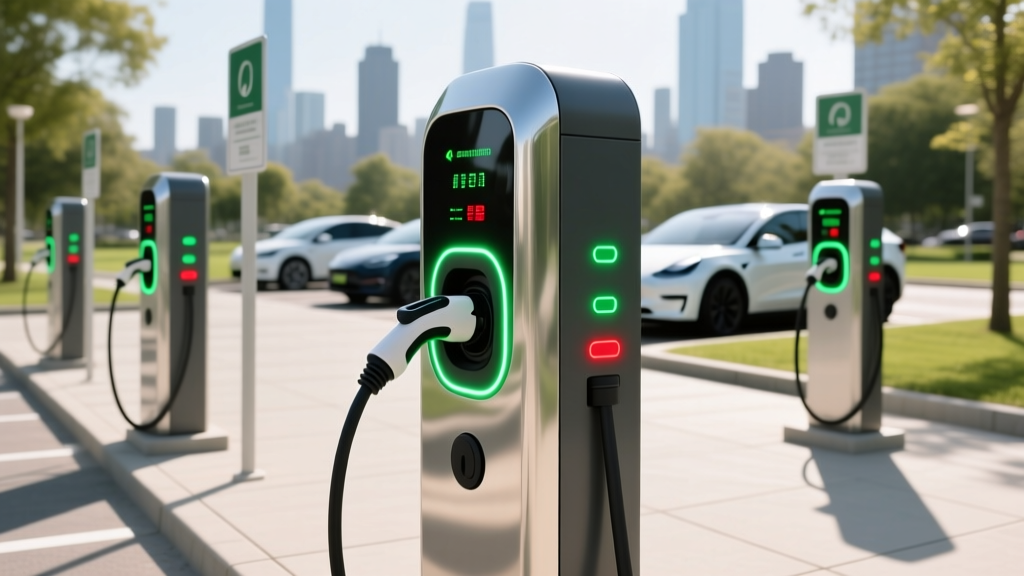
When charging networks advertise "97% uptime," they're typically measuring the percentage of time individual chargers are capable of delivering a charge — not whether every stall at a station is functional simultaneously. A station with four stalls where one is broken still reports 75% uptime. A network-wide average of 95% means that across hundreds of stations, 5% of chargers are non-operational at any given time. On a road trip with three planned DC fast charging stops, that compounds quickly.
The U.S. Department of Energy's Alternative Fuels Data Center tracks charger status, and independent testing by organizations like J.D. Power has consistently shown that real-world charger reliability lags behind advertised figures. Common failure modes include:
- Payment system failures: The charger works, but the card reader or app handshake fails — functionally the same as being broken.
- Connector damage: Cables get dropped, run over, or suffer weather damage, especially at high-traffic corridors.
- Software faults: Firmware crashes or communication errors between the charger and the vehicle's battery management system.
- Grid-side outages: The station loses utility power entirely, taking every stall offline.
- Cable length issues: Short cables that can't reach your charge port aren't technically "down," but they're unusable.
Charging Levels Explained: Speed, Power, and Range Added
Before evaluating where to charge, you need to understand the three charging levels and what they deliver. Remember the critical distinction: kW (kilowatts) measures power — how fast energy flows into your battery. kWh (kilowatt-hours) measures energy — the total capacity of your battery. Think of kW as the flow rate of a hose and kWh as the size of the bucket.
| Level | Power Source | Typical kW | Miles of Range Added per Hour | Best For |
|---|---|---|---|---|
| Level 1 | 120V household outlet | 1.0–1.4 kW | 3–5 miles | Overnight top-ups, PHEVs, low-mileage drivers |
| Level 2 | 240V dedicated circuit | 7.2–19.2 kW | 20–60 miles | Daily home charging, workplace charging |
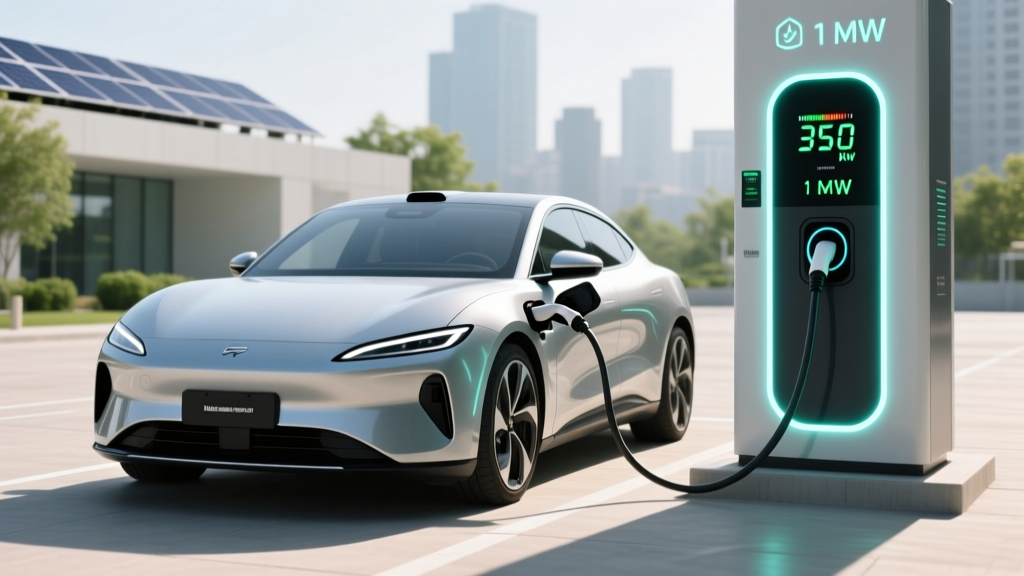
| DC Fast Charge | 480V+ commercial supply | 50–350 kW | 150–1,000+ miles (equivalent rate) | Road trips, quick top-ups away from home |
Charging Time Examples: 10-80% SoC
Charging slows significantly above 80% State of Charge (SoC) as the battery management system reduces current to protect cell health. Here's what 10-80% charging looks like for common battery sizes:
- 60 kWh battery (e.g., base Tesla Model 3 RWD): ~25 minutes on a 150 kW DC fast charger (peak); ~4.5 hours on a 9.6 kW Level 2 home charger.
- 84 kWh battery (e.g., Hyundai Ioniq 5 Long Range): ~18 minutes on a 350 kW charger (Ioniq 5's 800V architecture peaks near 240 kW); ~6.5 hours on 9.6 kW Level 2.
- 100 kWh battery (e.g., Ford F-150 Lightning Extended Range): ~30-35 minutes on a 150 kW DC fast charger; ~8 hours on 9.6 kW Level 2.
These figures assume battery preconditioning (the vehicle warming the battery to optimal charging temperature before arrival). Without preconditioning — especially in cold weather — expect 10-80% times to increase by 30-50% as the battery limits charge acceptance until cells warm up.
Public Charging Networks: Uptime and Reliability Compared
Not all networks are equal. Here's a reliability snapshot based on aggregated user reports and industry data as of 2025-2026:
- Tesla Supercharger: Widely regarded as the most reliable network, with uptime consistently above 99%. The vertically integrated hardware and software stack minimizes handshake failures. Now open to non-Tesla EVs via NACS adapter or built-in NACS port on newer models (Ford F-150 Lightning, Rivian, and others shipping with native NACS in 2025+).
- Electrify America: The largest non-Tesla DC fast network. Uptime has improved but historically hovered around 85-90%. Newer EA Hyperfast stations (350 kW-capable) tend to be more reliable than legacy hardware.
- EVgo: Mixed reliability, generally 88-93% uptime. Stronger in urban areas with newer installations.
- ChargePoint: Primarily Level 2 with some DC fast locations. Level 2 uptime is generally good (92-95%); DC fast reliability is more variable.
- Ionna (formerly BMW/Mercedes/VW/Stellantis/Hyundai joint venture): Newer network, still building out. Early reports suggest high reliability on new hardware, but limited station count.
The transition to NACS (North American Charging Standard) is improving the overall ecosystem by consolidating connectors and reducing adapter-related failures. If your EV has a CCS1 port, carrying a NACS-to-CCS adapter (available from Tesla, Lectron, and A2Z for $150-$250) unlocks Supercharger access as a reliable backup.
Connector Compatibility: Which Plug Does Your EV Need?
Connector standards have consolidated significantly. Here's what you'll encounter in North America:
| Connector | Brands Using It (Native) | Notes |
|---|---|---|
| NACS (Tesla) | Tesla, Ford (2025+), Rivian (2025+), GM (2025+), Hyundai/Kia (2025+), BMW, Volvo, Polestar, Mercedes, and most others transitioning | Becoming the de facto North American standard. Compact, no latch mechanism. |
| CCS1 | Legacy models from VW, Audi, BMW, Hyundai/Kia, Ford, GM (pre-2025 models) | Still widely deployed at public stations. Adapters available for NACS stations. |
| CHAdeMO | Nissan Leaf (discontinued after 2025 model year), Mitsubishi Outlander PHEV (older models) | Being phased out. Limited new station deployments. |
| J1772 | All EVs (Level 2 AC charging) | Standard AC connector. NACS vehicles use an adapter for J1772 Level 2 stations. |
If you're buying a 2025 or 2026 model-year EV, it almost certainly ships with a NACS port. For older CCS1-equipped vehicles, a quality NACS adapter is the single most impactful accessory you can buy for charging reliability.
Home Charging Installation: Requirements, Costs, and Upgrades
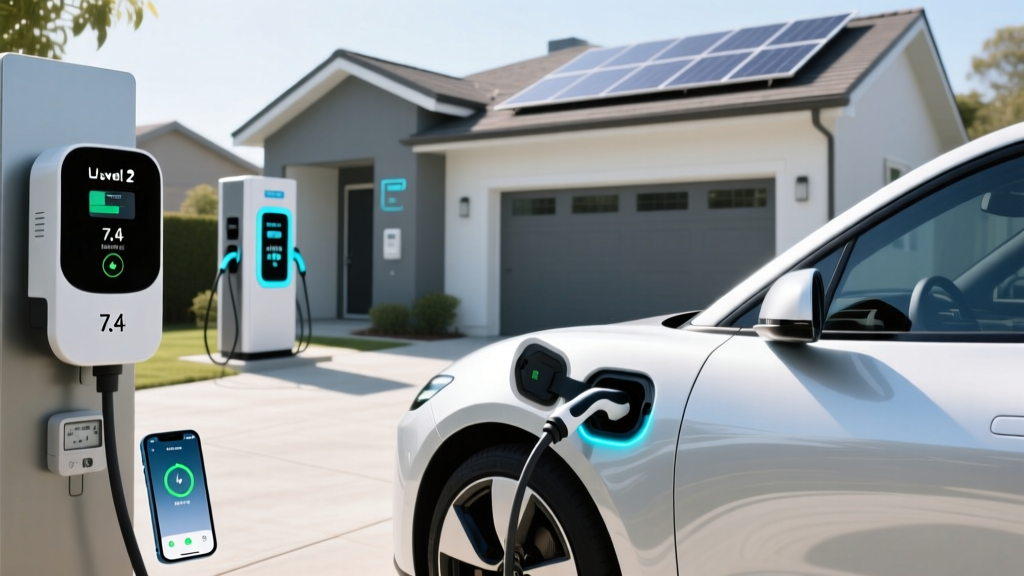
The strongest uptime guarantee is a charger in your own garage. A properly installed Level 2 home charger delivers 99.9%+ uptime because you control maintenance and there's no payment system to fail. Here's what's involved:
Electrical Requirements
A typical Level 2 home charger requires a 240V dedicated circuit, similar to what powers an electric dryer or oven. The most common setup is a 40-amp or 48-amp circuit supporting a 32-amp or 40-amp continuous draw (electrical code requires circuits to be rated at 125% of continuous load). Higher-power chargers like the Tesla Wall Connector at 48 amps require a 60-amp circuit.
Panel Upgrade Considerations
Homes with older 100-amp electrical panels may not have sufficient spare capacity for a 40-60 amp EV circuit. A licensed electrician will perform a load calculation to determine whether your panel can handle the additional draw. If an upgrade to a 200-amp panel is needed, expect to add $1,500–$3,500 to your project cost. Some utilities offer rebates for panel upgrades tied to EV adoption.
Alternatives to a full panel upgrade include:
- Lower-amperage charger: A 16-amp or 24-amp charger on a 20A or 30A circuit adds 12-20 miles of range per hour — sufficient for many daily drivers.
- Smart panel/load management systems: Devices like the SPAN smart panel or Emporia load-management module can dynamically allocate power to the charger only when other household loads are low, avoiding a full panel upgrade.
Installation Cost Breakdown
| Component | Cost Range | Notes |
|---|---|---|
| Level 2 Charger Equipment | $300–$700 | Varies by brand, power output, and smart features |
| Electrician Labor (standard install) | $400–$1,200 | Depends on run length from panel to garage/carport |
| Electrical Permit | $50–$200 | Required in most jurisdictions; varies by locality |
| Panel Upgrade (if needed) | $1,500–$3,500 | 100A to 200A service upgrade |
| Total (no panel upgrade) | $750–$2,100 | Most common scenario for newer homes |
| Total (with panel upgrade) | $2,250–$5,600 | Older homes with 100A service |
Always hire a licensed electrician and pull a permit. Unpermitted EV charger installations can void home insurance coverage and create fire risk. The National Electrical Code (NEC) requires a GFCI-protected circuit for outdoor installations and specifies conductor sizing based on circuit amperage and run length.
Safety and Code Considerations
- Dedicated circuit: Your EV charger should never share a circuit with other major appliances.
- GFCI protection: Required for all outdoor receptacles and recommended for garage installations (NEC 2023+ code).
- Outdoor rating: If installing outside, ensure the charger carries a NEMA 4 or IP65 weather-resistance rating.
- Cable management: Wall-mounted cable organizers prevent tripping hazards and connector damage.
- Wi-Fi connectivity: Smart chargers with Wi-Fi enable scheduled charging during off-peak utility rates, reducing your per-kWh cost significantly.
Level 2 Charger Equipment Recommendations
These are proven, well-built chargers we recommend based on power output, reliability, and features:
Tesla Wall Connector (Gen 3)
- Power: Up to 11.5 kW (48A on 60A circuit)
- Connector: NACS native; J1772 adapter included
- Cable length: 24 feet
- Smart features: Wi-Fi, OTA updates, power sharing between multiple units
- Price: ~$475
- Best for: Tesla owners and any NACS-equipped EV
ChargePoint Home Flex
- Power: Up to 12 kW (50A on 60A circuit); configurable down to 16A
- Connector: J1772 (NACS adapter available)
- Cable length: 23 feet
- Smart features: Wi-Fi, app scheduling, Alexa integration, flexible amperage
- Price: ~$550–$700
- Best for: CCS1/J1772 vehicles; homes needing adjustable amperage
Emporia Level 2 EV Charger
- Power: Up to 11.5 kW (48A on 60A circuit)
- Connector: J1772 (NACS adapter available)
- Cable length: 24 feet
- Smart features: Wi-Fi, energy monitoring, solar integration, load management
- Price: ~$400
- Best for: Budget-conscious buyers; solar-panel households
Grizzl-E Smart
- Power: Up to 10 kW (40A on 50A circuit)
- Connector: J1772 (NACS adapter available)
- Cable length: 24 feet
- Smart features: Wi-Fi, OCPP compatibility, extreme cold rating (-40°F)
- Price: ~$450
- Best for: Cold-climate owners; outdoor installs
All of these chargers are hardwired or plug into a NEMA 14-50 receptacle. Hardwired installations are preferred for reliability (no plug to loosen) and typically cost less in labor since no receptacle is needed.
Cost to Charge: Home vs. Public vs. Gas
One of the biggest ownership advantages of an EV is fuel cost — but only if you charge strategically. Public DC fast charging can approach or even exceed the per-mile cost of gasoline if used exclusively.
| Charging Scenario | Typical $/kWh | Cost per Mile | Equivalent Gasoline $/gallon |
|---|---|---|---|
| Home Level 2 (off-peak utility rate) | $0.08–$0.14 | $0.023–$0.040 | $0.80–$1.40 |
| Home Level 2 (standard utility rate) | $0.13–$0.18 | $0.037–$0.051 | $1.30–$1.80 |
| Public Level 2 (network pricing) | $0.20–$0.35 | $0.057–$0.100 | $2.00–$3.50 |
| DC Fast Charging (EA, EVgo, etc.) | $0.35–$0.55 | $0.100–$0.157 | $3.50–$5.50 |
| Tesla Supercharger (average) | $0.25–$0.40 | $0.071–$0.114 | $2.50–$4.00 |
| Gasoline (30 MPG combined, $3.40/gal) | — | $0.113 | $3.40 |
The takeaway is clear: home charging is where the economics work best. At off-peak rates, charging an EV costs roughly a quarter of what gasoline costs per mile. Even at standard rates, you're paying the equivalent of $1.30-$1.80 per gallon. But exclusive reliance on DC fast charging erases the cost advantage entirely — and exposes you to charger uptime risk on every fill-up.
For context, the EPA's fueleconomy.gov lists most 2025-2026 EVs at 100-130 MPGe combined, with efficiency figures between 2.8 and 4.0 miles per kWh depending on the vehicle.
Strategies to Maximize Your Charging Reliability
Whether you rely on home charging, public networks, or a mix, these practices minimize your exposure to charger downtime:
- Install Level 2 at home. This single step eliminates uptime concerns for 90%+ of your charging. You start every day with a full battery.
- Use PlugShare or A Better Routeplanner before road trips. Check real-time charger status and recent user check-ins. Stations with recent "works" reports are safer bets.
- Carry a NACS adapter if your EV has CCS1. Access to Tesla Superchargers doubles your reliable charging options on most highway corridors.
- Plan with redundancy. Identify a backup station within 15-20 miles of every planned DC fast stop. Don't plan to arrive at a charger with less than 15% SoC remaining — leave buffer for a detour.
- Charge to 80% at DC fast stations, not 100%. Charging above 80% SoC is dramatically slower (the charge curve tapers to protect battery health) and ties up the stall. Charge to 80%, then drive.
- Precondition your battery. Most EVs allow you to set a charging station as your navigation destination, which triggers battery preconditioning. This is critical in cold weather — an unpreconditioned battery may accept only 30-50 kW instead of its rated 150-250 kW peak.
Frequently Asked Questions
How much does it cost to install a home EV charger?
A standard Level 2 home charger installation costs between $750 and $2,100 when no panel upgrade is needed, covering the charger unit ($300-$700), electrician labor ($400-$1,200), and permit ($50-$200). If your home has an older 100-amp electrical panel that requires upgrading to 200 amps, total costs can reach $2,250-$5,600. Get at least two quotes from licensed electricians, and check whether your utility offers an EV charger rebate — many cover $250-$500 of equipment or installation costs.
How fast will each charging level add range?
Level 1 (120V) adds 3-5 miles of range per hour — adequate only for plug-in hybrids or very low daily mileage. Level 2 (240V) adds 20-60 miles per hour depending on the charger's kW output and your vehicle's onboard charger capacity. DC fast charging adds the equivalent of 150-1,000+ miles per hour at peak rates, but sessions are typically measured in minutes (18-35 minutes for 10-80%) rather than hours due to the charge curve taper above 80%.
Which connector/charger is compatible with my EV?
Check your vehicle's charge port. If you have a 2025 or newer model from Tesla, Ford, GM, Hyundai/Kia, Rivian, BMW, or most other major brands, your EV has a NACS port. Older models (2024 and prior from most non-Tesla brands) use CCS1. The Nissan Leaf uses CHAdeMO. For Level 2 AC charging, all EVs use J1772 — NACS vehicles include a J1772 adapter. When buying a home charger, match the connector to your vehicle or ensure a quality adapter is available.
How much does charging cost per mile vs gas?
At home on off-peak electricity rates ($0.08-$0.14/kWh), an EV costs $0.023-$0.040 per mile — roughly one-quarter the cost of gasoline at $3.40/gallon and 30 MPG ($0.113/mile). On standard utility rates, expect $0.037-$0.051/mile. Public DC fast charging is significantly more expensive at $0.10-$0.16/mile, approaching or exceeding gasoline costs. The economics strongly favor home charging as your primary strategy.
What electrical upgrades might I need?
The most common upgrade is a new 240V circuit run from your electrical panel to the charger location. If your panel has sufficient spare amperage (determined by a load calculation), this is straightforward. If you have an older 100-amp panel or your existing loads are near capacity, you may need a panel upgrade to 200 amps ($1,500-$3,500). Alternatives include installing a lower-amperage charger (16-24A) or using a smart load-management device that dynamically limits charger draw when other household loads are high. Your electrician will advise on the best path after performing the load calculation.
Why does charger uptime matter more than station count?
A corridor with 10 stations at 85% uptime means roughly 1-2 of those stations will have issues at any time. A corridor with 5 stations at 99% uptime is more reliable for trip planning. Network reliability matters more than raw station density, especially in rural areas where your next option may be 40+ miles away. This is why Tesla Supercharger access — with its 99%+ uptime — is so valuable even where other networks have more locations.
Public EV charging infrastructure is improving, but the most reliable charging experience you can buy is a properly installed Level 2 charger in your own home. Pair that with strategic use of high-uptime DC fast networks on road trips, and charger downtime becomes a rare inconvenience rather than a daily concern.