If you've been searching for pictures of chargers to figure out what you actually need for your electric vehicle, you're not alone. The EV charging landscape in 2026 involves three distinct charging levels, multiple connector standards, and home installation variables that can swing your total cost by thousands of dollars. This guide walks through exactly what each charger type looks like, what it delivers in kilowatts (kW — the rate of power flow), and what it costs to install and operate.
A critical distinction before we start: kW (kilowatts) measures charging power — how fast energy flows into your battery. kWh (kilowatt-hours) measures energy capacity — how much total energy your battery holds. A 100 kWh battery charged at 10 kW takes roughly 10 hours. Confusing these two is the most common EV literacy mistake, and it leads to wildly wrong expectations about charging times.
The Three Charging Levels: Speeds and Range Added Per Hour
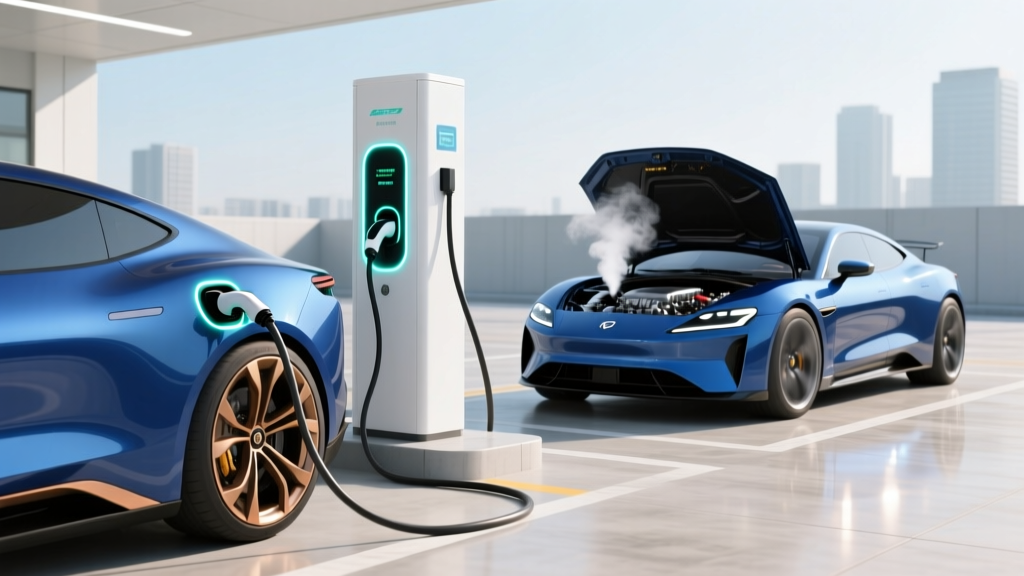
Every EV sold in the US charges on one or more of three levels. The hardware looks very different at each stage — from a simple cord plugged into a standard wall outlet to a refrigerator-sized DC fast charger at a highway rest stop.
| Level | Voltage | Max Power (kW) | Miles of Range Added Per Hour | Typical 10–80% Time (75 kWh Battery) | Common Use Case |
|---|---|---|---|---|---|
| Level 1 | 120V AC | 1.0–1.9 kW | 3–5 mi/hr | ~50–70 hours | Overnight trickle; PHEV owners |
| Level 2 | 240V AC | 3.3–19.2 kW | 12–75 mi/hr | ~4–12 hours (varies by kW) | Home daily charging; workplace |
| DC Fast Charge | 200–900V DC | 50–350+ kW | 150–1,200+ mi/hr (peak) | ~15–35 minutes | Road trips; highway corridors |
Level 1 uses a standard 120V household outlet — the same one your phone charger uses. The cord (called an EVSE — Electric Vehicle Supply Equipment) usually ships with the car. It's slow, but for a PHEV with a 15 kWh battery, an overnight session fully replenishes electric-only range. For a full BEV with an 80+ kWh battery, Level 1 is impractical as a primary strategy.
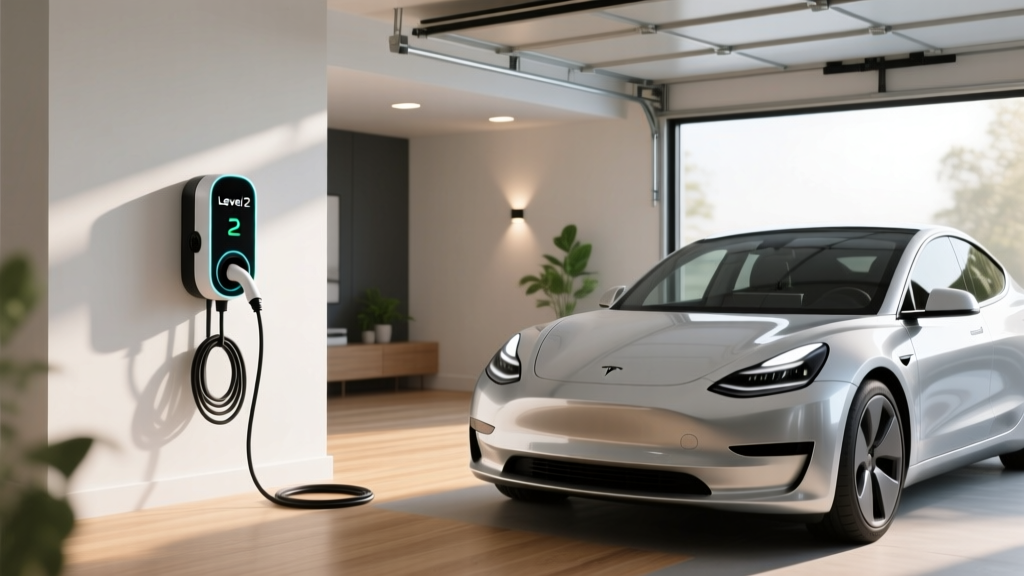
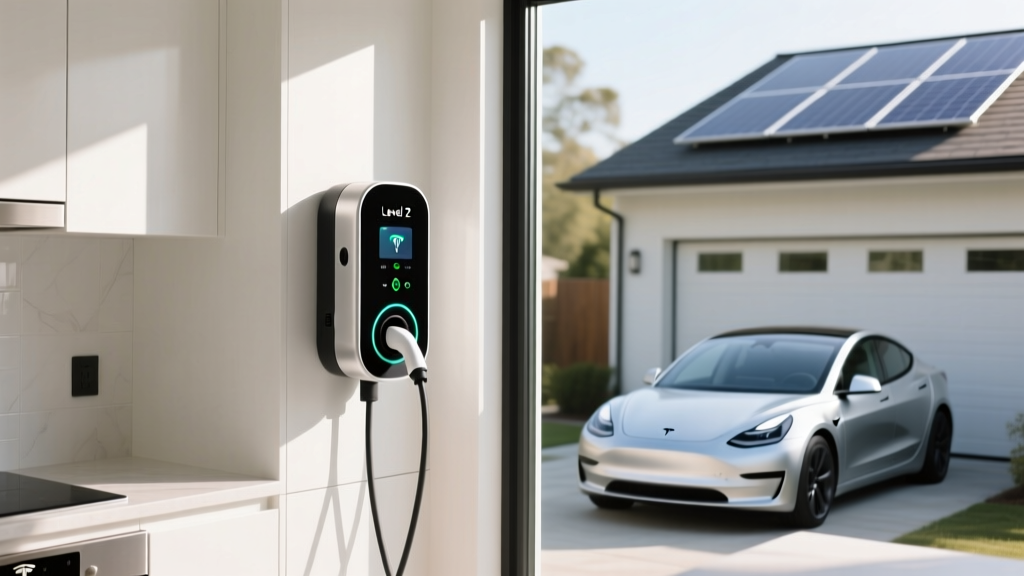
Level 2 requires a 240V circuit — identical to what your electric dryer or oven uses. This is the workhorse of EV ownership. Most EV owners install a Level 2 wallbox at home and wake up every morning with a full charge. At 48 amps (11.5 kW), a typical mid-size SUV with a 75 kWh battery goes from 10% to 80% in roughly 5–6 hours.
DC Fast Charging bypasses the car's onboard charger entirely and feeds direct current straight to the battery. Speeds vary enormously: a 50 kW CHAdeMO station adds maybe 120 miles in 30 minutes, while a 350 kW NACS or CCS station on an 800V-architecture vehicle (like the Hyundai Ioniq 5 or Porsche Taycan) can add 200+ miles in under 18 minutes. But peak kW is not sustained kW — charging curves taper significantly above 80% State of Charge (SoC) to protect battery health.
Home Charger Installation: Electrical Requirements and Real Costs
Installing a Level 2 home charger is the single biggest infrastructure decision an EV owner makes. The total cost depends on your electrical panel's capacity, the distance from panel to charger location, and local permitting requirements.
Electrical Requirements
A typical Level 2 charger installation requires:
- 240V dedicated circuit — not shared with other appliances
- 40A or 60A breaker — a 48A charger requires a 60A breaker (EVSE must be rated at 80% of breaker capacity per the National Electrical Code)
- NEMA 14-50 outlet (for plug-in chargers) or hardwired connection
- GFCI protection — required for outdoor installations and increasingly for indoor garage circuits under 2023/2026 NEC updates
Do You Need a Panel Upgrade?
Homes built before 1990 often have 100A or 150A main panels. Adding a 60A EV circuit to an already-loaded panel may require upgrading to a 200A service — this is the single biggest cost variable in home charging. A panel upgrade runs $1,500–$4,000+ depending on your utility's requirements, trenching needs, and whether the meter base also needs replacement.
Homes with 200A service and available headroom (fewer than ~160A of existing calculated load) typically accommodate a Level 2 charger without a panel upgrade. Your electrician will perform a load calculation (NEC Article 220) to determine this.
| Component | Low-End Cost | High-End Cost | Notes |
|---|---|---|---|
| Level 2 EVSE Equipment | $200 | $750 | 32A–48A smart chargers |
| Electrician Labor | $300 | $1,500 | Depends on run length, conduit, drywall work |
| Electrical Materials (wire, conduit, breaker) | $100 | $400 | Longer runs cost more in copper |
| Permit & Inspection | $50 | $300 | Varies by municipality |
| Panel Upgrade (if needed) | $1,500 | $4,000+ | Not always required; 200A service upgrade |
| Total (no panel upgrade) | $650 | $2,950 | Most homes fall in $800–$1,800 range |
| Total (with panel upgrade) | $2,150 | $6,950+ | Older homes with 100A service |
Some utility companies offer rebates of $250–$1,000 for Level 2 installations, and the federal Residential Clean Energy Credit may cover certain energy-related home improvements — consult a tax professional for current eligibility under IRS guidelines.
Connector Compatibility: NACS, CCS1, and CHAdeMO Explained
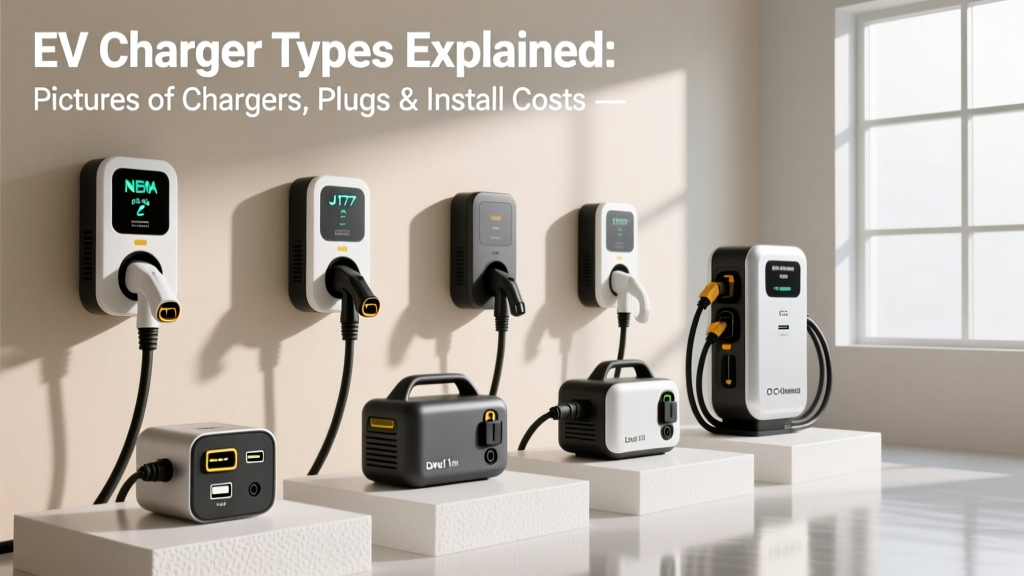
When you look at pictures of chargers, the plug shape is the most visible difference between networks. As of 2026, the North American Charging Standard (NACS) — originally developed by Tesla — has become the dominant connector, with most major automakers transitioning from CCS1.
| Connector | Brands Using It (Native) | DC Fast Charge Networks | Adapter Needed? |
|---|---|---|---|
| NACS (J3400) | Tesla (all), Ford (2025+), GM (2025+), Rivian (2025+), Hyundai/Kia (2026+), BMW, Volvo/Polestar | Tesla Supercharger, Electrify America (new stalls), EVgo, ChargePoint | CCS1→NACS adapters available ($150–$250) for older CCS vehicles |
| CCS1 | Legacy models: 2020–2024 VW ID.4, older Ford Mustang Mach-E, older Hyundai Ioniq 5, Stellantis models | Electrify America, EVgo, ChargePoint (existing stalls) | NACS→CCS1 adapters available for accessing Superchargers |
| CHAdeMO | Nissan Leaf (all years), Mitsubishi Outlander PHEV (older) | Limited; declining network | No practical adapter to NACS/CCS for DC fast charging |
Key takeaway for 2026: If you're buying a new EV, NACS is the standard to get. CCS1 vehicles still charge fine on Electrify America and other networks, but new infrastructure buildout is overwhelmingly NACS. CHAdeMO is effectively a legacy standard — the Nissan Leaf remains the primary vehicle using it, and DC fast charging options are narrowing.
Charging Cost Per Mile: Home vs. Public vs. Gas
The economics of EV charging depend heavily on where and when you charge. Home charging on an off-peak utility rate is dramatically cheaper than DC fast charging on a road trip — and both are typically cheaper than gasoline per mile driven.
| Scenario | Rate | Vehicle Efficiency | Cost Per Mile | Annual Cost (12,000 mi) |
|---|---|---|---|---|
| Home Level 2 (off-peak utility rate) | $0.09/kWh | 3.0 mi/kWh (typical mid-size EV) | $0.030 | $360 |
| Home Level 2 (standard rate) | $0.16/kWh | 3.0 mi/kWh | $0.053 | $640 |
| Public Level 2 (network pricing) | $0.30/kWh | 3.0 mi/kWh | $0.100 | $1,200 |
| DC Fast Charging (road trip) | $0.48/kWh | 3.0 mi/kWh | $0.160 | $1,920 (if 100% DC) |
| Gasoline vehicle (28 MPG combined) | $3.40/gal | 28 MPG | $0.121 | $1,457 |
Source: fueleconomy.gov for EV efficiency data; EIA weekly gas price averages for fuel costs.
Real-world EV owners who charge at home 85–90% of the time and use DC fast charging only for road trips typically see an effective cost of $0.04–$0.06 per mile — roughly one-third to one-half the fuel cost of a 28 MPG gasoline car. The savings widen further if your utility offers time-of-use (TOU) rates with super off-peak pricing below $0.08/kWh overnight.
Charging Time Examples for Common Battery Sizes
Charging times depend on both the charger's output (kW) and the vehicle's acceptance rate. Not every EV can accept 350 kW — many peak between 150–250 kW, and older or lower-cost models may cap at 50–100 kW.
Here are realistic 10–80% charging times for representative battery sizes:
- 40 kWh battery (Nissan Leaf, base PHEVs): ~55 min at 50 kW DC; ~3.5 hrs at 7.2 kW Level 2
- 65 kWh battery (VW ID.4, Chevrolet Equinox EV): ~28 min at 170 kW DC (peak); ~5.5 hrs at 11.5 kW Level 2
- 77 kWh battery (Ford Mustang Mach-E Extended Range, Tesla Model Y): ~25 min at 250 kW DC (peak); ~6.5 hrs at 11.5 kW Level 2
- 84 kWh battery (Hyundai Ioniq 5, Kia EV6 — 800V architecture): ~18 min at 350 kW DC (peak, sustained high rate due to 800V); ~7 hrs at 11.5 kW Level 2
- 100+ kWh battery (GMC Sierra EV, Tesla Model S): ~32 min at 250 kW DC; ~9 hrs at 11.5 kW Level 2
The charging curve reality: DC fast chargers don't deliver peak kW for the entire session. A charger rated at 250 kW might deliver that rate only between 10–40% SoC, then taper to 150 kW, then drop further above 70%. This is why 10–80% time is the standard metric — charging above 80% slows dramatically, often to Level 2 speeds, to protect battery longevity. On a road trip, it's faster to charge to 80% and drive on than to wait for a full charge.
Recommended Level 2 Home Chargers (2026)
When evaluating home chargers, the key specifications are: amperage (which determines kW output), cable length (25 feet is ideal for most garages), connector type (NACS native or J1772 with adapter), and smart features (Wi-Fi scheduling, load management, utility integration).
ChargePoint Home Flex (2nd Gen)
- Power Output: Up to 50A / 12 kW (adjustable 16A–50A)
- Connector: NACS native (2025+ models); J1772 for older vehicles
- Cable Length: 23 feet
- Smart Features: Wi-Fi, app scheduling, Alexa integration, utility demand-response compatible
- Price: ~$550 (NACS version)
- Best For: Flexible amperage lets you match your circuit — ideal if you have a 40A or 50A breaker rather than 60A
Wallbox Pulsar Plus (48A)
- Power Output: 48A / 11.5 kW
- Connector: NACS (2025+ models); J1772 available
- Cable Length: 25 feet
- Smart Features: Wi-Fi, Bluetooth, Power Sharing (two chargers on one circuit), Eco-Smart solar integration
- Price: ~$450
- Best For: Compact form factor, Power Sharing for two-EV households on a single 60A circuit
Tesla Wall Connector (Gen 4)
- Power Output: 48A / 11.5 kW
- Connector: NACS native
- Cable Length: 24 feet
- Smart Features: Wi-Fi, OTA updates, Power Sharing, integrated with Tesla vehicle app
- Price: ~$475
- Best For: Tesla owners who want seamless ecosystem integration; also works with any NACS-equipped EV
Emporia Vue Level 2 Charger
- Power Output: 48A / 11.5 kW
- Connector: J1772 (NACS adapter included)
- Cable Length: 24 feet
- Smart Features: Wi-Fi, real-time energy monitoring, integrates with Emporia home energy management system, EV + solar scheduling
- Price: ~$400
- Best For: Budget-conscious buyers who want detailed energy monitoring and solar integration
All of the above chargers are UL-listed (or equivalent), which is critical for insurance and code compliance. Avoid unbranded or non-certified chargers from marketplace sellers — they may lack proper safety protections and could void your homeowner's insurance coverage in the event of an electrical fire.
Safety and Code Considerations
Level 2 charger installation is not a DIY project. The NEC (National Electrical Code) treats EVSE installation as a significant electrical load, and improper installation creates fire and shock hazards. Key safety requirements include:
- Dedicated circuit: Your EV charger must have its own breaker — it cannot share a circuit with other outlets or appliances
- Correct wire gauge: 6 AWG copper for 48A–50A circuits; 4 AWG for 60A circuits. Aluminum wire is cheaper but requires larger gauge
- GFCI protection: Required for outdoor receptacles and increasingly for indoor garage installations under updated NEC 2023/2026 provisions. Note: some EVSEs have built-in GFCI, and double-GFCI (breaker + EVSE) can cause nuisance tripping — your electrician will configure this correctly
- Outdoor rating: If your charger is mounted outside, the EVSE must carry a NEMA 3R or NEMA 4 rating for weather resistance
- Permit and inspection: Most jurisdictions require an electrical permit and post-installation inspection. Skipping this step risks code violations, insurance claim denials, and issues at home sale
According to the NHTSA and fire safety organizations, properly installed and UL-listed EVSEs carry extremely low fire risk. The vast majority of EV-related charging incidents involve damaged cords, non-certified equipment, or circuits that were not properly sized.
Frequently Asked Questions
How much does it cost to install a home EV charger?
For a standard Level 2 installation on an existing 200A panel with a short wire run, expect $650–$2,950 total (equipment + electrician + permit). The national average in 2026 is approximately $1,200–$1,800. If your home needs a panel upgrade from 100A to 200A service, add $1,500–$4,000+ to the total. Always get 2–3 quotes from licensed electricians.
How fast will each charging level add range?
Level 1 (120V): 3–5 miles of range per hour. Level 2 (240V, 48A): approximately 30–40 miles per hour for a mid-size EV. DC Fast Charging (150–350 kW): 150–1,200+ miles per hour at peak, but sustained rates taper with SoC. For daily driving, Level 2 at home replenishes a typical 40-mile daily commute in about 1–1.5 hours.
Which connector/charger is compatible with my EV?
Check your vehicle's charge port. 2025–2026 models from Tesla, Ford, GM, Rivian, Hyundai, Kia, BMW, and Volvo/Polestar use NACS natively. Older models (2020–2024) from VW, Ford, and Hyundai likely have CCS1. The Nissan Leaf uses CHAdeMO. Adapters are available for cross-compatibility at DC fast chargers, but native NACS is the future-proof choice for new purchases.
How much does charging cost per mile vs gas?
Home charging at $0.12/kWh averages roughly $0.04/mile for a typical EV. Public DC fast charging at $0.48/kWh averages $0.16/mile. A 28 MPG gasoline car at $3.40/gallon costs about $0.12/mile. EV owners who charge primarily at home save $800–$1,100 annually vs. gasoline over 12,000 miles.
What electrical upgrades might I need?
The most common upgrade is a panel capacity increase from 100A to 200A service, required when your existing calculated load plus the EV circuit exceeds 80% of panel capacity. Other potential upgrades include: replacing a Federal Pacific or Zinsco panel (known safety hazards), adding a sub-panel in a detached garage, or upgrading the meter base. Your electrician's load calculation will determine exactly what's needed.
Can I use a dryer outlet for EV charging?
A NEMA 14-50 outlet (the same as many electric dryers) can power a Level 2 charger at up to 40A/9.6 kW — but only if the circuit is dedicated to the charger. Sharing a dryer outlet with a splitter or adapter is a fire hazard and violates NEC. If you want to alternate between dryer and EVSE use, have your electrician install a transfer switch or a second dedicated circuit.