Understanding EV Charger Top Speed: kW vs kWh Explained
Before comparing charger top speeds, the single most important distinction in EV ownership must be clear: kW (kilowatts) measures power — the rate at which electricity flows into your battery. kWh (kilowatt-hours) measures energy — the total capacity stored in your battery pack. Think of kW as the width of a hose and kWh as the size of the bucket. A wider hose (higher kW) fills the bucket faster, but the bucket size stays the same.
Your EV's charger top speed depends on two limiting factors working together: the maximum power the charger can deliver and the maximum power the vehicle's onboard charger or battery management system can accept. If you plug a Tesla Model 3 into a 350 kW Electrify America station, you won't pull 350 kW — the Model 3 Long Range AWD peaks around 250 kW on DC fast charging. Conversely, plugging into a 7.2 kW home Level 2 charger means you're limited to 7.2 kW regardless of what your car could theoretically accept on a DC fast charger.
This guide breaks down every charging tier with exact numbers — power output in kW, range added per hour, real-world charging times, and total installation costs — so you can make an informed decision about home equipment and public charging strategy.
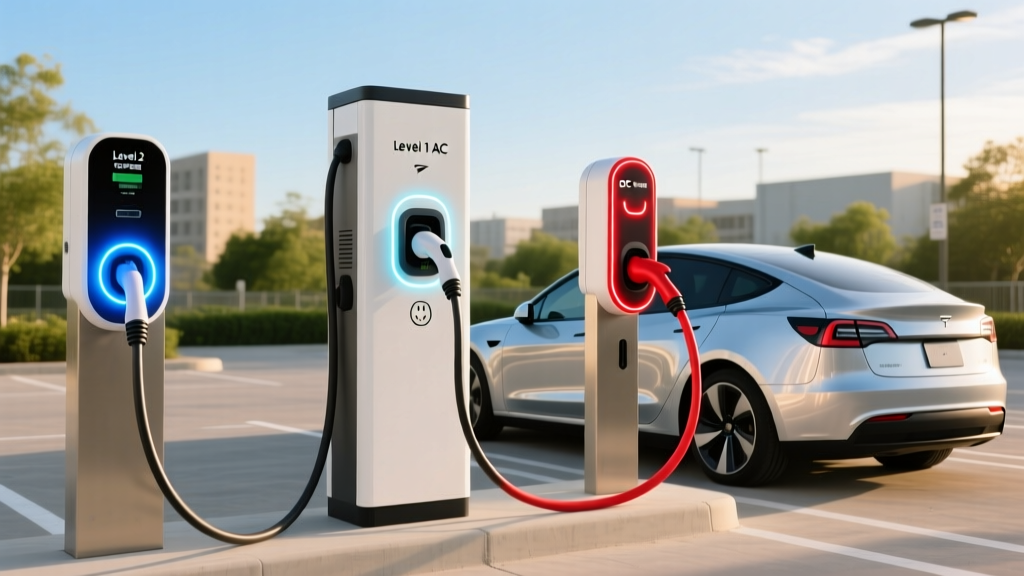
Charging Levels Compared: Speed, Power, and Range Added
| Charging Level | Voltage / Amperage | Max Power (kW) | Miles of Range Added Per Hour | Typical 10–80% Time | Best Use Case |
|---|---|---|---|---|---|
| Level 1 (120V household) | 120V / 12–16A | 1.4–1.9 kW | 3–5 miles | 40–60+ hours (75 kWh battery) | Overnight trickle, PHEV top-ups, emergency backup |
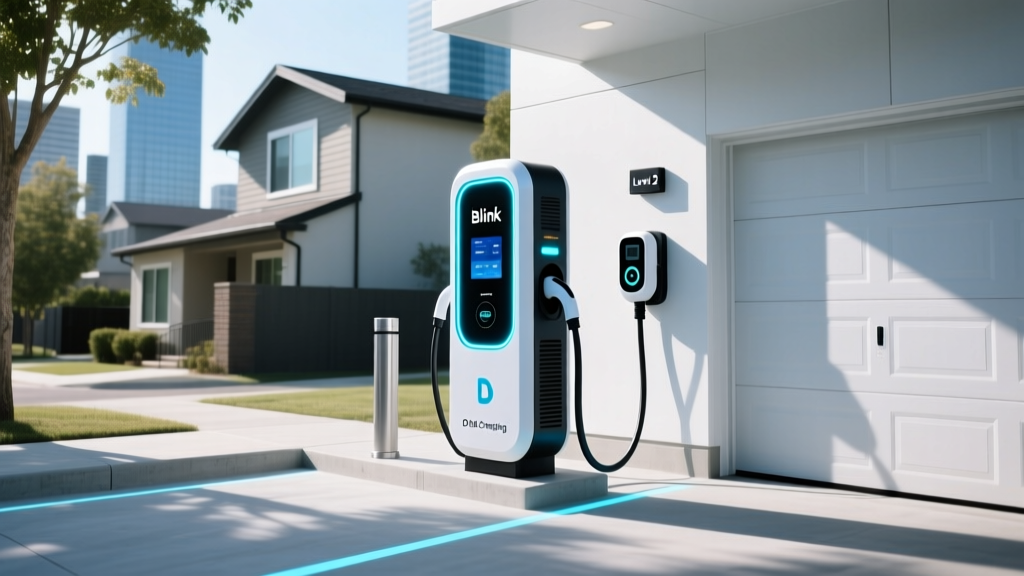
| Level 2 (240V home/public) | 240V / 16–80A | 3.8–19.2 kW | 14–60 miles | 5–10 hours (75 kWh battery) | Daily home charging, workplace, destination charging |
| DC Fast Charging (Level 3) | 400–900V DC | 50–350 kW | 150–1,000+ miles/hour equivalent | 18–45 minutes (varies by vehicle and station) | Road trips, commercial fleets, rapid top-ups |
Real-World Charging Speed Reality Check: Manufacturer-advertised peak kW rates are momentary maximums, not sustained averages. A vehicle rated at 250 kW peak DC fast charging may only sustain that rate between 10–30% State of Charge (SoC) before the battery management system tapers the rate to protect cell health. Expect the 10–80% average charge rate to be roughly 60–75% of the advertised peak. For a 250 kW-rated vehicle, that means an effective average of ~150–180 kW during a typical fast-charging session.
Level 1 Charging: The Emergency Backup
Every EV ships with a mobile charging cord that plugs into a standard 120V NEMA 5-15 household outlet. At 12 amps (the safe continuous draw on a 15A circuit), you'll get roughly 1.4 kW and approximately 3–5 miles of range per hour of charging. For a plug-in hybrid like the Toyota RAV4 Prime with its 18.1 kWh battery and 42 miles of electric range, a full overnight charge is feasible. For a full-size BEV like the Ford F-150 Lightning with a 131 kWh extended-range pack, Level 1 is essentially useless for anything beyond maintaining charge while parked.
Level 2 Charging: The Daily Workhorse
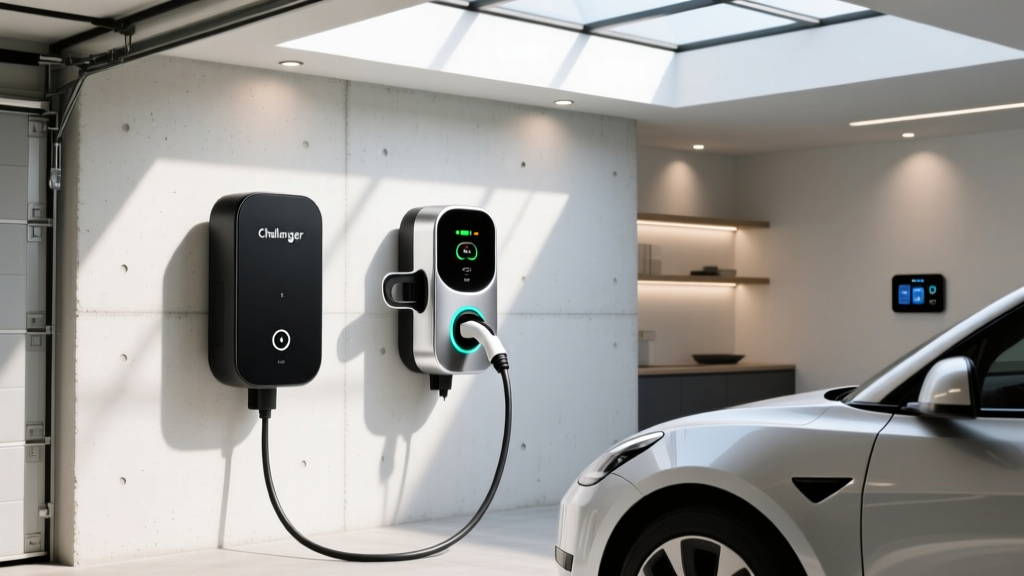
Level 2 operates on 240V — the same voltage as your electric dryer or oven. Most home Level 2 installations use a 40A or 48A dedicated circuit, delivering 9.6 kW or 11.5 kW respectively. At 48A, a vehicle like the Hyundai Ioniq 5 (which accepts up to 10.9 kW on AC Level 2) adds roughly 35–40 miles of range per hour. An overnight 8-hour session restores approximately 280–320 miles — more than enough for any daily commute.
Some vehicles, like the Tesla Model S and Model X, can accept up to 11.5 kW (48A) on Level 2, while the Chevrolet Equinox EV accepts up to 11.5 kW as well. The key constraint: your onboard charger's maximum AC acceptance rate caps your Level 2 speed regardless of how powerful the wall unit is.
DC Fast Charging: Road-Trip Essential
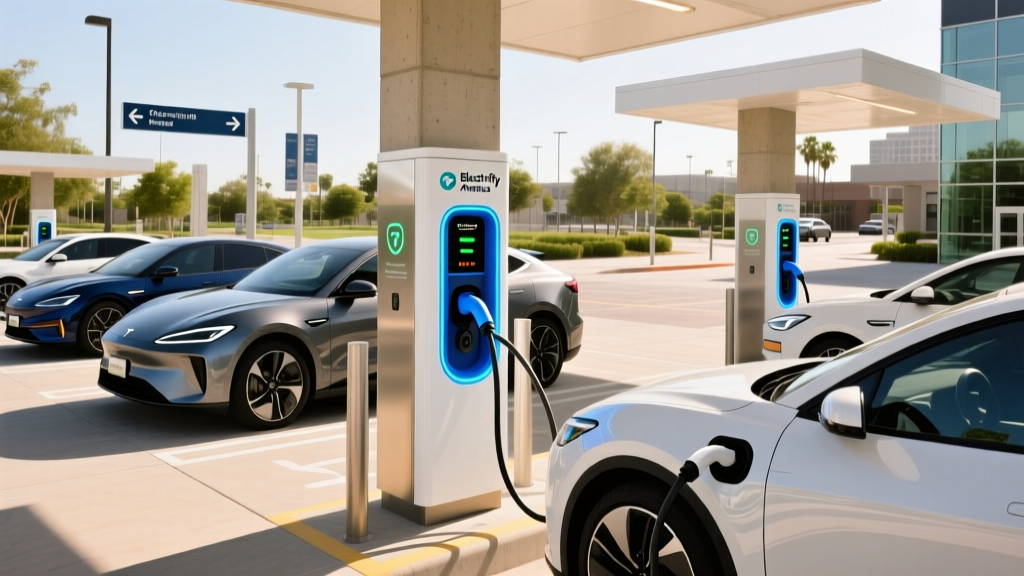
DC fast chargers bypass the vehicle's onboard AC-to-DC converter and feed direct current straight into the battery pack. Power levels range from 50 kW legacy stations to 350 kW ultra-fast chargers on networks like Electrify America and EVgo. The vehicle's battery management system controls the actual charge rate, and this is where the charge curve matters most.
Take the Kia EV6 GT-Line AWD with its 77.4 kWh battery and 800V architecture: it can peak at approximately 240 kW on a compatible 350 kW charger, achieving a 10–80% charge in roughly 18 minutes under optimal conditions (battery preconditioned to ~95°F, SoC starting at or below 10%). But above 80% SoC, the rate tapers dramatically — from 240 kW down to under 50 kW — which is why EV drivers are advised to charge only to 80% on road trips unless absolutely necessary.
Home Charger Installation: Electrical Requirements and Real Costs
Installing a Level 2 home charger is the single highest-impact upgrade an EV owner can make. But costs vary enormously depending on your home's electrical panel, the distance from panel to charger location, and local permit requirements.
Electrical Requirements
A typical Level 2 home charger requires a dedicated 240V circuit with appropriate amperage. For a 48A charger, electrical code (NEC Article 625) requires the circuit to be rated at 125% of the continuous load — meaning a 60A breaker is required. For a 40A charger, you need a 50A breaker. The circuit must be dedicated solely to the EV charger; you cannot share it with other appliances.
Panel capacity is the critical variable. Most modern homes have a 200A main electrical panel. If your panel is already heavily loaded (electric heating, central AC, electric water heater, electric range), adding a 60A EV circuit may push you over the safe 80% continuous-load threshold. In that case, you'll need either:
- A panel upgrade to 300A or 400A — the most expensive scenario
- A smart electrical panel or load-management device (like the Span smart panel or Emporia load manager) that dynamically throttles charger amperage when other circuits draw heavy current
- A lower-amperage charger — stepping down to a 32A (40A breaker) or 16A (20A breaker) unit to stay within panel capacity
| Cost Component | Simple Install (Panel Adjacent) | Moderate Install (50–100 ft Run) | Complex Install (Panel Upgrade Needed) |
|---|---|---|---|
| Level 2 Charger Equipment | $350–$700 | $350–$700 | $350–$700 |
| Electrician Labor (licensed) | $400–$800 | $800–$1,800 | $1,200–$2,500 |
| Materials (conduit, wire, breaker) | $100–$300 | $300–$800 | $400–$1,000 |
| Permit and Inspection | $50–$200 | $50–$200 | $50–$200 |
| Panel Upgrade (if needed) | N/A | N/A | $2,000–$5,000 |
| Total Estimated Cost | $900–$2,000 | $1,500–$3,500 | $4,000–$9,400 |
The federal Alternative Fuel Vehicle Refueling Property Credit (IRS Form 8911) may cover up to 30% of home charger equipment and installation costs, capped at $1,000, subject to census-tract eligibility requirements. Check irs.gov for current-year qualification maps and rules.
Connector Compatibility: NACS, CCS1, and CHAdeMO
The North American charging connector landscape has consolidated significantly since Tesla opened its Supercharger network and the North American Charging Standard (NACS) emerged as the dominant connector for new vehicles starting in 2024–2025. Here is the current connector landscape:
| Connector Type | AC Level 2 Charging | DC Fast Charging | Brands Using It (Native) | Adapter Availability |
|---|---|---|---|---|
| NACS (J3400) | Yes | Yes (up to 350+ kW) | Tesla, Ford, GM, Rivian, Volvo, Polestar, Mercedes-Benz, Honda, Hyundai/Kia (2025+), Toyota, Subaru, Lucid | CCS-to-NACS adapters widely available ($150–$300) |
| CCS1 (Combo) | Yes (J1772 upper portion) | Yes (up to 350 kW) | Legacy: BMW, VW, older Hyundai/Kia, Stellantis, some others pre-NACS adoption | NACS-to-CCS adapters available; CCS infrastructure declining |
| CHAdeMO | No (separate J1772 inlet for AC) | Yes (up to 100 kW typically) | Nissan Leaf (discontinued), Mitsubishi Outlander PHEV (legacy) | Limited; CHAdeMO infrastructure being phased out at most networks |
For new EV buyers in 2026: NACS is now the standard connector on the vast majority of new vehicles sold in the US. If you purchase a vehicle with a CCS1 port (some remaining inventory or certified pre-owned), you'll want a NACS-to-CCS adapter (~$200–$300) to access Tesla Superchargers, which now number over 30,000 stalls across North America and represent the most reliable DC fast-charging network.
For home Level 2 charging, the connector situation is simpler: nearly all Level 2 home chargers now ship with a NACS connector (or offer it as the default option). If you own a CCS1 vehicle, you can either buy a J1772-to-CCS adapter for home use or select a charger that ships with a J1772 plug (the legacy AC standard that CCS1 incorporates).
Charging Cost Per Mile: Home vs Public vs Gas
The economic case for EV charging hinges on where you charge. Electricity rates vary by region, time of day, and utility plan. Here are realistic cost scenarios based on 2026 national averages and an efficiency benchmark of 3.0 miles per kWh (roughly the average for a modern crossover EV like the Tesla Model Y or Hyundai Ioniq 5):
| Charging Scenario | Rate ($/kWh) | Cost Per Mile (at 3 mi/kWh) | Annual Cost (12,000 mi) |
|---|---|---|---|
| Home (off-peak utility rate) | $0.08–$0.14 | $0.027–$0.047 | $320–$560 |
| Home (standard residential rate) | $0.14–$0.20 | $0.047–$0.067 | $560–$800 |
| Public Level 2 (ChargePoint, EVgo) | $0.25–$0.49 | $0.083–$0.163 | $1,000–$1,960 |
| DC Fast Charging (Electrify America, EVgo) | $0.35–$0.65 | $0.117–$0.217 | $1,400–$2,600 |
| Gasoline Vehicle (28 MPG avg, $3.40/gal) | — | $0.121 | $1,457 |
The takeaway: Home charging on an off-peak utility rate delivers fuel costs at roughly one-quarter to one-third the cost of gasoline. However, exclusive reliance on DC fast charging at public rates can actually exceed the cost of gasoline per mile. This is why home Level 2 installation isn't just a convenience — it's the economic foundation of EV ownership.
According to fueleconomy.gov, the average 2026 EV achieves 97–130 MPGe combined, translating to roughly 2.8–3.8 miles per kWh depending on vehicle size and drivetrain. Smaller sedans (Tesla Model 3, Hyundai Ioniq 6) tend toward the higher end; large SUVs (Rivian R1S, GMC Hummer EV) cluster at the lower end.
Equipment Recommendations: Best Home Level 2 Chargers
ChargePoint Home Flex
- Power Output: Up to 11.5 kW (48A) on a 60A circuit; configurable down to 16A
- Connector: NACS (J3400) native — J1772 version also available
- Cable Length: 23 feet
- Smart Features: Wi-Fi connected, Alexa integration, scheduled charging, energy tracking via ChargePoint app, utility demand-response compatible
- Price: ~$599–$699 (equipment only)
- Best For: Most EV owners wanting a reliable, well-supported smart charger with flexible amperage settings
Tesla Wall Connector
- Power Output: Up to 11.5 kW (48A) on a 60A circuit
- Connector: NACS native
- Cable Length: 24 feet
- Smart Features: Wi-Fi updates, power sharing (link up to 6 units on one circuit for multi-stall garages), access control, Tesla app integration
- Price: ~$475 (equipment only)
- Best For: Tesla owners and NACS-equipped EVs; best value-to-performance ratio; power-sharing is ideal for two-EV households
Emporia Vue EV Charger
- Power Output: Up to 11.5 kW (48A) on a 60A circuit
- Connector: NACS native (J1772 version available)
- Cable Length: 24 feet
- Smart Features: Integrated with Emporia Vue whole-home energy monitor, solar-aware charging (charge only when solar production exceeds home consumption), load management, detailed energy cost tracking
- Price: ~$549–$649 (equipment only)
- Best For: Solar-panel owners, energy-monitoring enthusiasts, households needing load management without a panel upgrade
Grizzl-E Smart
- Power Output: Up to 10 kW (40A) on a 50A circuit
- Connector: NACS or J1772 options
- Cable Length: 24 feet
- Smart Features: Wi-Fi connected, OCPP-compatible (works with utility demand-response programs), adjustable amperage, built-in RFID access control
- Price: ~$449–$549 (equipment only)
- Best For: Budget-conscious buyers who still want smart features; Canadian-built with robust cold-weather rating (-40°F)
Charging Time Examples: How Long Does 10–80% Actually Take?
Charging times depend on battery size, charger power, vehicle acceptance rate, battery temperature, and the charge curve taper. Below are real-world approximate times for common scenarios, assuming a preconditioned battery at moderate temperature (65–80°F):
| Vehicle (Battery Size) | Level 2 Home (11.5 kW / 48A) | DC Fast (150 kW Station) | DC Fast (350 kW Station, Peak Rate) |
|---|---|---|---|
| Tesla Model 3 Long Range (75 kWh usable) | ~4.5 hours | ~30 minutes | ~22 minutes (peak 250 kW) |
| Hyundai Ioniq 5 AWD (77.4 kWh usable) | ~5 hours | ~28 minutes | ~18 minutes (peak 240 kW, 800V) |
| Ford F-150 Lightning Ext. Range (131 kWh usable) | ~8.5 hours | ~50 minutes | ~40 minutes (peak 210 kW) |
| Chevrolet Equinox EV (85 kWh usable) | ~5.5 hours | ~35 minutes | ~30 minutes (peak 150 kW) |
| Toyota RAV4 Prime PHEV (18.1 kWh usable) | ~1.2 hours (full charge) | N/A (no DC fast port) | N/A |
Charge Curve Taper Warning: The times above represent 10–80% only. Charging from 80–100% can take nearly as long as 10–80% due to aggressive taper above 80% SoC. On a road trip, charging to 80% and driving on is almost always faster than waiting for a full charge. On Level 2 home charging, the taper is less severe, and most vehicles allow scheduled charging to reach 100% by departure time without battery-health concerns for daily use — though most manufacturers recommend keeping daily SoC between 20–80% for NMC chemistry batteries.
Safety, Code Compliance, and Installation Best Practices
EV charging draws sustained high current for hours — this is fundamentally different from the short burst loads of a microwave or the cycling load of an air conditioner. The National Electrical Code (NEC Article 625) has specific requirements for EV supply equipment (EVSE) installations:
- Dedicated circuit: Your EV charger must be on its own dedicated breaker. No sharing with outlets, lights, or other appliances.
- GFCI protection: NEC 2020 and later require ground-fault circuit interrupter protection for all EVSE installations, whether hardwired or plug-in. Most quality Level 2 chargers have built-in GFCI protection.
- Outdoor rating: If your charger is installed outdoors (driveway, carport, exterior wall), it must carry a NEMA 3R or NEMA 4 rating for weather resistance. All recommended chargers above meet this standard.
- Hardwired vs plug-in: Chargers rated above 40A (which require a 50A+ breaker) are typically hardwired directly into the panel by a licensed electrician. Plug-in units using a NEMA 14-50 outlet are common for 40A chargers (50A breaker) and offer portability if you move. However, some jurisdictions now require GFCI breakers for NEMA 14-50 receptacles used for EV charging, which can cause nuisance tripping with some charger models — hardwired installations avoid this issue entirely.
- Permit and inspection: Most jurisdictions require an electrical permit for a new 240V circuit. The inspection ensures correct wire gauge, breaker sizing, grounding, and GFCI compliance. Never skip the permit — unpermitted electrical work can void homeowner's insurance claims and create fire risk.
Frequently Asked Questions
How much does it cost to install a home EV charger?
A straightforward Level 2 installation with the electrical panel close to the charger location typically costs $900–$2,000 total (equipment + electrician + permit). Longer wire runs (50–100 feet) push costs to $1,500–$3,500. If your home needs an electrical panel upgrade to handle the additional load, total costs can reach $4,000–$9,400. Always get 2–3 quotes from licensed electricians who have specific EV charger installation experience.
How fast will each charging level add range?
Level 1 (120V) adds approximately 3–5 miles of range per hour. Level 2 (240V, 48A) adds approximately 30–40 miles per hour for most EVs. DC fast charging adds the equivalent of 150–1,000+ miles per hour at peak rate, which is why it's measured in minutes for a 10–80% session (18–45 minutes depending on vehicle and station) rather than miles per hour.
Which connector and charger is compatible with my EV?
For 2026 model-year vehicles, most new EVs use the NACS (J3400) connector for both AC and DC charging. If you drive an older EV with a CCS1 port, you can use a NACS-to-CCS adapter to access Tesla Superchargers and newer NACS stations. CHAdeMO is essentially discontinued for new vehicles. For home Level 2 charging, choose a NACS-connector charger if your vehicle has a NACS port, or a J1772-connector charger for CCS1 vehicles (J1772 is the AC portion of the CCS1 standard).
How much does charging cost per mile compared to gas?
Home charging on an off-peak utility rate ($0.10/kWh) costs approximately $0.033 per mile for an average EV — roughly one-quarter the cost of gasoline at $3.40/gallon in a 28 MPG vehicle ($0.12/mile). Public DC fast charging at $0.48/kWh costs approximately $0.16 per mile, which actually exceeds gasoline costs. The economics of EV ownership depend heavily on consistent access to affordable home charging.
What electrical upgrades might I need for a home charger?
The most common upgrade is a panel capacity assessment. If your 200A panel is already near 80% utilized load, you may need a panel upgrade to 300A or 400A ($2,000–$5,000). Alternatives include installing a lower-amperage charger (e.g., 32A instead of 48A), using a smart load-management device that dynamically adjusts charger draw based on real-time household consumption, or upgrading to a Span smart electrical panel ($3,000–$5,000 installed) that provides circuit-level control. Your electrician should perform a load calculation per NEC Article 220 before recommending a solution.
Can I use a regular 120V outlet to charge my EV?
Yes, but only as a supplementary or emergency option. A standard 120V outlet delivers approximately 1.4 kW (at 12A continuous), adding about 3–5 miles of range per hour. This works adequately for PHEVs with small batteries (15–20 kWh) that can fully charge overnight. For a full-size EV with a 75–130 kWh battery, Level 1 charging would take 40–90+ hours for a full charge — impractical for daily use. Ensure the outlet is on a dedicated 15A or 20A circuit with no other loads, and inspect the outlet for warmth or discoloration before extended use.