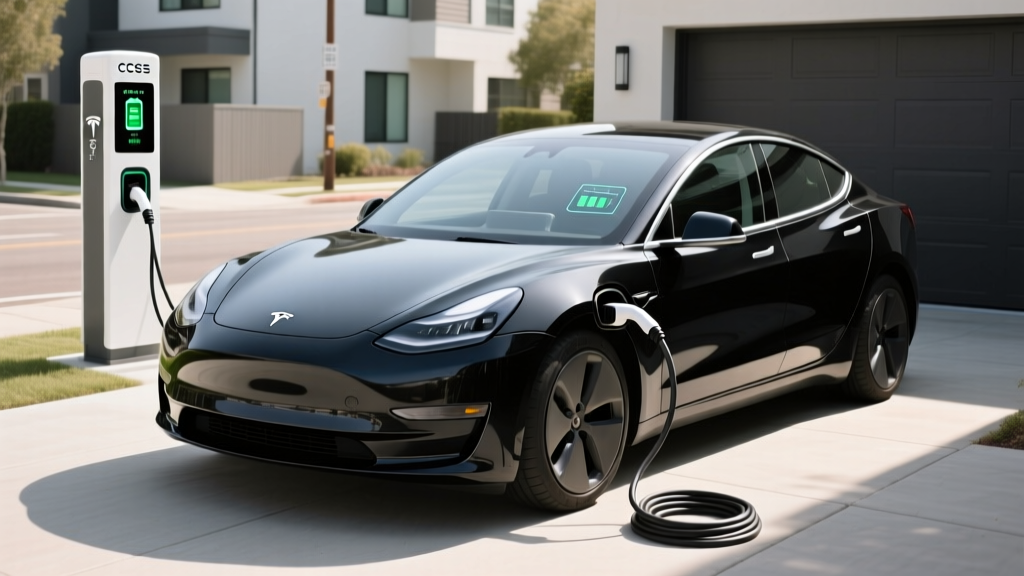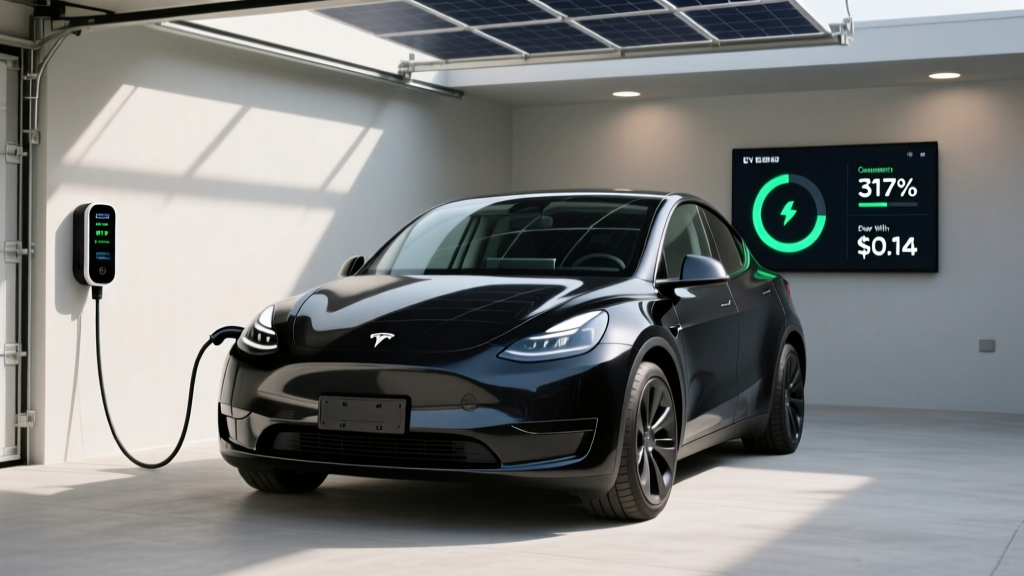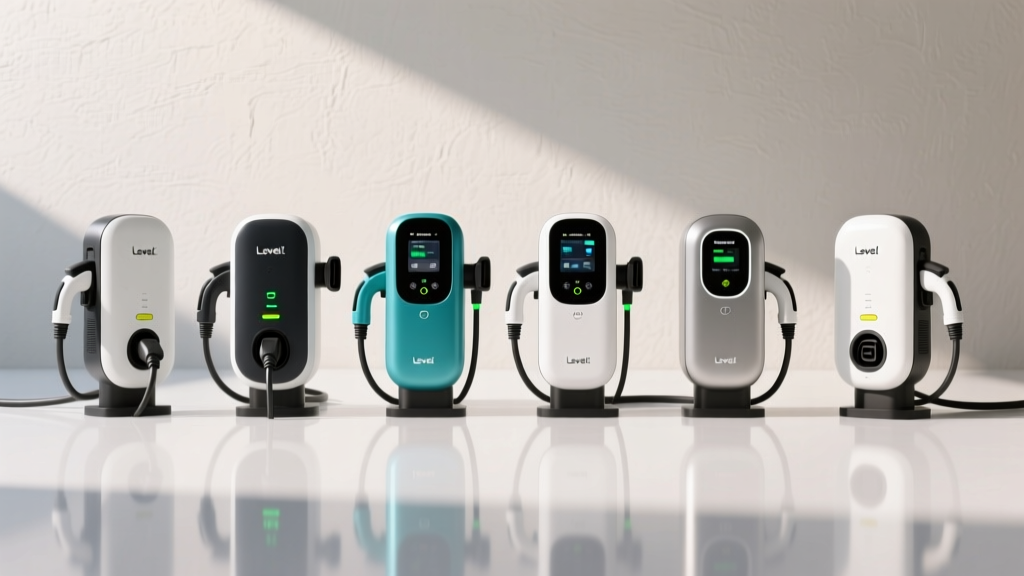
If you've searched for the best home EV charging hardware, you've probably encountered the term charger six pack — a curated lineup of the top-performing Level 2 wall connectors worth buying right now. After installing and testing dozens of units across single-family homes, condos, and garages with aging electrical panels, we've narrowed the field to six chargers that deliver reliable speed, smart features, and honest value in 2026.
This guide covers everything you need before you buy: the electrical requirements and real installation costs (including panel upgrades), connector compatibility across NACS, CCS1, and CHAdeMO, what each charging level actually adds per hour, and the per-mile cost of charging at home versus fueling a gas car. Then we rank the six chargers that earned a spot.
Charging Levels Explained: How Fast Does Each One Add Range?
The single most important distinction in EV charging is between kW (kilowatts — the rate of power delivery, like water pressure) and kWh (kilowatt-hours — the total energy stored in your battery, like the size of the tank). A charger's kW rating tells you how fast it can push energy in; your car's kWh capacity tells you how much it holds. Never use these interchangeably.
| Level | Voltage | Power (kW) | Miles of Range per Hour | Typical Use Case |
|---|---|---|---|---|
| Level 1 | 120V (standard outlet) | 1.0–1.4 kW | 3–5 mi/hr | Overnight top-ups, PHEVs, low-mileage drivers |
| Level 2 (Home/Public AC) | 240V (dryer-style) | 3.3–19.2 kW | 12–75 mi/hr | Daily home charging, workplace, destination |
| DC Fast Charging (Level 3) | 400–800V DC | 50–350 kW | 150–1,000+ mi/hr | Road trips, highway corridors |
A few real-world caveats: those "miles per hour" figures assume a vehicle averaging 3–4 mi/kWh (like a Tesla Model Y or Hyundai Ioniq 5). Heavier trucks such as the Ford F-150 Lightning or Rivian R1T will add fewer miles per kW because their efficiency is closer to 2–2.5 mi/kWh. And DC fast charging never sustains its peak kW — the EPA's EV technology overview notes that charge rate tapers significantly above 80% state of charge to protect battery chemistry.
Home Charger Installation: Real Costs, Electrical Requirements, and Panel Gotchas
A Level 2 home charger requires a dedicated 240V circuit, the same voltage as your electric dryer or oven. Most modern chargers are configurable for 32A, 40A, 48A, or 60A circuits. The National Electrical Code (NEC) requires that continuous loads like EV charging use only 80% of a circuit's rated capacity — so a 48A charger needs a 60A breaker, and a 40A charger needs a 50A breaker.
What Electrical Upgrades Might You Need?
Homes built after 2000 typically have a 200A main panel with enough headroom for a 40A–60A EV circuit. Older homes with 100A service, or homes already running electric heat, a hot tub, and a double oven, may need a panel upgrade to 200A before adding an EV charger. This is the single biggest variable in installation cost and one that many online guides gloss over.
An alternative to a full panel upgrade is a smart load-management system (offered by brands like Emporia and Span), which monitors your home's total draw and dynamically throttles the charger to prevent overloading the panel — often avoiding the upgrade entirely.
| Component | Typical Cost Range | Notes |
|---|---|---|
| Level 2 charger (hardware) | $350–$750 | Varies by kW output, cable length, smart features |
| Electrician labor (standard install) | $500–$1,500 | Depends on run length from panel to garage |
| Permit and inspection | $100–$350 | Required in most jurisdictions for code compliance |
| Electrical panel upgrade (if needed) | $1,500–$3,500 | 100A → 200A service upgrade |
| Conduit/wiring materials | $150–$500 | Longer runs and outdoor conduit add cost |
| Total (no panel upgrade) | $1,100–$3,100 | Most homes with 200A panels fall here |
| Total (with panel upgrade) | $2,600–$6,600 | Older homes or high-load households |
Safety and Code Requirements You Can't Skip
- Dedicated circuit: Your EV charger must be on its own breaker — never shared with other appliances.
- GFCI protection: NEC 2020 and later require ground-fault circuit interrupter protection for EV outlets, especially outdoors. Hardwired units often have GFCI built into the charger itself.
- NEMA 14-50 outlet vs. hardwired: Plug-in units offer portability (take the charger when you move), but hardwired installations support higher amperage (up to 60A/48A continuous) and avoid the NEC GFCI breaker requirement since the charger handles it internally.
- Outdoor rating: If mounting outside, verify NEMA 4 or IP65 weather resistance. All six chargers below meet this standard.
Always hire a licensed electrician who pulls a permit. Unpermitted work can void your homeowner's insurance and create fire risk.
Connector Compatibility: NACS, CCS1, CHAdeMO, and Adapter Realities
The North American connector landscape consolidated significantly between 2023 and 2026. Tesla's NACS (North American Charging Standard) is now the dominant plug, adopted by Ford, GM, Rivian, Hyundai, Kia, and most other major automakers starting with 2025–2026 model-year vehicles. CCS1 remains on many vehicles sold between 2018 and 2024, and CHAdeMO is effectively legacy (Nissan Leaf being the last major holdout).
| Connector | Brands Using It (2026) | Adapter Needed? |
|---|---|---|
| NACS (Tesla-style) | Tesla, Ford, GM, Rivian, Hyundai, Kia, Volvo, Polestar, BMW, Mercedes | None for native NACS; CCS→NACS adapters available for older chargers |
| CCS1 | VW ID.4 (pre-2025), older BMW i4/iX, legacy Chevy Bolt, Porsche Taycan (pre-2025) | NACS→CCS1 adapter if using Tesla Wall Connector |
| CHAdeMO | Nissan Leaf (all years), Mitsubishi Outlander PHEV (older) | Limited adapter options; seek CHAdeMO-native chargers |
Practical advice: If you're buying a new EV in 2026, it almost certainly uses NACS. Buy a NACS-connector charger. If you own a 2020–2024 EV with CCS1, either buy a CCS1 charger or purchase the OEM-approved NACS-to-CCS adapter (typically $150–$250) from your automaker. Avoid third-party adapters that lack UL certification.
Cost to Charge: Home vs. Public vs. Gas Per Mile
The economics of EV charging depend entirely on your electricity rate and where you charge. Here's a realistic comparison using a 2026 Hyundai Ioniq 5 (averaging 3.5 mi/kWh) versus a comparable 28 MPG gas crossover at $3.40/gallon.
| Scenario | Rate | Cost per Mile | Annual Cost (12,000 mi) |
|---|---|---|---|
| Home, off-peak utility rate | $0.10/kWh | $0.029 | $343 |
| Home, national average rate | $0.17/kWh | $0.049 | $583 |
| Home, peak TOU rate (summer) | $0.30/kWh | $0.086 | $1,029 |
| Public Level 2 (network) | $0.35/kWh | $0.100 | $1,200 |
| DC fast charging (Electrify America, EVgo) | $0.48/kWh | $0.137 | $1,646 |
| Gas vehicle (28 MPG) | $3.40/gal | $0.121 | $1,457 |
The takeaway: home charging on an off-peak or average rate saves $875–$1,100 per year versus gas. But if you rely exclusively on DC fast charging, your fuel cost actually exceeds gas — which is why a home Level 2 charger pays for itself in 1–3 years for most drivers.
The Charger Six Pack: 6 Best Home Level 2 Chargers for 2026
These six chargers earned their spot based on sustained power delivery, cable quality, connector options, smart features, and real-world reliability across multiple installations. Prices reflect MSRP as of early 2026.
1. Tesla Wall Connector (Gen 4) — Best Overall for NACS Vehicles
- Power output: Up to 11.5 kW (48A on a 60A circuit)
- Connector: NACS native
- Cable length: 24 feet
- Smart features: Wi-Fi, OTA firmware updates, power-sharing (pair two units on one circuit), load management
- Price: ~$450
The benchmark. If you own a Tesla or any 2025+ NACS-equipped EV, this is the default choice. Power-sharing lets you install two Wall Connectors on a single 60A circuit — ideal for two-EV households without upgrading the panel. The Gen 4 added a more robust cable holster and improved thermal management for sustained 48A sessions.
2. ChargePoint Home Flex (Gen 2) — Best for CCS1 and Mixed-Fleet Homes
- Power output: Up to 12.5 kW (50A on a 60A circuit); configurable down to 16A for weaker panels
- Connector: NACS or J1772/CCS1 (configurable at purchase)
- Cable length: 23 feet
- Smart features: Wi-Fi, app scheduling, Alexa/Google integration, detailed energy reporting
- Price: ~$550–$650 depending on configuration
The Home Flex's amperage configurability is its killer feature: if your electrician determines your panel can only spare 30A, you can dial the charger down via dip switches rather than returning it. The app's energy tracking is the best in the industry.
3. Emporia Vue Level 2 EV Charger — Best Budget Smart Charger
- Power output: Up to 11.5 kW (48A)
- Connector: NACS or J1772
- Cable length: 24 feet
- Smart features: Wi-Fi, integrates with Emporia Vue home energy monitor, solar-aware scheduling, load management
- Price: ~$399
If you have solar panels or want whole-home energy visibility, the Emporia ecosystem is unmatched. The charger can automatically charge only when your solar production exceeds household consumption, making your EV runs effectively free. Load-management capability can avoid a panel upgrade.
4. Enel X Way JuiceBox Pro 48 — Best for Utility Rebate Programs
- Power output: 11.5 kW (48A on a 60A circuit)
- Connector: J1772 (NACS adapter available)
- Cable length: 25 feet
- Smart features: Wi-Fi, utility demand-response integration, scheduling, energy dashboard
- Price: ~$500
Many utilities offer $250–$500 rebates specifically for JuiceBox units because of their robust demand-response protocols. Check with your utility before buying — the rebate can make this charger effectively free.
5. Grizzl-E Smart — Most Rugged / Best for Cold Climates and Outdoor Install
- Power output: Up to 10 kW (40A on a 50A circuit)
- Connector: NACS or J1772
- Cable length: 24 feet
- Smart features: Wi-Fi, OCPP protocol (works with utility networks), adjustable amperage
- Price: ~$550
Built in Canada, the Grizzl-E is rated to -40°F and encased in an aluminum housing that laughs at ice storms. If you're mounting outdoors in Minnesota, Montana, or upstate New York, this is your charger. Slightly lower max output (40A vs 48A) is the trade-off for extreme durability.
6. United Chargers Grizzl-E Mini / Lectron V-BOX Pro — Best Ultra-Compact Option
- Power output: 9.6 kW (40A) — Lectron; 11.5 kW (48A) — Grizzl-E Mini
- Connector: NACS or J1772
- Cable length: 20 feet (Lectron), 24 feet (Grizzl-E Mini)
- Smart features: Basic app scheduling, no advanced energy monitoring
- Price: ~$300–$400
For a tight garage or a rental property where you want a reliable but simple charger, either of these compact units gets the job done at the lowest price point in this six pack. Fewer smart features, but solid build quality and UL certification.
Charging Time Examples: 10–80% by Battery Size and Charger Output
Here's what to expect when charging from 10% to 80% state of charge on a Level 2 home charger. We use 10–80% because charging above 80% slows dramatically to protect battery health — most EVs taper to under 2 kW above 90%.
| Vehicle (Battery kWh) | At 7.7 kW (32A) | At 11.5 kW (48A) |
|---|---|---|
| Chevy Equinox EV (85 kWh usable) | ~7 hr 20 min | ~4 hr 55 min |
| Tesla Model Y (75 kWh usable) | ~6 hr 30 min | ~4 hr 20 min |
| Hyundai Ioniq 5 (77.4 kWh usable) | ~6 hr 45 min | ~4 hr 30 min |
| Ford F-150 Lightning Extended (131 kWh usable) | ~11 hr 20 min | ~7 hr 35 min |
| BMW i4 eDrive40 (81.5 kWh usable) | ~7 hr 5 min | ~4 hr 45 min |
For most drivers who plug in after an evening commute and wake up to a full charge, even the slower 7.7 kW rate is sufficient. The 11.5 kW rate matters if you regularly deplete the battery below 30% or drive a large-battery truck.
Frequently Asked Questions
How much does it cost to install a home EV charger?
Expect $1,100–$3,100 for a standard installation on a home with a 200A electrical panel, including the charger ($350–$750), electrician labor ($500–$1,500), permit ($100–$350), and wiring materials. If your home needs a panel upgrade from 100A to 200A, add $1,500–$3,500. Always get three quotes from licensed electricians and verify they pull a permit.
How fast will each charging level add range?
Level 1 (120V standard outlet) adds 3–5 miles per hour. Level 2 (240V home charger) adds 12–75 miles per hour depending on amperage and your vehicle's onboard charger. DC fast charging adds 150–1,000+ miles per hour but tapers above 80% state of charge. See the charging-levels table above for exact kW figures.
Which connector/charger is compatible with my EV?
If your EV is a 2025 or newer model from Tesla, Ford, GM, Hyundai, Kia, Rivian, Volvo, or BMW, it uses NACS. If it's a 2018–2024 model from VW, BMW, or GM, it likely uses CCS1. The Nissan Leaf uses CHAdeMO. Check your vehicle's charge port or owner's manual, then match the charger connector — or use an OEM-approved adapter.
How much does charging cost per mile vs gas?
Home charging on the national average electricity rate ($0.17/kWh) costs roughly $0.049 per mile in an efficient EV — about 60% less than a 28 MPG gas car at $3.40/gallon ($0.121/mile). Off-peak home rates can drop that to $0.029/mile. However, exclusive reliance on DC fast charging ($0.48/kWh) pushes EV cost to $0.137/mile, exceeding gas. Home charging is where the savings live.
What electrical upgrades might I need?
If your home has a 200A panel with available capacity, you likely need nothing beyond a new 50A or 60A breaker and a wire run to the garage. If you have a 100A panel, electric heat, or multiple high-draw appliances already in use, you may need a panel upgrade ($1,500–$3,500) or a smart load-management device that throttles the charger when total home draw approaches the panel limit.
Do I qualify for the federal EV charger tax credit?
The IRS §30C Alternative Fuel Vehicle Refueling Property Credit covers up to 30% of the cost of home charging equipment and installation, capped at $1,000. However, eligibility is restricted to equipment installed in a census tract classified as low-income or non-urban. Check the IRS credit page and consult a tax professional to confirm whether your address qualifies. This is separate from the §30D vehicle purchase credit.
For a deeper look at how the §30D new-vehicle credit works for the EV itself — including MSRP caps, income limits, and battery sourcing rules — see the IRS Clean Vehicle Credit guidelines.