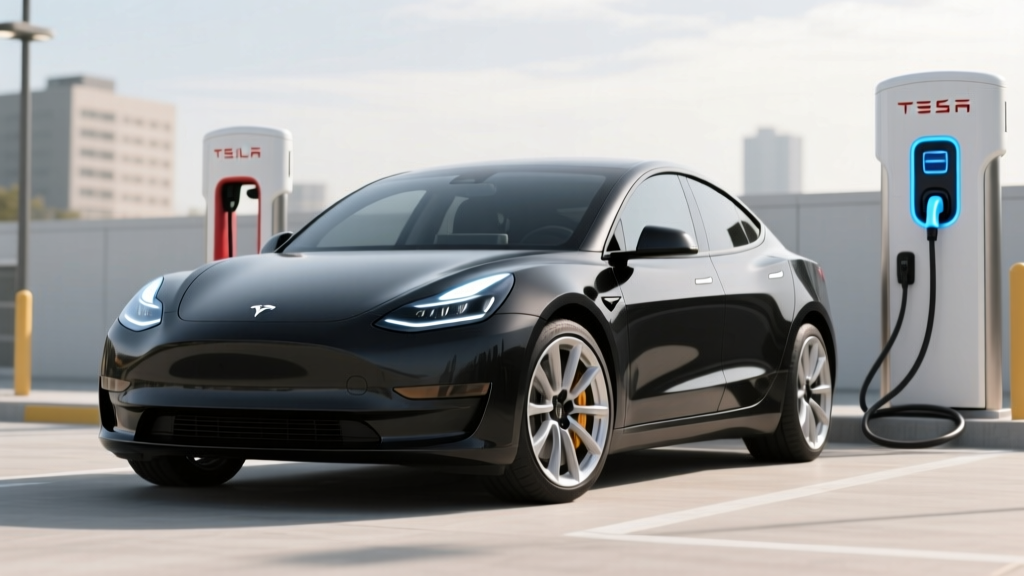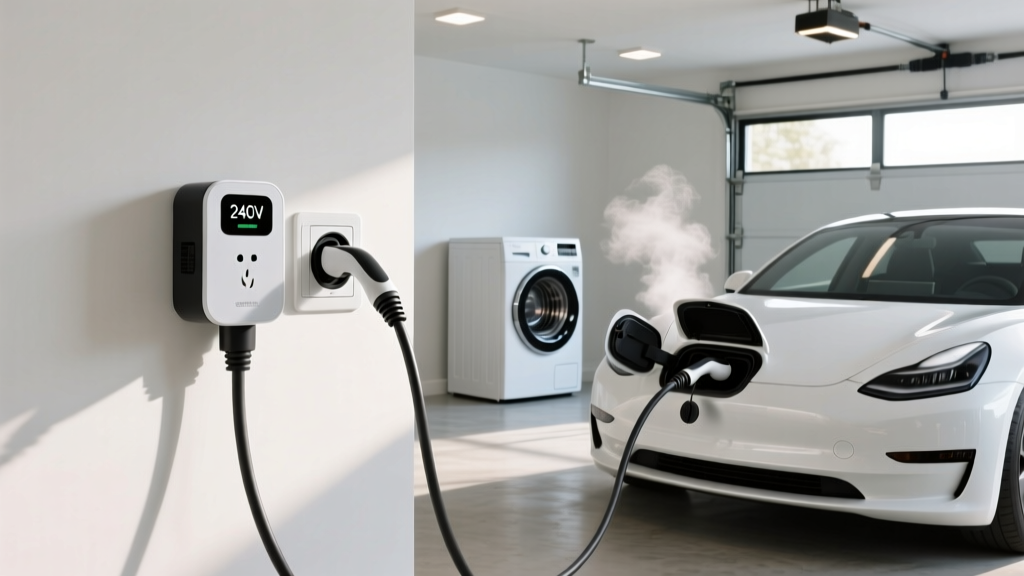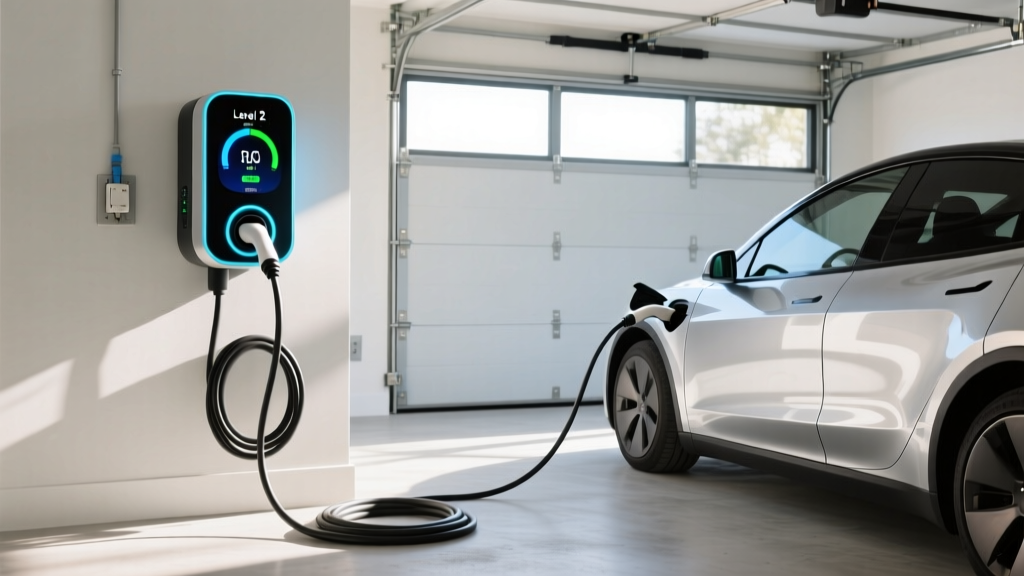
With EV adoption accelerating through the mid-2020s, the market for home and portable charging equipment has exploded. But charger sales brochures and online listings are packed with jargon — kW ratings, amperage specs, NEMA configurations, connector types — that make comparison shopping frustrating. This guide cuts through the noise with exact numbers: what each charging level actually delivers in miles per hour, what a real home installation costs when you factor in electrician labor and potential panel upgrades, and which specific charger models deliver the best value in 2026.
Charging Levels Explained: Speeds in kW and Miles Per Hour
Before evaluating any charger, you need to understand the three charging tiers and how they translate to real range recovery. The single most important distinction in EV charging literacy: kW (kilowatts) measures power — the rate at which energy flows. kWh (kilowatt-hours) measures energy — the total capacity stored in your battery. A 48 kW charger delivers energy roughly 6× faster than an 8 kW unit. Your battery's capacity is measured in kWh (e.g., 75 kWh usable).
| Level | Voltage | Power (kW) | Miles of Range Per Hour | Typical Use |
|---|---|---|---|---|
| Level 1 | 120V AC | 1.2–1.9 kW | 3–5 mi/hr | Overnight top-up, PHEVs, emergencies |
| Level 2 | 240V AC | 7.2–19.2 kW | 20–65 mi/hr | Home daily charging, workplace, retail |
| DC Fast Charge | 400–800V DC | 50–350+ kW | 150–1,200+ mi/hr (peak) | Road trips, highway corridors |
Real-world context: A Level 2 home charger rated at 11.5 kW (48A on a 60A circuit) will add roughly 35–42 miles of range per hour to a midsize EV like the Hyundai Ioniq 5 or Tesla Model Y. That means a 10–80% charge on a 77 kWh battery takes approximately 5.5–6 hours — perfectly suited for overnight charging. DC fast charging, by contrast, can take a battery from 10–80% in 18–25 minutes depending on peak kW and the vehicle's charge curve, but speeds taper significantly above 80% State of Charge to protect battery chemistry.
How Much Does It Cost to Install a Home EV Charger?
This is the question behind most charger sales inquiries, and the honest answer spans a wide range depending on your home's electrical infrastructure. Here's a realistic breakdown based on 2025–2026 installer data and equipment pricing:
| Component | Typical Range | Notes |
|---|---|---|
| Level 2 Charger (Equipment) | $350–$750 | Smart Wi-Fi-enabled, 40–48A, 24ft cable |
| Electrician Labor (standard install) | $500–$1,500 | Running 240V/50–60A circuit from panel to garage/carport |
| Electrical Permit | $50–$200 | Varies by municipality; required for code compliance |
| Panel Upgrade (if needed) | $1,500–$4,000+ | Upgrading from 100A to 200A service; common in pre-1990 homes |
| Utility Make-Ready Programs | −$0 to −$1,500 | Some utilities cover panel upgrades or conduit runs |
| Total (No Panel Upgrade) | $900–$2,450 | Most homes with 200A service and nearby panel |
| Total (With Panel Upgrade) | $2,400–$6,000+ | Older homes or those with maxed-out 100A panels |
What electrical upgrades might I need? The most common surprise for new EV owners is discovering their home's electrical panel lacks capacity. A 48A Level 2 charger requires a dedicated 60A circuit (National Electrical Code requires circuits be rated 125% above continuous load). If your home has a 100A main panel that's already near capacity with HVAC, electric range, and dryer loads, you'll likely need a panel upgrade to 200A service. A licensed electrician will perform a load calculation before recommending a circuit size. Some utilities, including PG&E and ConEdison, offer make-ready programs that subsidize panel upgrades or dedicated EV circuits.
Connector Compatibility: NACS, CCS1, CHAdeMO, and Adapters
The connector landscape has consolidated significantly since Ford, GM, Rivian, Volvo, and most major automakers adopted the North American Charging Standard (NACS) starting in the 2025–2026 model years. Here's where things stand for new buyers:
| Connector | Brands Using It (Native) | Home Charger Availability | Adapter Needed? |
|---|---|---|---|
| NACS (Tesla/J3400) | Tesla, Ford, GM, Rivian, Volvo, Polestar, Nissan (2025+), Hyundai/Kia (2026+) | Widely available — Tesla Wall Connector, ChargePoint, Emporia | CCS1→NACS adapters available ($150–$300) for older chargers |
| CCS1 (Combo) | Legacy: 2024 and older Ford, GM, VW, Hyundai/Kia, BMW, most non-Tesla | Still widely available — JuiceBox, ChargePoint, Grizzl-E | NACS→CCS1 adapters ($200–$300) for newer NACS vehicles on older chargers |
| CHAdeMO | Nissan Leaf (legacy), Mitsubishi Outlander PHEV | Very limited for home; mostly public DC stations | No practical home adapter; CHAdeMO public infrastructure declining |
Which connector/charger is compatible with my EV? Check your vehicle's charge port. If you're buying a 2025–2026 model from Ford, GM, Rivian, Volvo, or Tesla, it has a native NACS port. Buy a NACS-equipped Level 2 charger. If you own a 2023–2024 model with CCS1, you can either buy a CCS1 charger or purchase a NACS charger with a CCS1 adapter for future-proofing. According to the U.S. DOE Alternative Fuels Data Center, NACS is becoming the dominant standard at both home and public DC fast-charging locations.
Cost to Charge: Home vs. Public vs. Gas Per Mile
The economic case for home charging is overwhelming when you compare per-mile fuel costs. Here's a data-driven breakdown using 2026 electricity rates and an efficient midsize EV averaging 3.0 miles per kWh (roughly 112 MPGe combined, similar to a Tesla Model Y or Hyundai Ioniq 6):
| Scenario | Rate | Cost Per Mile | Annual Cost (12,000 mi) |
|---|---|---|---|
| Home Level 2 (national avg. $0.17/kWh) | $0.17/kWh | $0.057 | $680 |
| Home Level 2 (off-peak TOU rate $0.09/kWh) | $0.09/kWh | $0.030 | $360 |
| Public Level 2 (avg. $0.30/kWh) | $0.30/kWh | $0.100 | $1,200 |
| DC Fast Charge (avg. $0.48/kWh) | $0.48/kWh | $0.160 | $1,920 |
| Gasoline Vehicle (28 MPG avg., $3.40/gal) | $3.40/gal | $0.121 | $1,457 |
Key takeaway: Home charging on an off-peak time-of-use (TOU) plan delivers fuel costs roughly 75% lower than gasoline. Even public DC fast charging at premium rates is only marginally more expensive per mile than gas. The breakeven math overwhelmingly favors home Level 2 installation. Most utilities now offer EV-specific TOU rate plans — check with your provider, as enrollment can cut your charging cost nearly in half.
Charging Time Examples: 10–80% by Battery Size and Charger Power
Charger sales listings often advertise "peak kW" without context. The practical metric is how long a 10–80% session takes on a given vehicle battery. Here are realistic estimates accounting for charge-curve taper (charging slows above ~80% SoC to protect battery health):
| Battery (usable kWh) | Example Vehicles | 7.7 kW (32A) | 11.5 kW (48A) | 19.2 kW (80A) |
|---|---|---|---|---|
| 58 kWh | VW ID.4 Standard, base Nissan Ariya | 5 hr 15 min | 3 hr 30 min | 2 hr 10 min |
| 77 kWh | Tesla Model Y LR, Ford Mustang Mach-E ER, Hyundai Ioniq 5 | 7 hr 00 min | 4 hr 40 min | 2 hr 50 min |
| 100 kWh | Tesla Model S/X, GMC Hummer EV, Rivian R1S Max | 9 hr 05 min | 6 hr 05 min | 3 hr 40 min |
For DC fast charging on a road trip, a vehicle with 350V architecture (most non-Hyundai/Kia EVs) peaks around 150–200 kW and averages 10–80% in 25–35 minutes. Vehicles on 800V architecture (Hyundai Ioniq 5/6, Kia EV6/EV9, Porsche Taycan, Genesis GV60) can peak at 240–350 kW and complete 10–80% in 18–22 minutes at a compatible high-power station. Always precondition your battery before DC fast charging — most EVs do this automatically when you navigate to a charger — to hit peak charge rates.
Top Level 2 Charger Picks: Equipment Recommendations
Based on sustained real-world performance, build quality, connector options, and smart features, these are the chargers worth considering in 2026:
Tesla Wall Connector (Gen 3, NACS)
- Power: Up to 11.5 kW (48A) on a 60A circuit
- Connector: Native NACS; CCS1 adapter available separately (~$250)
- Cable Length: 24 ft
- Smart Features: Wi-Fi, OTA firmware updates, power-sharing between two units, Tesla app integration
- Price: ~$475
- Best For: Tesla owners or NACS-equipped 2025–2026 vehicles; best value in the segment
ChargePoint Home Flex (NACS or CCS1)
- Power: Up to 12 kW (50A) on a 65A circuit; adjustable down to 16A for smaller panels
- Connector: Available in NACS or CCS1 configurations
- Cable Length: 23 ft
- Smart Features: Wi-Fi, ChargePoint app with scheduling, Alexa integration, detailed energy tracking
- Price: ~$599–$649
- Best For: Mixed-fleet households, adjustable amperage for older panels
Emporia Vue Level 2 Smart Charger
- Power: Up to 11.5 kW (48A) on a 60A circuit
- Connector: NACS (J3400 standard)
- Cable Length: 24 ft
- Smart Features: Wi-Fi, integration with Emporia whole-home energy monitor, solar-aware charging, TOU scheduling
- Price: ~$399
- Best For: Budget-conscious buyers who want smart scheduling and solar integration
Grizzl-E Smart (CCS1 or NACS)
- Power: Up to 10 kW (40A) on a 50A circuit
- Connector: CCS1 or NACS
- Cable Length: 24 ft
- Smart Features: Wi-Fi, OCPP-compatible for utility demand-response programs, adjustable amperage
- Price: ~$499
- Best For: Cold-climate durability (rated to −40°F), outdoor installations, utility program participants
Safety, Code, and Installation Considerations
Every Level 2 installation must comply with the National Electrical Code (NEC Article 625) and local amendments. Here's what a proper installation includes:
- Dedicated circuit: Your EV charger must be on its own dedicated breaker — never shared with other appliances. A 48A charger requires a 60A breaker (125% continuous-load rule).
- GFCI protection: NEC 2020 and later requires GFCI (Ground Fault Circuit Interrupter) protection for all EV charging outlets. Hardwired units have GFCI built into the charger itself.
- Hardwired vs. plug-in: Hardwired installations (no plug) are generally preferred for 48A+ chargers because NEMA 14-50 receptacles are rated for intermittent use, not daily high-amperage charging. Some jurisdictions require hardwiring above 40A.
- Outdoor rating: If your charger is mounted outside, it must carry a NEMA 4 or NEMA 4X rating for weather resistance. All recommended chargers above meet this standard.
- Permit and inspection: A licensed electrician should pull a permit, and the installation must pass municipal inspection. This protects your home insurance coverage and ensures code compliance. Never skip the permit — unpermitted electrical work can void homeowners insurance claims.
Panel capacity check: Before purchasing any charger, have an electrician perform a NEC Article 220 load calculation. This determines whether your existing panel can support a 40–60A dedicated circuit. Homes built before 1990 with 100A service frequently need an upgrade. The National Electrical Contractors Association provides resources on what a proper load calculation entails.
Frequently Asked Questions
Can I use the Level 1 charger that came with my EV instead of buying a Level 2?
You can, but Level 1 charging at 120V delivers only 1.2–1.9 kW — roughly 3–5 miles of range per hour. For a 77 kWh battery, a full charge would take 40+ hours. Level 1 works for plug-in hybrids with small batteries (10–18 kWh) or as a backup, but any BEV owner driving more than 30 miles daily will benefit significantly from Level 2 home charging.
Does a smart Wi-Fi charger save money compared to a "dumb" charger?
Yes, if your utility offers time-of-use (TOU) rates. A smart charger lets you schedule charging during off-peak hours (typically 10 PM – 6 AM) when electricity costs $0.07–$0.12/kWh instead of $0.20–$0.35/kWh during peak. Over a year of daily charging, TOU scheduling can save $200–$500. Smart chargers also provide energy tracking, remote start/stop, and firmware updates.
What is the IRS §30D tax credit for home charger installation?
The federal Alternative Fuel Vehicle Refueling Property Credit (IRS Form 8911) covers 30% of home EV charger equipment and installation costs, up to $1,000. However, eligibility is restricted to equipment installed in a census tract that is not an "eligible census tract" (low-income or non-urban areas qualify). Check your census tract via the IRS tool before assuming eligibility. This credit is separate from the §30D vehicle purchase credit. Consult a tax professional for your specific situation.
Should I buy a 48A or 80A charger?
Most homes benefit from a 48A charger (11.5 kW on a 60A circuit), which provides 35–42 miles of range per hour — more than enough for overnight charging. An 80A charger (19.2 kW on a 100A circuit) charges roughly 65% faster but requires a heavy-duty panel, thick-gauge wiring, and significantly higher installation cost. Unless you have a 100+ kWh battery and need rapid turnaround between trips, 48A is the sweet spot for cost and performance.
How fast will each charging level add range to my specific EV?
Range added per hour depends on your vehicle's efficiency (miles per kWh). A highly efficient EV like the Lucid Air (4.5 mi/kWh) gains more miles per kWh than a heavy truck like the Rivian R1T (2.0 mi/kWh). At 11.5 kW: a Lucid Air adds ~52 mi/hr, a Tesla Model Y adds ~38 mi/hr, and a Rivian R1T adds ~23 mi/hr. Always calculate based on your vehicle's specific Wh/mile rating from fueleconomy.gov.
Will charging at home increase my electricity bill dramatically?
Charging a 77 kWh battery from 10–80% (roughly 54 kWh) at the national average of $0.17/kWh costs about $9.18. If you drive 35 miles daily and charge nightly, expect a monthly increase of $55–$90 on your electric bill — but you'll save $120–$180 in gasoline costs for the same mileage. The net monthly savings with home charging typically ranges from $60–$130.