If you own or are shopping for an electric pickup — the Ford F-150 Lightning, Rivian R1T, Chevrolet Silverado EV, or GMC Sierra EV — the single most important accessory you will buy is not a tonneau cover or a lift kit. It is a properly sized home charger. Electric pickups carry massive battery packs (98 kWh to 200+ kWh), which means the difference between a 12-amp Level 1 trickle and a 48-amp Level 2 wall connector is not just convenience — it is the difference between waking up with a full truck or waiting two days to recover from a road trip.
This guide breaks down exactly what charger an electric pickup needs, what your home electrical panel can support, what it will cost, and how charging economics compare to gassing up a conventional half-ton.
Charging Levels Explained: kW, Miles per Hour, and Why Pickups Need More
Before picking hardware, the three charging levels need clear definitions. The unit that matters here is kW (kilowatts), which measures power flow — how fast energy moves into the battery. The battery itself is measured in kWh (kilowatt-hours), which is energy capacity. Think of kW as the width of the hose and kWh as the size of the bucket.
| Level | Voltage | Max Power (kW) | Miles of Range Added per Hour | Typical Use Case |
|---|---|---|---|---|
| Level 1 | 120V AC | 1.0 – 1.4 kW | 3 – 5 mi/hr | Overnight top-off, emergency, PHEVs |
| Level 2 | 240V AC | 7.2 – 19.2 kW | 25 – 65 mi/hr | Home daily charging, workplace, destination |
| DC Fast Charge | 400V–800V DC | 50 – 350 kW | 150 – 1,200+ mi/hr (peak) | Road trips, highway corridors, commercial |
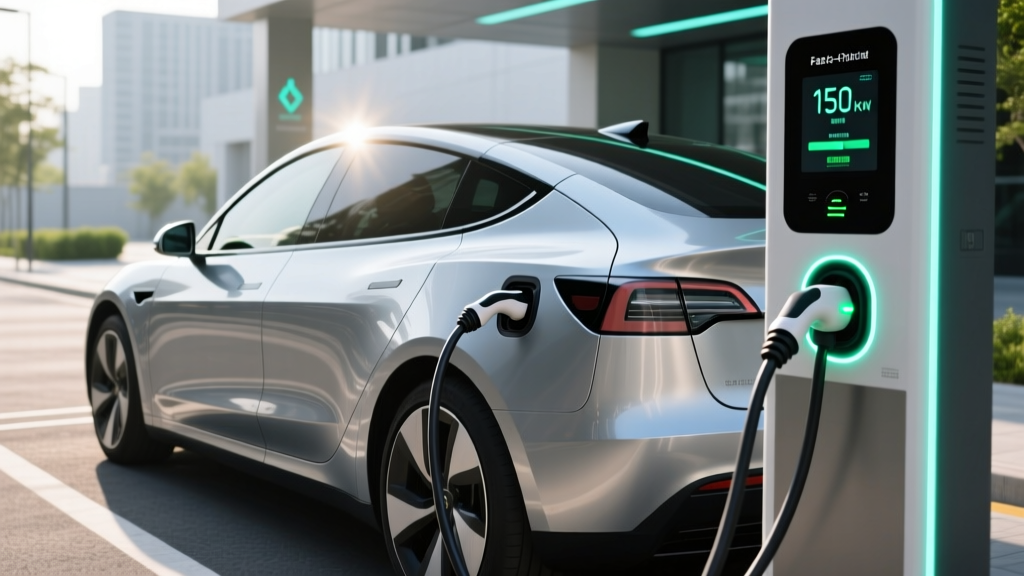
For a 230-mile-range electric pickup with a 131 kWh pack (like the F-150 Lightning Extended Range), Level 1 charging would take well over 100 hours from empty — effectively useless. A 48-amp Level 2 station delivering 11.5 kW can replenish that same pack in roughly 11–12 hours, which fits an overnight window. DC fast charging at 150+ kW can take a large pack from 10% to 80% in 30–45 minutes, though the charge curve tapers significantly above 80% to protect the battery cells.
Home Charger Installation Cost: Equipment, Electrician, and the Panel Upgrade Question
The sticker price of a Level 2 wall connector is only part of the story. Installation costs vary enormously based on your home's electrical panel age, available capacity, and the distance from the panel to your garage or driveway.
| Component | Simple Install (Panel Adjacent) | Complex Install (Long Run / Panel Upgrade) |
|---|---|---|
| Level 2 Charger (hardware) | $400 – $700 | $400 – $700 |
| Electrician labor (240V/50A circuit) | $500 – $1,200 | $1,500 – $3,500 |
| Permit & inspection | $100 – $300 | $150 – $500 |
| Electrical panel upgrade (100A → 200A) | $0 (not needed) | $2,000 – $5,000 |
| Conduit, wiring (6 AWG copper, 50+ ft run) | $100 – $300 | $400 – $1,000 |
| Total Estimated Cost | $1,100 – $2,500 | $4,450 – $10,700 |
What Electrical Upgrades Might You Need?
Most homes built after 1990 have a 200-amp main panel, which can usually support a 50-amp dedicated circuit for a 48-amp continuous Level 2 charger (electrical code requires circuits to be rated 125% above continuous load). However, if your panel is already near capacity — running electric heat, a hot tub, an electric range, and a dryer — a licensed electrician may recommend a panel upgrade to 320/400 amps or a dedicated sub-panel for the EV circuit.
Homes built before 1980 often have 100-amp service. Adding a 50-amp EV circuit to a 100-amp panel is usually not code-compliant and will require a service upgrade. This is the single biggest hidden cost in EV home charging, and it catches many pickup-owning homeowners off guard — especially those in older rural properties where electric pickups are popular for their torque and towing.
Always get a load calculation from a licensed electrician before purchasing a charger. Some utilities offer free or subsidized panel upgrades for EV adopters — check with your local provider.
Connector Compatibility: NACS, CCS1, and the Adapter Landscape for Electric Pickups
The connector on your charger must match the port on your truck. As of 2025–2026, the North American market has largely consolidated around NACS (North American Charging Standard), originally developed by Tesla, but the transition is still in progress.
| Electric Pickup | Native Connector | DC Fast Charge Network Access | Adapter Needed? |
|---|---|---|---|
| Ford F-150 Lightning (2025+) | NACS | Tesla Supercharger + CCS networks | CCS adapter included for non-Tesla DCFC |
| Ford F-150 Lightning (2022–2024) | CCS1 | Electrify America, EVgo, etc. | CCS-to-NACS adapter (~$230) for Superchargers |
| Rivian R1T (2025+) | NACS | Tesla Supercharger + CCS networks | CCS adapter for non-Tesla DCFC |
| Rivian R1T (2022–2024) | CCS1 | Electrify America, EVgo, etc. | CCS-to-NACS adapter for Superchargers |
| Chevrolet Silverado EV | NACS | Tesla Supercharger + CCS networks | CCS adapter for non-Tesla DCFC |
| GMC Sierra EV | NACS | Tesla Supercharger + CCS networks | CCS adapter for non-Tesla DCFC |
For home Level 2 charging: Most Level 2 wall connectors now ship with either a NACS plug or offer both NACS and J1772 (the legacy Level 2 standard that CCS1 is built on) options. If your truck has a NACS port, buy a NACS-equipped charger. If it has CCS1/J1772, buy a J1772 charger — the J1772 portion of the CCS1 connector handles all AC Level 2 charging.
CHAdeMO, the older Japanese DC fast-charge standard, is not used on any current electric pickup and is being phased out across North America. You will not encounter it for truck charging.
Equipment Recommendations: Best Level 2 Chargers for Electric Pickups
Electric pickups demand robust Level 2 hardware. With battery packs ranging from 98 kWh (Lightning Standard Range) to over 200 kWh (Silverado EV Max Range), you want a charger that can deliver at least 11.5 kW (48 amps on a 60-amp circuit) to complete a full charge overnight. Here are top picks for 2025–2026:
Tesla Wall Connector (NACS)
- Power output: Up to 11.5 kW (48A / 240V)
- Cable length: 24 ft
- Connector: NACS native
- Smart features: Wi-Fi, OTA updates, load sharing (pair two units on one circuit), power sharing with Powerwall
- Price: ~$475
- Best for: F-150 Lightning (2025+), Rivian R1T (2025+), Silverado EV, Sierra EV — any NACS-native truck
ChargePoint Home Flex (J1772 or NACS)
- Power output: Up to 12 kW (50A / 240V) — adjustable down to 16A for smaller circuits
- Cable length: 23 ft
- Connector: Available in J1772 or NACS
- Smart features: Wi-Fi, Alexa integration, scheduling, detailed energy tracking via app
- Price: ~$599 (J1772) / ~$649 (NACS)
- Best for: Owners of 2022–2024 CCS1-equipped trucks, or anyone wanting flexible amperage control
Emporia Level 2 EV Charger (J1772)
- Power output: Up to 11.5 kW (48A / 240V)
- Cable length: 24 ft
- Connector: J1772
- Smart features: Wi-Fi, energy monitoring (pairs with Emporia Vue home energy monitor), scheduling
- Price: ~$399
- Best for: Budget-conscious buyers wanting energy visibility; ideal for CCS1-era trucks
Grizzl-E Smart (J1772 or NACS)
- Power output: Up to 10 kW (40A / 240V)
- Cable length: 24 ft
- Connector: J1772 or NACS
- Smart features: OCPP-compatible, works with multiple charging apps, adjustable amperage
- Price: ~$499
- Best for: Cold-climate owners — rated to -40°F, rugged aluminum enclosure
Pro tip: If you have a 200-amp panel and want future-proofing, install a 60-amp circuit with 48-amp continuous charging. This delivers 11.5 kW and is the practical ceiling for most residential single-phase service. Going higher (80A circuit / 64A continuous for 15+ kW) is possible but requires heavier wire, a larger breaker, and significant panel headroom — rarely justified for overnight truck charging.
Charging Cost per Mile: Electric Pickup vs. Gas Half-Ton
The economic argument for electric pickups hinges on fuel savings, but the actual cost per mile depends heavily on where and when you charge. Below is a realistic breakdown using national averages.
| Charging Scenario | Cost per kWh | Efficiency (kWh/mi) | Cost per Mile | Equivalent Gas MPG at $3.50/gal |
|---|---|---|---|---|
| Home Level 2 — off-peak utility rate | $0.08 – $0.12 | 0.45 (avg electric pickup) | $0.036 – $0.054 | 65 – 97 MPG |
| Home Level 2 — standard residential rate | $0.15 – $0.18 | 0.45 | $0.068 – $0.081 | 43 – 51 MPG |
| Public Level 2 (ChargePoint, etc.) | $0.25 – $0.40 | 0.45 | $0.113 – $0.180 | 19 – 31 MPG |
| DC Fast Charge (Electrify America, EVgo) | $0.35 – $0.55 | 0.45 | $0.158 – $0.248 | 14 – 22 MPG |
| Tesla Supercharger (average) | $0.28 – $0.38 | 0.45 | $0.126 – $0.171 | 20 – 28 MPG |
| Gas F-150 (19 MPG combined) | — | — | $0.184 | 19 MPG (baseline) |
The takeaway: Home off-peak charging makes an electric pickup dramatically cheaper to fuel — roughly one-quarter the cost per mile of a gas half-ton. But exclusive reliance on DC fast charging at highway rates can approach or even exceed the cost of gasoline. The economics strongly favor home charging, which is why a proper Level 2 installation is not optional for pickup owners who want the cost advantage.
According to fueleconomy.gov, the 2025 F-150 Lightning Extended Range achieves 70 MPGe combined, translating to approximately 0.48 kWh/mile in mixed driving. Highway-only efficiency drops to roughly 0.55 kWh/mile, and cold weather (below 30°F) can increase consumption by 15–30% due to battery heating and cabin climate demands.
Charging Time Examples: How Long Does an Electric Pickup Actually Take?
Theoretical charge rates only tell part of the story. Below are real-world charge time estimates for common electric pickup battery sizes, factoring in charge-curve taper (the reduction in kW that occurs as the battery approaches full state of charge).
| Vehicle / Battery Size | Level 2 at 11.5 kW (48A) | DCFC 10–80% (peak kW) | DCFC 10–80% Estimated Time |
|---|---|---|---|
| F-150 Lightning Std Range (98 kWh usable) | ~8.5 hours (0–100%) | 150 kW peak | ~35 minutes |
| F-150 Lightning Ext Range (131 kWh usable) | ~11.4 hours (0–100%) | 150 kW peak | ~45 minutes |
| Rivian R1T Dual-Motor Large (128.9 kWh) | ~11.2 hours (0–100%) | 200+ kW peak (NACS) | ~35 minutes |
| Silverado EV 4WT (200+ kWh) | ~17+ hours (0–100%) | 350 kW peak (800V) | ~30–40 minutes (10–80%) |
Notice that Level 2 home charging for the largest packs (Silverado EV Max Range) can exceed a single overnight window if you deplete the battery deeply. For most daily driving — 40 to 80 miles of mixed use — even a large-pack truck will recover overnight on Level 2. Reserve deep-cycle charging for weekends or plan around DC fast stops on road trips.
Safety, Electrical Code, and Best Practices for Pickup Charger Installations
Electric pickups draw significant continuous current for many hours. Safety and code compliance are non-negotiable.
- Dedicated circuit: Your Level 2 charger must be on its own dedicated circuit — not shared with a dryer, HVAC, or other appliance. A 48-amp continuous charger requires a 60-amp breaker with 6 AWG copper wire (or 4 AWG aluminum).
- GFCI protection: The 2023 NEC (National Electrical Code) requires GFCI protection for all EV receptacles rated 60 amps or less in garages and outdoor locations. Hardwired chargers (which most wall connectors are) may have different GFCI requirements — your electrician will determine this based on local code adoption.
- Outdoor rating: If your charger is mounted outside (driveway, pole barn, carport), it must carry a NEMA 4 or IP65 weatherproof rating. All chargers listed above meet this standard.
- Cable management: A 24-foot cable on a pickup-height charge port (often located on the front fender or bed area) requires thoughtful mounting placement. Mount the charger at 48–54 inches from the floor for ergonomic reach, and ensure the cable can reach the charge port without stretching across a walkway.
- Permit and inspection: Most jurisdictions require an electrical permit for a new 240V circuit. Inspections verify wire gauge, breaker sizing, grounding, and GFCI compliance. Do not skip this — unpermitted work can void home insurance claims and create fire risk.
For detailed residential electrical code requirements, the National Fire Protection Association (NFPA 70 / NEC) is the authoritative source, though local amendments may apply.
Frequently Asked Questions
How much does it cost to install a home EV charger for an electric pickup?
For a straightforward installation on an existing 200-amp panel with a short wire run, expect $1,100–$2,500 total (charger, electrician, permit). If your panel needs upgrading from 100A to 200A, or the wire run exceeds 50 feet through finished walls, costs can reach $4,500–$10,000+. Always get a load calculation and quote from a licensed electrician before purchasing equipment.
How fast will each charging level add range to my electric pickup?
Level 1 (120V) adds roughly 3–5 miles of range per hour — inadequate for trucks. Level 2 (240V at 48A) adds approximately 30–45 miles per hour depending on the truck's efficiency. DC fast charging at 150 kW can add 150+ miles in 15 minutes at peak, though the charge rate tapers significantly above 80% state of charge.
Which connector and charger is compatible with my electric pickup?
Model-year 2025+ F-150 Lightning, Rivian R1T, Silverado EV, and Sierra EV all use the NACS connector natively. Model-year 2022–2024 F-150 Lightning and R1T use CCS1/J1772. For home Level 2 charging, match your charger's plug to your truck's port: NACS charger for NACS trucks, J1772 charger for CCS1-era trucks. DC fast charging adapters may be needed to access the full network — check with your manufacturer.
How much does charging an electric pickup cost per mile vs. a gas truck?
At a national average residential electricity rate of ~$0.16/kWh and an electric pickup efficiency of ~0.45–0.50 kWh/mile, home charging costs roughly $0.07–$0.09 per mile. A gas F-150 at 19 MPG combined with $3.50/gallon fuel costs about $0.18 per mile. Home-charged electric pickups cost roughly half as much per mile to fuel. However, DC fast charging at $0.40–$0.55/kWh can cost $0.18–$0.25 per mile, negating the savings.
What electrical upgrades might I need for a Level 2 pickup charger?
The most common upgrade is a panel service increase from 100 amps to 200 amps ($2,000–$5,000) in older homes. You may also need a dedicated sub-panel if your main panel lacks physical breaker spaces. Homes with 200-amp service generally support a 60-amp EV circuit without upgrades, provided existing loads (HVAC, electric heat, dryer) leave sufficient headroom per a professional load calculation.
Can I use a portable Level 2 charger instead of a hardwired wall unit?
Yes, but with caveats. Portable Level 2 chargers that plug into a NEMA 14-50 outlet (the same 240V outlet used for electric ranges and RVs) can deliver up to 40 amps / 9.6 kW — slightly less than the 48 amps available from a hardwired 60-amp circuit. A NEMA 14-50 receptacle still requires a dedicated 50-amp circuit, proper wiring, and a permit. The advantage is portability: you can take the charger with you if you move or use it on the road.
Are there tax credits or rebates for installing a home EV charger?
The federal Alternative Fuel Vehicle Refueling Property Credit (IRC §30C) offers up to 30% of the cost of home charging equipment and installation, capped at $1,000, but only for residents in eligible census tracts (typically rural or low-income communities as defined by the IRS). Many utilities and states also offer rebates of $250–$1,000 for Level 2 equipment. Check with your utility and state energy office for current programs, as these vary by jurisdiction and change frequently.
Sources: EPA fuel economy data from fueleconomy.gov; IRS §30C refueling credit guidance from irs.gov; NEC electrical code standards from NFPA.