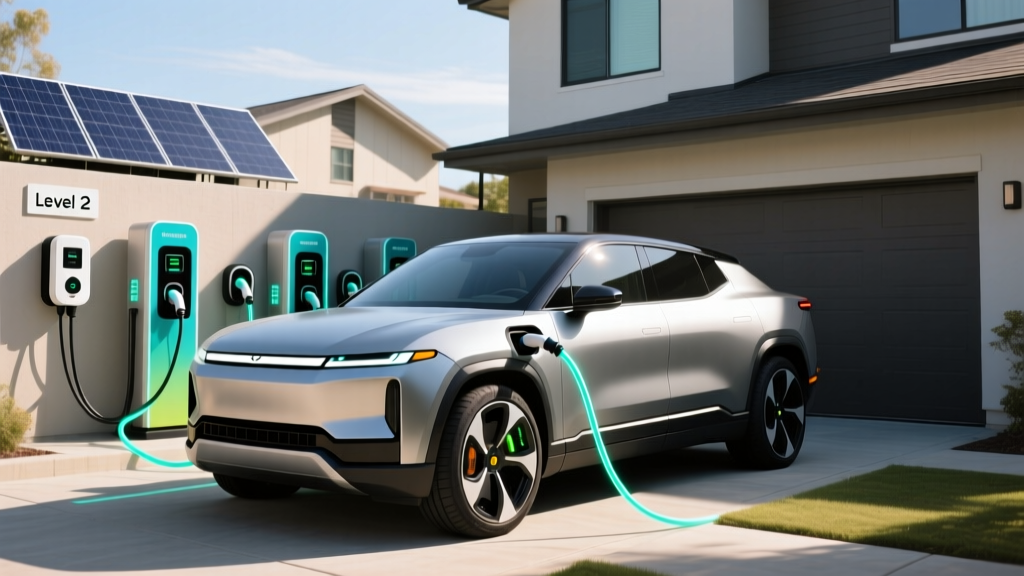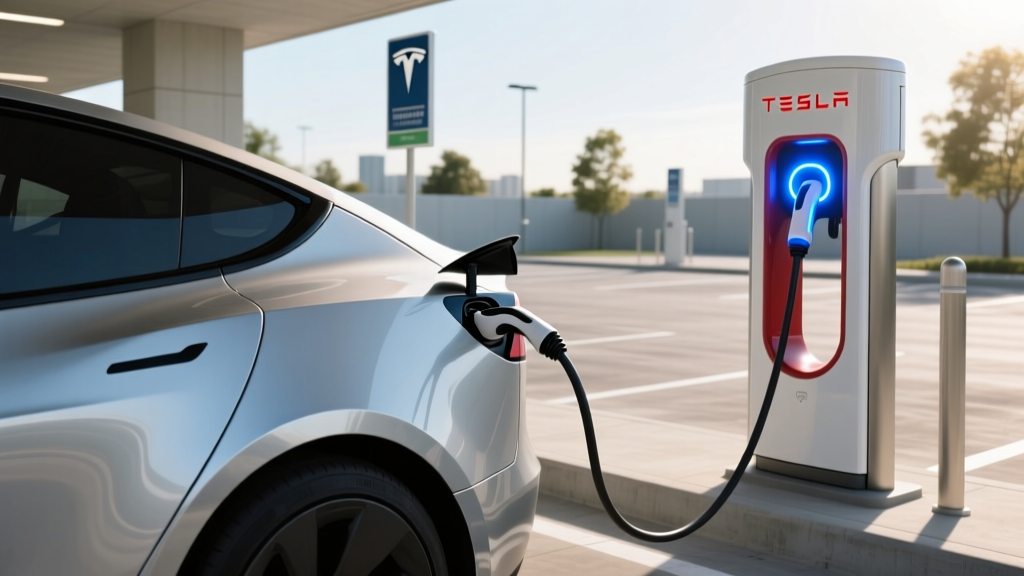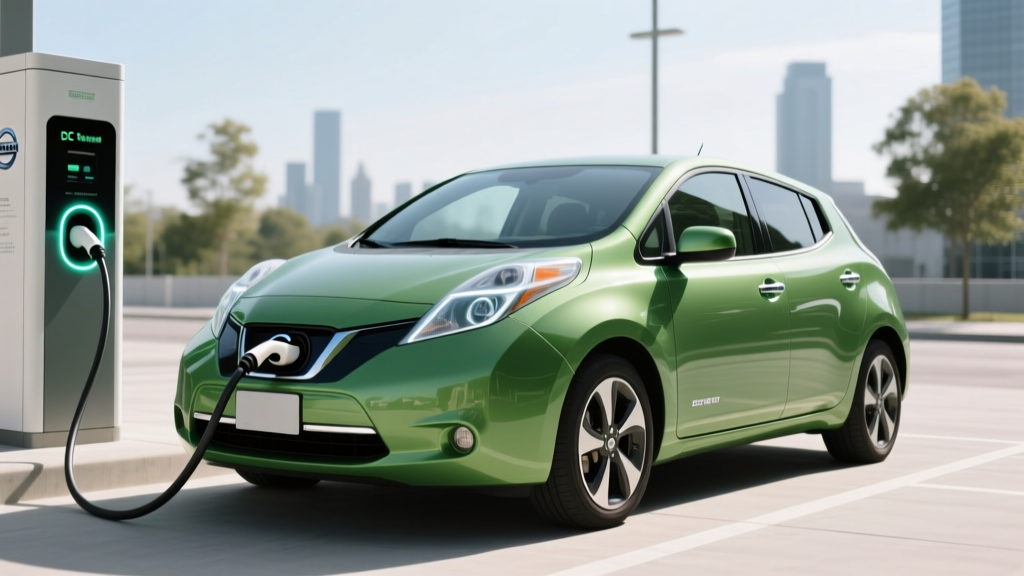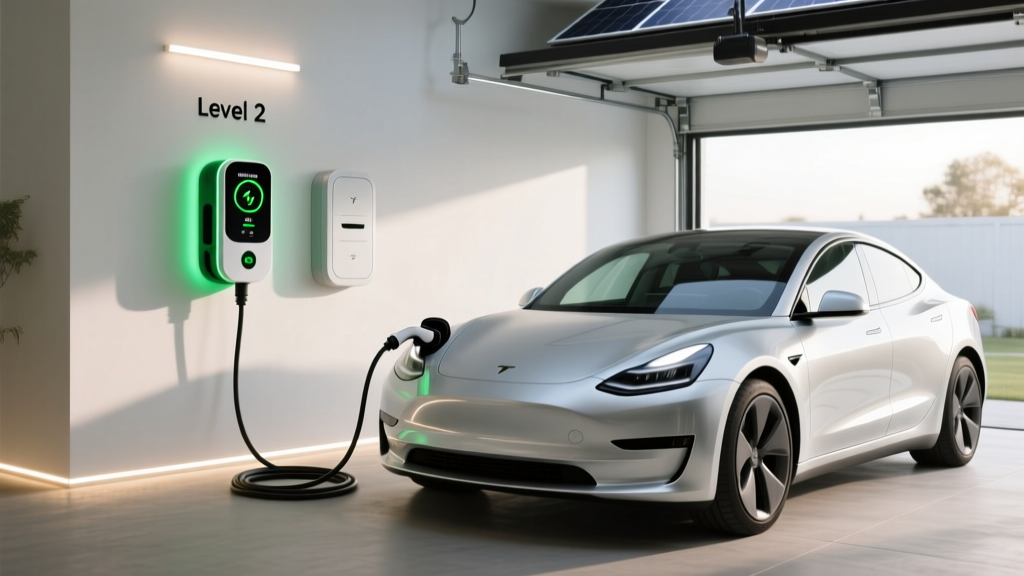
If you're researching home EV charging for the first time—or realizing your current setup isn't cutting it—you've likely hit what I call the "charger last call" moment: the point where you need to commit to a real charging solution instead of relying on a standard wall outlet and hope. This guide walks through every decision you'll face in 2026, from electrical panel capacity to connector compatibility, with exact numbers and real costs.
Understanding EV Charging Levels: Speeds That Actually Matter
Before buying equipment, you need to understand the three charging tiers and what they deliver in practical terms. The single most important distinction in EV charging: kW (kilowatts) measures power—the rate of energy delivery, while kWh (kilowatt-hours) measures energy—the total capacity of your battery. Think of kW as water flow rate and kWh as the size of the bucket.
| Level | Voltage | Max Power (kW) | Miles Added/Hour | Typical Use Case |
|---|---|---|---|---|
| Level 1 | 120V AC | 1.4–1.9 kW | 3–5 miles | Overnight trickle, PHEVs, emergencies |
| Level 2 | 240V AC | 7.2–19.2 kW | 20–70 miles | Daily home charging (the standard) |
| DC Fast Charging | 400–900V DC | 50–350+ kW | 150–1,200+ miles | Road trips, commercial fleets |
Real-world charging time examples for a typical 75 kWh battery (like a Tesla Model Y Long Range or Hyundai Ioniq 5):
- Level 1 (1.4 kW): 10–80% takes roughly 37 hours. Impractical for BEVs.
- Level 2 (11.5 kW / 48A): 10–80% in approximately 4.5–5 hours. The home-charging sweet spot.
- Level 2 (7.7 kW / 32A): 10–80% in approximately 6.5–7 hours. Adequate for overnight.
- DC Fast (250 kW peak): 10–80% in ~18–25 minutes, though sustained rates vary by vehicle thermal management and charge-curve taper above 80%.
A critical note on DC fast charging: the advertised peak kW is not sustained across the session. Most vehicles hit peak speed between 10–30% State of Charge (SoC), then taper progressively. A "250 kW" charger might average 130–160 kW over a 10–80% session depending on battery chemistry and temperature. This is why preconditioning—warming the battery before arriving at a charger—matters significantly in cold weather.
Home EV Charger Installation: Electrical Requirements and Real Costs
How much does it cost to install a home EV charger? The honest answer spans a wide range depending on your home's electrical infrastructure. Here's the full breakdown based on current 2026 electrician rates and equipment pricing.
| Component | Simple Install (Near Panel) | Standard Install (50–80 ft run) | Complex Install (Panel Upgrade) |
|---|---|---|---|
| Level 2 Charger (Equipment) | $350–$700 | $350–$700 | $350–$700 |
| Electrician Labor | $300–$600 | $600–$1,500 | $1,200–$3,000 |
| Permit & Inspection | $50–$200 | $50–$200 | $50–$200 |
| Panel Upgrade (if needed) | $0 | $0 | $1,500–$3,500 |
| Conduit, Wire, Misc. | $50–$150 | $150–$400 | $200–$500 |
| Total Estimated Cost | $750–$1,650 | $1,150–$2,800 | $3,300–$7,900 |
What Electrical Upgrades Might You Need?
Most Level 2 chargers require a 240V dedicated circuit. The amperage depends on your charger:
- 32A charger (7.7 kW): Requires a 40A breaker (NEC requires 125% overhead for continuous loads)
- 40A charger (9.6 kW): Requires a 50A breaker
- 48A charger (11.5 kW): Requires a 60A breaker
- 80A charger (19.2 kW): Requires a 100A breaker—rare in residential
Panel upgrade reality check: Homes built before 1990 often have 100A or 125A main service panels. Adding a 60A EV circuit to an already-loaded 100A panel may exceed capacity, requiring a 200A panel upgrade ($1,500–$3,500). Have an electrician perform a load calculation before committing to a high-amperage charger. In some cases, choosing a 32A unit avoids the panel upgrade entirely—saving thousands.
Safety and code requirements to verify:
- Dedicated circuit (no shared breakers with other appliances)
- GFCI protection required by NEC 2023/2026 for outdoor receptacles
- NEMA 14-50 outlet or hardwired connection (hardwired is safer and often required above 40A)
- NEMA 3R or NEMA 4 outdoor rating for exterior-mounted units
- Proper wire gauge: 6 AWG copper for 50A circuits, 4 AWG for 60A circuits (confirm with your electrician)
Connector Compatibility: NACS, CCS1, and CHAdeMO in 2026
Which connector/charger is compatible with my EV? The North American charging landscape has consolidated significantly around NACS (North American Charging Standard), originally Tesla's proprietary connector and now adopted by nearly every major automaker for new vehicles sold from 2025 onward.
| Connector | Brands Using It (Native) | Home Charger Availability | Adapter Needed? |
|---|---|---|---|
| NACS (Tesla) | Tesla, Ford, GM, Rivian, Volvo, Polestar, Hyundai/Kia (2025+), BMW, Mercedes | Wide (Tesla Wall Connector, ChargePoint, Emporia, etc.) | CCS-to-NACS adapters available ($150–$250) |
| CCS1 | Older Hyundai/Kia, VW ID.4 (pre-2025), some Stellantis models | Wide (ChargePoint, Emporia, Wallbox, etc.) | NACS-to-CCS1 adapters available ($150–$300) |
| CHAdeMO | Nissan Leaf (legacy), Mitsubishi Outlander PHEV | Limited (mostly public DC stations) | No practical adapter; legacy standard |
Practical advice: If you own a CCS1-equipped vehicle and plan to upgrade to a NACS vehicle in the next few years, buy a NACS home charger now and use a CCS1-to-NACS adapter for your current car. This future-proofs your investment. According to fueleconomy.gov, nearly all 2026-model-year EVs from major manufacturers now ship with NACS ports natively.
Charging Cost Per Mile: EV vs. Gas in 2026
How much does charging cost per mile vs gas? The answer depends heavily on where and when you charge. Here are realistic scenarios based on current national averages:
| Scenario | Rate ($/kWh) | Cost Per Mile* | Equivalent Gas MPG** |
|---|---|---|---|
| Home Off-Peak (utility TOU plan) | $0.08–$0.12 | $0.024–$0.036 | ~90–135 MPG |
| Home Standard Rate | $0.14–$0.18 | $0.042–$0.054 | ~60–78 MPG |
| Public Level 2 (workplace, shopping) | $0.20–$0.35 | $0.060–$0.105 | ~31–55 MPG |
| DC Fast Charging (Electrify America, Tesla Supercharger) | $0.32–$0.55 | $0.096–$0.165 | ~20–35 MPG |
| Gas Vehicle (avg. $3.40/gal, 28 MPG combined) | — | $0.121 | 28 MPG |
*Based on an EV averaging 3.0 miles per kWh (typical for a midsize crossover like the Tesla Model Y or Ford Mustang Mach-E). Your vehicle's efficiency will vary—check your specific MPGe rating at fueleconomy.gov.
**Equivalent gas MPG shows what a gas car would need to achieve to match that per-mile cost at $3.40/gallon.
The takeaway: home charging on a time-of-use (TOU) plan delivers fuel savings of 70–80% versus gas. Relying exclusively on DC fast charging, however, can push your per-mile cost close to or even above a fuel-efficient gas car. This is why a Level 2 home charger isn't optional—it's where the economics work.
2026 Equipment Picks: Home Level 2 Chargers Worth Buying
After testing dozens of units across multiple homes and vehicles, here are the Level 2 chargers I recommend in 2026. Every recommendation includes power output, connector, cable length, and price—because vague "best charger" lists without specs are useless.
Best Overall: Tesla Wall Connector (Gen 4)
- Power Output: Up to 11.5 kW (48A, 240V)
- Connector: NACS native
- Cable Length: 24 feet
- Smart Features: Wi-Fi connectivity, Tesla app scheduling, power sharing with multiple Wall Connectors on one circuit
- Price: ~$475
- Best For: Tesla owners and NACS-equipped vehicles (Ford, GM, Rivian, Hyundai/Kia 2025+). Hardwired installation recommended for full 48A.
Best for CCS1 Vehicles: ChargePoint Home Flex (2nd Gen)
- Power Output: Up to 12 kW (50A, 240V) — configurable down to 16A
- Connector: CCS1 (J1772 + DC pins) or NACS version available
- Cable Length: 23 feet
- Smart Features: ChargePoint app with scheduling, Alexa integration, detailed energy reporting, UL-listed
- Price: ~$599–$699
- Best For: CCS1-equipped vehicles or households with mixed connector needs. Flexible amperage means it works on smaller circuits.
Best Budget Smart Charger: Emporia Vue Level 2 EV Charger
- Power Output: Up to 11.5 kW (48A, 240V)
- Connector: NACS or J1772 (configurable)
- Cable Length: 24 feet
- Smart Features: Emporia app with real-time energy monitoring, solar integration, scheduling, load management
- Price: ~$399
- Best For: Budget-conscious buyers who still want smart features and energy monitoring. Excellent value at this price point.
Best for High-Power Needs: Wallbox Pulsar Max
- Power Output: Up to 19.2 kW (80A, 240V)
- Connector: NACS or CCS1
- Cable Length: 25 feet
- Smart Features: Wallbox app, Power Boost dynamic load management, Eco-Smart solar charging mode
- Price: ~$799–$899
- Best For: Homes with 200A+ panels and vehicles that accept high AC charge rates (e.g., Lucid Air, some Mercedes EQ models). Requires a 100A breaker—confirm panel capacity first.
Federal Tax Credits and Incentives for Home Charger Installation
Under the current IRS §30C Alternative Fuel Vehicle Refueling Property Credit, you may qualify for a tax credit covering 30% of home EV charger equipment and installation costs, up to $1,000. Key eligibility requirements:
- The charger must be installed at your primary residence
- The property must be located in an eligible census tract (low-income or non-urban area, per IRS guidelines)
- The credit applies to both equipment and installation labor
- You must have sufficient federal tax liability to claim the credit (it is non-refundable)
- Form 8911 must be filed with your tax return
Note: Census-tract eligibility was added under the Inflation Reduction Act and excludes many suburban and urban areas. Check the IRS page on §30C or consult a tax professional before assuming you qualify. Some states and utilities also offer separate rebates of $200–$750 for Level 2 charger purchases—check your local utility's EV program page.
Safety, Code, and Long-Term Ownership Considerations
Home EV charging is remarkably safe when installed correctly—EVs and chargers undergo rigorous UL certification. That said, cutting corners on installation creates real risk. Non-negotiable safety practices:
- Never use an extension cord with a Level 2 charger. Voltage drop over distance reduces charging speed and creates heat risk.
- Hardwire above 40A. NEMA 14-50 receptacles are rated for 50A but many residential-grade units have shown overheating issues at sustained 40A+ draw over hours. Hardwired connections are safer for 48A and above.
- GFCI protection is required by NEC for outdoor receptacles. Hardwired units typically don't require a separate GFCI breaker since the unit has built-in ground-fault protection.
- Outdoor-rated enclosures (NEMA 3R minimum, NEMA 4 for wet climates) are mandatory for exterior installations.
- Annual inspection: Check cable insulation, connector pins, and mounting hardware yearly. Replace any charger showing cracked housing or exposed wiring.
On longevity: quality Level 2 chargers from major brands (Tesla, ChargePoint, Wallbox, Emporia) typically last 8–12 years. Most carry a 3-year warranty. Factor in eventual replacement as a minor long-term ownership cost—roughly $400–$700 every decade.
Frequently Asked Questions
How much does it cost to install a home EV charger?
A straightforward Level 2 installation near your electrical panel runs $750–$1,650 all-in (equipment, electrician, permit). A standard install with a 50–80 foot wire run costs $1,150–$2,800. If your home needs a 200A panel upgrade, total costs can reach $3,300–$7,900. Get at least two quotes from licensed electricians before committing.
How fast will each charging level add range?
Level 1 (120V) adds 3–5 miles per hour—adequate only for PHEVs with small batteries. Level 2 (240V) adds 20–70 miles per hour depending on amperage, fully replenishing most EV batteries overnight. DC Fast Charging adds 150–1,200+ miles per hour at peak, but sustained rates taper significantly above 80% SoC.
Which connector/charger is compatible with my EV?
For 2026 model-year vehicles, NACS is now the dominant standard across Tesla, Ford, GM, Rivian, Hyundai, Kia, BMW, and others. Older CCS1 vehicles (pre-2025 Hyundai/Kia, some VW models) still use CCS1. CHAdeMO is limited to legacy Nissan Leaf and Mitsubishi models. Check your vehicle's charge port or owner's manual, then select a matching home charger. Adapters are available for cross-compatibility.
How much does charging cost per mile vs gas?
Home off-peak charging costs roughly $0.024–$0.036 per mile—about 70–80% cheaper than gas at $3.40/gallon and 28 MPG. Standard home rates push this to $0.042–$0.054/mile. Public DC fast charging at $0.32–$0.55/kWh costs $0.096–$0.165/mile, which can approach or exceed gas costs. The economics strongly favor home Level 2 charging.
What electrical upgrades might I need?
A Level 2 charger requires a dedicated 240V circuit at 40A–60A (depending on charger amperage). If your home has a 100A or 125A main panel that's already heavily loaded, adding a high-amperage EV circuit may require upgrading to a 200A panel ($1,500–$3,500). A licensed electrician should perform a NEC-compliant load calculation to determine your available capacity. Choosing a lower-amperage charger (32A instead of 48A) can sometimes avoid a panel upgrade entirely.