Why Your Charger Interior Wiring Matters More Than the Charger Itself
The most overlooked variable in home EV charging isn't the wallbox you buy — it's the electrical infrastructure behind it. The charger interior wiring, your panel capacity, circuit gauge, and breaker sizing determine whether you get a reliable 48-amp daily charge or a tripped breaker at 2 AM. We've seen too many EV owners spend $600 on a premium Level 2 charger only to discover their 1990s-era 100-amp panel can't support it without a costly upgrade.
This guide breaks down exactly what your home's electrical system needs to support Level 1, Level 2, and DC fast charging, what the real installation costs look like in 2026, and which chargers deliver the best combination of power output, cable management, and smart features.
Charging Levels Explained: Speeds, kW Ratings, and Miles Per Hour
Before we talk wiring, let's establish what each charging level actually delivers. Power is measured in kilowatts (kW) — that's the rate of energy flow. Energy stored in your battery is measured in kilowatt-hours (kWh). Confusing these two is the single most common EV mistake. Think of kW like the diameter of a garden hose, and kWh like the bucket you're filling.
| Level | Voltage | Max Power (kW) | Miles of Range Per Hour | Typical Use |
|---|---|---|---|---|
| Level 1 | 120V AC | 1.4–1.9 kW | 3–5 mi/hr | Overnight trickle, PHEVs, low-mileage drivers |
| Level 2 | 240V AC | 3.3–19.2 kW | 12–75 mi/hr | Daily home charging, workplace, destination |
| DC Fast Charge | 400–900V DC | 50–350 kW | 150–1,000+ mi/hr | Road trips, commercial fleets, highway corridors |
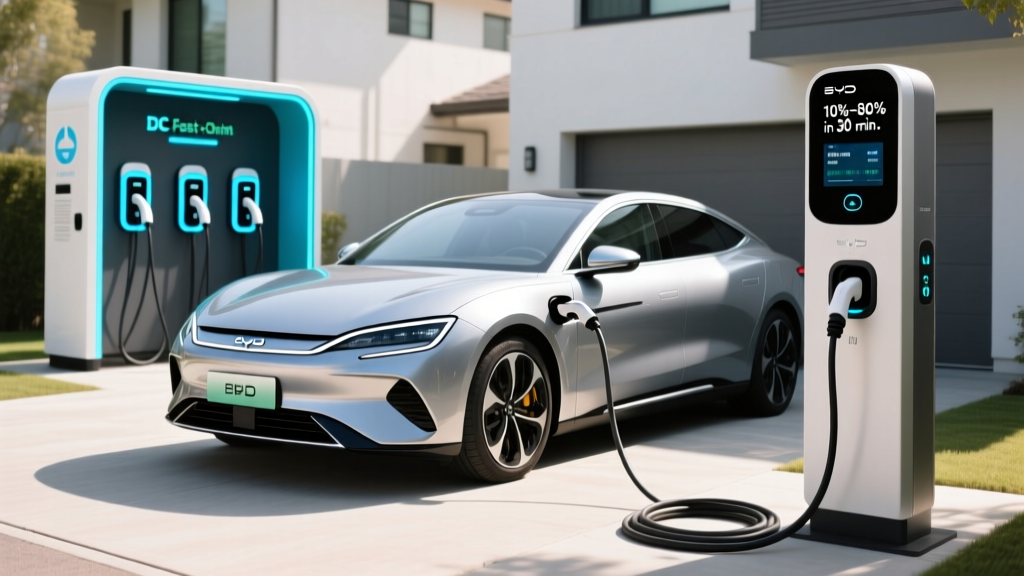
For context, a 75 kWh battery (like the one in a Tesla Model Y Long Range) charging at 11.5 kW (a typical 48-amp Level 2 circuit) gains roughly 37 miles of range per hour and fills from 10–80% in about 4.5 hours. That same battery on a 150 kW DC fast charger hits 10–80% in roughly 25–30 minutes, though charging speed tapers significantly above 80% State of Charge (SoC) to protect the battery cells.
Home Charger Installation: Electrical Requirements and Interior Wiring
Most Level 2 home chargers require a dedicated 240-volt circuit, identical in concept to what your electric dryer or oven uses. The specific amperage depends on the charger's output. Here's the rule of thumb: the circuit breaker must be rated at 125% of the charger's continuous draw. So a 48-amp charger (11.5 kW) requires a 60-amp breaker. A 32-amp charger (7.7 kW) requires a 40-amp breaker.
Wire Gauge and Circuit Specifications
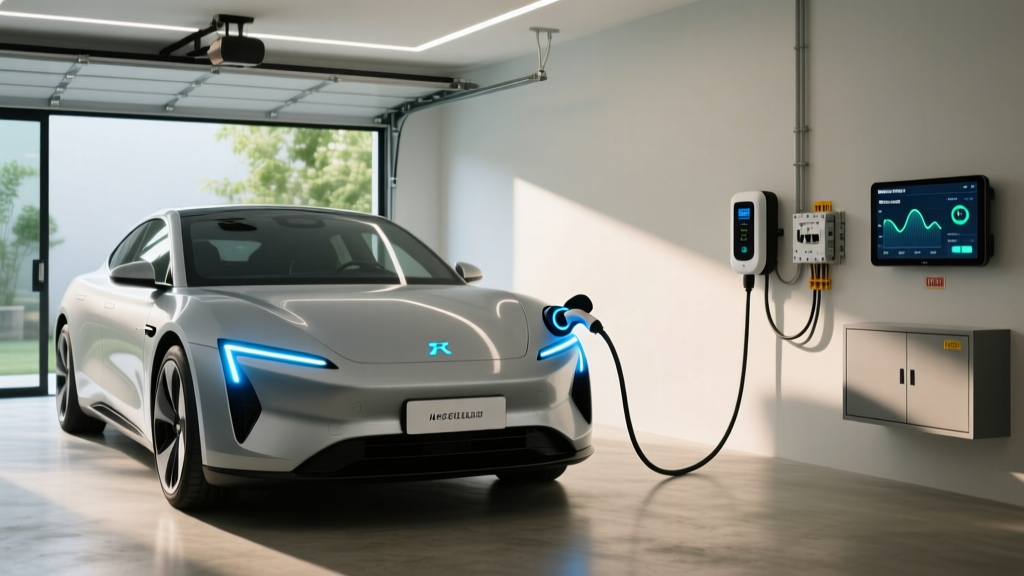
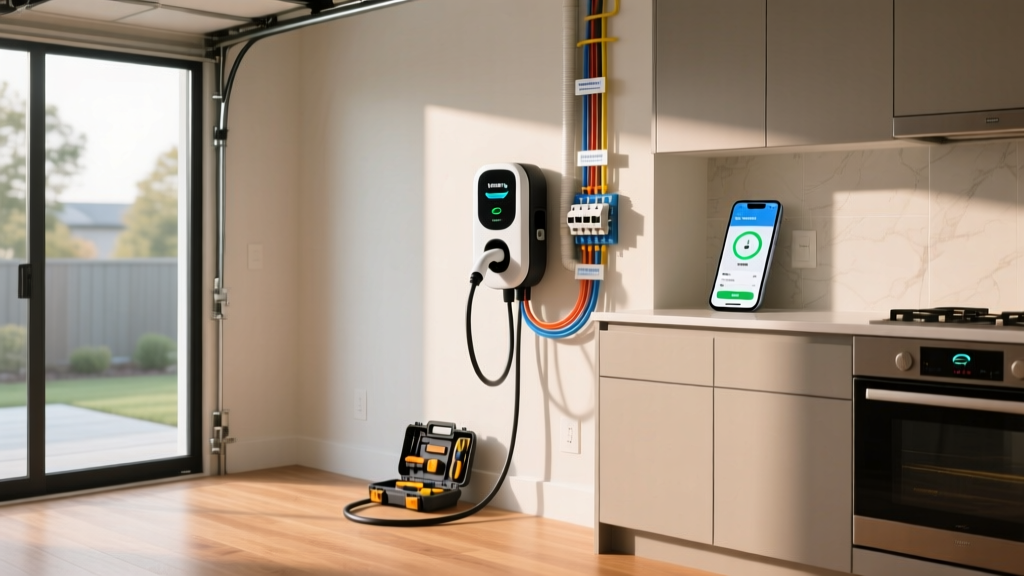
The charger interior wiring connecting your panel to the charger outlet or hardwired junction must match the circuit amperage:
- 40-amp circuit (32A charger): 8 AWG copper wire (THHN in conduit or NM-B/Romex)
- 50-amp circuit (40A charger): 6 AWG copper wire
- 60-amp circuit (48A charger): 6 AWG copper wire (some jurisdictions require 4 AWG for runs over 50 feet)
- 80-amp circuit (64A charger): 4 AWG copper or 2 AWG aluminum
Wire run length matters. Longer runs experience voltage drop, which reduces charging efficiency and can cause the charger to throttle amperage. For runs exceeding 50 feet from the panel, your electrician should calculate voltage drop and may upsize the wire gauge accordingly.
Hardwired vs. NEMA Outlet
You have two installation options for Level 2 chargers:
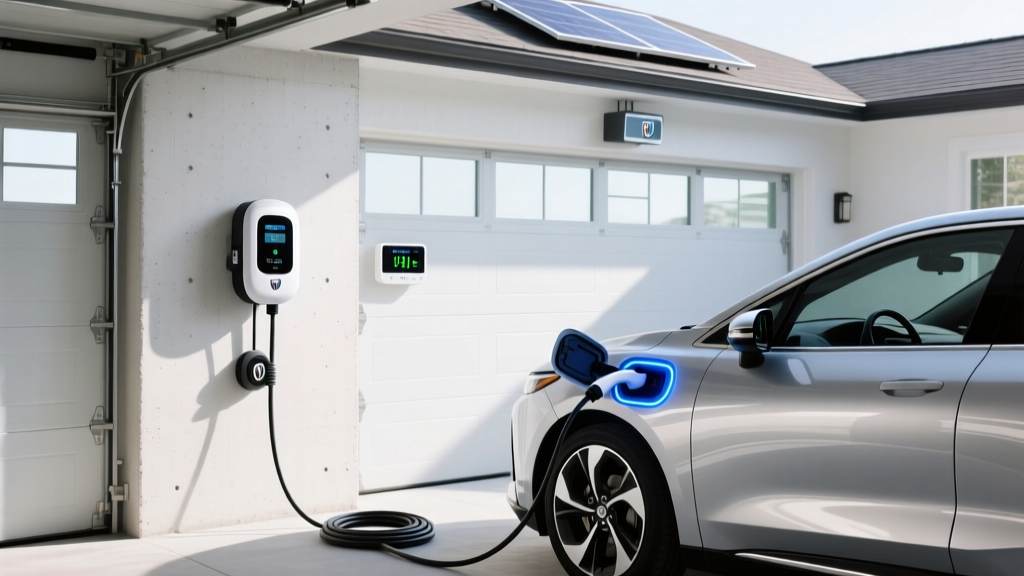
- Hardwired: The charger's internal wiring connects directly to the circuit via a junction box. This is the preferred method for 48-amp and higher chargers because it eliminates the plug/receptacle as a failure point and avoids the requirement for GFCI breakers on receptacles (which can nuisance-trip with EV chargers).
- NEMA 14-50 outlet: A 50-amp rated receptacle that allows you to unplug and take the charger with you if you move. Ideal for 40-amp chargers. Must be installed with a GFCI breaker per NEC 2017+ code in most jurisdictions, though some local codes have adopted EV-specific exemptions.
How Much Does It Cost to Install a Home EV Charger?
Installation costs vary enormously based on your panel capacity, the distance from the panel to the charge point, and whether your home needs an electrical service upgrade. Here's a realistic breakdown based on 2026 national averages:
| Component | Simple Install (panel adjacent) | Complex Install (long run, panel upgrade) |
|---|---|---|
| Level 2 Charger Equipment | $350–$700 | $350–$700 |
| Electrician Labor (2–4 hrs simple / 8–16 hrs complex) | $300–$600 | $1,200–$2,800 |
| Wire, Conduit, Breaker, Materials | $100–$250 | $400–$900 |
| Permit & Inspection | $50–$150 | $100–$300 |
| Panel Upgrade (100A → 200A) if needed | Not needed | $1,800–$4,000 |
| Total Estimated Range | $800–$1,700 | $3,850–$8,700 |
The panel upgrade is the wildcard. Homes built before 2000 frequently have 100-amp or 150-amp service panels. Adding a 60-amp EV circuit to a panel already near capacity (electric range, dryer, HVAC) may require a service upgrade to 200 amps. This isn't optional — your electrician will perform a load calculation per NEC Article 220, and if the math doesn't work, the panel must be upgraded before the charger circuit can be added.
- No upgrade needed if: You have a 200A panel, gas appliances (range, dryer, water heater), and the charger location is within 30 feet of the panel.
- Upgrade likely needed if: You have a 100A panel, all-electric appliances, or an older home with a fuse box. Budget $2,000–$4,000 additional.
- Consider a smart panel or load-management device: Products like the Span smart panel or Emporia load-management systems can dynamically share capacity between your EV charger and other circuits, potentially avoiding a full panel upgrade.
Federal Tax Credit for Home Charger Installation
The IRS §30C Alternative Fuel Vehicle Refueling Property Credit covers 30% of home charger equipment and installation costs, up to $1,000. However, eligibility depends on your census tract meeting certain low-income or rural criteria. Check the IRS eligibility tool before counting on this credit — it does not apply universally. Always consult a tax professional for your specific situation.
Connector Compatibility: NACS, CCS1, and CHAdeMO
The North American charging landscape has consolidated rapidly around the North American Charging Standard (NACS), originally developed by Tesla. As of 2026, nearly every major automaker has adopted NACS as the native connector on new vehicles, with CCS1 being phased out on most new models. CHAdeMO remains only on legacy Nissan Leaf vehicles.
| Connector | Compatible Brands (2026) | Home Charger Availability | Adapter Needed? |
|---|---|---|---|
| NACS (Tesla) | Tesla, Ford, GM, Rivian, Hyundai, Kia, Volvo, Polestar, BMW, Mercedes, Subaru, Lucid, Fisker | Widely available (Tesla Wall Connector, ChargePoint, Emporia, Grizzl-E) | CCS→NACS adapters available (~$200) for older CCS vehicles |
| CCS1 | VW ID.4 (pre-2026), some legacy BMW, Mini, older Hyundai/Kia | Available but declining (ChargePoint, JuiceBox) | NACS→CCS adapters available for newer NACS chargers |
| CHAdeMO | Nissan Leaf (discontinued after 2025) | Limited | No practical adapter to NACS |
If you're buying a charger today, choose NACS unless you currently own a CCS-only vehicle and plan to keep it long-term. Even then, a NACS charger with a CCS adapter gives you flexibility for your next vehicle.
2026 Equipment Recommendations: Best Home Level 2 Chargers
We've tested dozens of Level 2 chargers across multiple homes and electrical configurations. Here are our top picks based on power output, build quality, smart features, cable management, and value:
Best Overall: Tesla Wall Connector (Gen 4)
- Power Output: 11.5 kW (48 amps) on a 60A circuit
- Connector: NACS native
- Cable Length: 24 feet
- Smart Features: Wi-Fi, OTA updates, power sharing between multiple units, load management
- Price: ~$420
- Best For: NACS-equipped vehicles, multi-EV households, clean installation
Best for Smart Features: ChargePoint Home Flex (NACS)
- Power Output: Up to 12 kW (50 amps) on a 60A circuit; adjustable down to 16A for lower-capacity panels
- Connector: NACS (2026 model); CCS available on older stock
- Cable Length: 23 feet
- Smart Features: Wi-Fi, Alexa/Google integration, detailed energy tracking, scheduled charging, utility demand-response programs
- Price: ~$550
- Best For: Users who want granular energy data and utility rate optimization
Best Budget/Durable: Grizzl-E Smart
- Power Output: 10 kW (40 amps) on a 50A circuit
- Connector: NACS or J1772 (select at purchase)
- Cable Length: 24 feet
- Smart Features: Wi-Fi, OCPP protocol (compatible with utility programs), adjustable amperage
- Price: ~$399
- Best For: Outdoor installations, cold climates (rated to -40°F), budget-conscious buyers
Best for High Power: Emporia Vue Level 2 Charger
- Power Output: 11.5 kW (48 amps) on a 60A circuit
- Connector: NACS (J1772 with adapter)
- Cable Length: 24 feet
- Smart Features: Integrates with Emporia Vue energy monitor for whole-home load tracking, solar-aware charging, automatic load management
- Price: ~$400
- Best For: Solar homes, panel-constrained installations, energy-monitoring enthusiasts
Charging Cost Per Mile: Home vs. Public vs. Gas
The economic case for home charging is overwhelming. Here's how costs compare across scenarios, using the national average electricity rate of $0.17/kWh and a vehicle efficiency of 3.5 miles per kWh (typical for a mid-size crossover like the Hyundai Ioniq 5 or Tesla Model Y):
| Scenario | Rate | Cost Per kWh | Cost Per Mile | Annual Cost (12,000 mi) |
|---|---|---|---|---|
| Home, off-peak TOU rate | $0.09–$0.12/kWh | $0.11 avg | $0.031 | $372 |
| Home, standard flat rate | $0.17/kWh | $0.17 | $0.049 | $588 |
| Public Level 2 (ChargePoint, etc.) | $0.25–$0.49/kWh | $0.35 avg | $0.100 | $1,200 |
| DC Fast Charging (Electrify America, Tesla Supercharger) | $0.35–$0.55/kWh | $0.45 avg | $0.129 | $1,548 |
| Gas Vehicle (28 MPG combined, $3.40/gal) | $3.40/gal | — | $0.121 | $1,452 |
Home charging on an off-peak time-of-use (TOU) plan costs roughly one-quarter what gasoline costs per mile. Even at standard residential rates, you're paying less than half. The savings evaporate if you rely exclusively on DC fast charging, which is why home Level 2 access remains the single most important factor in EV ownership satisfaction.
According to fueleconomy.gov, the average EV costs $0.04–$0.05 per mile to charge at home, compared to $0.12–$0.15 per mile for a comparable gas vehicle, depending on local fuel and electricity prices.
Safety, Code, and Best Practices for Charger Interior Wiring
EV chargers draw continuous, high-amperage loads for hours — a duty cycle far more demanding than most household appliances. Proper installation isn't just about code compliance; it's about preventing overheating, arcing, and fire risk.
Key NEC and Safety Requirements
- Dedicated circuit: Your EV charger must be on its own dedicated breaker — not shared with any other outlet or appliance.
- GFCI protection: NEC 2017 and later requires GFCI protection on 240V receptacles in garages. However, hardwired installations are exempt from this requirement, which is one reason hardwiring is preferred for 48A+ chargers. GFCI breakers can nuisance-trip with certain EV chargers due to the inrush current when the charger initiates.
- Outdoor rating: If installing outdoors, the charger must carry a NEMA 3R or NEMA 4 rating. All chargers recommended above are outdoor-rated.
- Permit and inspection: Virtually all jurisdictions require a permit for new 240V circuits. The inspection verifies wire gauge, breaker sizing, grounding, and torque on terminal connections. Do not skip this step — unpermitted work can void your homeowner's insurance in the event of an electrical fire.
- Torque specifications: Your electrician should use a calibrated torque screwdriver on all terminal connections. Loose connections at the breaker or charger terminal are the leading cause of overheating in EV charging circuits.
Frequently Asked Questions
How fast will each charging level add range?
Level 1 (120V) adds 3–5 miles per hour — adequate for PHEVs with 25–40 miles of electric range but impractical for full BEVs. Level 2 (240V) adds 12–75 miles per hour depending on amperage (a 48-amp charger delivers roughly 37 mi/hr for a typical crossover). DC fast charging adds 150–1,000+ miles per hour at peak, though sustained rates taper as the battery fills.
Which connector/charger is compatible with my EV?
Check your vehicle's charge port. If it's a 2025 or newer Ford, GM, Rivian, Hyundai, Kia, or Tesla, it uses NACS. Older VW ID.4, BMW i4, and some pre-2025 models use CCS1. The Nissan Leaf uses CHAdeMO. For home chargers, buy the connector that matches your current vehicle, or choose NACS with a CCS adapter for maximum future flexibility.
How much does charging cost per mile vs gas?
Home charging on a standard rate averages $0.04–$0.05 per mile. Off-peak TOU rates drop this to $0.03/mile. A comparable 28 MPG gas vehicle at $3.40/gallon costs about $0.12/mile. The DOE's fueleconomy.gov provides a state-by-state cost comparison tool.
What electrical upgrades might I need?
If your home has a 100-amp service panel with all-electric appliances, you'll likely need a 200-amp panel upgrade ($1,800–$4,000). If you have a 200-amp panel with gas appliances and the charger location is within 30 feet of the panel, you likely need only a new breaker, wire run, and permit ($800–$1,700 total). A licensed electrician's load calculation will determine this definitively.
Can I install a charger in a condo or apartment garage?
Yes, but you'll need HOA or property management approval. Many states have "right to charge" laws that limit an HOA's ability to deny installation, though you'll typically bear all costs including any common-area electrical upgrades. Conduit runs in shared garages can be expensive — get multiple quotes.
Should I hardwire my charger or use a NEMA 14-50 outlet?
Hardwire for 48-amp chargers and above — it's more reliable, avoids GFCI nuisance trips, and handles higher amperage safely. Use a NEMA 14-50 outlet if you want portability (moving soon, renting) and your charger is 40 amps or below. Both are safe when installed correctly by a licensed electrician.