EV Charger Installation Rebate: Your Complete Guide to Saving on Home Charging
Switching to an electric vehicle is one of the smartest moves you can make for your wallet & the environment. But before you can enjoy the convenience of home charging, you need to install a dedicated EV charger — & that comes with costs. Fortunately, EV charger installation rebates can significantly reduce your out-of-pocket expenses, sometimes covering hundreds or even thousands of dollars of the total installation price.
In this comprehensive guide from Auto Edge View, we will walk you through everything you need to know about EV charger installation rebates, including eligibility requirements, step-by-step installation processes, cost breakdowns, safety tips, & how to maximize your savings.
Quick Overview
Difficulty Level: Moderate to Advanced (professional installation recommended)
Estimated Total Cost: $500 – $2,500 (before rebates)
Estimated Cost After Rebates: $200 – $1,500 (depending on available incentives)
Time Required: 2 – 6 hours for professional installation
Key Savings: Federal tax credits up to $1,000, utility rebates $250 – $1,500, state incentives vary
Understanding EV Charger Installation Rebates & Incentives
EV charger installation rebates are financial incentives offered by federal, state, & local governments, as well as utility companies, to encourage the adoption of electric vehicles & the expansion of charging infrastructure. These rebates can come in several forms:
Types of Rebates & Incentives
- Federal Tax Credits: The Alternative Fuel Infrastructure Tax Credit (AFITC) provides a tax credit of up to 30% of the cost of purchasing & installing an EV charging station, capped at $1,000 for residential installations. According to the U.S. Department of Energy, this credit applies to both the equipment & installation labor costs.
- Utility Company Rebates: Many electric utility providers offer direct rebates ranging from $250 to $1,500 for installing a Level 2 home charger. Some utilities also offer reduced electricity rates for EV charging during off-peak hours.
- State & Local Incentives: Numerous states provide additional rebates, tax credits, or grants on top of federal incentives. States like California, New York, Colorado, & Massachusetts are known for generous EV infrastructure programs.
- Manufacturer Rebates: Some EV manufacturers & charger brands offer their own rebates or bundled deals when you purchase their vehicles or charging equipment.
How Rebates Are Applied
Rebates can be applied in different ways depending on the program:
- Point-of-sale rebates reduce your cost immediately at the time of purchase.
- Mail-in rebates require you to submit proof of purchase & installation after the fact.
- Tax credits reduce your tax liability when you file your annual tax return.
- Utility bill credits appear as a credit on your monthly electricity statement.
To explore which chargers are eligible for the most rebates, check out our best Level 2 EV chargers roundup for top-rated options that qualify for major incentive programs.
Eligibility Requirements for EV Charger Installation Rebates
Not every installation qualifies for every rebate. Understanding the eligibility requirements upfront can save you time, money, & frustration. Here are the most common criteria you need to meet:
Federal Tax Credit Requirements
To qualify for the federal Alternative Fuel Infrastructure Tax Credit, your installation must meet the following conditions:
- The charging equipment must be installed at your primary residence or a qualified location.
- The equipment must be new & meet applicable safety standards.
- The charger must be certified by a recognized testing laboratory (UL, ETL, or equivalent).
- You must have sufficient tax liability to claim the credit (it is non-refundable).
- The installation must comply with the National Electrical Code (NEC) Article 625, which governs electric vehicle charging systems.
Utility Rebate Requirements
Utility company rebate programs typically require:
- You must be a customer of the participating utility company.
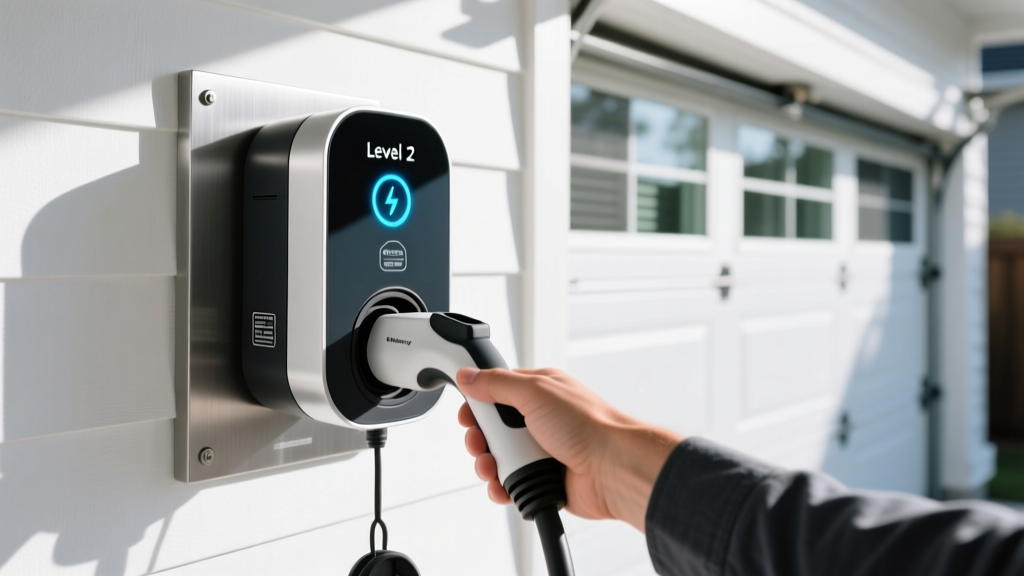
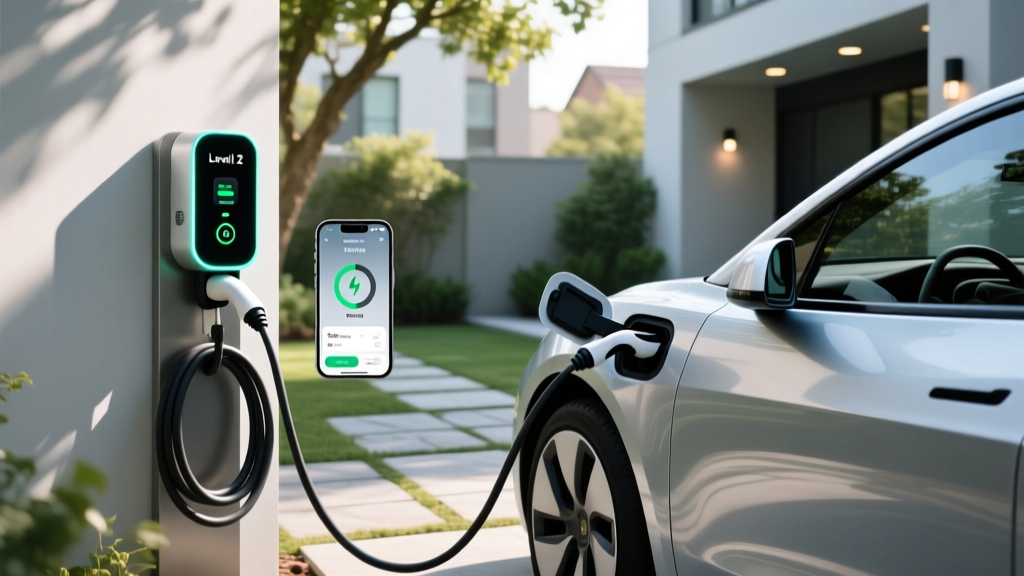
- The charger must be a Level 2 (240V) smart charger with Wi-Fi or network connectivity in many programs.
- Installation must be performed by a licensed electrician.
- You may need to enroll in a time-of-use (TOU) rate plan to qualify for certain rebates.
- Some utilities require pre-approval before installation begins.
State & Local Program Requirements
State incentive programs vary widely, but common requirements include:
- Residency in the state offering the incentive.
- Installation within a specific timeframe.
- Use of approved equipment from a qualified manufacturer list.
- Submission of receipts, permits, & inspection documentation.
- Some programs prioritize installations in underserved or multi-family housing communities.
For a detailed look at the chargers that best meet these requirements, read our complete EV charger buying guide.
Step-by-Step EV Charger Installation Process
Installing a home EV charger involves several key steps, from planning to final inspection. Here is a detailed walkthrough to help you understand the process & ensure you do not miss anything that could affect your rebate eligibility.
Step 1: Assess Your Electrical Panel Capacity
Before purchasing a charger, evaluate your home's electrical panel. Most Level 2 EV chargers require a dedicated 240V circuit with 30 to 60 amps. Your electrical panel must have enough spare capacity to handle the additional load. A licensed electrician can perform a load calculation to determine if an upgrade is necessary.
Step 2: Choose the Right EV Charger
Select a charger that meets your vehicle's charging requirements, your home's electrical capacity, & the eligibility criteria for available rebates. Key factors to consider include:
- Charging speed: Measured in kilowatts (kW), typically 7.2 kW to 11.5 kW for residential units.
- Connector type: Most EVs use the J1772 connector, while Tesla vehicles use the NACS connector (or require an adapter).
- Smart features: Wi-Fi connectivity, scheduling, & energy monitoring are often required for utility rebates.
- Cable length: Choose a cable long enough to reach your vehicle's charging port from the installation location.
See our latest EV charger reviews for detailed comparisons of top models.
Step 3: Apply for Pre-Approval (If Required)
Many utility rebate programs require pre-approval before installation. Contact your utility company or visit their website to submit an application. You will typically need to provide:
- Proof of EV ownership or lease agreement
- The make & model of the charger you plan to install
- Your electrician's information
- A copy of the planned installation scope
Step 4: Hire a Licensed Electrician
Unless you are a qualified electrician, professional installation is strongly recommended — & often required for rebate eligibility. A licensed electrician will:
- Obtain necessary permits from your local building department
- Install the dedicated circuit & charger according to NEC code
- Ensure proper grounding & bonding
- Test the installation for safety & functionality
Step 5: Schedule Inspection
After installation, your local building department will need to inspect the work to verify it meets code. The inspection typically covers:
- Proper wire sizing & overcurrent protection
- Correct mounting & placement of the charging unit
- GFCI protection as required by NEC Article 625
- Adequate ventilation for indoor installations
Step 6: Submit Rebate Documentation
Once your installation passes inspection, gather all required documentation & submit your rebate applications. Keep copies of everything, including:
- Itemized receipts for equipment & labor
- Permit & inspection approval documents
- Photographs of the completed installation
- Utility pre-approval confirmation (if applicable)
- IRS Form 8911 for the federal tax credit
Permits, Inspections & Code Compliance
Permits & inspections are not just bureaucratic hurdles — they protect your safety, your home, & your rebate eligibility. Skipping permits can result in denied rebate claims, insurance complications, & potential safety hazards.
Why Permits Matter for Rebates
Most rebate programs explicitly require that your installation be permitted & inspected. Without proper documentation, your application will likely be denied. This is because rebate administrators want to ensure that subsidized installations meet safety standards & do not create fire or electrical hazards.
NEC Code Requirements for EV Chargers
The National Electrical Code (NEC) Article 625 sets the standard for EV charging installations in the United States. Key requirements include:
- Circuit sizing: The branch circuit must be rated at least 125% of the charger's maximum continuous load. For example, a 40-amp charger requires a 50-amp circuit.
- GFCI protection: Ground-fault circuit-interrupter protection is required for outlets used for EV charging.
- Disconnecting means: A readily accessible disconnect switch must be provided for hardwired installations.
- Ventilation: Indoor installations must ensure adequate ventilation to prevent overheating.
- Cable management: Charging cables must be managed to prevent tripping hazards & physical damage.
The Inspection Process
After your electrician completes the installation, the local building inspector will visit your property to verify code compliance. The inspector will check:
- Wire gauge & conduit specifications
- Breaker sizing & panel labeling
- Proper grounding electrode connections
- Mounting height & location of the charging unit
- Overall workmanship quality
If the installation passes, you will receive a certificate of completion or final approval, which you will need for your rebate applications.
DIY vs. Professional Installation: Which Is Right for You?
One of the most common questions EV owners face is whether to install the charger themselves or hire a professional. Let us break down the pros & cons of each approach.
DIY Installation
Pros:
- Lower upfront cost (save $500 – $1,500 on labor)
- Flexible scheduling — work at your own pace
- Satisfying for experienced DIYers with electrical knowledge
Cons:
- Most rebate programs require professional installation by a licensed electrician
- Electrical work carries serious safety risks, including fire & electrocution
- Improper installation may void your charger's warranty
- You may not pass inspection without professional-grade work
- Home insurance claims may be denied for unpermitted electrical work
Professional Installation
Pros:
- Required for most rebate programs & utility incentives
- Ensures compliance with NEC code & local regulations
- Licensed electricians carry liability insurance
- Work is typically guaranteed or warrantied
- Inspection is more likely to pass on the first attempt
Cons:
- Higher upfront cost
- Scheduling may take time depending on electrician availability
Our recommendation: For the vast majority of EV owners, professional installation is the clear winner. The safety benefits, code compliance, rebate eligibility, & peace of mind far outweigh the additional labor cost — especially when you factor in that rebates can offset a significant portion of that cost.
Need help choosing a charger that is easy for professionals to install? Check out our smart EV charger comparison guide for models with straightforward installation requirements.
Cost Breakdown: What to Expect & How Rebates Reduce Your Bill
Understanding the full cost picture helps you plan your budget & maximize your savings. Here is a detailed breakdown of typical EV charger installation costs & how rebates apply.
Equipment Costs
| Item | Cost Range |
|---|---|
| Level 2 EV Charger (32A – 48A) | $300 – $700 |
| Smart/Wi-Fi Enabled Charger | $400 – $800 |
| Charging Cable (25 ft) | Included or $50 – $100 |
| Mounting Hardware | $20 – $50 |
Installation & Labor Costs
| Service | Cost Range |
|---|---|
| Basic Installation (panel nearby) | $300 – $600 |
| Complex Installation (long wire runs) | $600 – $1,500 |
| Electrical Panel Upgrade (if needed) | $1,000 – $3,000 |
| Permit Fees | $50 – $200 |
| Inspection Fees | $50 – $150 |
Total Cost Scenarios with Rebates Applied
Scenario 1: Simple Installation
- Charger: $500
- Installation: $400
- Permits & Inspection: $150
- Total: $1,050
- Federal Tax Credit (30%): -$315
- Utility Rebate: -$500
- Net Cost: $235
Scenario 2: Complex Installation with Panel Upgrade
- Charger: $650
- Installation: $1,200
- Panel Upgrade: $2,000
- Permits & Inspection: $250
- Total: $4,100
- Federal Tax Credit (30% capped at $1,000): -$1,000
- Utility Rebate: -$750
- State Incentive: -$500
- Net Cost: $1,850
As these examples show, stacking multiple rebates & incentives can dramatically reduce your total investment. In some cases, homeowners have installed Level 2 chargers for under $200 out of pocket after all incentives are applied.
Safety Tips for EV Charger Installation & Use
Safety should always be your top priority when installing & using an EV charger. Follow these essential tips to protect yourself, your family, & your property.
Before Installation
- Never attempt electrical work beyond your skill level. Working with 240V circuits can be lethal if done improperly.
- Always turn off the main breaker before any work near the electrical panel.
- Use a voltage tester to confirm circuits are de-energized before touching any wires.
- Verify your charger is UL-listed or ETL-certified to ensure it meets safety standards. Refer to UL's EV charging safety resources for certified product listings.
During Installation
- Follow manufacturer installation instructions exactly as provided.
- Use the correct wire gauge for your circuit amperage — undersized wires can overheat & cause fires.
- Ensure proper grounding of the circuit & charging unit.
- Install GFCI protection as required by NEC code.
- Mount the charger securely at the manufacturer-recommended height.
After Installation & Ongoing Use
- Inspect the charging cable regularly for signs of wear, fraying, or damage.
- Keep the charging area dry & free of flammable materials.
- Do not use extension cords with your EV charger — they are not rated for continuous high-current loads.
- Test the GFCI protection periodically using the test button on the breaker or outlet.
- Register your charger with the manufacturer to receive firmware updates & safety recalls.
Troubleshooting Common EV Charger Installation Issues
Even with professional installation, you may encounter issues during or after the setup process. Here are solutions to the most common problems.
Charger Will Not Power On
- Check that the circuit breaker is in the ON position.
- Verify the charger is properly connected to the circuit (hardwired) or fully plugged in (plug-in models).
- Test the outlet with a multimeter to confirm 240V is present.
- Check for a tripped GFCI breaker & reset if necessary.
Charging Speed Is Slower Than Expected
- Confirm your charger's amperage setting matches the circuit capacity.
- Check your vehicle's onboard charger specifications — the vehicle may limit the charging rate.
- Verify you are using the correct wire gauge for the circuit length & amperage.
- Some vehicles throttle charging speed when the battery is very hot or very cold.
Wi-Fi Connectivity Issues (Smart Chargers)
- Ensure your Wi-Fi signal reaches the charger's installation location (garage & outdoor locations often have weak signals).
- Consider installing a Wi-Fi range extender near the charger.
- Update the charger's firmware through the manufacturer's app.
- Reset the charger's network settings & reconnect.
Rebate Application Denied
- Review the denial letter for specific reasons — common issues include missing documentation or using non-approved equipment.
- Contact the rebate administrator to clarify requirements & resubmit if possible.
- Ensure your installation was permitted & inspected — most programs require proof of both.
- Verify the charger model is on the program's approved equipment list.
Frequently Asked Questions
Can I stack multiple EV charger installation rebates?
Yes, in most cases you can combine (stack) multiple incentives. For example, you can typically claim the federal tax credit alongside a utility company rebate & a state incentive. However, some programs have specific rules about stacking, so always read the terms & conditions of each rebate program carefully. The federal tax credit is claimed on your tax return using IRS Form 8911, while utility & state rebates are usually processed separately. Consult a tax professional to ensure you are maximizing your benefits correctly.
Do I need to own an electric vehicle to qualify for a charger installation rebate?
Most rebate programs require proof of EV ownership or a signed lease agreement. However, some utility programs allow you to apply if you have a pre-order or reservation for an EV. A few progressive programs even offer incentives for installing chargers in anticipation of a future EV purchase. Check the specific requirements of each program you plan to apply for. Plug-in hybrid electric vehicles (PHEVs) also typically qualify for most rebate programs.
What happens if my electrical panel needs an upgrade to support an EV charger?
If your electrical panel lacks sufficient capacity for a dedicated EV charging circuit, you will need a panel upgrade. This typically costs between $1,000 & $3,000 depending on the scope of work. The good news is that the federal tax credit covers both the charger equipment & the associated installation costs, which can include panel upgrades directly related to the EV charger installation. Some state & utility programs also offer additional incentives for panel upgrades when they are necessary for EV charging infrastructure.
Are EV charger installation rebates taxable income?
Tax credits reduce your tax liability dollar-for-dollar & are not considered taxable income. However, cash rebates from utility companies or state programs may be considered taxable income depending on how they are structured. Point-of-sale discounts are generally not taxable since they simply reduce the purchase price. Consult a qualified tax professional to understand the tax implications of specific rebates you receive, as individual circumstances vary based on your overall tax situation.
How long does it take to receive an EV charger installation rebate?
Processing times vary significantly by program. Utility rebates typically arrive within 4 to 8 weeks after submitting a complete application with all required documentation. State incentive programs may take 6 to 12 weeks or longer, depending on program volume & verification requirements. Federal tax credits are realized when you file your annual tax return, so the benefit comes as a reduction in taxes owed or an increase in your refund. To speed up processing, ensure all documentation is complete, legible, & submitted according to the program's specific instructions.
Final Thoughts on Maximizing Your EV Charger Installation Rebate
EV charger installation rebates represent one of the most valuable — & most underutilized — incentives available to electric vehicle owners. By combining federal tax credits, utility rebates, & state incentives, you can dramatically reduce the cost of installing a home Level 2 charger, sometimes to just a few hundred dollars out of pocket.
The key to maximizing your savings is planning ahead. Research available rebates before purchasing your charger, ensure your equipment meets all eligibility requirements, hire a licensed electrician, obtain proper permits, & keep meticulous records of every receipt & document. Following the steps outlined in this guide will help you navigate the process smoothly & claim every dollar you are entitled to.
Ready to find the perfect charger for your home? Browse our top-rated Level 2 EV charger recommendations & our complete EV charger buying guide to make an informed decision that maximizes both your savings & your charging convenience.
For more electric vehicle tips, reviews, & guides, explore the full collection of resources at Auto Edge View.