EV Charger Installation Cost in Ontario: The Complete Homeowner's Guide
Switching to an electric vehicle is one of the smartest moves you can make for your wallet and the environment. But once you've got your EV parked in the driveway, one critical question remains: how much will it cost to install a home charger in Ontario? Whether you're in Toronto, Ottawa, Hamilton, or anywhere else across the province, understanding the full cost picture — from electrical upgrades to permits and inspections — is essential before you begin.
In this comprehensive guide, we break down everything Ontario homeowners need to know about EV charger installation costs, including average pricing, electrical requirements, permit processes, and tips to keep your project on budget. We'll also help you decide whether to tackle the installation yourself or hire a licensed electrician.
At a Glance
Difficulty Level: Moderate to Advanced (electrical work required)
Estimated Total Cost: $500 – $3,500+ CAD (charger + installation)
Typical Timeline: 2 – 6 hours for installation; 1 – 4 weeks including permits
Recommended Skill Level: Licensed electrician strongly advised
Understanding EV Charger Types & Electrical Requirements
Before diving into costs, it's important to understand the types of EV chargers available for residential installation in Ontario and the electrical infrastructure each one demands.
Level 1 Charging (120V)
Level 1 chargers plug into a standard household outlet and deliver roughly 1.3 to 2.4 kW of power. They add about 6 to 8 kilometres of range per hour of charging. While Level 1 requires no special installation, it's best suited for plug-in hybrids or drivers with very short commutes. Most EV owners quickly find they need something faster.
Level 2 Charging (240V)
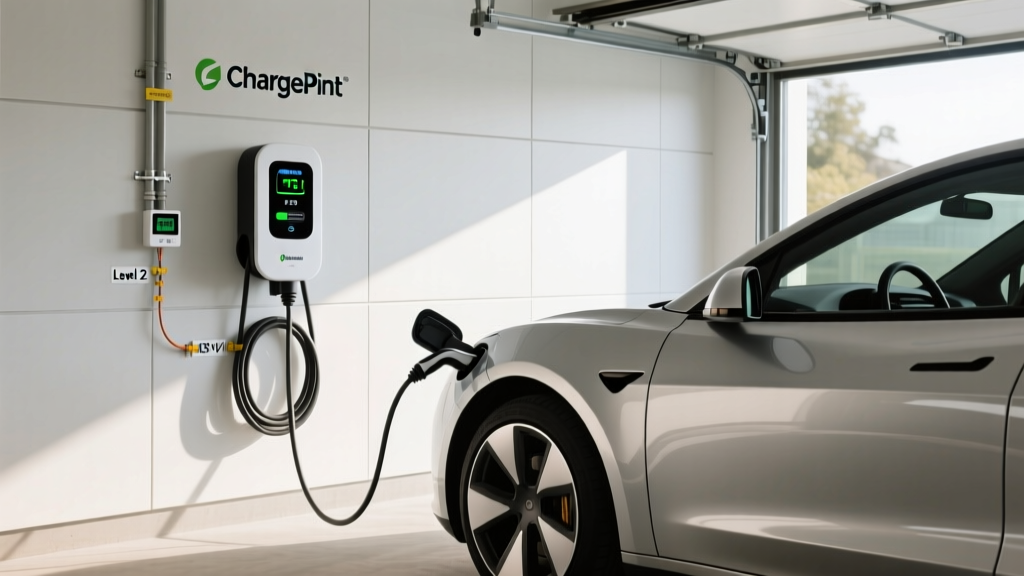
Level 2 chargers are the gold standard for home EV charging. Operating on a dedicated 240-volt circuit — the same type of outlet your electric dryer or oven uses — they deliver between 7 kW and 19.2 kW of power, adding roughly 40 to 80 kilometres of range per hour. According to the U.S. Department of Energy, Level 2 home charging satisfies the daily needs of more than 80% of EV drivers.
For Ontario homes, a Level 2 charger typically requires:
- A dedicated 240V circuit (usually 40-amp or 50-amp)
- A NEMA 14-50 outlet or a hardwired connection
- Appropriate gauge wiring (6 AWG or 8 AWG copper, depending on amperage)
- A circuit breaker rated for continuous load (125% of the charger's rated current, per the National Electrical Code (NEC) Article 625)
Level 3 / DC Fast Charging
DC fast chargers are generally not practical for home installation. They require 480V three-phase power and can cost tens of thousands of dollars to install. These are found at public charging stations along Ontario's 400-series highways and in commercial settings.
If you're exploring which Level 2 charger is right for your vehicle, check out our best EV charger reviews for detailed comparisons of top models available in Canada.
Step-by-Step EV Charger Installation Process in Ontario
Installing a Level 2 EV charger in your Ontario home involves several key steps. Here's a detailed walkthrough of what to expect from start to finish.
Step 1: Evaluate Your Electrical Panel
The first step is determining whether your home's electrical panel can support a new 240V circuit. Most modern Ontario homes have a 100-amp or 200-amp main service panel. Your electrician will perform a load calculation to ensure adding a 40-amp or 50-amp EV charger circuit won't overload your system.
If your panel is at or near capacity, you may need a panel upgrade (from 100A to 200A), which significantly increases your overall installation cost. Older homes in cities like Hamilton, London, or Kingston are more likely to require this upgrade.
Step 2: Choose the Charger Location
Your charger should be installed close to where you park your EV — typically in a garage or on an exterior wall near the driveway. Consider the following when selecting a location:
- Cable reach: Ensure the charger's cable (typically 5 to 7.5 metres) can comfortably reach your vehicle's charge port
- Weather protection: Indoor installations are simpler, but many chargers are rated for outdoor use (look for NEMA 4 or IP65 ratings)
- Wi-Fi connectivity: Smart chargers need a reliable Wi-Fi signal for app features and scheduling
- Proximity to the panel: Shorter cable runs from the panel to the charger mean lower material and labour costs
Step 3: Obtain Required Permits
In Ontario, any electrical work — including EV charger installation — requires an electrical permit filed with the Electrical Safety Authority (ESA). This is a legal requirement under the Ontario Electrical Safety Code, and skipping it can void your home insurance and create serious safety hazards.
Your licensed electrical contractor (LEC) will typically handle the permit application on your behalf. The permit fee generally ranges from $75 to $150 CAD, depending on your municipality and the scope of work.
Step 4: Electrical Installation
During the installation itself, your electrician will:
- Install a new double-pole breaker in your electrical panel
- Run appropriately sized cable (typically NMD90 or NMWU) from the panel to the charger location
- Install either a NEMA 14-50 receptacle or hardwire the charger directly
- Mount the charger unit to the wall or pedestal
- Connect all wiring, ground the circuit, and test the installation
Step 5: Inspection & Approval
After installation, the ESA must inspect the work to ensure it meets the Ontario Electrical Safety Code. Your electrician will schedule this inspection, which usually occurs within a few business days of completing the work. Once approved, you'll receive a Certificate of Inspection — keep this document safe, as it may be required for insurance purposes or when selling your home.
Permit & Inspection Requirements in Ontario
Ontario has some of the most rigorous electrical safety standards in North America, and EV charger installations are no exception. Here's what you need to know about the regulatory landscape.
Ontario Electrical Safety Code Compliance
All EV charger installations in Ontario must comply with Section 86 of the Ontario Electrical Safety Code, which adopts and amends the Canadian Electrical Code Part I rules for electric vehicle charging. Key requirements include:
- The charging circuit must be dedicated — no sharing with other appliances or outlets
- The circuit breaker must be rated at 125% of the charger's maximum continuous current draw
- Ground fault protection is required for outdoor installations
- Charger equipment must be CSA-approved or certified by a recognized testing agency
- All wiring methods must be appropriate for the installation environment (indoor vs. outdoor, exposed vs. concealed)
ESA Notification & Filing
Your licensed electrical contractor must file a notification with the ESA before beginning any electrical work. After the work is complete, the ESA inspector will verify:
- Correct breaker sizing and wire gauge
- Proper grounding and bonding
- Adequate clearance and mounting
- Compliance with all applicable code sections
Failure to obtain a permit can result in fines, forced removal of the installation, and complications when selling your property. It can also invalidate any manufacturer warranty on your charger.
Municipal Considerations
Some Ontario municipalities have additional bylaws or zoning requirements, particularly for exterior-mounted chargers visible from the street or installations in heritage-designated homes. Check with your local building department if you live in a designated heritage property or a condominium complex. Condo owners should also review their building's rules regarding common-area electrical modifications and consult our guide to EV charging in condos and apartments.
DIY vs. Professional Installation: What Ontario Homeowners Should Know
One of the most common questions we hear is whether it's possible to install an EV charger yourself. Let's break down the pros, cons, and legal realities.
Can You Legally DIY an EV Charger Installation in Ontario?
Under Ontario law, homeowners are permitted to do electrical work in their own homes, but there are important caveats:
- You must still obtain an ESA permit before starting
- The work must pass ESA inspection
- You are personally liable for any code violations, safety issues, or resulting damage
- Some insurance companies may not cover damage caused by unlicensed electrical work
- If you plan to sell your home, unpermitted or non-compliant work can become a significant liability
When DIY Might Make Sense
If you're an experienced homeowner with electrical knowledge — perhaps you've installed 240V outlets for a workshop or welded — a DIY installation of a NEMA 14-50 outlet might be within your capabilities. The materials alone (breaker, wire, outlet, and box) typically cost between $100 and $250.
Why Hiring a Licensed Electrician Is Recommended
For the vast majority of Ontario homeowners, hiring a Licensed Electrical Contractor (LEC) is the safest and most practical choice. Here's why:
- Code expertise: Professional electricians understand the Ontario Electrical Safety Code and ensure your installation passes inspection on the first visit
- Load calculations: They can accurately assess your panel's capacity and recommend upgrades if needed
- Warranty protection: Most EV charger manufacturers require professional installation to maintain the warranty
- Insurance coverage: Licensed contractors carry liability insurance, protecting you from financial risk
- Time savings: A professional can typically complete the installation in 2 to 4 hours, including testing
When hiring an electrician, look for contractors who are licensed with the ESA, carry a valid ECRA/ESA licence number, and have specific experience with EV charger installations. Ask for references and itemized quotes from at least three contractors.
Complete Cost Breakdown: EV Charger Installation in Ontario
Now let's get to the heart of the matter — what will you actually pay? Below is a detailed breakdown of every cost component involved in a typical Level 2 EV charger installation in Ontario.
The Charger Unit
The EV charger itself is usually the single largest expense. Prices vary significantly based on features, brand, and power output:
| Charger Type | Power Output | Price Range (CAD) |
|---|---|---|
| Basic Level 2 (non-smart) | 16A – 32A (3.8 – 7.7 kW) | $300 – $600 |
| Smart Level 2 (Wi-Fi enabled) | 32A – 48A (7.7 – 11.5 kW) | $600 – $1,000 |
| Premium Smart Charger | 48A – 80A (11.5 – 19.2 kW) | $900 – $1,500 |
For a detailed comparison of top models, read our best Level 2 EV charger reviews to find the right unit for your vehicle and budget.
Electrical Installation Labour
Licensed electricians in Ontario typically charge between $75 and $150 per hour, with most EV charger installations requiring 2 to 4 hours of labour. Total labour costs generally fall in the $200 to $600 range for a straightforward installation.
Factors that increase labour costs include:
- Long cable runs from the panel to the charger location (over 15 metres)
- Running cable through finished walls, ceilings, or concrete
- Installing a sub-panel
- Working in tight or difficult-to-access spaces
- Trenching for underground cable runs to detached garages
Materials & Supplies
Beyond the charger itself, you'll need electrical materials for the circuit:
- Circuit breaker (double-pole, 40A or 50A): $30 – $80
- Wire (NMD90 6/3 or 8/3, per metre): $3 – $8 per metre
- NEMA 14-50 receptacle & box (if not hardwired): $25 – $60
- Conduit (if required for exposed runs): $2 – $5 per metre
- Miscellaneous (connectors, cable staples, junction boxes): $20 – $50
Total material costs for a standard installation typically range from $100 to $300.
Electrical Panel Upgrade (If Needed)
If your home's electrical panel doesn't have sufficient capacity for a new 240V circuit, you'll need an upgrade. This is most common in older Ontario homes with 60-amp or 100-amp service:
- 100A to 200A panel upgrade: $1,500 – $3,000
- Adding a sub-panel: $500 – $1,500
While expensive, a panel upgrade adds value to your home and supports future electrical needs like solar panels, heat pumps, or a second EV charger.
Permit & Inspection Fees
ESA permit fees in Ontario typically range from $75 to $150. The inspection is included in the permit fee and is conducted at no additional charge.
Total Estimated Cost Summary
| Component | Simple Install | Complex Install |
|---|---|---|
| EV Charger Unit | $400 – $700 | $800 – $1,500 |
| Labour | $200 – $400 | $400 – $800 |
| Materials | $100 – $200 | $200 – $400 |
| Permit & Inspection | $75 – $150 | $75 – $150 |
| Panel Upgrade (if needed) | — | $1,500 – $3,000 |
| Total | $775 – $1,450 | $2,975 – $5,850 |
Available Rebates & Incentives
Ontario homeowners may be eligible for various rebates and incentives that can offset installation costs. Check with your local utility provider (such as Hydro One, Toronto Hydro, or Alectra) for current EV charger rebate programs. Some municipalities also offer grants or reduced permit fees for EV charger installations. Federal programs like the Canada Greener Homes Initiative have historically included EV charging infrastructure — check the Natural Resources Canada website for the latest offerings.
Safety Tips for EV Charger Installation & Use
EV chargers handle significant electrical power, and safety should always be your top priority. Follow these essential safety guidelines whether you're overseeing a professional installation or maintaining your charger long-term.
During Installation
- Always shut off the main breaker before any work is performed on your electrical panel
- Verify zero voltage with a multimeter or non-contact voltage tester before touching any wires
- Use only CSA-certified equipment — chargers and components must bear a recognized certification mark (CSA, cUL, or cETL)
- Follow the manufacturer's installation manual precisely — deviations can void warranties and create hazards
- Ensure proper grounding — the circuit must include an equipment grounding conductor sized per NEC Table 250.122
Ongoing Safety & Maintenance
- Inspect the cable and connector regularly for signs of wear, cracking, or corrosion — especially on outdoor installations exposed to Ontario's harsh winters
- Keep the charging area clear of flammable materials, standing water, and debris
- Never use extension cords with your EV charger — they are not rated for continuous high-current loads and pose a fire risk
- Install a GFCI breaker for outdoor receptacles as required by the Ontario Electrical Safety Code
- Consider a surge protector — Ontario's summer thunderstorms can produce electrical surges that damage sensitive charger electronics
- Have your charger inspected if you notice unusual sounds, burning smells, tripped breakers, or error codes on the unit
For more on keeping your setup safe and efficient, see our complete EV charging safety guide.
Troubleshooting Common EV Charger Installation Issues
Even with a professional installation, you may encounter issues during or after setup. Here are the most common problems Ontario homeowners face and how to resolve them.
Charger Won't Power On
If your charger shows no signs of life after installation:
- Verify the circuit breaker is fully in the ON position (some breakers require a firm push)
- Check that all wire connections at the breaker, outlet, and charger terminal are tight and secure
- Test the outlet with a multimeter to confirm 240V is present between the two hot legs
- If hardwired, ensure the disconnect switch (if installed) is in the closed position
Breaker Trips Repeatedly
A breaker that trips immediately or shortly after the charger starts indicates a serious issue:
- The breaker may be undersized — verify it's rated at 125% of the charger's maximum continuous draw
- There may be a ground fault or short circuit in the wiring
- The charger's internal settings may be configured for a higher amperage than the circuit supports (many smart chargers allow software-based amperage adjustment)
- Your home's total electrical load may be exceeding panel capacity when the charger runs simultaneously with other large appliances
Slow Charging Speeds
If your EV is charging significantly slower than expected:
- Confirm the charger's amperage setting matches the circuit capacity
- Check your vehicle's onboard charger capacity — some EVs accept a maximum of 32A or 48A regardless of the charger's output
- Ensure you're not using an adapter that limits current flow
- Verify the charger's Wi-Fi connection if scheduled or limited charging is enabled through the app
Wi-Fi Connectivity Issues with Smart Chargers
Smart chargers rely on Wi-Fi for features like scheduling, energy monitoring, and firmware updates:
- Most smart chargers only support 2.4 GHz Wi-Fi — ensure you're not trying to connect to a 5 GHz-only network
- If the charger is in a garage with poor signal, consider a Wi-Fi extender or mesh network node
- Some chargers support Ethernet connections for more reliable connectivity
ESA Inspection Failures
If your installation fails the ESA inspection, common reasons include:
- Incorrect breaker sizing or wire gauge
- Missing or improper grounding
- Insufficient clearance around the electrical panel (a minimum of 1 metre of working space is required)
- Use of non-certified equipment or components
- Inadequate support or protection for cable runs
Your electrician will need to correct any deficiencies and schedule a re-inspection. Most reputable contractors will handle this at no additional charge.
Frequently Asked Questions
How long does it take to install an EV charger at home in Ontario?
A straightforward Level 2 EV charger installation typically takes 2 to 4 hours when performed by a licensed electrician. This includes running the circuit, mounting the charger, connecting all wiring, and testing the system. More complex installations — such as those requiring a panel upgrade, long cable runs through finished walls, or trenching to a detached garage — can take a full day or longer. Factor in an additional 1 to 2 weeks for the ESA permit approval and inspection process.
Do I need a permit to install an EV charger in Ontario?
Yes. Ontario law requires an electrical permit from the Electrical Safety Authority (ESA) for any new 240V circuit installation, including EV chargers. The permit ensures your installation is inspected for compliance with the Ontario Electrical Safety Code. Your licensed electrical contractor will typically file the permit on your behalf. Operating an EV charger that was installed without a permit can result in fines, insurance complications, and safety risks.
Can I install an EV charger in a condo or rented property in Ontario?
Condo owners and renters face additional considerations. In condominiums, you'll need approval from the condo board or property management, as the installation may involve modifications to common electrical infrastructure. Ontario's Condominium Act was amended to make it easier for condo owners to install EV chargers, but the process still requires a formal application and may involve a cost-sharing agreement. Renters should discuss installation with their landlord, as any electrical modifications require the property owner's consent. For more details, see our guide to EV charging in condos and apartments.
Is it worth installing a Level 2 charger if my EV came with a Level 1 charger?
In most cases, absolutely. While the Level 1 charger that came with your EV is useful as a backup or for overnight top-ups, it typically adds only 6 to 8 km of range per hour. If you drive more than 40 to 50 km per day, Level 1 charging may not fully replenish your battery overnight. A Level 2 charger adds 40 to 80 km of range per hour, meaning most EVs can charge from empty to full in 4 to 8 hours. The convenience, speed, and ability to take advantage of off-peak electricity rates make Level 2 a worthwhile investment for nearly all EV owners. Browse our top-rated Level 2 charger reviews to find the best option for your needs.
Will installing an EV charger increase my home's value in Ontario?
Yes, an installed Level 2 EV charger is increasingly seen as a desirable feature by homebuyers in Ontario, particularly in urban and suburban markets where EV adoption is growing rapidly. A properly permitted and inspected installation signals to buyers that the home is modernized and EV-ready. While the charger itself may not dramatically increase the appraised value, it can make your home more competitive and appealing — similar to how central air conditioning or a renovated kitchen attracts buyers. Additionally, if you upgraded your electrical panel as part of the installation, that improvement carries its own resale value.
Final Thoughts
Installing an EV charger at your Ontario home is one of the most impactful upgrades you can make as an electric vehicle owner. While costs can range from under $1,000 for a simple garage installation to several thousand dollars for more complex setups, the long-term convenience and savings on fuel more than justify the investment for most drivers.
The key takeaways are straightforward: always hire a licensed electrical contractor, obtain the required ESA permits, choose a CSA-certified charger that matches your vehicle's capabilities, and never cut corners on safety. By following the guidelines in this article, you'll enjoy fast, reliable, and safe home charging for years to come.
Ready to choose the right charger? Start with our best EV charger roundup and explore our full library of EV guides and charging resources to make the most of your electric vehicle ownership experience in Ontario.