The Infrastructure Reality: Why Geography Dictates EVSE Pricing
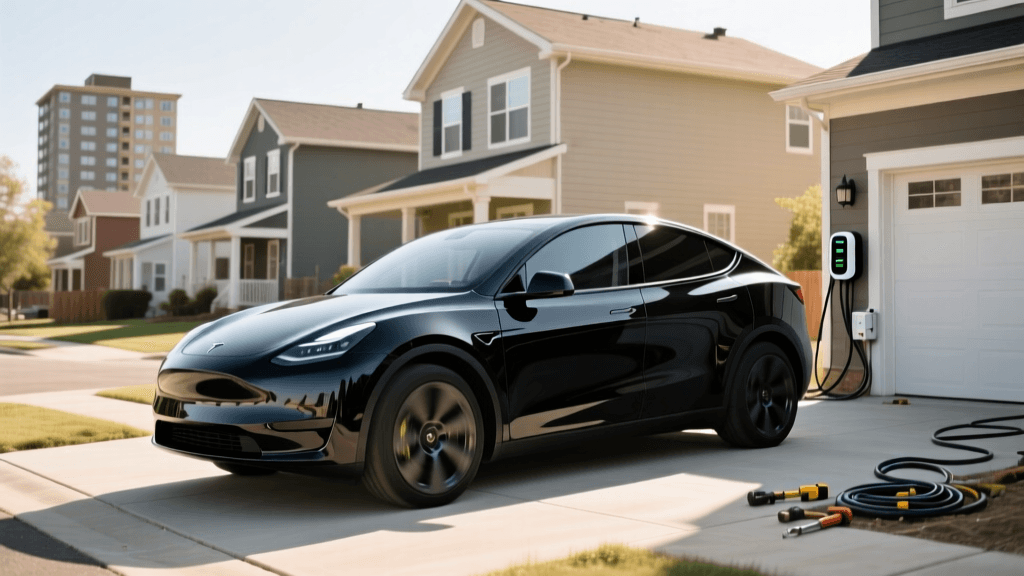
When purchasing a premium Level 2 home charging station like the ChargePoint Home Flex or the Tesla Wall Connector, the hardware itself represents a predictable expense—typically ranging from $400 to $700. However, the installation cost is a massive wildcard. Across the United States, the price to install a 240-volt, 48-amp hardwired EV charger can fluctuate anywhere from $500 to over $5,000. From a technology and electrical engineering perspective, this variance is not merely a product of local electrician hourly rates. It is deeply tied to regional grid topology, the age of local housing stock, utility service drop capacities, and the localized adoption of the National Electrical Code (NEC).
To truly understand what you will pay to electrify your garage, we must perform a technology deep dive into the regional variables that dictate EV supply equipment (EVSE) installation costs. According to the U.S. Department of Energy, assessing your home's electrical capacity and local code requirements is the most critical first step before purchasing any hardware.
Regional Cost Breakdown: Level 2 (48-Amp Hardwired) Installation
The following table outlines the estimated cost variables for a standard 60-amp circuit installation (supporting 48 amps of continuous Level 2 charging) across four major U.S. regions. These figures factor in labor, materials (wire, conduit, breakers), local permitting, and the statistical likelihood of requiring a main electrical panel upgrade.
| Region | Avg. Hourly Labor | Panel Upgrade Rate | Avg. Permit Fee | Total Cost (No Upgrade) | Total Cost (w/ 200A Upgrade) |
|---|---|---|---|---|---|
| Northeast | $120 - $180 | High (45%) | $150 - $400 | $800 - $1,500 | $3,500 - $5,500 |
| West Coast | $110 - $160 | Medium (30%) | $200 - $600 | $900 - $1,600 | $3,200 - $4,800 |
| Midwest | $85 - $130 | Low (15%) | $50 - $150 | $500 - $900 | $2,500 - $3,800 |
| South / Sunbelt | $90 - $140 | Low (20%) | $75 - $200 | $600 - $1,100 | $2,800 - $4,200 |
Deep Dive: Northeast & Mid-Atlantic
The Northeast presents some of the most complex and expensive EVSE installation environments in the country. The primary technological hurdle here is the age of the housing stock. Millions of homes in states like New York, Massachusetts, and Pennsylvania were built before 1980 and still operate on 100-amp or even 60-amp main electrical services. Adding a continuous 48-amp EV load to a 100-amp panel is a mathematical impossibility under NEC Article 220 load calculation rules.
Consequently, Northeast installers frequently encounter the need for a heavy-up—a complete replacement of the main service panel and an upgrade to the utility's service drop wire. Furthermore, urban density in cities like Boston or Philadelphia often means chargers must be installed in shared multi-unit dwelling garages or on exterior street-facing walls, requiring extensive conduit runs, masonry drilling, and coordination with local historical or zoning boards. High union labor rates and stringent local inspector requirements push the baseline installation cost to the higher end of the national spectrum.
Deep Dive: West Coast (California, Oregon, Washington)
The West Coast is the epicenter of EV adoption, but it is also the epicenter of stringent electrical and building codes. California's Title 24 (CALgreen) building code mandates that new residential construction be "EV-ready," which has normalized the technology but also established strict baseline expectations for inspectors. In older homes, the primary cost driver on the West Coast is the aggressive adoption of NEC 2020 and NEC 2023 standards.
Under recent NEC updates, specific GFCI (Ground Fault Circuit Interrupter) protections are required for receptacles in garages. If a homeowner opts for a NEMA 14-50 receptacle instead of a hardwired setup, they must purchase a 50-amp, 240-volt GFCI breaker, which can cost upwards of $250 on its own and is notorious for nuisance tripping with certain EV onboard chargers. To bypass this, West Coast electricians heavily favor hardwired installations. Additionally, utilities like PG&E and Southern California Edison often require the installation of a secondary Time-of-Use (TOU) smart meter specifically for the EV circuit to qualify for discounted charging rates, adding $300 to $800 to the project's hardware and labor costs.
Deep Dive: The Midwest
The Midwest offers the most favorable economics for EV charger installation. The technological advantage here is the era of housing development; a vast majority of suburban homes in states like Ohio, Michigan, and Illinois were built during the late 1980s and 1990s boom, standardizing 200-amp electrical panels. Because the baseline infrastructure is already robust, the statistical need for a main panel upgrade is remarkably low.
Furthermore, Midwestern homes typically feature detached or attached garages with unfinished drywall interiors, allowing electricians to easily route 6-AWG or 4-AWG copper wire through open studs without the need for extensive drywall patching or fishing wires through finished walls. Lower regional costs of living also translate to more competitive electrical contracting rates and minimal municipal permit fees, making the Midwest the most budget-friendly region for deploying high-amperage Level 2 infrastructure.
Deep Dive: The South & Sunbelt
The South is experiencing a rapid surge in EV adoption, driven by expanding suburban sprawl and favorable weather conditions that mitigate cold-weather battery degradation. However, the technological challenge in the Sunbelt revolves around peak thermal loads. In states like Texas, Florida, and Arizona, homes are equipped with massive, multi-zone central HVAC systems, electric water heaters, and pool pumps.
When an electrician performs an NEC Article 220 load calculation, the baseline draw of a Southern home running dual AC compressors in July is extraordinarily high. Even if a home has a 200-amp panel, the calculated existing load may leave insufficient headroom for a 60-amp EV circuit. To solve this without upgrading the main utility service, Southern installers are increasingly turning to smart load management technology, which dynamically throttles the EV charger's amperage when the HVAC system kicks on.
Technology Spotlight: Bypassing Upgrades with ALMS
Automated Load Management Systems (ALMS) are revolutionizing regional installation costs by eliminating the need for catastrophic panel upgrades. Devices like the Emporia Vue smart panel or the Span.IO smart breaker box monitor the home's real-time electrical consumption at the circuit level. If you are charging your EV at 48 amps and someone turns on the electric oven and the AC compressor, the ALMS communicates with the EVSE via Wi-Fi or hardwired serial connection to instantly throttle the charging rate down to 16 amps. Once the high-draw appliances turn off, the charger ramps back up to 48 amps.
While an ALMS setup adds $400 to $1,200 to the upfront hardware and configuration cost, it is vastly cheaper than a $4,000 utility service upgrade. For homeowners in the Northeast and West Coast, where utility transformer capacity and trenching costs are prohibitive, ALMS is becoming the standard technological workaround recommended by advanced EVSE installers.
Navigating Local Codes and Incentives
The National Electrical Code (NEC), published by the National Fire Protection Association (NFPA), sets the baseline for safety, but local Authorities Having Jurisdiction (AHJs) dictate how and when those codes are enforced. One region might require a dedicated grounding rod for an exterior EV pedestal, while another might mandate arc-fault protection on the charging circuit.
Before signing a contract with an electrician, homeowners must leverage local utility make-ready programs. Many utility companies will cover 100% of the costs associated with upgrading the wiring from the street transformer to your home's meter, provided you are installing a Level 2 smart charger. The Alternative Fuels Data Center (AFDC) maintains a comprehensive, state-by-state database of these utility rebates, tax credits, and local municipal incentives that can drastically alter the regional cost breakdown.
Actionable Steps for Homeowners
- Request a Load Calculation: Do not rely on an electrician who simply looks at your panel and guesses. Demand a formal NEC Article 220 load calculation to ensure your home can handle continuous 48-amp charging.
- Hardwire Over Receptacles: Unless you live in a region with extremely lenient codes, opt for a hardwired charger. It eliminates the GFCI breaker requirement, reduces points of failure, and allows for higher amperage (up to 80 amps) that a standard NEMA plug cannot support.
- Check Utility Make-Ready Programs: Contact your local utility provider before hiring an electrician. If the utility covers the service drop upgrade, your out-of-pocket regional costs will plummet.
- Verify Wi-Fi Connectivity: Regional infrastructure also includes internet access. If your garage is a Faraday cage or located far from your router, factor in the cost of running a Cat6 ethernet cable or installing a Wi-Fi mesh node to ensure your smart charger can access TOU pricing schedules and OTA firmware updates.
Ultimately, the cost of installing an EV charger is a reflection of your local electrical ecosystem. By understanding the technological and regulatory forces unique to your region, you can strategically plan your installation, leverage smart load management, and avoid unnecessary infrastructure upgrades.